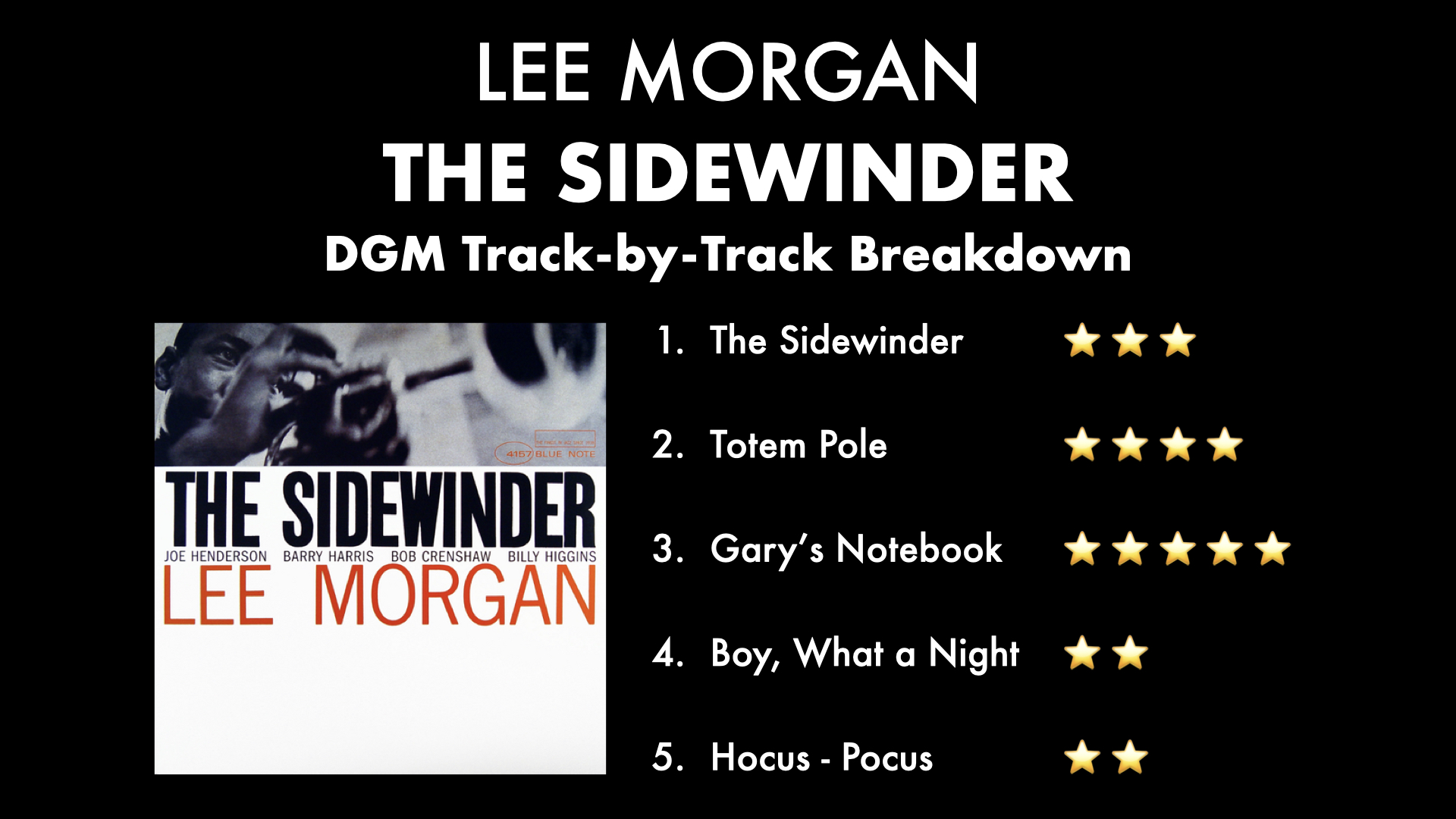

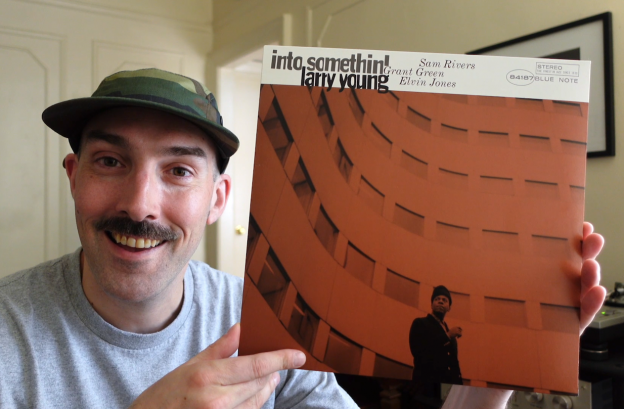
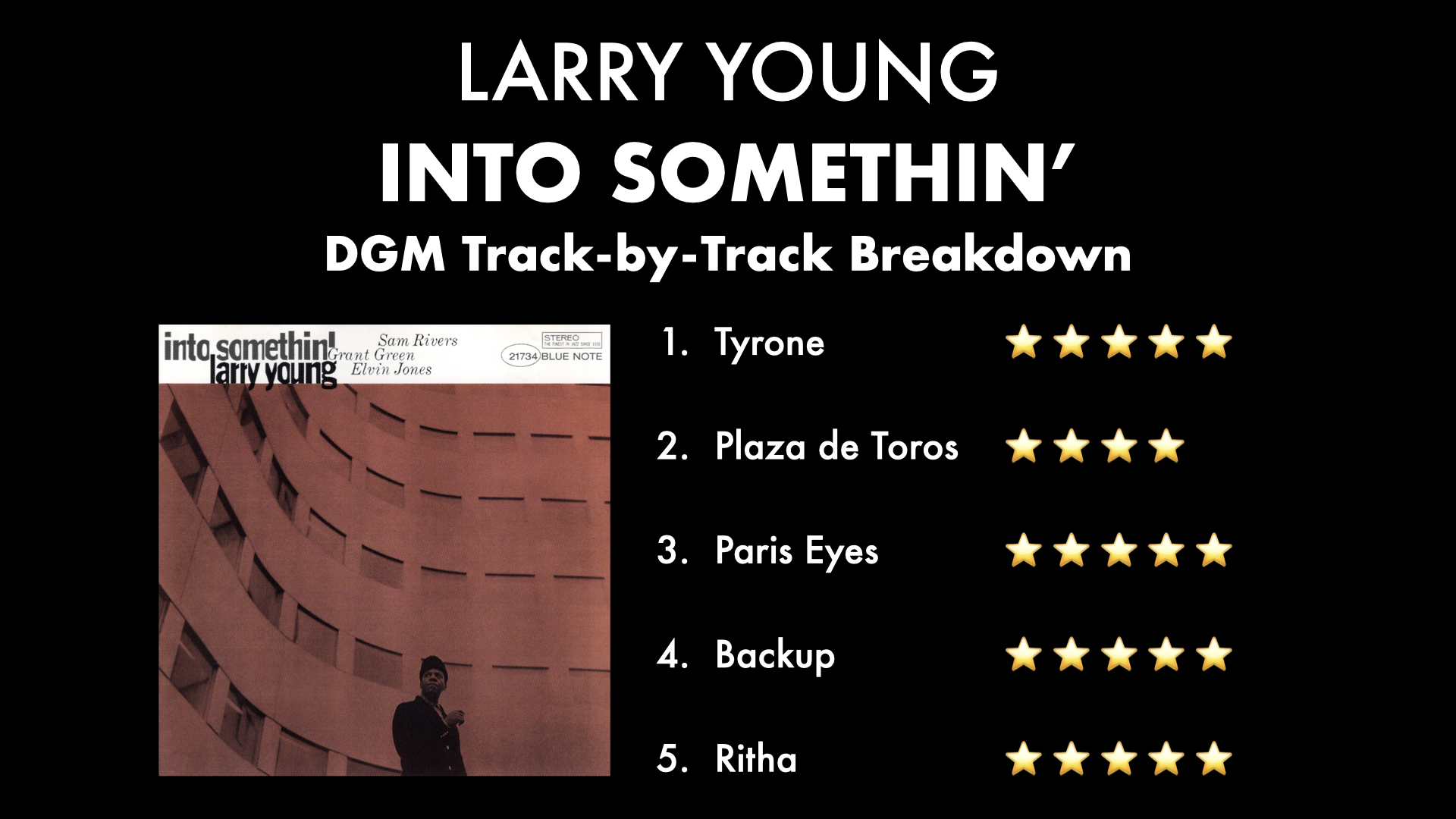
I’m back, once again. Vinyl Spotlight posts began back in January 2014 and have been a cornerstone of this blog for the past eight years. Well, I recently acquired a new camera and decided it was time to bring Deep Groove Mono into the 2020s with a new series, Video Vinyl Spotlight. The first video covers Blue Note’s 80th Anniversary reissue of Larry Young’s Into Somethin’. Feel free to head over to YouTube and subscribe to my channel if you haven’t already, and stay tuned!
 |
(Ed. Note: I originally intended to do a formal interview with Joe and Kevin, but as the day progressed and the friendly vibe between us grew, I became less and less interested in the idea of shifting gears into being “on the record”. So I kept it casual. As a result, this article is a narrative and not in a traditional interview format.)
Back in 2012, when I first caught the jazz record collecting bug, I quickly took a strong interest in recording engineer Rudy Van Gelder, who recorded for numerous classic jazz labels including Blue Note Records. I had a background as an amateur audio engineer so I was also interested in his methods. On one occasion, I reached out to mastering engineer Kevin Gray, who had been working with Rudy’s original master tapes for several years in conjunction with various jazz reissue labels including Music Matters.
Kevin was very polite and helpful, so a few years later when I published an article on groove wear, I thought it would be a good idea to ask Kevin to proofread it before it was published. After he read it, he wanted to talk to me over the phone, so that was the first time we spoke.
On a few occasions I would ask him questions about my research so we stayed in touch. Then last November when I launched RVG Legacy, a website dedicated to preserving the legacy of Rudy Van Gelder, I let him know about it. It must have flown under his radar until this summer when he emailed me excited about what I had put together. A couple weeks later he emailed me again, saying he had been talking to Blue Note reissue producer Joe Harley about my Rudy site, and they decided to invite me to a Blue Note remastering session at Kevin’s mastering studio, Cohearent Audio in Los Angeles.
I was beaming with excitement. For the first time I would get to hear Rudy Van Gelder’s original master tapes in person, someone whose methods and sound I had been carefully studying for the past ten years. So I booked a flight and waited patiently for the day to come where I packed my bags and headed for the West Coast.
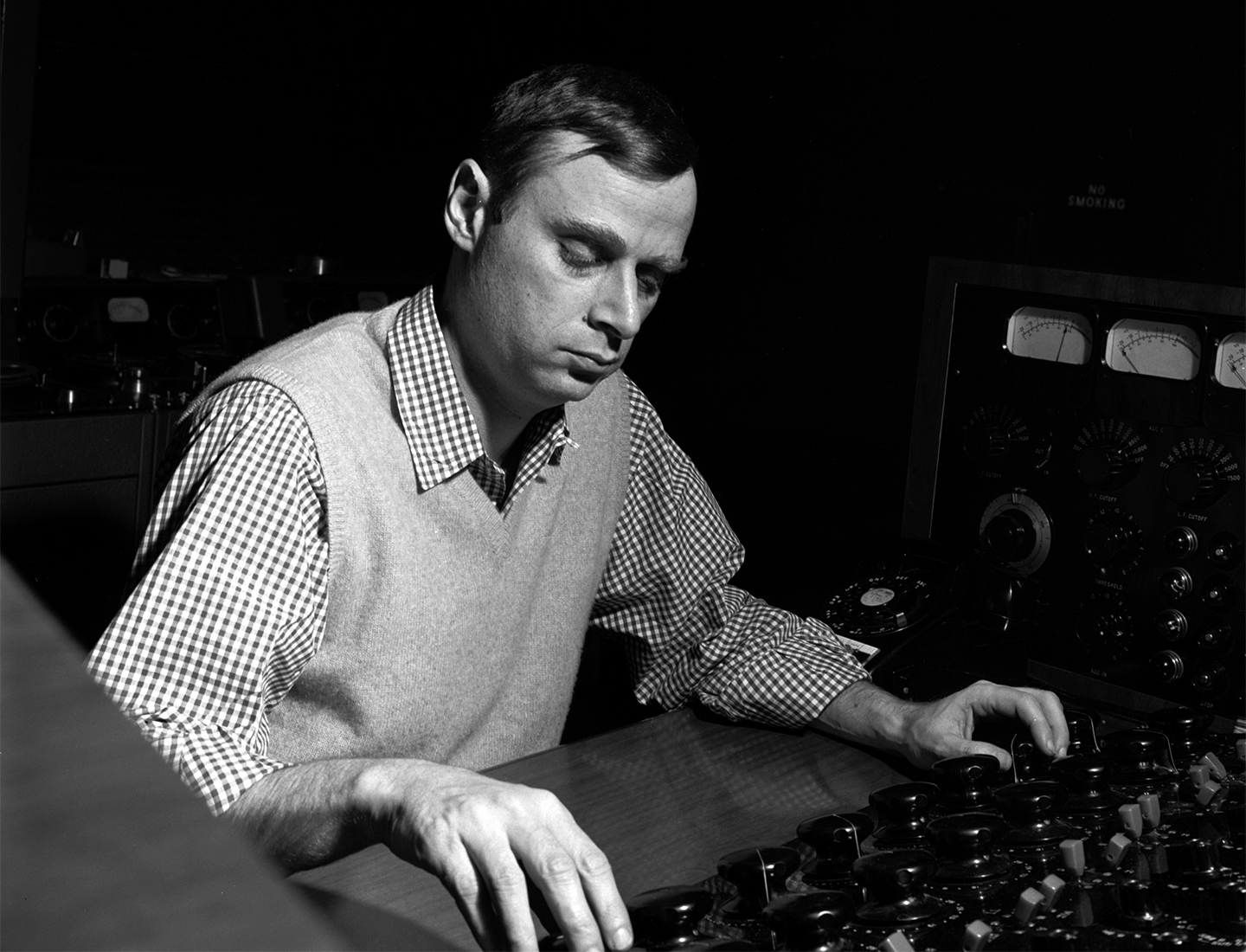 |
| Rudy Van Gelder in his Englewood Cliffs studio in 1962 (Photo credit: Francis Wolff © Mosaic Images LLC) |
An Unexpected Listening Exercise (and Outcome)
The first morning I was in SoCal, my co-pilot, Tarik, and myself began the 90-minute drive west from San Bernardino at 8 A.M., headed for Cohearent. Upon pulling up to the address, Tarik and I were met with the unassuming façade of a small, single-floor, seafoam green house. We had been instructed to go through the gate to the building on the back of the property.
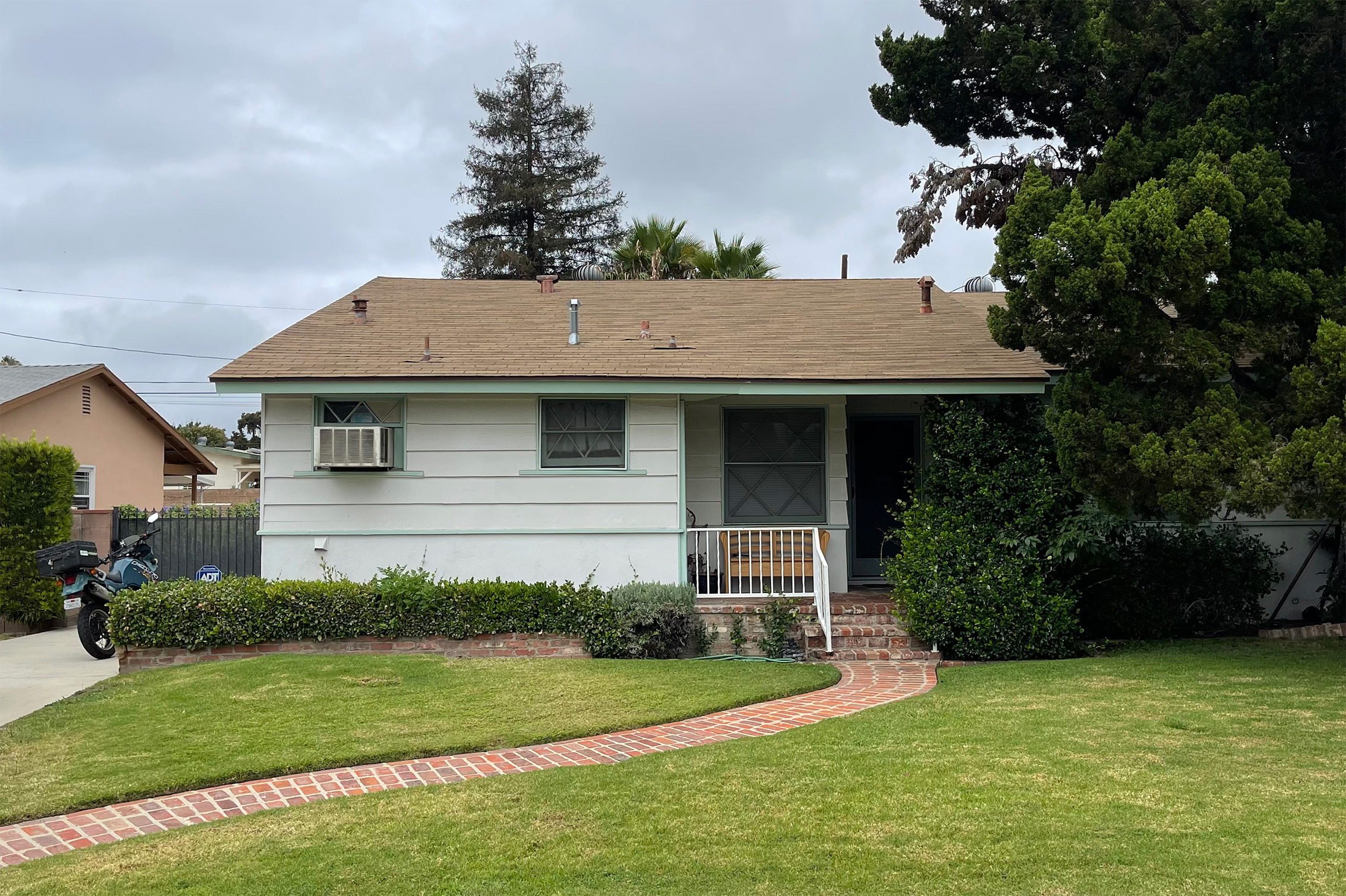 |
| World-class mastering incognito: View of the Cohearent Audio property from the street |
Once inside, it wasn’t long before Kevin hit “play” on one of his Studer reel-to-reel tape recorders. While we waited for Joe to arrive, the sound of music began flowing from Kevin’s massive custom-built speakers at the front of the room, each of which consists of two subwoofers with sealed enclosures, two woofers, one midrange driver and one tweeter.
Before I tell you what happened next, I think it’s only fair that I preface it with a comment about what kind of listener I am. I am a very honest listener. I don’t pull any punches. For example, if it costs ten times as much and sounds the same to me, I’m going to be honest about that.
When Kevin played that first tape, it literally made me tear up. (I wish I could tell you what it was. All I can say is that it was a recording made by a well-known yet underrated West Coast jazz recording engineer in 1958.) I had a strong emotional response that was completely unexpected. If I had to describe what it was that made it sound so special, I’d guess that it was a combination of lifelike dynamics and a very natural stereo soundstage. I know this may sound cliché, but in a word, it was haunting.
Keep in mind that my experience cannot be attributed to the tape alone. Of course, Kevin’s playback system and room also played an important role. After talking to Kevin a little about his background, it became clear that he is a master of electrical engineering and acoustics, and the evidence is in the spectacular playback achieved in his studio, which he designed and built himself, bass traps, electrical wiring and all.
The second thing Kevin played for us was a tape of a Rudy Van Gelder recording dating back to 1961. Time for another preface…
I adore Rudy Van Gelder. His story of creative and entrepreneurial independence has inspired the way I work and live for many years now, going all the way back to 2004 when I first read the book Temples of Sound. Being someone who has always firmly believed that audio recording is an artistic medium that should not necessarily be used in a way that attempts to imitate life as closely and objectively as possible, I have always appreciated the unique character of his recordings. I have stuck up for Rudy in internet chat rooms when he was getting trashed by audiophiles claiming to be “in the know” about other great jazz engineers like Roy DuNann and Fred Plaut.
That said, when the Rudy tape came on, I did not feel as “wowed”. And I think the most important factor here was my feelings — how the sound and the music made me feel. In comparison, Rudy’s tape sounded a little “hyped up”. The top end was much more present, and the sound was less relaxed. What this ultimately amounted to, I feel, is that where the first recording sounded chillingly like the musicians were in the room with us (I have listened to expensive home audio systems before and never got this feeling), the Rudy recording sounded like a recording — an outstanding, gorgeous recording, but nonetheless a recording. And maybe that makes sense since Rudy never claimed to try to make his records sound “as realistic as possible”.
It’s also possible that I came to the studio that day with my own prejudice, that I subconsciously was setting a bar in my mind for “realism in playback”. Most jazz collectors and audiophiles will agree that the greatest classic jazz recordings are the ones that sound the most realistic. I also feel it’s important to keep in mind that Joe Harley has on more than one occasion explained that his goal as a remastering engineer is to make his reissues sound as close as possible to the experience of being in the room with the musicians themselves. In light of this, perhaps it wasn’t unreasonable for me to have those expectations.
Now of course, this was not an apples-to-apples comparison, far from it. In fact, there are too many uncontrolled variables to list. My reaction might have also been different if the Rudy tape was played first. The Rudy tape was of a classic, breathtaking recording of his that I have long admired. It’s just that hearing that tape didn’t necessarily feel a whole lot different than my experiences listening to the same album at home (Kevin’s amazing playback system aside). I should also mention that I had never heard the first recording by “Engineer X”, so it’s possible that this element of surprise also played a part in that recording’s “wow” factor.
While the Rudy recording was playing, Joe came busting through the door, reference vinyl LPs in hand. He gave me a COVID era-appropriate fist bump. Kevin then pulled a large blue plastic bin from a closet and shoved it across the floor in Joe’s direction. Joe then opened it up to reveal some of the most precious treasures in all the world of music: about a dozen original master tapes dating back to the 1950s and 1960s, all jazz recordings and almost all made with loving care by Rudy Van Gelder.
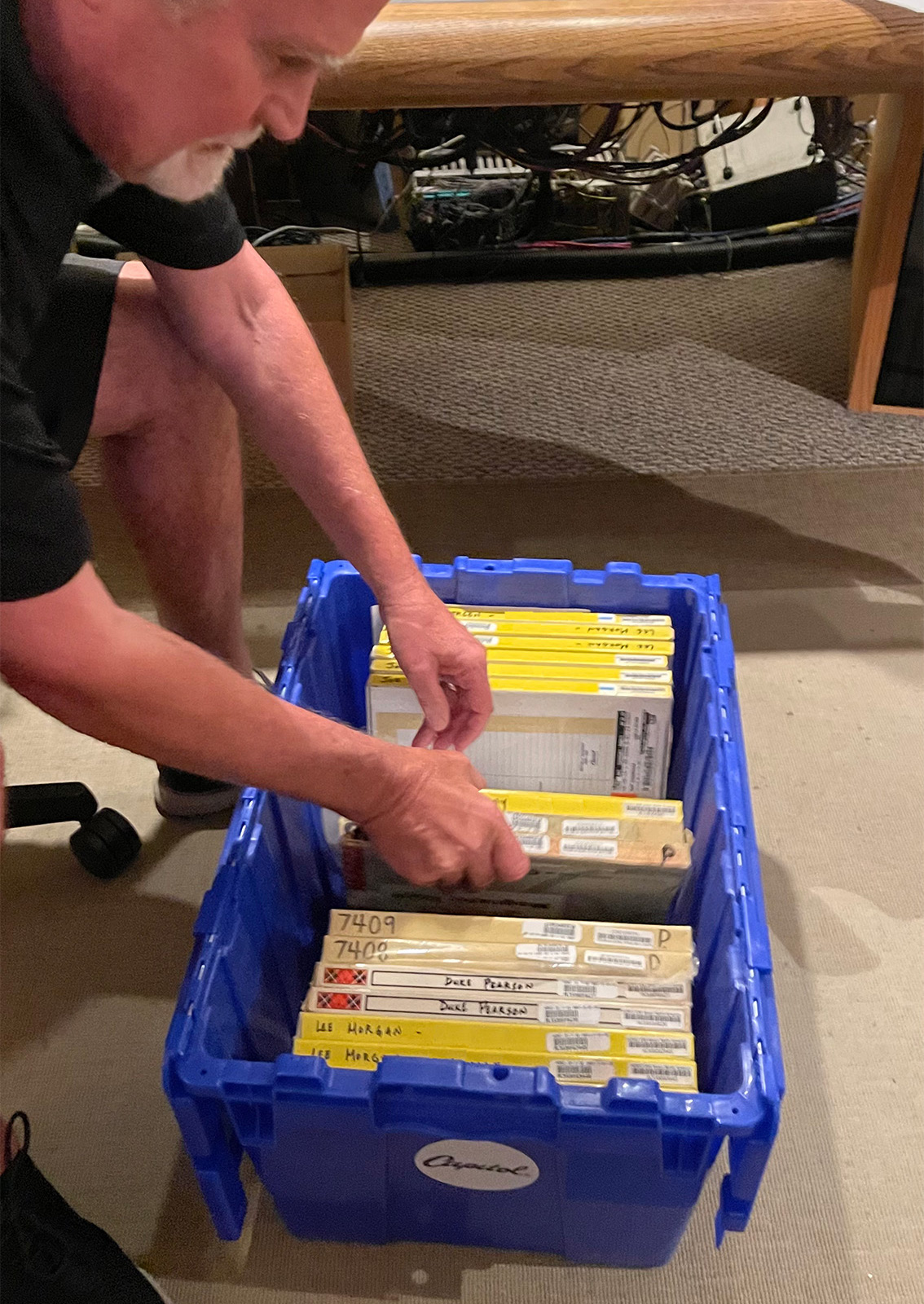 |
| Joe Harley reaching into the magic blue bin for the day’s tapes |
The Morning Session
Joe then handed a tape box to Kevin and Kevin started loading it on to a different Studer deck that he uses for most of his mastering work. The tape was of a Blue Note album originally recorded at Rudy Van Gelder’s Hackensack home studio in 1957 (I was asked to not name specific recordings). Before I went to L.A., Joe told me were going to work on this album in the morning and another in the afternoon. Knowing the morning album’s history, I was privately hoping I would get to hear both the original mono and stereo tapes in person, and was pleased that both tapes were in the blue bin.
Joe gave Kevin the mono tape first, and before I knew it we had launched into a comparison of the mono and stereo tapes to decide which would be used for the Tone Poet reissue (slated for next year). Tarik and I sat in the back of the room and quietly watched Joe and Kevin work their magic. The tape was wound “tails out”, a common reel-to-reel tape storage practice intended to avoid audible “print-through”. As such, Kevin rewound past the album’s ending solo piano ballad to a piece featuring the entire band. (Interestingly, the mono master was on a single reel but the stereo was on two reels.)
Joe shifted his chair center to better judge what he was hearing. He and Kevin partook in some inaudible chatter, then Joe got up to put the Japanese stereo reissue he had brought with him on Kevin’s lathe, which doubles as a turntable complete with V-15 playback cartridge and tonearm to the side. The intention was to quickly switch between the mono and stereo presentation, something that couldn’t be done with just one tape machine. Once the record was spinning, there was more inaudible chatter between them, but I did manage to make out that Joe seemed to be favoring the stereo presentation.
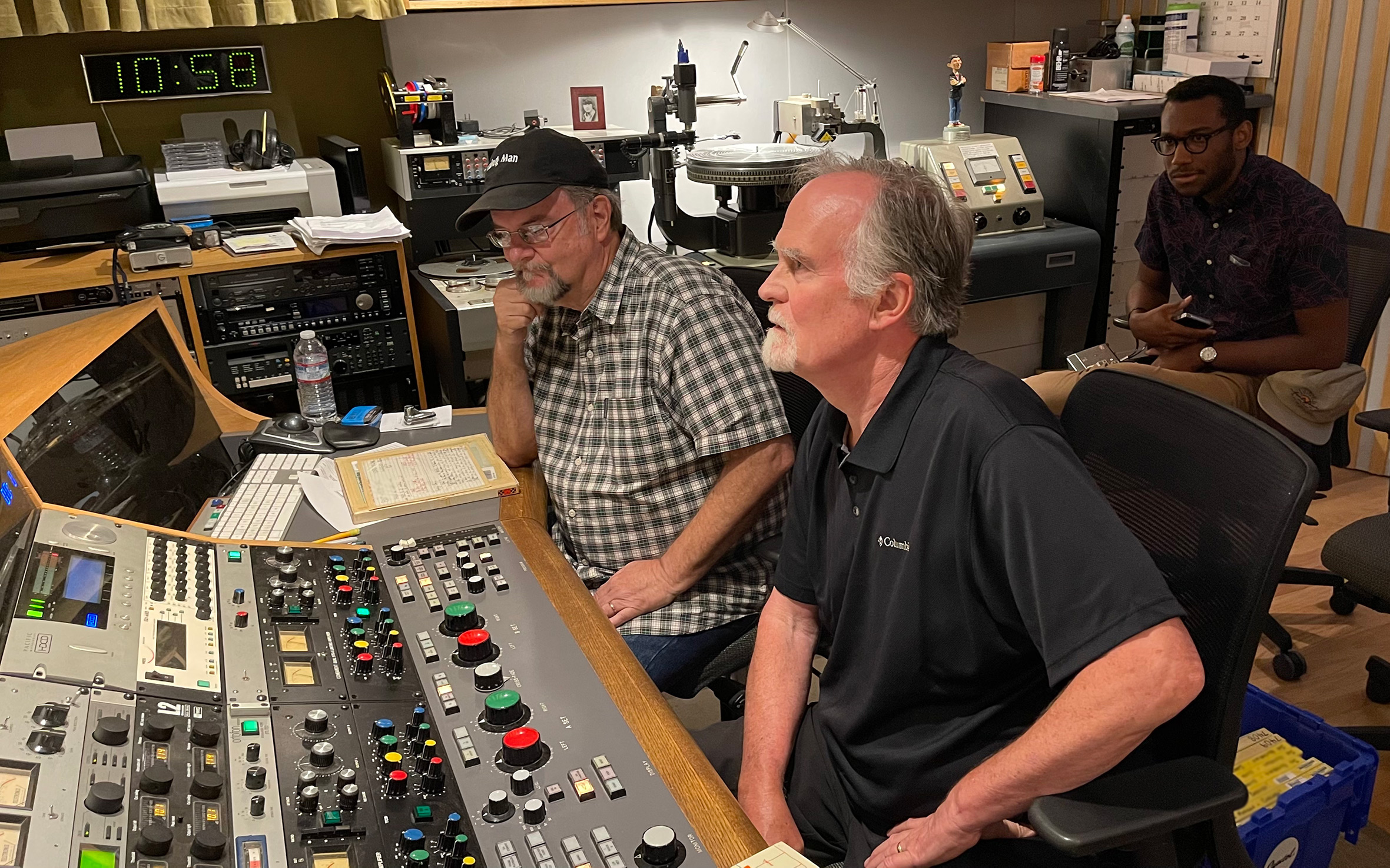 |
| Critical listening time with Kevin Gray (left), Joe Harley (center), and my copilot, Tarik Townsend (right) |
Kevin began quickly switching reels from mono to stereo when the song was over. Once he had the stereo reel cued up to the beginning of the first side and playing, it wasn’t long before Joe began singing its praises. He was clearly moving toward using the stereo tape for the reissue, and seemed to have been from the very start.
From where I was sitting, the mono tape sounded pretty darn good. A little bright, but the balance between the musicians was solid. I didn’t know what to make of the comparison between the mono tape and the stereo LP, but once they put the stereo tape on, my first thoughts were, ‘That’s pretty bright,’ and, ‘It sounds like nothing is on the right.’ In all fairness, I was sitting back further than them and I wasn’t close to the sweet spot. Still, the stereo presentation clearly offered a greater sense of width in space.
Prior to this, I noticed that Joe had been reading a 6-by-6 cardboard card that was inside the mono tape box, and a few minutes after the stereo tape had begun playing, Joe explained that someone had left a note about tape damage on the mono tape in a spot we hadn’t heard. That was all it took for him to confirm with Kevin that they were going to use the stereo tape for the Tone Poet reissue. Several minutes later, by the end of the first side, EQ moves and other adjustments contributed to what I felt was a smoother top end and a more even stereo spread (at one point Joe explained that the vinyl manufacturing process would naturally relax the top end a little more as well).
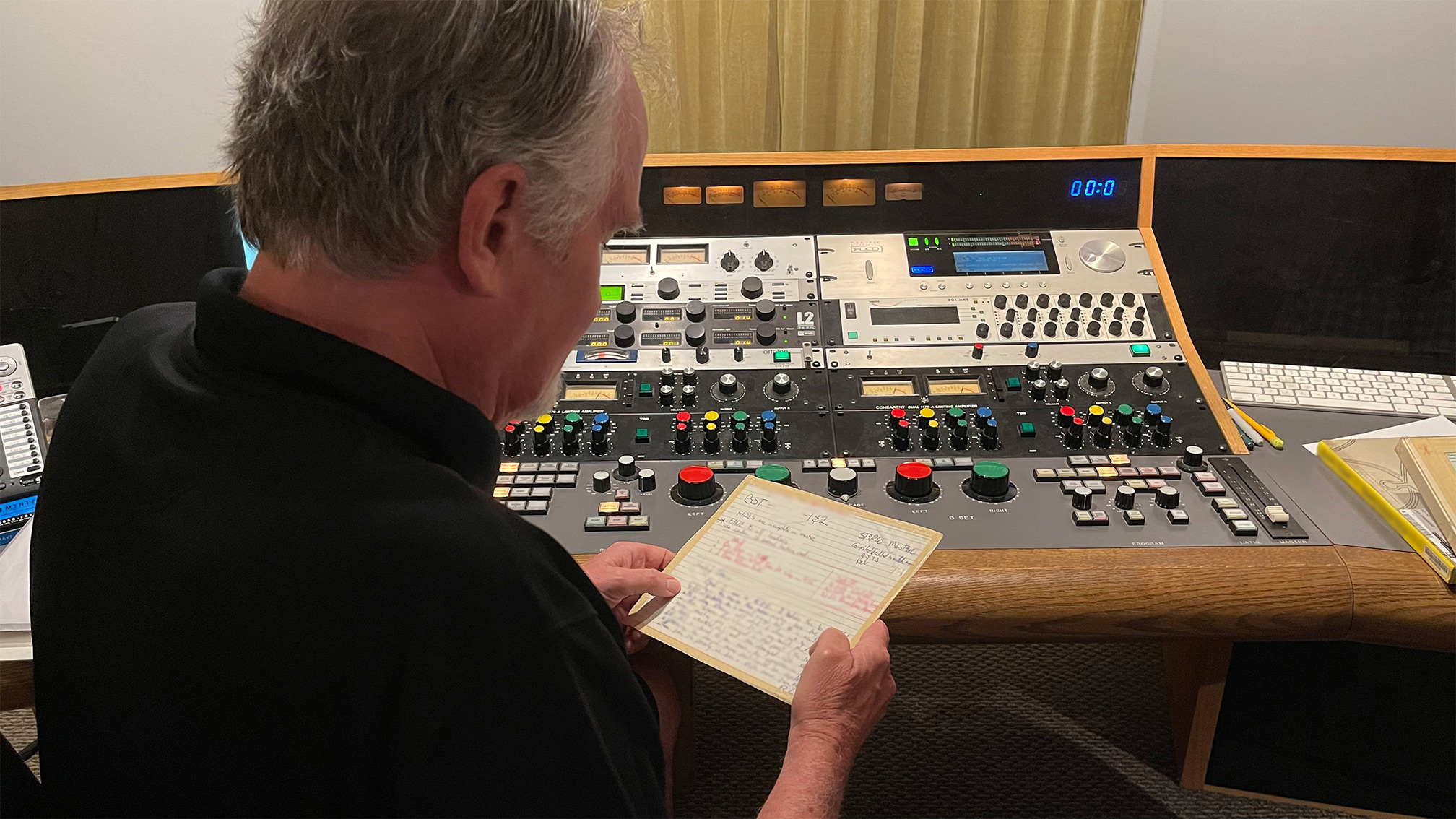 |
| Joe peering at notes left by a previous mastering engineer |
As we listened through the entire album on the stereo reels, we all chatted while Joe and Kevin multitasked. Joe would occasionally make a quick comment to Kevin about the volume levels between tracks, and Kevin kept busy taking his official session notes, which he explained serve the primary purpose of making it easier to go back and redo the mastering should any problems pop up between the lathe and the presses.
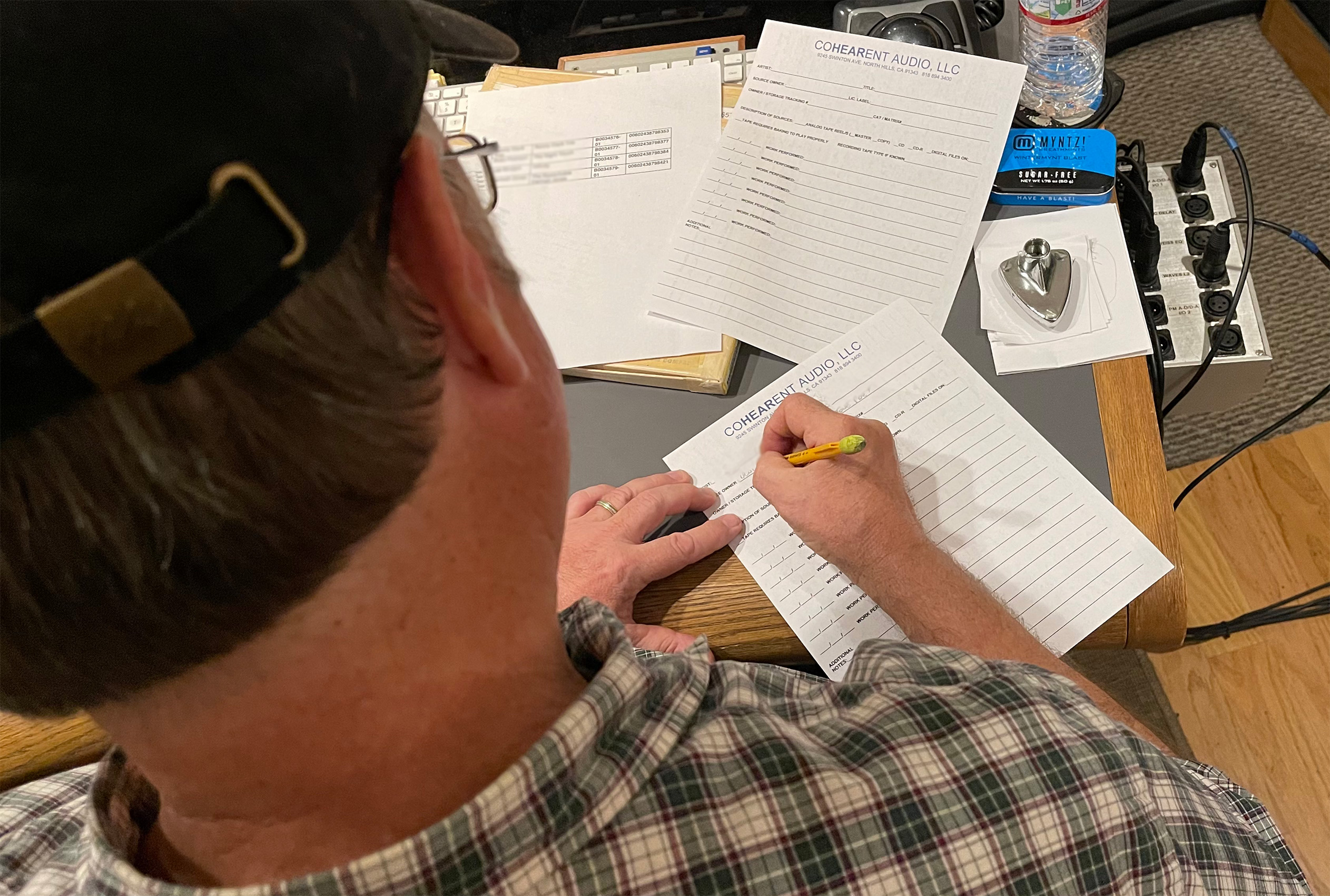 |
| Kevin taking session notes |
It was also at this time that I boldly asked Joe and Kevin if I might be able to move my chair up to the center of the console so I could sit at the sweet spot. They happily obliged, and when I did — again, I don’t like to overdramatize these things — it felt like I had stepped in to the Hackensack living room after standing outside the doorway. All the musicians quickly snapped into position, creating a lush stereo image with swirls of airy reverberation bouncing around (sitting between big speakers like Kevin’s, you can’t help but feel wrapped in sound). I had a stronger sense of the soundstage, and the music’s dynamics also became more apparent. Still a little bright to my taste but nonetheless a significant difference compared to when I was sitting further back.
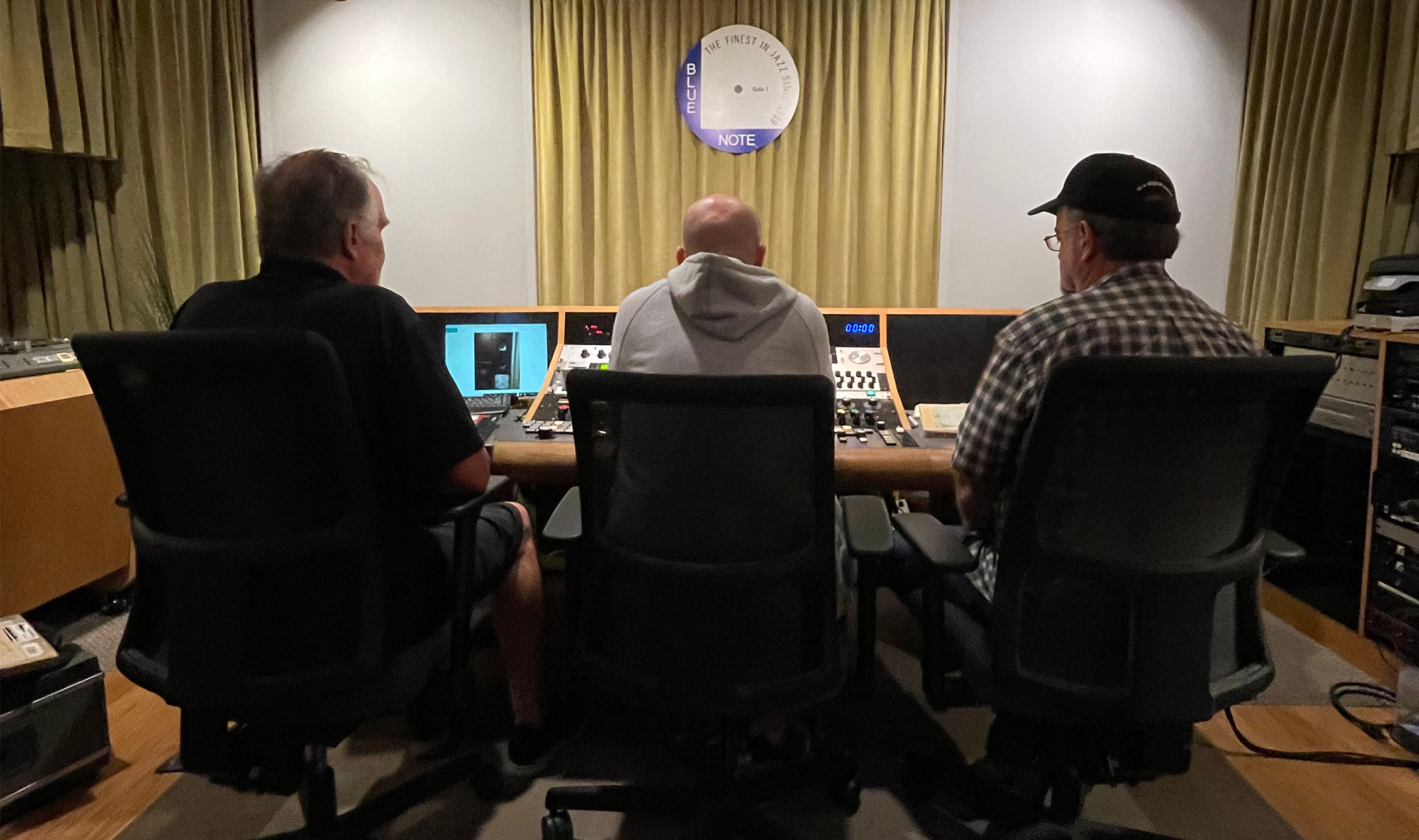 |
| Listening in the sweet spot (Kevin’s monitors are between the curtains, the white strips are the grills) |
From there, Kevin readied his Neumann lathe to create the lacquer disk masters that would be sent to Record Technology Incorporated, or RTI, for plating and pressing immediately after the session (Kevin hurried off to Fed Ex as soon as we were through with the afternoon session). Joe gave Kevin a gentle reminder: “Did you say you were gonna swap out the cutting stylus?” Before pressing play, Kevin also readied his digital recorder in order to make a high-resolution digital transfer for Blue Note as well. Once the tape was rolling and the lathe was cutting, Kevin was free to talk, but between takes he excused himself so he could implement small fadeouts at the end of each song (there was a note inside the tape box to do so).
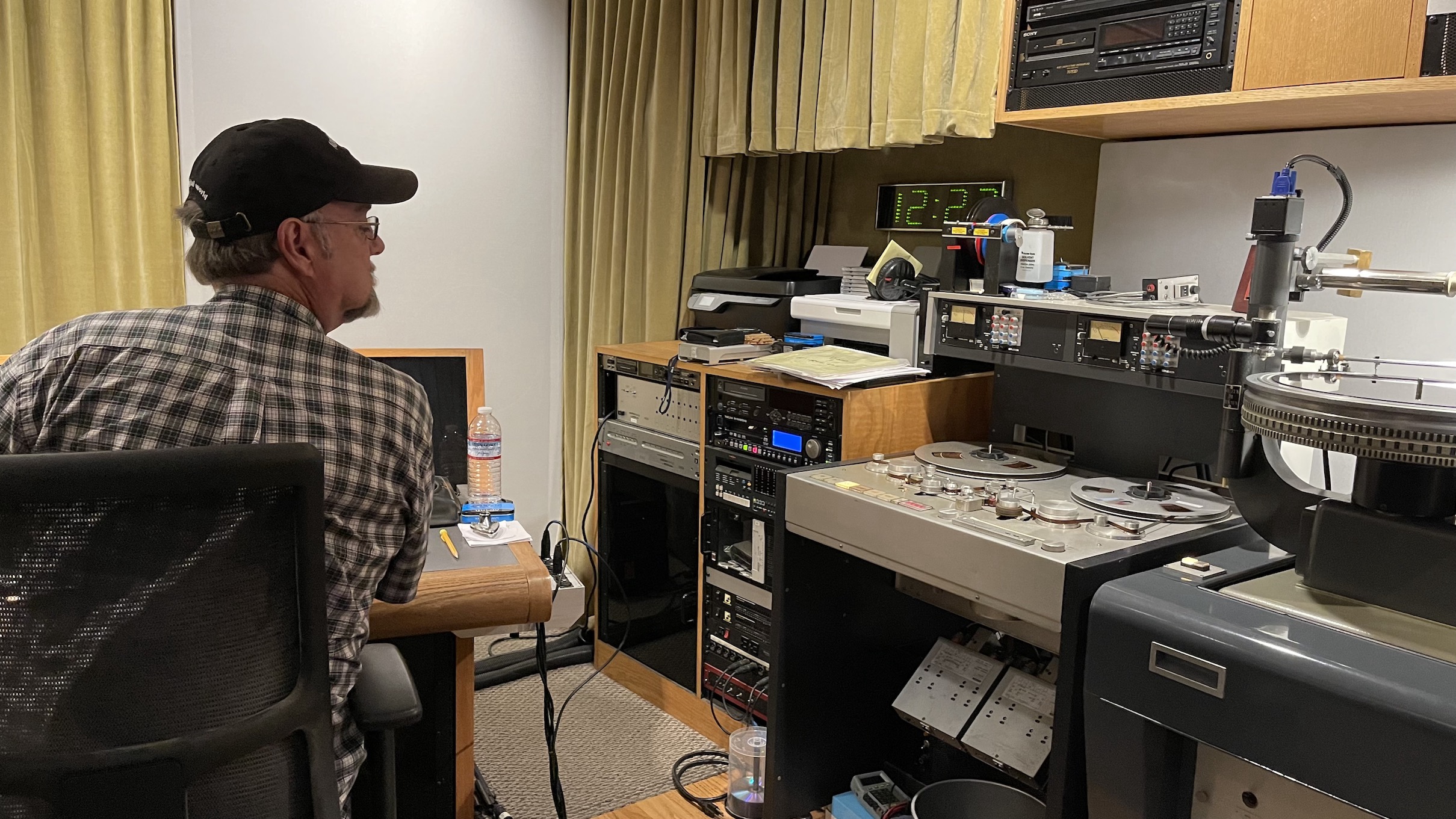 |
| Kevin getting ready to do a manual fadeout |
The Afternoon Session
After we went to lunch, we came back for the afternoon session. The album we would be working with was recorded in 1965 at Van Gelder’s Englewood Cliffs studio. It featured a bigger band and presented a marked difference in sonics. The routine was more or less similar to the morning session, though there was only a stereo tape to be used this time, so no fussing over mono and stereo. After Gray and Harley got a good sonic balance, I once again asked to pull my chair up. Though I had never heard this album before, I was familiar with other work the trumpeter and drummer did for Blue Note from that time period. Here, I heard a more significant difference compared to what I was used to hearing. The sweet spot revealed a very nice balance between all the instruments, and the drummer sounded especially dynamic and realistic compared to other records I had heard him on.
Kevin’s system also seemed to help make the musicians sound less separate than what I was used to. One of my pet peeves about Rudy Van Gelder’s standard stereo spread in the 1960s is that the left channel often feels empty when the saxophonist is soloing on the right alongside the drummer. On Kevin’s system though, the microphone bleed and overall ambience of Van Gelder Studio was more consistently apparent, even in the trumpeter’s absence, which led to both greater cohesiveness within Rudy Van Gelder’s “primitive” stereo mix as well as a stronger sense of spatial balance throughout the performance.
I often listen to music on headphones (while I’m doing other things), where stereo separation is typically exaggerated. But regardless of whether the master tape, Kevin’s rig, or both played a significant role in creating that beautiful spatial balance I heard, I walked away from Cohearent Audio that day having learned a valuable lesson: I have done very little focused listening on good speakers in the sweet spot over the years, and above all I think my experience served as a welcome reminder of how rewarding that type of listening can be.
Once our work had been done, we all began saying our goodbyes. Moments later, just as Joe was opening the door to leave the studio, he paused as if he had forgotten something. Quickly turning to me, in a quiet voice he asked, “So are you going to change the name of your site to Deep Groove Stereo now?”
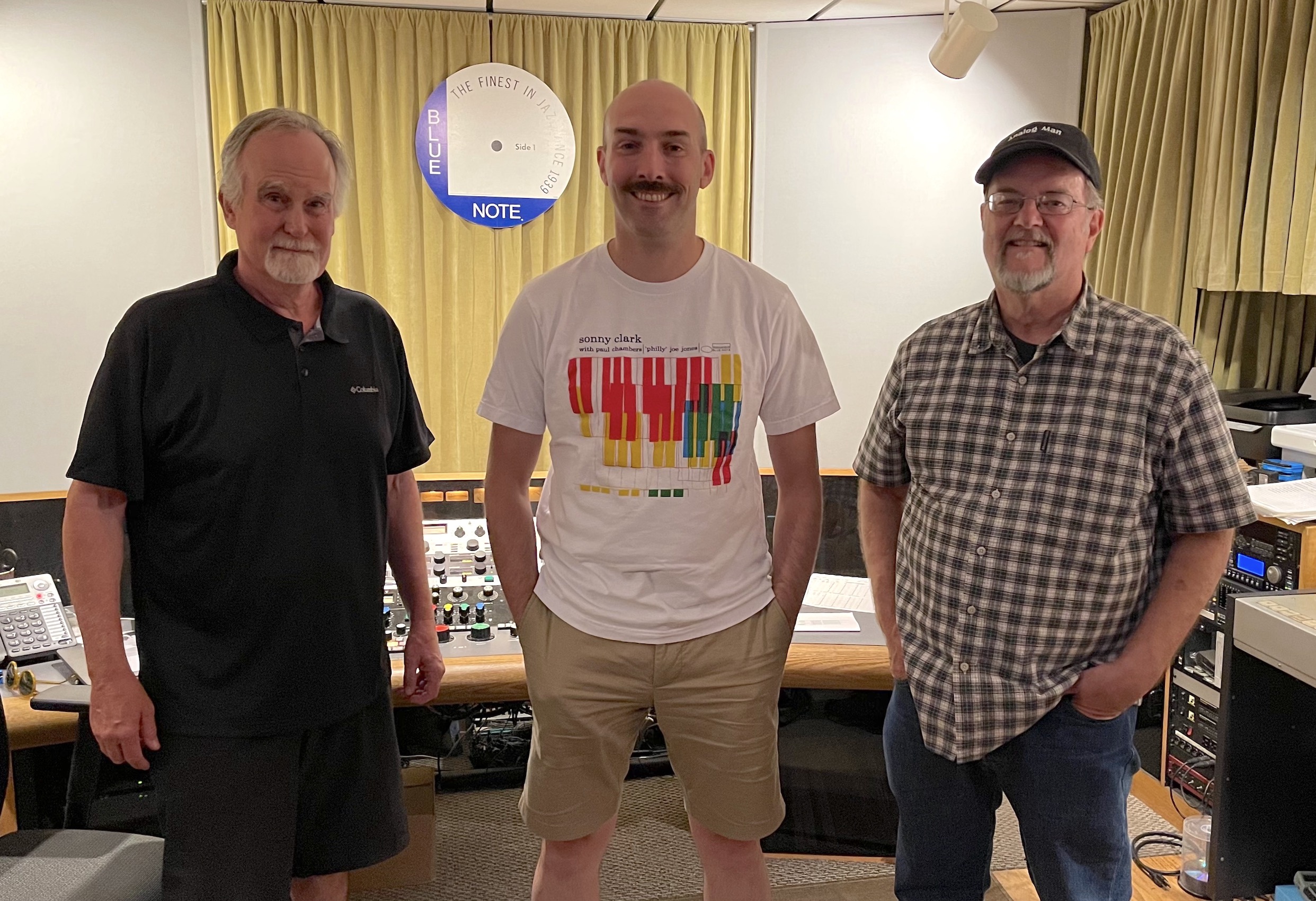 |
| (L to R) Joe, me, and Kevin |


Ladies and gentlemen, after several unexpected weeks immersing myself in images and history, I present to you the Deep Groove Mono Classic Jazz Album Art Extravaganza! This design love fest has been broken into two parts with links below. The first is an essay on Modern American design and its origins, and the second is an extensive gallery that includes commentary on each cover from yours truly. This project started small and turned into something much bigger, I am exhausted, and I hope you don’t mind if I let the content do the rest of the talking!
LINK: Jazz Album Art and the Origins of Modern American Graphic Design
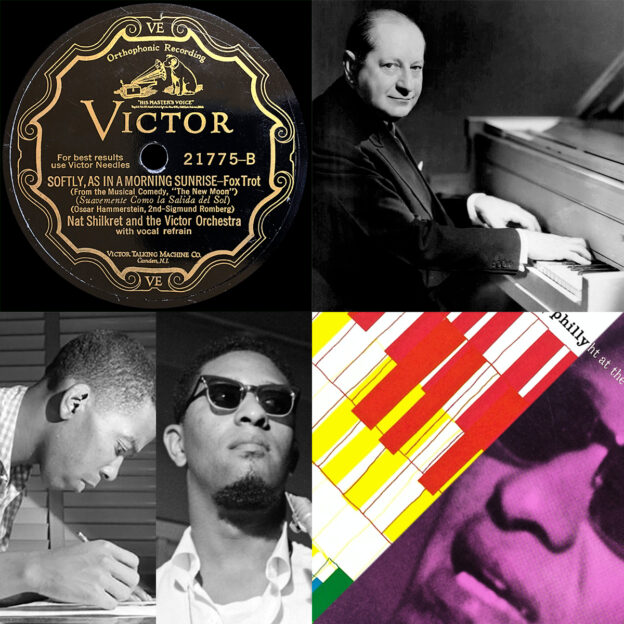
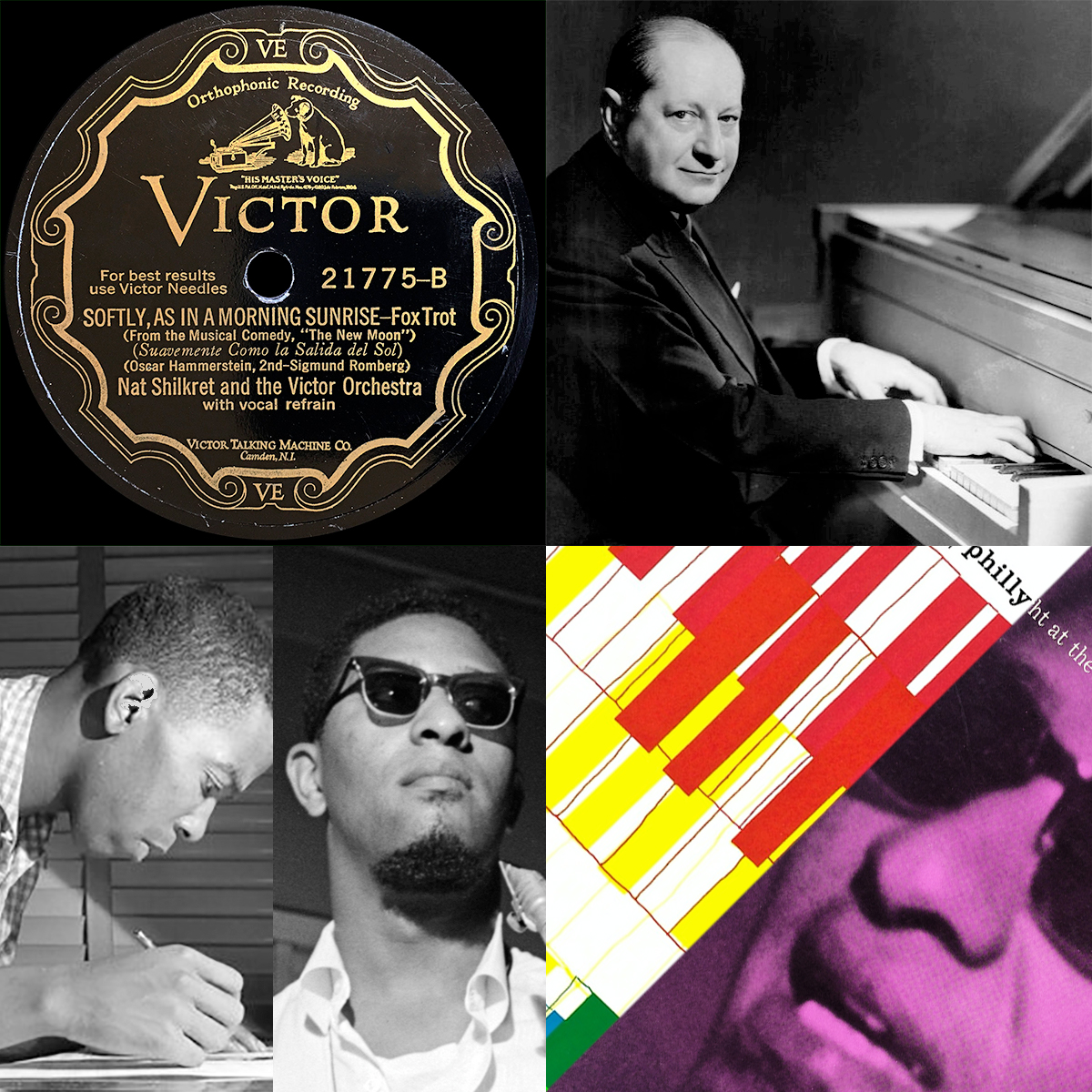
Victor Records Cat. No. 21775 (Side B) | 1929
Blue Note Records Cat. No. 1581 | 1957
Blue Note Records Cat. No. 1579 | 1957
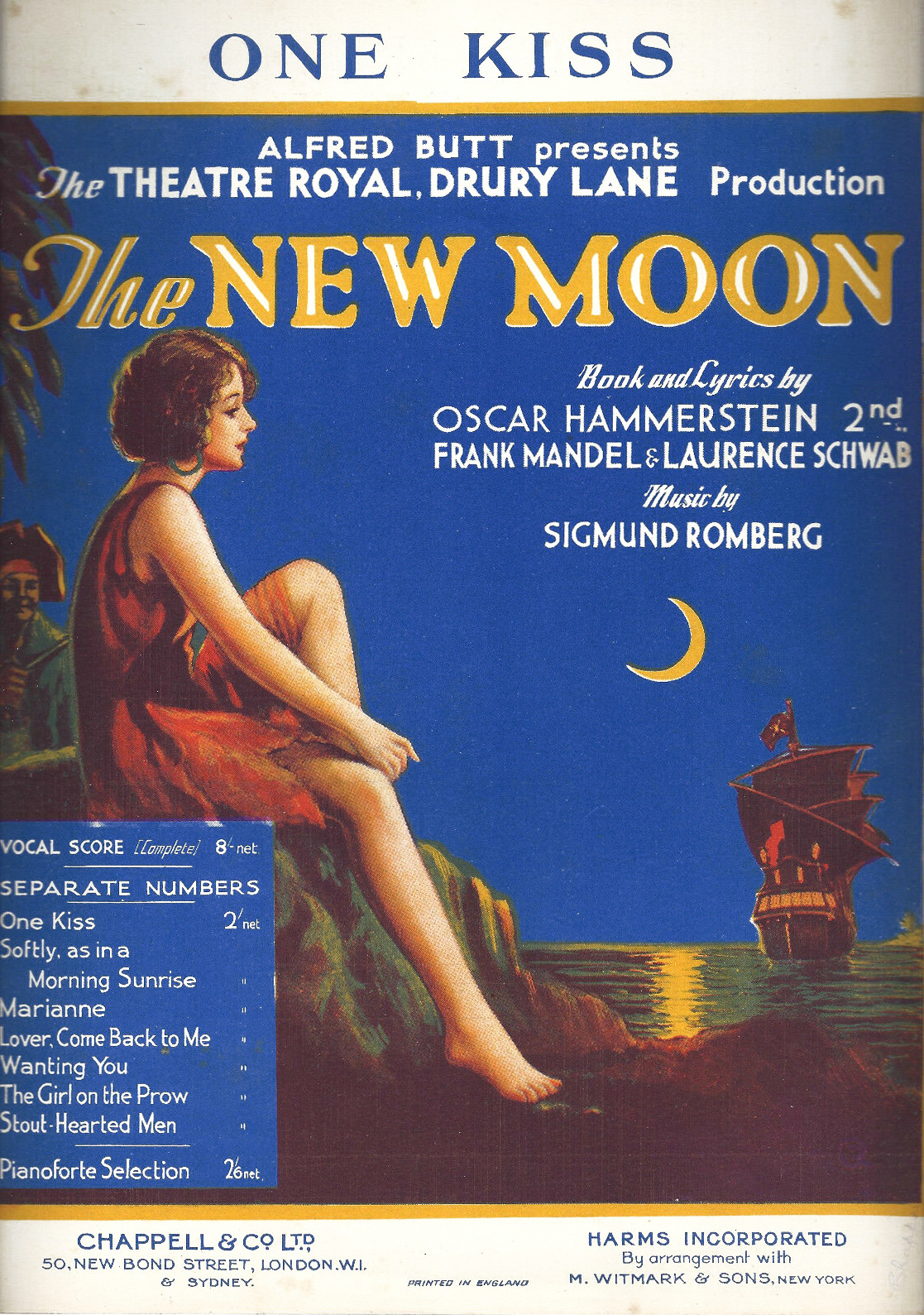 |
| Playbill for The New Moon |
My personal history with this song is no different than most vocal jazz standards in that I had heard numerous instrumental renditions before ever knowing it had lyrics. I have always been a fan of popular music so the act of discovering the lyrics to one of my favorite standards has proven both a joy and a revelation. Several years ago, this passion for vocal versions led me to research the origins of my favorite hard bop tunes (it’s also a big reason why this series exists). These efforts culminated in two big Spotify playlists that I have since shared here on the blog.
Later on when I started collecting 78s, I had the idea to hunt down some of these older versions. There are usually numerous options to choose from for any given song, and while it’s possible that others might better suit my taste in this case, Nat Shilkret’s recording of “Softly” for Victor represents the first studio performance. It embodies the way most of the music-buying public would have first heard it in 1929 and thus brings along with it a unique authenticity.
Recordings like this are a bit paradoxical to me. On one hand, I value them because they enhance my appreciation of the instrumental versions I originally came to love. On the other hand, these Vaudevillian, string-drenched predecessors often sound undeniably square. In Ken Burns’ Jazz doc, the late, great critic Stanley Crouch gave historical context to the revolution Louis Armstrong created in singing when Crouch humorously demonstrated the difference between Satch’s fresh, entertaining lyricism and the insufferably corny vocal stylings that were commonplace in the early ‘20s. By 1929 that revolution was nearing completion, and to the dismay of a new generation of hep cats, bandleaders like Shilkret and the labels employing them desperately clung to a musical tradition that was becoming more and more obsolete by the minute.
 |
| Nat Shilkret and the very un-diverse Victor Orchestra |
Although The New Moon had lasting popularity as an operetta both on Broadway and the silver screen, “Softly” remained virtually untouched by the recording industry through the ‘30s, ‘40s, and into the early 1950s, save a swinging 1938 Artie Shaw version. It really wasn’t until the Modern Jazz Quartet picked it up and dusted it off in 1955 for a recording session with Prestige Records that the song was first brought to the attention of the jazz community. Two years later, Sonny Clark and Sonny Rollins gave the oldie their own respective readings for Blue Note Records, and countless other musicians would carry on the new tradition for decades to come.
The first version I ever heard was Rollins’, a cool performance appearing on the mega-classic live album A Night at the Village Vanguard. Elvin Jones picks up the brushes for this one, reduces the temperature of things to a simmer, and the trio proceeds to find a natural groove while trading short solos during an extended round of cooperative improvisation. Rollins slyly maneuvers the changes, darting then tip-toeing from one chord to the next like Peter Sellers playing a detective in hot pursuit of a suspect.
Sooner than later I discovered Blue Note 1579, Sonny Clark Trio, and when “Softly” played for the first time, I quickly recognized its highly memorable melody. Clark’s reading is the aural equivalent of gentle, natural light being emitted by an overcast day’s cloudy sky. From an engineering standpoint, a trio is undoubtedly easier to record than a larger arrangement like a quintet, and accordingly the sound of this group has plenty of room to reverberate in engineer Rudy Van Gelder’s home studio. Van Gelder’s piano treatment is typically much darker and perhaps even sounds a bit “squashed” at times. But here he takes the headroom afforded by this small band and gives the piano an extra dose of bounce that, though unusual for Van Gelder, is a very welcome change of pace. The tonal coloring is not too bright, not too dark, and the added dynamics make it easy for us to hear just how expressive Clark could be when his fingers struck the keys.
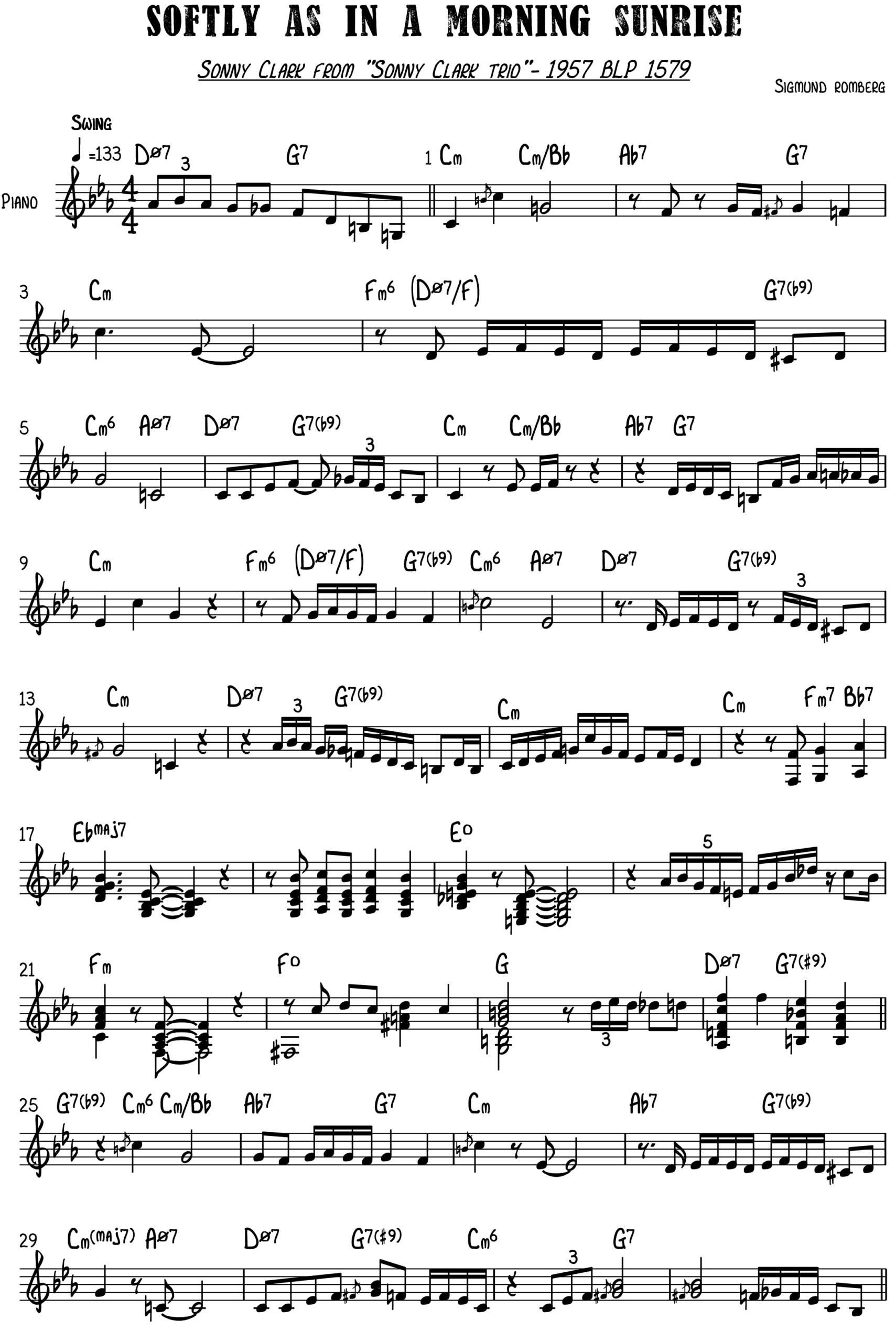
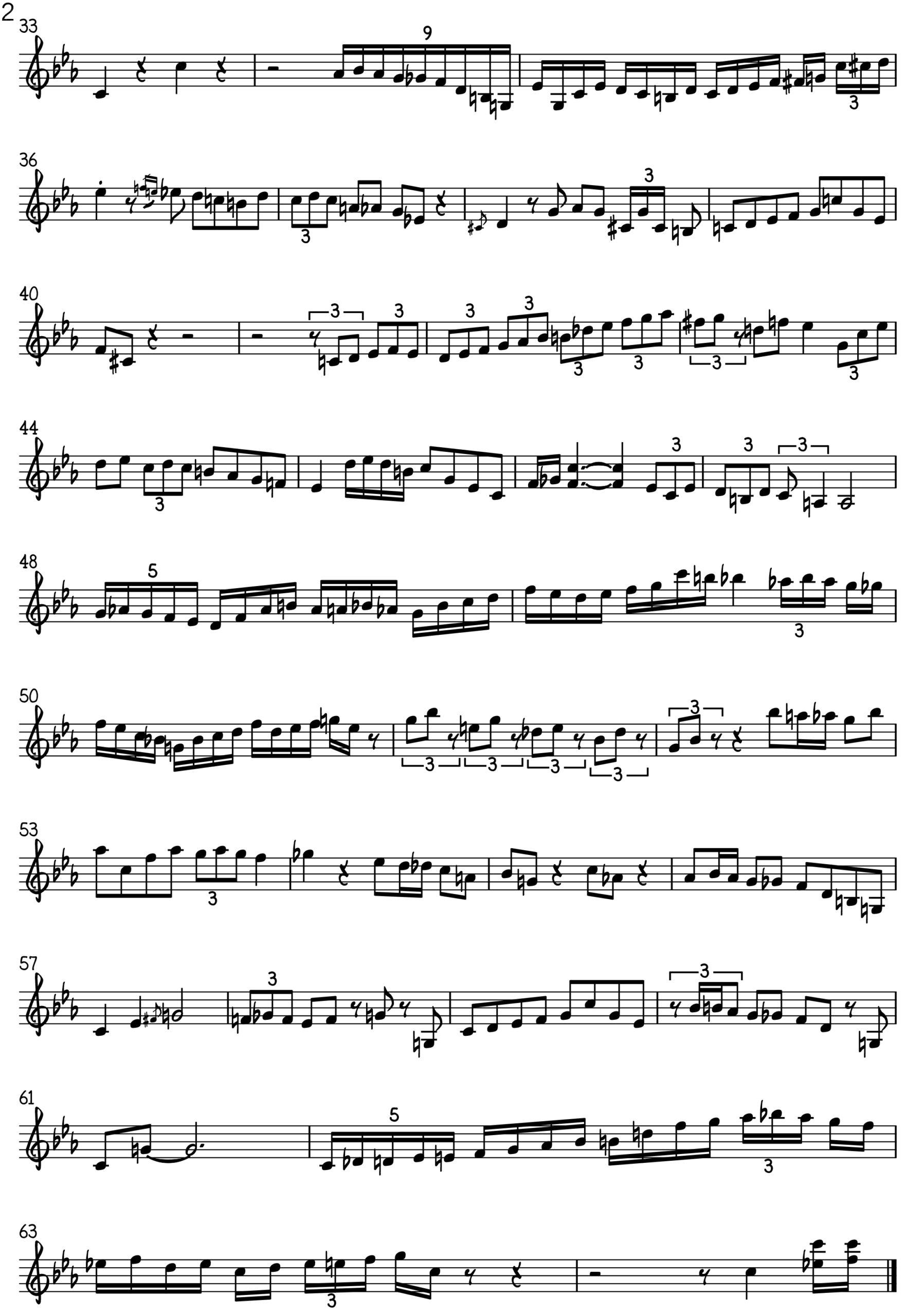
Simon Whiteside, co-host of the entertaining, educational jazz podcast 2-5-1, has provided Deep Groove Mono with his transcription of the intro and first chorus of “Softly” as played by Sonny Clark on Sonny Clark Trio. I have been a devout listener of Simon’s cast and it is highly recommended. There is not enough informed analysis in jazz record collecting and I always jump at the opportunity to educate myself more on this great art form. Have fun following along!
Side 1:
Side 2:
Side 1 recorded June 22, 1953 at WOR Studios, New York City
Side 2 recorded September 24, 1954 at Van Gelder Studio, Hackensack, New Jersey
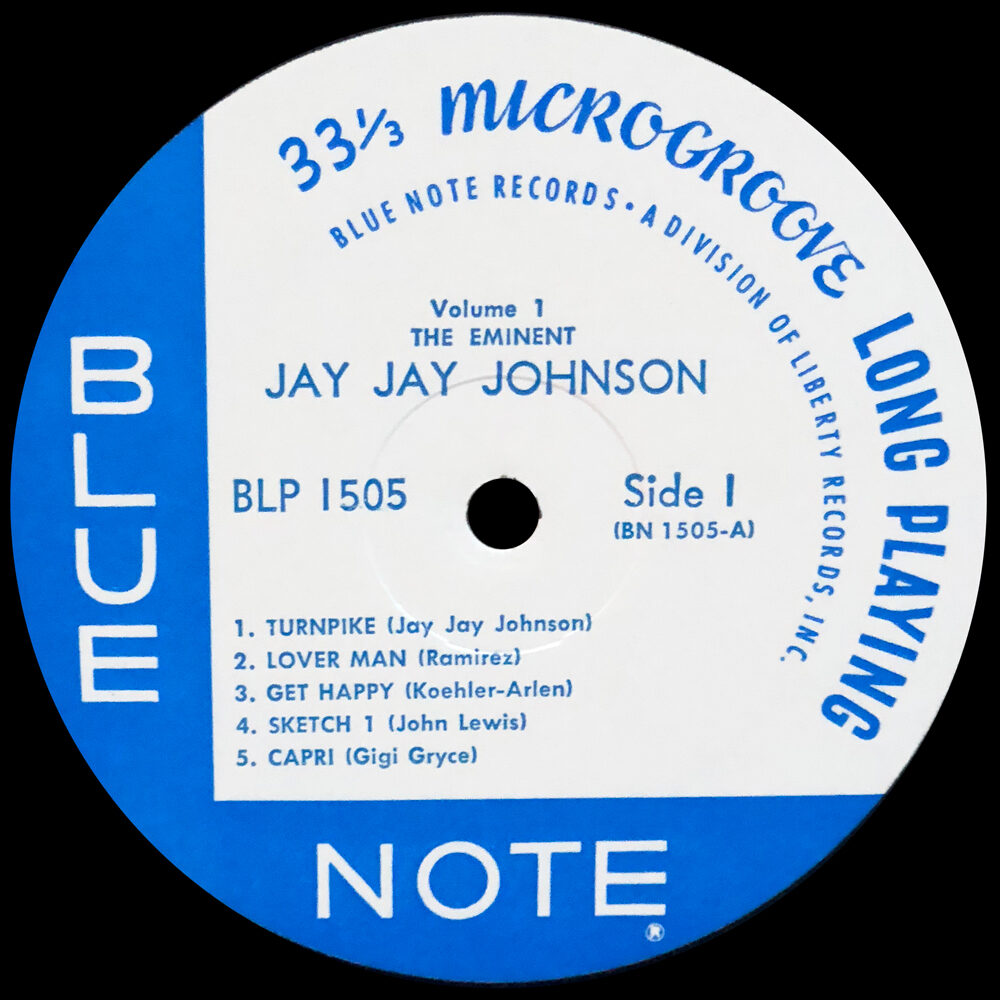
Originally released in 10″ format (BLP 5028/5057) in 1953/1954 (BLP 1505 released January 1956)
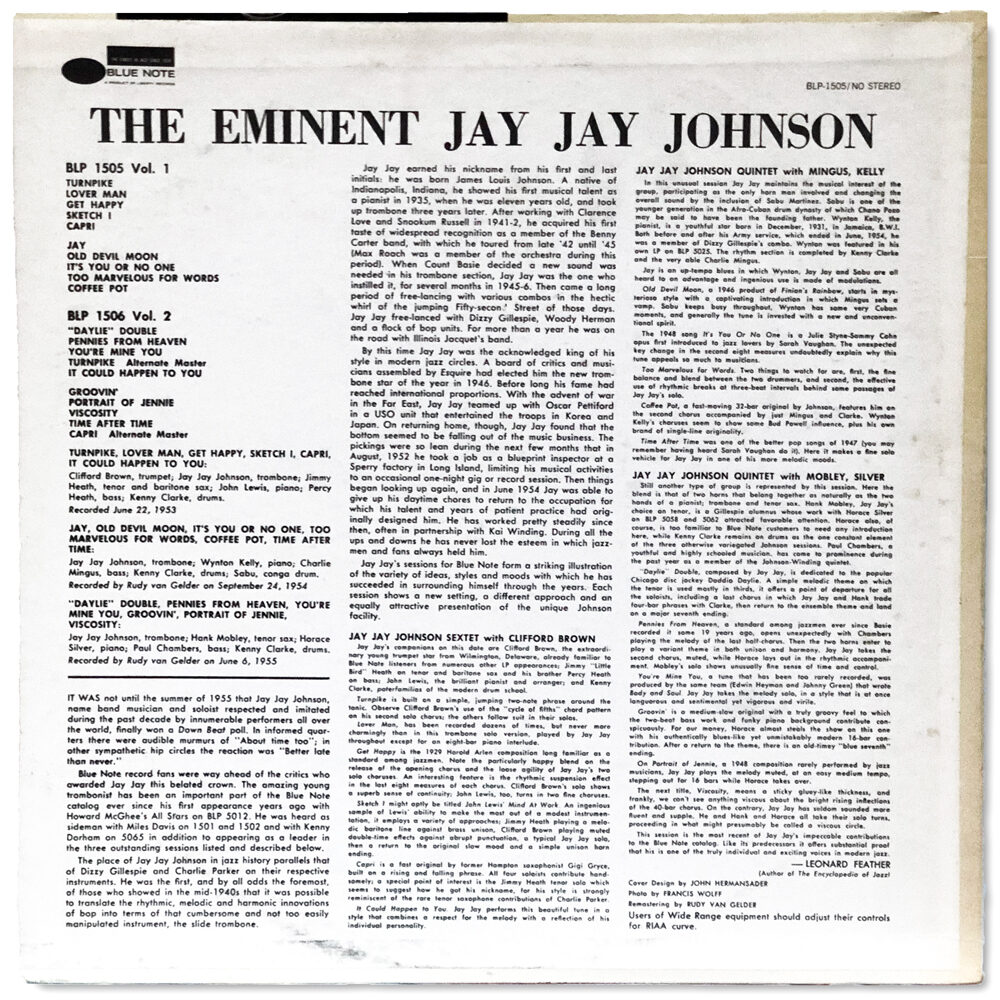
As with many of these compilations of earlier Blue Note material, there are several different configurations of musicians on each track of this album. But, unlike many of those compilations of 10” and 78 RPM material, this collection of sides contains some of the finest musicians in early bebop. Led by arguably the greatest trombonist in modern jazz, J.J. Johnson, the lineups play fast and furious on the first side with the talismanic Clifford Brown trading very quick riffs with Johnson and Jimmy Heath on the opening track, “Turnpike”. If the song was named after fast traffic on a New Jersey toll road, it is very appropriate. The three horns pound out a hard-driving, repeating riff to open the song. Per usual, Clifford Brown and Jimmy Heath continue the furious pace as they often do on most of the recordings featuring them at the time.
But what is most impressive about fast-paced bop numbers like “Turnpike” that feature a trombonist or tubist is each player’s ability to keep pace with the other soloists. During a short period of time in junior high school, I chose trombone as my first instrument. In those six months, the only thing I learned on the trombone was that it was extremely difficult to play anything fast. My young muscles struggled to play even quarter notes fluidly. I simply could not move the slide into the different positions fast enough to be in key. Having to do that all while breathing in sync with finger motions is very difficult. Knowing what it’s like to move that slide into the perfect position and then hearing J.J. Johnson fly through a solo, playing notes in rapid fire succession with the ease of a trumpeter or saxophonist impresses me every time I play this LP.
On the next song, the same band plays the standard “Lover Man”. Like many standards, it is a classic that has seen very creative interpretation by several musicians. But what sets this reading apart is the bottom end sound of Johnson’s trombone. The other trombonist that I (and frankly, most other collectors) revere most is Curtis Fuller. For me, Fuller always has a somber tone to his trombone sound even in songs such as the classic “Blue Train”, which is a very uptempo song. But Johnson’s tone, though low like Fuller’s, has a very swinging yet casual kind of sound. It seems to dare the audience to sway but not quite dance to the music. Also, Johnson seemed to embrace the wide use of trombones in the new and exciting latin salsa music that was emerging from New York at the time; his music can sometimes have a latin tinge that adds a unique sound to the typical bebop track.
The latin influence is most present on the song that I most enjoy on this LP. Johnson turns the Broadway standard “Old Devil Moon” into a cool, relaxing latin jam. Johnson plays his trombone with a kind of warble, like a guitarist with a wah-wah pedal for a special effect. As he plays the familiar riff, time is kept by one of the most influential drummer of the early days of bebop, Kenny Clarke. As worthy as he is of the praise he receives, for me the most exciting percussionist of the whole compilation is the conguero, Sabu Martinez. I’ve always been a fan of the conga on classic jazz sessions, whether it’s Ray Barretto on such influential recordings as Blues Walk, Manteca, and Midnight Blue, or Martinez, who is very lively on this LP. It is a rare treat to hear Sabu (who had a short life and career due to drug abuse), and he is the perfect fit to a latinized song such as this one.
Strangely enough, Charles Mingus, the biggest name on the session and one of the greatest composers, bassists, and personalities in the history of music, fails to make any kind of impression on me here. Mingus always seemed, to me, to enjoy playing and writing his own material most. Perhaps he felt restrained by playing music composed by others, and in this case maybe he had grown tired of exploring these standards. It is also documented that Mingus did not like the way that Blue Note’s house engineer, Rudy Van Gelder, recorded his sound. I notice the bass of Percy Heath far more on the record than I do Mingus.
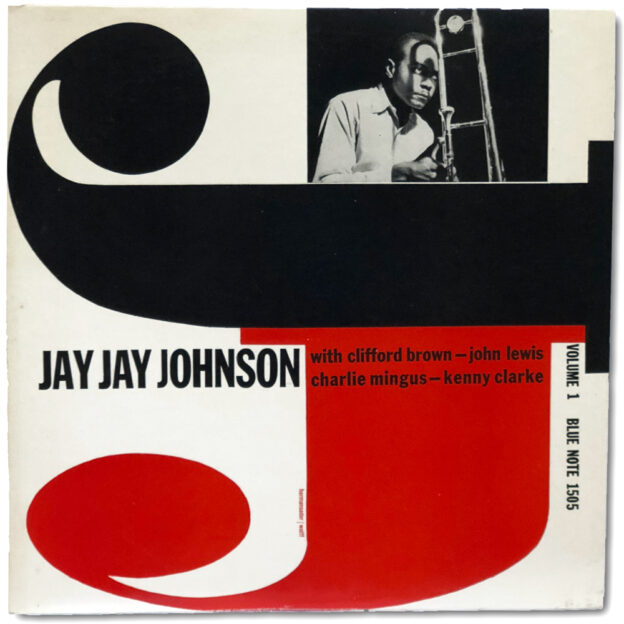
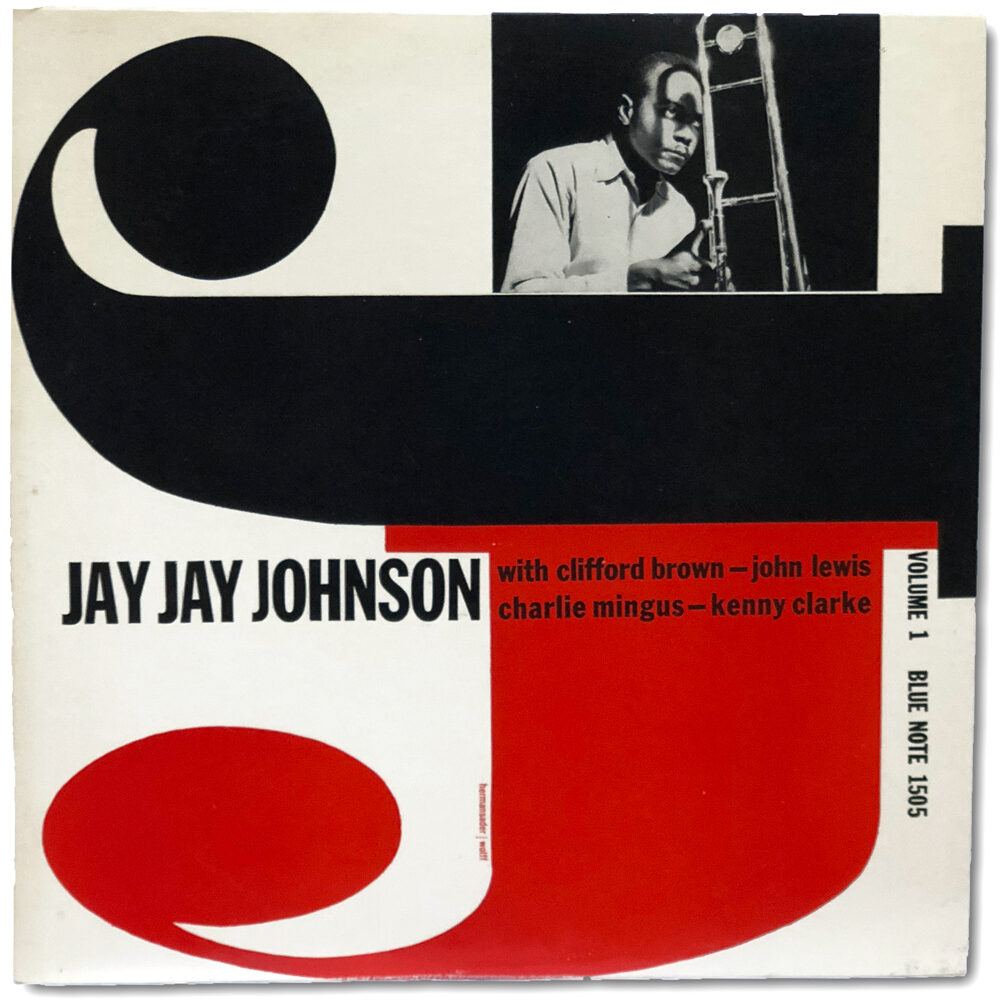
Lastly and aside from the phenomenal music laid to tape here, the thing I enjoy most about this LP is probably the cover. The color scheme of the bright red, black, and white pops out at one’s eyes, and the neatly placed photo of J.J., looking serious and a bit menacing, is fitting. It is a perfect example of all of the things that Blue Note covers were known for at the time: an excellent photograph juxtaposed with some of the most clever, aesthetically pleasing typography of the day. The cleanliness of this record, the jacket, and most importantly, the music makes me feel fortunate to have it in my collection.
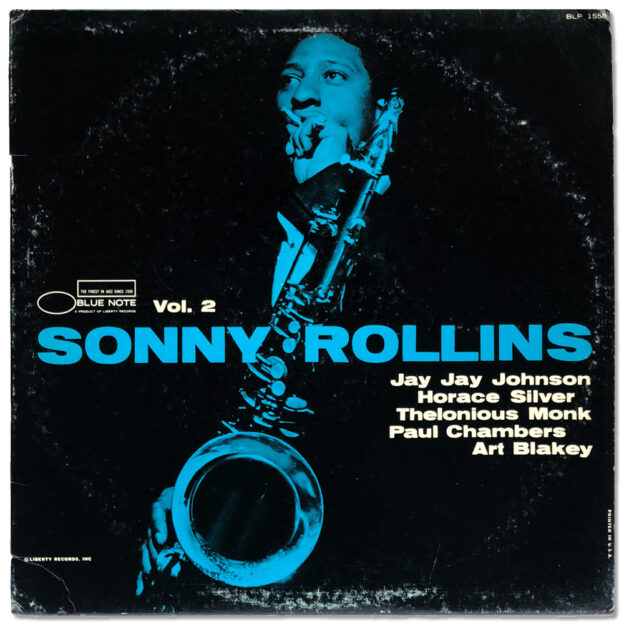
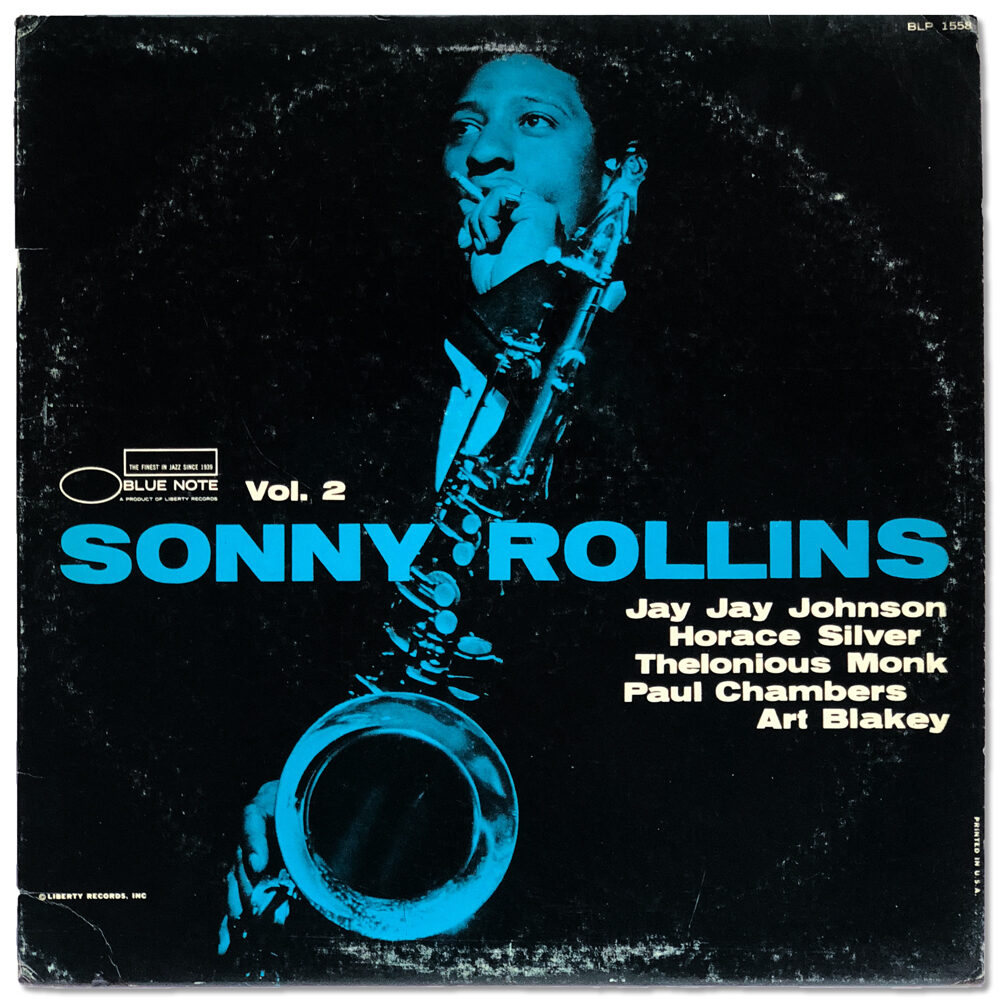
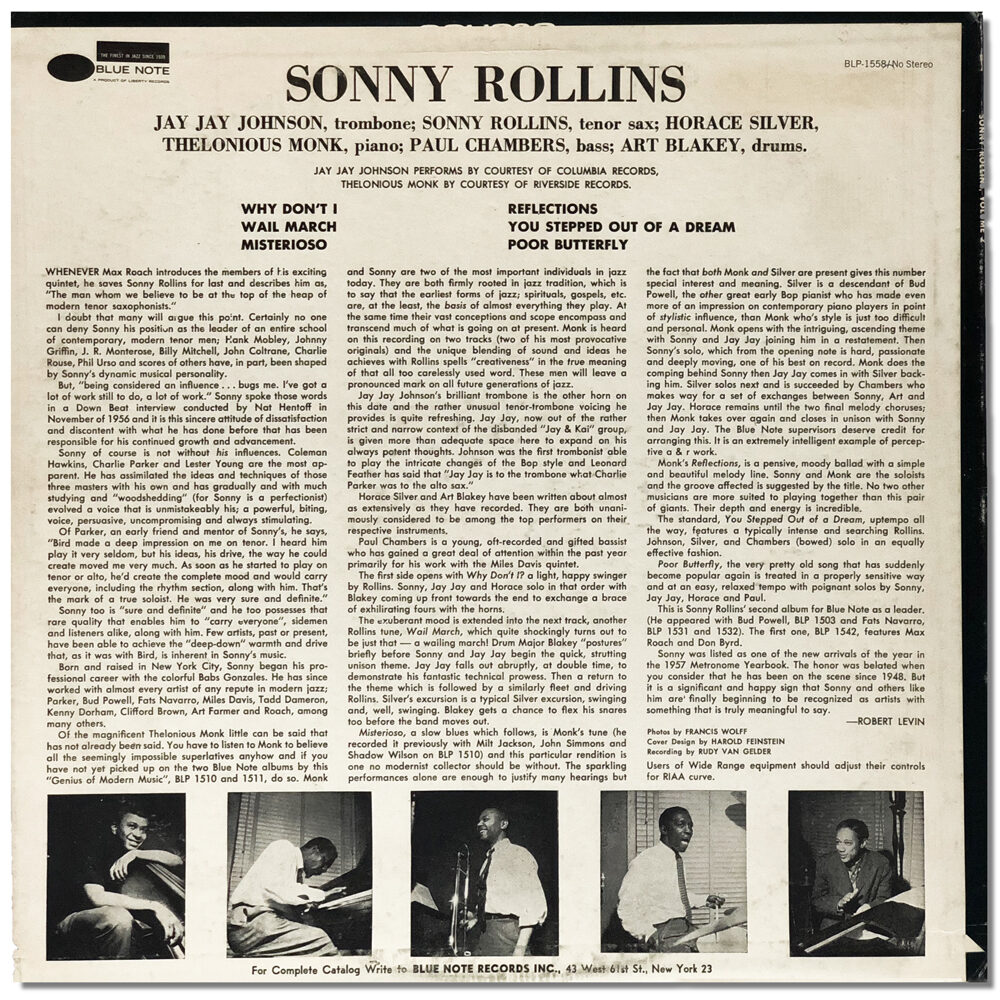
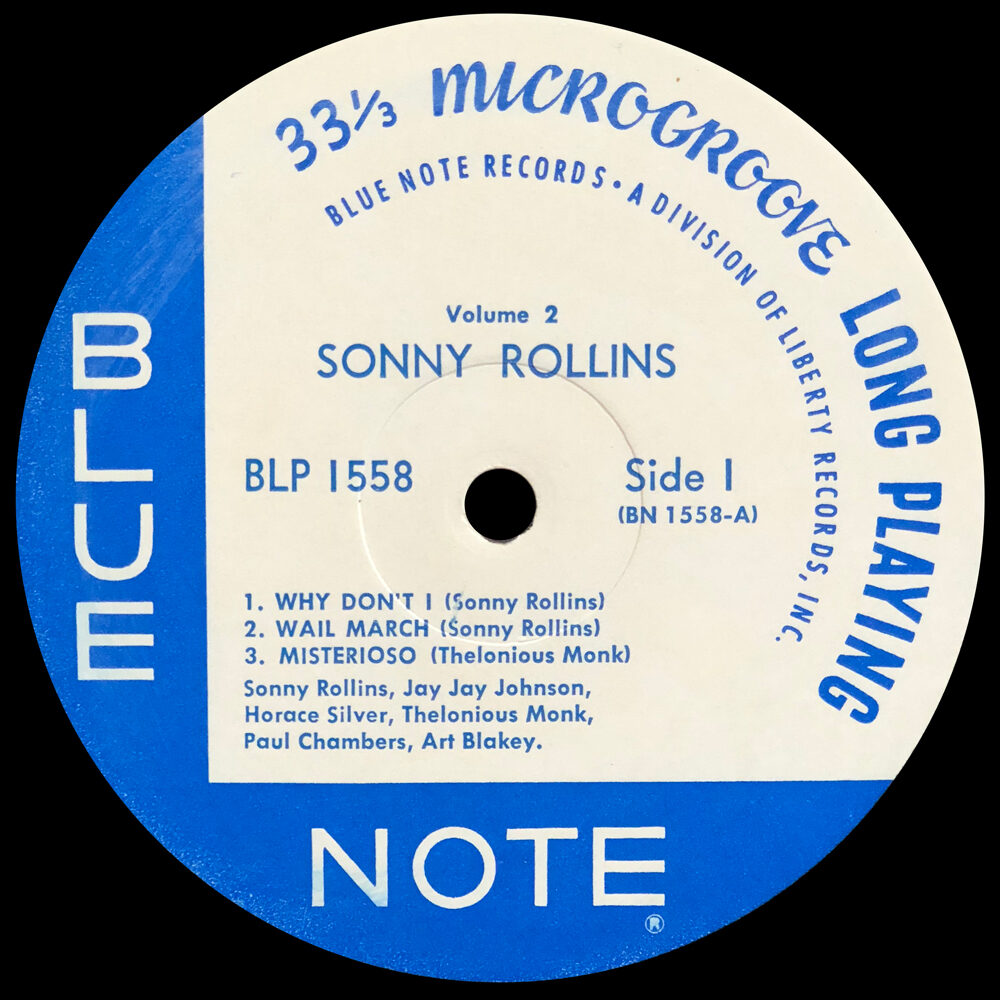
Recorded April 14, 1957 at Van Gelder Studio, Hackensack, New Jersey
Originally released in September 1957
“Wail March” (Rollins)
“Misterioso” (Monk)
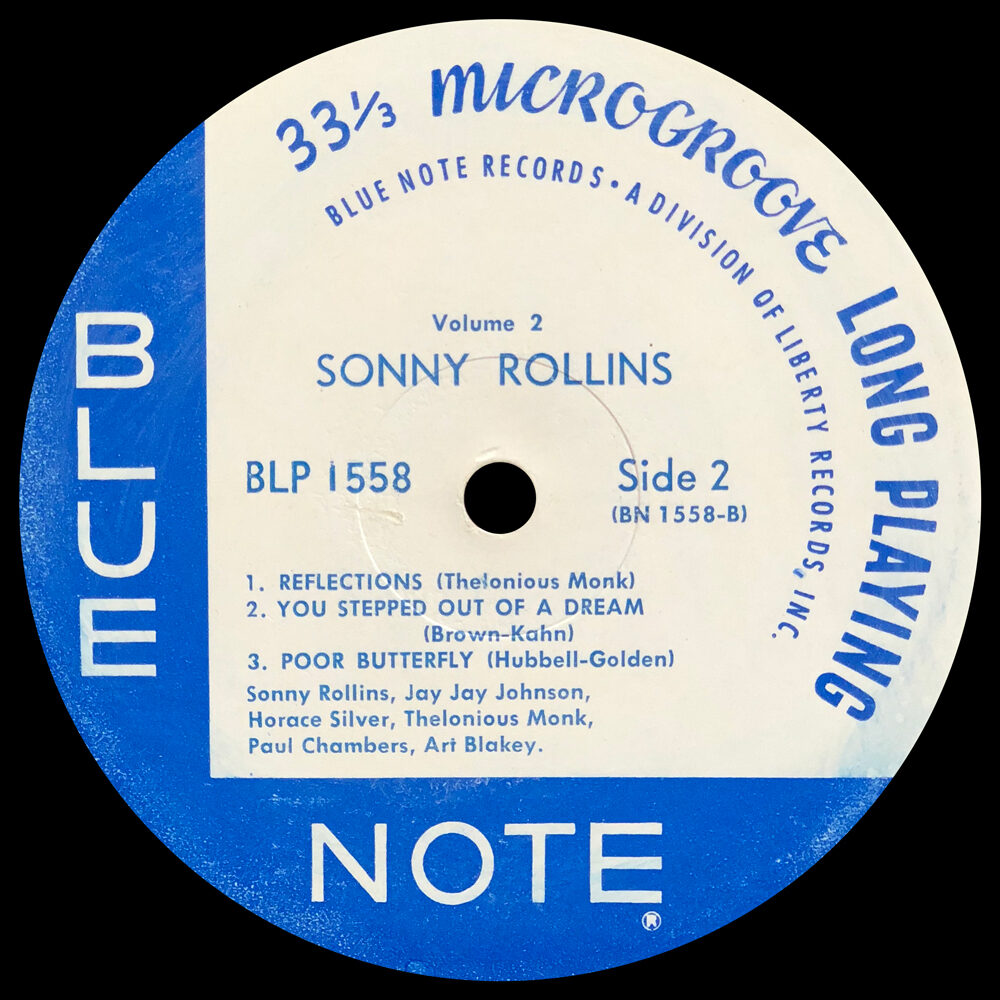
As a jazz lover and record collector, I am very fortunate to live near New York and its dusty record stores, as well as fellow collectors like the namesake of this blog, Mr. Mono himself. If we can’t hunt for LPs together in person, he will sometimes send me pictures of any records I might be interested in from the stores in the city — and sometimes be so kind as to snag some for me to be mailed later. A few months ago, he was in a store that has a very serious reputation for jazz sales when he sent me a few shots of some early pressing Blue Notes at pretty fair prices. One of the pics was of a glossy early pressing of Sonny Rollins Volume 2. The copy was not the first pressing but still had all the things that make collectors warm inside: a West 63rd Street label, Rudy Van Gelder’s initials in the dead wax, and the famous cursive ‘P’ indicative of a copy made in the company’s heyday. Best of all, the dealer did not want an arm and a leg for the copy, and it was payday Friday.
I was very tempted. Sonny Rollins is hands down my favorite artist in the entire genre, and in my quest to own the best possible copies of his LPs that I can afford, Volume 2 is a record I did not have an original of. I did own a copy of this album on Capitol and it had never made an impression on me. Despite its critical acclaim and my liking every artist on the date, it had never caused me to want to listen to it frequently. I do not attribute this to the record I had; the purpose of this post is not to downplay or argue the fidelity of other copies of an LP, but my Capitol copy certainly didn’t do anything to elevate the music of this album higher than A Night at the Village Vanguard or Way Out West, my two favorite Sonny records. So I texted Rich back a dismissive reply: “Nah, forget it — it’s never been my favorite Rollins LP,” to which he replied, “Mine either.” This made me feel two ways: pleased because a fellow collector had validated my opinion, but upset that one of the most celebrated records by my favorite musician was somehow dismissed by two knowledgeable jazz lovers.
Fast forward to a few weeks ago. I had just run into a nice string of luck with my favorite saxophonist on Blue Note. Within a two-week span, I had lucked out on copies of Volume One and the LP that has eluded me most in recent years, Newk’s Time. A few days after buying Newk’s, I was browsing eBay and a seller was selling Volume 2 as a Buy It Now. I usually avoid the Buy It Now sellers for rare records. However, this was a Liberty copy with some wear on the cover, and it was a later cover with the Division of Liberty lettering on the cover. In other words, this copy was not one that a high stakes collector or dealer would value.
However, as a listener of Sonny Rollins, it had some very good things going for it. For one, it was a monaural copy, which I’m not terribly picky over, except for these very early Blue Note recordings where the focus, at least for sales purposes and sound quality, was mono over the primitive stereo of the day. Secondly, it had the initials of Rudy Van Gelder in the dead wax which, without going into too many details, usually results in a high quality sound regardless of year of issue. Lastly, this thing was cheap! Relatively so, but at less than half the price of the copy that Mr. Mono showed me. I felt that if I was ever going to enjoy this record in its somewhat original form, this was going to be the most affordable way to do so.
After a busy few days of package receiving because of the other Rollins LPs I had just purchased, Volume 2 arrived almost as if it matched my opinion of it, as an afterthought. It was the last in a string of records that I had just purchased, and the two records that preceded it (Volume 1 and Newk’s Time) were two of my favorites. Well imagine my surprise when I dropped the needle. The opening riff of “Why Don’t I?” leapt out of the speaker with great urgency. To me it could have been an outtake from Volume 1 with its loud, honking Rollins riff announcing his unmistakable tone in a similar manner to the Volume 1 jams “Decision” and “Bluesnote”. Despite the presence of a piano here, Rollins hints at the legendary style of pianoless strolling he would perfect the following year, all while trading loud, fast riffs with Art Blakey in a conversation punctuated by the drummer’s own Elvin Jones-esque grunts and patented press roll. It all makes for an exciting conclusion to the take.
Another surprising highlight of the album that mirrored my expectations is the song “Wail March”. I am not usually a fan of marches, from the traditional bop march of “Blues March” by Blakey’s Messengers to the almost avant garde style of march found on Bobby Hutcherson’s “Les Noires Marchant”, but “Wail March” changed that quickly. Normally turned off by their corny, almost antiquated style of beat, “Wail March” is a freewheeling song with the driving snare of any classic march but also wild, reckless improvisation by Rollins and trombonist J.J. Johnson and an admittedly catchy chorus. I could not picture any of the stereotypically bland members of a T.V. sitcom marching band playing such a swinging tune at all. It is one of the myriad example of Rollins taking a theme or tune that was considered ‘corny’ or ‘overdone’ and using his dominating tone and knack for off-the-cuff improvisation to make it into something fresh and revolutionary.
The track on this record that most critics laud is the rendition of the Thelonious Monk standard “Misterioso”, instantly memorable because of a repeating, haunting piano riff played by Monk with a sporadic stabbing motion. It has been recorded on many other albums, but this version instantly became my favorite. Every member of the band plays to their strengths on this song. J.J. Johnson has a memorable solo where he fluidly recreates the opening riff while Rollins finds yet another way to insert “Camptown Races” into a song. Horace Silver and Monk appear on the track — a rarity — and they do a remarkable job of playing their own styles. So many musicians have tried to play Monk’s songs just like he did and failed. These guys all knew how to play with Monk. They all retain their own unique sounds all while paying respect to the song’s original theme.
A few weeks ago, Rich and I had one of our many conversations about our respective collections. We discussed what we believed in our opinion to be the best pressings of Blue Note records in terms of collectability, sound quality, condition, lack of wear, and value. The Division of Liberty Blue Notes, especially reissues of earlier Blue Note material in mono, continued to come up in our talks. When I mentioned to Rich that I had quite a few of these, he asked me to review and write about them for his blog, and in the next few posts I hope to demonstrate that these pressings are not just a mere runner-up to original pressings. They have the potential to provide collectors with a high-quality, affordable listening experience while maintaining many of the hallmarks that make originals so collectable.
Many people think that there is a mystique to the Blue Note sound captured by engineer Rudy Van Gelder. That, of course, is an unscientific way of saying that there is an unexplainable and unique sound to these records. The fact that a Liberty pressing purchased at a discount price can project the classic Blue Note sound so well speaks volumes. It essentially changed my opinion of the recording and also provides evidence that Blue Note’s new parent label was capable of preserving the sound of the original LPs to a tee.
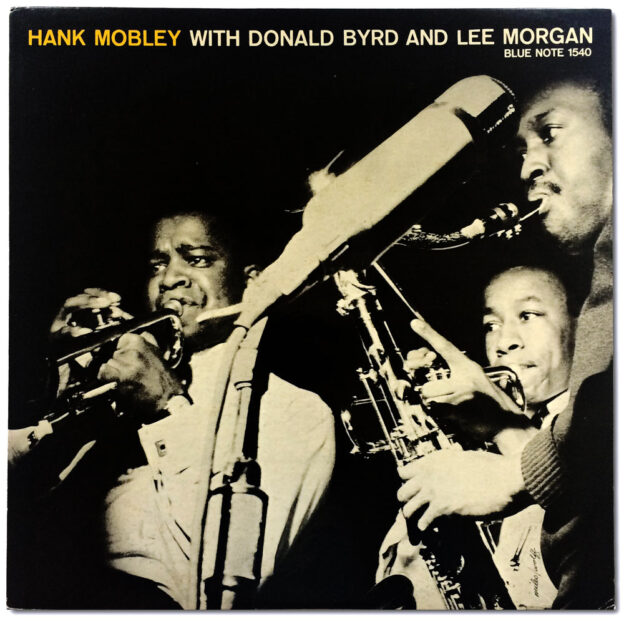
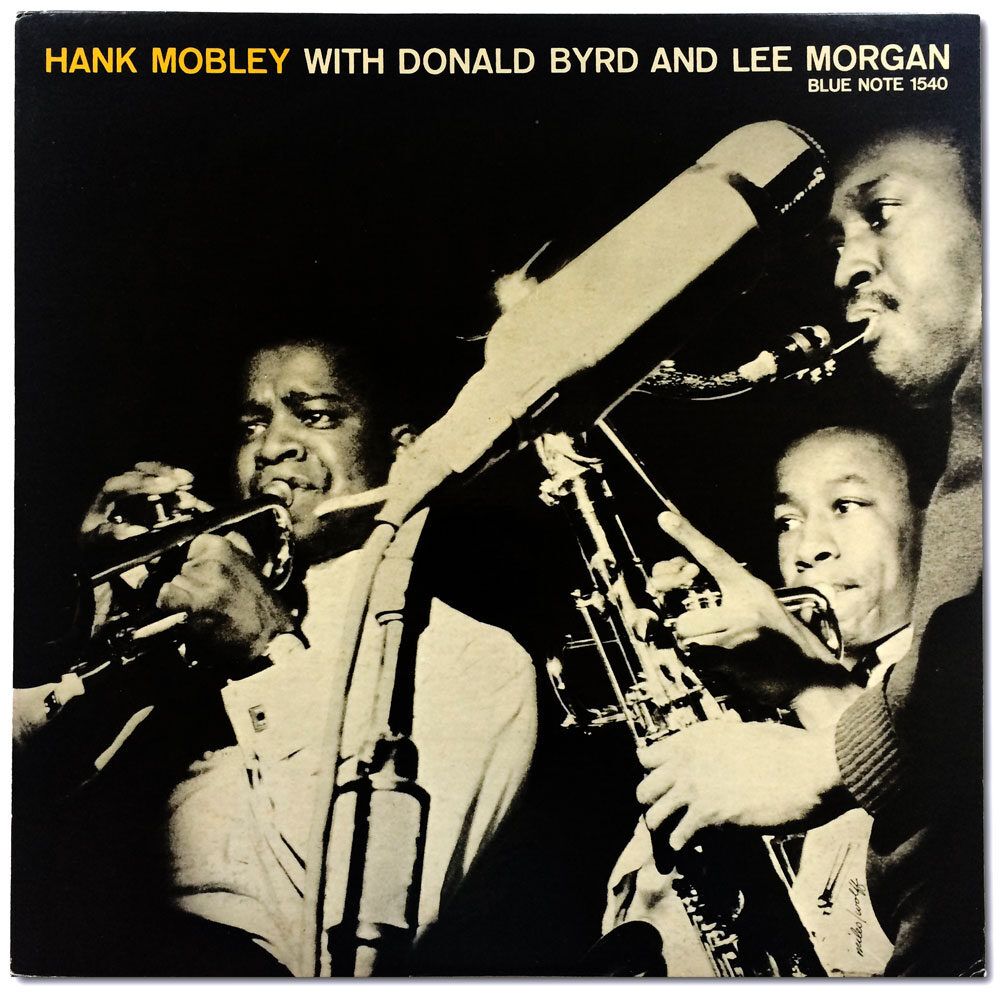
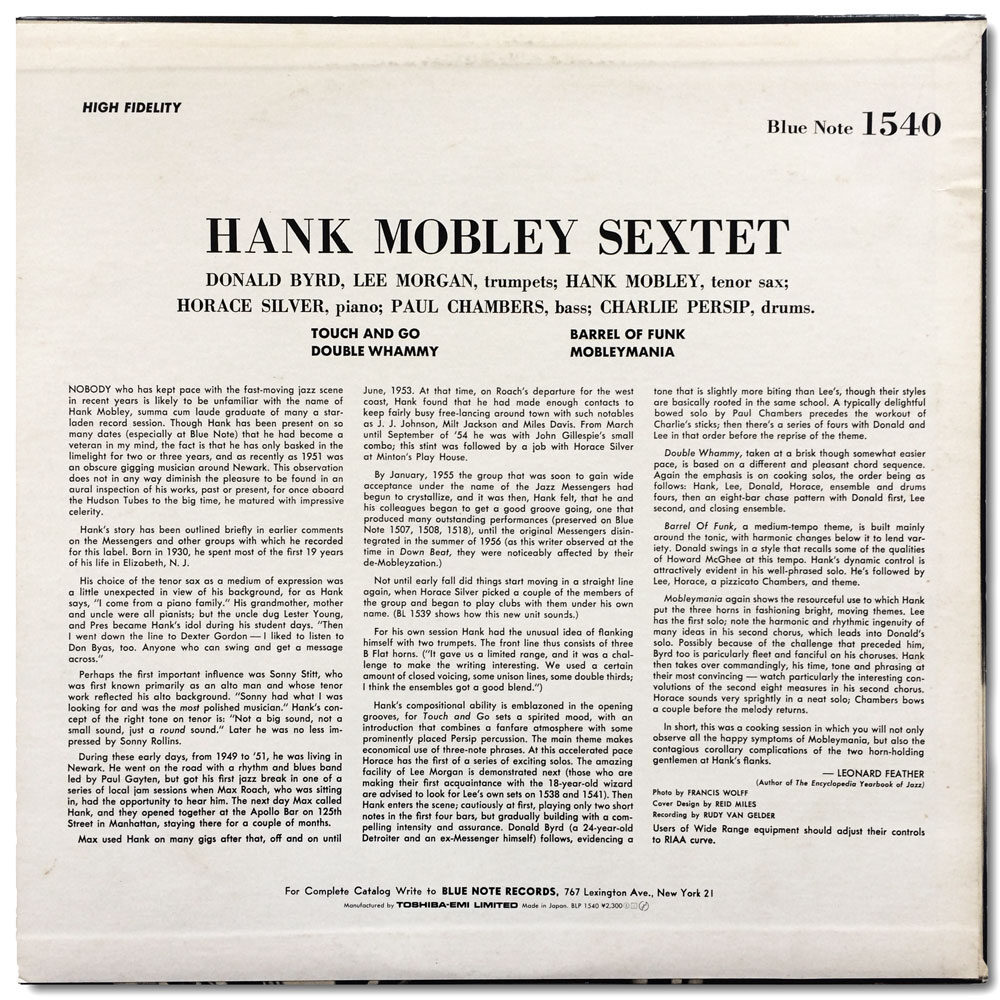
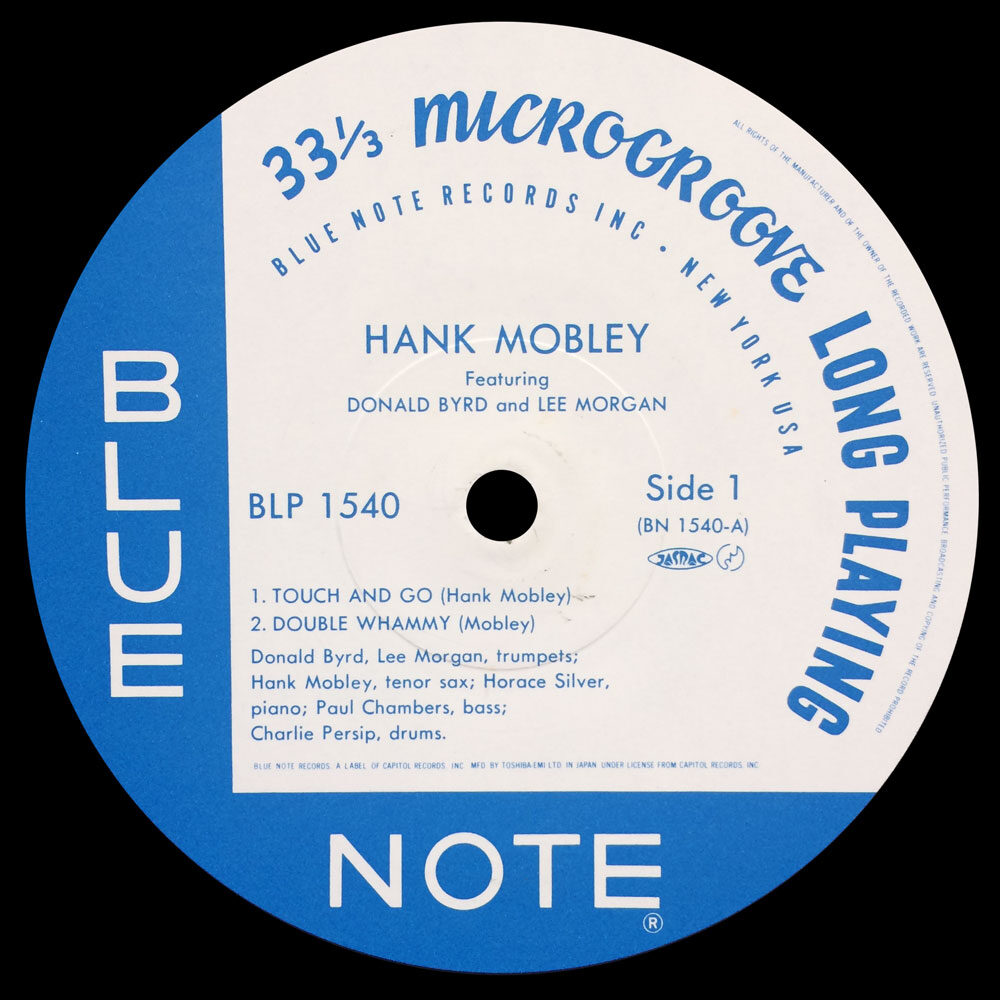
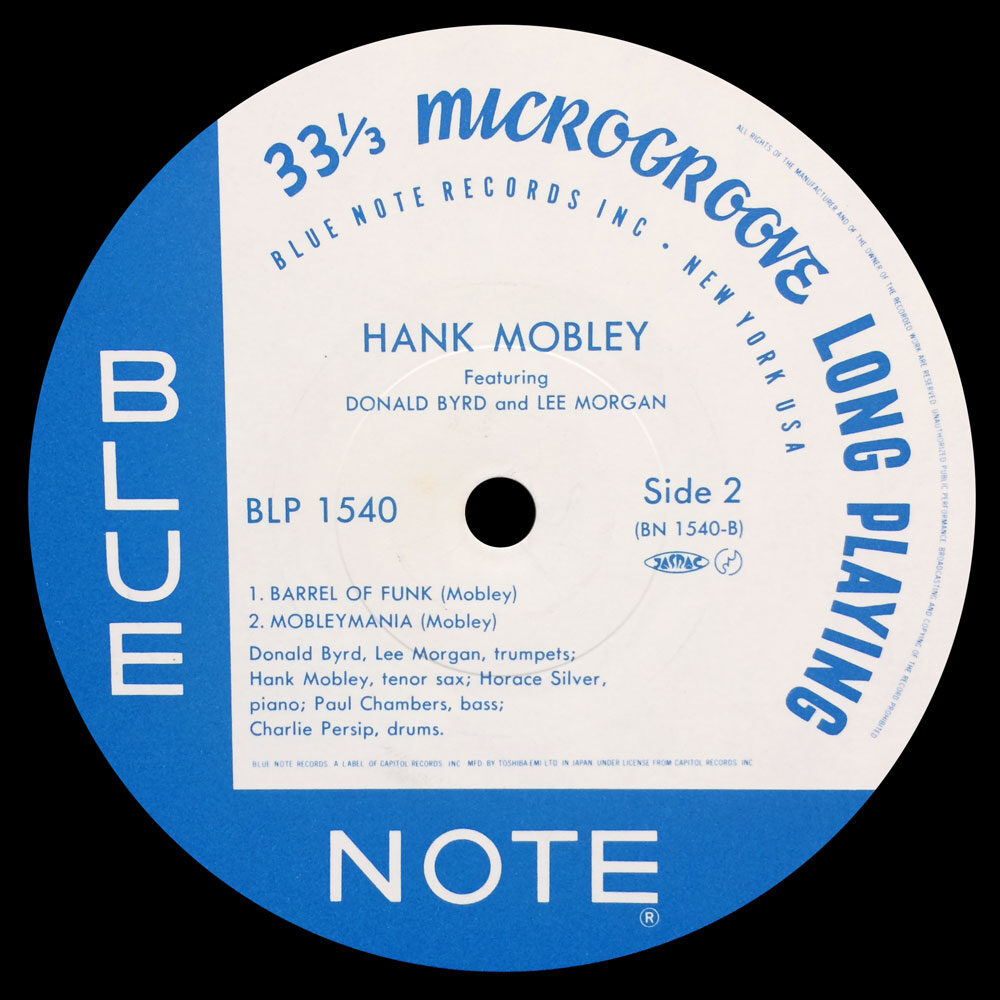
Recorded November 25, 1956 at Van Gelder Studio, Hackensack, New Jersey
Originally released January 1957
Selection: “Touch and Go” (Mobley)
Selection: “Double Whammy” (Mobley)
There was something different about this sound, though. The horns had a tremendous sonic impact. The unique arrangement of two trumpets and one tenor saxophone was certainly playing a role, but recording engineer Rudy Van Gelder had clearly found a rare synergy with his equipment that day and I have yet to hear this horn sound topped by any other jazz recording. It is intense, smooth, and cohesive all at once. Van Gelder was getting a similar sound on other albums in late 1956 but perhaps the particular combination of Mobley, Byrd, and Morgan sets this album apart. The engineer’s choices regarding microphone positioning, preamplifier gain, compression, and instrument balance certainly played a role in the creation of this monumental sound as well.
The album’s compositions, all written by leader Hank Mobley, are consistently menacing. The haunting harmonies of “Touch and Go” and “Double Whammy” carry a sense of foreboding, and while “Barrel of Funk” has a rather upbeat “A” section, the tune ultimately transforms into an intriguing progression of minor-key origins at its bridge. Even the album’s most upbeat tune, “Mobleymania”, manages to keep listeners on the edge of their seats with harmonic tension.
Blue Note catalog number 1540 features Mobley’s characteristic sweet, smooth tone throughout. As a youthful pair of trumpeters, Donald Byrd and Lee Morgan are difficult to tell apart. Horace Silver does little to detract from this star-studded frontline, and the forefather of bop humbly yet tastefully blends into the background for much of the program. Silver’s comping is never boastful here, but at the same time it falls short of embodying the pianist’s big musical personality and signature funk (it wouldn’t be long before Silver would ditch sideman work for good and become the leader of his own legendary quintet). To round things out, drummer Charlie Persip sits at the throne behind his drum kit in the far corner of Rudy Van Gelder’s living room studio. I cannot get enough of the beautiful simplicity of Van Gelder’s mono drum sound at Hackensack in the late ’50s. Persip sounds just as good as anyone in that room and his straight-ahead timekeeping compliments Van Gelder’s technique exceedingly well.
Beyond a repress in the late ’60s after Blue Note had been sold to Liberty Records (the proof of which lies in the existence of copies with “RVG” etchings but no “ear”), this album has never been reissued in the United States, not even on compact disc (it has, however, appeared on numerous compilations including Mosaic’s box set of Mobley’s ’50s Blue Note recordings). The Japanese almost never left a Blue Note stone unturned though and this album is no exception, having been reissued by Toshiba-EMI five times in various formats. I was also considering the King reissue from the same year when I bought this 1983 Toshiba copy on eBay from a Japanese seller but ultimately chose the Toshiba not only because it was cheaper but I also noticed that the fonts used on the Toshiba cover more accurately portrayed those of the original artwork (King album covers also often admit an unnaturally high level of contrast). This was my first Japanese Blue Note vinyl reissue venture and I remember being stunned by how dead-quiet this pressing was.
My dream is to someday own a vintage copy of this album with RVG etchings. Until then, this Toshiba reissue is sure to get lots of turntable time in my house.
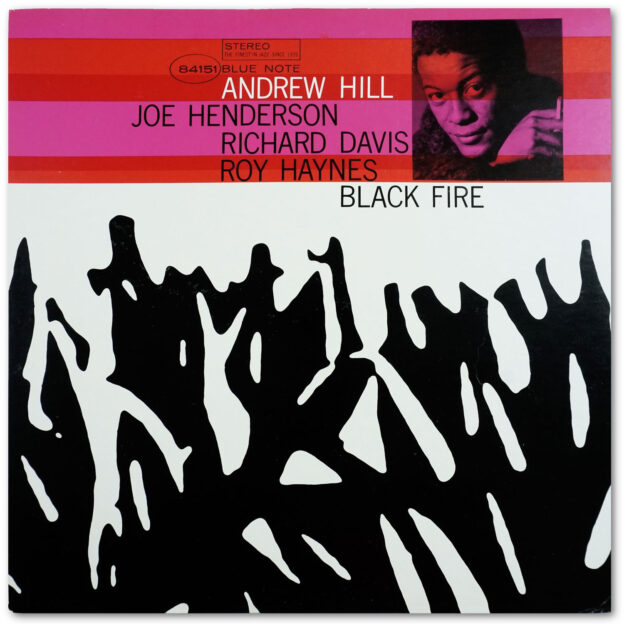

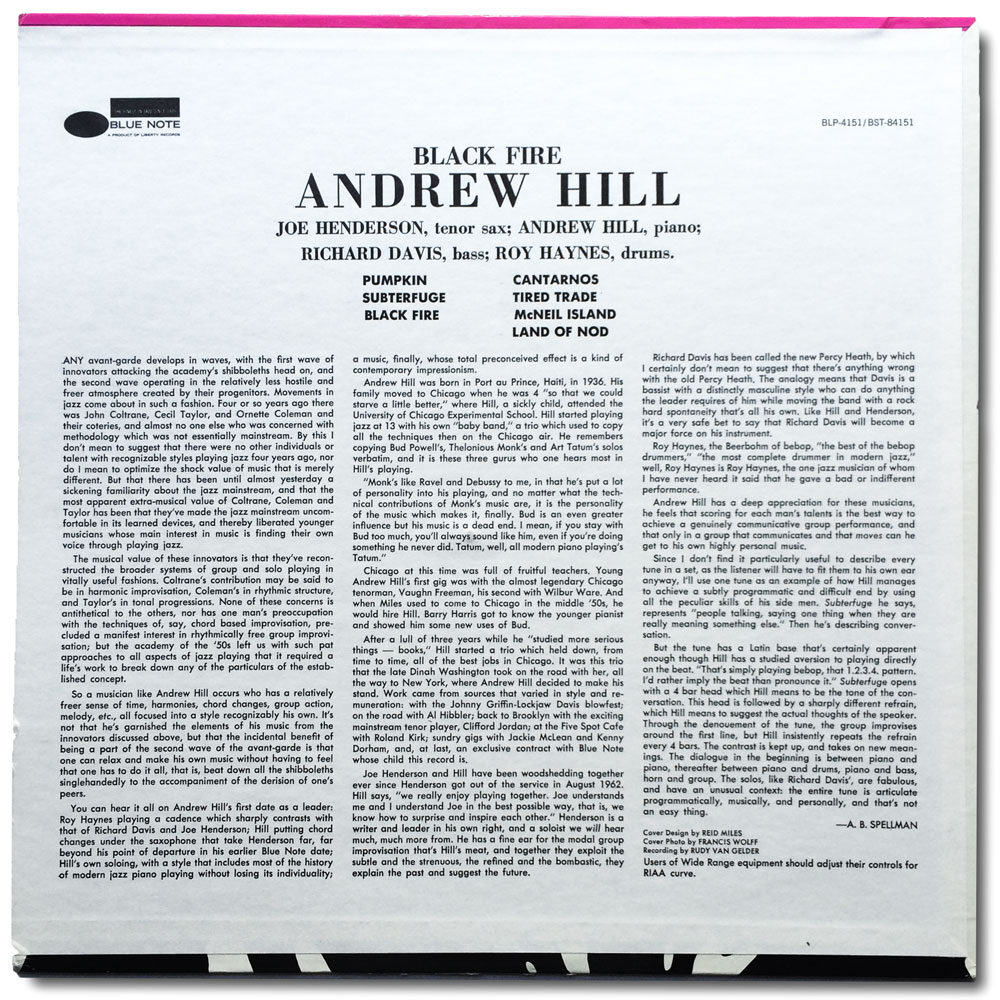
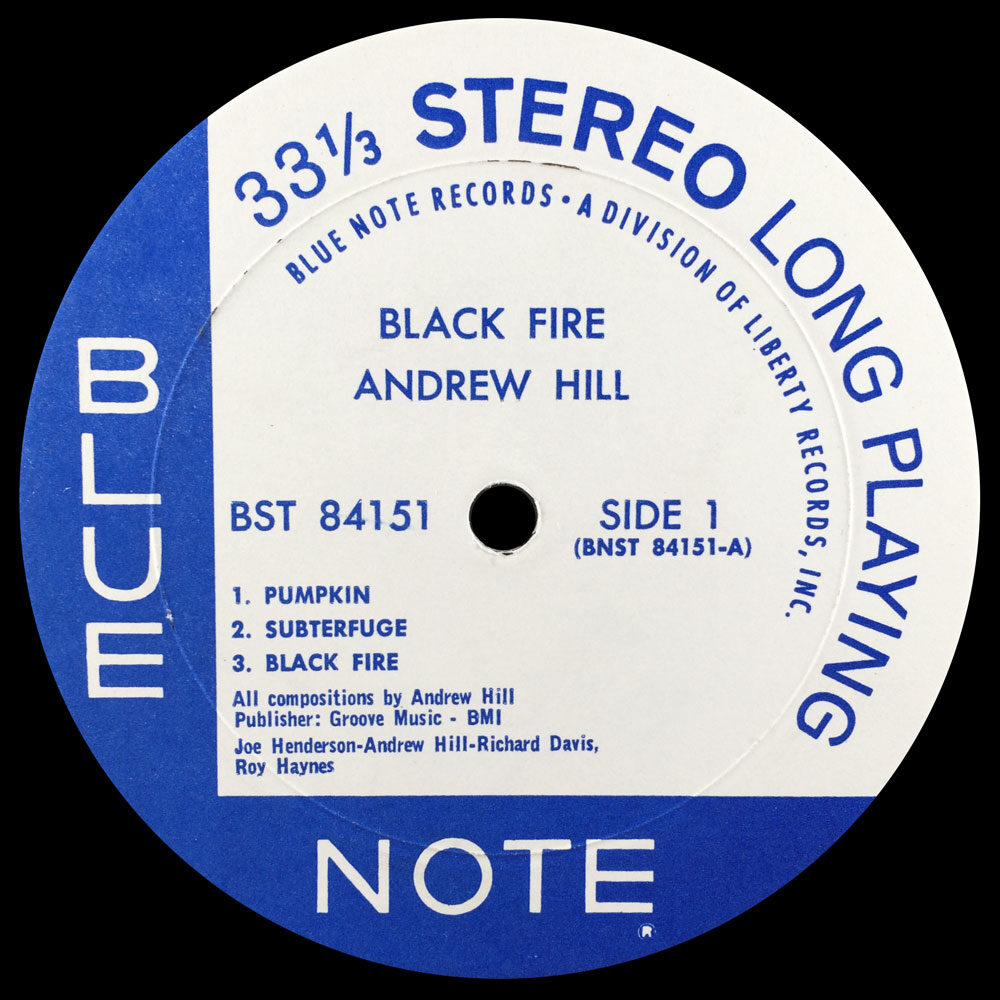
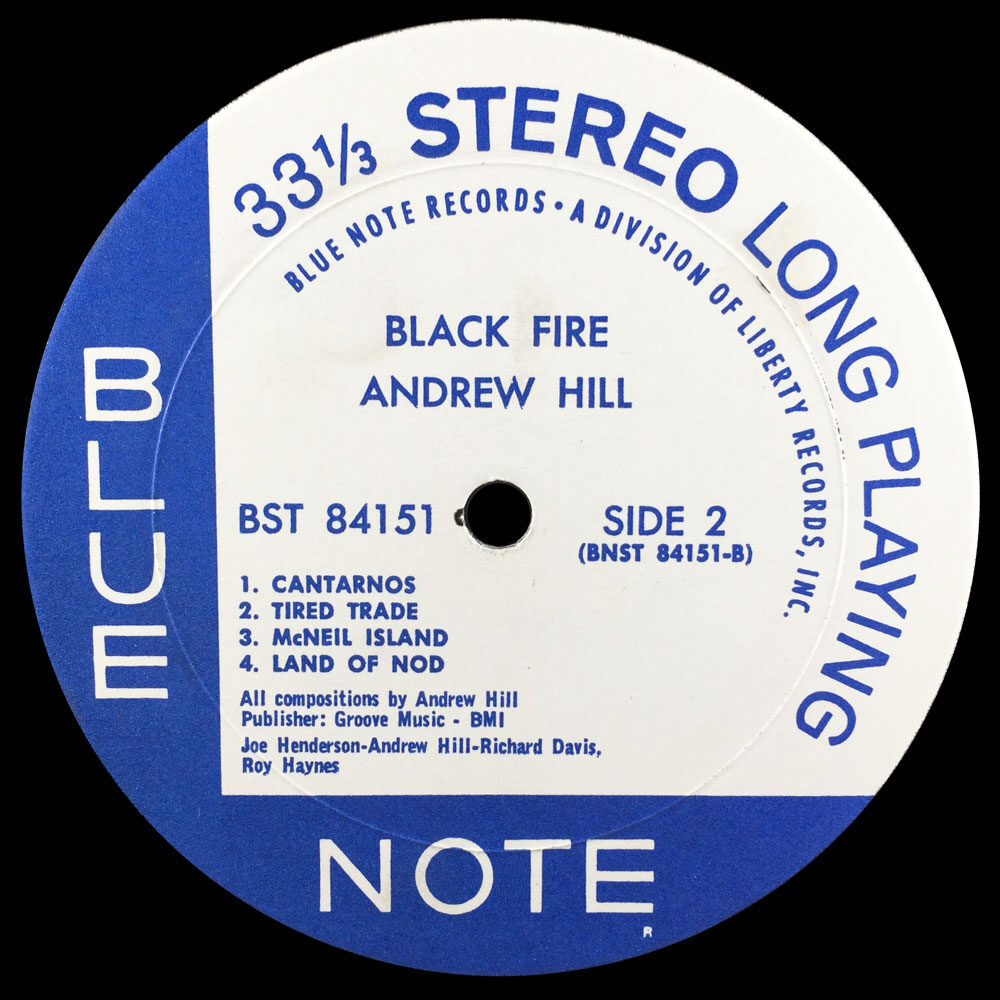
Recorded November 9, 1963 at Van Gelder Studio, Englewood Cliffs, New Jersey
Originally released March 1964
| 1 | Pumpkin | |
| 2 | Subterfuge | |
| 3 | Black Fire | |
| 4 | Cantarnos | |
| 5 | Tired Trade | |
| 6 | McNeil Island | |
| 7 | Land of Nod |
“Pumpkin” (Hill)
“Black Fire” (Hill)
First and foremost, I think this is one of the greatest album covers of all time. I love the juxtaposition of the bold strips of various red hues with the cartoony black-and-white illustration of fire beneath. Reid Miles’ cover design speaks volumes and yet again complements the music incredibly well.
From the time Andrew Hill arrived at Blue Note in 1963, it didn’t take long for the pianist-composer to venture “out” and away from bop. Hill first recorded for the label in September of that year with Joe Henderson (Our Thing, Blue Note 4152), then with Hank Mobley the following month (No Room for Squares, Blue Note 4149). Black Fire, Hill’s first album as a leader for Blue Note, was recorded in November 1963 and gives us an early glimpse at Hill loosely conforming to the higher degree of harmonic and melodic structure commonly found in bop. Blue Note would continue to document Hill’s musical explorations in the coming months, laying to tape Smokestack, Judgment!, then finally Hill’s avant-garde classic Point of Departure in March 1964 — the same month that Eric Dolphy recorded his landmark album Out to Lunch! for the label.
This album is about as far out as I’m willing go into the free jazz sea. I’m not a fan of free jazz and don’t know much about it, but from the little I do know I’m willing to say that Black Fire tows the line between post bop and the avant-garde. The sounds here tend to invoke a subtle feeling of panic, but much like another favorite mid-sixties quartet album of mine, Black Fire maintains a surprising degree of calm and quietude through all of the chaos. We also get to hear Roy Haynes on an uncommon Blue Note date and he doesn’t disappoint, demonstrating his patented pinpoint precision and tight snare drum work throughout.
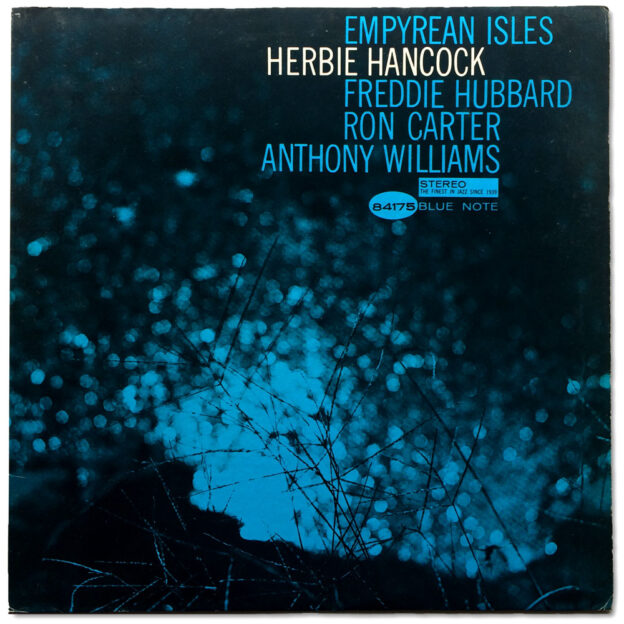
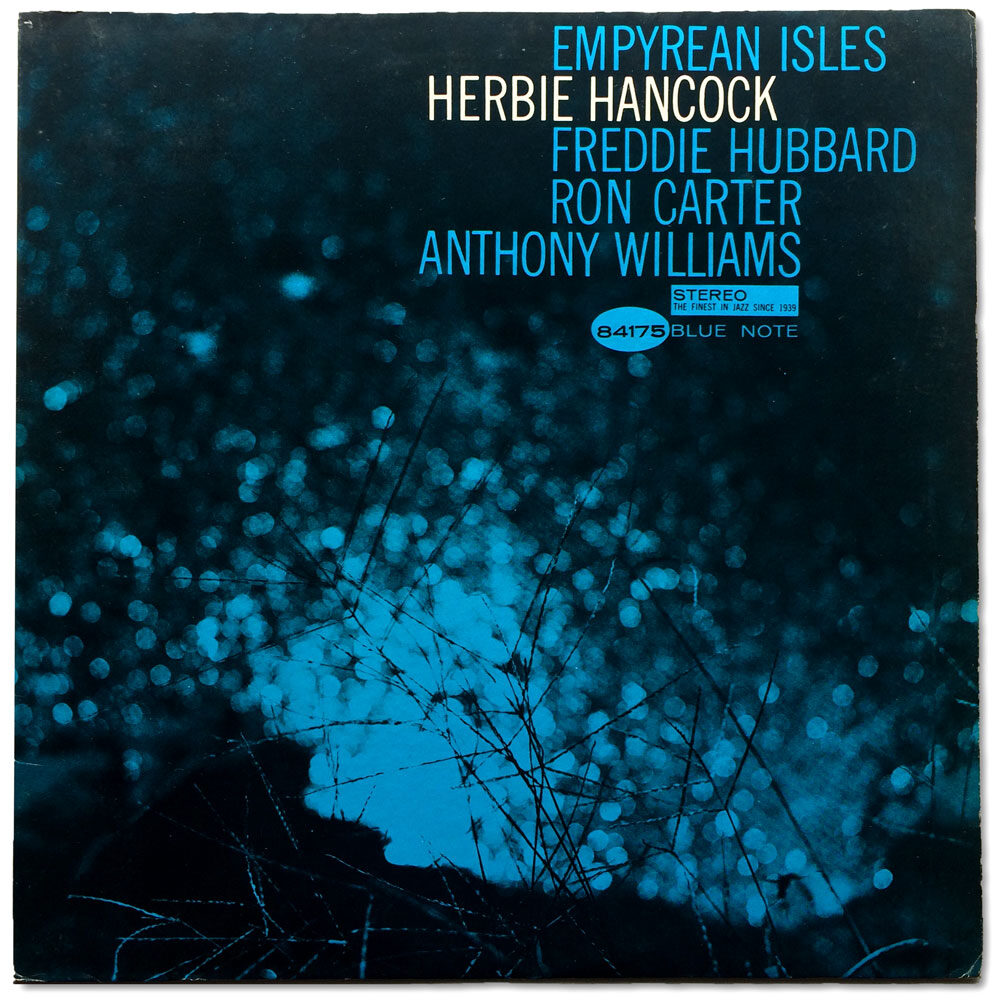
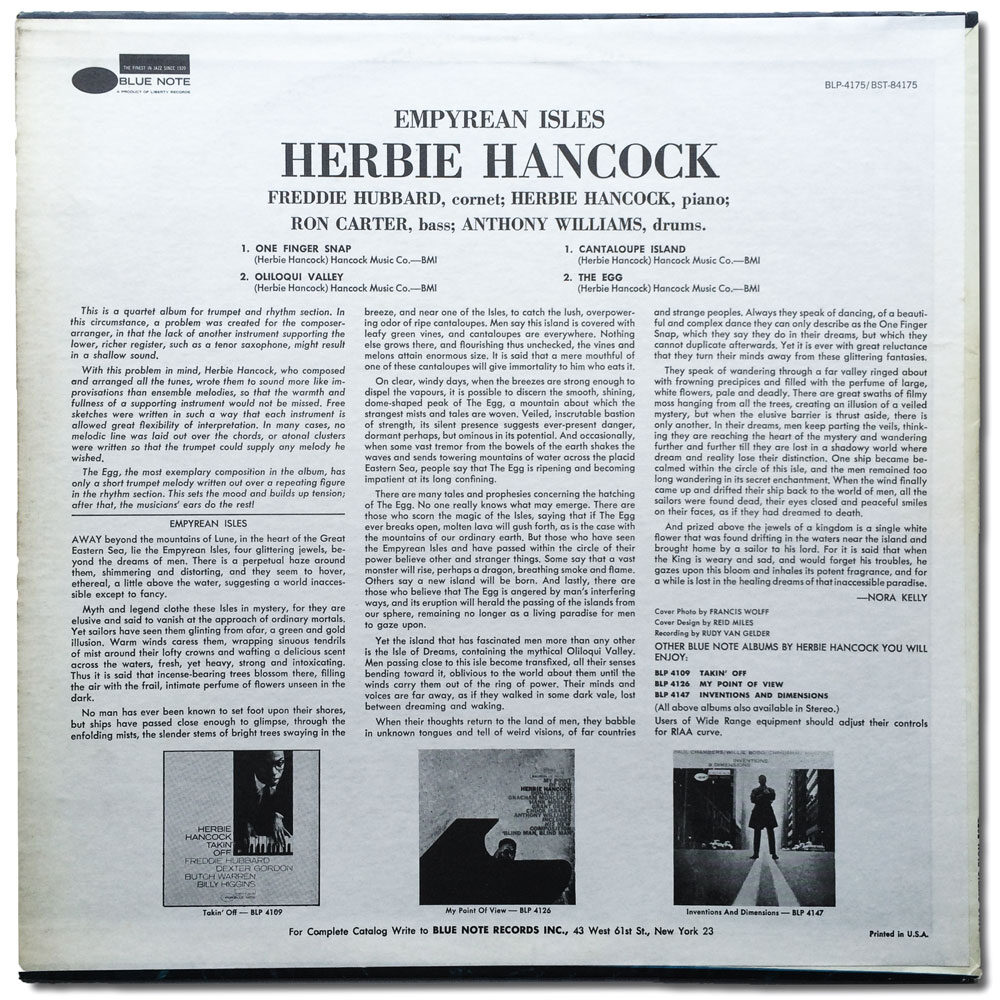
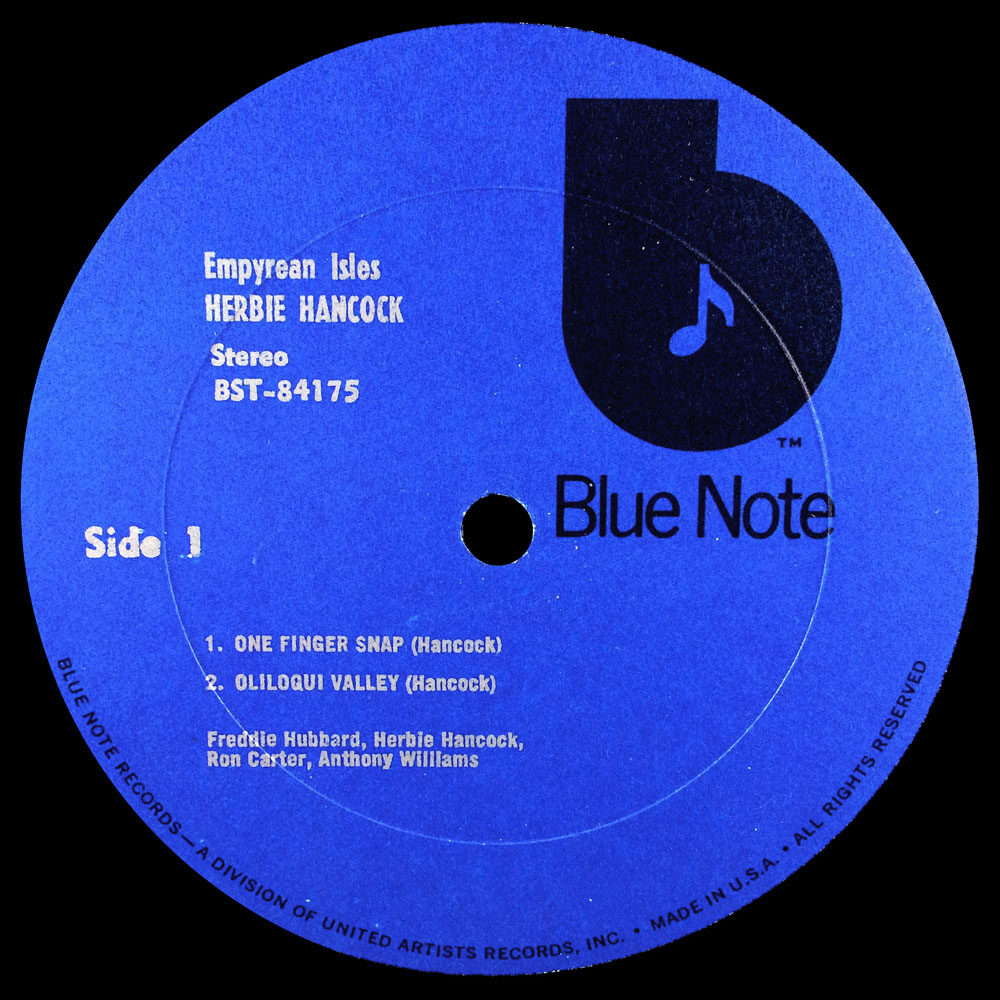
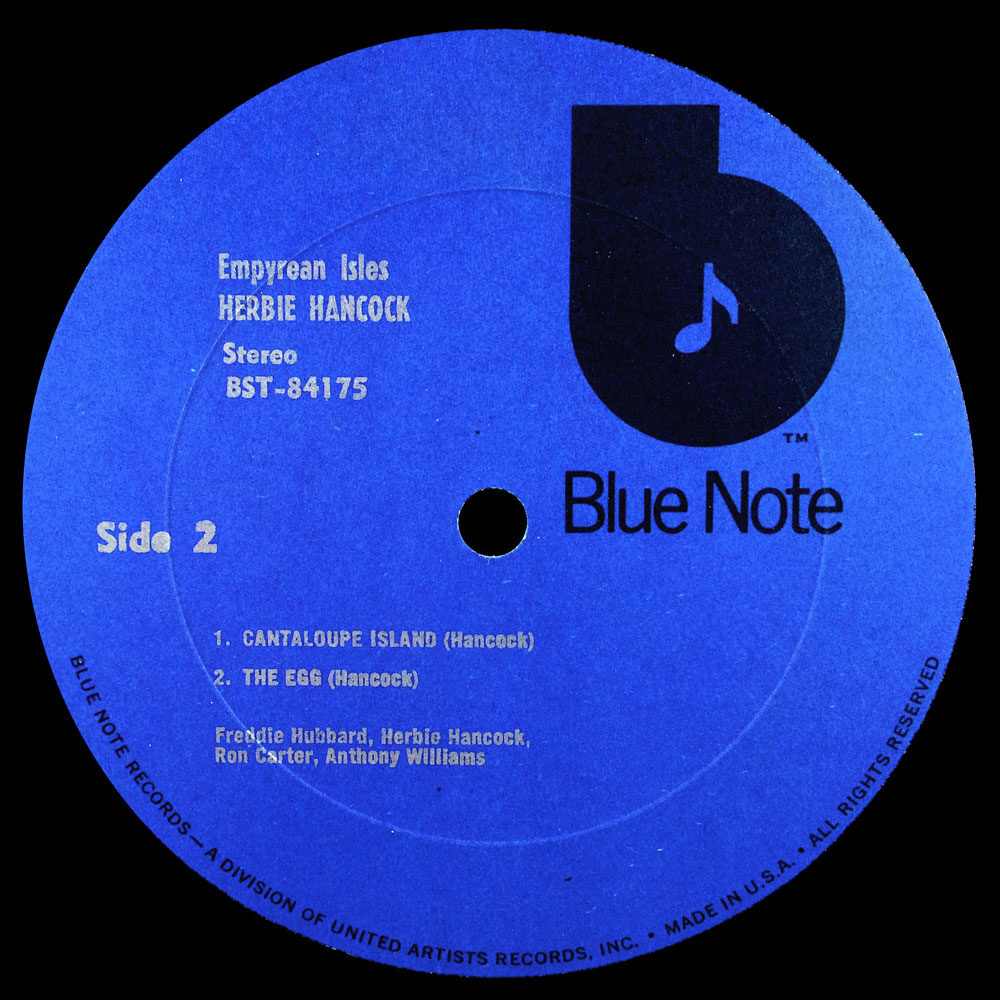
Recorded June 17, 1964 at Van Gelder Studio, Englewood Cliffs, New Jersey
Originally released November 1964
“One Finger Snap” (Hancock)
“Oliloqui Valley” (Hancock)
This is one of my favorite Herbie Hancock albums. It has a soft, gentle vibe that I return to time and time again when I want to listen to something quiet. The quartet with trumpet seems like the perfect minimal arrangement for this album, and even though I’m not the biggest Freddie Hubbard fan, I find that he fits in with the rest of the group like a glove here. I love the cover too. Reid Miles had a way of making album art reflect the music contained within, and with this album, the simple, out-of-focus image of shimmering water cast in a teal blue tint complements the music extremely well…even the pronunciation of the title has a calming sort of effect (“Em-PEE-ree-in”).
Although the album’s closing track, “The Egg”, ventures out a bit too far for my taste, the other three compositions are all favorites. “Cantaloupe Island” sounds like part three in a trilogy of soulful, radio-friendly Hancock compositions that began with “Watermelon Man” and “Blind Man, Blind Man”, but side 1 consists of sixteen of my favorite minutes in music. Eighteen-year-old (Eighteen!) Tony Williams’ drumming is fiery, imaginative and expressive. His kit sounds incredible here as well, especially his ride cymbal. Engineer Rudy Van Gelder’s spacious Englewood Cliffs studio had a way of making drum kits sound colossal when they needed to, which can be heard during Williams’ solo on “One Finger Snap”. Who would have ever thought that Blue Note darling Freddie Hubbard would pair with the rhythm section of Miles Davis’ Second Great Quintet so well?