Tag Archives: vintage

Introducing “Record Collector Confessions”, A New DGM Video Blog

It is my pleasure to introduce a new Deep Groove Mono video blog (“vlog”, as the kids say) series titled Record Collector Confessions. The inspiration to do this partly came from fellow members of the jazz community who are making terrific podcasts, and it also came from filmmaker Alan Zweig. The confessional style of his 2000 documentary Vinyl made a lasting impression on me when I first saw it many years ago. After publishing my first “confessional” article in 2015 and a second last year, I revisited the doc recently, which led to a viewing of I, Curmudgeon, also by Zweig. In the process I got bit by the creative bug. I found a lot I related to in Zweig’s refreshingly honest approach to things, both in terms of his feelings and his willingness to be open about them.

I have always placed tremendous value on being emotionally honest because of its power to make me feel connected with other people in a world that feels increasingly dominated by competition. This series is meant to combat that competitive spirit and to bring us together as people who have an equal appreciation for music and old things. It is a proclamation to enjoy collecting and for each of us to be true to ourselves in our approach to this hobby we share.

It’s not always easy to listen to the voice of reason in our heads. We all get caught up in emotional turmoil, not just in collecting but in all aspects of our lives. But I firmly believe that listening to that voice leads to an authenticity in the way we live that feels really good.

The plan is to do one short episode every week, we’ll see where it takes us!

Vinyl Spotlight: Thelonious Monk Trio (Esquire EP-75) Original 45 RPM 7″ EP

Original 45 RPM 7″ UK pressing circa 1954

Personnel:

  • Thelonious Monk, piano
  • Gary Mapp, bass
  • Art Blakey, drums

Recorded October 15, 1952 at WOR Studios, New York, NY

Selection: “Monk’s Dream” (Monk)

A couple years ago I switched up my philosophy of collecting, moving away from chasing expensive, high-demand vintage jazz LPs and working harder to find less expensive, less sought-after records that managed to bring me an equal amount of joy, if not more. This is partly what led me to Esquire, in addition to their sterling reputation for producing quality vinyl. The British label has been bubbling under for several years, perhaps gaining in popularity due to the internet, yet to some extent it remains off the radar, at least it seems that way here in the states. In other words, the average foaming-at-the-mouth amateur collector isn’t rushing to Discogs to look for Saxophone Colossus on Esquire; they’re going for the original U.S. pressing.

Recorded in 1952, the four sides on this Monk EP were originally issued as two 78 RPM shellac disks and also compiled on a Prestige ten-inch LP, catalog number 142, with the original cover simply reading Thelonious. I owned a copy of the latter at one point: what a gorgeous cover, and at the same time what hissy, wimpy-sounding mastering. Last year when I attended the Jazz Record Collectors’ Bash in New Jersey for the first time, I managed to meet producer and author Bob Porter, who confirmed that the first round of Prestige ten-inchers were generally shoddy. Bob told me a story of a radio jock in Manhattan dialing up Prestige to demand they continue sending 78s to the station in place of the ten-inch LPs.

The original ten-inch pressing of PRLP-142

Though the cymbals don’t cut through quite as much as they do on my 2000 Monk Prestige CD box, this Esquire EP is of a much higher fidelity than the original ten-inch. Do I feel that the faster speed of 45 revolutions per minute creates a significant bump in fidelity? Maybe…it would be hard to prove in this case I think. I also find it fairly neat that this EP perfectly compiles all four tracks from Monk’s inaugural recording session with Prestige.

Monk biographer Robin D.G. Kelley has noted that Monk had no choice but to use an old, out-of-tune piano for this session. I can hear the results of that now but I’m not enough of a musician to have heard it before I read Kelley’s book. Perhaps ironically, I think the faulty piano complements Monk’s creaky style of playing perfectly here.

Of all Monk’s work, his Prestige catalog hits a particular sweet spot: hungry performances recorded with fidelity that for the most part improves on the pianist’s previous studio sessions for Blue Note. In 1952 most modern jazz fans would have been unable to hear Monk’s newest compositions played live by their composer in the jazz clubs of New York City. As a result, they got to hear three Monk originals for the very first time with the release of these sides. On “Little Rootie Tootie”, the discordant stomping of keys comprising the chorus screams for the spotlight and is exemplary of a generally raucous session. Though this type of device may sound a little contrived to me today — far from the intricacy of “Monk’s Dream”, for example — it surely had the shock value to entice me back when I was first getting into Monk.

It’s worth noting that the three remaining songs from this session all resurfaced in 1963 on Monk’s first Columbia LP, Monk’s Dream. Like most jazz fans I’m sure, I was introduced to these songs (two originals and one standard) through the Columbia release. If one were to argue that the original Prestige recordings are a more authentic documenting of Monk’s work, it would then be a tragedy that so many jazz fans are introduced to these songs by way of the less aggressive Columbia LP. Aside from the fact that the Prestige session preceded the Columbia sessions by ten years, my personal feeling is that the band’s rawer delivery for Prestige does a better job of personifying Monk.

Monk’s first release for Columbia Records

That being said, when I heard the Prestige versions for the very first time, I think I probably still preferred the Columbia versions. Perhaps the former was a little too raw for me at first. For example, I definitely preferred the Columbia version of “Bye-Ya” and Frankie Dunlop’s straight-ahead swing over Art Blakey’s calypso beat on the Prestige version. But Blakey’s dirty, overly-compressed ride cymbal crashes and thunderous tom-tom hits have grown on me.

On the Columbia album Monk gives us a rather gentle reading of “Monk’s Dream”, and the dynamic, state-of-the-art quality of the Columbia recording further enhances this softer feel. This starkly contrasts with the Prestige version, where Monk plays more (dissonant) notes and is more unhinged. Again I was taken aback by this less harmonious sound initially, but over time I have come to adore it. Sandwiched between the two heads are two choruses of Monk soloing, and the way Monk flips the B-section at both passes demonstrates the pianist’s mastery of rhythm. In the first, Monk winds up with a repetitive trinkling of adjacent keys only to create an impactful sense of resolve when he brings the A-section back in smack on the “one”. The next time around Monk uses a similar motif, building us up with an ascending Chopin-esque run then landing with a swinging return to the “A”.

This is the Monk I think of when I hear these sides: In the zone, raw, and unfiltered

Monk’s reading of “Sweet and Lovely”, a less obvious standard with publishing dating back to 1931, rounds things out. Though the Prestige version is again packed with harmonic dissonance, it’s the moment on the record where everything settles down a little and the listener gets a much-deserved rest.

Typical of Esquire, and as we have now seen more than once here on DG Mono, the album art for this EP is sublime. Enjoy the audio clip and don’t sleep on Monk’s Prestige years!

Vinyl Spotlight: Tony Fruscella (Atlantic EP-557) Original 45 RPM 7″ EP

Original 45 RPM 7″ pressing circa 1955

Personnel:

  • Tony Fruscella, trumpet
  • Chauncey Welsch, trombone
  • Allen Eager, tenor saxophone
  • Danny Bank, baritone saxophone
  • Bill Triglia, piano
  • Bill Anthony, bass
  • Junior Bradley, drums

“Muy” recorded March 29, 1955
“Metropolitan Blues” recorded April 1, 1955
All selections recorded at Capitol Studios, New York, NY

Selections:

“Muy” (Sunkel)

“Metropolitan Blues” (Sunkel)

Though this seven-inch EP only contains two songs, they are both outstanding picks from an album that shares the same cover art. I had an encounter with an original pressing of the full LP about a year ago. The European seller graded it NM/M- on Discogs and it played with absolutely terrible distortion on the trumpet. When I asked the seller about it he said “the European grading system is different than the U.S.” Anyway, it was unlistenable and I sold it. This EP, on the other hand, sounds great. It wasn’t pressed terribly loud but the vinyl is clean, the music is dynamic, and the top end is crisp. There is a second EP that is meant to match this one with red lettering and I’m on the hunt for that one now.

I won’t review the whole LP here, which is phenomenal (I currently own a digital copy that sounds great and I’m also considering a Japanese “mini-LP” CD). I was surprised to learn from the back of the album jacket that Tom Dowd did not record this. It was recorded by an engineer named Frank Abbey, who I admittedly know nothing about. Abbey gets an even, dry sound — both qualities of which I think are present on most of my favorite jazz recordings.

The music, generally sweet and quiet, was written by Phil Sunkel, another guy I didn’t know about until I started researching this album. He wrote both sides here and seven out of nine songs on the album. I find it especially interesting (and tragic of course) that a relatively lesser-known composer like Sunkel could pen an album of such cohesive quality yet fail to have many more impressive credits to their name.

Fun fact: Tony Fruscella was one of the earliest musicians to record at Rudy Van Gelder’s Hackensack home studio. According to my research, I have him recording there as early as January 30, 1952 for a Bill Triglia session (who plays piano here as well). Another fun fact: I have been through Rudy’s collection of acetates and he still has the acetate from that session, so there’s a good chance that the world will hear it at some point! This would technically be the fifth-oldest recording of Rudy’s we would have.

Vinyl Spotlight: Sonny Rollins Quartet (Esquire EP-148) Original 45 RPM 7″ EP

Original 45 RPM 7″ UK pressing circa 1955
Recorded October 25, 1954 at Van Gelder Studio, Hackensack, New Jersey

Selection: “I Want to Be Happy” (Caesar-Youmans)

Last spring I got a Columbia GP-3, the workhorse portable record player made in Japan that has been serving beatdiggers and the like for decades. Finances were good at the time and I had been trying to find ways to relax and enjoy life more. Since I had always wanted one of these, I didn’t overthink it and just bought it. Lo and behold, a couple months later a friend visiting from Europe got me back into 45s, and as we hopped from shop to shop in Brooklyn last summer, the GP-3 proved invaluable. It allowed us to easily preview records we were otherwise unfamiliar with all while avoiding the complete takeover of a store listening station.

The Columbia GP-3 portable record player

All the 45s I was buying at that point were doo-wop, rhythm & blues, and rock & roll. Most of the records I proudly consider part of my personal collection, but I was also simultaneously investing in a set of records I could use to get back into DJing. Jazz didn’t necessarily fit into the latter category so I was passing it over when I saw it in the bins. But then I realized how fun it would be to take my GP-3 to the park or bring it along when I travel. To this end, I became more alert to the presence of jazz 45s while shopping both in person and online.

Remember that Esquire Monk ten-inch I posted about a few months ago? While conducting general research on Esquire titles around the time I acquired that record, I decided it might be fun to have some Monk on 45. Then I stumbled upon this title and its glorious cover.

The two songs on this British extended play or “E.P.” first appeared in the U.S. most likely in late 1954 or early 1955 on Prestige catalog number 190, a ten-inch long-play featuring Sonny Rollins and Thelonious Monk. A couple years later the songs would resurface on Prestige 7075, this time a twelve-inch LP that compiled takes from three sessions Rollins and Monk collaborated on in 1953 and ’54. Unfortunately, Rudy Van Gelder is noticeably absent from the mastering process for this E.P., evidenced by the lower signal-to-noise ratio between the music and surface noise.

Prestige catalog numbers 190 and 7075 (photo of 190 courtesy of @jrock1675)

While I’m a big fan of the music and performances here, I’m not the biggest fan of the actual recording. Van Gelder did record this session, though it was recorded during a period in which he seems to have been fascinated with a shiny new toy, a spring reverberation unit. The result is a Rollins unfavorably drenched in artificial-sounding reflections. The truth is it takes away from my enjoyment of the recording a little, but the performances surely make up for it. I enjoy Monk’s especially heavy-handed comping on “I Want to Be Happy”, and I’ve always liked the melody of Jerome Kern’s “The Way You Look Tonight”, where we find Monk a bit tamer behind Rollins.

Lastly, if it makes sense to call any album covers “sexy”, surely this is one of them. The eye-popping contrast of bold yellow with cream and the cover’s deep black typography demands your attention. Esquire, you have done it again with absolutely killer cover design…hats off.

Deep Groove Mono’s Great 78 Adventure

In my time collecting vintage jazz LPs I have always been curious about jazz from the bebop era, which for the most part was originally released on 78 R.P.M. shellac disks. Listening to digital reissues of music from artists who thrived in the 1940s like Charlie Parker, Thelonious Monk, and Lester Young was educational, but it still felt like it left something to be desired. Not only did that feeling accompany me when listening to vintage twelve-inch LP compilations of this material, I always felt that if I’m going to go back that far to get closer to the original listening experience, I might as well go all the way to the 78s — assuming I could find them.

But the prospect of studying and acquiring different, older equipment always loomed overhead, and as a result I hesitated to jump into the 78 game. Finally last year I decided to start simple, purchasing a Califone portable player and an original 1948 pressing of Thelonious Monk’s “Evonce” backed with “Off Minor”. The listening experience did not disappoint and my appetite was whet for more.

Months went by and I hadn’t given the medium much thought. I blindly bought a few 78s cheap at a record fair that were recommended by of one of the dealers, but they didn’t quite match up with my taste. I bought another Monk 78 online but returned it for groove wear issues. But then a couple months ago, frustrated with the trendiness and high cost of collecting vintage jazz LPs, I got inspired to purchase a handful of jazz 78s. For the most part this batch of shellac disks sounded great but the Califone was having some trouble tracking a couple of them. Noticing that the grooves of these records were extremely clean led me to hypothesize that the Califone may have had some unique troubles tracking 78s that were either cut hot or cut with a lot of bass.

Upgrading to an Actual Turntable

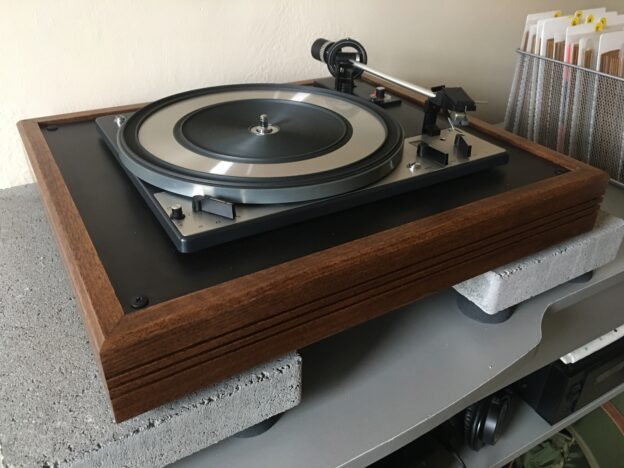
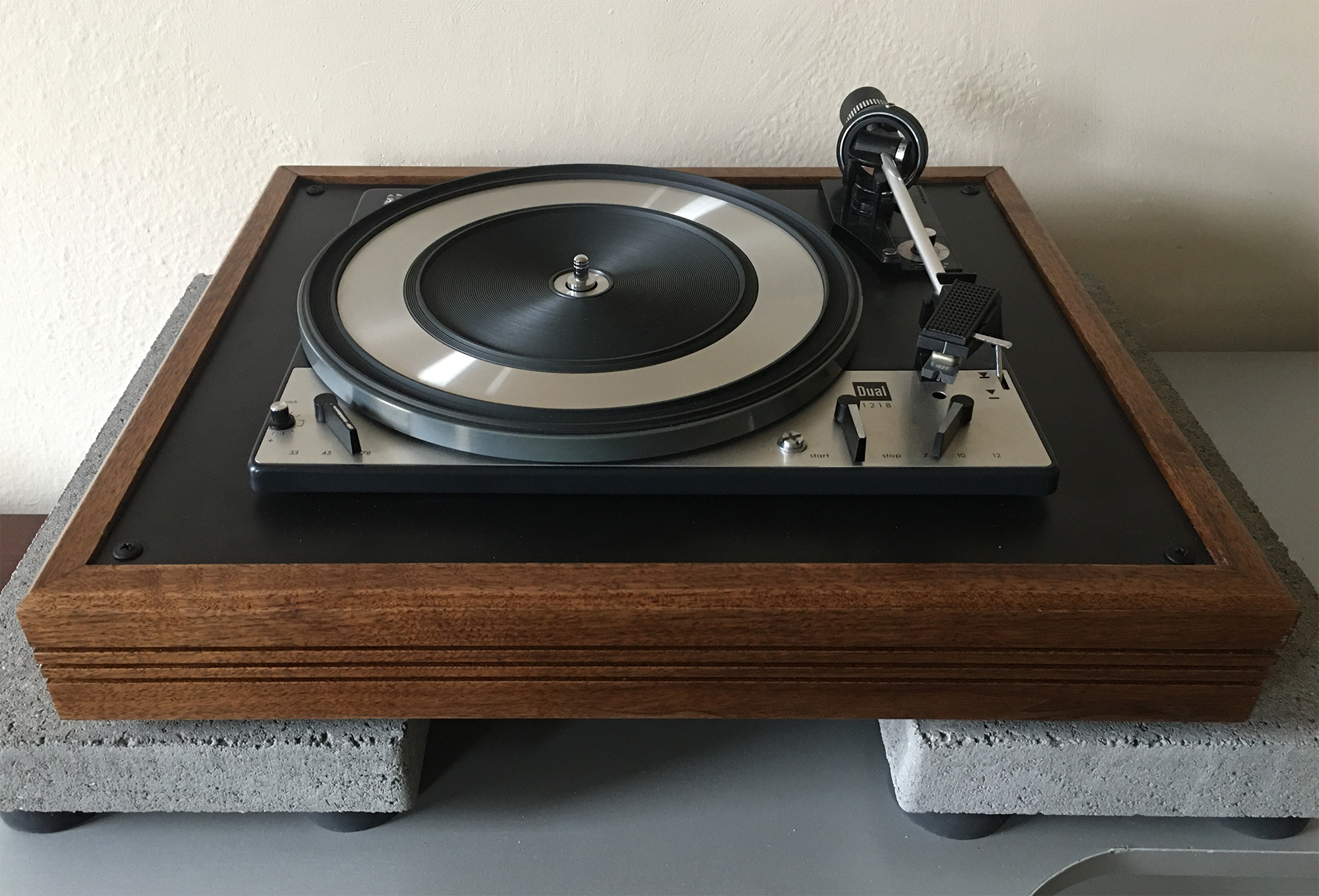
The overall experience with these new 78s and the Califone was nonetheless positive, which motivated me to investigate other playback options. I soon learned that idler wheel German-made Dual turntables from the 1960s have a good rapport with 78 collectors. So I started searching and soon settled on a model 1218 for sale on eBay.

When I got the table I was virtually clueless as to how it worked and needed to consult an online manual. The auto-play functionality was a bit baffling, as was the proprietary tonearm counterweight mechanism and headshell. After testing it out, it became clear that the seller had cleverly sidestepped any description of playback issues present: “It powers on and the platter turns fine. It works but I am selling as-is due to its age.” That was all quite true, but there were a couple glaring issues: 1. The turntable would not stop, and 2. The auto-return mechanism was malfunctioning.

Through all this, I was able to mount a cartridge and give a few records a spin. I was impressed by what I heard and frankly a little surprised. The speed was extremely stable and the sound was bold and clear. This gave me hope, so I found a seller on eBay who said they service Duals and I reached out to ask him about servicing mine. He said he doesn’t like to have tables shipped to him, so believe it or not he then proceeded via text and phone to guide me through all the necessary modifications my deck needed. Over the years I’ve gotten decent at making mild adjustments, but I wasn’t used to making repairs like this. After a couple hours though, when everything was done and my table was running smooth, I was quite proud of what I had accomplished with the guidance of my new friend.

Finding a Cartridge-Stylus Combo

Without overthinking it I chose to start with a Grado 78C cartridge, which I chose mainly for its ability to track at a higher force of five grams. (I have never shied away from tracking force. Not only have I found that more force helps alleviate surface noise, I have always been skeptical of the theory that more liberal settings will ruin records.) When I gave the Grado a test run, the sound kind of blew me away, and no tracking issues like I had with the Califone. But after several listens, it eventually became apparent that there was some ground hum in the system, hum that wasn’t present when I was testing playback with a Shure M44-7. After doing some research, I learned that Grado cartridges are unshielded, which causes problems with some turntable pairings.

At this point my 78 cartridge knowledge was still limited, and the next attractive option was the Audio-Technica VM670SP, which also tracked at five grams. But there was something underwhelming about it. It was kind of ugly and clunky-looking and rode extremely close to the record surface. My disapproval may not have been all that much about what I was actually hearing, but I had audiophile friends who I knew would back me in making cosmetics factor into my equipment choices. So I pushed on looking for something more ideal.

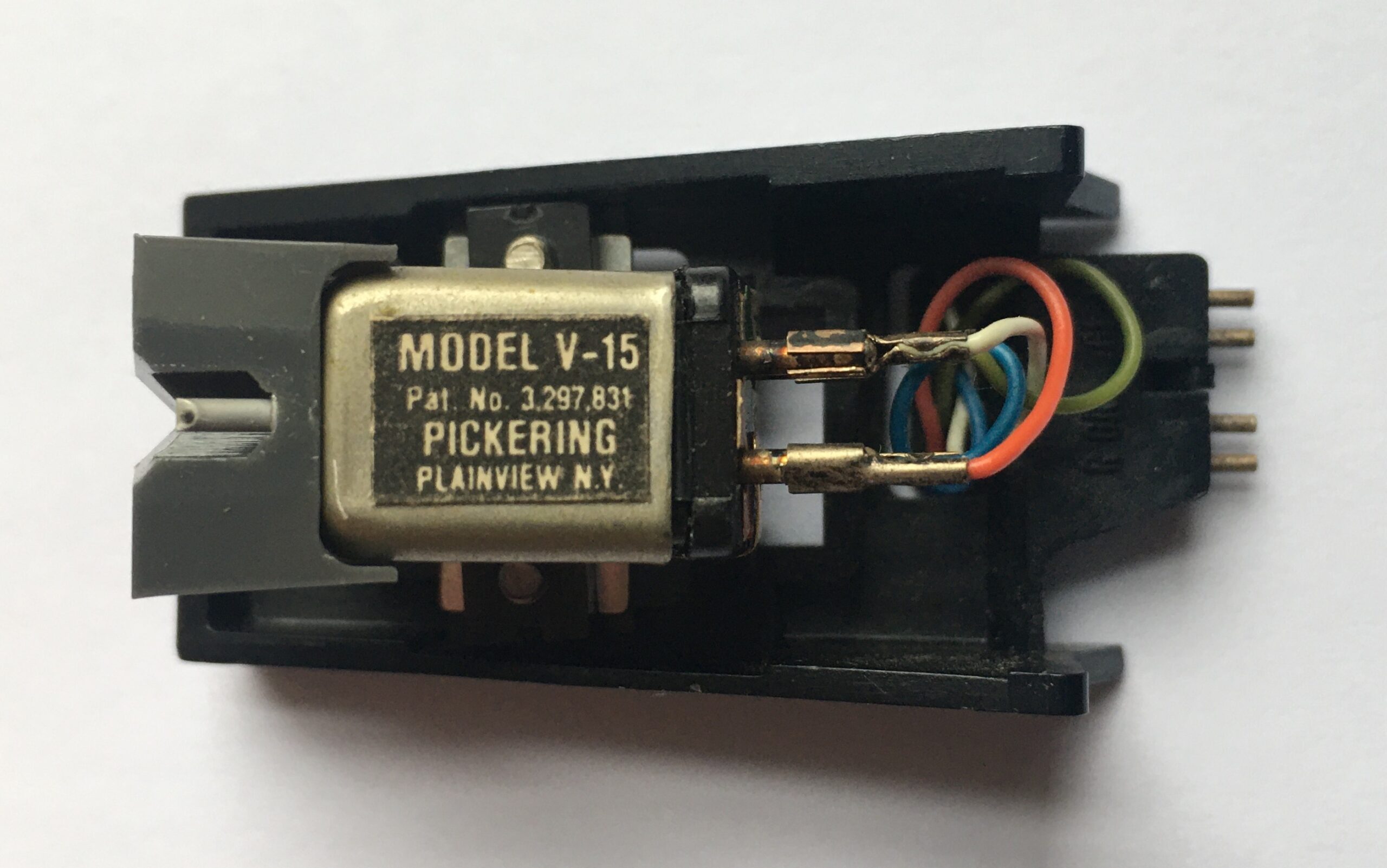
It was then that I got talking to a new vinyl mastering engineer friend, Bill Pauluh, who is an adamant 78 collector. He spoke highly of the Pickering V-15 cartridge and all of its seemingly infinite incarnations. So I found a couple vintage V-15 bodies and a variety of styli: 3.0-mil and 2.7-mil for 78s and 0.7-mil for microgroove LPs. Some were original equipment manufactured (O.E.M.), others were generic “repros” made by Pfanstiehl.

The majestic underbelly of the Pickering V-15 phono cartridge in all its glory

Shootouts

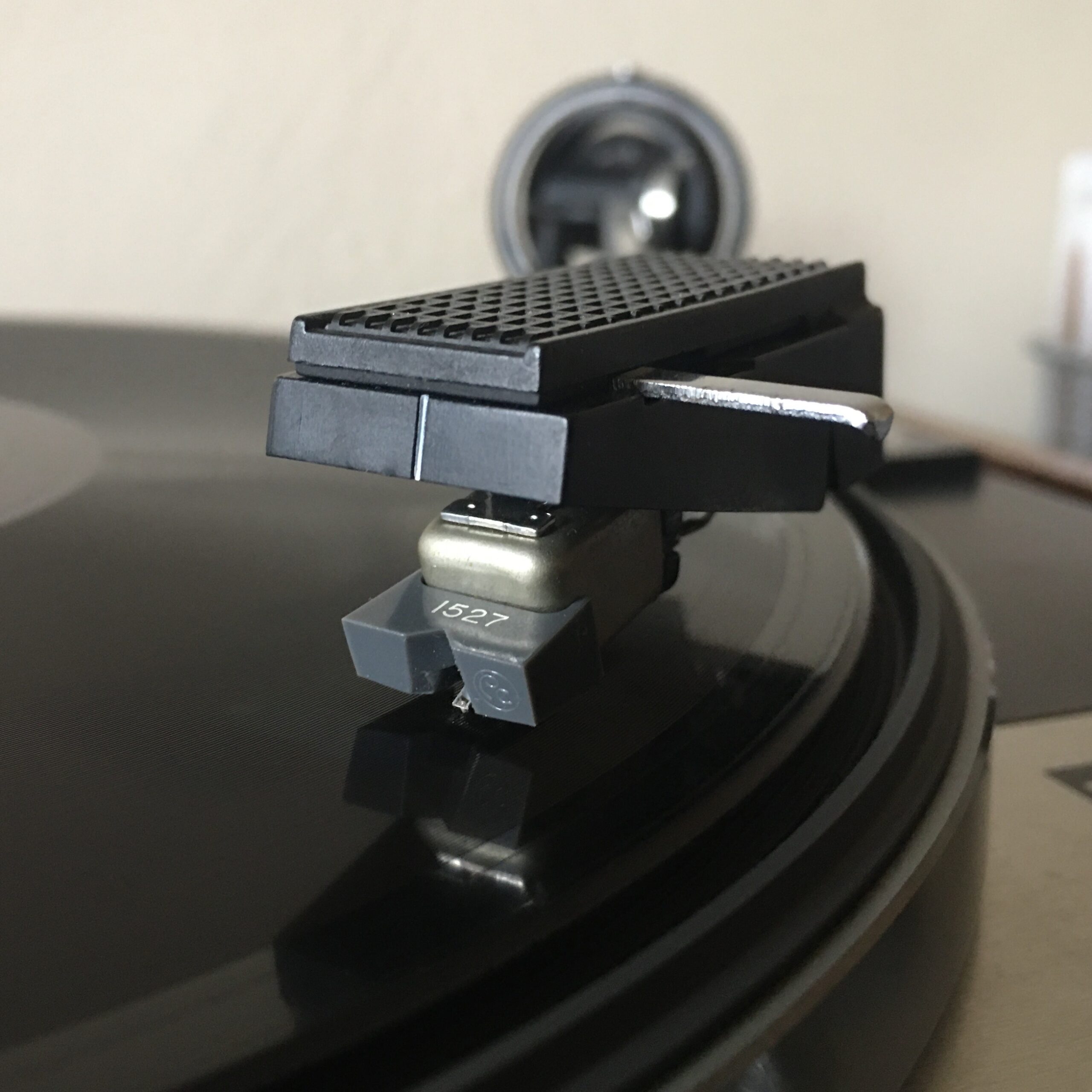
First I compared the bodies of an original Pickering V-15 cartridge with a later V-15/AME-1 (I have been told that all V-15 model number variations are identical to the original mechanically). Using the same stylus for playback, there was no difference detected. From there I compared 78 playback with the OEM Pickering D1527 2.7-mil stylus and the repro Pfanstiehl 4604-D3 3.0-mil, both sporting conical tips and both tracking at five grams.

Three key differences arose. First, the Pfanstiehl had a slightly brighter top-end — not necessarily an advantage considering that the high-frequency response of most 78s is fairly limited. Second, at certain moments the 2.7-mil Pickering handled surface noise better, yet at other moments — on the same record — the 3.0-mil Pfanstiehl did! These differences were subtle though and took some serious critical listening to detect.

Pickering V-15 in action with original D1527 stylus

Finally and most significantly, for a few of my 78s there was a sort of swooshing noise with the wider Pfanstiehl. With the narrower Pickering, I was kind of shocked that the noise was completely absent. In the past when I have compared 0.7-mil and 1.0-mil styli with microgroove LPs I never heard this type of dramatic difference. Moving forward, I wonder if the 2.7-mil Pickering will always outperform the 3.0-mil Pfanstiehl in this way; for all I know it will be the opposite sometimes. So while I have found myself going to the Pickering regularly, I’ve decided to keep the Pfanstiehl in the mix.

Playback with Pfanstiehl 4604-D3 Stylus:

Playback with Pickering D1527 Stylus:

Phono Equalization

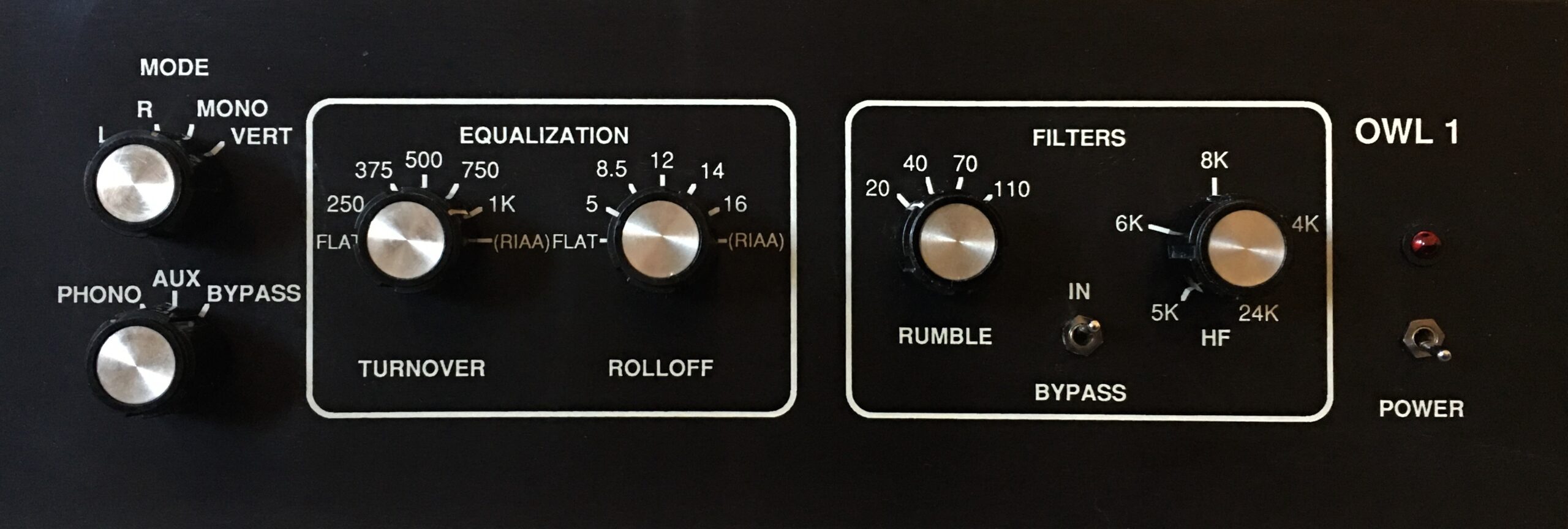
Through volunteering at engineer Rudy Van Gelder’s studio I became acquainted with his playback equipment, which included a very cool phono preamp that I had never seen before. Introduced in 1983, Conductart’s OWL 1 was designed for playing mono 78s and early mono LPs on modern stereo equipment. By default the OWL sums the input from a stereo turntable to mono, and from there the user has oodles of options for how to equalize the signal.

Conductart’s OWL 1 phono preamp

There was no collective standard for phono equalization before the RIAA curve was universally adopted around 1954, about five years into the LP era. This meant that each record company’s 78s and early microgroove LPs emphasized different bands of the frequency spectrum, which would result in a variety of different playback equalization curves when being played on a system that lacked the necessary adjustment features (sometimes a “tone control” was included on older equipment as an economical compromise). Accordingly, the OWL 1 gives you a variety of settings that accommodate all the various phono EQ curves from the time before the RIAA standardization.

When I first found out about the OWL 1 I had an interest in both ten-inch and twelve-inch LPs made in the early 1950s so I decided to look for an OWL 1 for myself. After several months of scouring the internet with no luck, an audience member at one of my Rudy Van Gelder talks just happened to mention having one. Instantly I asked, “Can I buy it?”, and I was surprised by how quickly he agreed.

Though there is information out there on which labels used which curves, I have generally been using the same settings. Conductart provides some of this info in their instruction manual but ultimately recommends that the user simply “use their ears” as a guide to setting the controls. Indeed, those favorite settings of mine coupled with some additional lowpass filtering are a substantial diversion from the RIAA curve that would be standard on any modern phono preamp.

Isolation

The one area where I had doubts about the Dual becoming my go-to workstation deck was that of isolation. Although the plinth that it came with was quite clean, I quickly noticed that there were wow and flutter issues if I was walking near the turntable. Surely I have been spoiled by the insane amount of isolation with my Technics 1200s, but I was really happy with the Dual otherwise so I looked for a custom plinth option. I soon found a good-looking, modestly priced option online, which sported a sturdy walnut frame and thick veneer base. Not only did isolation improve with the new plinth, things are looking much better now as well!

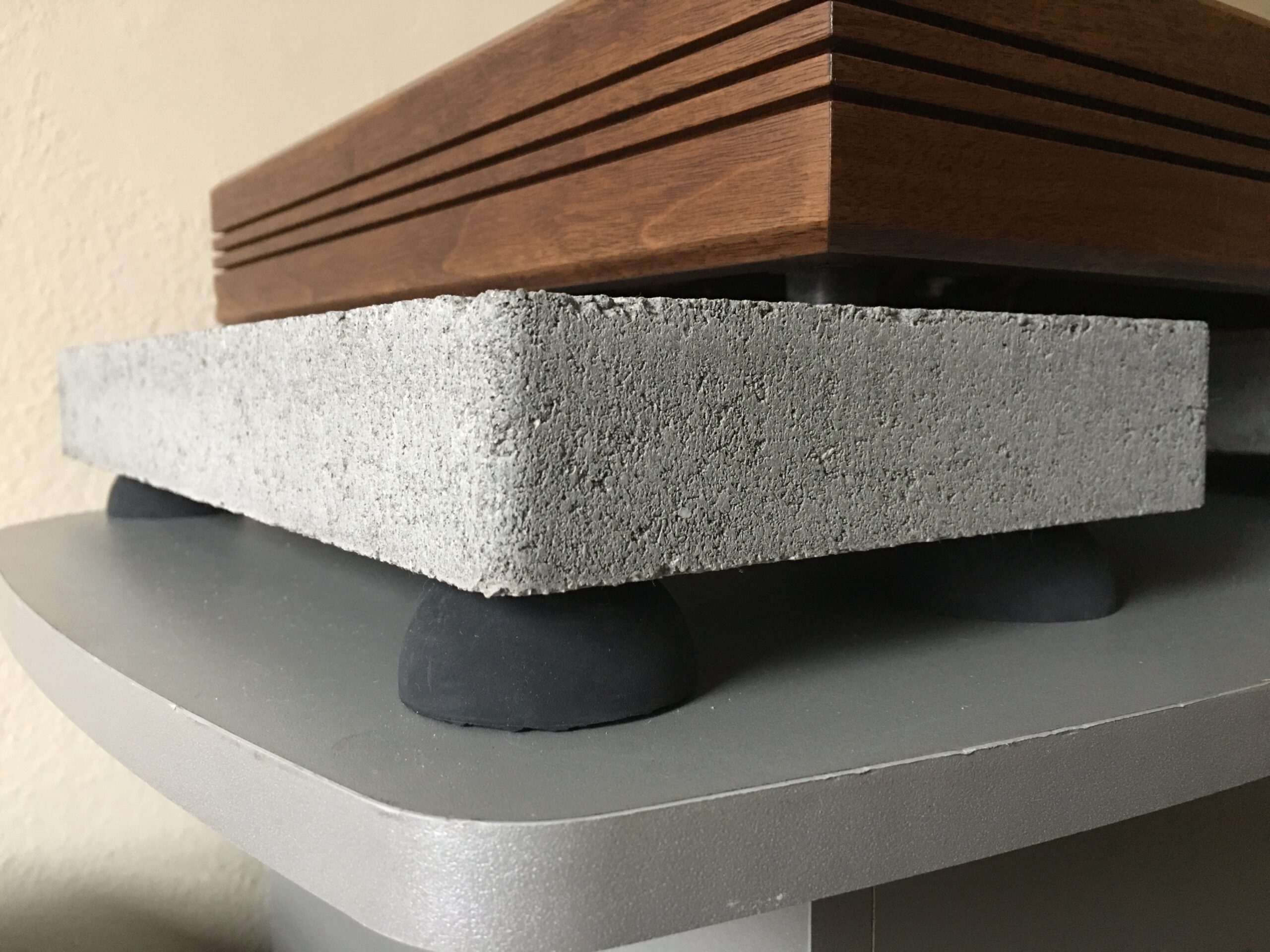
Still I felt isolation could be improved, so after yet another several hours of research and conversations with fellow collectors, I decided to purchase two eight-by-sixteen-inch concrete block slabs from Home Depot, place them under each pair of legs, and I decoupled the slabs from the tabletop with eight racquetball halves, four for each slab. While I’d say the isolation of a 1200 is still superior, I’d also say there was improvement in isolation at each of the two phases of this process.

Closeup of cement base with racquetballs used for decoupling

My Pride and Joy

I have been pleasantly surprised that my new setup rivals the stability and low noise of my 1200, and as a result I have been going to this table for playback of microgroove mono LPs and 45s in addition to 78s. Not only has the unexpectedly high performance of the 1218 allowed me to use a single deck for all my needledrops and critical listening, I have also been feeling a greater sense of pride with it as a consequence of getting it up to spec with my own labor. I also have a soft spot for cost-effective equipment that performs at a high level.

There is also something neat and special about idler wheel design. It may just be that I like the idea of a simplistic mechanism like a pulley spinning a rubber wheel which in turn spins a platter; perhaps I am also a little in awe of just how stable the speed can be under such circumstances. Either way, my new Dual 1218 is giving me joy in a way that my tried-and-true Technics 1200s — tables that have faithfully been with me since 1998 — never have.

And what better way to end my report but with a video needledrop of the new setup in action! Keep an eye out for my new “Shellac Spotlight” column here on the blog!

Vinyl Spotlight: Sonny Rollins, Newk’s Time (Blue Note 4001)

  • Liberty mono pressing ca. 1966-70
  • RVG stamped in dead wax

Personnel:

  • Sonny Rollins, tenor saxophone
  • Wynton Kelly, piano
  • Doug Watkins, bass
  • Philly Joe Jones, drums

Recorded September 22, 1957 at Van Gelder Studio, Hackensack, New Jersey
Originally released January 1959

1 Tune Up
2 Asiatic Raes
3 Wonderful! Wonderful!
4 Surrey with the Fringe on Top
5 Blues for Philly Joe
6 Namely You

Selection:

“Blues for Philly Joe” (Rollins)

I ignored this album for quite some time for a couple reasons. First, it was primarily comprised of standards and short on originals, but also because the album has rarely been reissued in mono and I kept reading about issues with the consistency of Rollins’ volume level in the stereo mix (apparently caused by the leader’s motion in the studio during recording). Well this is a copy made from the bold, original Van Gelder mono mastering, and to my ears there is no such problem here.

This is not the first time that seeing a good deal on a clean original pressing of an album encouraged me to listen to the music more carefully. On this occasion, I was surprised to unearth an album I really enjoy. First and foremost, “Tune Up” and “Asiatic Raes” are two of my favorite modern jazz standards, and this quartet knocks them out of the park. Prematurely, I never thought anyone could best Kenny Dorham’s version of “Asiatic Raes” on Quiet Kenny (titled “Lotus Blossom” there), but Rollins gives him a run for the money.

There are several comical moments from the leader here, and on “Tune Up” we find Rollins at his funniest. His descending staccato riff beginning on the seventh chorus of his solo literally sounds like laughing, and its refrain is a welcome break from the saxophonist’s inventive genius. For someone who is among the most imaginative soloists ever, this less-than-cerebral moment demonstrates Rollins’ sharp wit and special talent for expressing his sense of humor through his music. The lighthearted theme persists throughout the album, but what makes Newk’s Time special is how laid back it feels all while the musicians execute with consistent precision.

Philly Joe Jones shows up for this date and crushes it. His duet with Rollins on “Surrey with the Fringe on Top” is a must-listen. As if the album’s quartet arrangement wasn’t good enough for a minimalist like myself, this pairing of drummer and saxophonist takes it a step further. Although “Surrey” makes it most obvious that engineer Rudy Van Gelder was perhaps a little too heavy-handed with the reverb on Rollins that day, Philly still sounds dry and snappy.

“Blues for Philly” is probably my favorite cut on the album (and for all we know invented on the spot at the session). When the entire band comes back in after “Surrey”, it sounds like an explosion. The low end of Doug Watkins’ bass drops and Wyton Kelly fills the rest of the space with chords. Kelly is especially aggressive and percussive on this album, perhaps rising to match Rollins’ intensity. Everyone is in a good mood and you can hear it.

This sure is one in-your-face album. The entire band is in full attack mode and it makes for an exciting listen.

Vinyl Spotlight: Curtis Fuller Volume 3 (Blue Note 1583)

  • Earless mono pressing circa 1966
  • West 63rd INC/R labels on both sides; no deep groove
  • RVG stamped in dead wax

Personnel:

  • Art Farmer, trumpet
  • Curtis Fuller, trombone
  • Sonny Clark, piano
  • George Tucker, bass
  • Louis Hayes, drums

Recorded December 1, 1957 at Van Gelder Studio, Hackensack, New Jersey
Originally released December 1960

My first interaction with Curtis Fuller Volume 3 came when I bought a Japanese reissue at a local record store on a whim. The lineup looked good and I knew it was fairly rare in any format so I decided to take a chance. After an initial round of unfocused listens, I prematurely dismissed the album and sold it locally. Then about a year later, an original pressing popped up in a different local shop, which inspired me to go home and give it another listen online. This time, the album’s infectious melodies stood out, and upon more critical listening I eventually fell in love, start to finish. At that time I didn’t quite understand where this recording fit into Fuller’s history, though I knew I liked him a lot on other Blue Note albums like Cliff Jordan Sextet, Sonny’s Crib, and Blue Train.

At the time of its recording, Fuller had just hit the New York scene, and his talents as a writer were apparent immediately. Not only did he demonstrate that by contributing four of this album’s six compositions, the dark, brassy harmonies created by Fuller’s trombone and Art Farmer’s trumpet are a testament to his imagination and pursuit of fresh tonalities as an arranger.

Album titles had a tendency to be a little ambiguous in the dawn of the long-play. While the front and back of this jacket simply read, “Curtis Fuller”, the record’s labels suggest Volume 3 as a title (Fuller had led two Blue Note sessions prior to this: The Opener and Bone & Bari). The responsibility of naming an album probably fell squarely in the label’s lap back then, but in all fairness this was par for the course, as many jazz albums of the day had names that either simply echoed a song title or spelled out some cliché play-on-words involving the artist’s name.

Semantics aside, this album is a diamond in the rough. Perhaps because it was released three years after it was recorded, perhaps because it has not been reissued all that much, but also maybe because it does not come across as one of Blue Note’s more sincere branding moments. The cover’s rather basic presentation has a bit of a manufactured feel, and the aforementioned lack of a catchy title may also contribute something to the album’s deceptive front.

Volume 3 begins with a bang. The band explodes out of the gate with a rush of cymbals and a powerful blast from the frontline’s horns on “Little Messenger”. Fuller then proves he can write with latin flavor on “Quantrale”, and drummer Louis Hayes knows how to pepper the rhythm accordingly. Rounding out side one is “Jeanie”, one of several uplifting moments in this moody set. (I’ll always have a soft spot in my heart for songs named after women.)

Side two opens with “Carvon”, a somber ballad that eventually gives way to a more optimistic and uptempo mid-section. Bassist George Tucker’s bow work complements the composition’s downtrodden mood quite well and is reminiscent of Paul Chambers’ reading of “Yesterdays”, recorded earlier that year. But my favorite track is the happy-go-lucky “Two Quarters of a Mile”, which showcases yet another one of Fuller’s catchy melodies. Volume 3 closes with “It’s Too Late Now”, a ballad that opens with glorious unison between the leader and Farmer. Fuller then stretches into one of his patented sweet solos, the likes of which can also be heard on other ballads like “A Lovely Way to Spend an Evening” and “Come Rain or Come Shine”.

The main reason I adore this album is because the musicians, led by Fuller and his heartfelt writing, seem to communicate emotions ranging from happy to sad so genuinely at each and every turn here. Indeed, this was a magical day of synergy for this group of talented musicians, and I’m grateful that its beauty has been preserved all these years.

Vinyl Spotlight: Sonny Clark, Cool Struttin’ (Blue Note 1588) Liberty Mono Pressing

  • Liberty mono pressing circa 1966-1970
  • “RVG” stamped in dead wax

Personnel:

  • Jackie McLean, alto saxophone
  • Art Farmer, trumpet
  • Sonny Clark, piano
  • Paul Chambers, bass
  • Philly Joe Jones, drums

Recorded January 5, 1958 at Van Gelder Studio, Hackensack, New Jersey
Originally released August 1958

1 Cool Struttin’
2 Blue Minor
3 Sippin’ at Bells
4 Deep Night

Selection:

“Deep Night” (Henderson-Vallee)

For Collectors

When I first began collecting vintage jazz records, I quickly noticed that Sonny Clark’s Cool Struttin’ is a very in-demand album and considered by many to be a classic. Additionally, I noticed that original pressings fetched in the upwards of two thousand dollars. At some point I became aware that this third/fourth Liberty pressing with original mono Rudy Van Gelder mastering existed, but it still fetched substantial sums of money despite being at least eight years removed from the initial release. Since this isn’t one of my favorite jazz albums, I didn’t foresee myself owning a copy with the Van Gelder stamp any time soon.

Then this copy popped up in a friend’s list of records for sale. Graded highly and priced very fairly, I replied to my friend’s email the instant I saw it, beating out any other potential buyers who also received my friend’s list that evening. Despite this not being a personal favorite, I still fancy the music, the price was right, and it is a great recording that, after finally hearing an authentic mono copy, revealed itself to be even more outstanding than I had already known it to be in stereo.

The stereo version of Cool Struttin’ has been vastly favored over the mono in reissue programs down through the decades, and I have owned the stereo RVG Edition CD for quite some time. Coincidentally, just before I acquired this copy, I was considering either a 2004 Classic Records mono reissue or the 2011 Japanese Disk Union “DBLP” mono reissue. Blue Note albums like this recorded between May 1957 and October 1958 are especially intriguing in mono because they were recorded to both full-track and two-track tape, so mono versions aren’t (shouldn’t be) a “50/50” summation of the two-track tape, as all Blue Note mono LPs following this period are. So while in theory you may not hear a huge difference between an authentic mono version and a stereo version with the channels summed, at least in principle the two versions came from two different master tapes.

Another factor enticing me to bite on this copy was the album’s iconic cover, which is perhaps the most famous jazz album cover of all time. The presentation of both the graphic and typography remain sharp with this issue, though after Liberty Records acquired Blue Note in 1966 they felt obligated to brandish their name on the front and in the process tarnish Reid Miles’ original artistic vision. The typography he chose for the words “Blue Note 1588” have been replaced with a less attractive outlined version of the label’s note logo complete with the phrase “A Product of Liberty Records” in fine print. While this is the type of thing a detail-oriented collector like myself often takes notice of, it ultimately only amounts to a subtle disappointment that is easy to overlook upon hearing the vinyl’s playback.

Differences in the original and Liberty reissue album covers

For Audio Engineering Nerds

The several stereo versions of this album I have heard no doubt have accurate representations of each instrument (save Rudy Van Gelder’s less-than-ideal piano sound, of course), yet the overall presentation has typically been a little on the bright side in stereo, and, as per usual with pre-seventies stereo, sounds disjoint. Surely some jazz lovers prefer the added detail of these stereo mixes; personally I prefer the cohesion of the mono.

I don’t know if my mind is playing tricks on me as a result of this being such a high-profile album, but the mono presentation of Cool Struttin’ seems especially balanced in relation to other mono-stereo comparisons from the same time period. This original Van Gelder mono mastering is on the darker side — especially good here since it sounds like the cymbals were recorded with a lot of high-frequency energy — but everything really locks into place in mono here.

For example, where stereo issues arguably give an added sense of depth by placing the reverb for Art Farmer’s trumpet in the center of the stereo spread with Farmer flanked to the left, on the mono version the same plate reverb melds with Farmer’s tone in a unique and satisfying way. What’s more, the mono seems to emphasize producer Alfred Lion’s artistic sensibilities and engineer Rudy Van Gelder’s ability to give each musician their own sound. As pointed out by my honorable collecting friend Clifford (Instagram’s @tallswami), in contrast to Farmer, Jackie McLean is presented front and center with drier immediacy. These choices emphasize each soloist’s unique character and helps each find their own voice on the recording.

For Music Lovers

Many jazz fans adore Cool Struttin’. While collectors stereotypically have a special fetish for the album that is perhaps in some way informed by its killer album art, a drummer friend who is deeply rooted in the jazz tradition and entirely unfamiliar with the world of collecting has identified this as his favorite jazz album of all time. Paraphrasing him, “It just swings so hard”.

I don’t deny that, but hard bop is my thing and I hear a lot of hard swinging in my day-to-day listening. As a result then, I can’t say that I hold Cool Struttin’ in such high regard. I would never deny that it embodies quality performances by world-class musicians but it’s a bit off-base from my typical taste. I’ve never been a big fan of bluesy walking tunes like the title track; they have always seemed kind of “jammy” to me and hence a bit lacking in purpose. The song’s artistic statements could have probably been made in about two minutes’ less time as well. Not that there’s anything inherently wrong with two solos from a great pianist, but Clark solos twice, and the band seems to be in miscommunication when Chambers comes out of his solo, which leads to an additional chorus of meandering.

I dig the intro of “Blue Minor”, and though the bridge has a cheesy, swanky quality to it, perhaps it creates interesting contrast with the song’s hipper A-section. McLean’s solo here is in the Monkian tradition of sticking close to the melody, but at the same time it sounds out of character for the saxophonist, who is typically quite adventurous harmonically. Ironically, this paints McLean as being somewhat unfamiliar with the tune at the time of recording.

“Sippin’ at Bells” is a Miles Davis composition dating back to 1947, the melody of which has firm roots in the bebop tradition. Regular readers of Deep Groove Mono may be aware that compositions with more complex melodies like this generally aren’t my favorite. True, many Monk compositions I adore have challenging structures (“Four in One”, for example), though there’s something about Monk’s melodies that make them fun to hum regardless (which I believe is a very important aspect of his genius). A lot of bebop melodies make me think of tangled string and thus I have a hard time finding something to latch on to. That said, I don’t feel that “Sippin’ at Bells” squarely falls into this category, and I enjoy both Clark’s take and Miles’ original version with Charlie Parker.

Concluding the album is “Deep Night”, a song originally recorded by Rudy Vallee in 1929 and my favorite track on Cool Struttin’. I love the opening two-minute trio vamp. Philly’s brush work and Clark’s delicate, lyrical style complement each other so well, and Philly’s solo at the end is airtight percussive perfection. I probably would have preferred that the trio finish out the song unaccompanied, but when Farmer and McLean eventually enter they deliver quality solos nonetheless.

Vinyl Spotlight: A Date with Jimmy Smith, Vol. 2 (Blue Note 1548) “W63/NY” Mixed Labels Pressing

  • Vintage pressing circa 1962-1966
  • “West 63rd (no R) / New York USA” mixed labels
  • “RVG” and Plastylite “P” (ear) etched in dead wax

Personnel:

  • Donald Byrd, trumpet
  • Lou Donaldson, alto saxophone
  • Hank Mobley, tenor saxophone
  • Jimmy Smith, organ
  • Eddie McFadden, guitar
  • Art Blakey, drums

Recorded February 11 & 12, 1957 at Manhattan Towers, New York City
Originally released September 1957

When I started collecting, I bought into the popular opinion that Jimmy Smith isn’t “collectible” and didn’t pay him any attention. But then I found a great 1965 German documentary on him serving as evidence of how “incredible” he really was. From the live performances where he plays with so much heart and frankly, tears it up, to the interview moments where he communicates his philosophy of jazz and music in general so well, I decided to start listening. So I made a Spotify playlist of all his Blue Note albums, put it on shuffle while I worked, and a couple weeks later I had a condensed playlist of favorites (you can hear that playlist on Spotify now). One of those songs, “Groovy Date”, is from this LP. The sheer power with which the song opens and closes was enough to make me hit the “heart” button, and the solos from all the members do not disappoint.

Despite this album being available only in mono regardless of format, many Smith Blue Notes are only available in stereo as reissues. So I decided it would be both worthwhile and cost-effective to pursue these albums in their original mono LP incarnations. Since Smith originals are so readily available, I quickly acquired six of them. This one was a little harder to get online, but then one day I was in a local shop and they had this copy for cheap. The cover looked great but the vinyl was pretty marked up. It doesn’t play with any skips, and aside from “Groovy Date”, it can be a little noisy. That’s fine with me because my favorite track sounds bold and clear, and I basically chalk this up as paying a fair price for a single song and a great cover (I love the photos of the musicians, the layout, and the color scheme).

As for one of my favorite topics, sonics, this is one of a handful of Blue Note albums recorded by Rudy Van Gelder that wasn’t recorded at one of his studios or a live venue. For years I noticed the recording location “Manhattan Towers” for various Blue Note recordings on jazzdisco.org but never knew what it meant. But then, one day I was lucky enough to speak with Blue Note producer and archivist Michael Cuscuna about it, and he explained that Blue Note had worked out a deal with Manhattan Towers, a hotel in New York City’s Upper West Side, so bigger bands could assemble in their ballroom (Art Blakey’s percussion ensembles, Sabu Martinez) and important artists like Smith who liked to record at night could jam after the normal Hackensack business hours (Van Gelder’s neighbors were known to complain about the noise late at night and his parents lived there).

In writing this article I did a little research and found this cool New York Times article from 1974 explaining that the hotel, located on Broadway between West 76th and 77th Streets, was crime-ridden! (One has to wonder if it was similar or becoming more that way in 1957!) You can hear the massive size of that ballroom on these cuts. The horns, organ, and guitar still sound quite immediate and up-close, but the reverberation of Art Blakey’s drums is true to the space’s larger size. Stay tuned as I review more of Jimmy Smith’s classic Blue Note recordings in the coming months.

Vinyl Spotlight: Kenny Burrell, Blue Lights, Vol. 2 (Blue Note 1597) Liberty Mono Pressing

  • Liberty mono pressing circa 1966-1970
  • RVG etched in dead wax

Personnel:

  • Louis Smith, trumpet
  • Junior Cook, tenor saxophone (all but “The Man I Love”)
  • Tina Brooks, tenor saxophone (“Rock Salt”, “Chuckin'” only)
  • Kenny Burrell, guitar
  • Duke Jordan, piano (“The Man I Love”, “Phinupi” only)
  • Bobby Timmons, piano (“Rock Salt”, “Chuckin'” only
  • Sam Jones, bass
  • Art Blakey, drums

Recorded May 14, 1958 at Manhattan Towers, New York City
Originally released in October 1961

Selection:

“The Man I Love” (Gershwin)

For music lovers:

Continuing with the theme of mono Liberty Blue Notes, this is one of my favorite records by the prolific guitarist Kenny Burrell. In reading about this LP, I find that most of the discussion related to the album deals with its cover art. It is, of course, one of the three titles that the artist Andy Warhol drew for Blue Note. While the cover art is very beautiful, especially when seen on a clean, crisp copy, it was the sheer amount of talent on this record that sold me. The two bands that play on Blue Lights are a who’s-who of the bop era with an exciting player at every instrument.

Truly there is something for every fan of each player, and having them play on the same record provides for an interesting comparison in the styles of the musicians sharing an instrument. The opening track, “Rock Salt”, is a perfect showcase of each group member’s talent. Burrell opens with a familiar sounding, repeating blues riff that is echoed by the other instruments on repeated choruses. But the most exciting moments here involve the track’s two tenors. I always appreciate when Tina Brooks appears in a lineup because his tendency to play many minor notes with a Latin influence is right up my alley. But for this record, it was Junior Cook who first got my attention. For many years I have appreciated Cook in one of the most popular jazz groups of all time, The Horace Silver Quintet, and I was very excited to hear him at a young age in a different setting. Cook holds his own with legendary bandmates here, all while maintaining his own distinctive tone shoulder-to-shoulder with the uniquely-voiced Brooks.

Though the tenors are what drew me to this album, an unassuming player impresses me on every play. Sam Jones, though very well known as a bop player, was not known to me as an acclaimed virtuoso of the bass when I acquired this LP. I had seen his name on many recordings of the era but heard nothing in his playing on those records that would make me elevate him to the level of, say, Paul Chambers or Ron Carter. And on this recording, surrounded by such dominant and loud (Art Blakey!) musicians, you might expect Jones’ bass to be buried under crashing drums, the volume of an (at times) three-man frontline, and Burrell’s rhythmic chords. But Jones’ bass stays at the forefront throughout and drives the rhythm section to a point where he virtually assumes the role of a leader. With such strong rhythm players and timekeepers as Blakey, Bobby Timmons, and Duke Jordan, I was impressed that the bassist was the one who had the greatest impact on the overall sound of the band. Jones has several bass solos both here and on the preceding volume, but the riffs bookending “The Man I Love” are two of my favorite bass passages in jazz.

Sam Jones

In mentioning all the date’s sidemen thus far I have not forgotten the person for without whom this session would not be possible. To me Kenny Burrell has always been the epitome of consistency in his Blue Note recordings. Along with Silver, Jimmy Smith, and Stanley Turrentine, no other artist has recorded so many quality records over such a long period of time for the label. He plays just as well on this album as he does on any other, with an equally impressive display of chords, quick flourishes, and solid organization of his band. To this day (Burrell has survived the stereotypical turbulence of the bop lifestyle), he is considered the best guitarist in jazz by many. There were many other greats in the genre like Wes Montgomery or Grant Green, but many of them either had very short careers or were enticed by more commercial music. (Barring a single Christmas album) Burrell has consistently been dedicated to playing respectable music throughout his career. As it was for me with Junior Cook, part of the appeal of this recording was to hear a great player in the early stages of his career.

For collectors:

One of the only drawbacks to coveting such an all-star session with a notoriously famous cover was of course the challenge of acquiring a copy. Though recorded to both full-track and two-track tape, both volumes of Blue Lights would only be released in mono initially. My introduction to this LP was by way of a United Artists stereo pressing, but for one thing that copy had such muffled bass that Sam Jones’ incredible talent was not even on my radar at the time. It was equally dissatisfying that United Artists decided to release both volumes with the blue background of Volume 1. The scarcity of the pink second cover, the inferior stereo presentation, and the presence of deep grooves all seem to drive the high demand for first pressings.

In searching for an affordable copy, I saw that even the second and third pressings (West 63rd labels with no deep groove and New York USA labels, respectively) were still out of my price range. I had started looking for more modern alternatives in mono (Japanese pressings) when I noticed this Liberty copy for sale in an online auction. Acquiring a top copy of this album with original mono Van Gelder metalwork all while keeping the lights on proved an attractive option and I wasn’t alone. I encountered a lot of competition, and though I paid over a thousand dollars less than what an original costs in similar condition, to this date it is the most I have ever paid for a Division of Liberty Blue Note. But it has proven to be worth every penny.