Tag Archives: sonny rollins

Origins of Bop: Sigmund Romberg, “Softly, As in a Morning Sunrise”

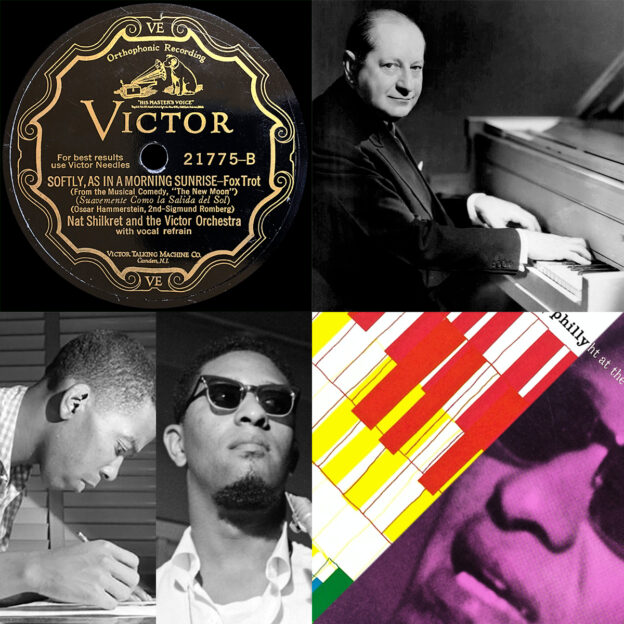
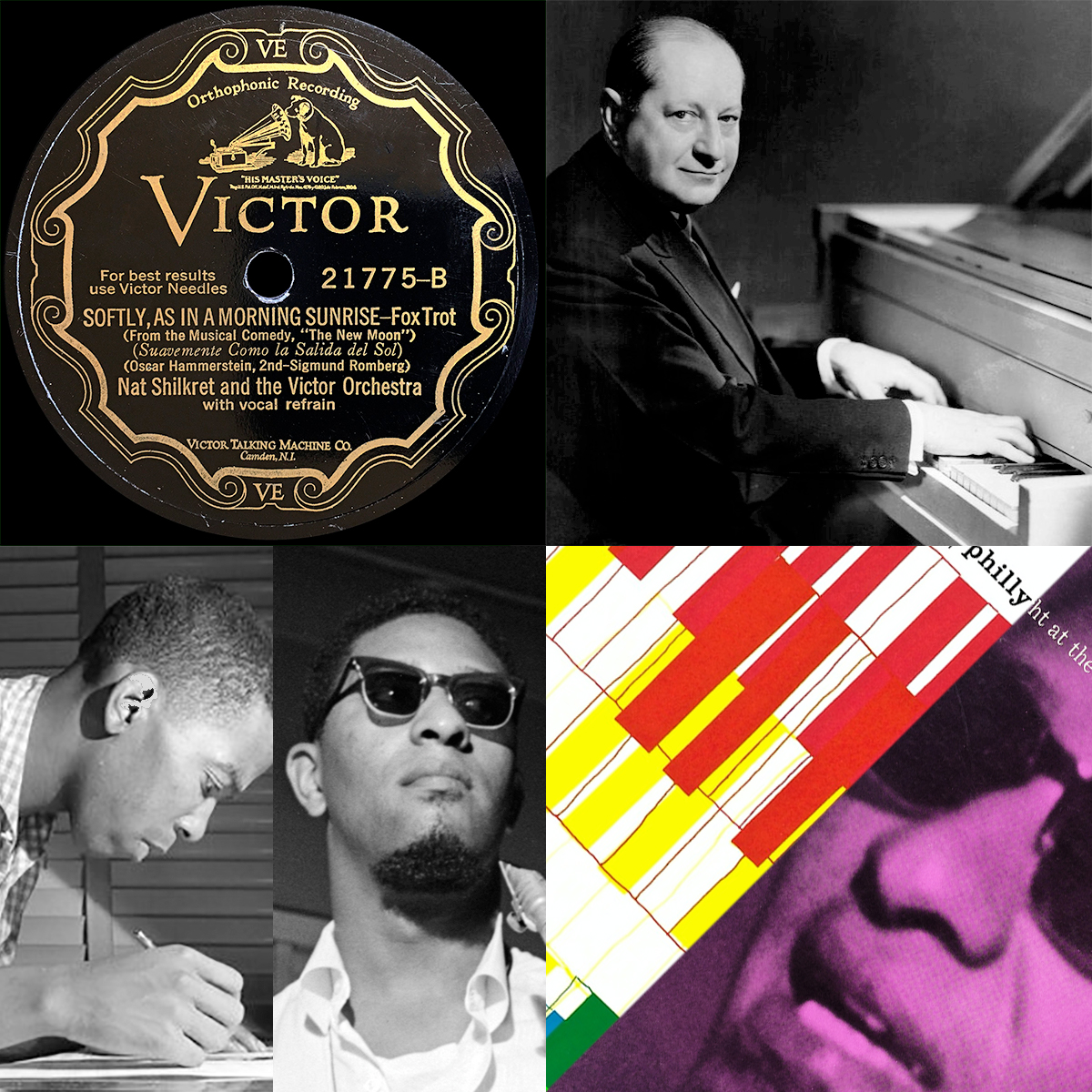
Nat Shilkret and the Victor Orchestra, “Softly, As in a Morning Sunrise” (Original 78)

Victor Records Cat. No. 21775 (Side B) | 1929

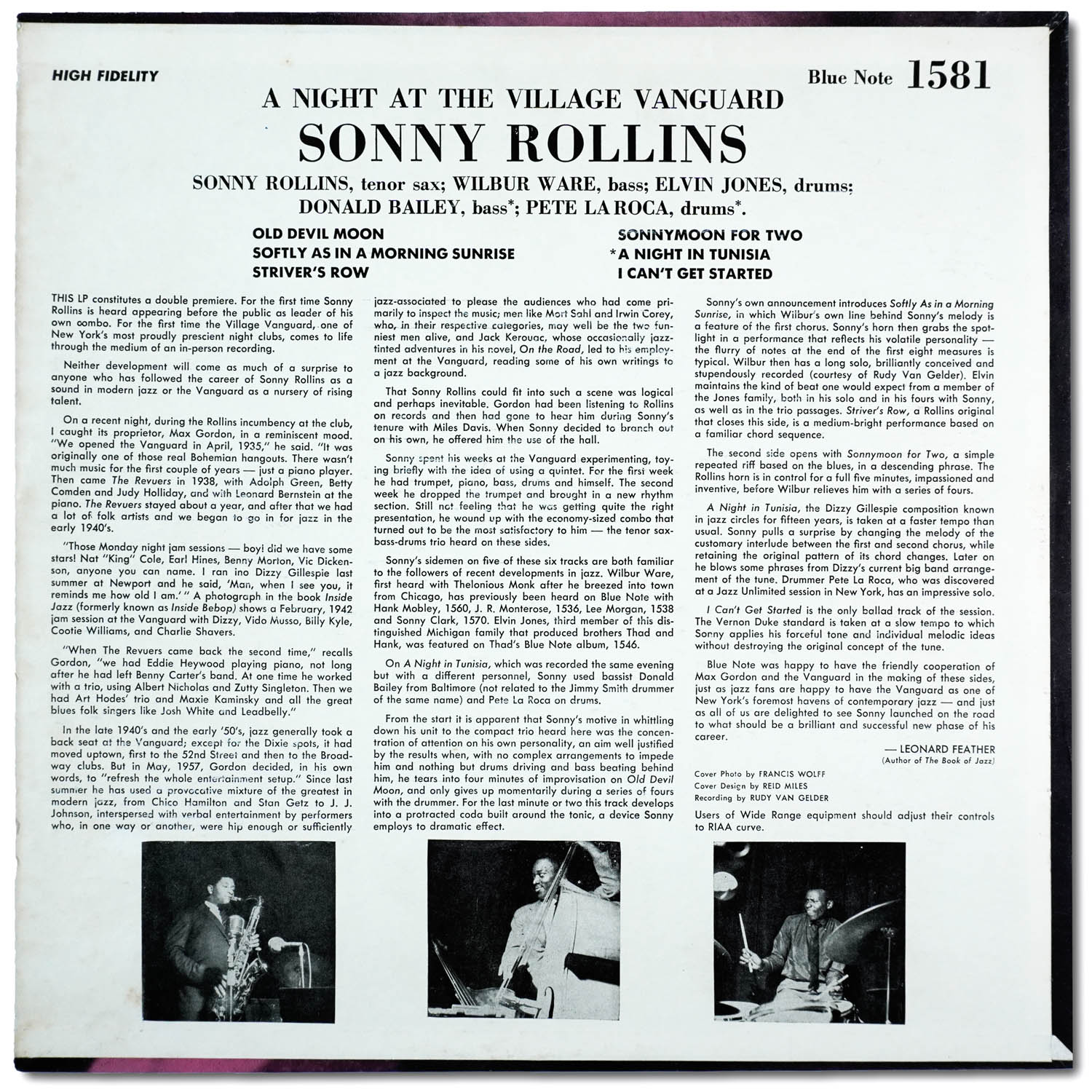
Sonny Rollins, “Softly, As in a Morning Sunrise” (Original LP)

Blue Note Records Cat. No. 1581 | 1957

Personnel:

  • Sonny Rollins, tenor saxophone
  • Wilbur Ware, bass
  • Elvin Jones, drums

Sonny Clark, “Softly, As in a Morning Sunrise” (Disk Union “DBLP” Mono Reissue)

Blue Note Records Cat. No. 1579 | 1957

Personnel:

  • Sonny Clark, piano
  • Paul Chambers, bass
  • Philly Joe Jones, drums
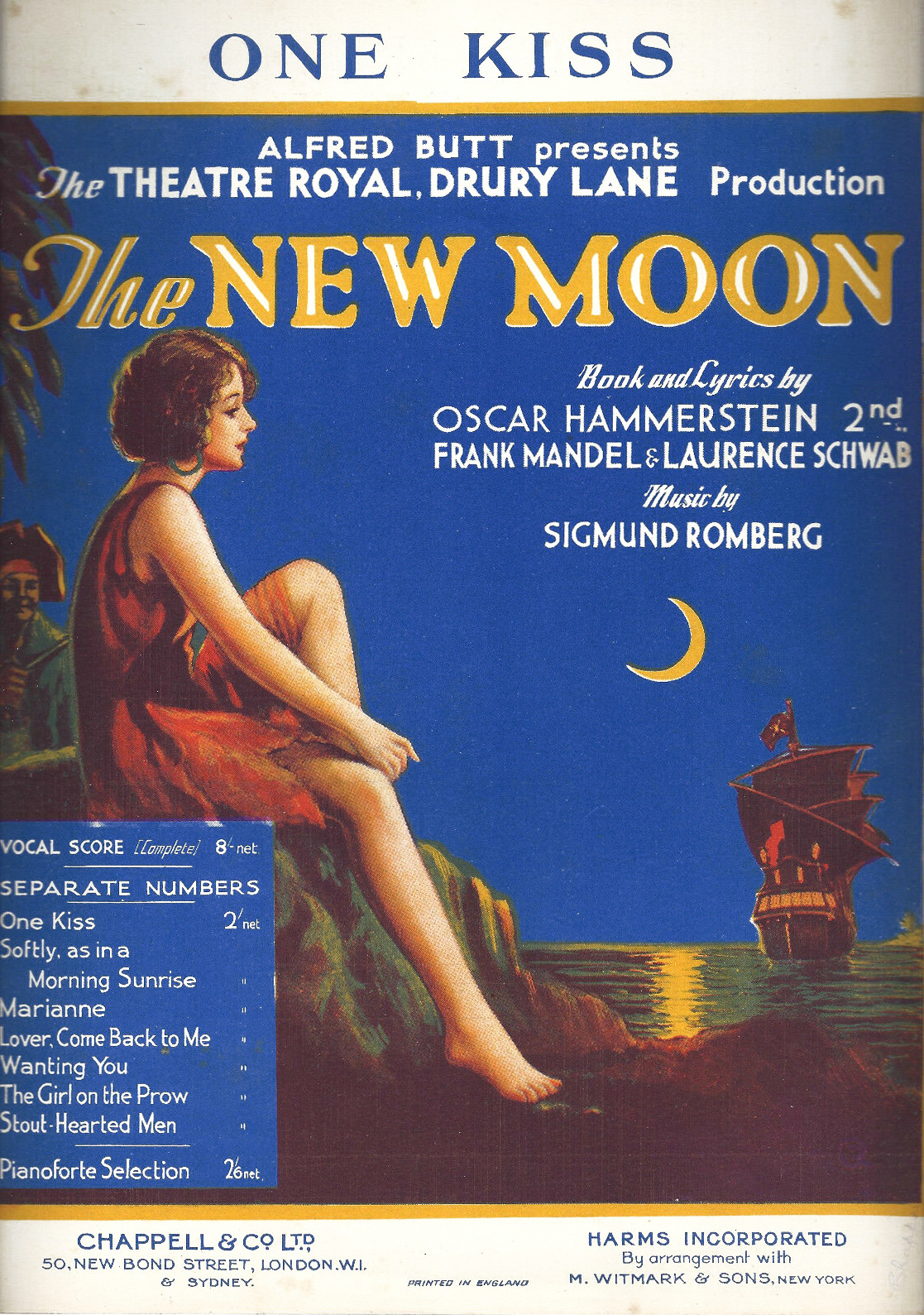
For the first installment of Origins of Bop, we looked at a 1948 bebop classic (Bird’s “Ah Leu Cha”) covered in the hard bop era (by Miles). This time, we explore a jazz standard with roots stretching back much further. “Softly, As in a Morning Sunrise” has been covered by many artists including John Coltrane and Larry Young, but here we focus on the interpretations of two Sonnys. Published in 1928 and written for a theatrical production titled The New Moon, the song’s music was composed by the great Sigmund Romberg with lyrics penned by Oscar Hammerstein II.

Playbill for The New Moon

My personal history with this song is no different than most vocal jazz standards in that I had heard numerous instrumental renditions before ever knowing it had lyrics. I have always been a fan of popular music so the act of discovering the lyrics to one of my favorite standards has proven both a joy and a revelation. Several years ago, this passion for vocal versions led me to research the origins of my favorite hard bop tunes (it’s also a big reason why this series exists). These efforts culminated in two big Spotify playlists that I have since shared here on the blog.

Later on when I started collecting 78s, I had the idea to hunt down some of these older versions. There are usually numerous options to choose from for any given song, and while it’s possible that others might better suit my taste in this case, Nat Shilkret’s recording of “Softly” for Victor represents the first studio performance. It embodies the way most of the music-buying public would have first heard it in 1929 and thus brings along with it a unique authenticity.

Recordings like this are a bit paradoxical to me. On one hand, I value them because they enhance my appreciation of the instrumental versions I originally came to love. On the other hand, these Vaudevillian, string-drenched predecessors often sound undeniably square. In Ken Burns’ Jazz doc, the late, great critic Stanley Crouch gave historical context to the revolution Louis Armstrong created in singing when Crouch humorously demonstrated the difference between Satch’s fresh, entertaining lyricism and the insufferably corny vocal stylings that were commonplace in the early ‘20s. By 1929 that revolution was nearing completion, and to the dismay of a new generation of hep cats, bandleaders like Shilkret and the labels employing them desperately clung to a musical tradition that was becoming more and more obsolete by the minute.

Nat Shilkret and the very un-diverse Victor Orchestra

Although The New Moon had lasting popularity as an operetta both on Broadway and the silver screen, “Softly” remained virtually untouched by the recording industry through the ‘30s, ‘40s, and into the early 1950s, save a swinging 1938 Artie Shaw version. It really wasn’t until the Modern Jazz Quartet picked it up and dusted it off in 1955 for a recording session with Prestige Records that the song was first brought to the attention of the jazz community. Two years later, Sonny Clark and Sonny Rollins gave the oldie their own respective readings for Blue Note Records, and countless other musicians would carry on the new tradition for decades to come.

The first version I ever heard was Rollins’, a cool performance appearing on the mega-classic live album A Night at the Village Vanguard. Elvin Jones picks up the brushes for this one, reduces the temperature of things to a simmer, and the trio proceeds to find a natural groove while trading short solos during an extended round of cooperative improvisation. Rollins slyly maneuvers the changes, darting then tip-toeing from one chord to the next like Peter Sellers playing a detective in hot pursuit of a suspect.

Sooner than later I discovered Blue Note 1579, Sonny Clark Trio, and when “Softly” played for the first time, I quickly recognized its highly memorable melody. Clark’s reading is the aural equivalent of gentle, natural light being emitted by an overcast day’s cloudy sky. From an engineering standpoint, a trio is undoubtedly easier to record than a larger arrangement like a quintet, and accordingly the sound of this group has plenty of room to reverberate in engineer Rudy Van Gelder’s home studio. Van Gelder’s piano treatment is typically much darker and perhaps even sounds a bit “squashed” at times. But here he takes the headroom afforded by this small band and gives the piano an extra dose of bounce that, though unusual for Van Gelder, is a very welcome change of pace. The tonal coloring is not too bright, not too dark, and the added dynamics make it easy for us to hear just how expressive Clark could be when his fingers struck the keys.

Epilogue

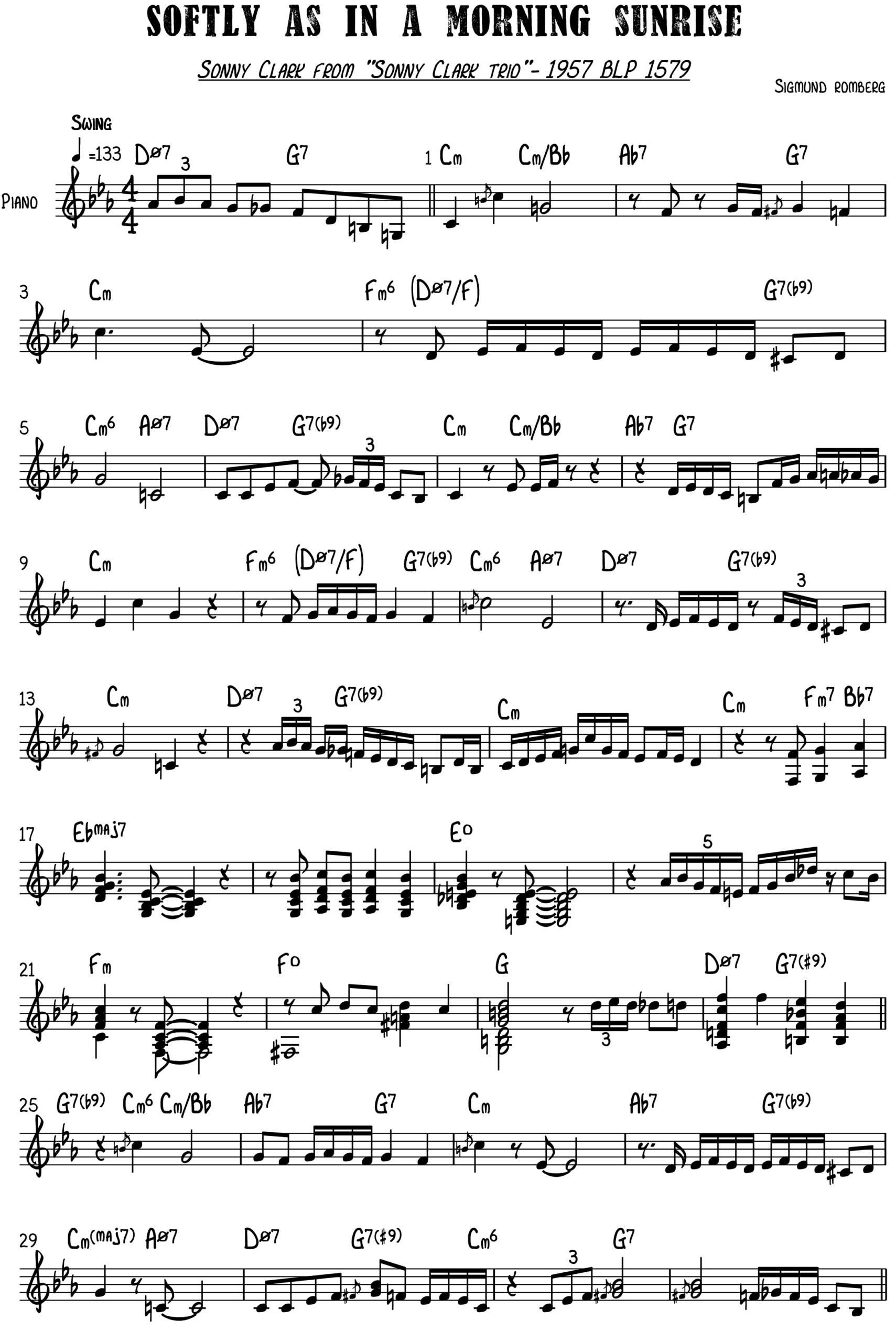
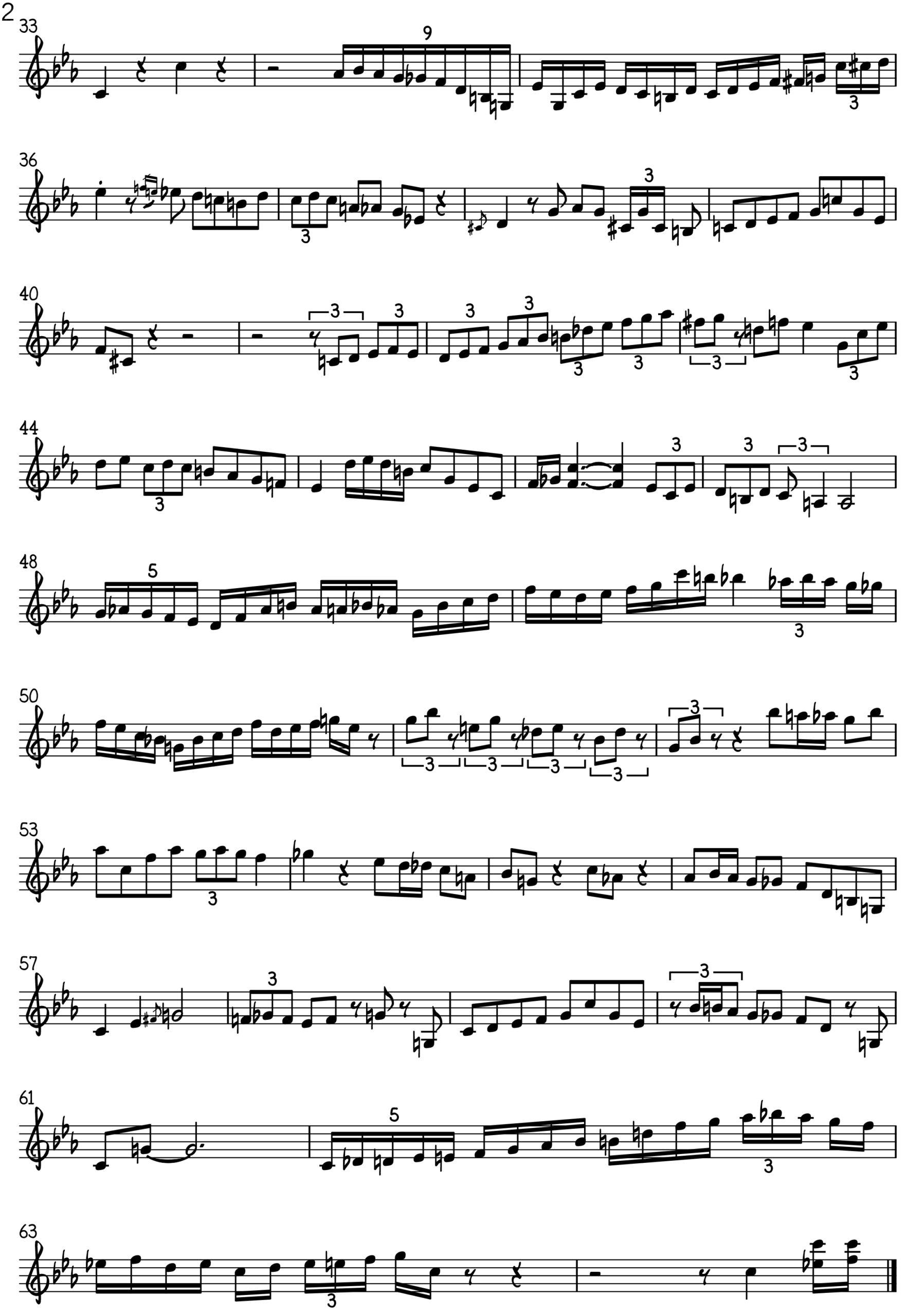
Simon Whiteside, co-host of the entertaining, educational jazz podcast 2-5-1, has provided Deep Groove Mono with his transcription of the intro and first chorus of “Softly” as played by Sonny Clark on Sonny Clark Trio. I have been a devout listener of Simon’s cast and it is highly recommended. There is not enough informed analysis in jazz record collecting and I always jump at the opportunity to educate myself more on this great art form. Have fun following along!
Vinyl Spotlight: Sonny Rollins Quartet (Esquire EP-148) Original 45 RPM 7″ EP

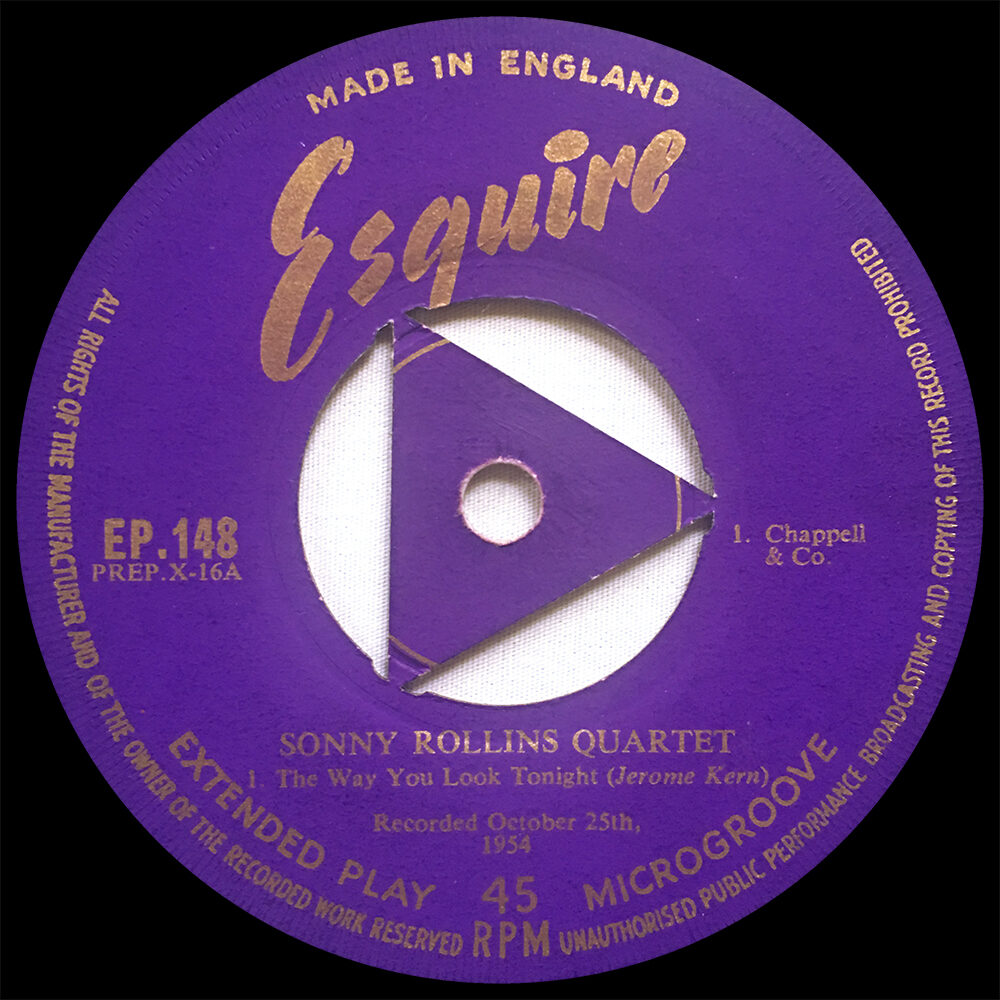
Original 45 RPM 7″ UK pressing circa 1955
Recorded October 25, 1954 at Van Gelder Studio, Hackensack, New Jersey

Selection: “I Want to Be Happy” (Caesar-Youmans)

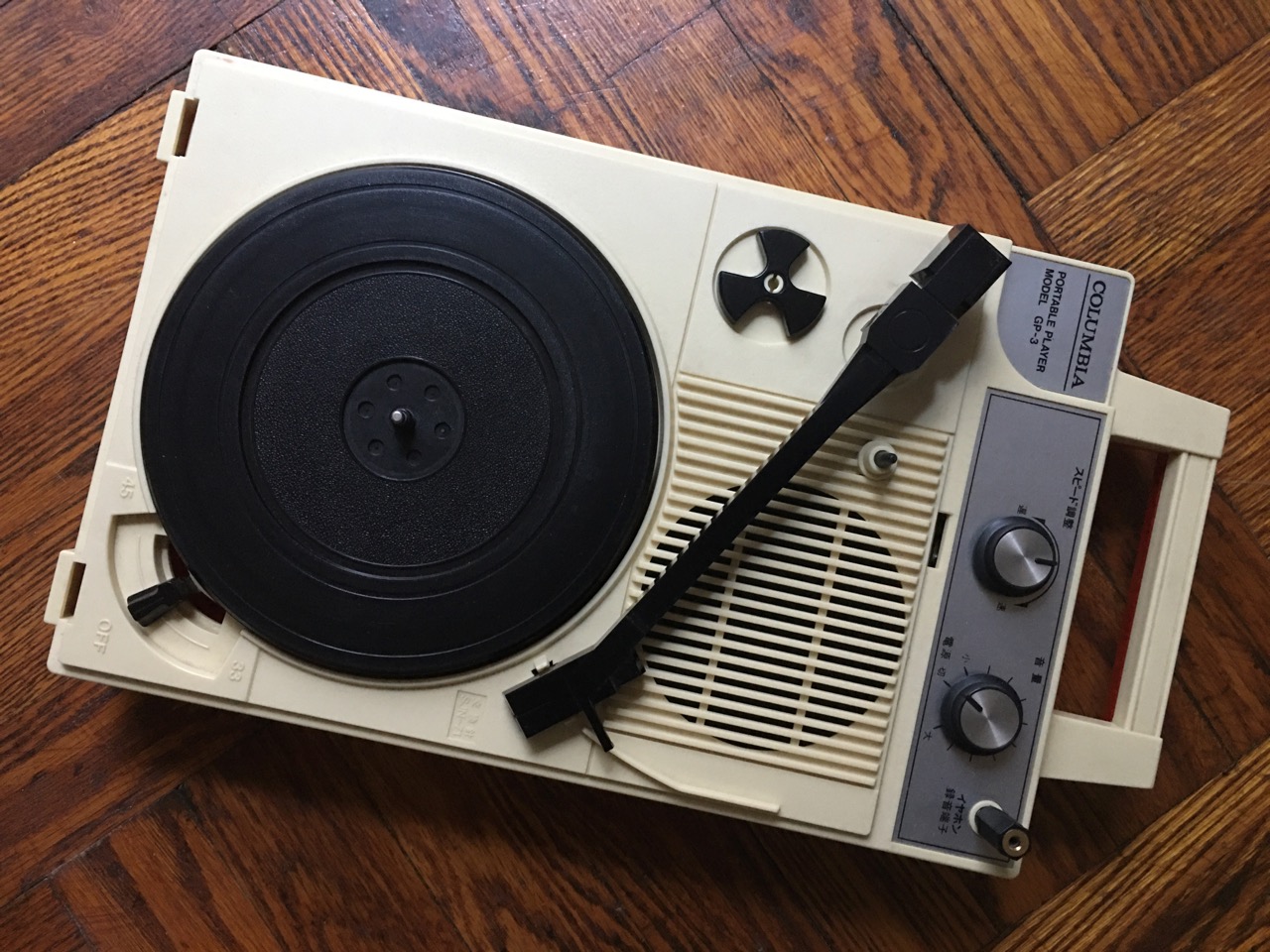
Last spring I got a Columbia GP-3, the workhorse portable record player made in Japan that has been serving beatdiggers and the like for decades. Finances were good at the time and I had been trying to find ways to relax and enjoy life more. Since I had always wanted one of these, I didn’t overthink it and just bought it. Lo and behold, a couple months later a friend visiting from Europe got me back into 45s, and as we hopped from shop to shop in Brooklyn last summer, the GP-3 proved invaluable. It allowed us to easily preview records we were otherwise unfamiliar with all while avoiding the complete takeover of a store listening station.

The Columbia GP-3 portable record player

All the 45s I was buying at that point were doo-wop, rhythm & blues, and rock & roll. Most of the records I proudly consider part of my personal collection, but I was also simultaneously investing in a set of records I could use to get back into DJing. Jazz didn’t necessarily fit into the latter category so I was passing it over when I saw it in the bins. But then I realized how fun it would be to take my GP-3 to the park or bring it along when I travel. To this end, I became more alert to the presence of jazz 45s while shopping both in person and online.

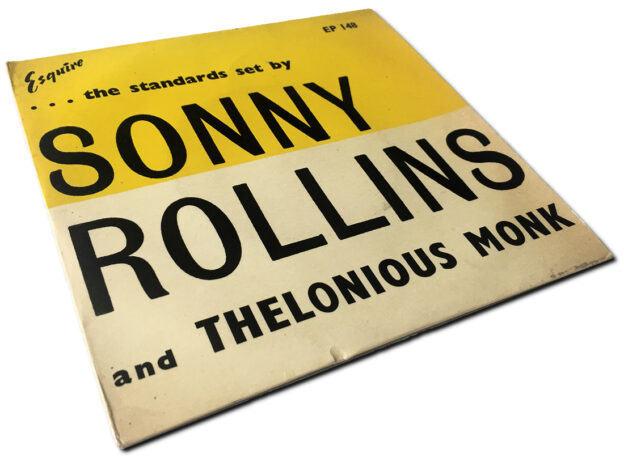
Remember that Esquire Monk ten-inch I posted about a few months ago? While conducting general research on Esquire titles around the time I acquired that record, I decided it might be fun to have some Monk on 45. Then I stumbled upon this title and its glorious cover.

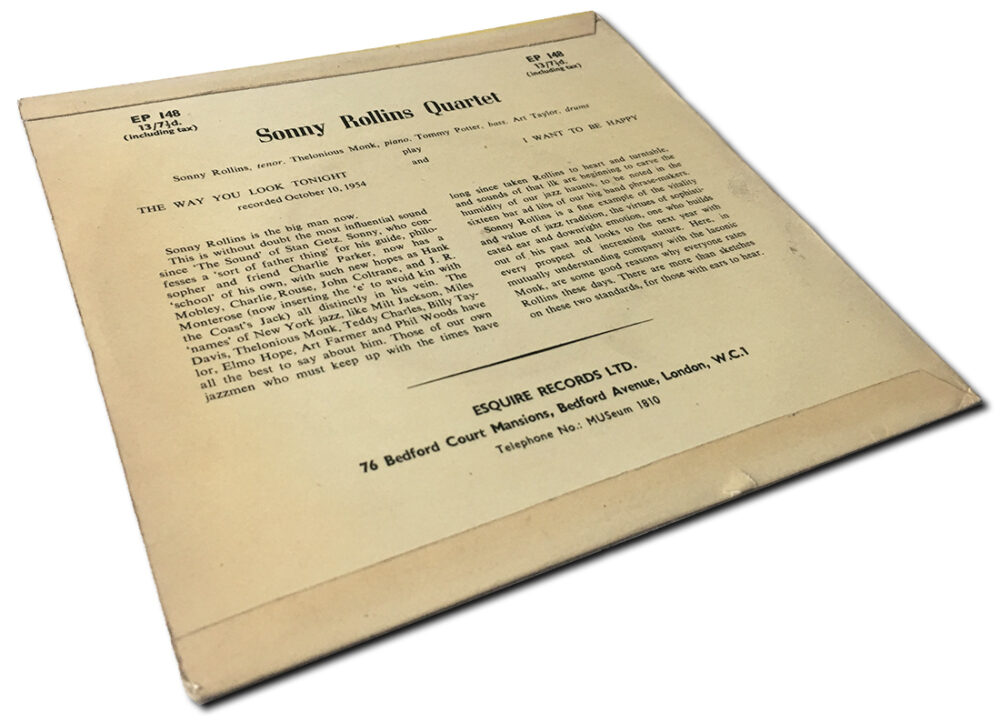
The two songs on this British extended play or “E.P.” first appeared in the U.S. most likely in late 1954 or early 1955 on Prestige catalog number 190, a ten-inch long-play featuring Sonny Rollins and Thelonious Monk. A couple years later the songs would resurface on Prestige 7075, this time a twelve-inch LP that compiled takes from three sessions Rollins and Monk collaborated on in 1953 and ’54. Unfortunately, Rudy Van Gelder is noticeably absent from the mastering process for this E.P., evidenced by the lower signal-to-noise ratio between the music and surface noise.

Prestige catalog numbers 190 and 7075 (photo of 190 courtesy of @jrock1675)

While I’m a big fan of the music and performances here, I’m not the biggest fan of the actual recording. Van Gelder did record this session, though it was recorded during a period in which he seems to have been fascinated with a shiny new toy, a spring reverberation unit. The result is a Rollins unfavorably drenched in artificial-sounding reflections. The truth is it takes away from my enjoyment of the recording a little, but the performances surely make up for it. I enjoy Monk’s especially heavy-handed comping on “I Want to Be Happy”, and I’ve always liked the melody of Jerome Kern’s “The Way You Look Tonight”, where we find Monk a bit tamer behind Rollins.

Lastly, if it makes sense to call any album covers “sexy”, surely this is one of them. The eye-popping contrast of bold yellow with cream and the cover’s deep black typography demands your attention. Esquire, you have done it again with absolutely killer cover design…hats off.

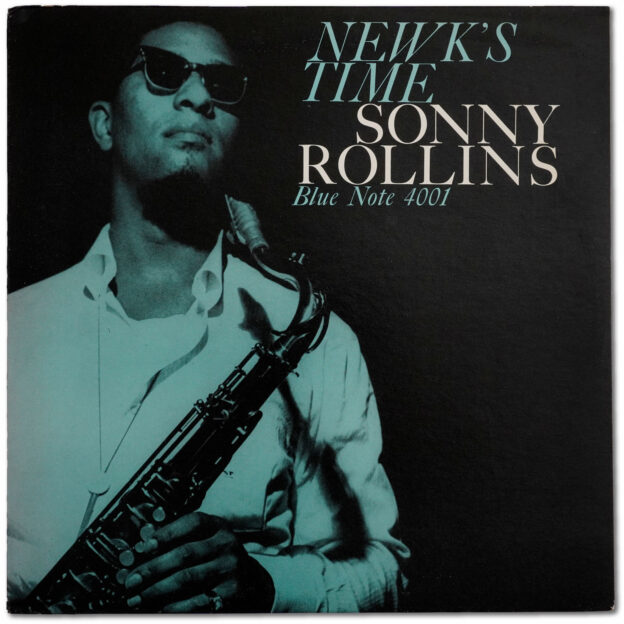
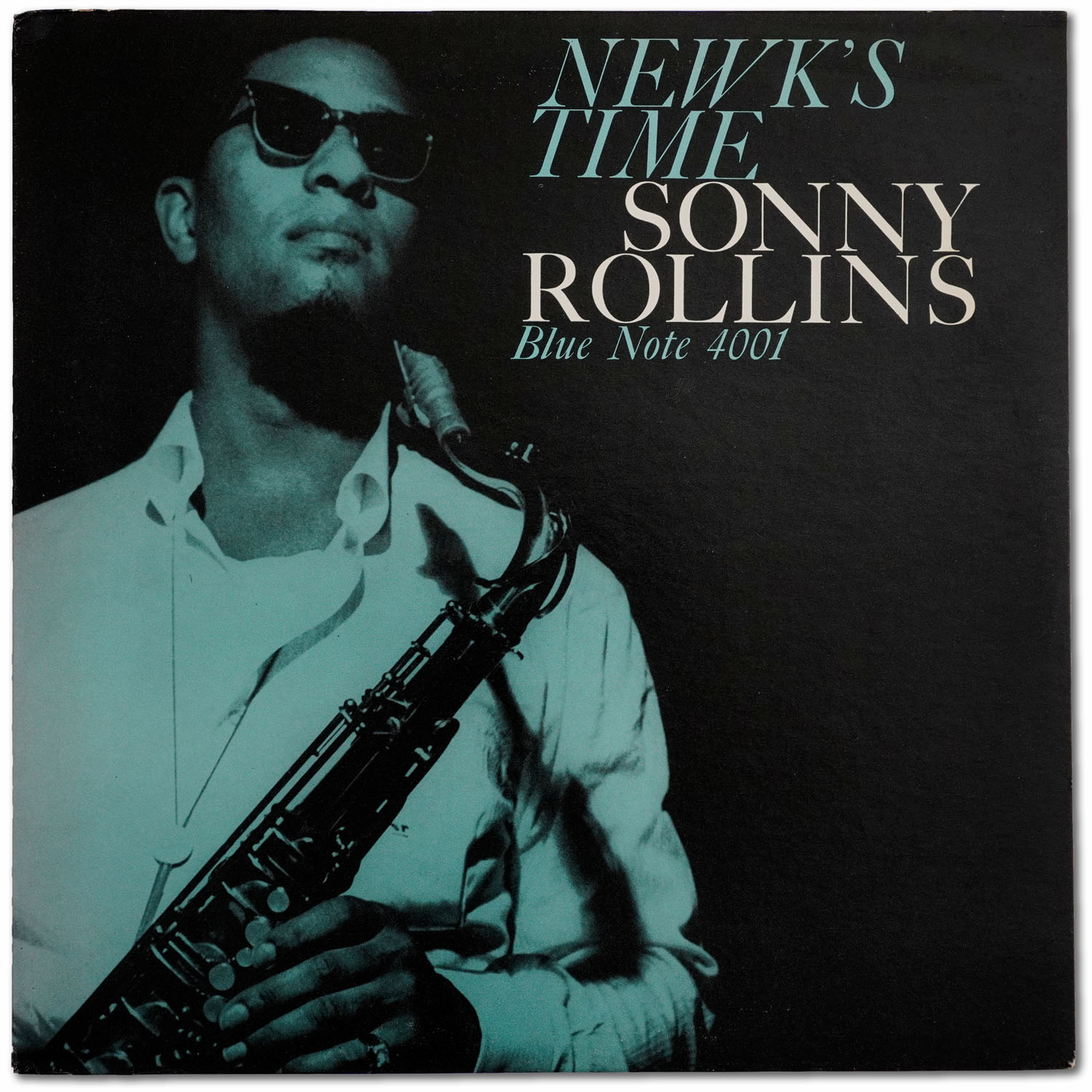
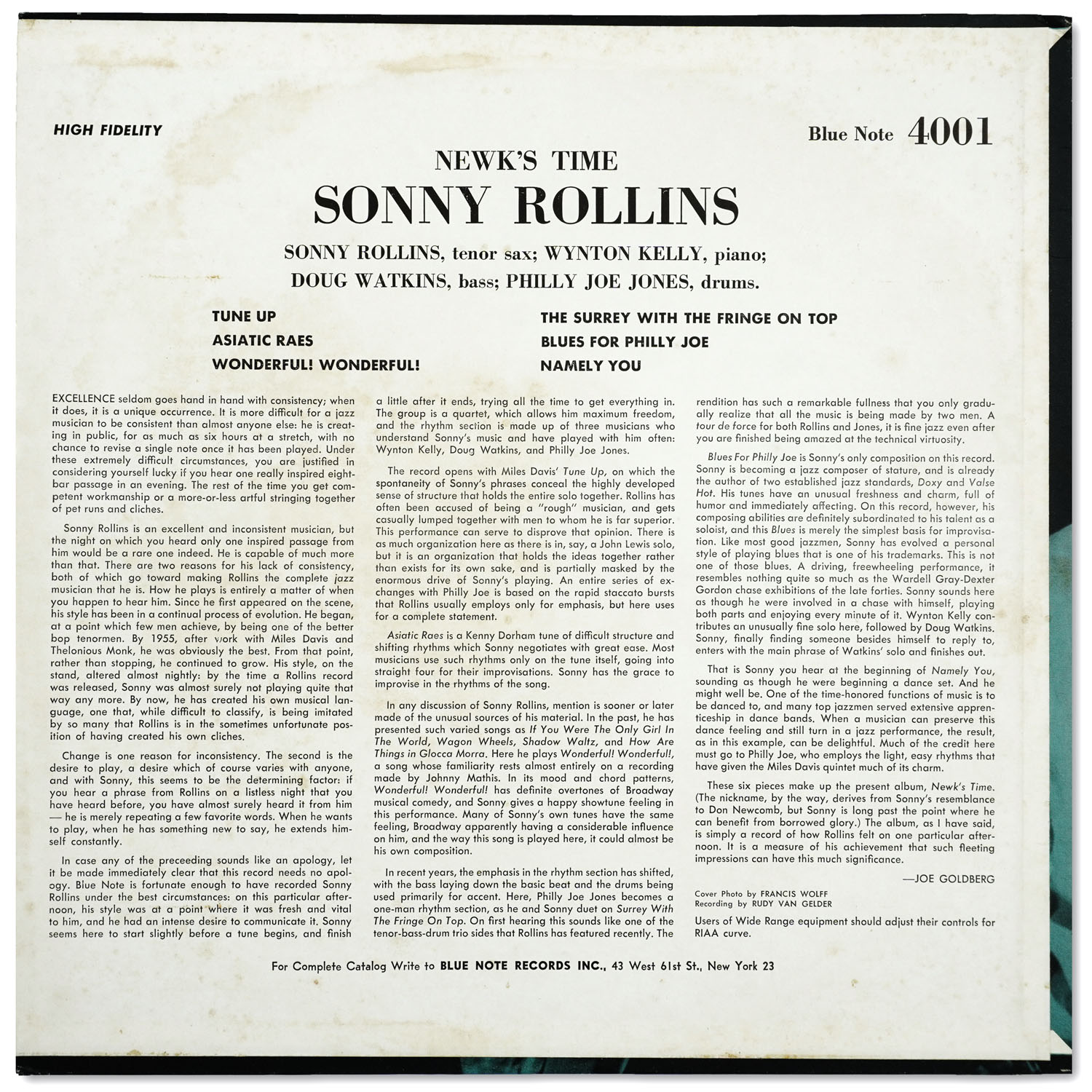
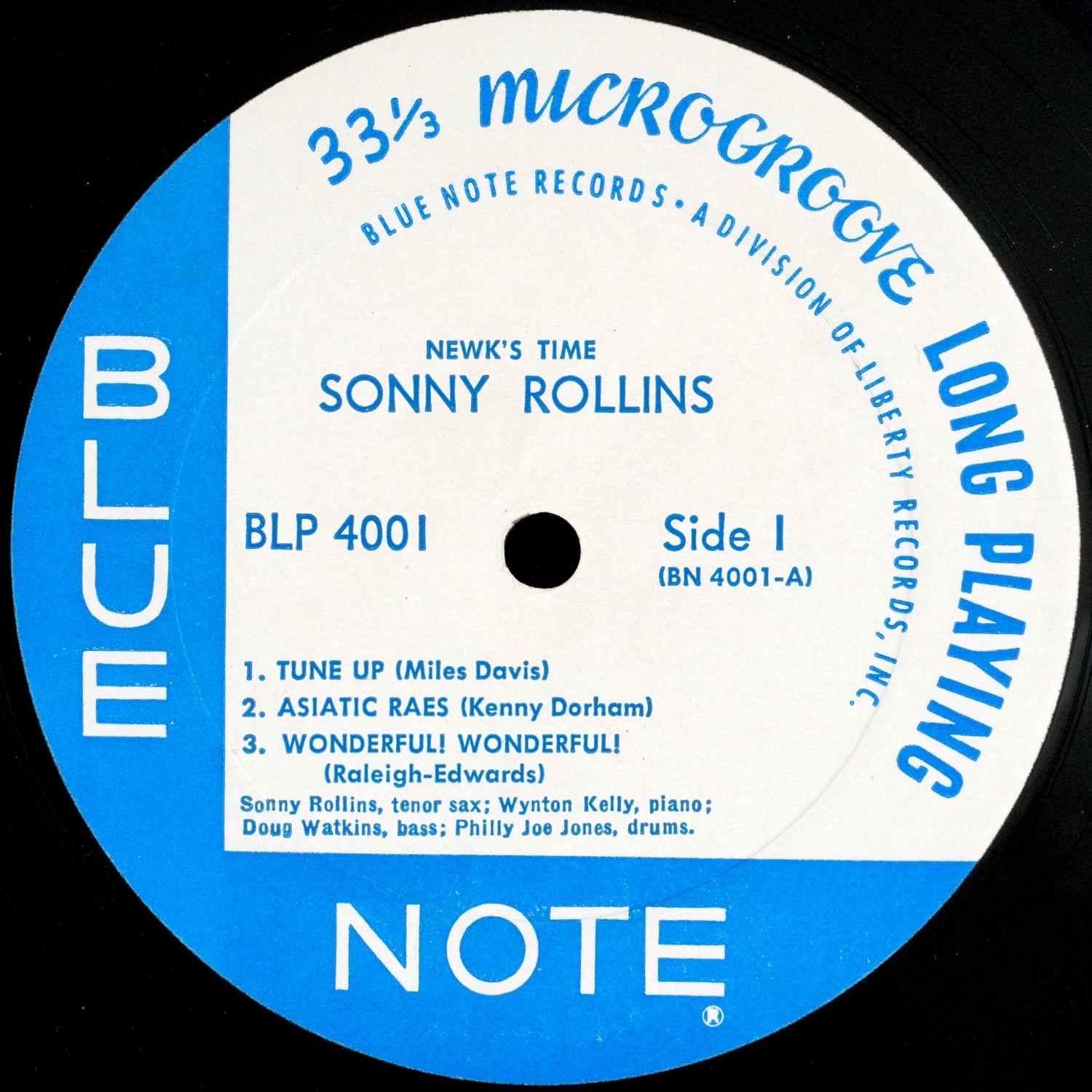
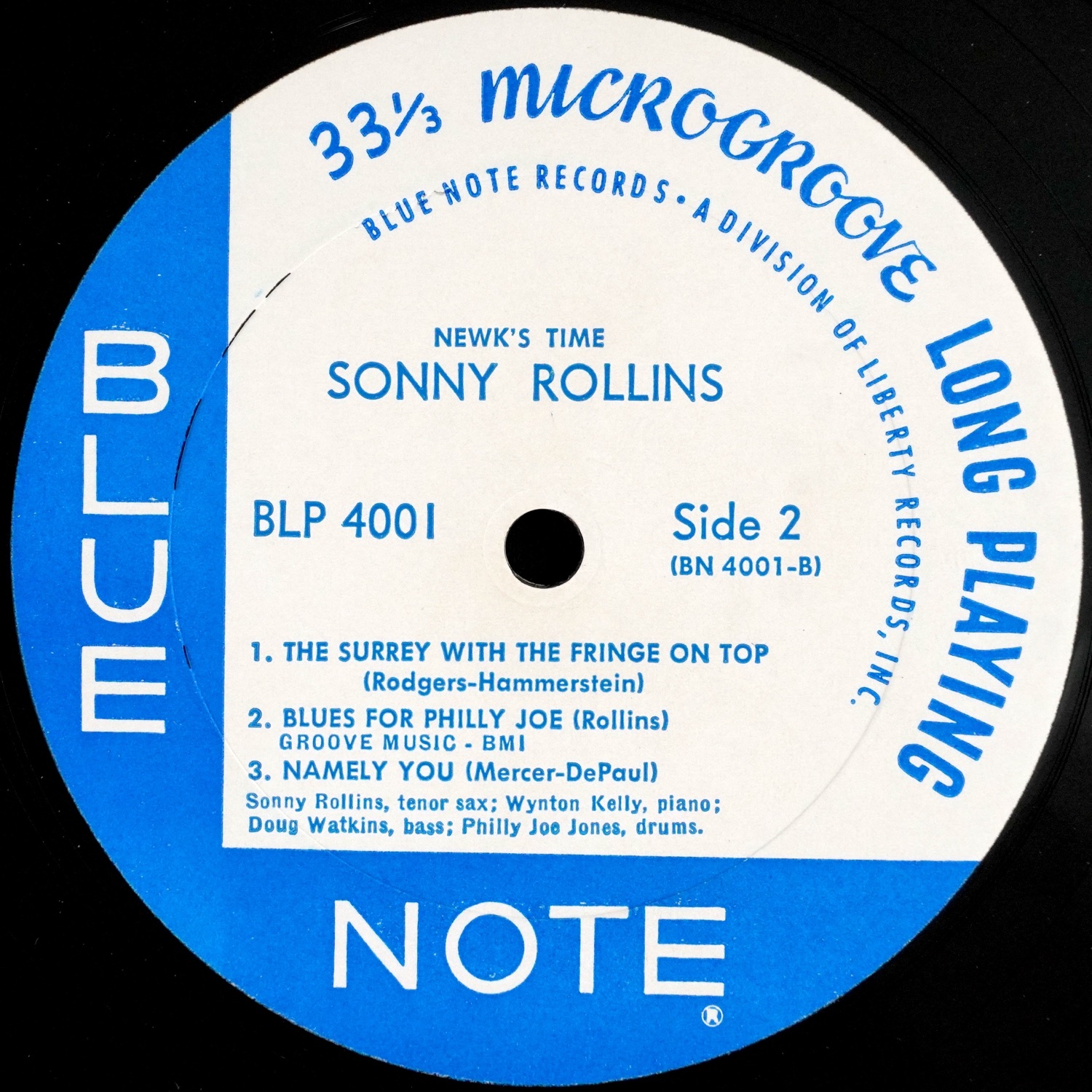
Vinyl Spotlight: Sonny Rollins, Newk’s Time (Blue Note 4001)

  • Liberty mono pressing ca. 1966-70
  • RVG stamped in dead wax

Personnel:

  • Sonny Rollins, tenor saxophone
  • Wynton Kelly, piano
  • Doug Watkins, bass
  • Philly Joe Jones, drums

Recorded September 22, 1957 at Van Gelder Studio, Hackensack, New Jersey
Originally released January 1959

1 Tune Up
2 Asiatic Raes
3 Wonderful! Wonderful!
4 Surrey with the Fringe on Top
5 Blues for Philly Joe
6 Namely You

Selection:

“Blues for Philly Joe” (Rollins)

I ignored this album for quite some time for a couple reasons. First, it was primarily comprised of standards and short on originals, but also because the album has rarely been reissued in mono and I kept reading about issues with the consistency of Rollins’ volume level in the stereo mix (apparently caused by the leader’s motion in the studio during recording). Well this is a copy made from the bold, original Van Gelder mono mastering, and to my ears there is no such problem here.

This is not the first time that seeing a good deal on a clean original pressing of an album encouraged me to listen to the music more carefully. On this occasion, I was surprised to unearth an album I really enjoy. First and foremost, “Tune Up” and “Asiatic Raes” are two of my favorite modern jazz standards, and this quartet knocks them out of the park. Prematurely, I never thought anyone could best Kenny Dorham’s version of “Asiatic Raes” on Quiet Kenny (titled “Lotus Blossom” there), but Rollins gives him a run for the money.

There are several comical moments from the leader here, and on “Tune Up” we find Rollins at his funniest. His descending staccato riff beginning on the seventh chorus of his solo literally sounds like laughing, and its refrain is a welcome break from the saxophonist’s inventive genius. For someone who is among the most imaginative soloists ever, this less-than-cerebral moment demonstrates Rollins’ sharp wit and special talent for expressing his sense of humor through his music. The lighthearted theme persists throughout the album, but what makes Newk’s Time special is how laid back it feels all while the musicians execute with consistent precision.

Philly Joe Jones shows up for this date and crushes it. His duet with Rollins on “Surrey with the Fringe on Top” is a must-listen. As if the album’s quartet arrangement wasn’t good enough for a minimalist like myself, this pairing of drummer and saxophonist takes it a step further. Although “Surrey” makes it most obvious that engineer Rudy Van Gelder was perhaps a little too heavy-handed with the reverb on Rollins that day, Philly still sounds dry and snappy.

“Blues for Philly” is probably my favorite cut on the album (and for all we know invented on the spot at the session). When the entire band comes back in after “Surrey”, it sounds like an explosion. The low end of Doug Watkins’ bass drops and Wyton Kelly fills the rest of the space with chords. Kelly is especially aggressive and percussive on this album, perhaps rising to match Rollins’ intensity. Everyone is in a good mood and you can hear it.

This sure is one in-your-face album. The entire band is in full attack mode and it makes for an exciting listen.

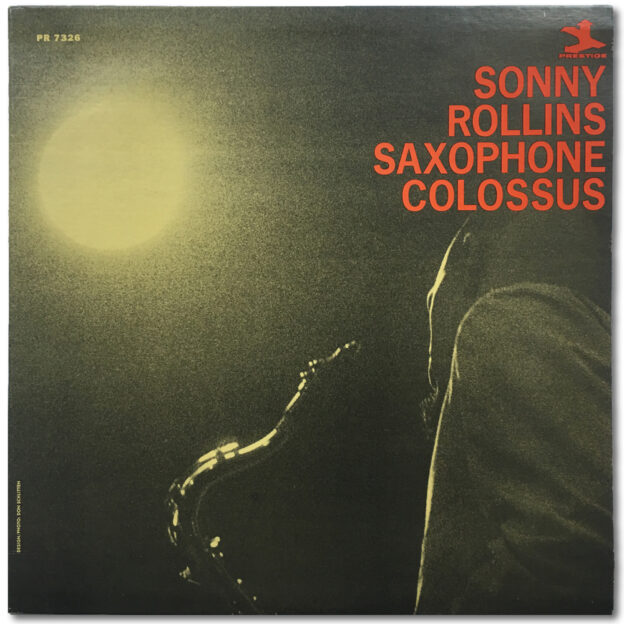
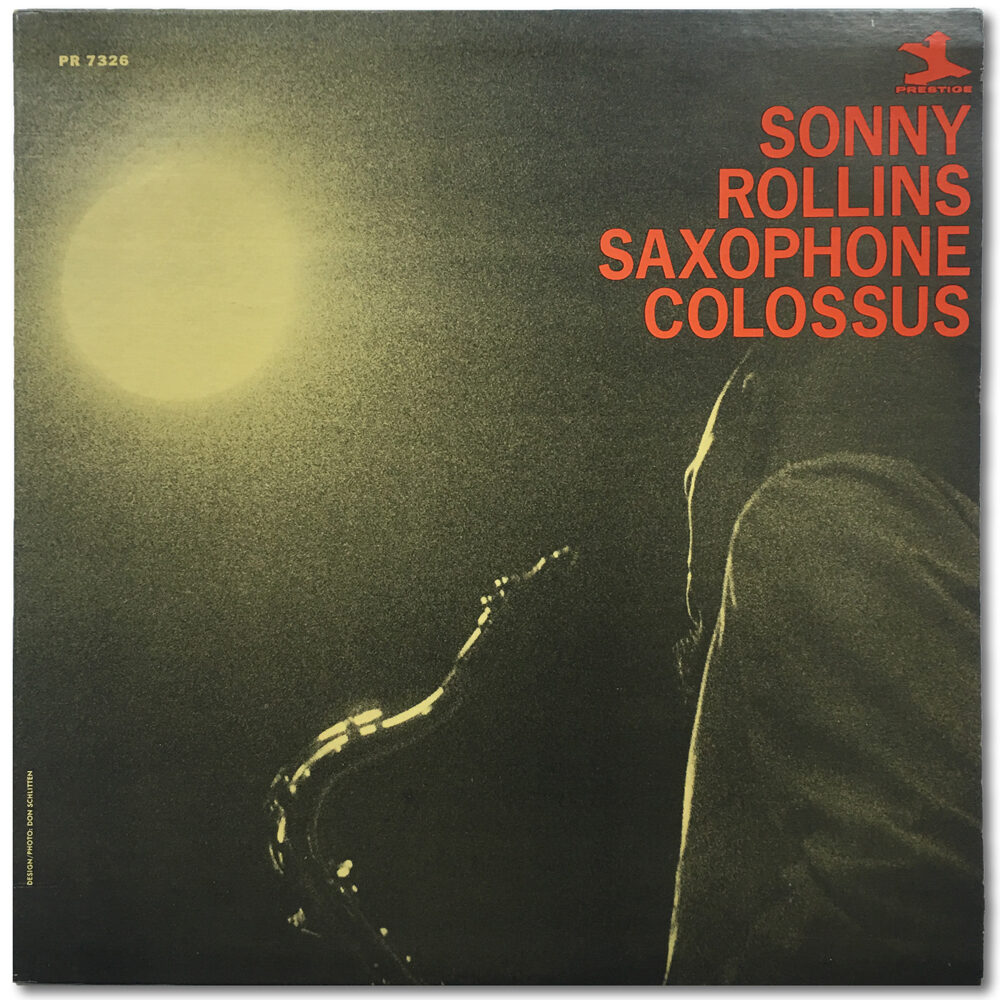
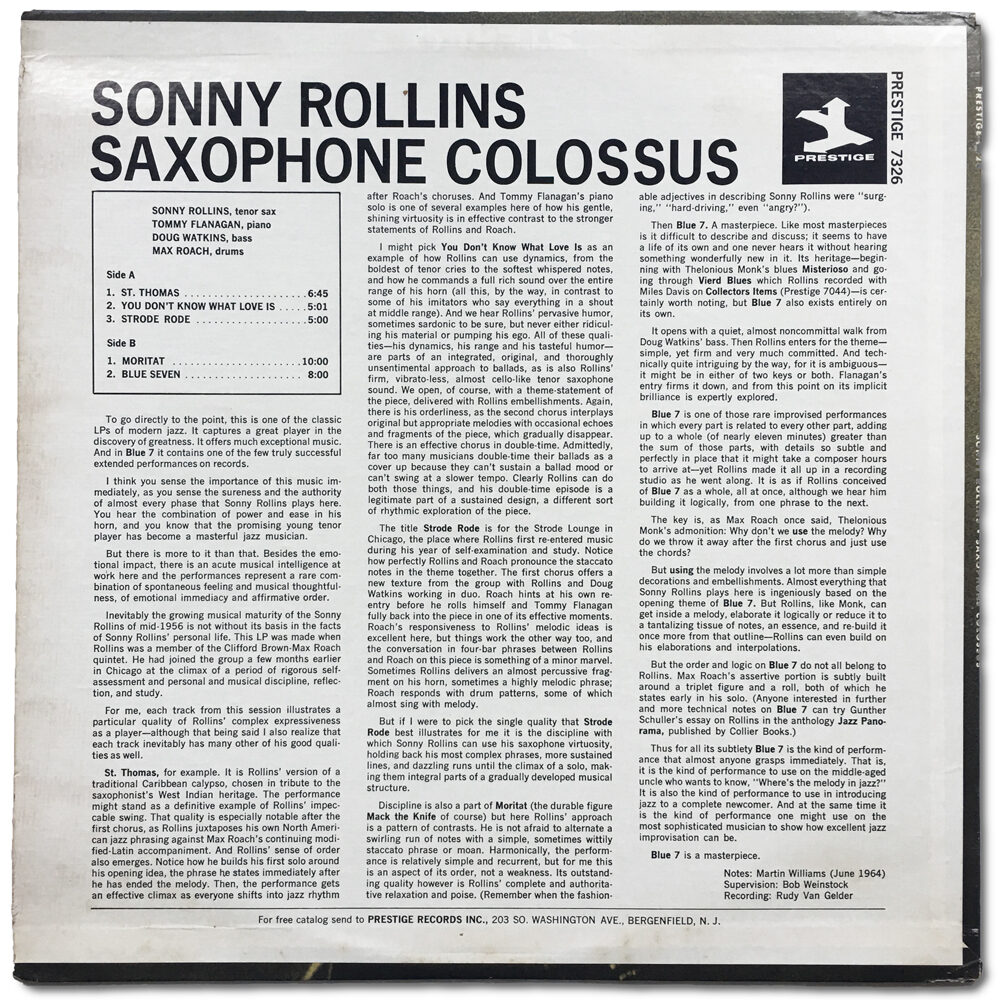
Vinyl Spotlight: Sonny Rollins, Saxophone Colossus (Prestige 7079/7326) “Gold Label” RVG Mono Pressing

  • Mono Prestige reissue circa 1964-1971
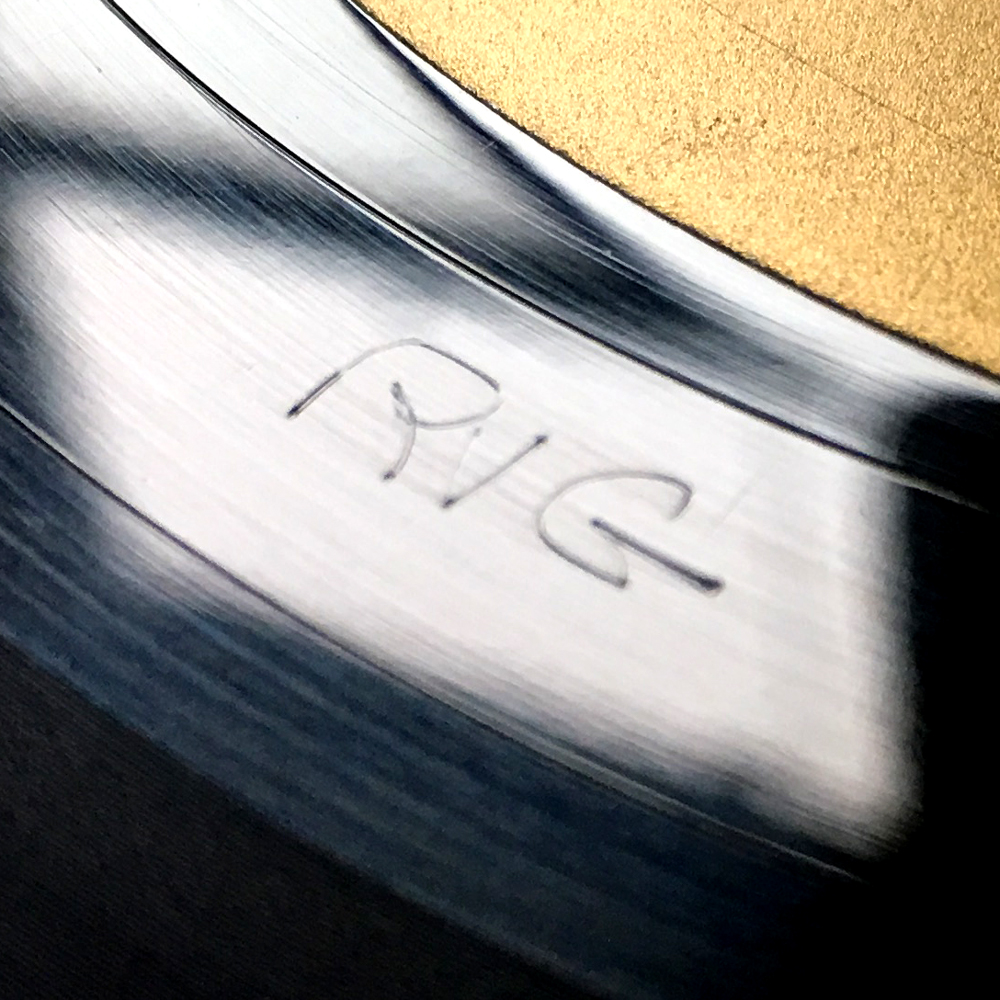
  • “RVG” etched in dead wax

Personnel:

  • Sonny Rollins, saxophone
  • Tommy Flanagan, piano
  • Doug Watkins, bass
  • Max Roach, drums

Recorded June 22, 1956 at Van Gelder Studio, Hackensack, New Jersey

Well it pays to give the jazz sections in record stores a quick flip on each visit. Though usually less than mediocre, I’ve found that jazz LPs often skip the new arrivals bins — a longstanding staple of record stores — and go straight to the genre section. My method is usually to flip quickly through each of my favorite players’ sections and the beginning of each “lettered” section. This effort usually ends up fruitless but every now and then something slips through the cracks.

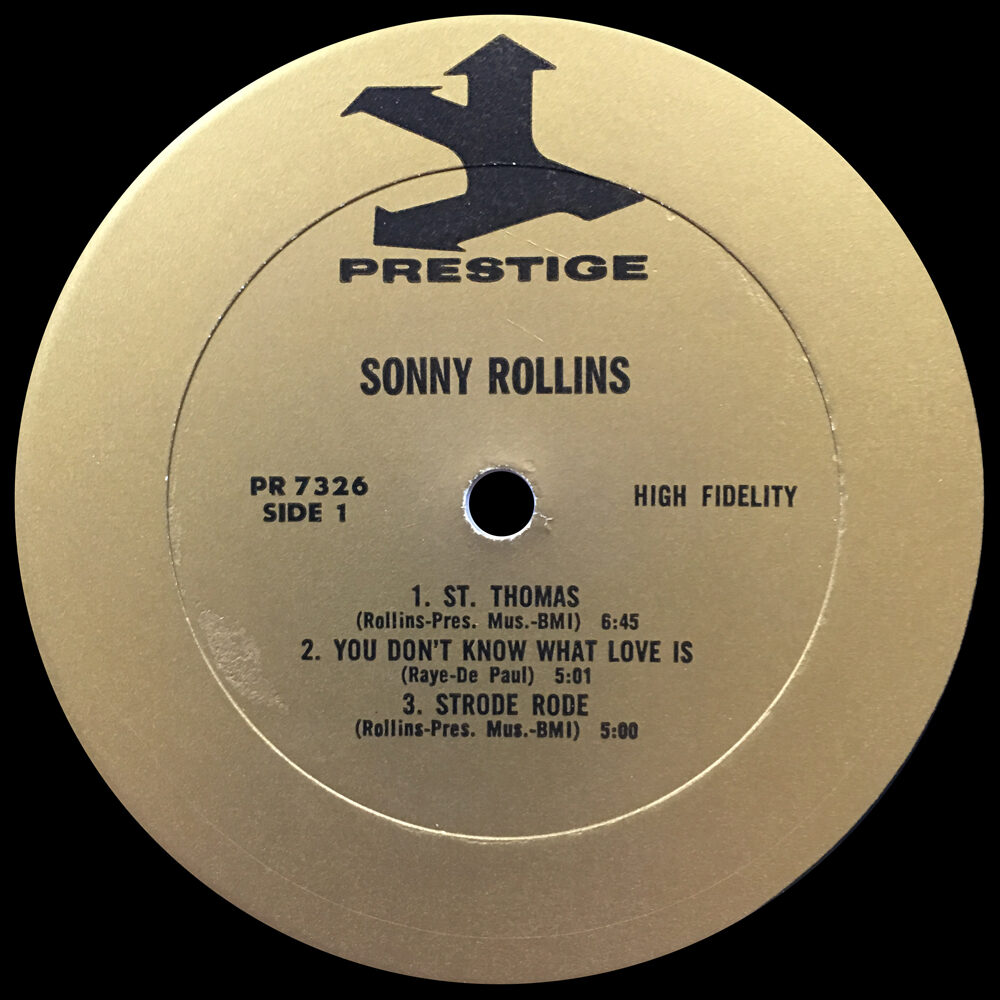
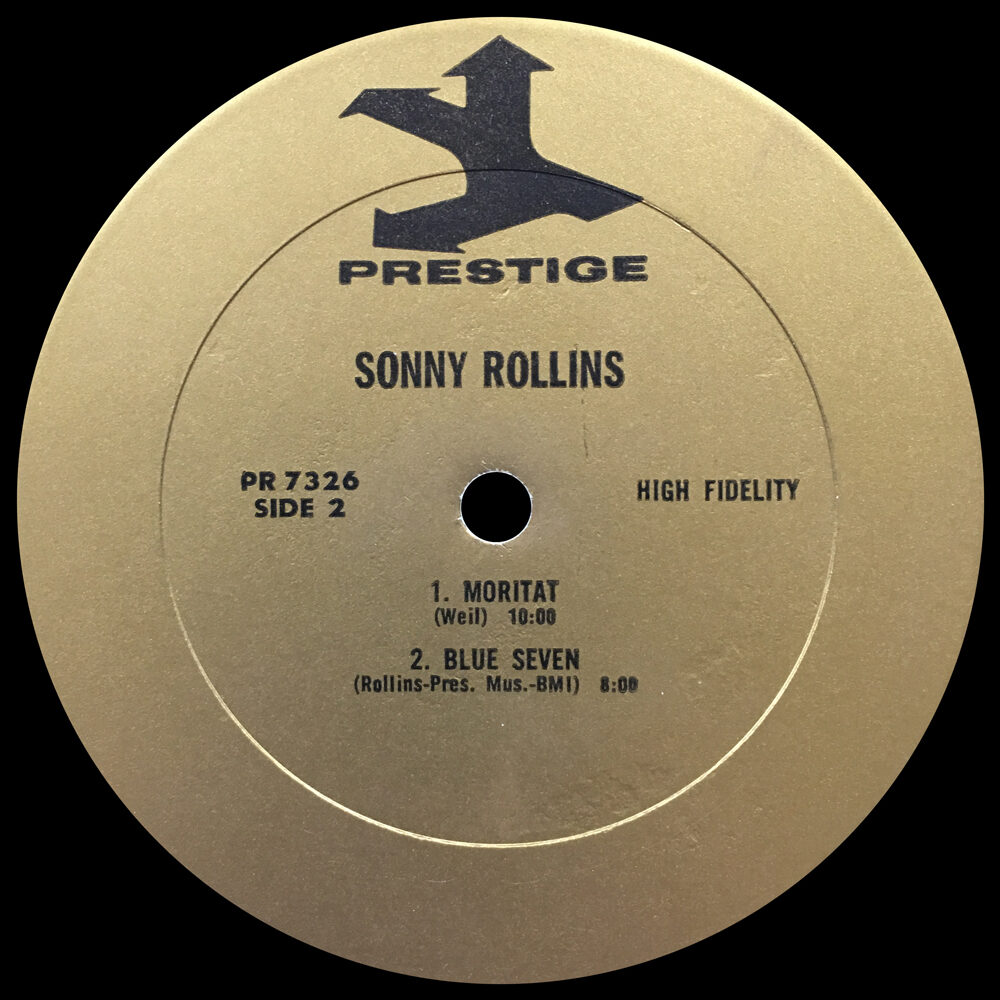
That surely was the case when I found this copy of Saxophone Colossus. On the surface, this pressing seems harmless. It serves as evidence of Prestige Records being up to their old capitalist tricks, updating artwork and catalog numbers in a shameless effort to rebrand previously issued material. Prior to this I had seen fake stereo copies of this reissue a few times but this was the first time I failed to see the “stereo” moniker anywhere on the cover. As I examined the front and back of the jacket I thought, “Could this be mono, and better yet, could it possibly be made from the original 1956 RVG metalwork??” And when I slid the LP out of the jacket, I was overjoyed to find the initials “RVG” handwritten there in the dead wax. To sweeten the pot, the record looked near mint and the price tag was in no way suggestive of the colossal sound laying dormant in these grooves. (See what I did there?)

I promptly paid my fare at the counter, and on this hot, sunny Manhattan day, I posted up at a nearby burger joint to grab lunch as I researched the record’s obscure gold labels. While London Jazz Collector places this label run in the rather wide range of 1964-1971, VinylBeat.com makes a narrower yet less specific claim of “mid-1960s”. Discogs has the pressing year pegged down to 1964 (I have no idea what the source of that info is), but to be honest, the vinyl’s lighter weight and thinner, more bendable material makes me suspicious that it would have been released sometime in the ‘70s. The RVG etching and bold sound of this copy nonetheless remain, a fact made even more astounding when one considers that the original metal factory master disks could have been over 15 years old when this record was made.

Although I usually post favorite albums of mine on here, to be honest Saxophone Colossus is a classic that does not resonate with me as much as it does with most jazz fans. The melody and rhythm of “Saint Thomas” is a bit too corny to find its way into my regular rotation, though the jerky rhythm and brisk pace of “Strode Rode” has always appealed to me. But the real allure for a drummer-minded jazz fan such as myself is Max Roach’s pair of solos on side two. Roach’s hands get quite busy at times during “Moritat” (a renaming of the 1928 Weill-Brecht composition “Mack the Knife”, made for the German play Die Dreigroschenoper; “Moritat” roughly translates to “murder ballad”), but Roach plays with tasteful restraint during his solo on “Blue 7”. Engineer Rudy Van Gelder’s recording of drums was always second to none, even in 1956 as demonstrated here. Roach’s consistent striking of the ride cymbal during his solo on “Blue 7” shimmers with glowing resonance and his tom-toms ring with air-tight clarity and precision.

Though Sonny Rollins’ unique character and humor as a soloist became apparent to me many years ago, I can’t say that I’ve studied the breadth of his catalog with the careful attention it most certainly deserves. But with the addition of this record to my collection, Sonny is sure to get more play on my turntable in the future.

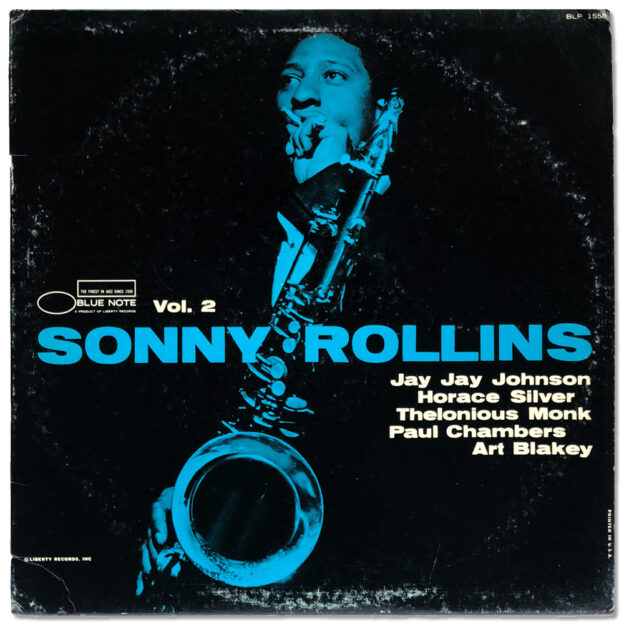
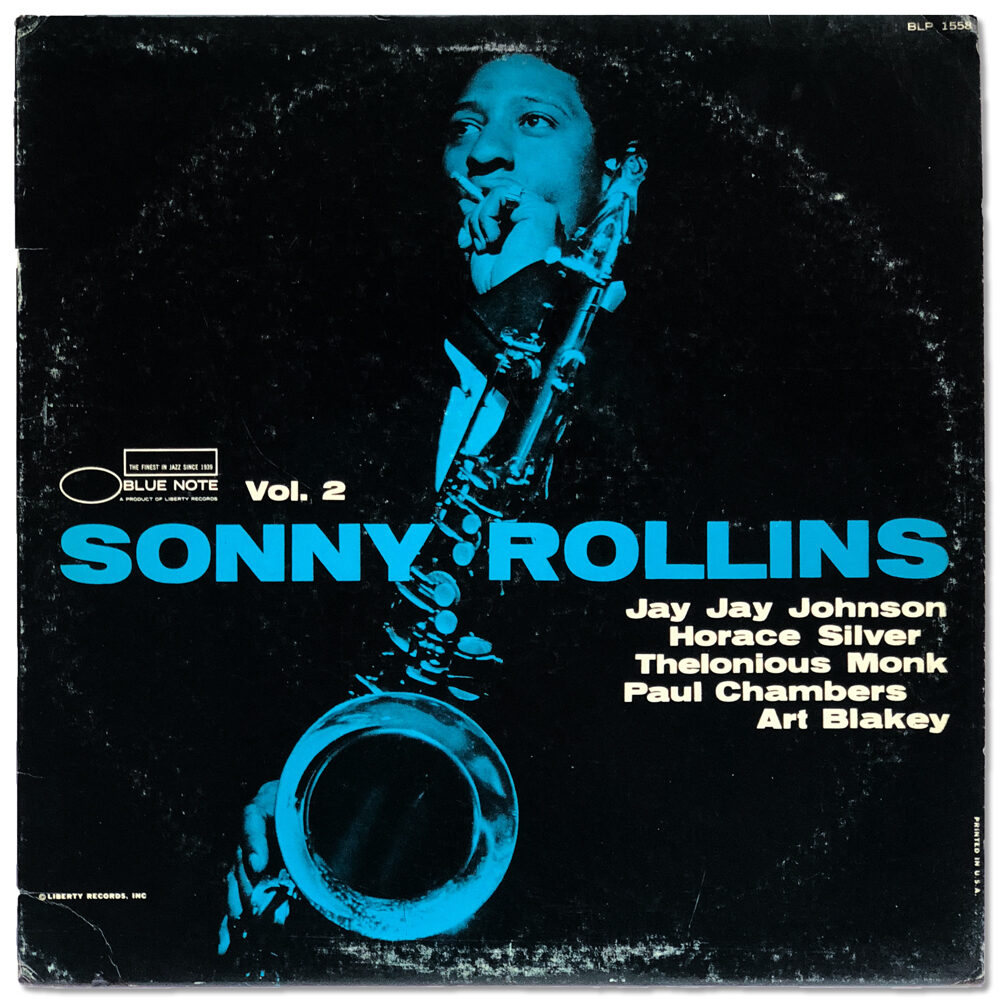
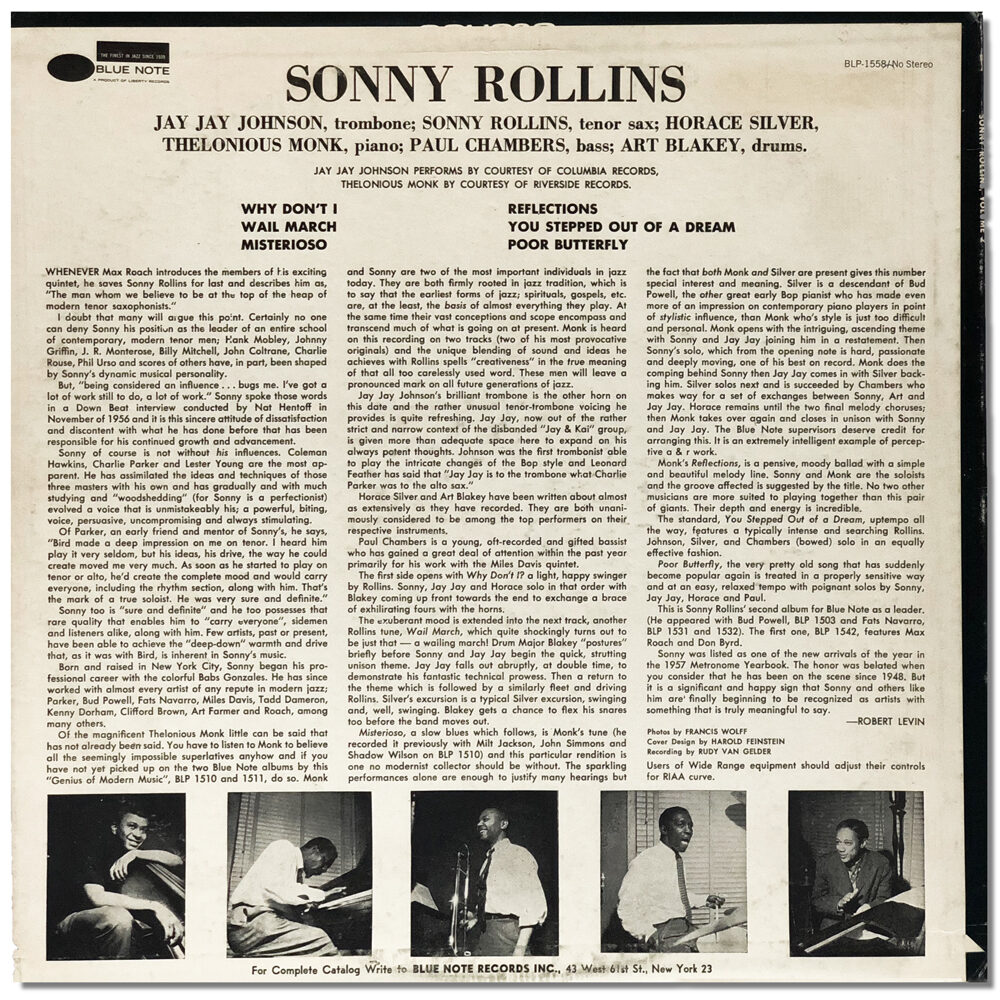
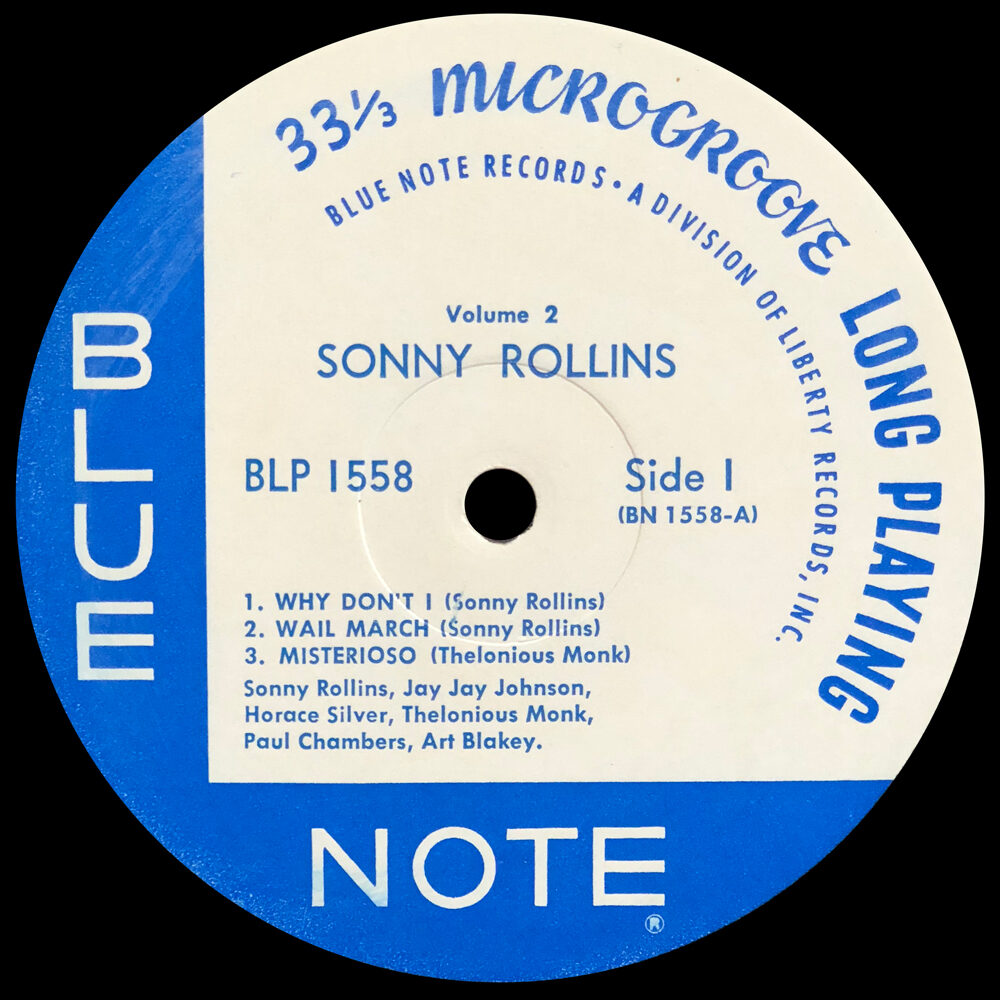
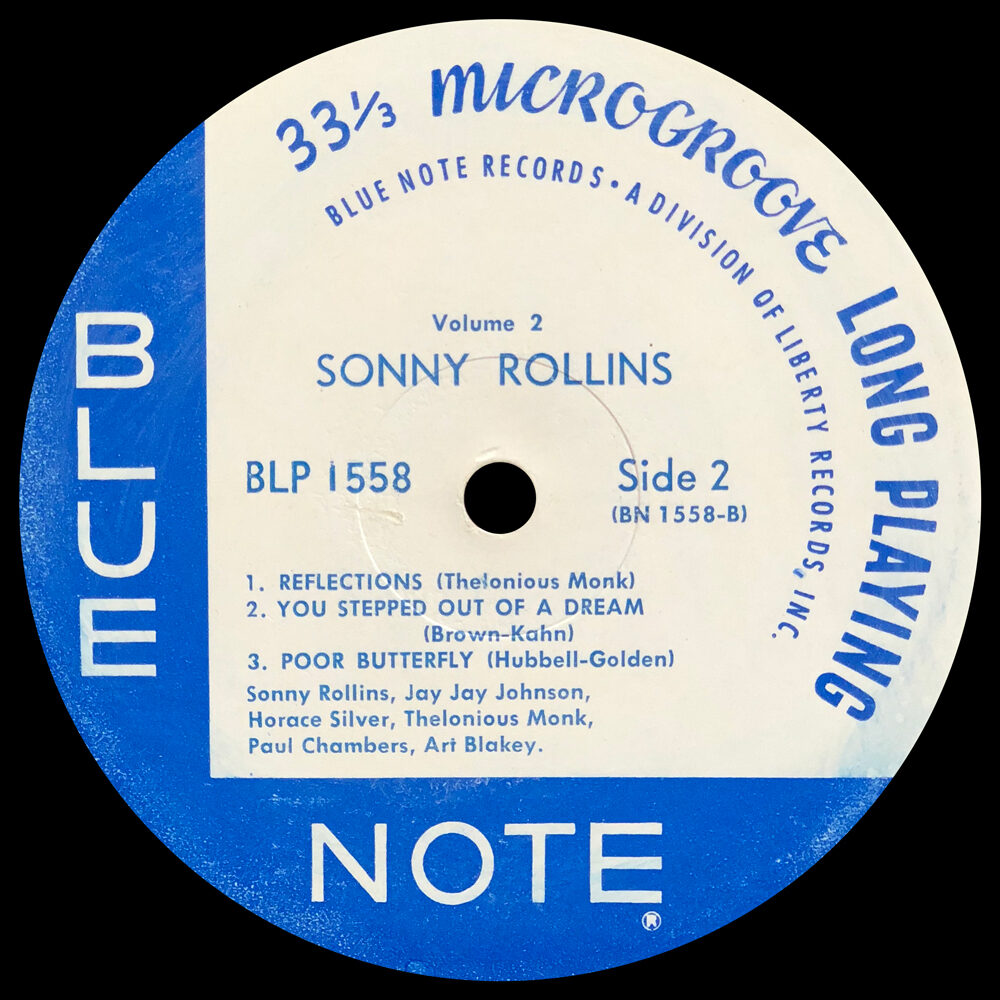
Vinyl Spotlight: Sonny Rollins, Volume 2 (Blue Note 1558) Liberty Mono Pressing

  • Liberty mono pressing circa 1966-1970
  • RVG etched in dead wax

Personnel:

  • Sonny Rollins, tenor saxophone
  • J.J. Johnson, trombone (all but “Reflections”)
  • Horace Silver, piano (all but “Reflections”)
  • Thelonious Monk, piano (“Reflections” and “Misterioso” only)
  • Paul Chambers, bass
  • Art Blakey, drums

Recorded April 14, 1957 at Van Gelder Studio, Hackensack, New Jersey
Originally released in September 1957

Note: This is a guest post by Charles Strong.

As a jazz lover and record collector, I am very fortunate to live near New York and its dusty record stores, as well as fellow collectors like the namesake of this blog, Mr. Mono himself. If we can’t hunt for LPs together in person, he will sometimes send me pictures of any records I might be interested in from the stores in the city — and sometimes be so kind as to snag some for me to be mailed later. A few months ago, he was in a store that has a very serious reputation for jazz sales when he sent me a few shots of some early pressing Blue Notes at pretty fair prices. One of the pics was of a glossy early pressing of Sonny Rollins Volume 2. The copy was not the first pressing but still had all the things that make collectors warm inside: a West 63rd Street label, Rudy Van Gelder’s initials in the dead wax, and the famous cursive ‘P’ indicative of a copy made in the company’s heyday. Best of all, the dealer did not want an arm and a leg for the copy, and it was payday Friday.

I was very tempted. Sonny Rollins is hands down my favorite artist in the entire genre, and in my quest to own the best possible copies of his LPs that I can afford, Volume 2 is a record I did not have an original of. I did own a copy of this album on Capitol and it had never made an impression on me. Despite its critical acclaim and my liking every artist on the date, it had never caused me to want to listen to it frequently. I do not attribute this to the record I had; the purpose of this post is not to downplay or argue the fidelity of other copies of an LP, but my Capitol copy certainly didn’t do anything to elevate the music of this album higher than A Night at the Village Vanguard or Way Out West, my two favorite Sonny records. So I texted Rich back a dismissive reply: “Nah, forget it — it’s never been my favorite Rollins LP,” to which he replied, “Mine either.” This made me feel two ways: pleased because a fellow collector had validated my opinion, but upset that one of the most celebrated records by my favorite musician was somehow dismissed by two knowledgeable jazz lovers.

Fast forward to a few weeks ago. I had just run into a nice string of luck with my favorite saxophonist on Blue Note. Within a two-week span, I had lucked out on copies of Volume One and the LP that has eluded me most in recent years, Newk’s Time. A few days after buying Newk’s, I was browsing eBay and a seller was selling Volume 2 as a Buy It Now. I usually avoid the Buy It Now sellers for rare records. However, this was a Liberty copy with some wear on the cover, and it was a later cover with the Division of Liberty lettering on the cover. In other words, this copy was not one that a high stakes collector or dealer would value.

However, as a listener of Sonny Rollins, it had some very good things going for it. For one, it was a monaural copy, which I’m not terribly picky over, except for these very early Blue Note recordings where the focus, at least for sales purposes and sound quality, was mono over the primitive stereo of the day. Secondly, it had the initials of Rudy Van Gelder in the dead wax which, without going into too many details, usually results in a high quality sound regardless of year of issue. Lastly, this thing was cheap! Relatively so, but at less than half the price of the copy that Mr. Mono showed me. I felt that if I was ever going to enjoy this record in its somewhat original form, this was going to be the most affordable way to do so.

After a busy few days of package receiving because of the other Rollins LPs I had just purchased, Volume 2 arrived almost as if it matched my opinion of it, as an afterthought. It was the last in a string of records that I had just purchased, and the two records that preceded it (Volume 1 and Newk’s Time) were two of my favorites. Well imagine my surprise when I dropped the needle. The opening riff of “Why Don’t I?” leapt out of the speaker with great urgency. To me it could have been an outtake from Volume 1 with its loud, honking Rollins riff announcing his unmistakable tone in a similar manner to the Volume 1 jams “Decision” and “Bluesnote”. Despite the presence of a piano here, Rollins hints at the legendary style of pianoless strolling he would perfect the following year, all while trading loud, fast riffs with Art Blakey in a conversation punctuated by the drummer’s own Elvin Jones-esque grunts and patented press roll. It all makes for an exciting conclusion to the take.

Another surprising highlight of the album that mirrored my expectations is the song “Wail March”. I am not usually a fan of marches, from the traditional bop march of “Blues March” by Blakey’s Messengers to the almost avant garde style of march found on Bobby Hutcherson’s “Les Noires Marchant”, but “Wail March” changed that quickly. Normally turned off by their corny, almost antiquated style of beat, “Wail March” is a freewheeling song with the driving snare of any classic march but also wild, reckless improvisation by Rollins and trombonist J.J. Johnson and an admittedly catchy chorus. I could not picture any of the stereotypically bland members of a T.V. sitcom marching band playing such a swinging tune at all. It is one of the myriad example of Rollins taking a theme or tune that was considered ‘corny’ or ‘overdone’ and using his dominating tone and knack for off-the-cuff improvisation to make it into something fresh and revolutionary.

The track on this record that most critics laud is the rendition of the Thelonious Monk standard “Misterioso”, instantly memorable because of a repeating, haunting piano riff played by Monk with a sporadic stabbing motion. It has been recorded on many other albums, but this version instantly became my favorite. Every member of the band plays to their strengths on this song. J.J. Johnson has a memorable solo where he fluidly recreates the opening riff while Rollins finds yet another way to insert “Camptown Races” into a song. Horace Silver and Monk appear on the track — a rarity — and they do a remarkable job of playing their own styles. So many musicians have tried to play Monk’s songs just like he did and failed. These guys all knew how to play with Monk. They all retain their own unique sounds all while paying respect to the song’s original theme.

A few weeks ago, Rich and I had one of our many conversations about our respective collections. We discussed what we believed in our opinion to be the best pressings of Blue Note records in terms of collectability, sound quality, condition, lack of wear, and value. The Division of Liberty Blue Notes, especially reissues of earlier Blue Note material in mono, continued to come up in our talks. When I mentioned to Rich that I had quite a few of these, he asked me to review and write about them for his blog, and in the next few posts I hope to demonstrate that these pressings are not just a mere runner-up to original pressings. They have the potential to provide collectors with a high-quality, affordable listening experience while maintaining many of the hallmarks that make originals so collectable.

Many people think that there is a mystique to the Blue Note sound captured by engineer Rudy Van Gelder. That, of course, is an unscientific way of saying that there is an unexplainable and unique sound to these records. The fact that a Liberty pressing purchased at a discount price can project the classic Blue Note sound so well speaks volumes. It essentially changed my opinion of the recording and also provides evidence that Blue Note’s new parent label was capable of preserving the sound of the original LPs to a tee.

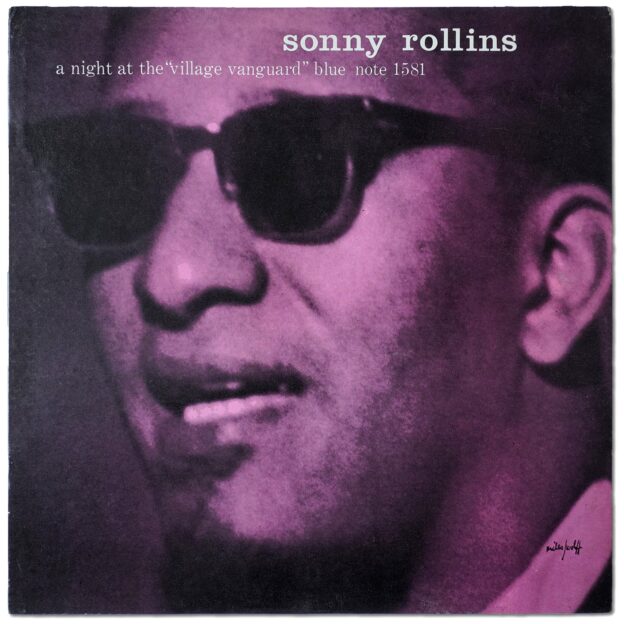
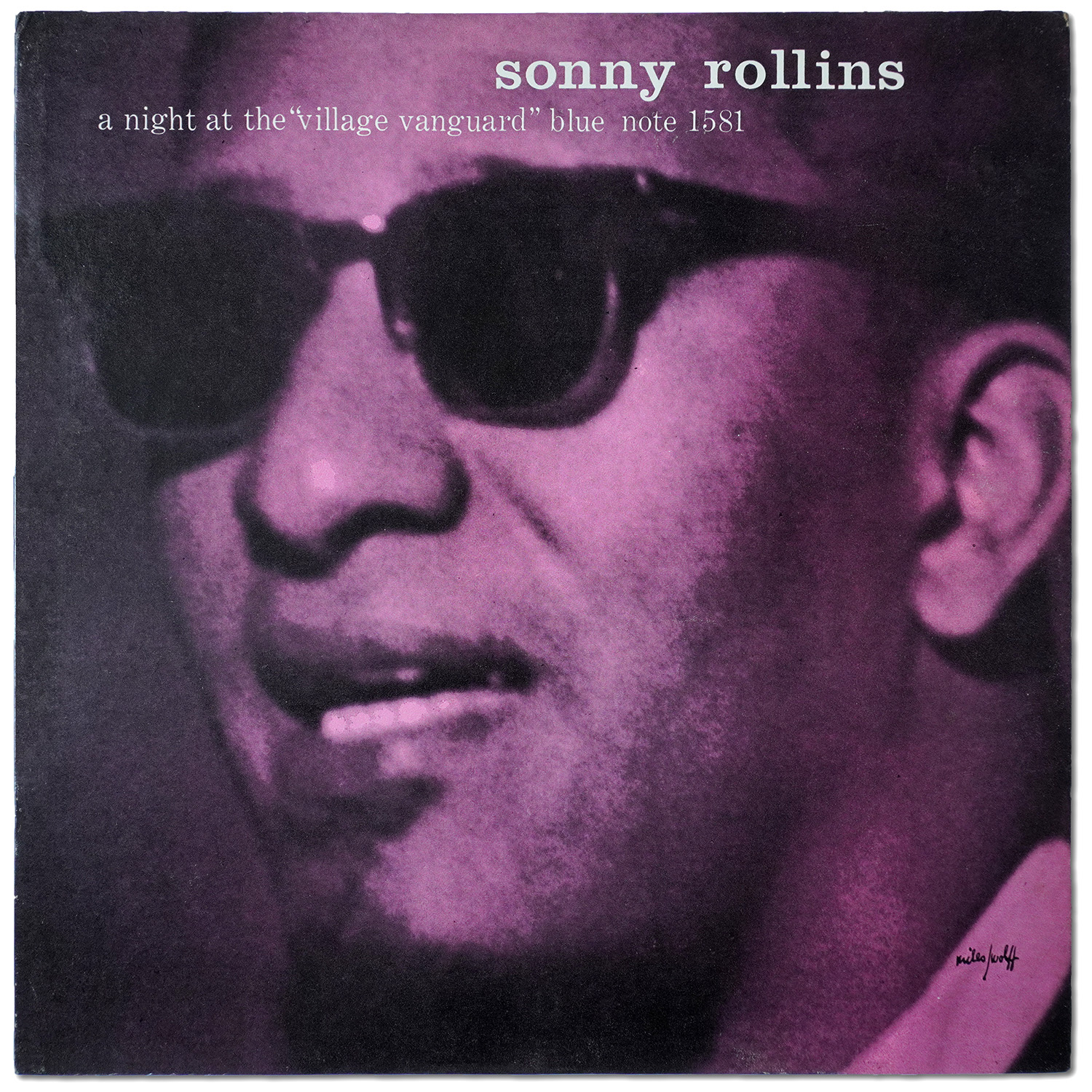
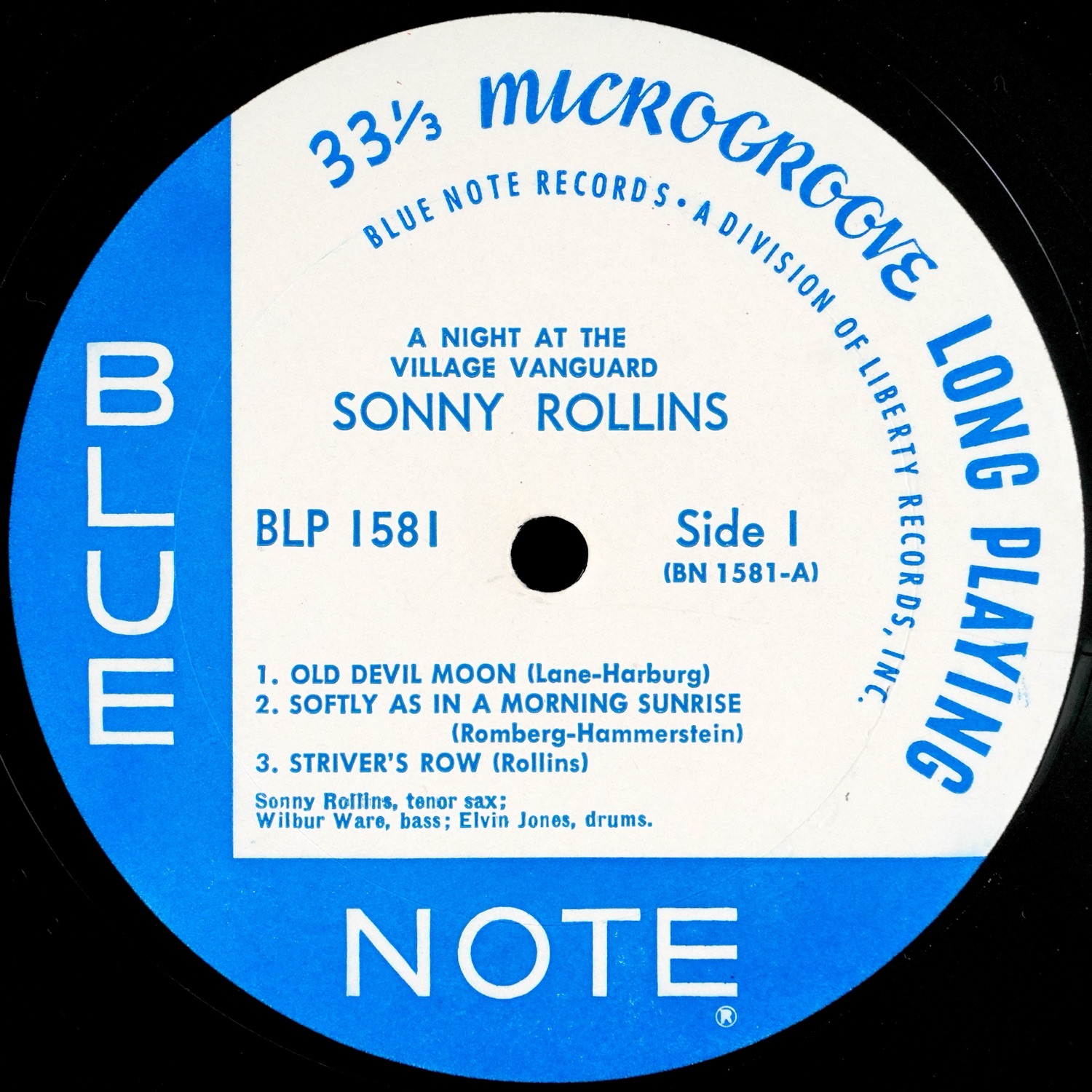
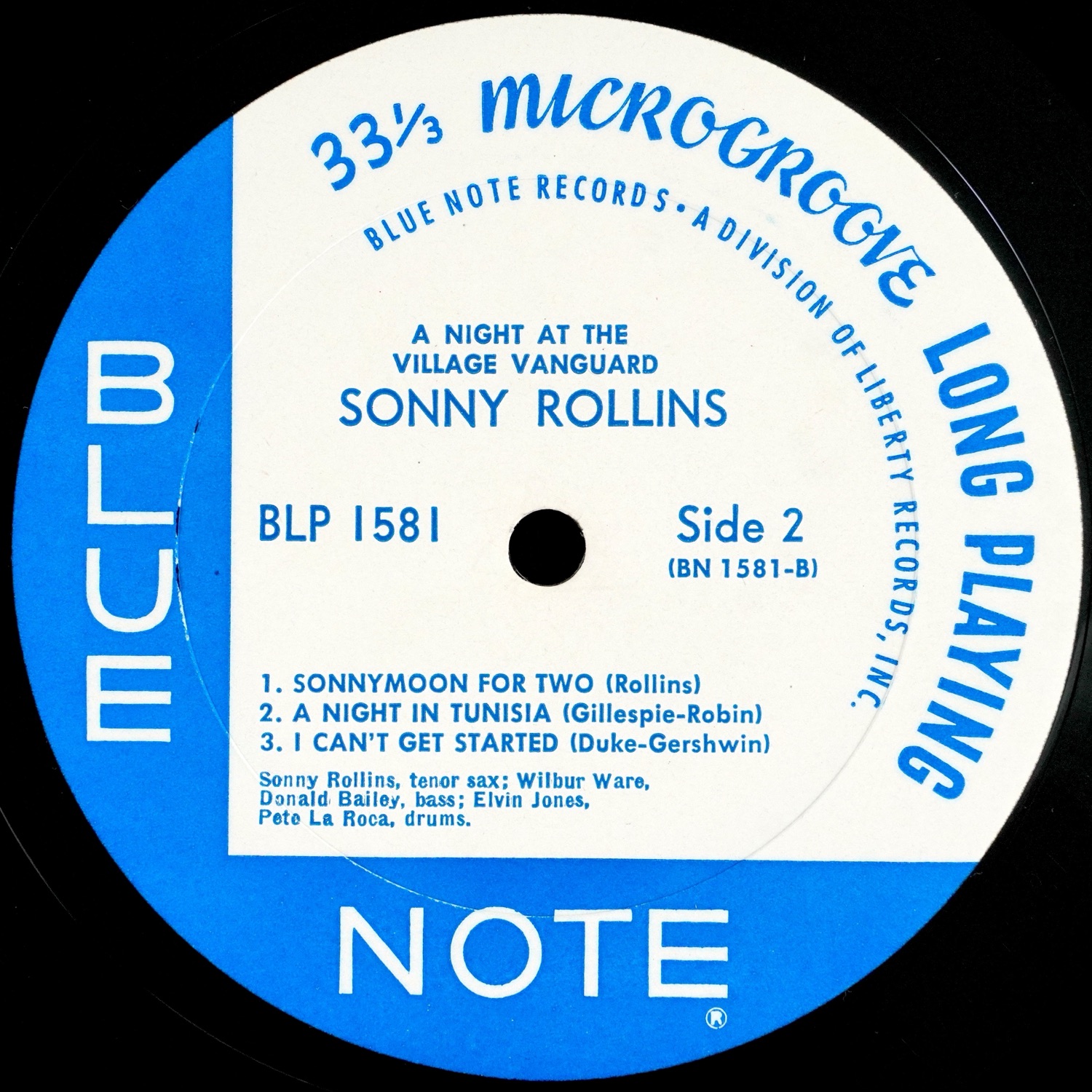
Vinyl Spotlight: Sonny Rollins, A Night at the Village Vanguard (Blue Note 1581) Liberty Mono Pressing

  • Liberty pressing ca. 1966-70 (mono)
  • “RVG” stamped in dead wax

Personnel:

All but “A Night in Tunisia”:

  • Sonny Rollins, tenor saxophone
  • Wilbur Ware, bass
  • Elvin Jones, drums

“A Night in Tunisia” only:

  • Sonny Rollins, tenor saxophone
  • Donald Bailey, bass
  • Pete La Roca, drums

Recorded live at The Village Vanguard, New York City, November 3, 1957
Originally released December 1957

1 Old Devil Moon
2 Softly, as in a Morning Sunrise
3 Striver’s Row
4 Sonnymoon for Two
5 A Night in Tunisia
6 I Can’t Get Started
Thelonious Monk once said that he thought of his studio albums as advertisements for his live performances. John Coltrane expressed a similar sentiment during a radio interview in Japan when he said, “Some of (my best music) hasn’t been recorded. Recordings always make you, just a little bit, tighten up.” Though we all know that the recording sessions responsible for our favorite classic jazz albums captured phenomenal studio performances, it makes sense to me that a live performance might — according to the artist — guarantee a slightly greater degree of authenticity.

Perhaps Monk and Trane are offering some insight into why an album like A Night at the Village Vanguard sounds so real and so raw. Rollins was a music rebel: I like to think of him as the most “punk rock” of all the bop greats (he even sported a mohawk over a decade before the inception of punk). He was also an insatiable innovator, so much that he went on a three-year hiatus from public and studio appearances because he was dissatisfied with his own progress as an artist. By 1957, it was apparent that Rollins felt confined to the underlying harmonic structure naturally imposed on him by piano accompaniment. His solution as a leader? Get rid of the piano player. Rollins recorded his first entire LP without keys in March of that year (Way Out West, Contemporary 3530), and on this November Vanguard date he decided to expand on the idea with two different rhythm duos during the afternoon and evening sets, respectively.

“Softly As in a Morning Sunrise” is a standout tune not only for the refreshingly humble solos from all three members of the evening trio (Rollins, Wilbur Ware, and Elvin Jones), but also for its sonic brilliance. I love how immediate and direct Rollins’ horn sounds (partly due to the lack of piano), and things are quiet enough during the bass and drum solos (audience included) for us to hear each and every nuance. I’ve always had a thing for drums, and Jones’ kit is astonishingly tight, tuned, and clear here — especially the bass drum. The only shortcoming is that the overhead miking of the drums tends to overload from time to time, resulting in the occasional distorted cymbal crash.

The complete survived takes from this session were first issued in 1999 on double-CD. Numbering triple the amount of songs here, this can be a daunting listen. I was first exposed to A Night at the Village Vanguard through the reissue, and as a record collector who has always approached music with a “less is more” mentality, I just focused on the original track listing anyway — which in all likelihood was carefully curated by Blue Note founder Alfred Lion. Someday I will probably get to a point where I feel familiar enough with this LP to move on to the rest of the reissue. But until then, I like that the record’s concise program naturally encourages me to focus more on the details of a smaller amount of material.