Tag Archives: Original Pressing

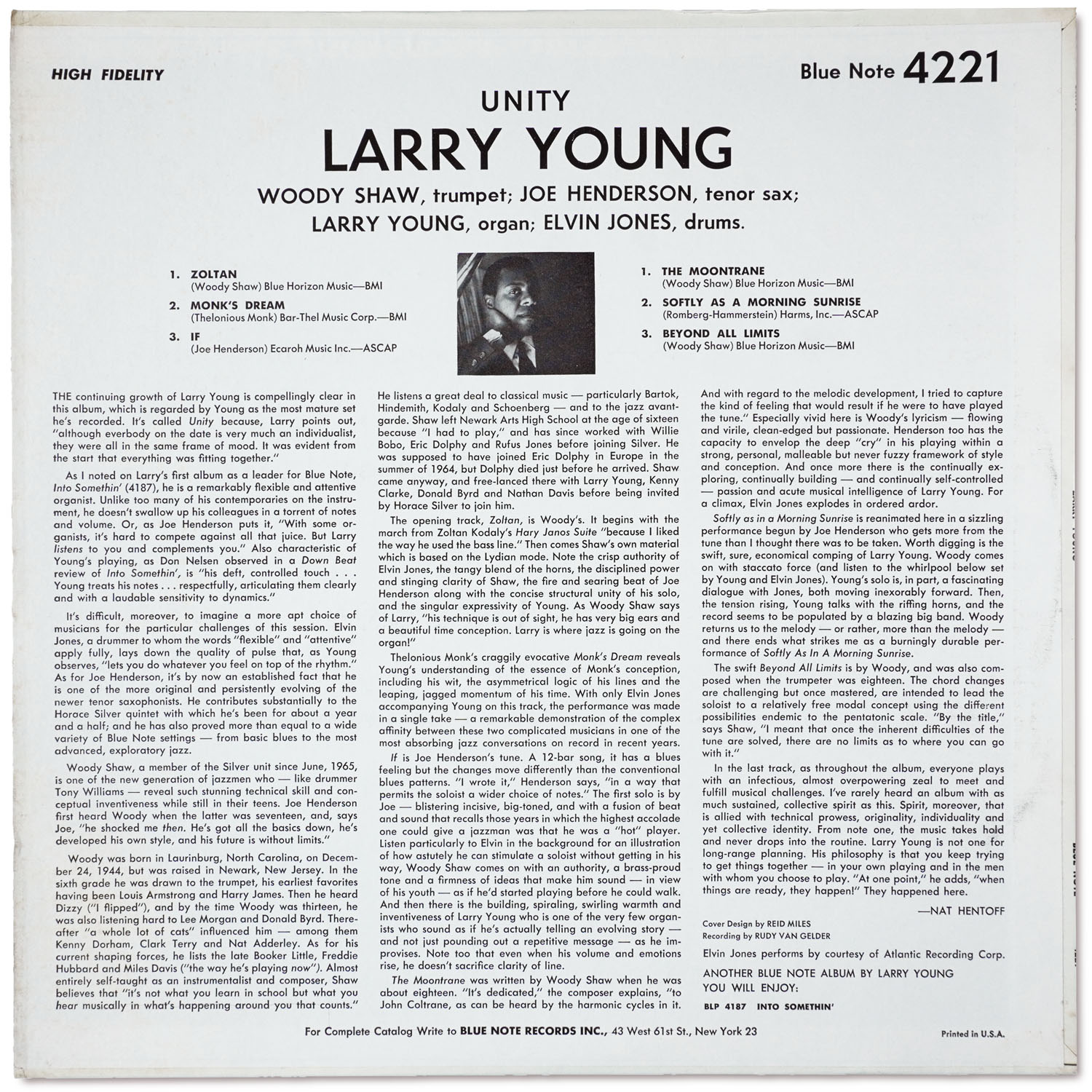
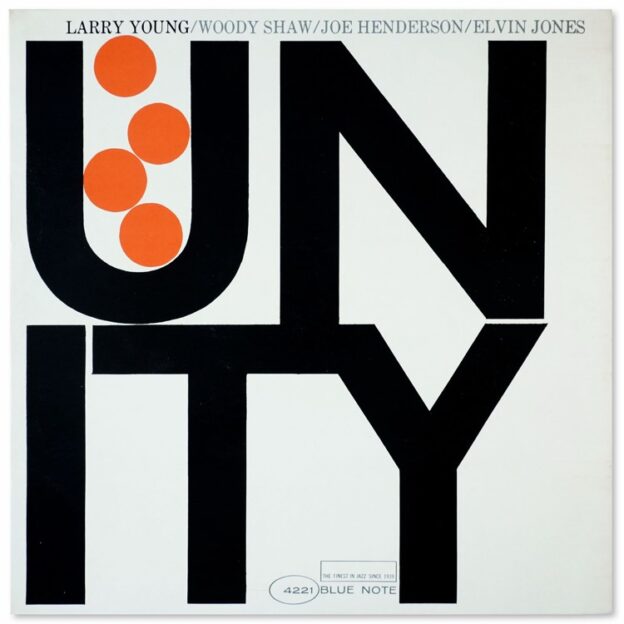
Vinyl Spotlight: Larry Young, Unity (Blue Note 4221) “Earless NY” Mono Pressing

  • Second “earless New York” mono pressing ca. 1966
  • “VAN GELDER” stamped in dead wax

Personnel:

  • Woody Shaw, trumpet
  • Joe Henderson, tenor saxophone
  • Larry Young, organ
  • Elvin Jones, drums

Recorded November 10, 1965 at Van Gelder Studio, Englewood Cliffs, New Jersey
Originally released August 1966

1 Zoltan
2 Monk’s Dream
3 If
4 The Moontrane
5 Softly As A Morning Sunrise
6 Beyond All Limits
Back in 2010, I first got interested in collecting vintage jazz records by way of the Blue Note Album Cover Art book. Since then it’s been glaringly obvious that Larry Young’s Unity sports one of the most popular and timeless covers in the legendary label’s catalog — there’s even a copy of it on display (alongside BLP 1530, Jutta Hipp and Zoot Sims) at the Museum of Modern Art here in New York City. I always fancied this album art but initially ignored the music; I may have initially bought into the hype of jazz records with organ not being “cool”, and the post bop leanings of the soloists here didn’t appeal to me at first either.

Well I’ve come full circle with most of that. Finding an earless mono copy in excellent condition for a fair price on Discogs recently forced my hand at giving the album another chance, and all kinds of great musical things started jumping out at me. Being a big Monk fan, “Monk’s Dream” got my attention first, and I found a new appreciation for its tag-team arrangement featuring Young and drummer Elvin Jones. From there, it became clear how incredible Jones sounds on this album and how well his kit was recorded by engineer Rudy Van Gelder. Over time I’ve also become a bigger fan of the sound coming out of Van Gelder’s Englewood Cliffs studio in the mid ‘60s. Distinguished from all of the engineer’s previous eras by a “softer” approach to recording and mastering, there is a smoothness to these 1965 takes that starkly contrasts with the more heavily compressed instrumentation on other Van Gelder albums recorded in 1963 and 1964 like The Sidewinder (BLP 4157), Search for the New Land (BLP 4169), and Song for My Father (BLP 4185).

Other standout tunes on Unity include “If” and “The Moontrane”, composed by frontmen Joe Henderson and Woody Shaw, respectively, and the pair’s contribution as songwriters is paramount to the album’s classic status. As for this band’s interpretation of “Softly as in a Morning Sunrise”, I prefer Sonny Rollins’ (BLP 1581, A Night at the Village Vanguard) and Sonny Clark’s (BLP 1579, Sonny Clark Trio) treatments of the standard. Auditioning this album multiple times early on in my jazz listening, I probably rarely got past Shaw’s “Zoltan”: I enjoy the melody here but the tune’s dissonant “B” section leaves the door open for chaotic improvisation and Joe Henderson seems to take advantage of that more than any other band member.

Unity is a gorgeous recording of four adventurous musicians that I have returned to countless times since acquiring it. The more progressive frontline pairing of Henderson and Shaw make it a challenging listen, and the more tempered post bop leanings of Young and Jones have kept me coming back for more.

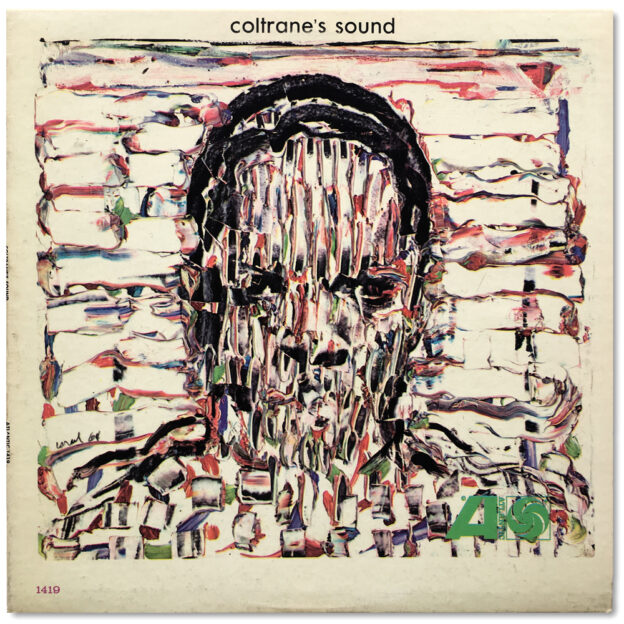
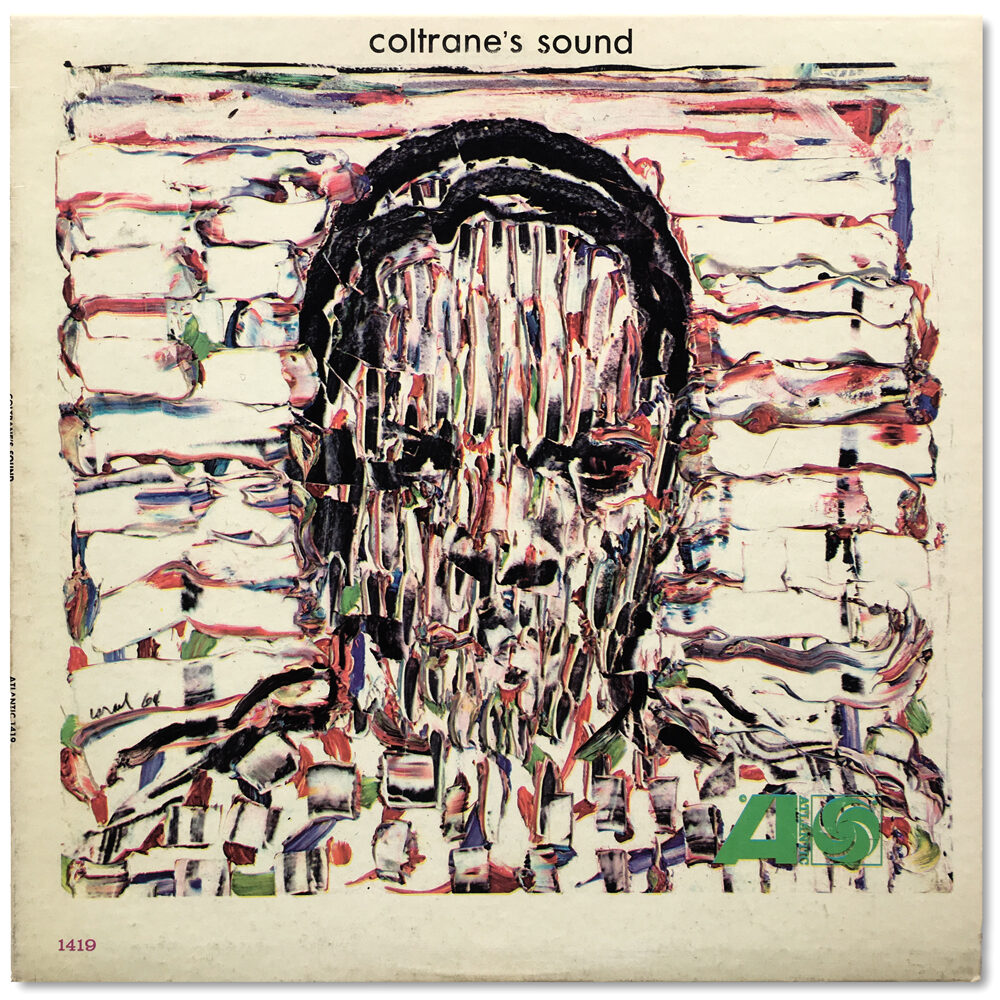
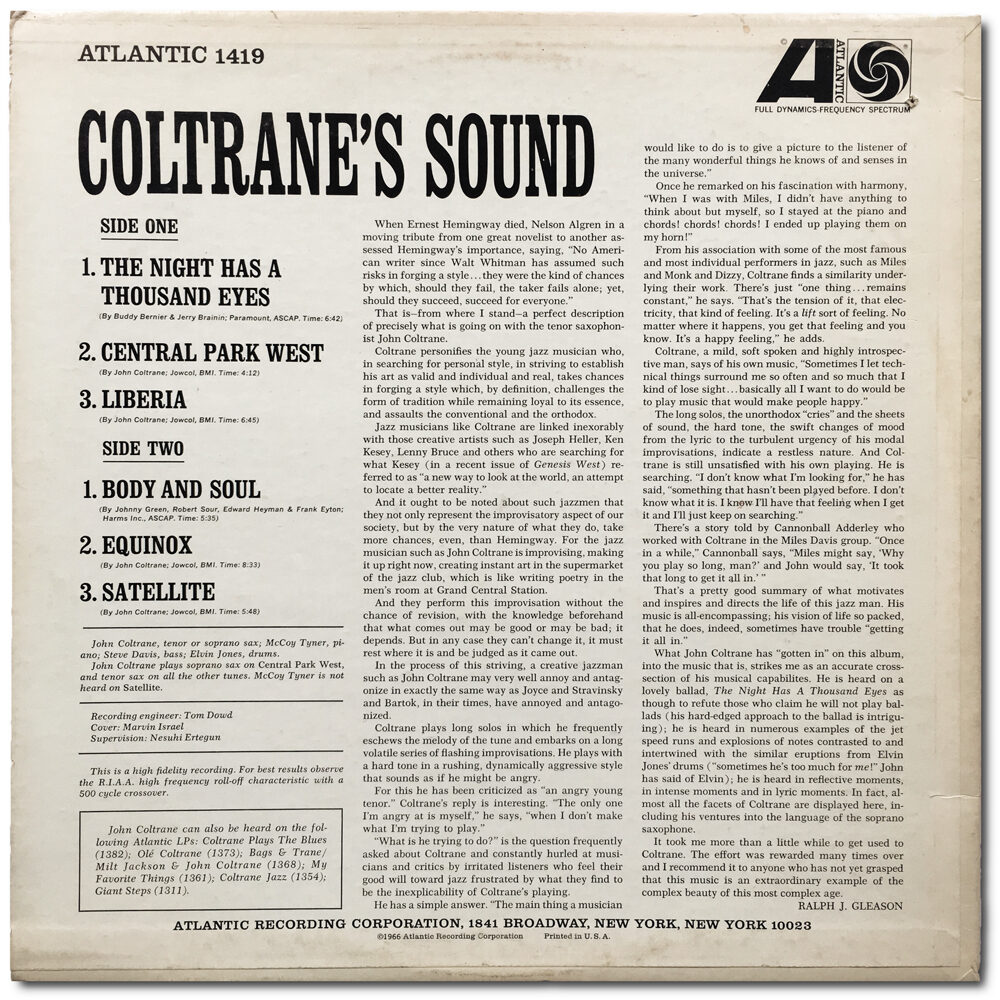
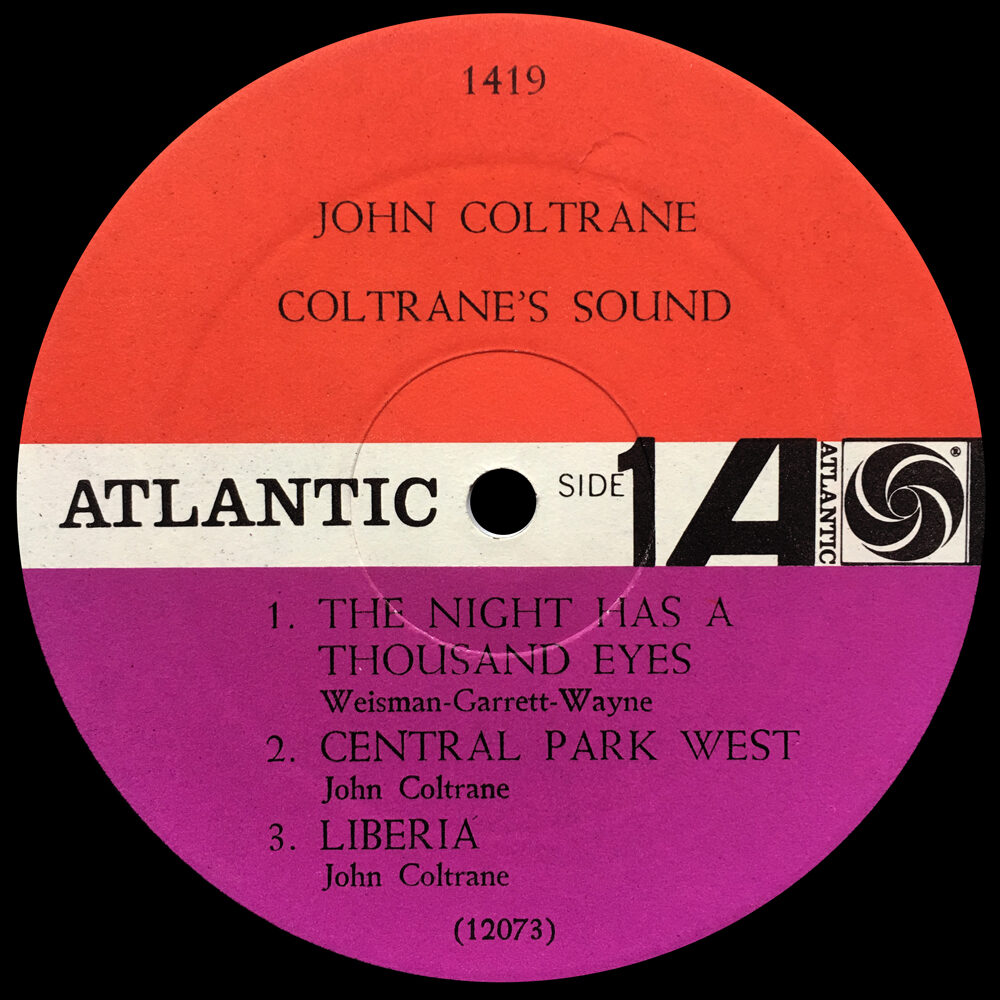
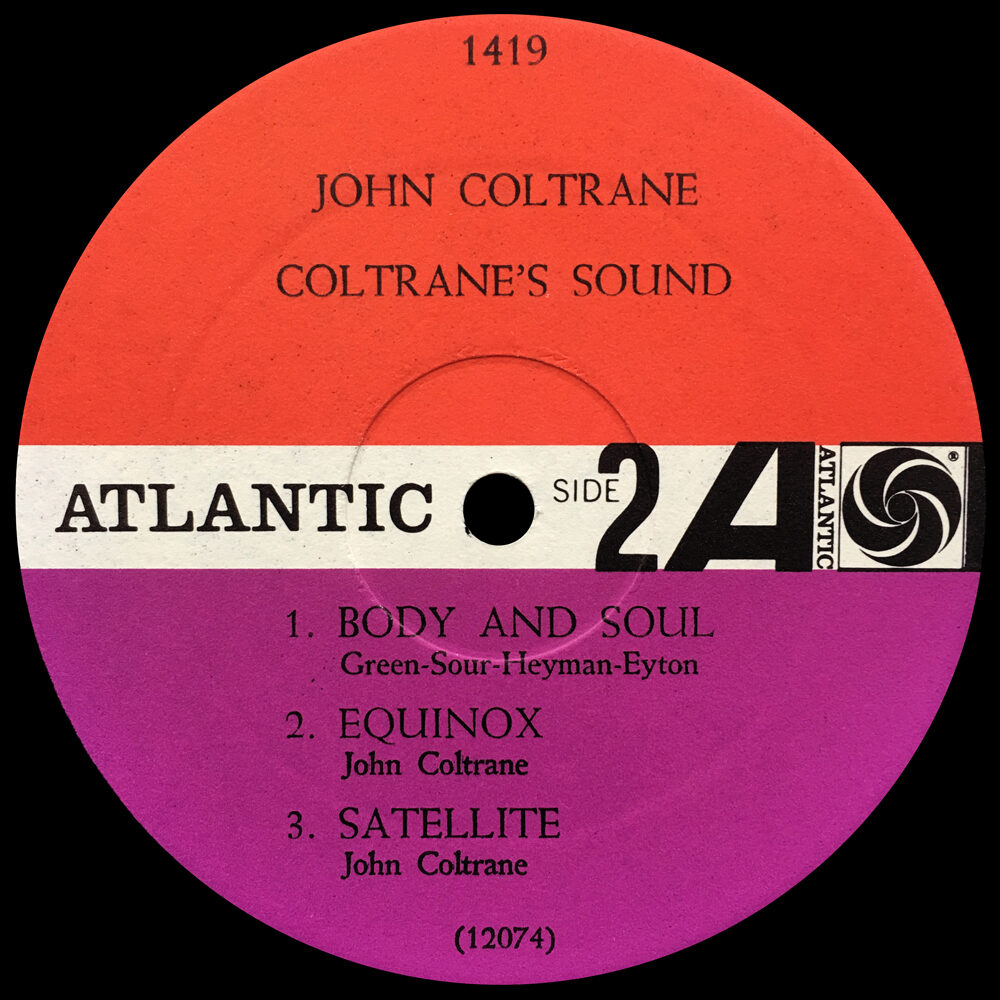
Vinyl Spotlight: John Coltrane, Coltrane’s Sound (Atlantic 1419) Second “Orange/Purple Label” Mono Pressing

  • Second 1966 mono pressing
  • Orange & purple labels with black fan and “Atlantic” written vertically
  • Non-laminated cover with “NEW YORK, NEW YORK 10023” and “copyright 1966” on back of jacket

Personnel:

  • John Coltrane, tenor & soprano saxophones
  • McCoy Tyner, piano
  • Steve Davis, bass
  • Elvin Jones, drums

“Central Park West”, “Body and Soul”, and “Satellite” recorded October 24, 1960
“Liberia”, “The Night Has a Thousand Eyes”, and “Equinox” recorded October 26, 1960
All selections recorded at Atlantic Records’ 56th Street studio, NYC
Originally released in 1964

1 The Night Has a Thousand Eyes
2 Central Park West
3 Liberia
4 Body and Soul
5 Equinox
6 Satellite
Before I started collecting vintage jazz records, a friend of mine who also happens to be a jazz drummer let me borrow a bunch of jazz CDs to rip to my computer and this was one of them. At the time, I pretty much took all the John Coltrane he had, not having any idea of what was what. But a couple songs on this album, “Central Park West” and “Equinox”, immediately stood out to me, and this has been one of my favorite Trane albums since.

Released after Coltrane had already moved over to Impulse and his contract with Atlantic had expired, Coltrane’s Sound was compiled from three 1960 recording sessions (two in one day on October 24, 1960), which also produced tracks for My Favorite Things and Coltrane Plays the Blues. (Fun fact: I’ve heard that Coltrane disapproved of this cover art, believing that the way it made his face look like it was melting was morbid.) The separation on stereo versions of this album is typical of that on all the Atlantic Coltrane albums: an empty center and all instruments panned either hard left or right. After ripping this album from my friend but before I acquired this copy, I got a hold of the same 1999 stereo CD my friend had, and the extreme separation made me especially interested in hunting down an original mono pressing. A copy evaded me for years (stereo originals of this album seem to outnumber mono copies by a wide margin), but a couple months ago I was elated to find this copy at a local shop.

I had a bit of fun determining the vintage of this pressing. Almost convinced that it was a first pressing, I noticed a copy for sale on eBay that appeared to sport a laminated cover. Upon further inspection I noticed that, despite the labels being identical on both copies, the bottom of the eBay jacket read, “NEW YORK 23, NEW YORK”, followed by “copyright 1964”. My copy is therefore clearly a second pressing, but what’s to complain about when the mastering is identical, my copy is in top condition, and I paid the price of a sealed reissue?

As previously stated, “Central Park West” and “Equinox” are the moody standouts here. The former, a sweet ballad written by Coltrane and played with soprano sax, conjures imagery of a romantic couple strolling the namesake Upper West Side street on a cloudy autumn day. The latter is a blues with a dark, foreboding underpinning whose happier “B” section ultimately gives way to solos of a more playful nature. These two songs are really the sole reason I hold this album in such high regard. The rest of the tracks don’t appeal to me enough to play this album all the way through every time (I’ve never been a big fan of the standard “Body and Soul”), though the controlled chaos of the pianoless trio on “Satellite”, which serves as one of numerous Atlantic-era predictors of Trane’s future direction at Impulse, has steadily grown on me.

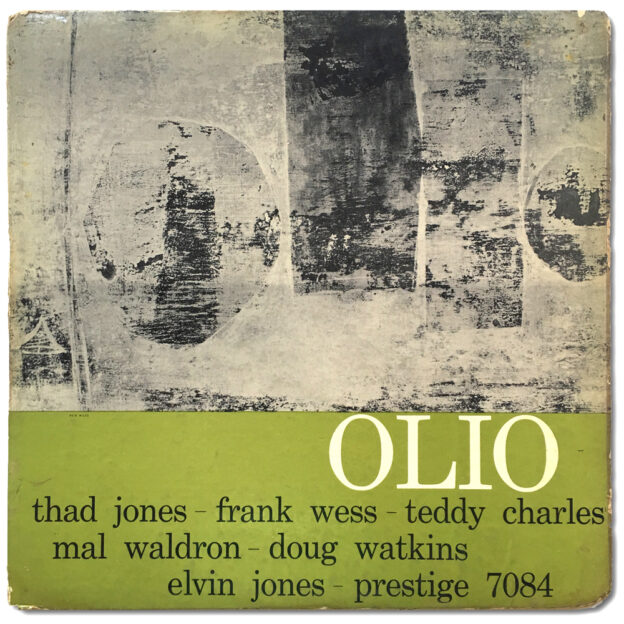
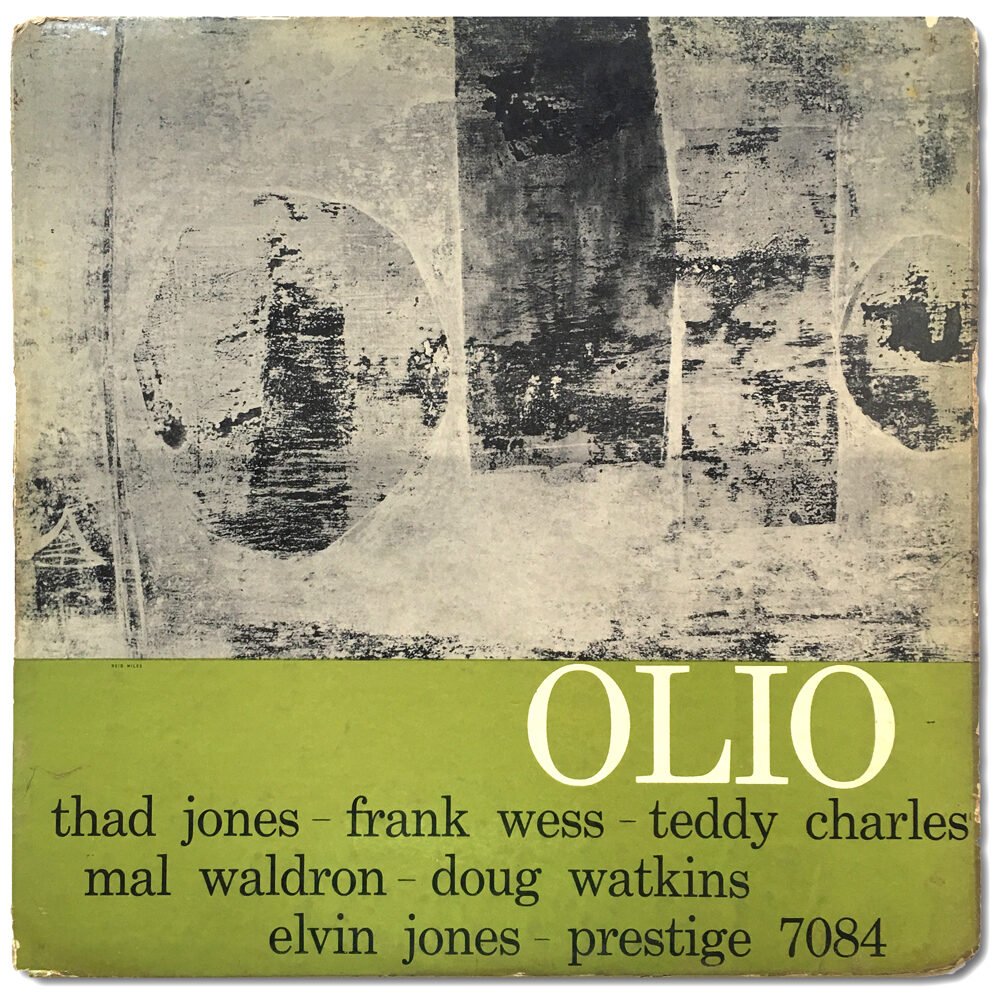
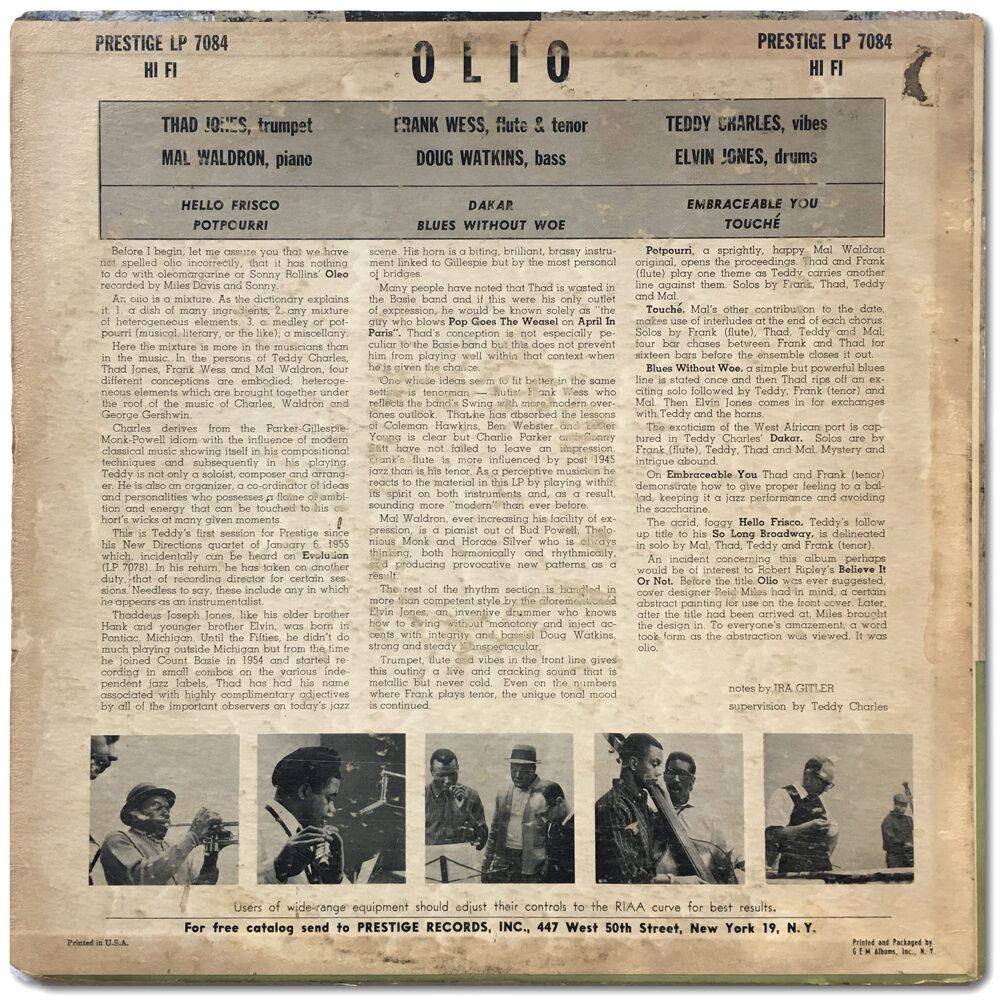
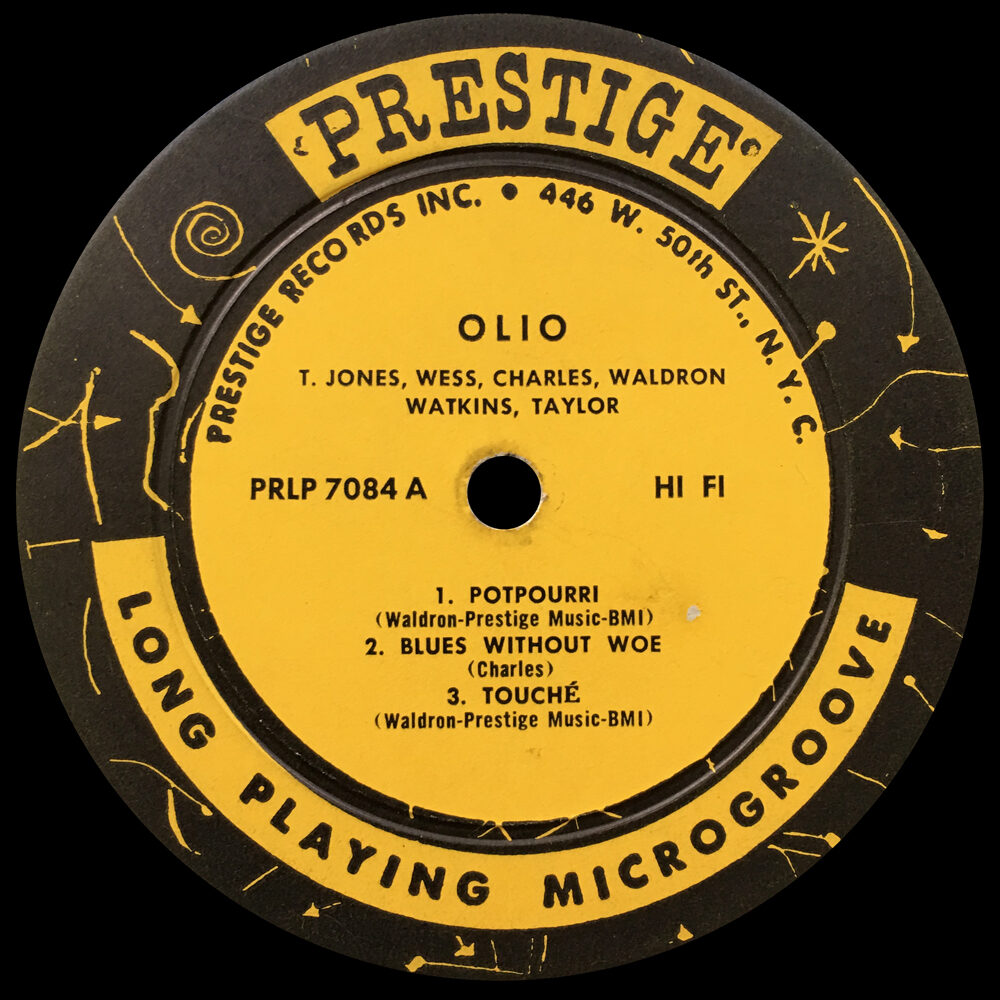
Vinyl Spotlight: Olio (Prestige 7084) Original Pressing

  • Original 1957 pressing
  • “446 W. 50th ST., N.Y.C.” on both labels
  • Deep grooves on both sides
  • “RVG” stamped in dead wax

Personnel:

  • Thad Jones, trumpet
  • Frank Wess, flute & tenor saxophone
  • Teddy Charles, vibraphone
  • Mal Waldron, piano
  • Doug Watkins, bass
  • Elvin Jones, drums

Recorded February 16, 1957 at Van Gelder Studio, Hackensack, New Jersey
Originally released in 1957

Selection:

“Blues Without Woe” (Charles)

It’s rare that I hang on to a record in VG condition, but this record has a couple things working for it: 1. Despite the pops and ticks, it has no groove wear, 2. I got it for (the vintage jazz record collecting equivalent of) a dollar bin price, and 3. The music and performances are both spectacular. Like my copies of Saxophone Colossus and Coltrane Live at Birdland, this was a “jazz genre section” find. Unfamiliar with the music, the price tag made me walk it over to the listening station to give it a try, and I wasn’t expecting such great performances and such a sweet sound.

For several months I grappled with the choice of keeping it or selling it, and lately I decided it’s here to stay. The compositions are all top-notch, mostly written by the tag team of Teddy Charles and Mal Waldron. The sound of the recording hearkens back to the days of lo-fi recording, drums softly set back in the mix (although the bass is maybe a little too low) and the soloists are loud and clear up front, providing a unique take on late 1950s jazz recordings. And the solos are fantastic, from “leader” Thad Jones (the leader of these Prestige “jam sessions” is never clear, save their name being first on the cover) to Charles to Waldron to the most gifted Frank Wess, who plays with a breathiness undeniably reminiscent of Lester Young. Thad Jones had a unique tone and was inventive on the level of Sonny Rollins, and Frank Wess plays with unbeatable swing (this record made me realize what I miss with the avant-garde: swing). We also get to hear a young, swinging Elvin Jones on drums, a rare occasion considering the splashy, liberated rhythmic style he would develop and own in the post bop era of the ’60s. Everyone is on point when it’s their time to shine, and though these Prestige dates often get a bad rep for lacking the care and preparation that went into sessions on labels like Blue Note, one can’t help but conclude that this group knew what they were doing when they stepped into the studio that day.

The album maintains a high quality of writing and musicianship throughout. Opening with “Potpourri”, which features Frank Wess on flute, the group then shifts to “Blues Without Woe”, an uptempo hard bop masterpiece. The first side concludes with “Touché”, a lazy summer jazz walk most exemplified by the harmony of Charles’ vibes and Wess’ flute. Side two opens with “Dakar”, a Charles composition with harmonic chaos in the spirit of Thelonious Monk’s “Evidence”. From there the band slows things down with a reading of the Gershwin standard “Embraceable You”. Thad Jones is his usual ballad-sweet self, and Wess plays a resonating, breathy solo. The album’s final cut, Charles’ “Hello Frisco”, ends things without exclamation, though we still get an inspired solo from Waldron, a pianist who we hear tirelessly working out ideas record after record.

At the end of the day, a cheap original pressing that plays without groove wear or skips is a record worth listening to, especially if the music and performances are as captivating as they are here.

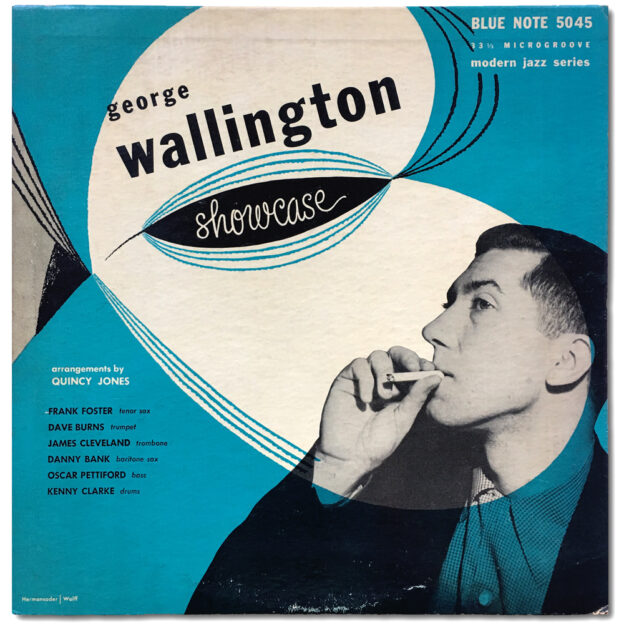
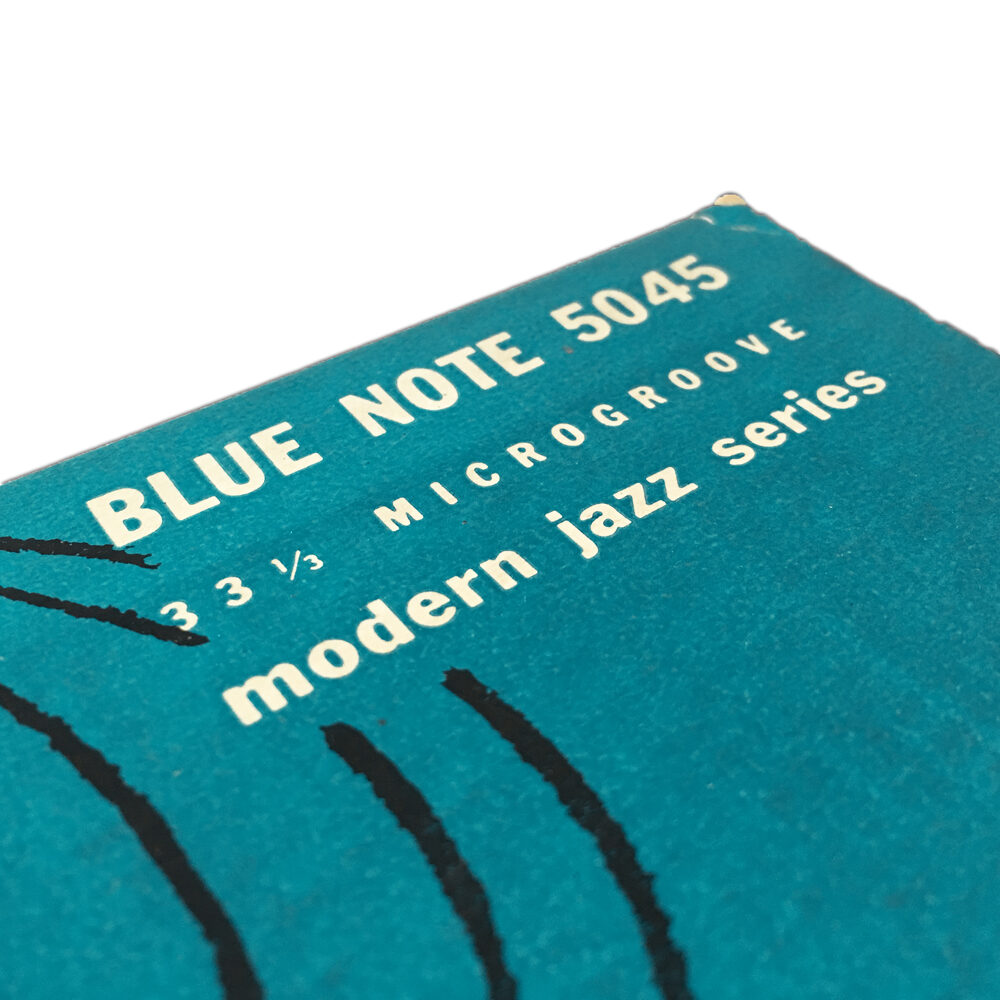
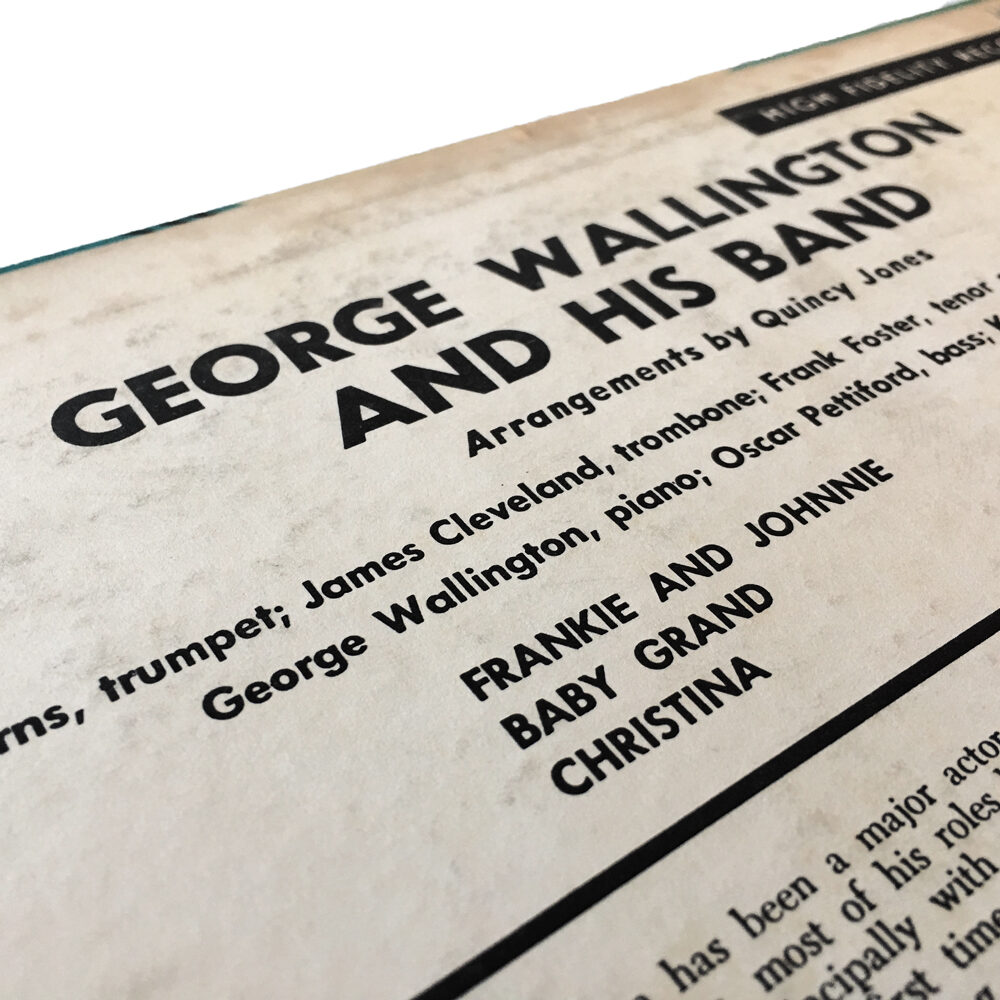
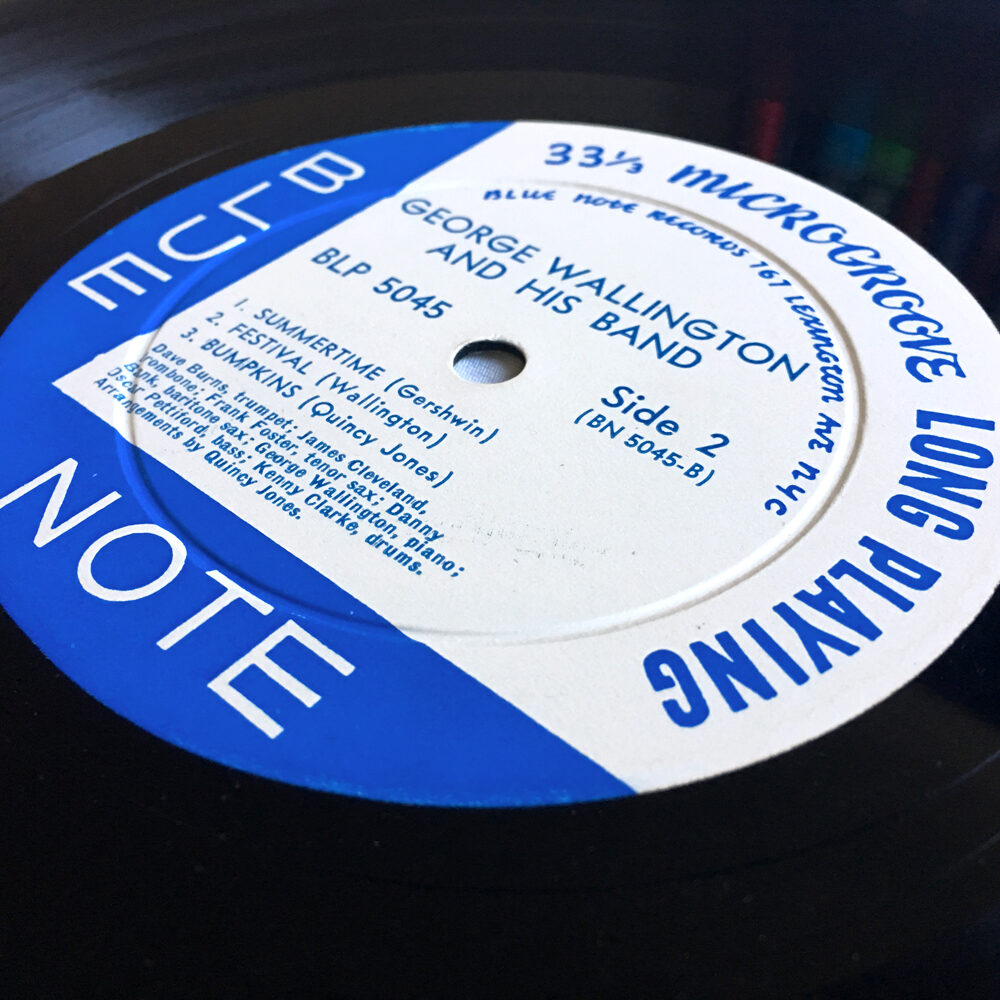
Vinyl Spotlight: George Wallington Showcase (Blue Note 5045) Original 10″ Pressing

  • Original 1954 pressing
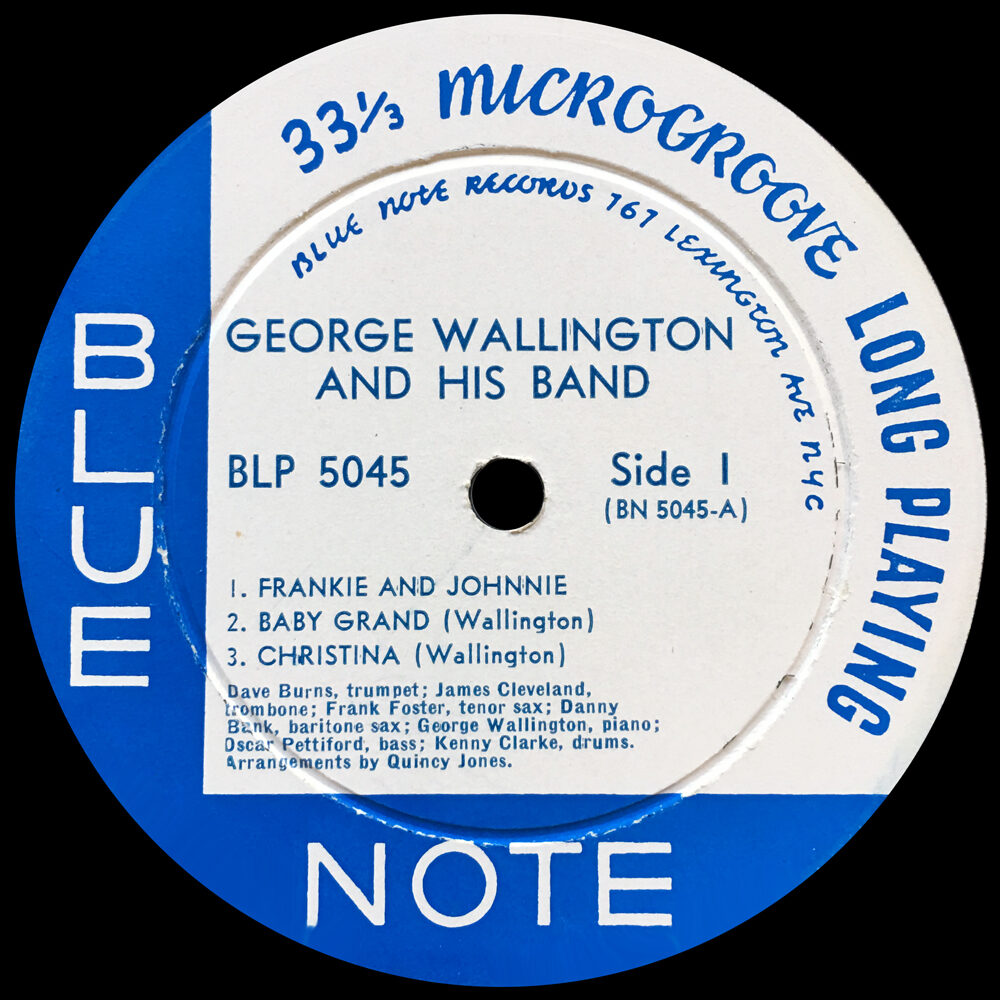
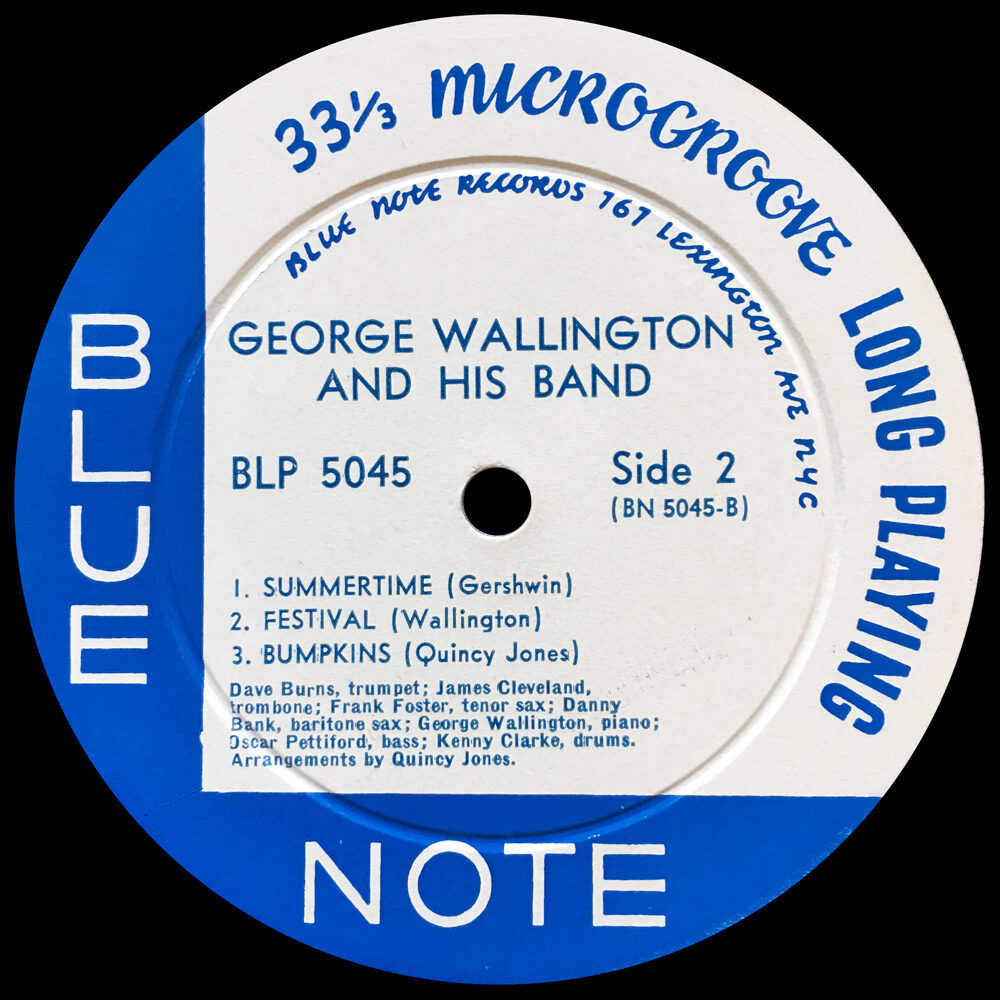
  • “767 Lexington Ave NYC” on both labels
  • Deep groove both sides
  • Plastylite “P” and “RVG” etched in dead wax

Personnel:

  • Dave Burns, trumpet
  • James Cleveland, trombone
  • Frank Foster, tenor saxophone
  • Danny Bank, baritone saxophone
  • George Wallington, piano
  • Oscar Pettiford, bass
  • Kenny Clarke, drums

Recorded May 12, 1954 at Audio-Video Studios, New York City
Originally released November 1954

1 Frankie and Johnnie
2 Baby Grand
3 Christina
4 Summertime
5 Festival
6 Bumpkins

For Collectors and Engineering Nerds

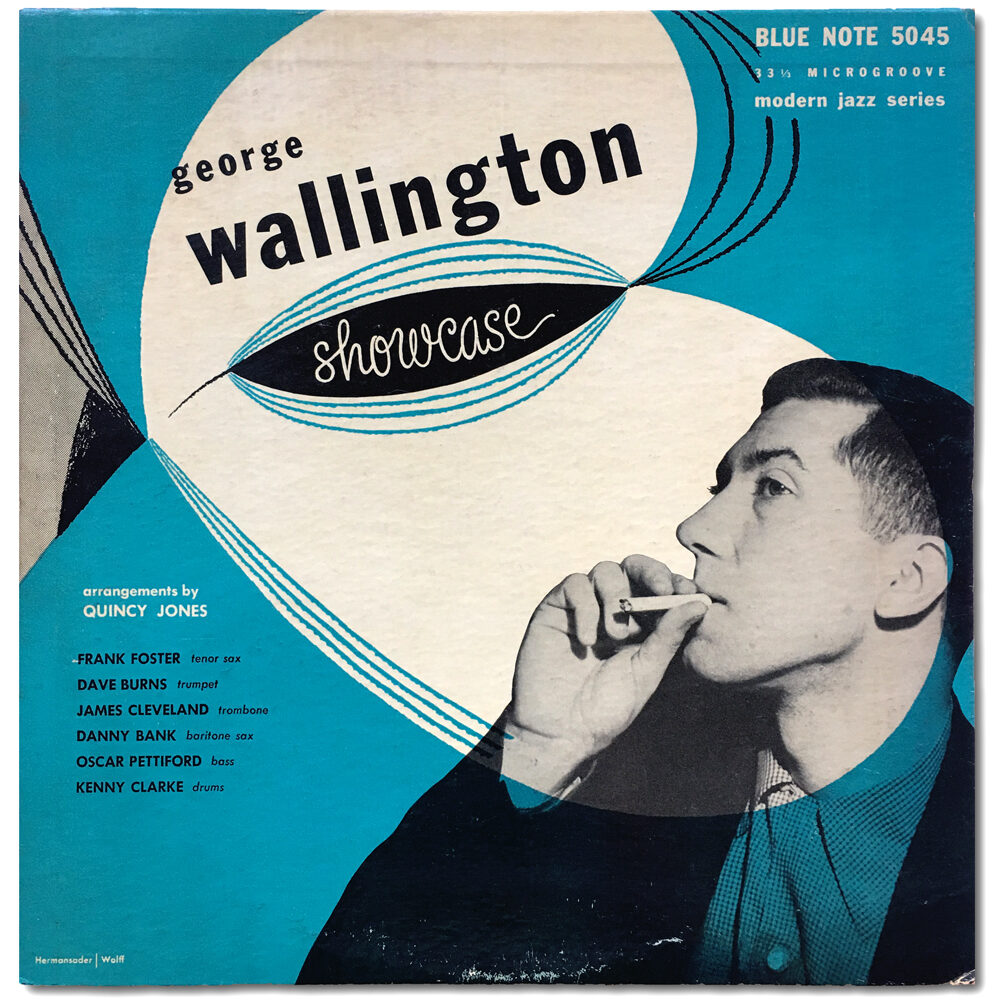
I am fascinated by the extent to which even a mere encounter with an original pressing of a jazz record can heighten my interest in the music. My first experience with classic Blue Note LPs came by way of the Blue Note album cover book and later the website Vintage Vanguard, hosted by what is assumed to be a Japanese collector who has long owned every Blue Note LP in the 5000, 1500, and 4000 series. It was then that I first came across the super-hep cover art for this album. Its typography, artwork, and bold teal background — clearly a byproduct of the early modern art movement of the early 1950s — was a style unlike the minimalist design and sans-serif fonts of Reid Miles’ later work for the label. Although I have grown to adore the ways in which the former style contrasts with the latter, it was an aesthetic that took some time to warm up to. Through all this, I couldn’t begin to imagine a cooler looking cat than Wallington as he appears on this cover. Cigarette in hand, the septet leader was 29 at the time of recording but somehow manages to not look a day over 19, his crew cut and small-check shirt a proclamation of his “in-ness”.

A rare album in any format, I kept it on my radar for many years simply on the strength of the cover art without having ever actually heard it. That changed when I saw an original pressing on the wall of a local shop last summer. It looked clean and the price seemed fair but it still made me proceed with caution. When I got home later I scoured the web for sound clips. Nothing on Spotify, but a few songs appeared sporadically on YouTube. Though I’m not usually a fan of bigger bands, I gave this album a chance and it grew on me after several listens. But when I went back to the store the next day to audition the record, I found a series of loud ticks in one spot so I decided it wasn’t worth the (EX) asking price.

Days later I had a twelve-inch Japanese reissue in my hands by way of another local store, and I have fond memories of playing that copy on many late mornings last summer (“Summertime” being the obvious mood-setter). But I never liked the way Michael Cuscuna arranged the track listings on these reissues, the outtakes of which aren’t included at the end of the original program but placed back-to-back with their respective counterparts. Needless to say, this made for repetitive listening away from the turntable so I eventually got my hands on the ten-inch Japanese reissue, which only included the original program.

The story of how I acquired this particular copy is unfortunately not as fun as others I’ve told of late and can be reduced to a single four-letter word: eBay (womp womp). The seller graded both jacket and record VG+. Normally being skeptical of this grade, I noticed that the auction ended on a weekday afternoon and the seller accepted returns so I decided to take a chance. Later that week I emerged victorious for about 60% of my high bid.

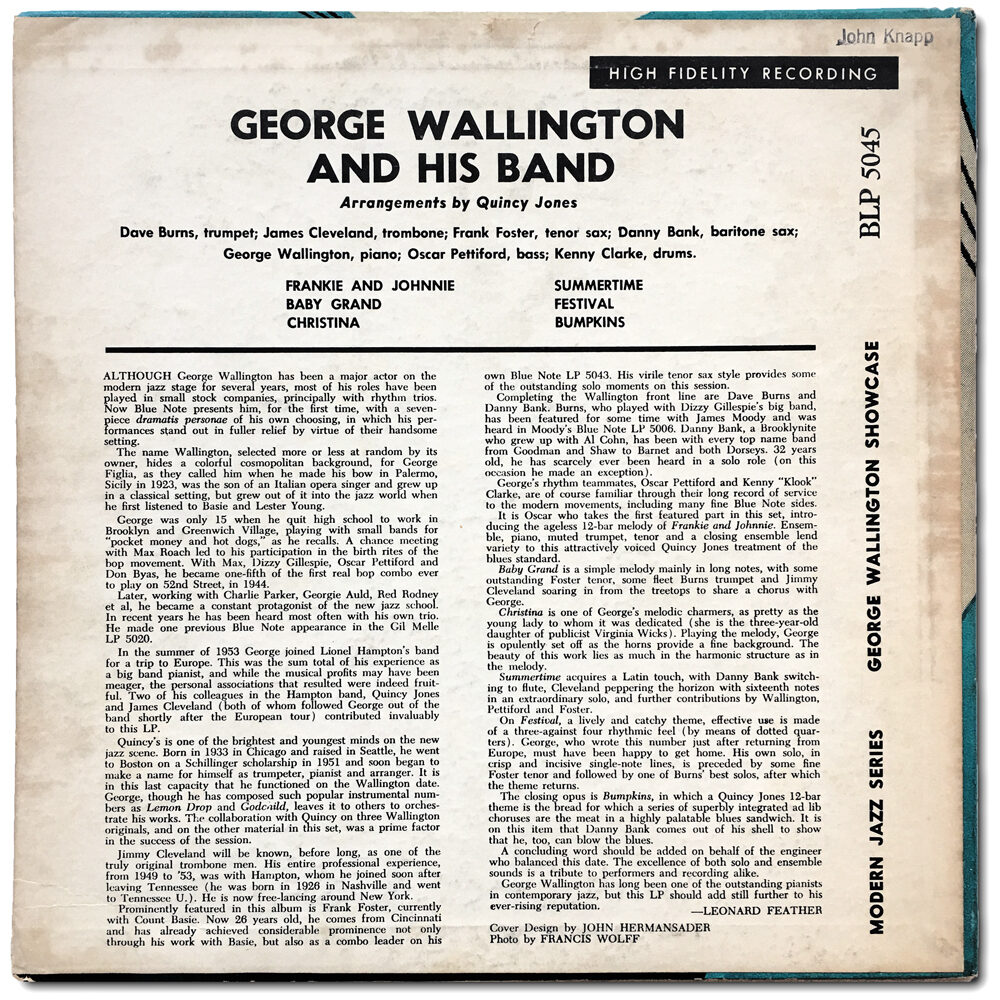
When the LP arrived days later, I was pleased to find that it was conservatively graded. There were some marks but it played through most without a sound, and I was floored by the fidelity. The sound was magnetic, and I’ve played it countless times since. The instrument balance is exceptional (Leonard Feather, responsible for the album’s liner notes, was not known to comment on recording quality but here even he agrees). It is also a very dynamic recording, each soloists loudest notes really jumping out of the speaker, and the space it creates sounds very natural with no artificial reverb added.

Though it is one of the earliest Blue Note titles to bear Rudy Van Gelder’s initials in the dead wax (an indication that the LP was mastered by him), it was not laid to tape by the mastermind engineer. Though the label had recorded with Van Gelder as early as March 1952 (BLP 5020, Gil Melle Quintet/Sextet), Blue Note regularly rotated between a few recording studios through 1953. The New York City locations included radio station WOR and a studio run by the obscure Audio and Video Products Corporation, also known as “Audio-Video Studios”. The last time Blue Note recorded at WOR was in November 1953 (BLP 5034, Horace Silver Trio Volume 2), and from that point on the label almost exclusively used Van Gelder with a few exceptions. Aside from this Wallington date, recorded at Audio-Video in May 1954, Blue Note recorded there again in March 1956 (BLP 1513, Thad Jones’ Detroit-New York Junction, and BLP 1543, Kenny Burrell Volume 2). Perhaps there was a leak in the Hackensack roof in March ’56, though I’m willing to bet that the size of the Wallington band forced them out of Van Gelder’s Hackensack living room and into a larger space back in ’54.

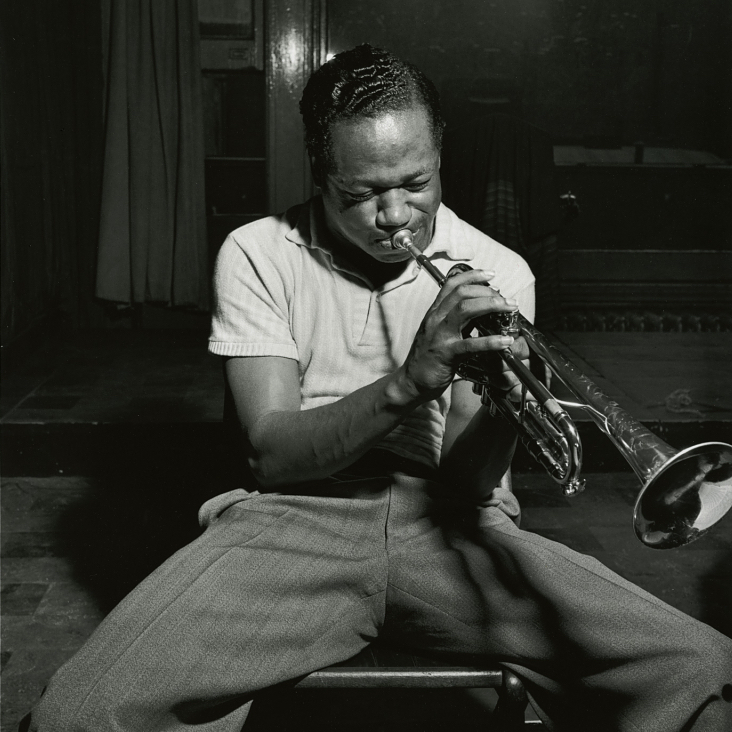
Not much is known about Audio-Video Studios. It appears to have been located on the corner of East 57th Street and Fifth Avenue in Manhattan, and Oliver Summerlin, co-founder of Pulse Techniques, Inc. (makers of the legendary Pultec EQP-1 equalizer), was an employee or perhaps even owner of the studio as early as 1949 (sources: Horning’s Chasing the Sound and reevesaudio.com). Other than that, I’ve come to realize that the following famous photo of Clifford Brown was taken by Francis Wolff at the studio on August 28, 1953 during the recording of BLP 5032, Clifford Brown: New Star on the Horizon.

Clifford Brown at Audio-Video Studios in 1953

For Music Lovers

I became familiar with George Wallington first by acquiring an original pressing of Jazz for the Carriage Trade (Prestige 7032). From there I acquired the Original Jazz Classics CD reissue of George Wallington Quintet at the Bohemia, extremely rare in its original form and originally released by the short-lived Progressive label in 1955. Preceding the others, Showcase was arranged by a 21 year-old Quincy Jones, who met Wallington when they both were playing in Lionel Hampton’s band during a European tour the year before. Jones contributed the swinging “Bumpkins” to this set, with Wallington penning the rest, save the traditional “Frankie and Johnnie” and “Summertime”, a Gershwin standard that gets a reading in the lineage of the “cool” here. “Baby Grand” and “Festival”, the album’s most upbeat tunes, feature standout solos by tenor saxophonist Frank Foster, who cuts through the mix with pinpoint accuracy. Slowing things way down at the end of side 1, “Christina” is a quiet, sweet ballad named after the three year-old daughter of jazz publicist Virginia Wicks.

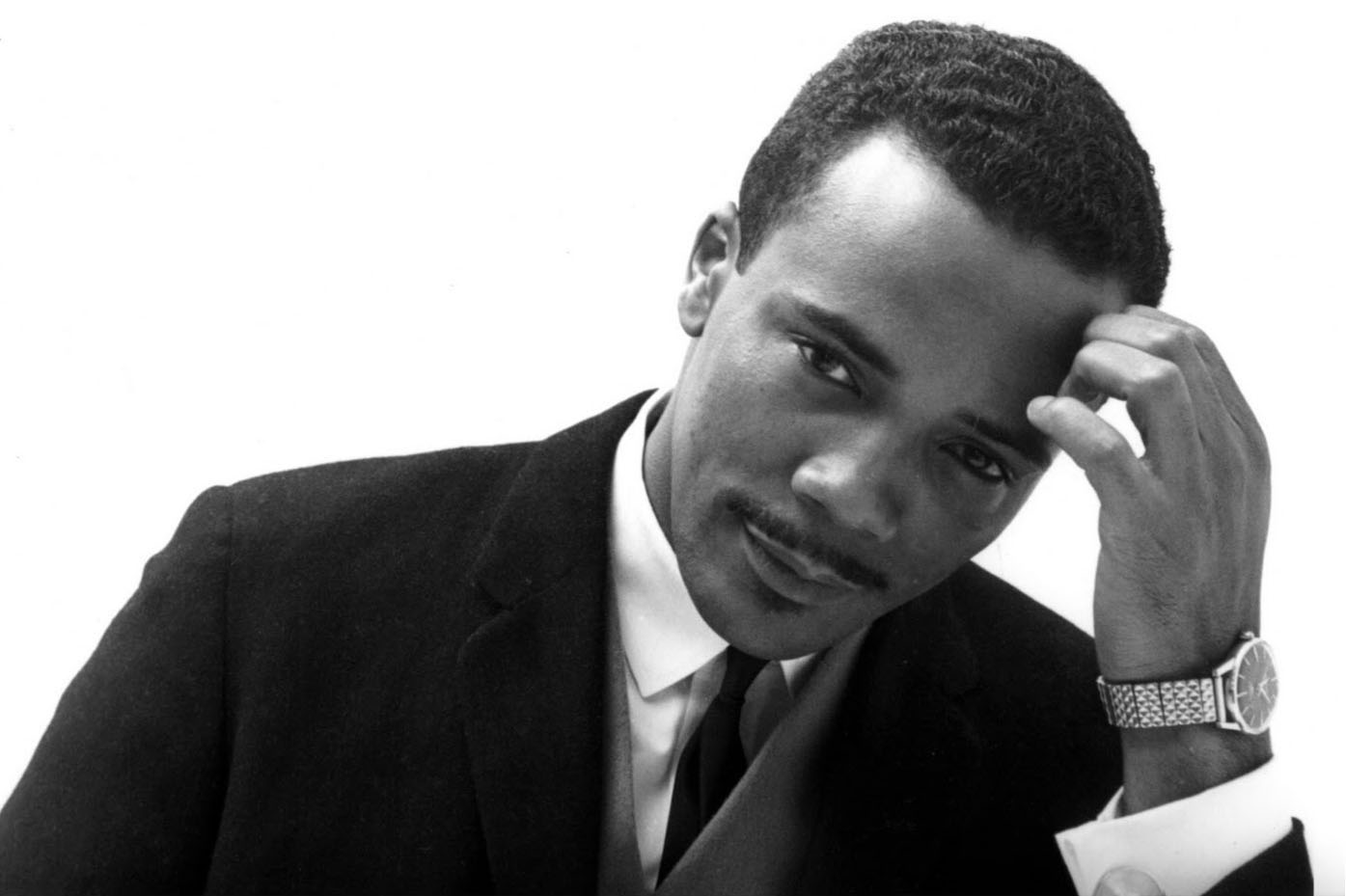
Quincy Jones

The album has proved a delightful listen start to finish and has resonated with me on many levels. It tastefully tows the line between swing and bop throughout, making it a refreshing break from the hard bop sets that comprise most of my collection. There’s not a weak track on either side — I had a very difficult time narrowing my selections down to three. The band sounds incredibly tight and must have been well rehearsed before they stepped into the studio that day. I also appreciate the limitations of the ten-inch format as reflected in how succinct all the takes are. Surely a carryover from the 78 era and that format’s very short runtime of three-and-a-half minutes tops, in 1954 bands must have still been in the mentality of making every musical statement count with efficiency and precision, something that wouldn’t change until the twelve-inch LP format became the standard the following year. The shorter program length here works to the group’s advantage and it makes each listen that much more special.

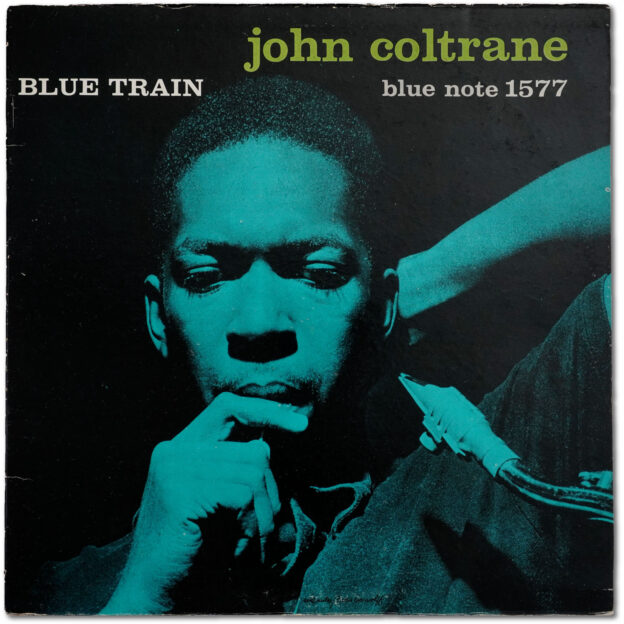
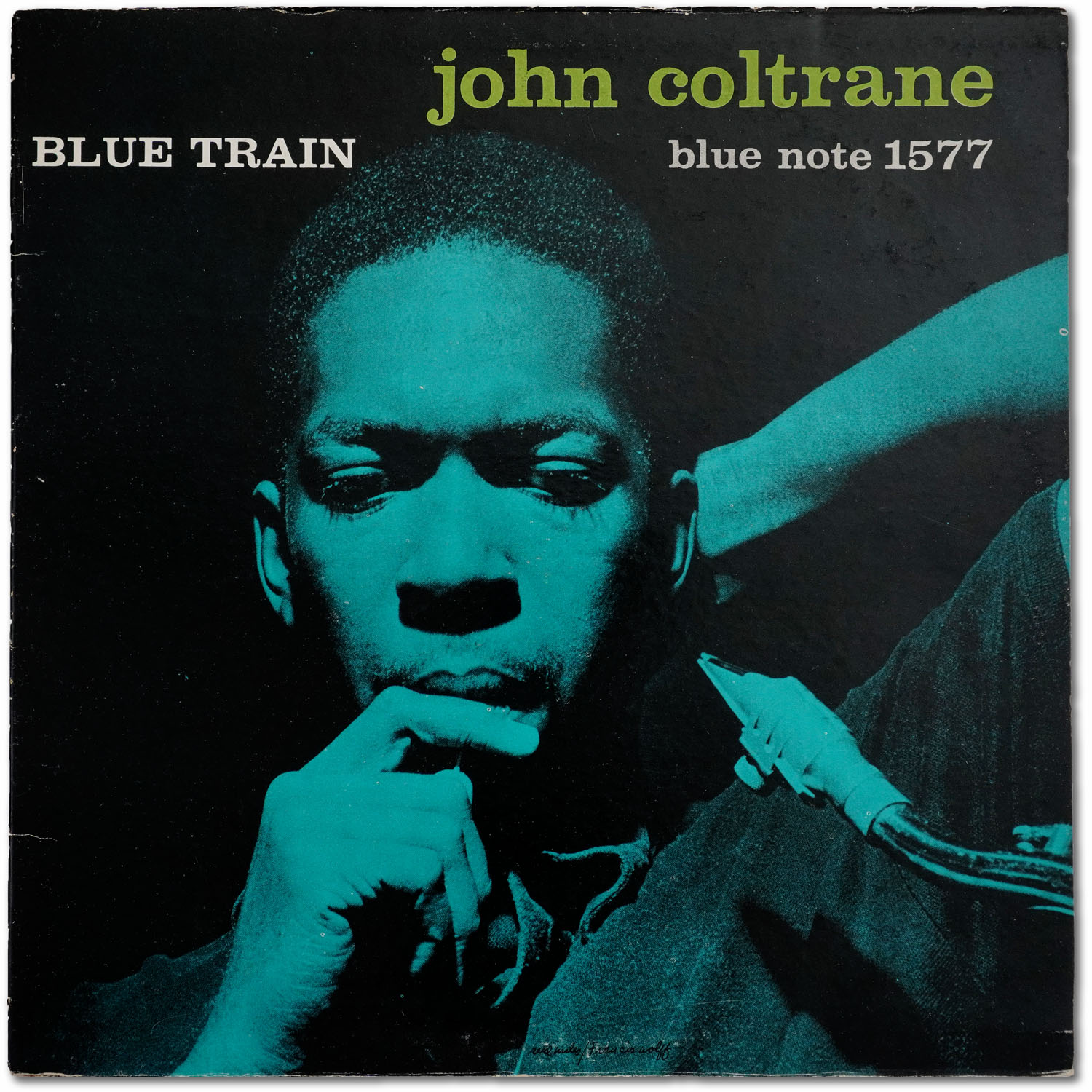
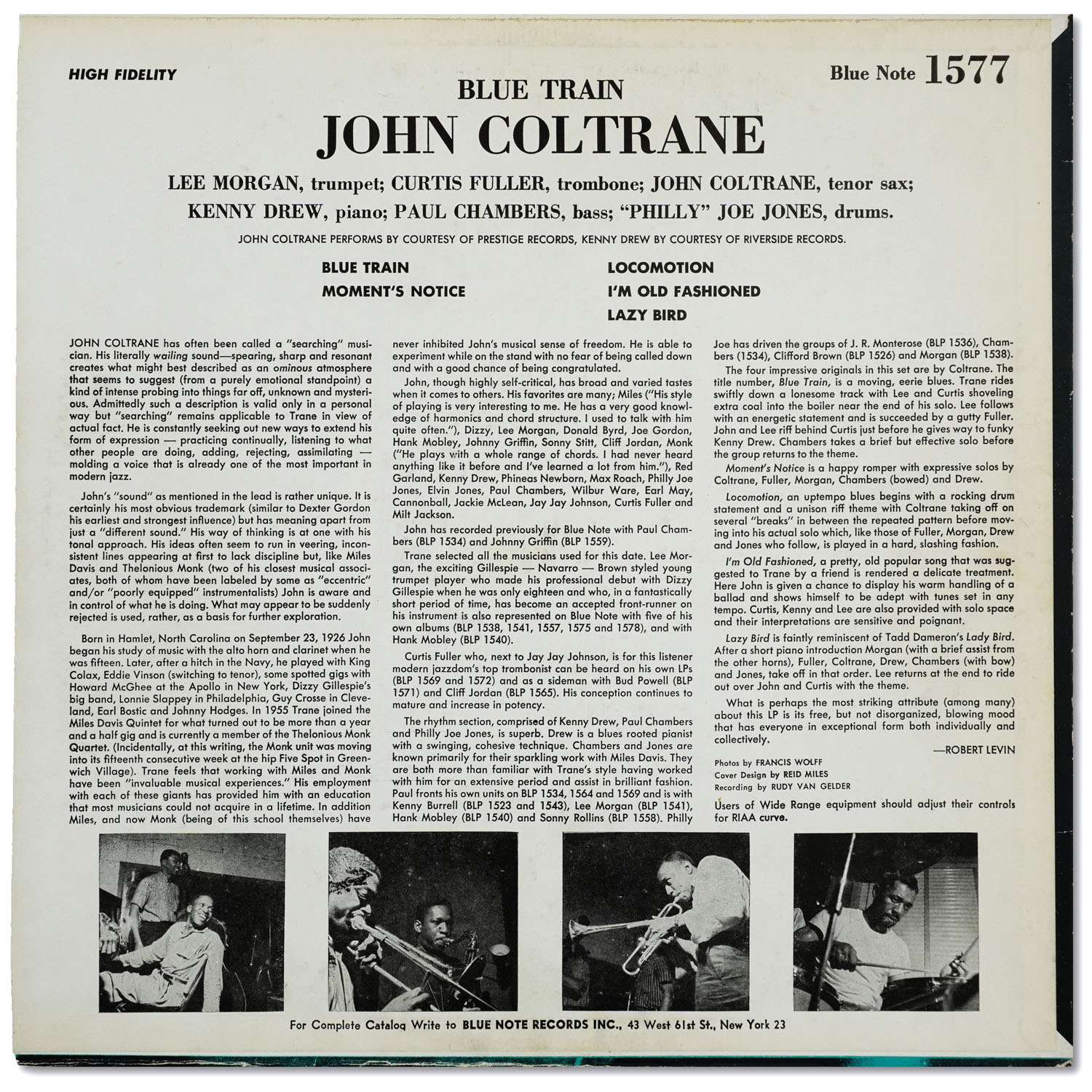
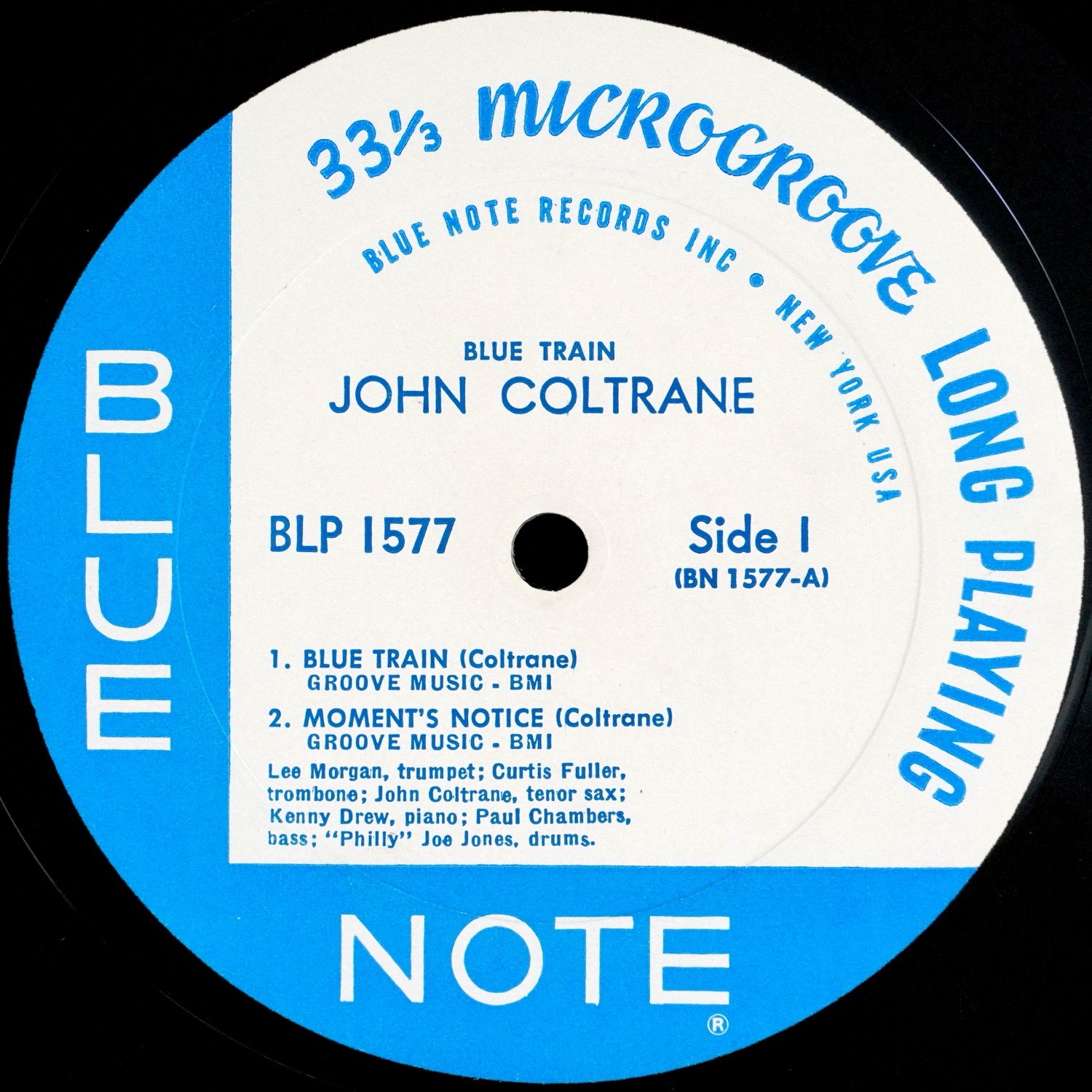
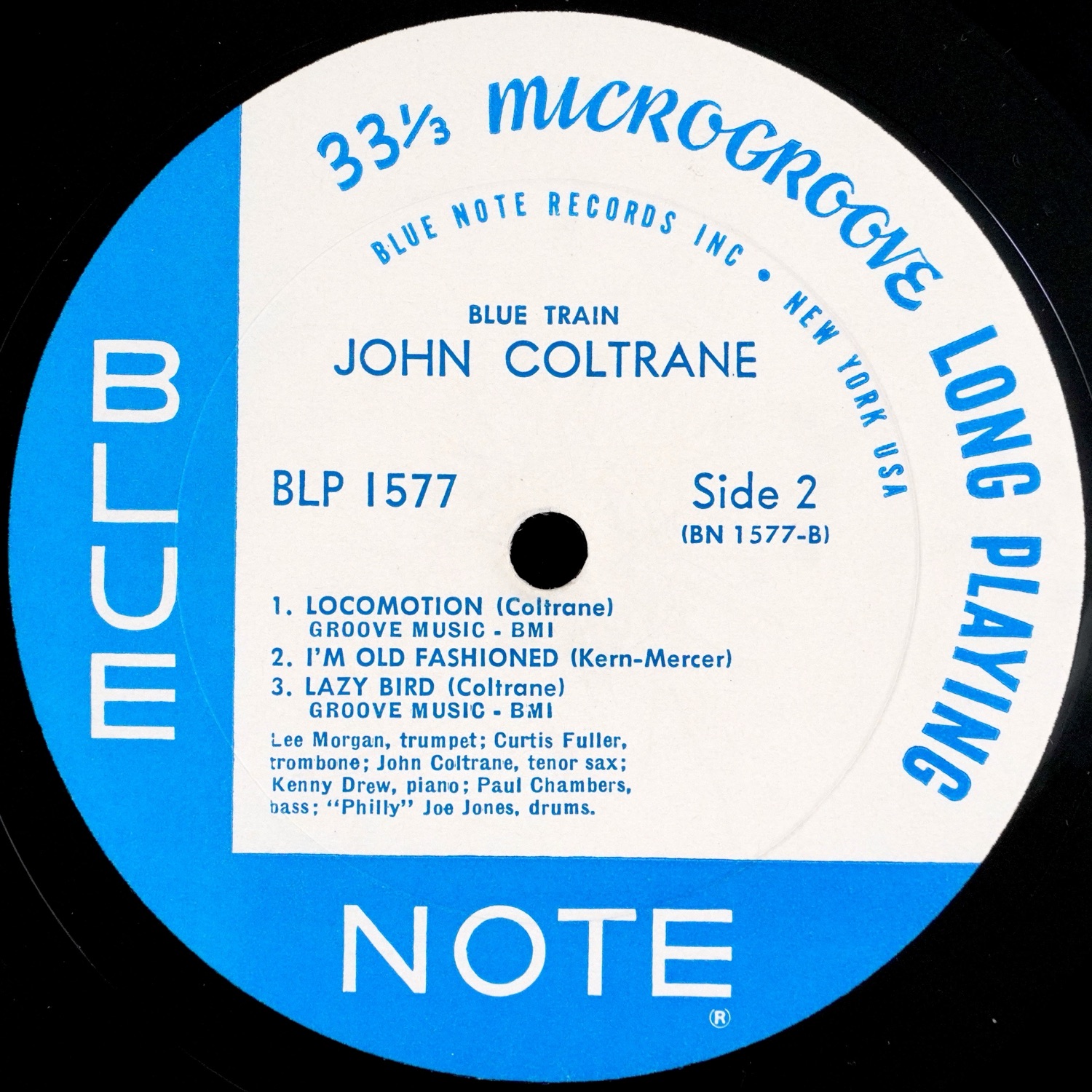
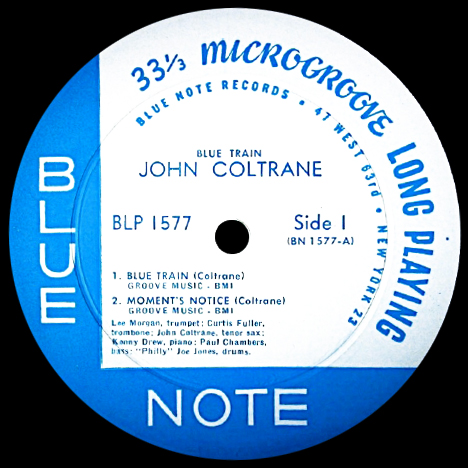
Vinyl Spotlight: John Coltrane, Blue Train (Blue Note 1577) “Earless NY” Mono Pressing

  • “Earless NY” mono pressing ca. 1966
  • “RVG” stamped in dead wax

Personnel

  • Lee Morgan, trumpet
  • John Coltrane, tenor saxophone
  • Curtis Fuller, trombone
  • Kenny Drew, piano
  • Paul Chambers, bass
  • Philly Joe Jones, drums

Recorded September 15, 1957 at Van Gelder Studio, Hackensack, New Jersey
Originally released November 1957

1 Blue Train
2 Moment’s Notice
3 Locomotion
4 I’m Old Fashioned
5 Lazy Bird

For Music Lovers

I’m surprised by how many people recommend this album to jazz novices because I don’t necessarily find it to be an “accessible” listen. Slowly it has become one of my favorite jazz albums but I didn’t like it initially and ignored it for quite some time. I find Coltrane’s solos here challenging, and this next comment may not be something most people can identify with, but I initially found many of the melodies to sound “major” in terms of scale and thus maybe a little old-fashioned (no pun intended) at a time when I was looking for something more edgy and “minor”.

Growing out of my fashionable pessimism phase, I’ve come to appreciate older-sounding jazz numbers. But there’s a sort of hidden darkness looming in between the heads of the songs here. “Moment’s Notice”, an album favorite of mine, is the prime example of this: its happy, soulful theme seems to deceitfully change from major to minor key at the renewal of each chorus.

One by one, I grew to adore every song on this album. “I’m Old Fashioned”, a standard written by songwriting juggernauts Jerome Kern and Johnny Mercer, initially sounded like a cookie-cutter ballad but ultimately won me over. On “Lazy Bird”, trumpeter Lee Morgan’s quiet introductory proclamation of the theme is a welcome break from the sheer power of this all-star sextet. But what hasn’t already been said about the album’s mega-classic title track? The simple 24-bar theme is one of the most famous intros in all of jazz, and Coltrane’s solo has been exhaustively picked apart by scholars. No more than forty seconds after the album’s first notes sound, the leader launches this Molotov cocktail at the listener. It was too intense for me as a jazz newcomer, but over the years I feel I have grown to better understand Coltrane’s music, and today I marvel at the flurry of notes played here. In my view of jazz history this marks the beginning of Coltrane’s revolution: uninspired by what he was hearing at the time, it is the moment when the saxophonist took his instrument and proclaimed to the jazz world, “Enough is enough, it’s time to push this music forward.”

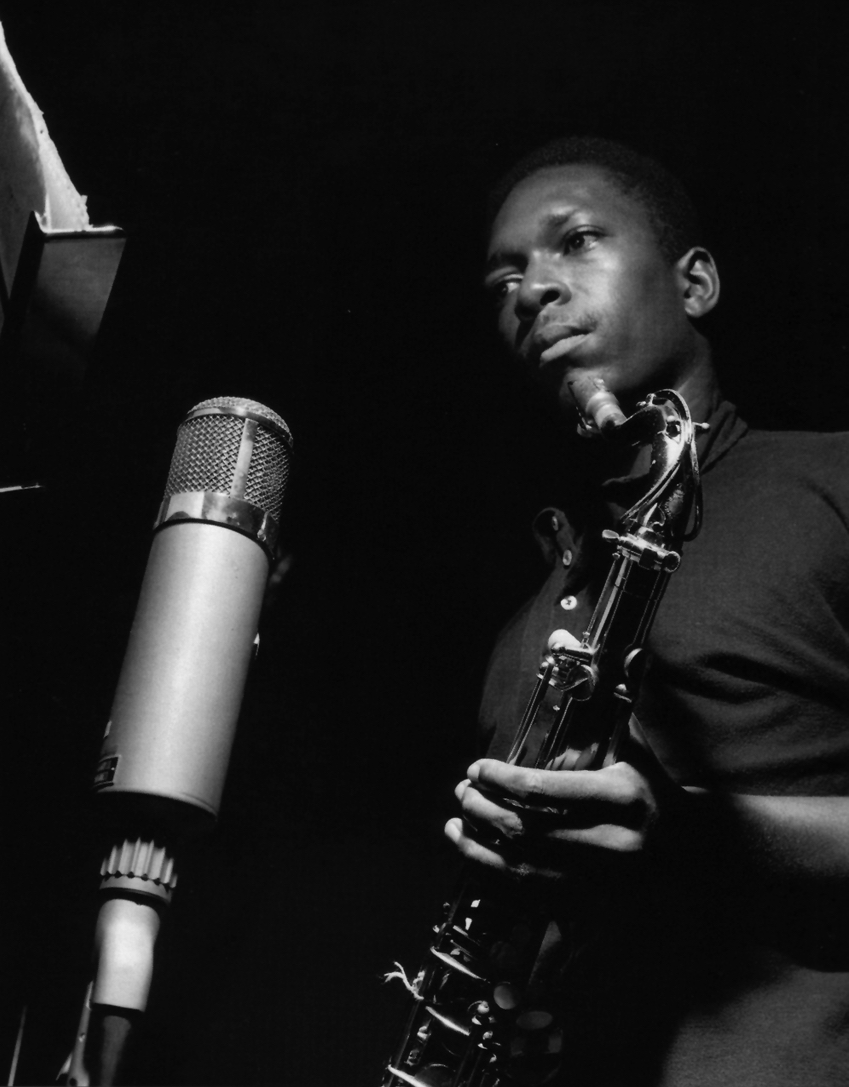
John Coltrane approaching Rudy Van Gelder’s Telefunken U47 microphone

On a side note, two weeks prior to the recording of this album in mid-September 1957, Coltrane was in the studio as a sideman for the recording of Sonny’s Crib (Blue Note 1576). That album’s title track bears a striking resemblance to the minimal, bluesy progression in “Blue Train”. Was Coltrane inspired by Sonny Clark? Had he taken Clark’s idea and ran with it? We may never know if there was a conscious connection between the two songs in Coltrane’s mind (“Sonny’s Crib” was not necessarily written first just because it was recorded first) but I found it worth mentioning.

BLP 1576, Sonny’s Crib

The choice of lineup on Blue Train is interesting. Coltrane was not known to have a regular working relationship with either Kenny Drew or Lee Morgan (he had recorded with each of them once on separate occasions prior to this date), which leaves open the possibility that Drew and Morgan were suggested by Blue Note producer Alfred Lion. This seems more plausible in the case of Morgan, a regular leader with the label. Though the album proved a grand slam for Blue Note in terms of sales, it was ultimately a one-off recording Trane did for them.

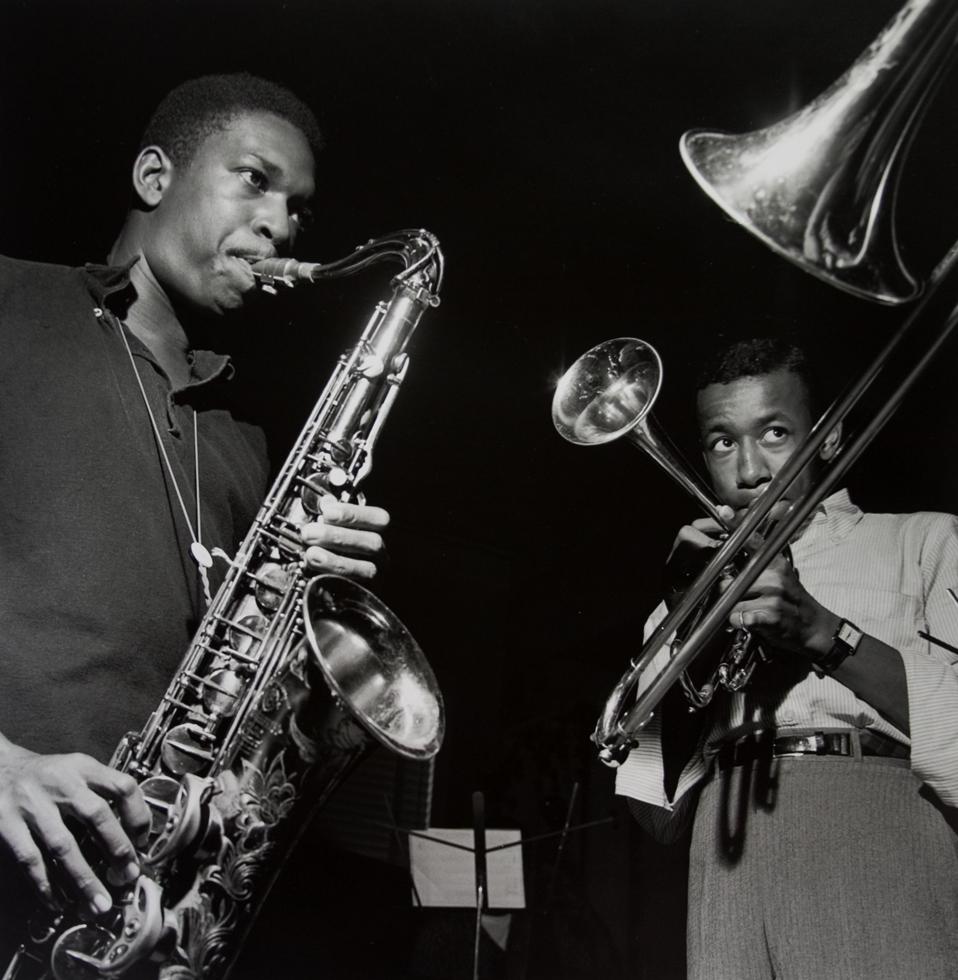
Coltrane, Morgan, and Curtis Fuller (off camera) rehearsing before a take

Critics seem split as to the brilliance of Blue Train. Beyond the title track, I have read reviews suggesting that the album amounts to little more than a run-of-the-mill bop date. The Penguin Guide to Jazz Recordings, while awarding it four stars, also manages to call it “an overvalued record”. I personally find the music jubilant and adventurous. The pairing of Trane with Morgan doesn’t create a seamless fusion to me, but it’s interesting to hear how Morgan responds to being thrown into such a foreign situation.

For Collectors

My experiences with vinyl versions of this album began many years ago with the 2005 Classic Records mono reissue. Though visually near mint, that copy had significant surface noise (a problem I’ve sadly run into again and again with Classic reissues — not all, but most). After ditching that copy, I spent several years getting more familiar with the material by listening to the 2003 stereo RVG Edition CD before I acquired the 2014 Music Matters mono reissue. I’m not nearly as fanatical about Music Matters as most jazz fans, but the fact that they released this as a single 33 R.P.M. disc in mono got my attention. Mastered by Kevin Gray, it is sonically astonishing. Through all this, I’ve always kept my eye on auctions for the rarer “NEW YORK USA” mono reissues of this with the RVG stamp and ear. These pressings sell for much less than copies displaying some form of the “West 63rd NYC” address on the labels, but I was always outbid.

Speaking of pressings, there is a hotly-contested debate over what constitutes a “first pressing” of this album. While fundamentalists will insist that only copies brandishing the “NEW YORK 23” address on one side should be considered first pressings, these copies are so rare that many collectors are left to conclude that “WEST 63RD” copes without the “INC” or registered trademark “R” must have also been part of that initial run. I side with the latter camp, considering all of these copies firsts, which would make this copy a second pressing (notice my quotes around the word “second” in the description above). Some collectors, including the venerable Larry Cohn, even go as far as suspecting that the New York 23 copies are second pressings. Semantics aside, this is an absolutely stunning copy of this classic and one of the cleanest vintage jazz records in my collection.

The elusive “NEW YORK 23” label

I’m not usually one to sweat the details when it comes to various runs of album jackets, but through a bit of recent research I have come to realize that there is a small difference between the first and second pressings of this jacket despite the “West 63rd Street” address appearing on both: while second jackets have black printing artifacts on the photo of Curtis Fuller, first jackets do not.

Original (left) and second edition (right) jackets

Though engineer Rudy Van Gelder is famous for his high level of sonic consistency, careful inspection will expose a multitude of different approaches both he and producer Alfred Lion took to the recording and mixing processes. Blue Train is an ideal example of this. The dead-black background depicted on the cover compliments the “nighttime” vibe of this recording exceedingly well. This is partly due to the fact that the album was laid to tape not long after Van Gelder acquired his new EMT plate reverb unit. This replaced his old (and frankly, cheap-sounding) “spring” reverb unit, which to the dismay of many jazz fans plagues numerous earlier Hackensack recordings by saturating the soundstage with choppy echoes of horns and drums. And while stereo versions of Blue Train present a rather disjointed soundstage (instruments on the far left and right with the reverb alone in the center), the unified mono presentation of the music here coupled with the roomy decay of the mono EMT plate succeeds at creating a spacious, dark soundstage that’s as far as one might imagine from the natural characteristics of a makeshift living room studio. And while the true-to-life sonic character of that room has appeared on countless jazz recordings and been celebrated for decades, this is a shining example of a time when Van Gelder and Lion decided that the music and temperaments of the artists required a fresh approach.

EMT reverb plate

It really doesn’t get any better than this when it comes to a vintage jazz listening experience: a clean copy of a classic album with a star-studded, exceptionally recorded cast being presented in monophonic fidelity as originally intended. It’s a time machine back to that cool autumn day in 1957 when jazz giants roamed Rudy Van Gelder’s New Jersey living room, expressing themselves the best way they knew how. This is an album I will cherish when I’m old and grey, and it is sure to get lots and lots of plays from now until then.

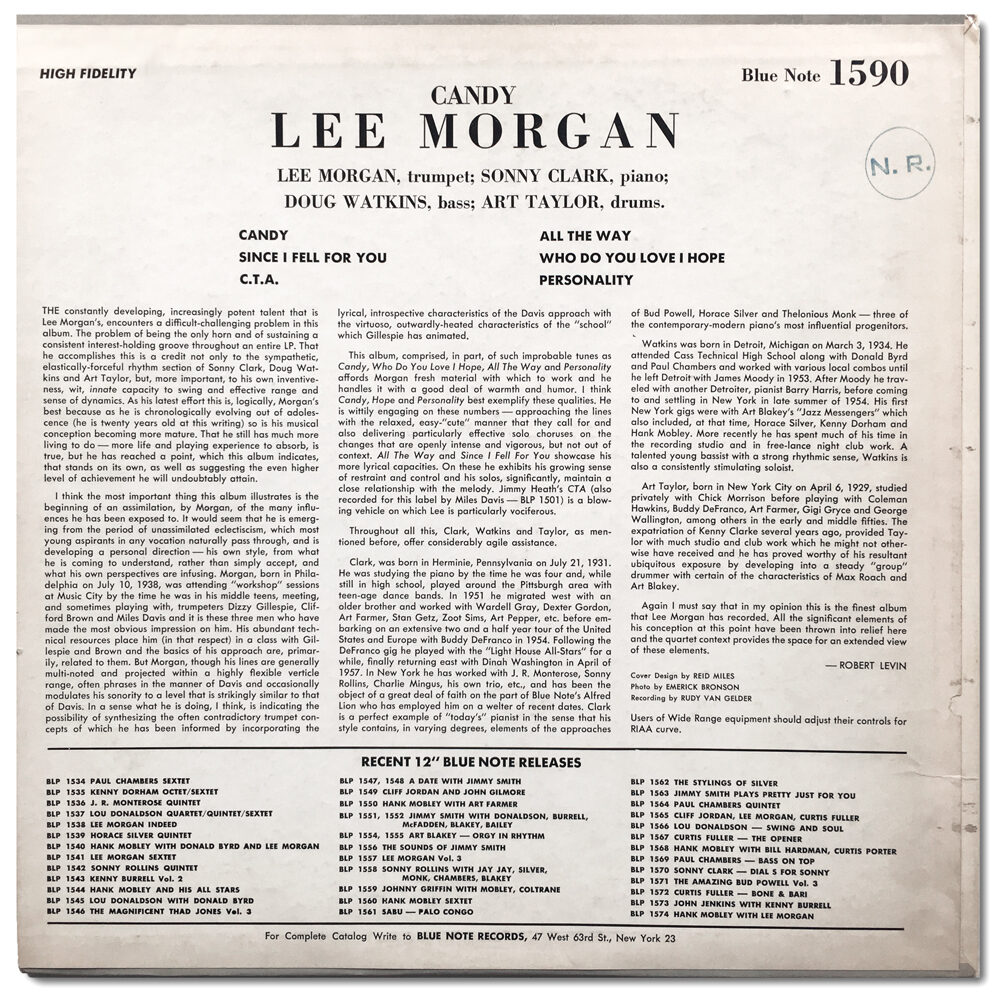
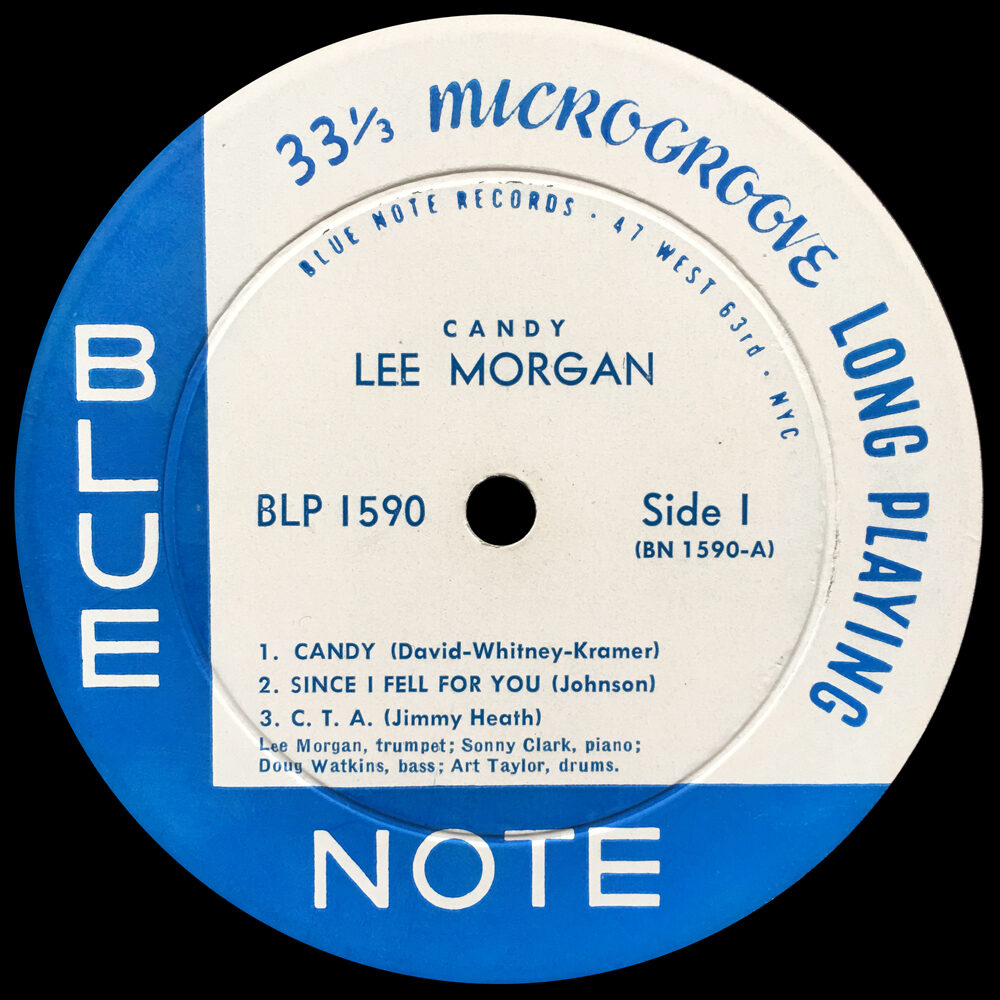
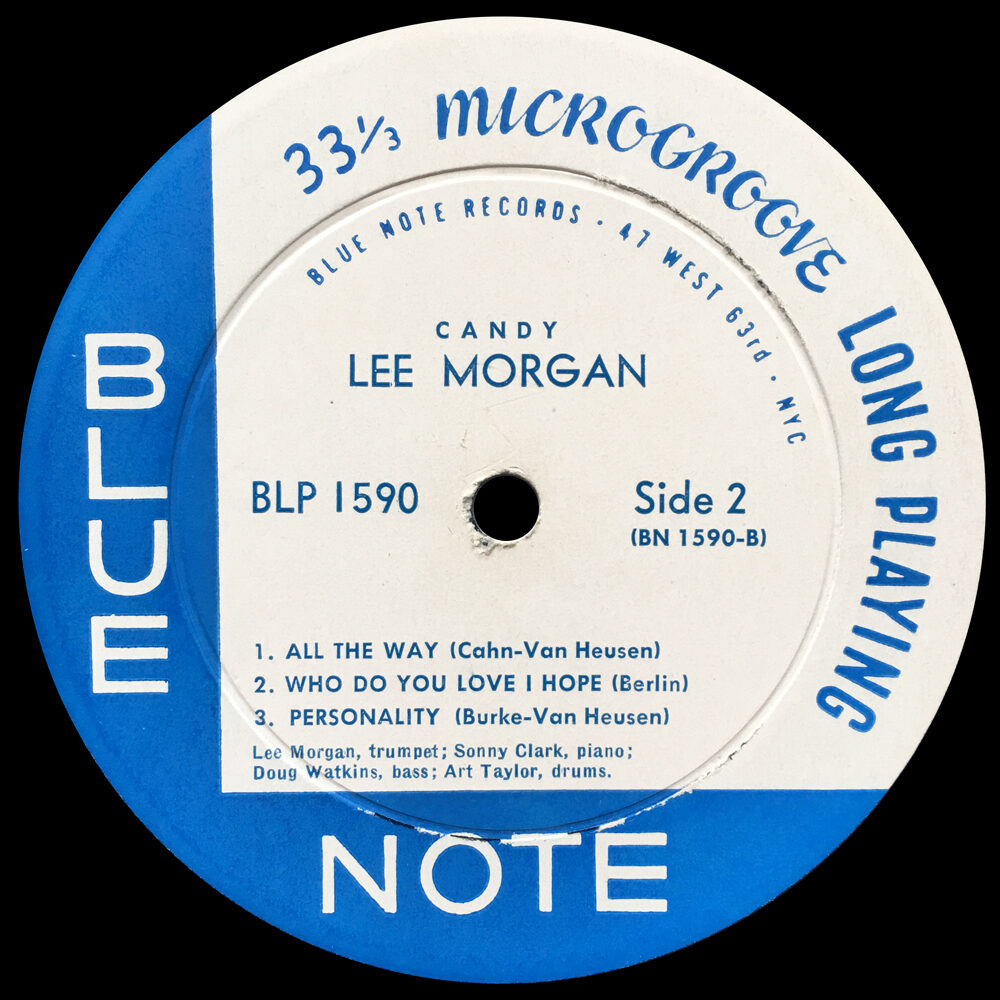
Vinyl Spotlight: Lee Morgan, Candy (Blue Note 1590) Original Pressing

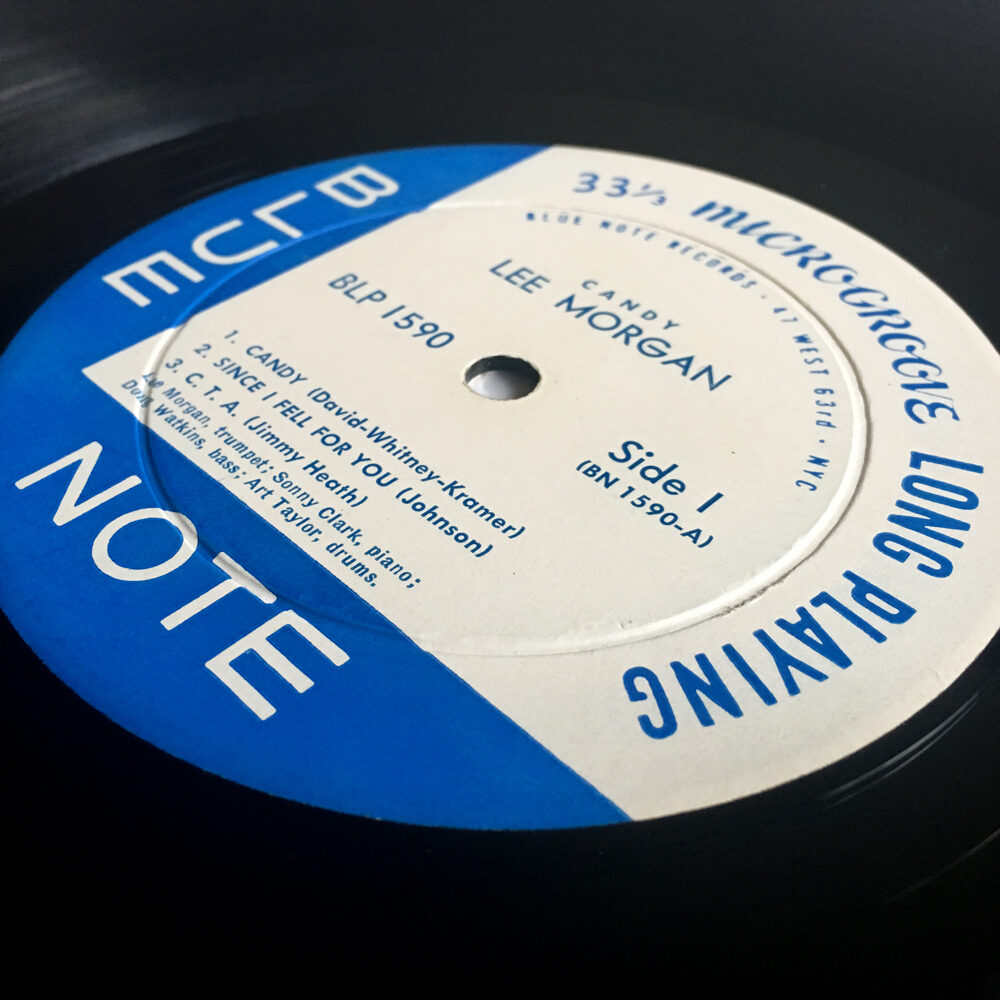
  • Original 1958 mono pressing
  • West 63rd address on both labels
  • Deep groove on both sides
  • Plastylite “P” etched and “RVG” stamped in dead wax

Personnel:

  • Lee Morgan, trumpet
  • Sonny Clark, piano
  • Doug Watkins, bass
  • Art Taylor, drums

Recorded November 18, 1957 and February 2, 1958 at Van Gelder Studio, Hackensack, New Jersey
Originally released September 1958

It appears that along with a recent change in my philosophy of collecting has also come a change in my luck. I recently decided to go all in on creating the most authentic vintage mono jazz LP listening experience I could. This meant a new turntable (a gorgeous Garrard 301 which I have already secured), a separate component tonearm fitted to a plinth, and the Ortofon CG 25 mono cartridge. But before I could gather all the components for this new rig, an opportunity presented itself to me that I would have been a fool to ignore.

As a result of my change in philosophy, I have worked to put myself in a position where original pressings of my favorite jazz albums are more within my reach financially. Not too long after making this decision, this copy of Lee Morgan’s Candy popped up in a friend’s Instagram feed. “That seems like a very fair price for that Morgan,” was my first text to my friend, sent without any serious intent to buy. But 24 hours later the record was still on my mind, so I worked on my financials and decided I could make it work — if the record checked out — and two days later I made the 90-minute trip upstate on the Metro North railroad to look at the record first-hand and give it a listen.

Once I had it in my hands, the jacket was indeed a strong VG+ with no splits, and the labels were clean with the assumed deep grooves, “47 West 63rd NYC” address, and lack of registered trademark “R”. I listened to the record in its entirety before making a decision. Overall I would have play graded it VG+ with light surface noise that could be heard more during some of the quieter passages, but no loud or repetitive clicks and no distortion from wear. The record came from the original owner, an Upper West Side native who, according to my friend, remembered it as the first record he ever bought.

After making payment, I got on the train home with reserved excitement. I was honestly banking on the noise quieting down after running it through my Spin Clean (one of the greatest dollar-to-value purchases a collector can make, in my humble opinion). After one cleaning the surface noise settled down and I was quite pleased. But after a few plays I wondered if the simple act of playing the LP may have loosened some of the dirt, so why not run it through the machine one more time and see what happens? And I was happy to find that the surface noise had virtually disappeared in many places.

As for holy grails, I’d say Quiet Kenny, Jutta Hipp with Zoot Sims, and Overseas are near the top of my wish list, but Candy is really my number one, mainly because I find the entire program to be so great. When I first got into jazz, the atypical arrangement of trumpet quartet stood out to me. I love how playful sounding the music is, and the ballads are some of my favorites of all time.

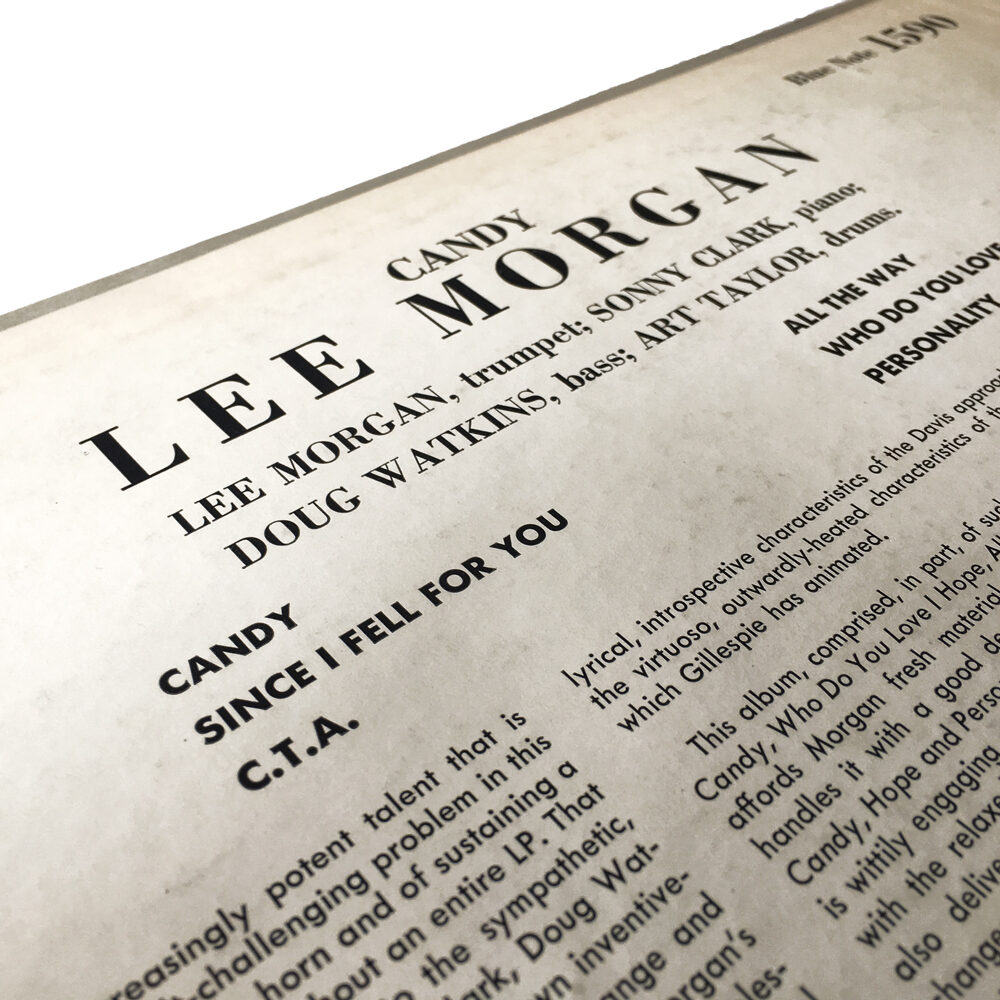
I think Candy is marginalized by jazz critics for its lack of original compositions, but I could care less when the songs are played with such beauty and brilliant execution. It turns out that most of the songs have their origins in the mid-1940s when Morgan was between the ripe ages of seven and eight. The title track was first recorded by Johnny Mercer and Jo Stafford for Capitol Records and reached number 2 on Billboard’s Best Seller chart in 1945. That same year, “Since I Fell for You” was written and recorded by Buddy Johnson for Decca Records. “Who Do You Love I Hope” is a lesser known song written by Irving Berlin for Annie Get Your Gun in 1946, and “Personality”, penned by Jimmy Van Heusen and Johnny Burke for the play Road to Utopia, also premiered in 1946 with a film starring Dorothy Lamour to follow in 1950.

The remaining two songs completing the tracklist would have been more readily recognized by their respective audiences in 1958. “C.T.A”, the only cut on the album with modern jazz origins, was written by saxophonist Jimmy Heath and first recorded by Miles Davis with Heath on sax for Blue Note in 1953 (according to Miles, “C.T.A.” were the initials of Heath’s then-girlfriend Connie Theresa Ann). “All the Way”, the 1957 Academy Award winner for Best Original Song, was written by Van Heusen and Sammy Cahn for The Joker Is Wild, a film about the life of comedian/singer Joe E. Lewis starring Frank Sinatra. Scroll down to hear a Spotify playlist featuring the original recordings of all of these great songs.
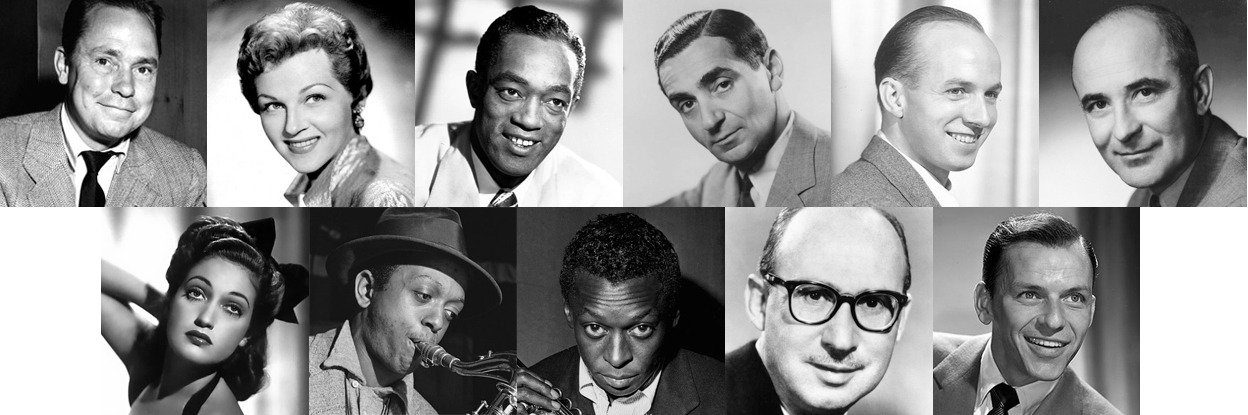
Top: Johnny Mercer, Jo Stafford, Buddy Johnson, Irving Berlin, Jimmy Van Heusen, Johnny Burke
Bottom: Dorothy Lamour, Jimmy Heath, Miles Davis, Sammy Cahn, Frank Sinatra

Candy immortalizes the legend of Rudy Van Gelder’s Hackensack home studio, with the album’s sparse arrangement leaving plenty of room for the sound of the engineer’s living room to make its mark on the recording. Sonny Clark’s piano playing takes center stage here and can be heard with startling clarity, and Art Taylor’s drum kit embodies the gorgeous drum sound Van Gelder would regularly get at Hackensack in the 1950s: a slightly roomy, unified sound with soft cymbals and lifelike accuracy in the bass, snare, and tom toms (for this session, perhaps a little too accurate at times: most collectors are aware of Taylor’s infamous squeaky hi-hat pedal during Clark’s leading solo on the title track).
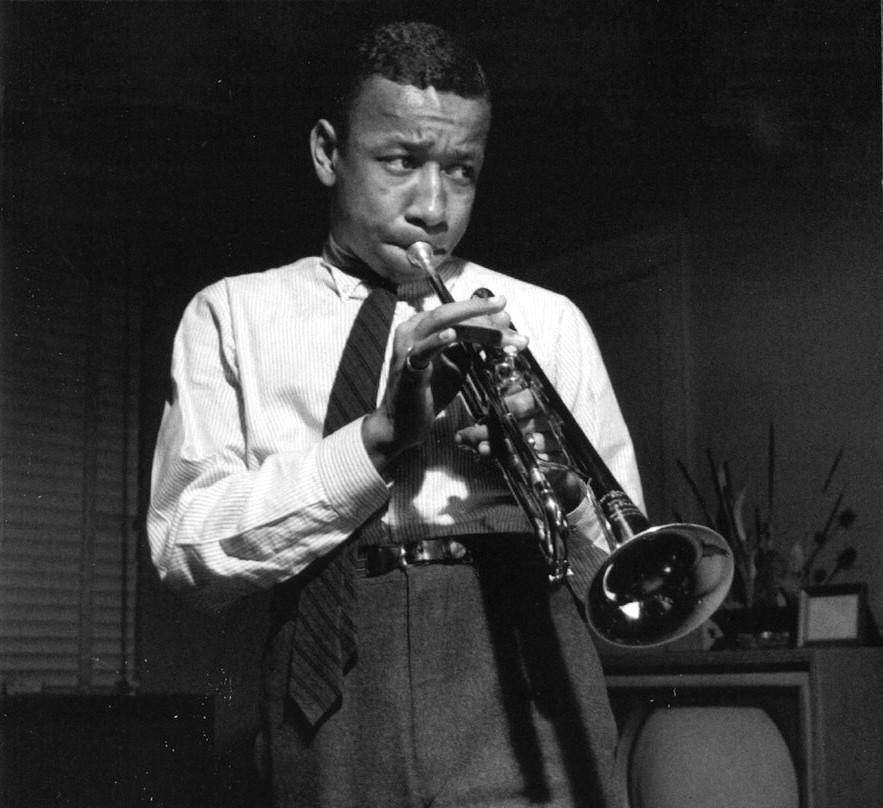
Morgan dressed to impress while recording Candy in February 1958 at Hackensack

The mono presentation of the music, while not exclusively found on the original LP, is less than common. In stereo the music sounds as full as primitive stereo can with Lee’s regular presence on the far left of the spread, but the sparse arrangement here never leaves me feeling that the mono presentation of the band is “crammed into the center image”, as critics of the format often object. What’s more, there does appear to be some tape degradation on my stereo 1987 Capitol/Manhattan CD during “Who Do You Love I Hope”, though this is a nonstarter on all mono issues of the album. Apparently Music Matters did find some sort of a two-track “safety tape” of Candy that was in better condition than the old master, and as a result decided to release the album in stereo for their 33 1/3 R.P.M. series after releasing it in mono for their original 45 R.P.M. campaign.

Other interesting variations in the mono and stereo releases of this album include different piano lines played by Sonny Clark for the intro of “All the Way”. The intro of a different take must have been preferred by the team and thus spliced into the full-track master reel by Rudy Van Gelder. Why the two-track reel did not receive similar treatment is testament to the fact that Candy was only released in mono originally, with stereo being a mere afterthought for Blue Note producer Alfred Lion in early 1958. Additionally, the 1987 stereo CD boasts a reading of “All at Once You Love Her” that is noticeably absent from the original tracklist, which I have to believe was a decision made solely as a consequence of the temporal limitations of the LP format.

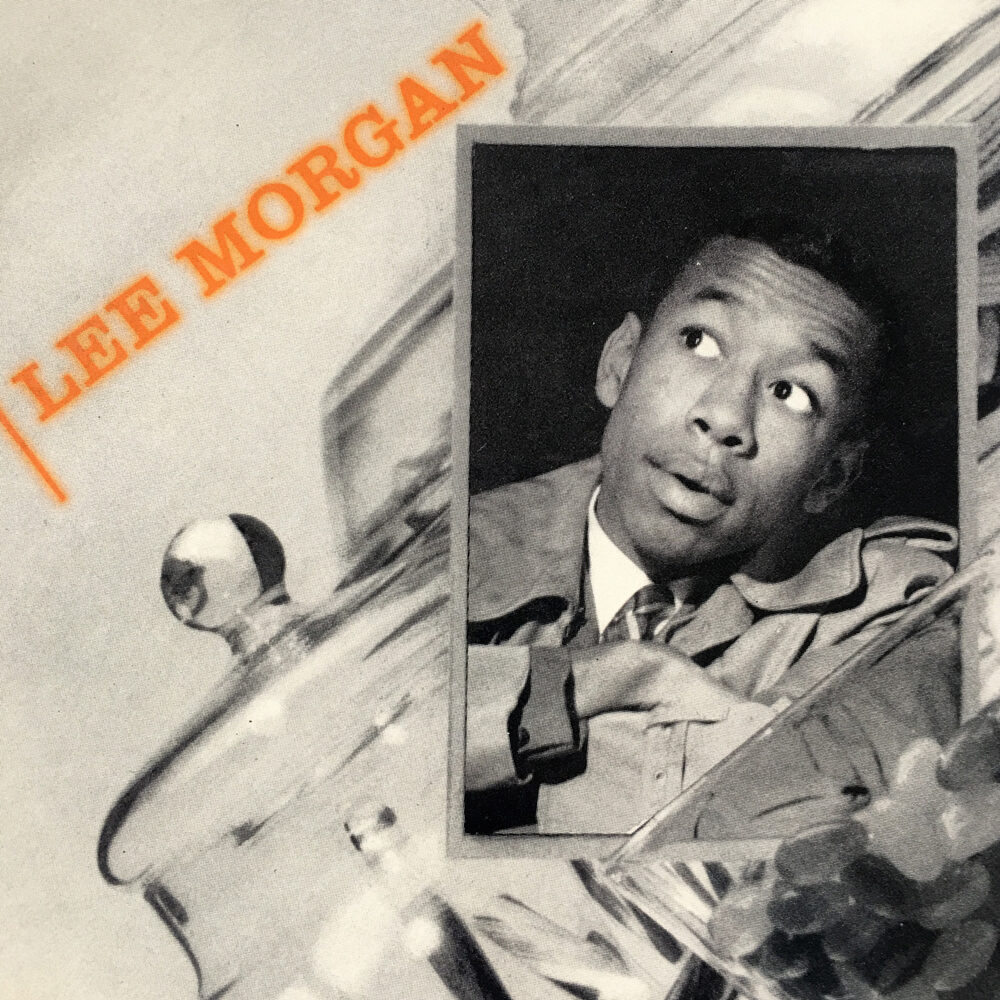
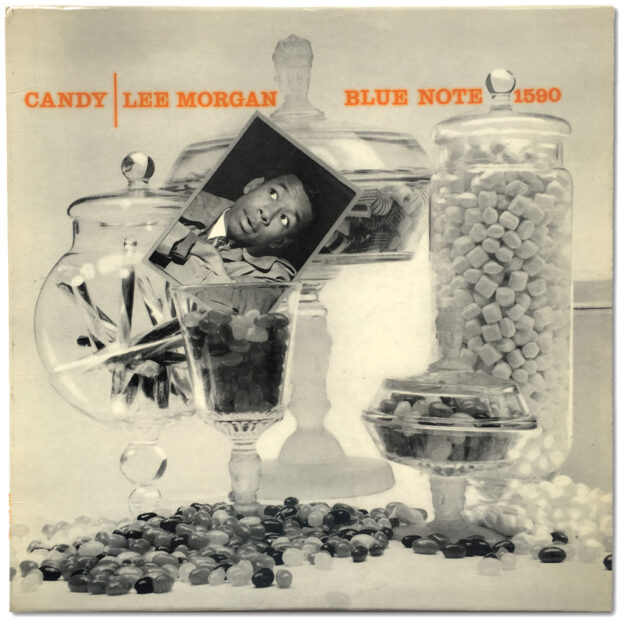
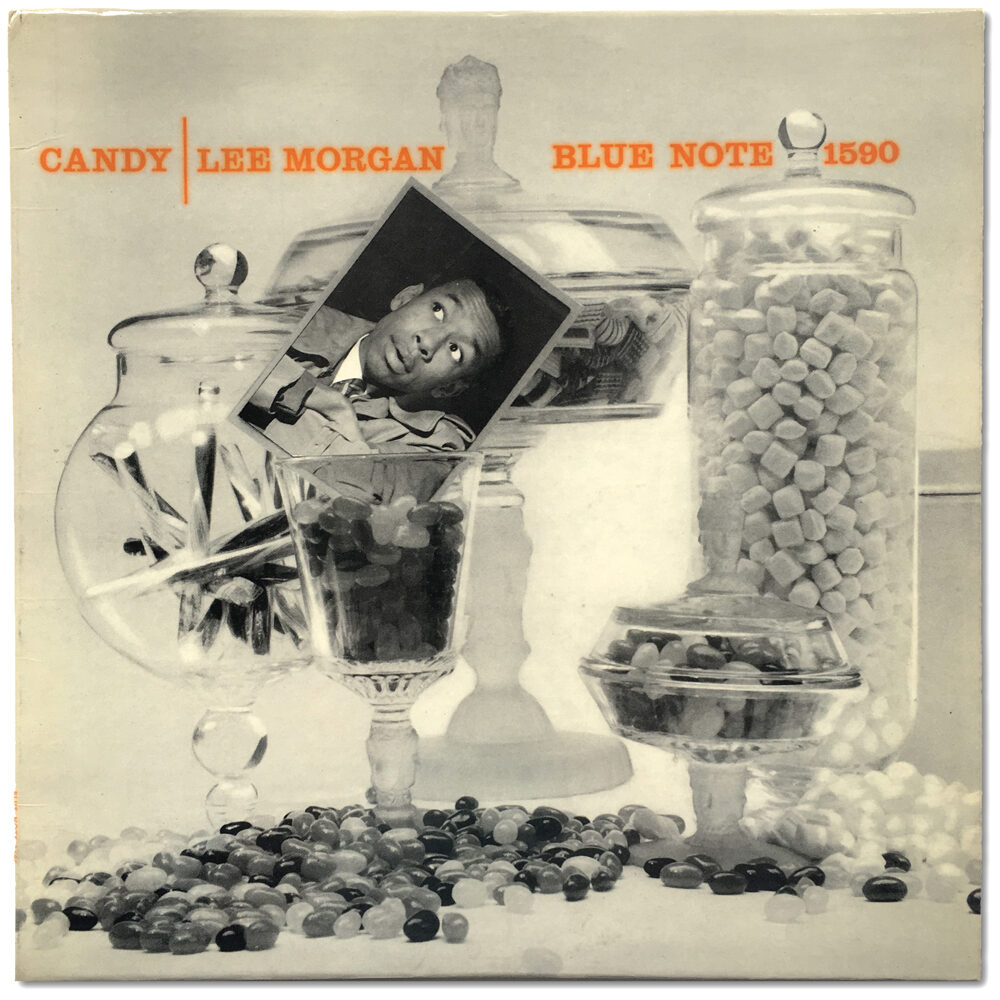
Finally, I admit that I understand when collectors express their distaste for this album cover, but I can’t help but love it. As Lee mischievously glances upward at his name hovering above, the young trumpeter’s boyish innocence conveys a sense of awe toward his newfound fame (side note: though it appears to be a shot from the same sequence of photos as the original, Music Matters used a slightly different photo of Morgan for their reissues). Not being sure why Reid Miles opted to neutralize the potentially explosive rainbow of colored candy pieces depicted here with a black-and-white overlay — perhaps he felt it would be too much of a departure from Blue Note’s two-tone theme — it is a juxtaposition that nonetheless succeeds, with the help of Morgan’s presence, at communicating the playful nature of the musical themes within.
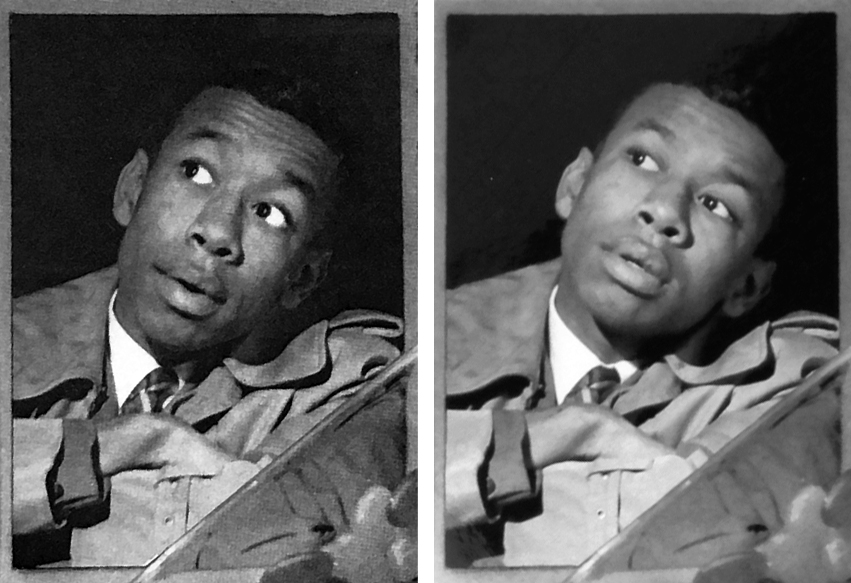
Photos used for the original release (left) and Music Matters reissue (right) of Candy

When I first started collecting, I gawked at the prices original pressings of this album would fetch, and I would have never guessed I’d be in possession of a copy so early on in my collecting years. So the collector saying goes, music comes first. I have always cherished the gorgeous music presented here, but I can’t deny that listening to an original mono pressing has caused my ears to perk up and listen more intently, specifically to the charming solos of all the instrumentalists. I couldn’t be more satisfied with this acquisition, and this copy of Candy is now, obviously and without question, the crown jewel of my collection.


Spotify Playlist: Songs That Inspired Candy

Note: If you are not logged in to Spotify on your web browser, clicking the “play” icon above will only play 30-second clips of the songs. Click “Play on Spotify” or the Spotify logo to launch the app on your computer. Click here to open this playlist in your web browser.

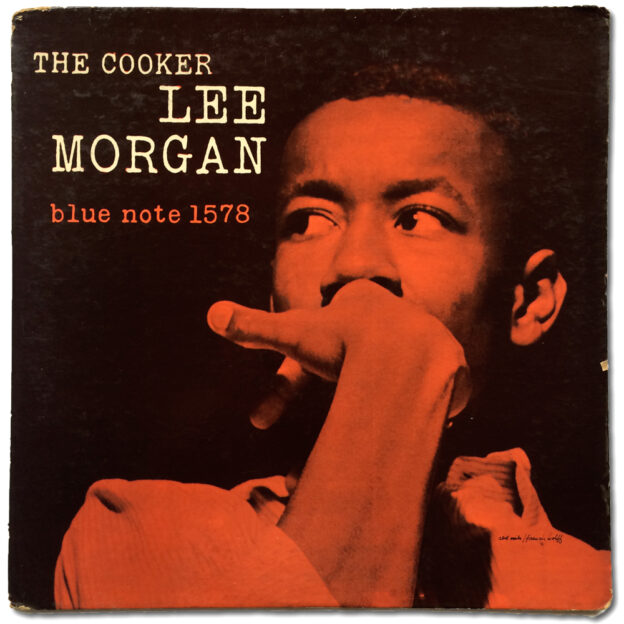
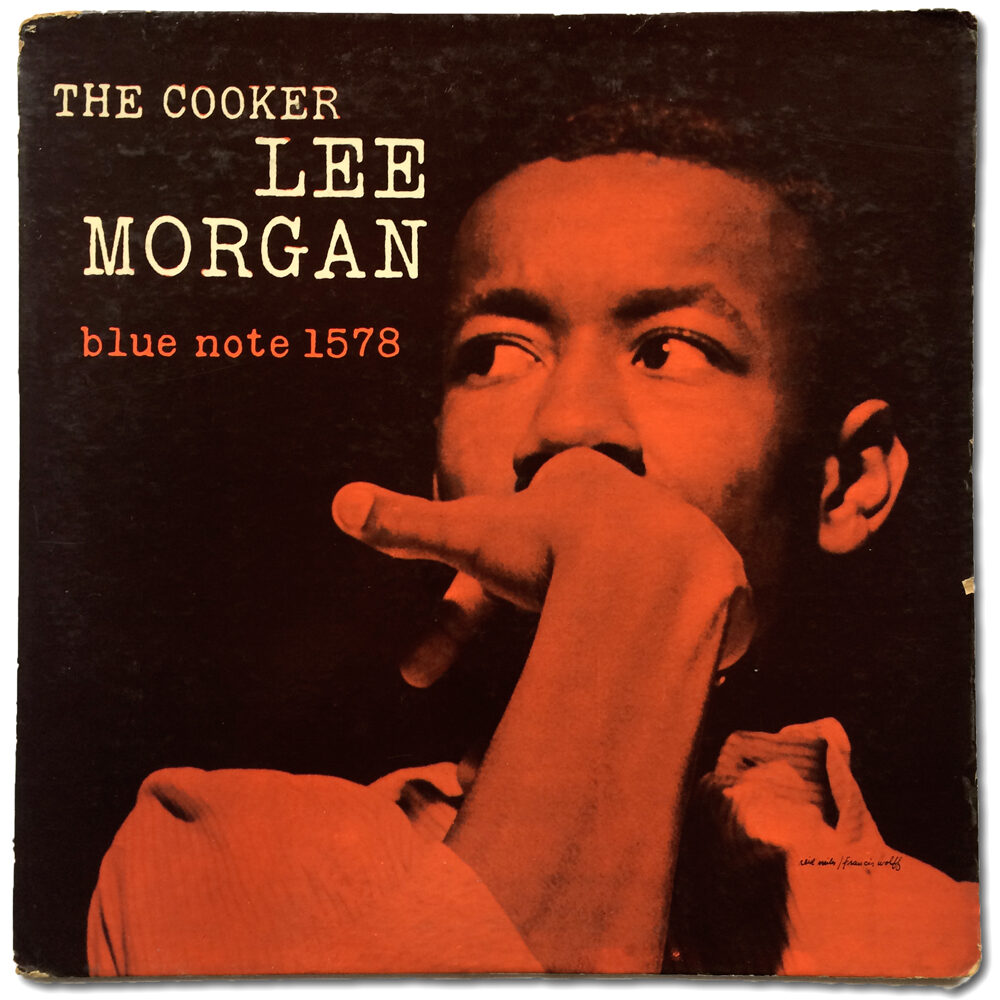
Vinyl Spotlight: Lee Morgan, The Cooker (Blue Note 1578) Original Pressing

  • Original 1957 mono pressing
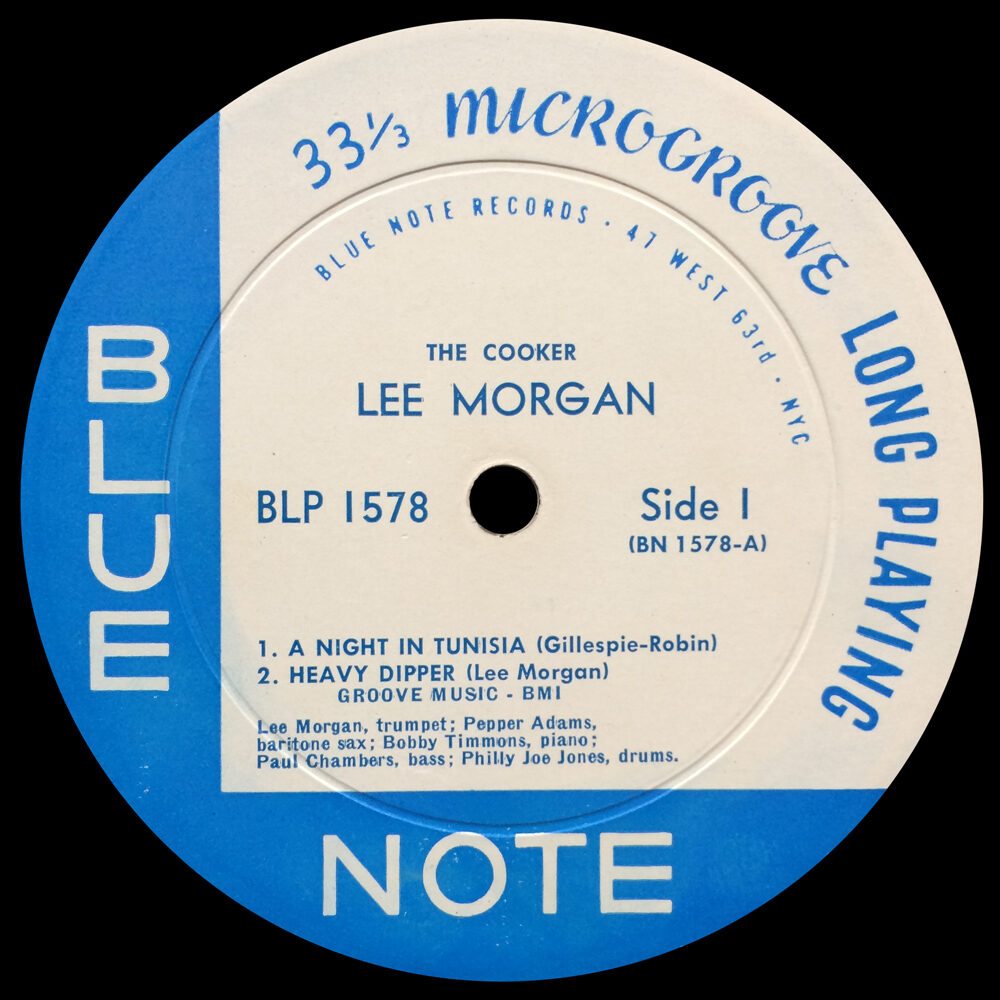
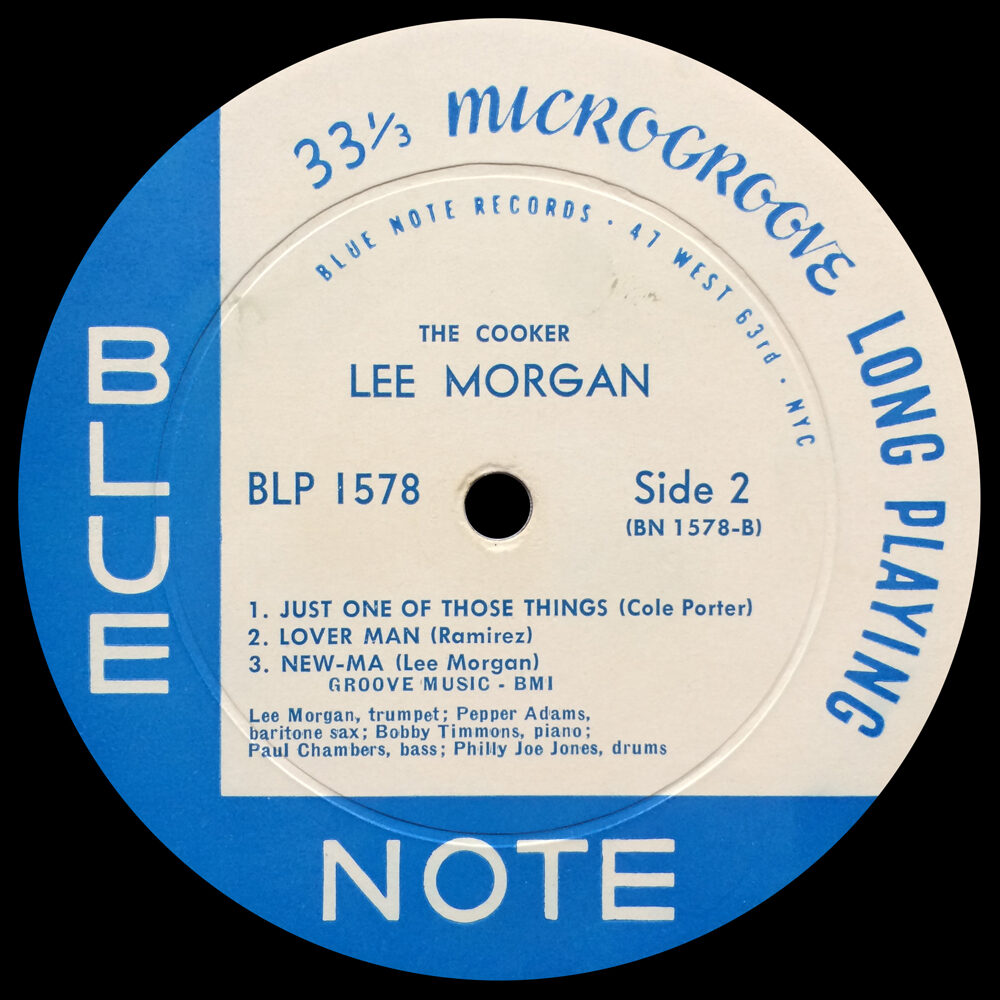
  • West 63rd address on both labels without registered trademark “R”
  • Deep groove on both sides
  • Plastylite “P” etched and “RVG” stamped in dead wax

Personnel:

  • Lee Morgan, trumpet
  • Pepper Adams, baritone saxophone
  • Bobby Timmons, piano
  • Paul Chambers, bass
  • “Philly” Joe Jones, drums

Recorded September 29, 1957 at Van Gelder Studio, Hackensack, New Jersey
Originally released in November 1957

A while ago I happened upon the YouTube channel of “KoolKatJazz”, a collector who takes pride in finding cheap original pressings of vintage jazz records that, while perhaps grade VG or lower, sound great at times nonetheless. Being a collector on a pretty strict budget made me think that this might be a collecting strategy I could benefit from.

Then I came across this copy of The Cooker. It looked VG at best, and while I would normally pass on a record like this due to a personal intolerance of audible wear and loud pops and ticks, this time I had the opportunity to preview the playback before buying. Indeed, the record had its share of loud ticks and even a skip at one point, but no distortion, and at times the thing sounded undeniably brilliant. The price was more than fair so I decided to go for it.
Though I was originally under the impression that mono issues of this album are quite rare, collecting buddy Clifford Allen informed me that in addition to a West 63rd “R” repressing, mono pressings with New York USA and even United Artists “classic” labels exist. Shout out to Clifford for helping make this article more accurate!

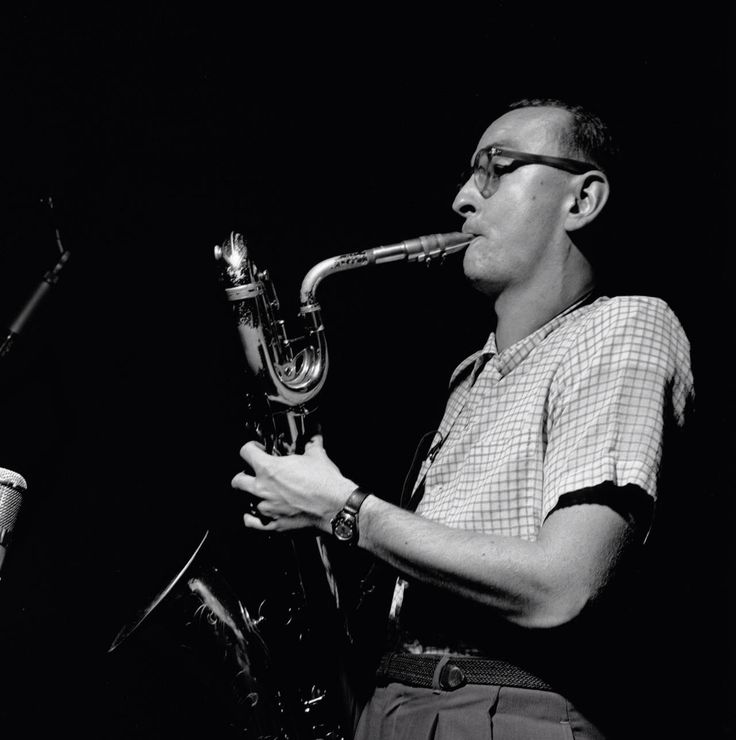
Pepper Adams during the recording of The Cooker in 1957

I had never heard these sides before I found this copy. I’m not the biggest fan of the mega-standard “A Night in Tunisia” and accordingly was a little underwhelmed by this epic reading. But just as I began to fear that the date would ultimately amount to no more than “another bop blowing session”, Pepper Adams’ quirky presence grew on me, and I soon came to appreciate this pleasantly odd frontline pairing of trumpet and baritone sax. Prior to the release of The Cooker, Morgan had never laid to tape any of his own compositions, and thus with “Heavy Dipper” and “New Ma”, the world got its first glimpse of the leader’s talents as a songwriter. And most collectors will be able to appreciate the magic contained in these fresh 1957 mono Plastylite grooves.
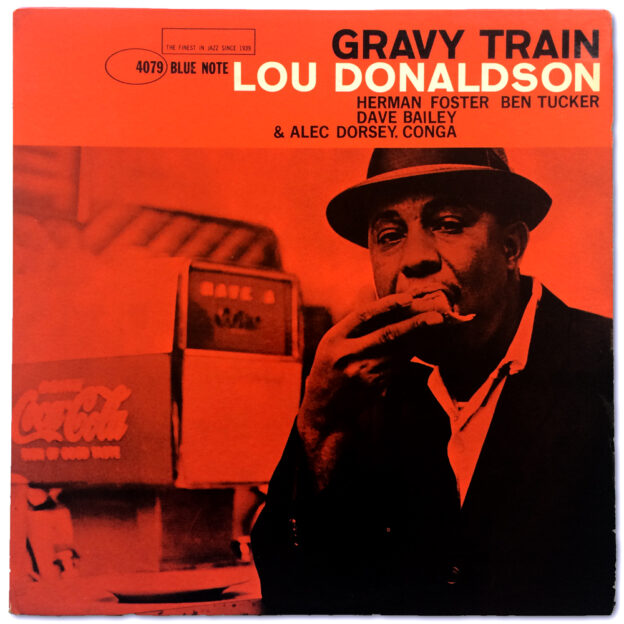
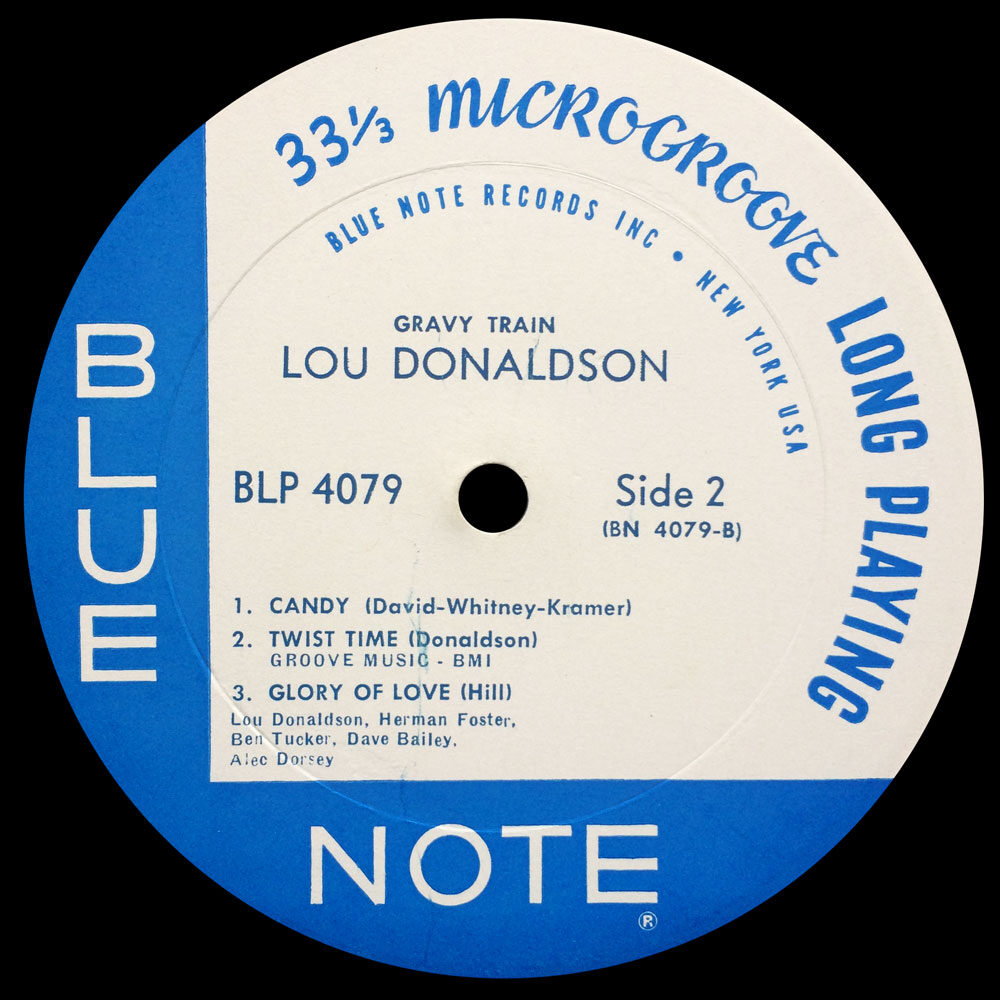
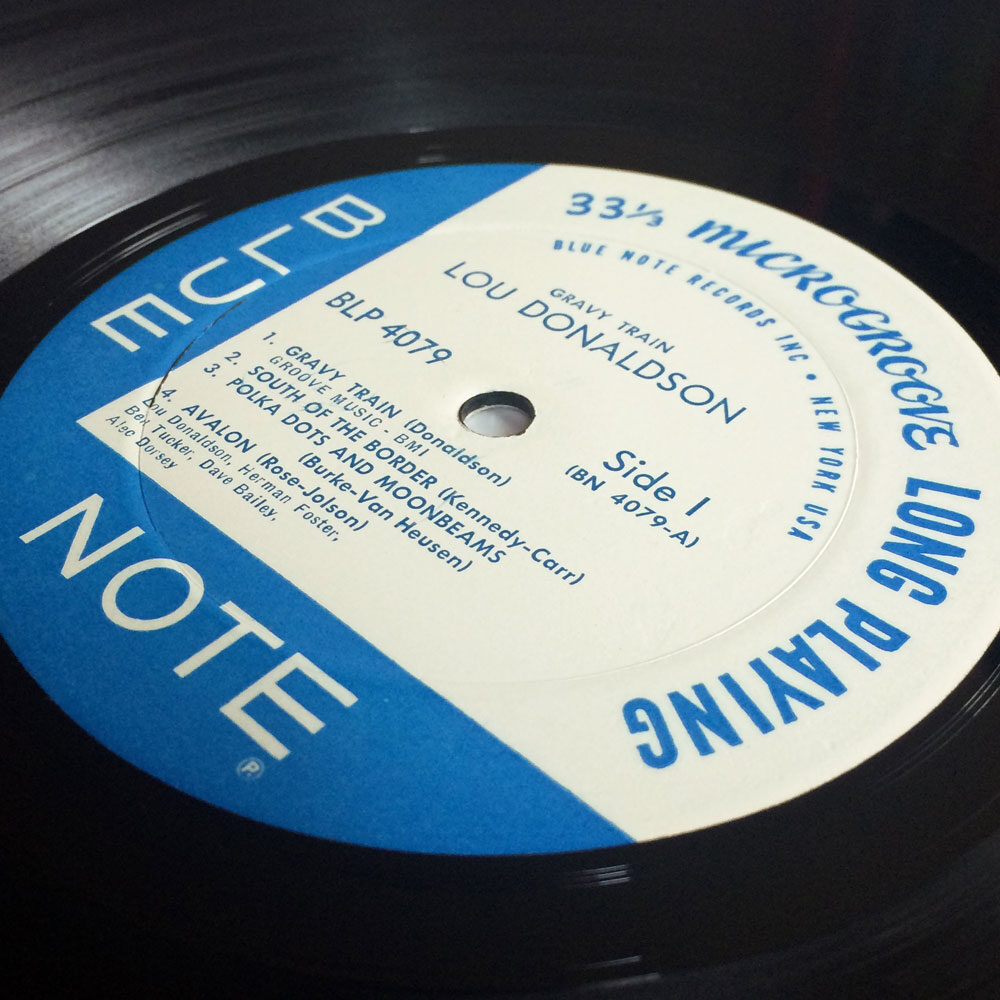
Vinyl Spotlight: Lou Donaldson, Gravy Train (Blue Note 4079) Original Mono Pressing

  • Original 1962 mono pressing
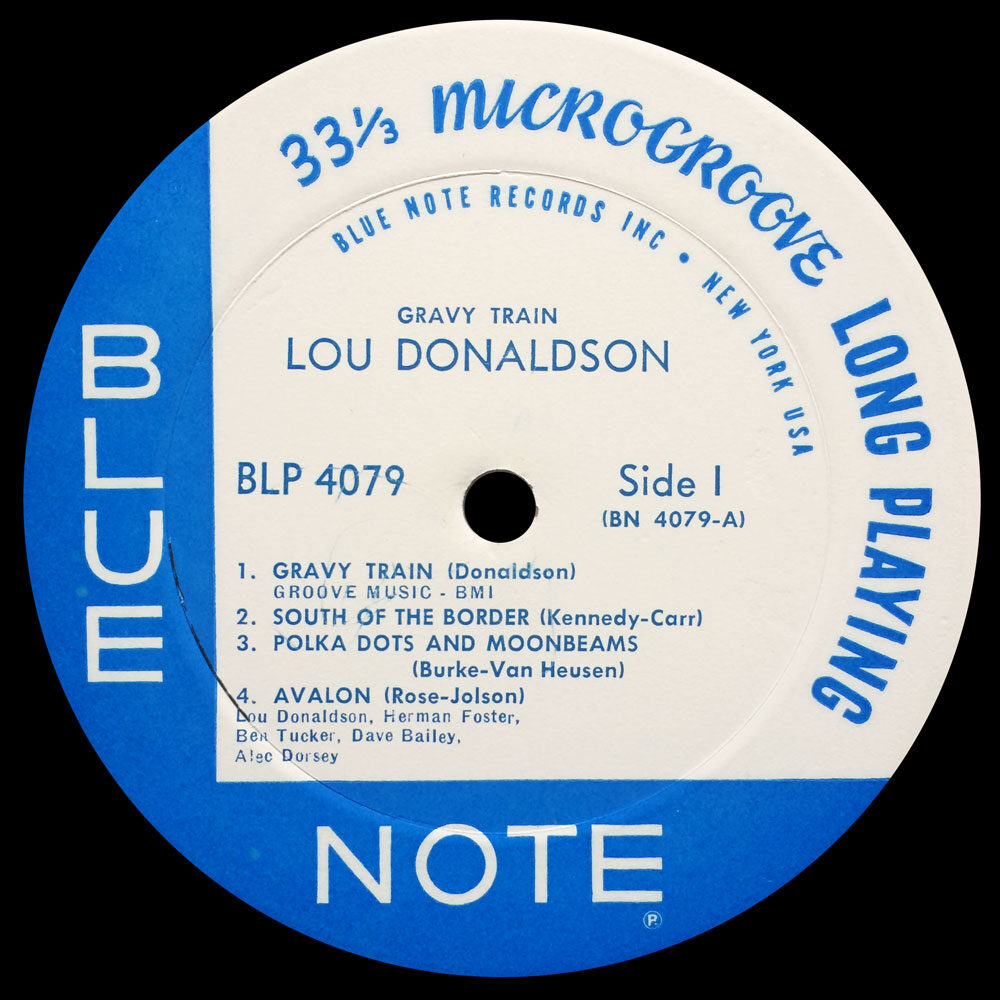
  • “NEW YORK USA” on both labels
  • Plastylite “P” etched and “RVG” stamped in dead wax
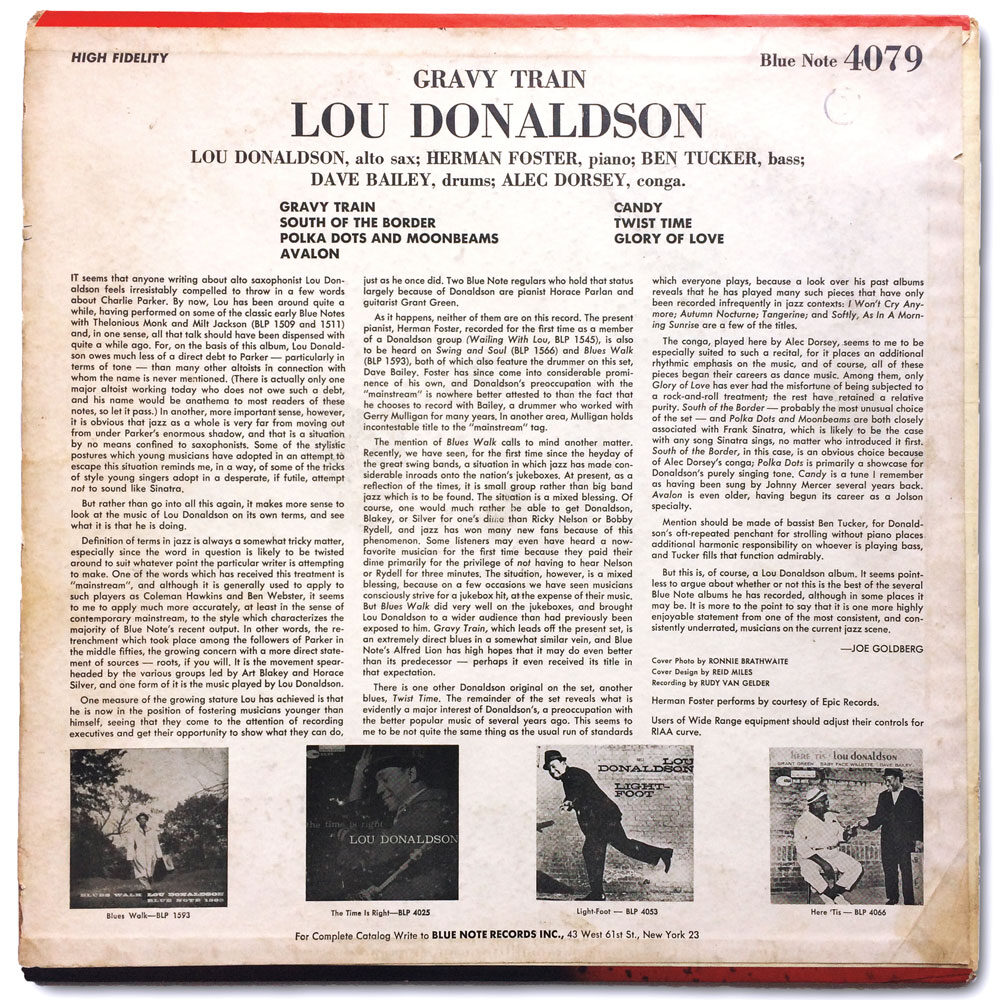
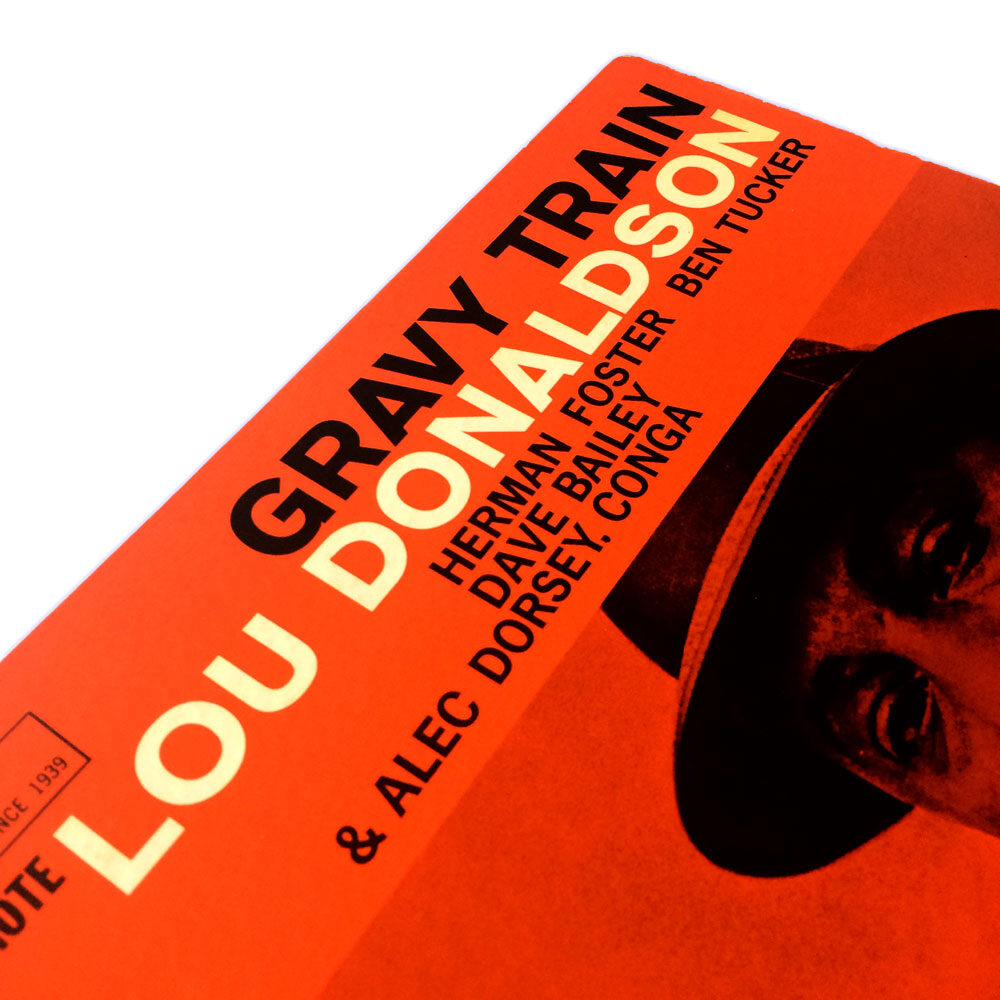
  • “43 West 61st St., New York 23” address on jacket

Personnel:

  • Lou Donaldson, alto saxophone
  • Herman Foster, piano
  • Ben Tucker, bass
  • Dave Bailey, drums
  • Alec Dorsey, conga

Recorded April 27, 1961 at Van Gelder Studio, Englewood Cliffs, New Jersey
Originally released June 1962

1 Gravy Train
2 South of the Border
3 Polka Dots and Moonbeams
4 Avalon
5 Candy
6 Twist Time
7 Glory of Love
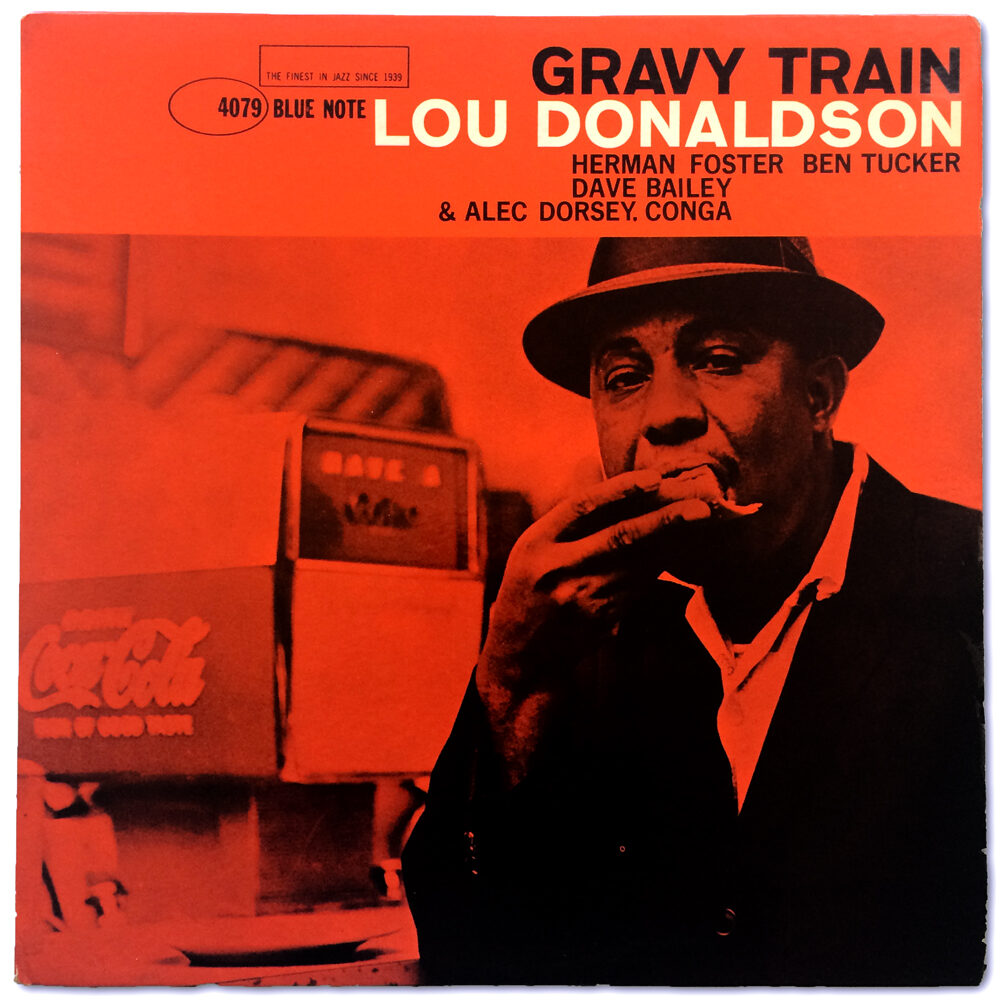
This is the fourth original mono pressing of this album I’ve owned. Why would I be so persistent for this album? While the title track is one of my all-time favorite soul jazz numbers, the truth is I’m not a huge fan of this album in its entirety, and I’ve largely pursued an original so diligently because I love the album cover so much. Lou Donaldson looks like a serious boss on this cover as he woofs down what looks like a hot dog in a mid-century luncheonette. And that two-tone, bold, fiery orange is indeed very eye-catching.

The first copy I owned was a VG copy I won on eBay in the dawn of my vintage jazz record collecting experience. I quickly replaced that worn copy with a wear-free but crackly copy. A couple years later I found a copy on eBay whose record was touted as VG+ but the jacket was exceptional (sometimes if a jacket is graded conservatively I’ll take a chance on a VG+ record).

That third copy ended up being fairly graded VG+. It looked EX but suffered from a mild case of…dun dun duuun: groove wear. I ultimately gave it up, not feeling it was worth what I paid. Then last year I found this copy at a local record shop for a much more reasonable price. It suffers from groove wear in much the same way as the last copy (the wear being less audible on the outermost tracks like my favorite, “Gravy Train”, as a result of inner groove distortion), and the jacket isn’t as clean as the last either, but I feel that its price more accurately represented its condition than the previous copy I owned. Generally speaking, the records that end up staying im my collection aren’t always the nicest but they always were purchased for a fair price.

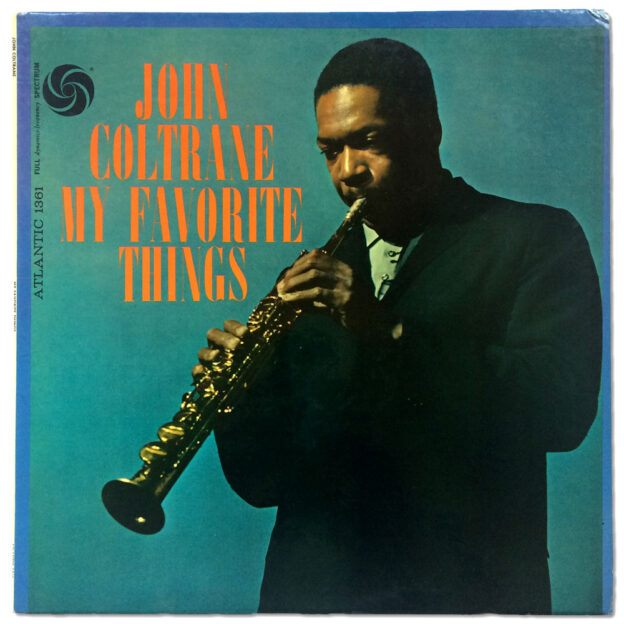
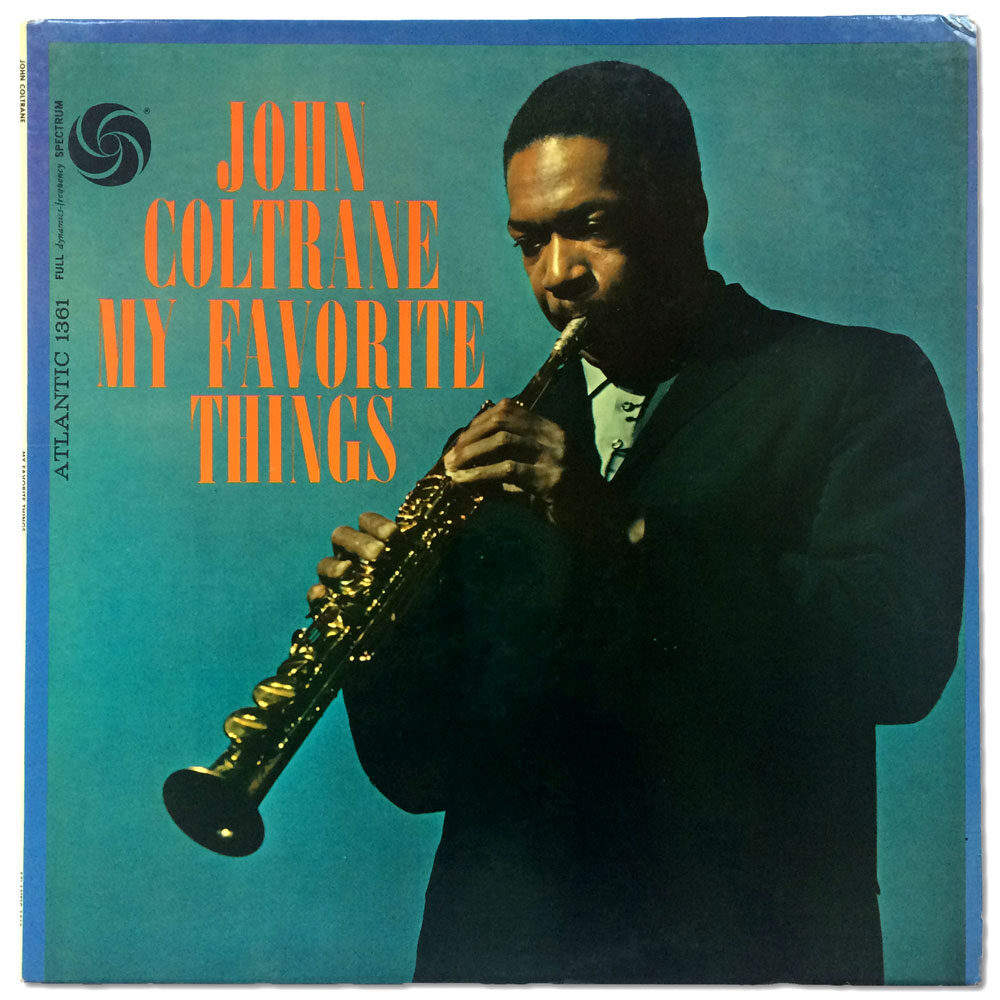
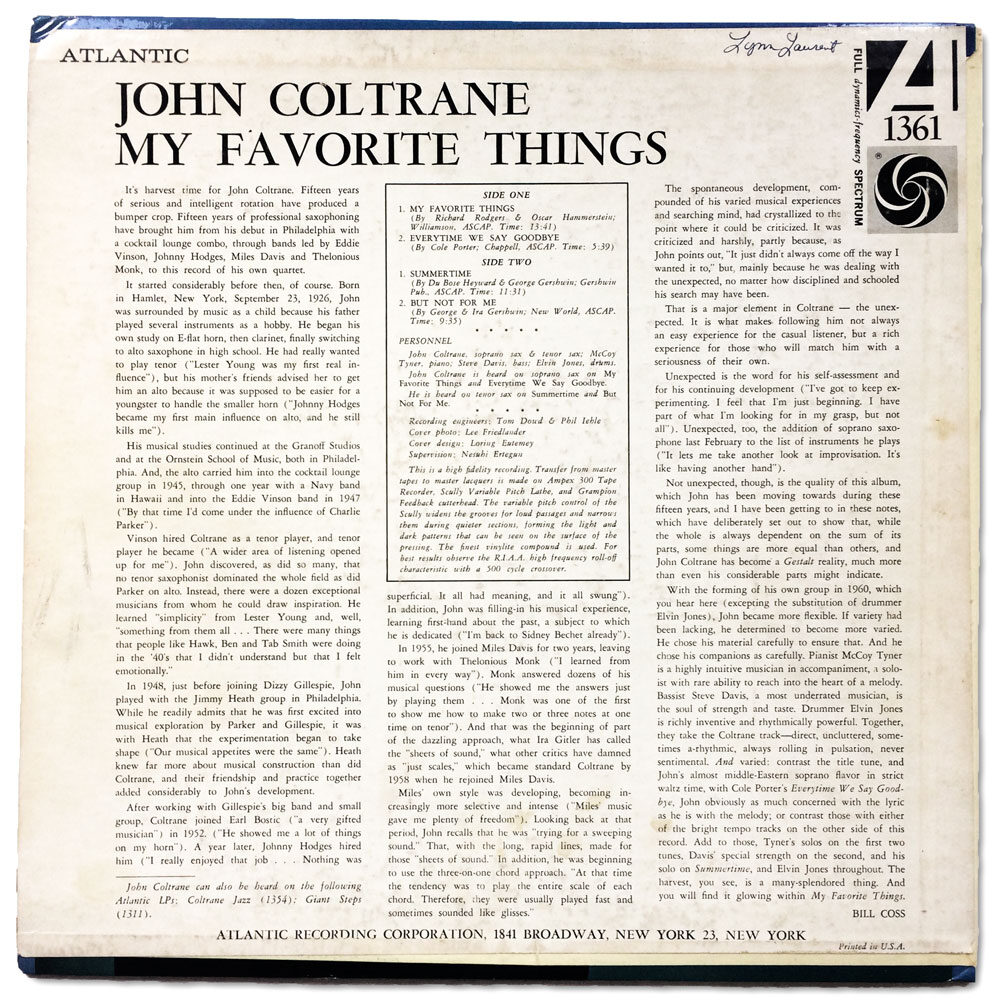
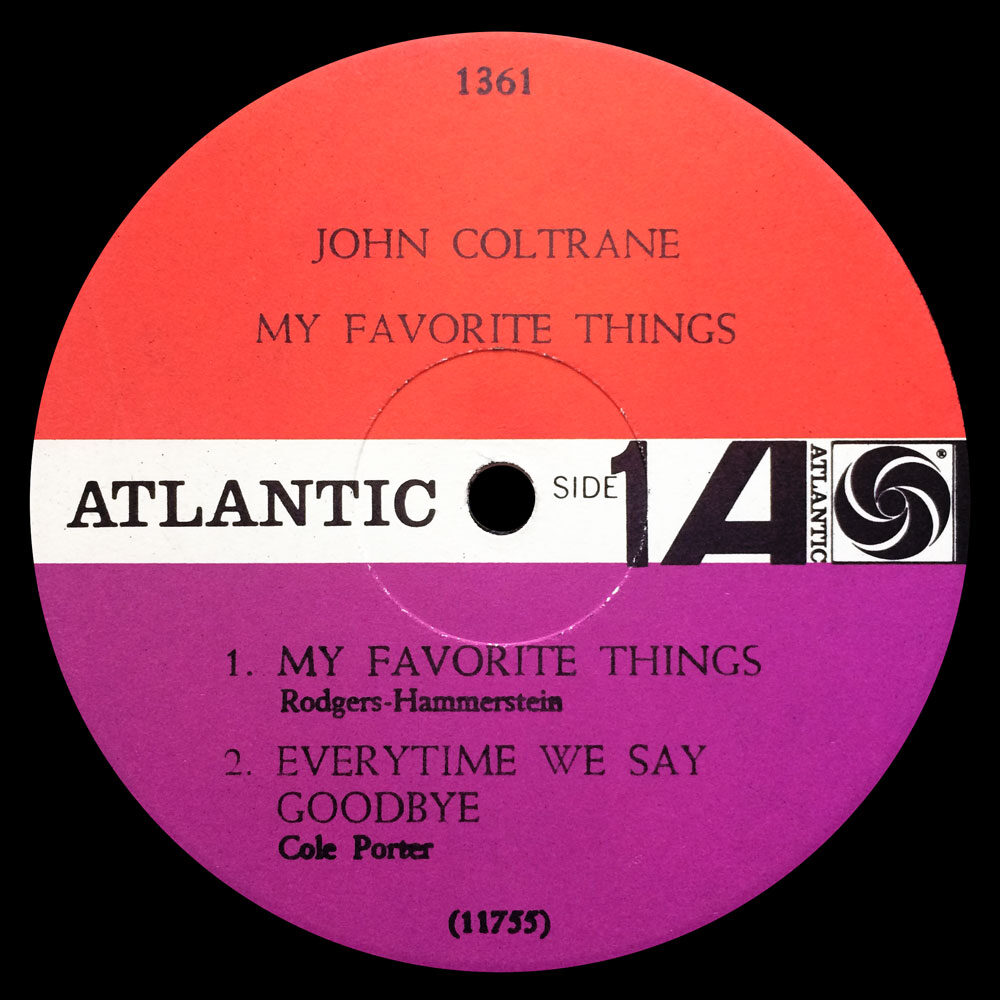
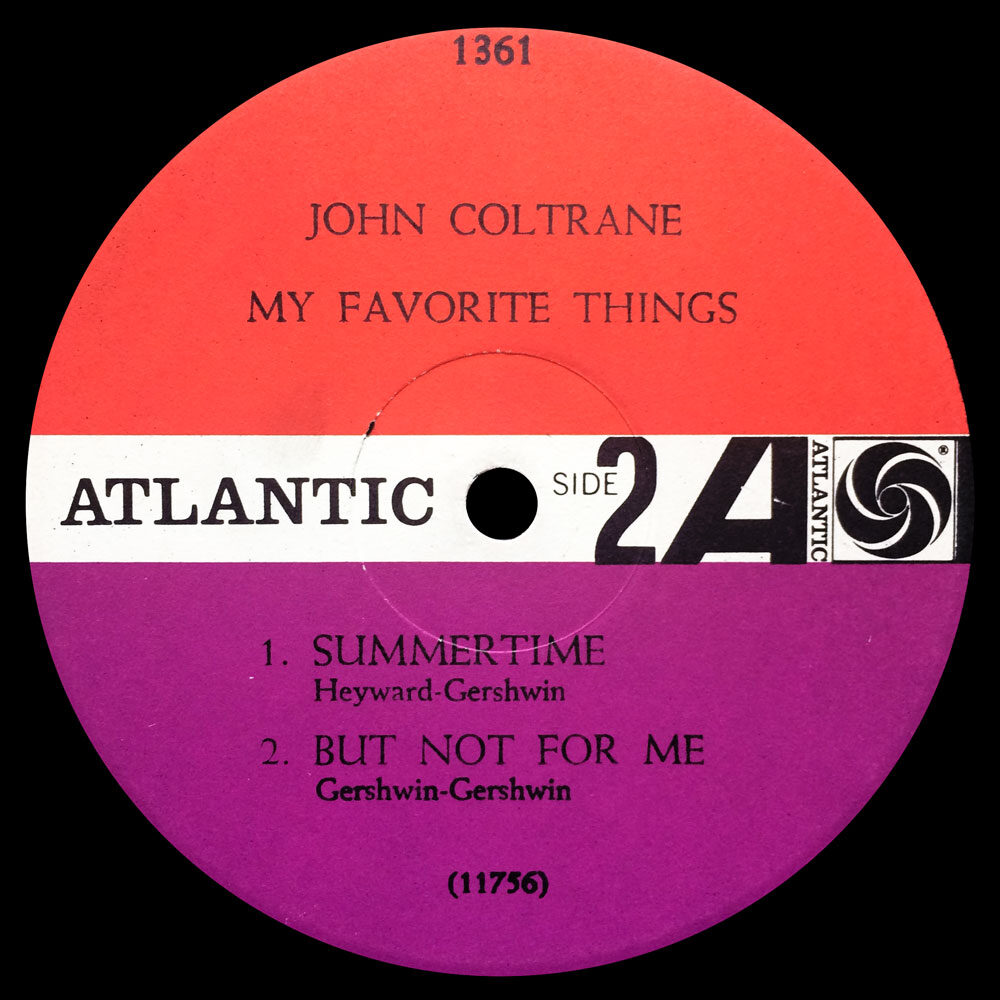
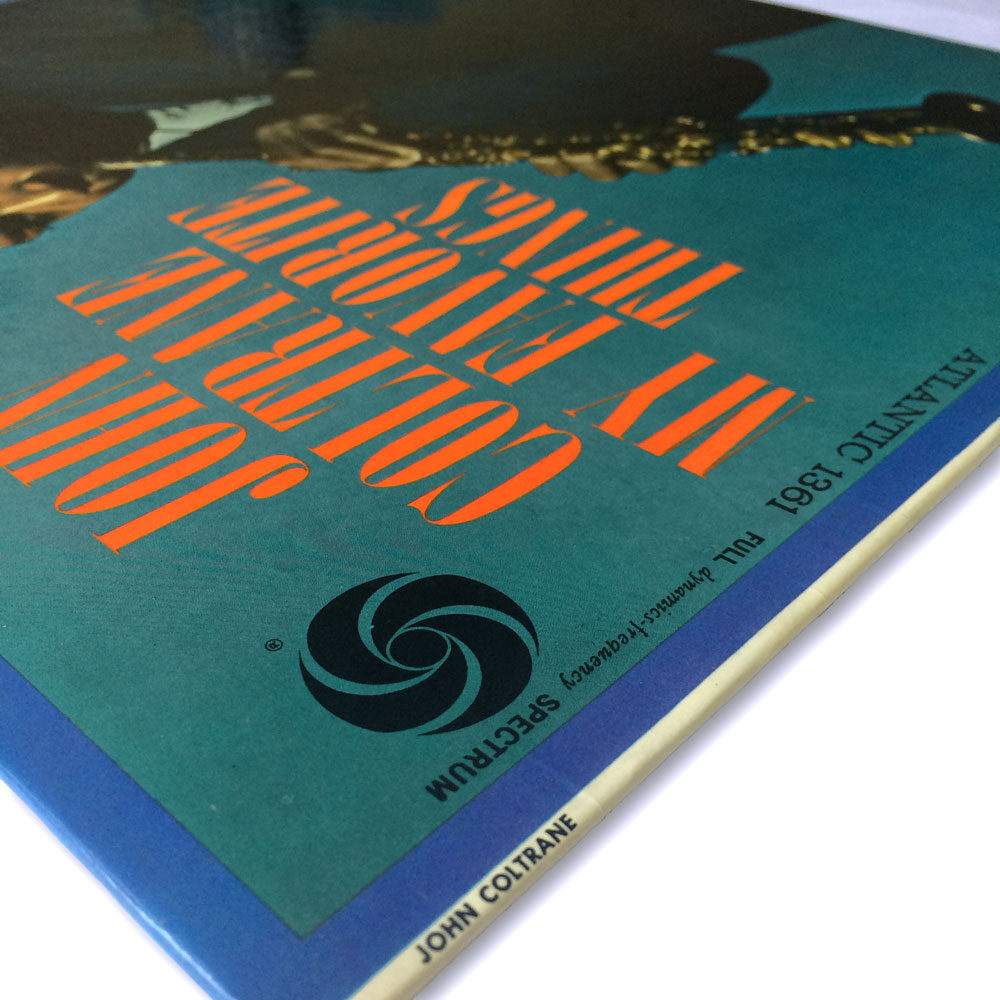
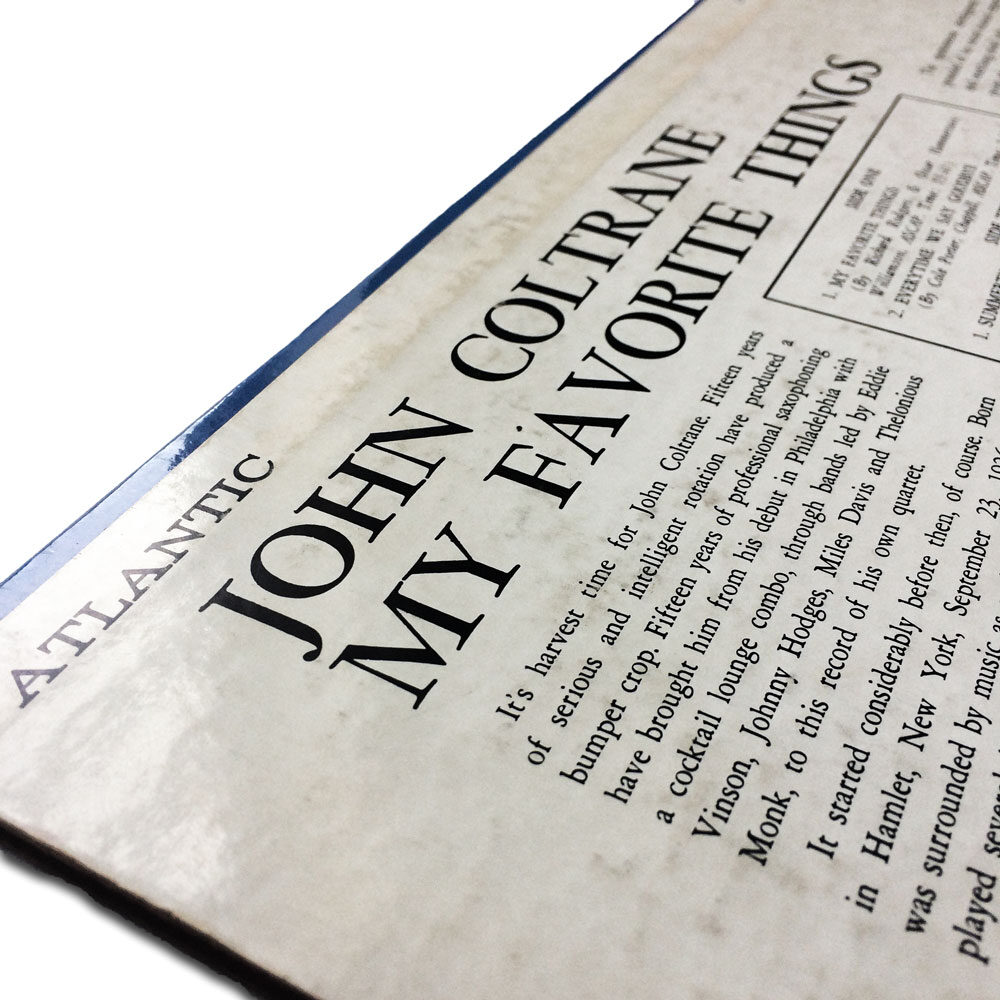
Vinyl Spotlight: John Coltrane, My Favorite Things (Atlantic 1361) Second “Black Fan” Mono Pressing

  • Second mono pressing circa 1962-1966
  • Orange & purple label
  • Black fan logo on both sides
  • Side 1/2 matrix: 11755-A “AT” / 11756-B “AT”

Personnel:

  • John Coltrane, soprano & tenor saxophones
  • McCoy Tyner, piano
  • Steve Davis, bass
  • Elvin Jones, drums

“My Favorite Things” recorded October 21, 1960
“Summertime” recorded October 24, 1960
“Everytime We Say Goodbye” and “But Not for Me” recorded October 26, 1960
All selections recorded at Atlantic Records’ 56th Street studio, NYC
Originally released March 1961

1 My Favorite Things
2 Everytime We Say Goodbye
3 Summertime
4 But Not For Me

Selection: “My Favorite Things” (Rodgers-Hammerstein)

At the tender age of twenty, my introduction to jazz came by way of a cassette tape that the guitarist in my band let me borrow. Side one was Kind of Blue and side two was My Favorite Things. At that time, the tape was little more than something I put on when I wanted to relax, but both albums have stuck with me and both have endured as crucial parts of my music collection to this day.

My Favorite Things is a magical album that is up at the top of my favorite Coltrane records. Those of you who read along here on a regular basis have probably picked up on the fact that I often favor “quieter” sounding jazz. My Favorite Things is no exception. Coltrane plays the soprano saxophone with great passion but it’s never overbearing. I also appreciate the accompaniment of Elvin Jones and McCoy Tyner, a brave young combo playing with less abandon on the eve of their leader’s ascent into the heavens of the avant-garde.

This record has a really unique, sweet sound. Engineer Tom Dowd had a way of making pianos sound soft and even ghostly with just a touch of tube amplifier overdrive. We heard that sound on Giant Steps for Tommy Flanagan and we hear it again here with Tyner, a most welcome coloring of the piano’s sonic palette.

Before I stole this original mono pressing on eBay in a weeknight-ending auction, I had heard this album in stereo my entire life. I’m not one to overhype differences in various versions of an album usually but hearing the original mono pressing of this album for the first time was profound. None of these four brilliant musicians are competing to be heard here, and the mono presentation succeeds at unifying the music without sacrificing each player’s individuality. As warm as this recording sounds even in its digital stereo incarnation, this pressing accentuates that. It’s one of the most dramatically different listening experiences I’ve had comparing a record to its digital counterpart, sonically making this one of my favorite LPs to listen to.

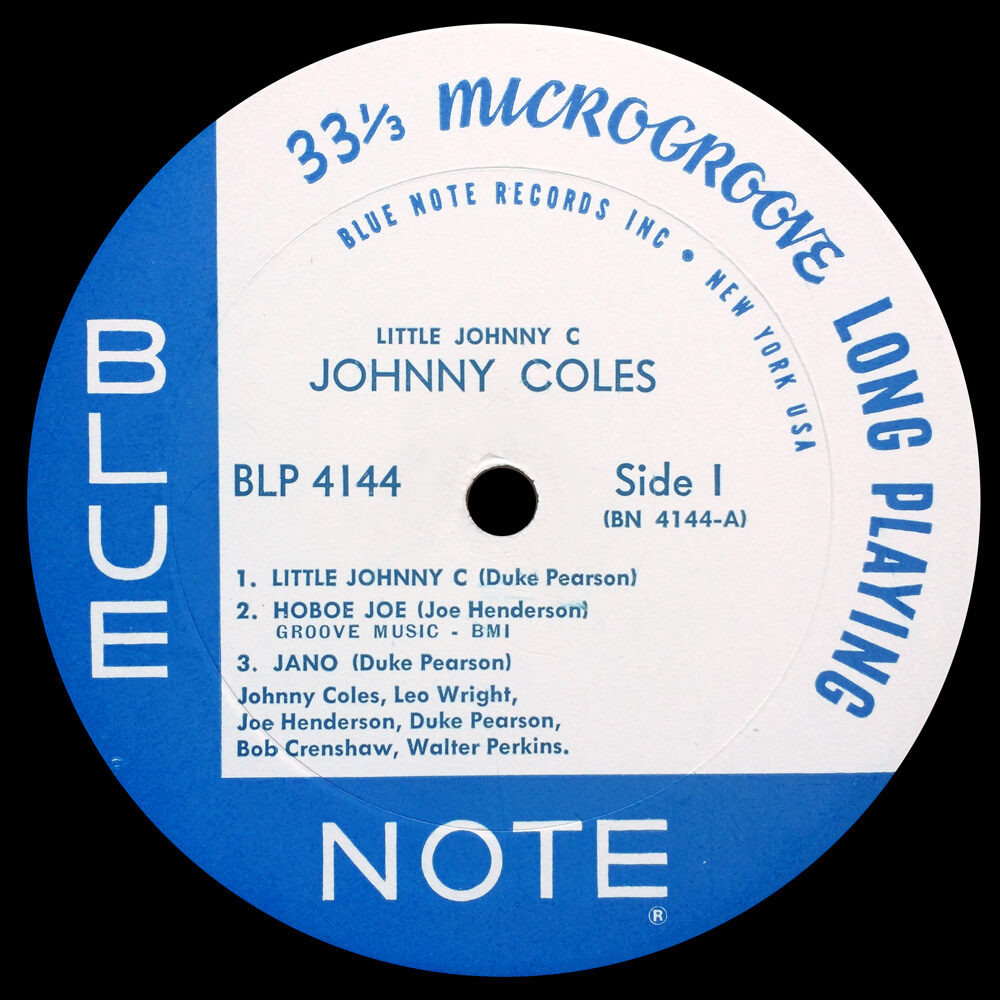
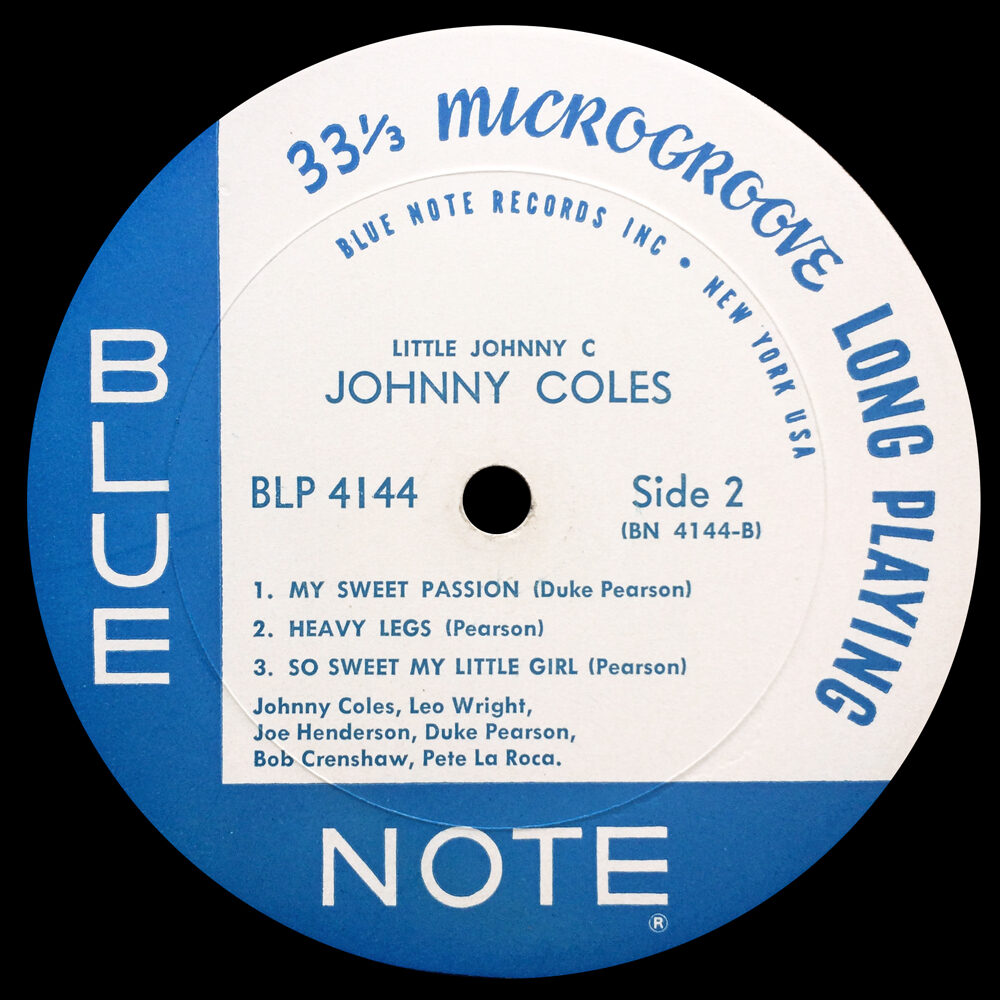
Vinyl Spotlight: Johnny Coles, Little Johnny C (Blue Note 4144) “Earless NY” Mono Pressing

  • “Earless NY” mono pressing ca. 1966
  • “NEW YORK USA” on both labels
  • “VAN GELDER” stamped in dead wax
  • “43 West 61st St., New York 23” address on jacket with “Printed in U.S.A.”

Personnel:

  • Johnny Coles, trumpet
  • Leo Wright, alto saxophone & flute
  • Joe Henderson, tenor saxophone
  • Duke Pearson, piano
  • Bob Cranshaw, bass
  • Walter Perkins (Side 1) and Pete La Roca (Side 2), drums

Side 1 recorded July 18, 1963
Side 2 recorded August 9, 1963
All selections recorded at Van Gelder Studio, Englewood Cliffs, New Jersey
Originally released February 1964

1 Little Johnny C
2 Hobo Joe
3 Jano
4 My Secret Passion
5 Heavy Legs
6 So Sweet My Little Girl
I’m sure you guys get tired of me saying “this is one of my favorite albums” but I’m saying it again, deal with it!

Song for song, start to finish, this is a brilliantly executed body of work, and session pianist Duke Pearson deserves the lion’s share of the credit. As composer of five of the album’s six tracks, Little Johnny C demonstrates Pearson’s talents in a leadership role and points to his timely inclusion in the Blue Note family as an A&R man and producer.

Recorded on two separate dates, the program undergoes a drummer change between sides 1 and 2 while the frontline is maintained. Walter Perkins sits at the throne for the album’s most fast-paced tracks (“Little Johnny C” and “Jano”), his playing unique and imaginative on both takes. Coles seems to follow Miles in his “less is more” approach to solos, and Leo Wright’s work on alto sax is perhaps the finest of all the album’s soloists, arguably topping even tenor heavyweight Joe Henderson.

Engineer Rudy Van Gelder’s Englewood Cliffs recording studio typically exerts a roomy, larger-than-life sound on recordings. But in a rare break from routine, producer Alfred Lion has opted for a tighter, more up-close-and-personal sound here reminiscent of the days in Hackensack. The result is a unique take on the Blue Note sound that has the immediacy of a Hackensack record but also the clarity and definition of Englewood Cliffs.

Little Johnny C is a delightful roller coaster ride that ends with a slow and gentle stop. Rising and dipping between up-tempo and mid-tempo readings, the listener finally arrives at “So Sweet My Little Girl”, a heartfelt ballad unmatched in its syrupy pace. Pearson rightfully concludes the album with a string of breathtaking notes that comprise one of the most perfect endings to a song I have ever heard.