Kenny Dorham, “My Ideal” (Original Jazz Classics LP Reissue)
New Jazz Records Cat. No. 8225 | 1959
Personnel:
Kenny Dorham, trumpet
Tommy Flanagan, piano
Paul Chambers, bass
Art Taylor, drums
I’ve been noticing some buzz on the internet about an up-and-coming mono reissuing of Kenny Dorham’s Quiet Kenny by the Craft label, so I thought I’d feature a track off that album for this edition of Origins of Bop. “My Ideal” dates back to 1930, the year of both its publishing and premier on the silver screen. Playboy of Paris starred Maurice Chevalier, who was also the first to record the song.
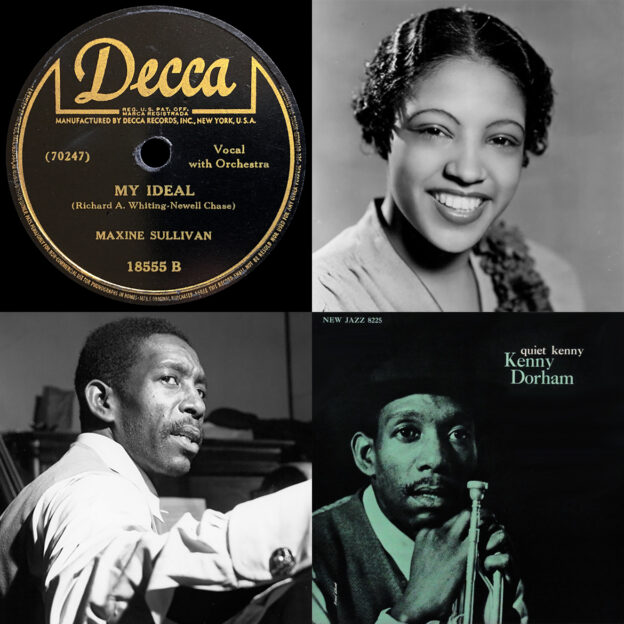
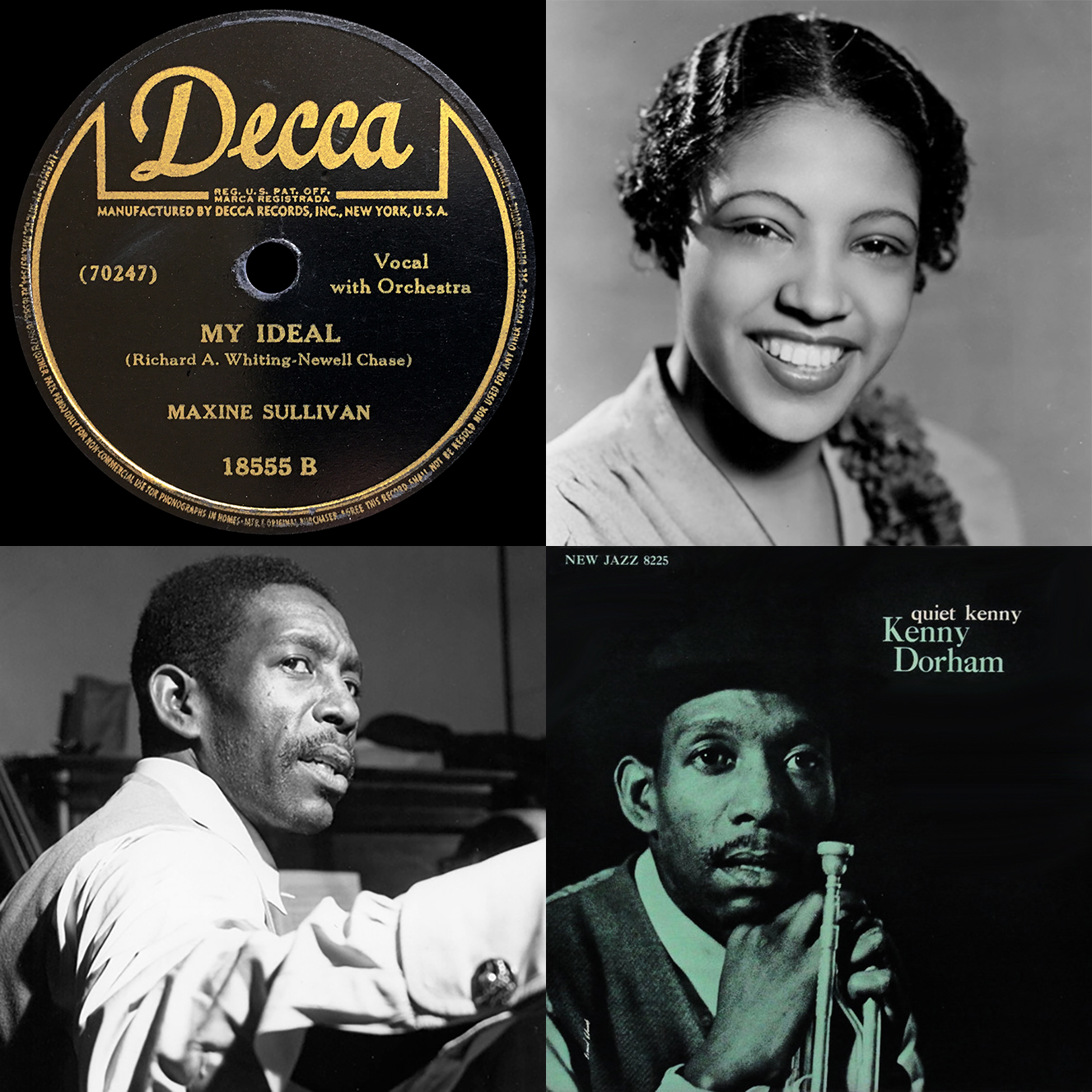
After several years of laying commercially dormant, Maxine Sullivan decided to give “My Ideal” a fresh reading. Gone are Chevalier’s humorous French accent, masculine perspective, “B” section, and half-spoken delivery of the final verse. With Buster Bailey’s clarinet taking the instrumental lead, Sullivan’s version is the first to feature a jazz arrangement. Sullivan was 32 at the time of recording but the innocence of her voice suggests a teenage girl waiting for a fantasized heartthrob to make her acquaintance on the way home from school.
Coleman Hawkins followed soon after with his own instrumental version, which retained the structure of Sullivan’s. Over a decade later, Chet Baker tried the tune on in 1956, brining back the “B” section while moving it to the beginning, and two years later Earl Coleman would mimic the Baker arrangement on Sonny Rollins’ Tour de Force album.
A word about the popular music form: It has always seemed like “real music lovers” kind of shun popular music. I’m not one of them. I love pop music. I love it for its simplicity. You get that with Sullivan’s version. Her lyrical inflections are hardly adventurous yet they easily keep my interest. The humility of her straight-down-the-middle interpretation is also admirable. Baker takes a few steps away from that, swinging to-and-fro with syllables rarely falling on-beat. Then Coleman and Rollins wreak havoc on this pretty love song, mangling it to the point of near-unidentifiability.
Is the ease of pop such a sin? These are my opinions, after all, but to me Coleman’s version is the epitome of trying too hard to make things interesting. (Fans of Rollins might guess, like me, that his atypical stylings here are meant to appease Coleman.) Surely I don’t understand the fundamental conception of most jazz vocalists, as numerous legends seem to “jazz things up” in this manner: Johnny Hartman, Sarah Vaughan, Helen Merrill, Sheila Jordan, Cassandra Wilson. Give me Ella or Blossom Dearie and I’m a happy camper.
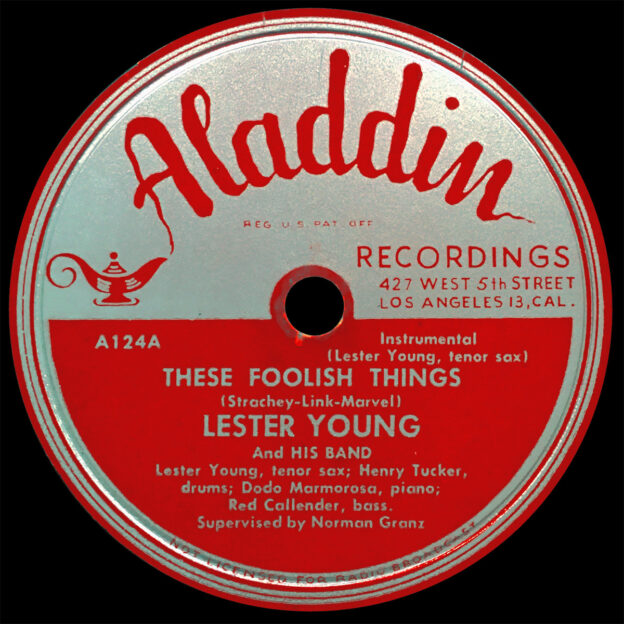
Thank heavens for Kenny Dorham restoring some order to the universe in 1959 with his version, which, like Hawkins’, is executed in the spirt of Sullivan’s. Dorham’s heartwarming, muffled tone is reminiscent of Baker’s, yet I have always found Kenny to have a unique and understated musical persona that is perfectly complemented by this type of tone. From his sweet playing alone I had originally and erroneously assumed that this song was dedicated by its authors (Newell Chase, Richard A. Whiting, and Leo Robin) to their respective lovers. Yet the lyrics reveal a hopeful story of longing for a partner unknown.
Dorham’s version is a favorite ballad of mine and I’m glad it led me to discover Maxine Sullivan. There’s plenty more Origins of Bop posts to come so please stay tuned.
Original 1946 pressing
Recorded December 1945 in Los Angeles
A
These Foolish Things
B
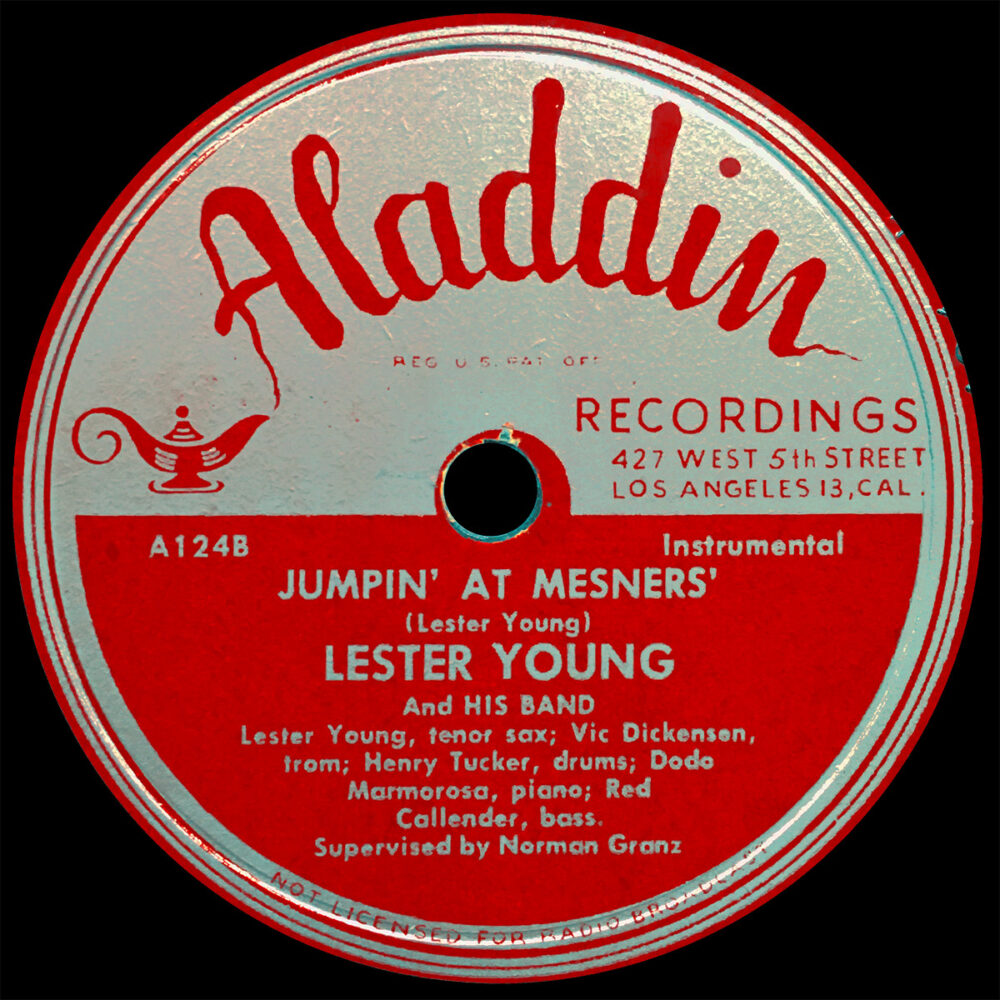
Jumpin’ at Mesners’
Selection:
“These Foolish Things” (Strachey)
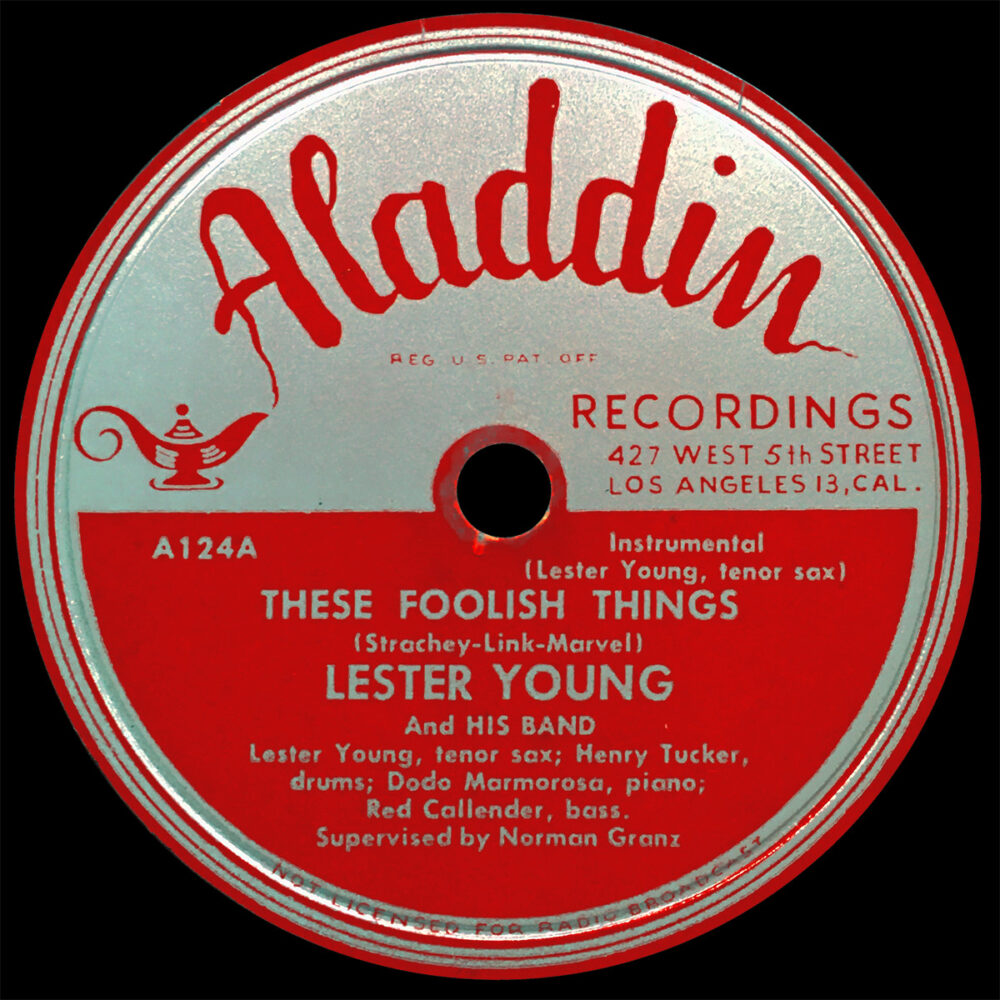
Truth be told, I snubbed Lester Young for a long time for the simple fact that he rose to fame during the swing era. I didn’t realize how hip he could be until I heard the Oscar Peterson Trio sessions he recorded for Norgran. From there, something told me to check him out when I started collecting 78s, and sure enough, I discovered the set of small combo sessions Prez recorded for Aladdin Records on the West Coast in the mid-1940s.
God knows why these Aladdin 78s are so cheap because they are a goldmine of fantastic performances by Young and his various company. For the 1945 session that produced this particular disk, Young’s quintet included pianist Dodo Marmarosa and trombonist Vic Dickenson, the latter of which sits out the A-side, “These Foolish Things”. This is a standard ballad that Lester Young owns like a Cadillac paid for up front with cash. Before I had a chance to study Young in even the most rudimentary of ways, I had heard more experienced jazz fans talk about his breathy style of playing. Once I started listening for myself, that breathiness quickly proved an undeniable hallmark of Prez’s sound. He has one of the most original tones in the history of jazz, and it’s something that makes him instantly recognizable.
Of course, listening to classic material like this just sounds right on 78. The soft, consistent surface noise complements the mood. I also own the CD box set of these Aladdin recordings, and though my regular readers will know all too well how much I love the dead-accuracy of digital — especially for older lower-fidelity recordings like this — I find myself listening to my needledrop of the 78 far more than my CD rip. Make no mistake about it, though: the box set, produced by Michael Cuscuna, delivers with startling clarity and low noise. Yet I still seem to prefer listening with all the extra “stuff” baked in to the 78 experience.
Welcome to Origins of Bop, a new Deep Groove Mono series aiming to explore the lineage of some of my favorite hard bop recordings. I have always been interested in music history, and with jazz, that has meant finding out more about where my favorite compositions came from. This series is therefore intended to provide some backstory for many of the hard bop performances that we as collectors of twelve-inch vinyl LPs have come to love so much. Quite often, these songs date back to the 78-R.P.M. era of shellac disks, and in many cases I will be happy to feature 78s from my own collection.
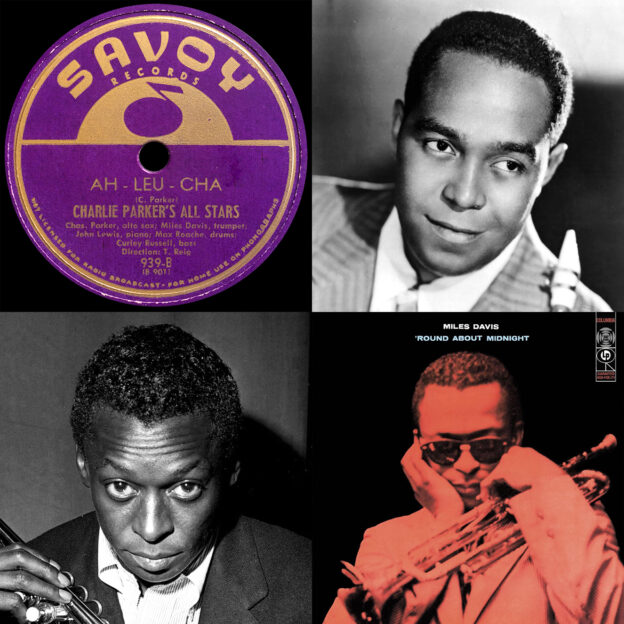
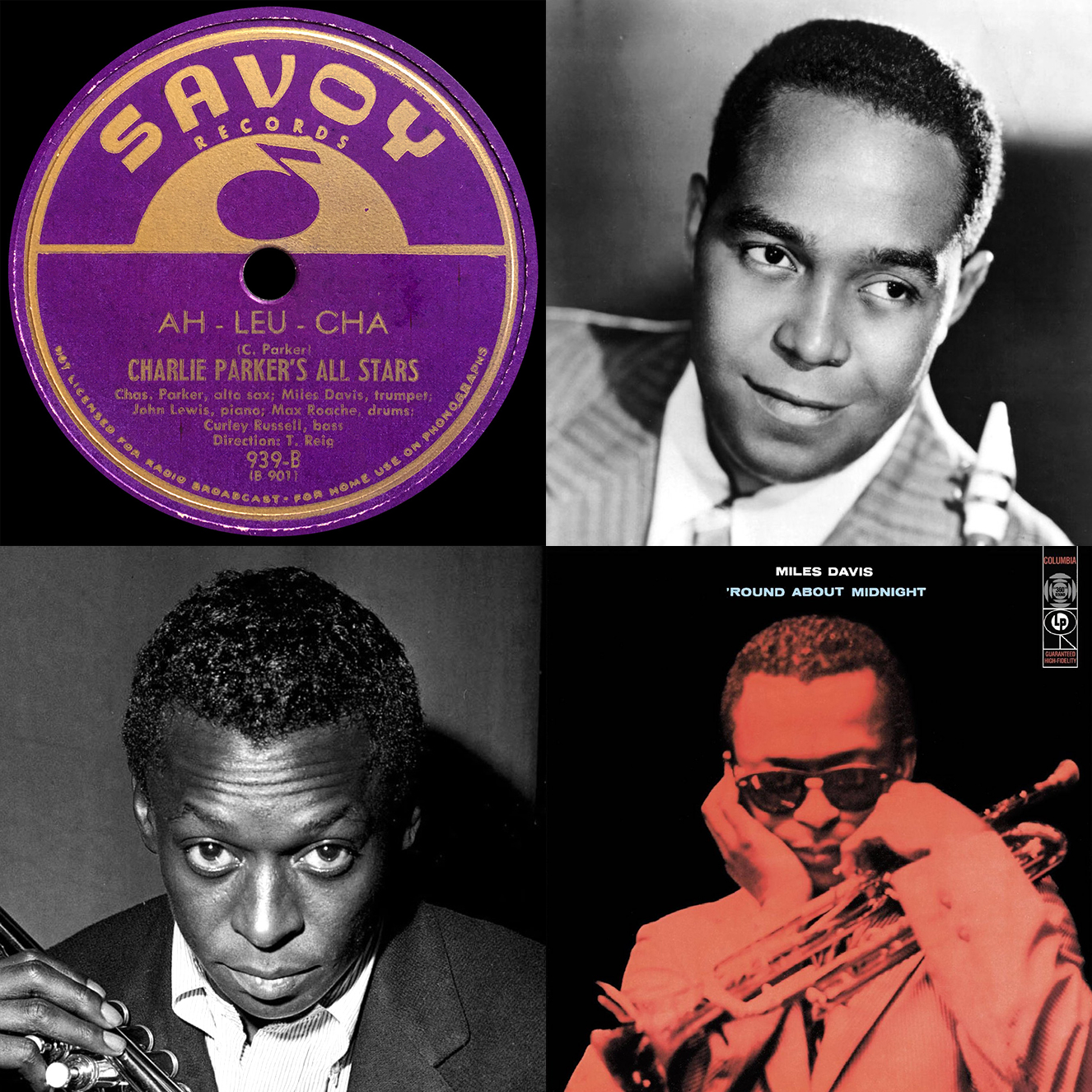
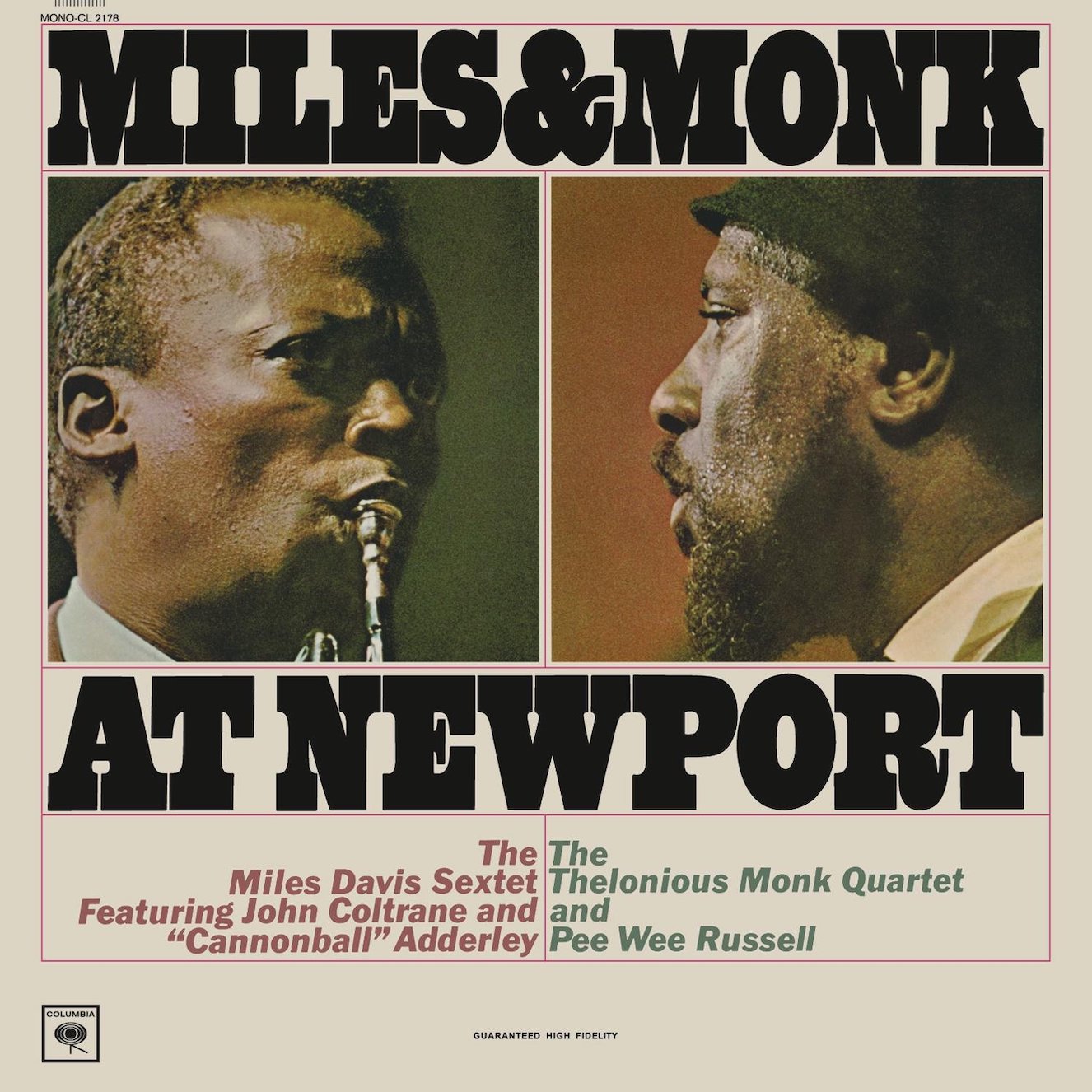
This first installment features a tune composed by one of the founding fathers of bebop. I was introduced to Charlie Parker’s “Ah-Leu-Cha” back in 2001 through the first jazz LP I ever bought: Miles & Monk at Newport. One rainy afternoon in Albany, New York I had a break between my college classes, so I decided to hop in my car and venture downtown to Last Vestige, a local record shop. With a musical background largely focused on hip hop and rock at the time, my experience with jazz was limited. All I had was a cassette tape from a friend with Kind of Blue on one side and My Favorite Things on the other. But as a DJ, I had been seeing lots of cool covers for jazz albums popping up on the Turntable Lab website, and I had recently gotten interested in Madlib’s new electronic jazz project, Yesterday’s New Quintet. I was also DJing with an R&B cover band, and I befriended the group’s saxophonist, who was a locally-renowned jazz musician and composer.
My first-ever jazz vinyl purchase
This all had an influence on me when I decided to check out the jazz section of that shop for the first time. The copy of Miles & Monk I found was a stereo ‘70s reissue, it costed six dollars, and I pretty much bought it solely on the strength that I had heard of both leaders before. Side 1 was the Miles side. “Ah-Leu-Cha” was the first track, and it wasted no time ripping my face off. Miles liked to play fast live, and this Newport Festival reading was taken at a blistering pace, nearly twice as fast as Parker’s original 1948 recording, which by no coincidence also featured Davis. If I’m being honest, I remember wondering if I would even like jazz if this was what most jazz sounded like! Today I love that recording for its tenacity, high fidelity, and airtight performances. But back then, knowing nothing about jazz and being quite unfamiliar with such high levels of musicianship, I felt utterly confused.
Many years later when I discovered Davis’ classic ‘Round About Midnight, I was pleasantly surprised to find a slower, more accessible version of “Ah-Leu-Cha”. It was recorded three years before the Newport date in 1955 and features Miles’ First Great Quintet. Philly Joe Jones sounds snappy, his patented loose-wrist cymbal work creating an inimitable groove for each soloist to work with. The exceptional fidelity of this recording needs to be noted as well.
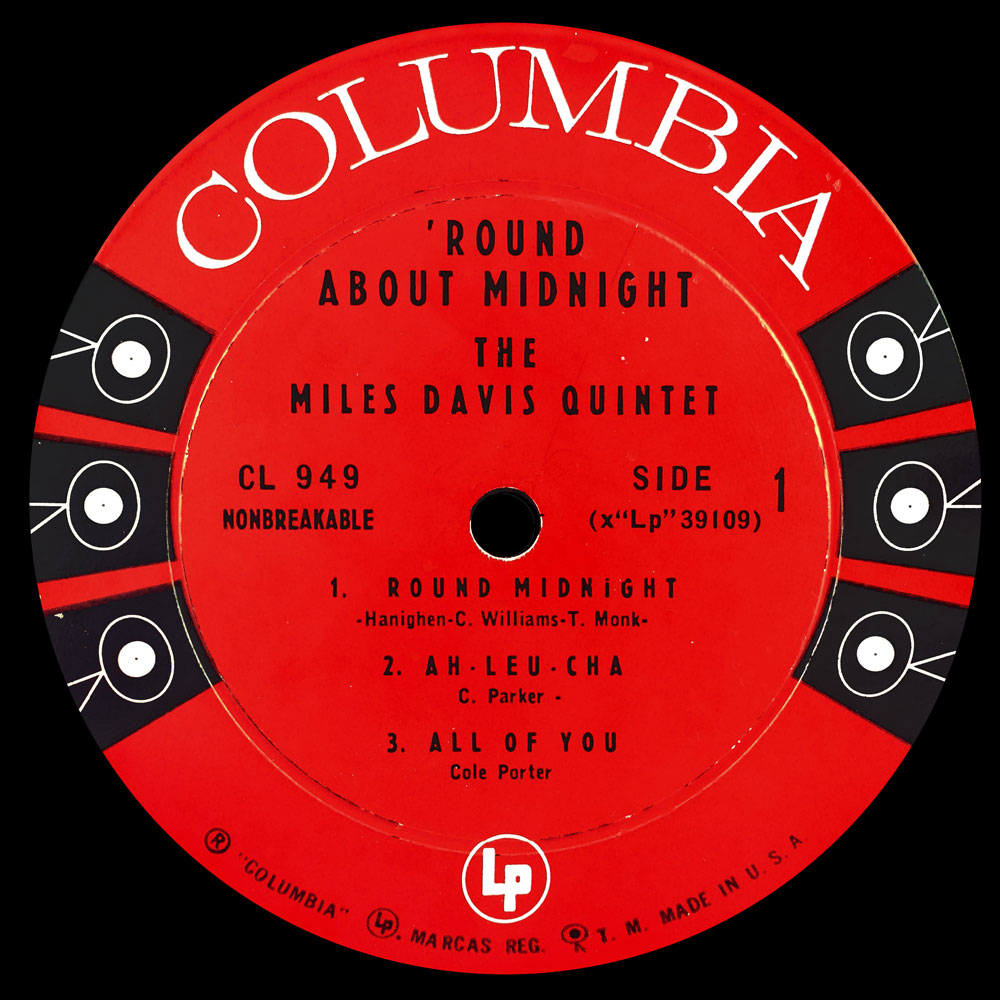
Side 1 label for CL 949
Prior to reviewing ‘Round About Midnight for my blog several years ago, I had never noticed Parker as the composer of “Ah-Leu-Cha”, and when I listened to Bird’s version for the first time I was caught off-guard by its syrupy tempo. Recorded for Savoy Records at Apex Studios in New York City (mentioned last week in a blog post here), engineer Harry Smith set the rhythm section back a ways behind a very present front line. This was a standard mixing aesthetic in the 1940s, and it makes jazz recordings from that period unmistakably of-the-era. Max Roach could tear it up like no one else in 1948, but he’s much tamer here. Peppering the backbeat with gentle fills throughout, the drummer manages to quickly trade two half-bar solos with bassist Curley Russell before the track’s closing. As a composition, the counterpoint of Bird and Miles creates exciting harmonic motion that makes my ears smile every time I hear it.
Recorded September 11 and September 24, 1929 in New York City
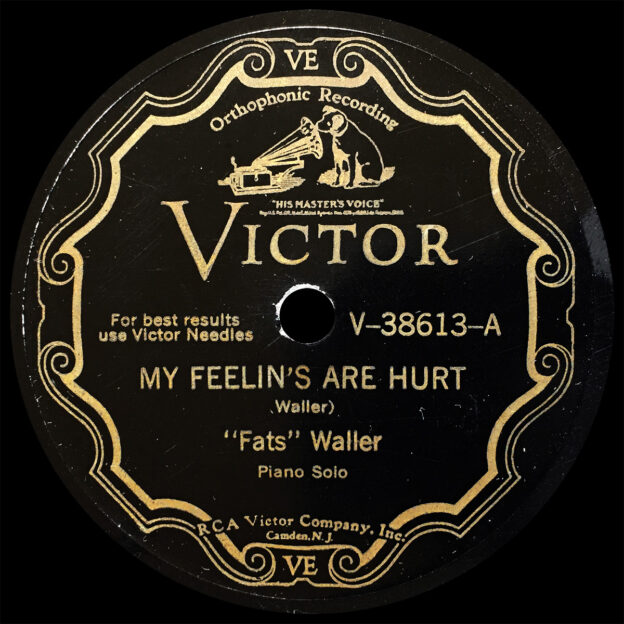
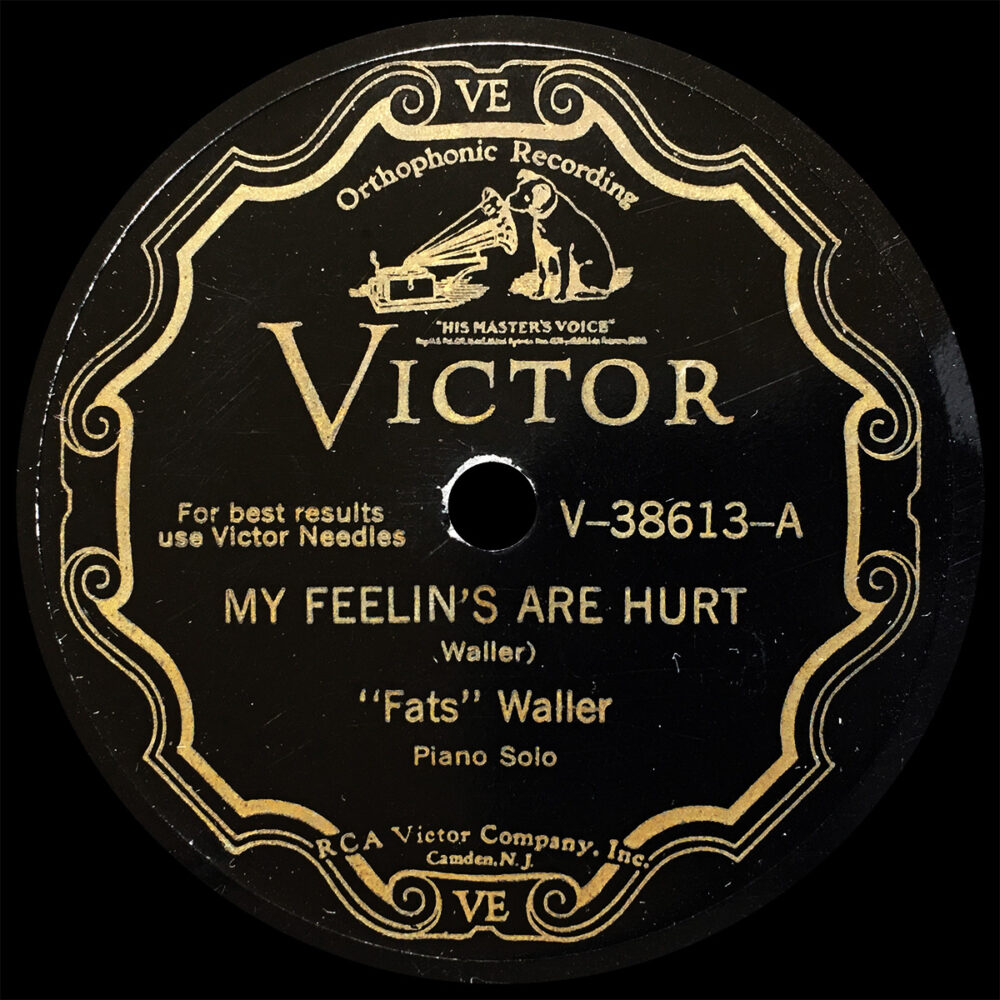
Selection: “My Feelin’s Are Hurt” (Waller)
While I still haven’t delved all too deeply into ‘pre-bop’ jazz, I managed to find another great 78 from that era. For a stretch in 2019 I was accustomed to seeing the silly grin on Fats Waller’s pudgy face regularly while volunteering at the National Jazz Museum in Harlem. Footage of Waller performing was part of a video on loop there, and I was regularly reminded what a natural entertainer he was.
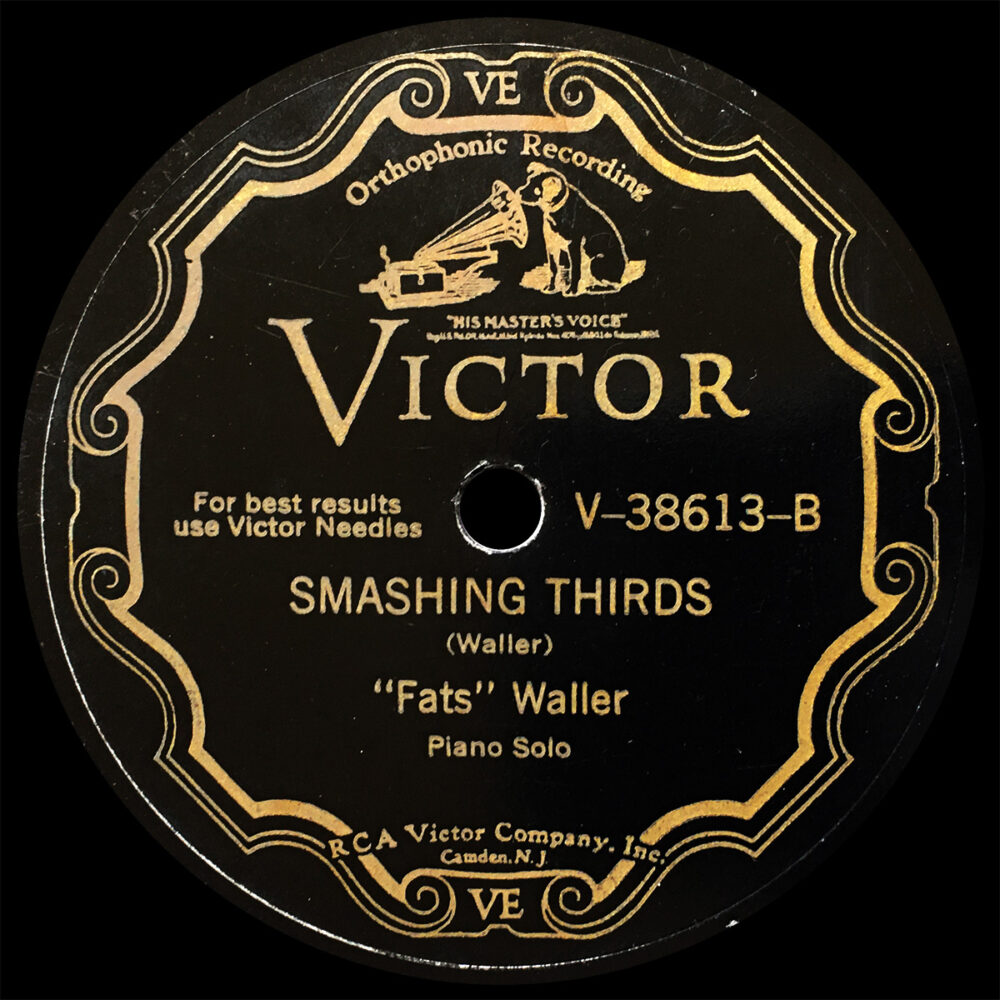
It was enough to make this “serious” jazz fan (who sometimes takes himself too seriously) avoid Waller’s records whenever they came up. But trying to be more open-minded about older jazz, I figured I would give Fats a chance if I could find an instrumental record of his. Then I found this. Despite knowing how influential all the stride pianists were on my favorite bop pianists including Thelonious Monk, I’m still not decided on how I feel about boogie/stride piano numbers like “Smashing Thirds”, the B-side here (pretty awesome title, though). For this 78, it was the “A” that caught my attention.
The first thing that stood out about “My Feelin’s Are Hurt” was that it is not an uptempo stride tune. More of a brisk walk, it reminds me of Monk’s tendency to avoid faster paces. Fats starts the tune off by playing with numerous ideas and finally settles on a rhythmic romp halfway through the side. Like the Louis Armstrong sides I reviewed recently, his super-steady playing here makes me move every time. Toward the end Waller breaks out into stride for a brief spell, then slows things back down to return home with a beautiful cadence.
For many collectors including myself, exclusivity ultimately plays a role in the extent to which a particular record is desired. Very rarely is a recording unavailable via streaming services like Spotify and Apple Music. That being the case for the A-side here, don’t say I never did anything for you. This is a fun tune you’re not gonna hear anywhere else on internet, so enjoy and I’ll see you for the next installment of Shellac Spotlight!
Recorded May 7 and May 10, 1927 at Okeh Studios, Chicago
Selections:
“Willie the Weeper” (Melrose-Bloom)
“Alligator Crawl” (Waller)
So far, Deep Groove Mono’s coverage of 78s has been limited to the very first 78 I ever acquired and the Dual idler wheel turntable I recently picked up for its popularity with 78 collectors. Since I have replaced that first 78 with a cleaner copy, abandoned the economical Califone portable featured in that post, and now prefer my modified Technics 1200 to play 78s over the Dual, this in some ways is my inaugural 78 post.
I have managed to build up a modestly-sized 78 collection over the past six months, and without trying to sound too self-congratulatory, I worked hard for it. It took a lot of research, shopping, patience, reception of packages, cleaning, critical listening, transferring, and photographing. Time for me to finally relax and enjoy the fruits of my labor.
For Jazz Historians
I have always taken an interest in the historical roots of the hard bop I cherish most. After exhausting all my resources for bebop 78s recently, I shifted gears to collecting original vocal versions of my favorite jazz standards. But jazz history is deep as the ocean, and it surely does not end with the white popular vocal artists featured on most of these earlier records. The music of colossal jazz legends like Louis Armstrong and Fats Waller was clearly a major influence on my favorite bop musicians, and even if it isn’t naturally the first music I would reach for, I still felt a drive to understand it and the way it’s connected to bop. Maybe I would develop a more genuine interest in the music from there; either way, the records those guys put out have historical value to me.
In the process of exploring “hot jazz”, I stumbled upon the Instagram page of Hot Club of New York. Founded and maintained by a young, bright WKCR alum and disciple of Phil Schaap that I only know as “Fat Cat”, his passion and enthusiasm for hot jazz is infectious, and it surely inspired me to further explore the subgenre.
Ever since I watched Ken Burns’ (somewhat controversial) Jazz documentary, I had been curious about Louis Armstrong. The thing I noticed right away about that documentary (probably true of any history of jazz) was how unanimous the interviewees seemed in their agreement that Louis Armstrong is essentially the gravitational force of creativity at the center of the jazz galaxy. More than any other figure in the music’s history, experts seem to agree that Pops is tops. For obvious reasons, this white boy born in 1980 had trouble understanding that universal sentiment, but I too wanted to share in the knowledge of Armstrong’s lasting influence on jazz.
Author Gary Giddins’ input on Satchmo made an especially strong impression on me. Giddins spoke about Armstrong’s importance with certainty and conviction. There was also a moment in which I really felt I understood just how special Louis Armstrong was. During footage of an October 21, 1933 live performance with his orchestra in Copenhagen, his immense charm and skill is on full display as he effortlessly shifts between addressing the crowd, dancing along with the music, and taking his solos with utmost poise and seriousness. Fashioning a white rag to wipe the sweat from his brow, one can’t help but remember trumpeters past like Buddy Bolden who would drape a rag over their hand to protect the secrets of their fingering from onlooking players. Witnessing Louis’ swagger then made it perfectly clear why he was far and away “the man” in his day.
For Record Collectors
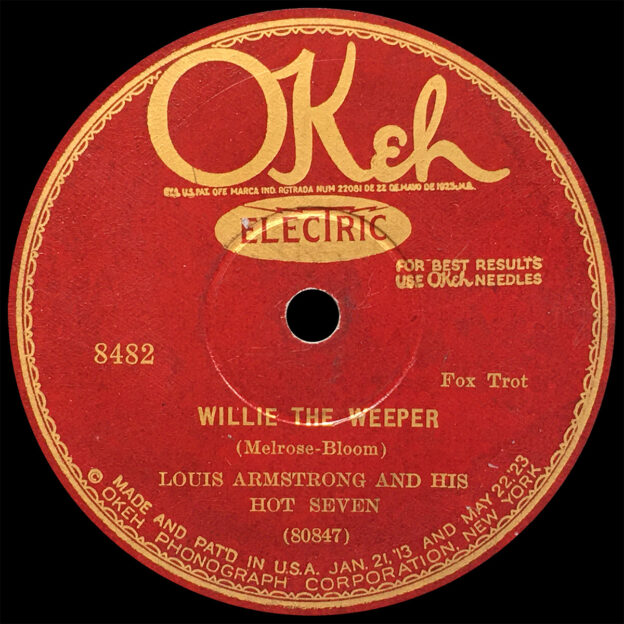
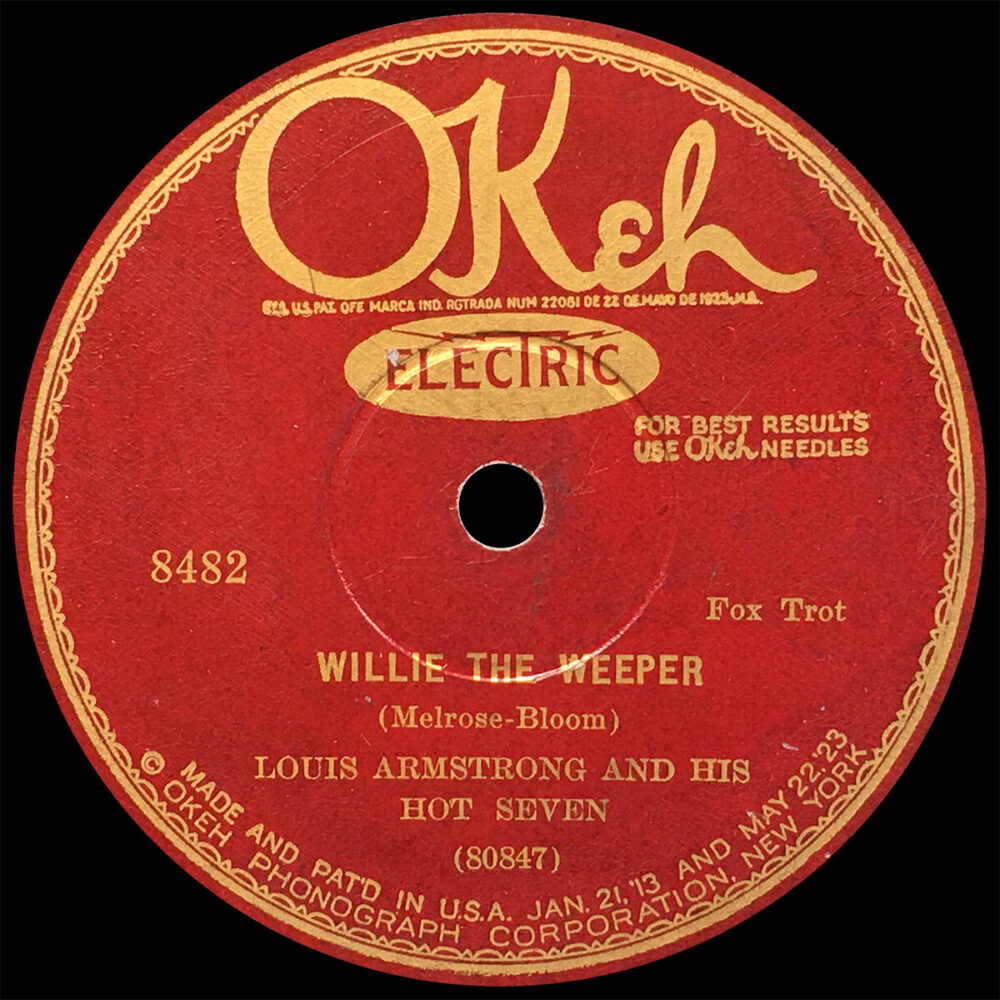
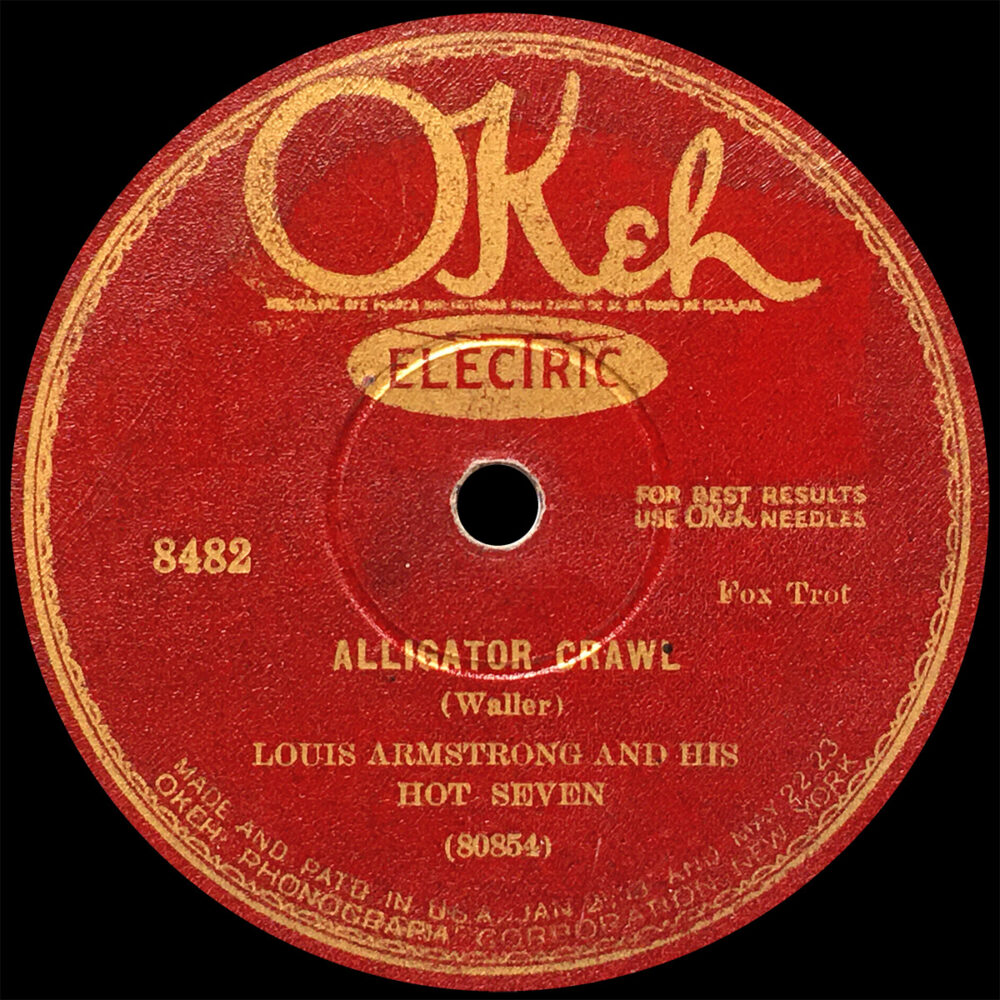
Once I started researching Armstrong’s 78 catalog, it didn’t take long to realize that his Hot Five and Hot Seven recordings for Okeh in the late 1920s are considered by many to be the creme-de-la-creme. So I started listening on Spotify. Of the dozens of sides I heard, two stood out above the rest. Not only that, both were originally issued on the same 78, and even more coincidental, there was a decent copy for sale on eBay — surprising since these Louis Okeh 78s seem rare and in regular demand.
I decided to take a chance on the disk, which was graded “V” (I have learned that V for 78s is more comparable to VG- with LPs). There’s something about these really old 78s where the older the record is, the more forgiving I am of playback issues. The record proved conservatively graded, and even with some minor playback issues I decided it was worth the price of admission (my time collecting has shown me that effectively determining what does and does not constitute an “enjoyable listen” is a skill that needs developing). And I’ll be honest: these gorgeous Okeh labels and their highly-stylized typography inevitably enhance my enjoyment. Perhaps a less shallow assessment would be that records like these are pieces of history that make listening exciting in a special way.
For Music Lovers
I still have a lot to learn about the history of Louis Armstrong’s small groups, but I have managed to figure out that these are some of the earliest sides cut by the newly-formed Hot Seven in Chicago in early May 1927. Tuba and drums were added to what by modern standards seems like an odd conception of a rhythm section, which in the Hot Five consisted of a pianist and banjoist. Pops is still on cornet at this point, and while we catch the band in the middle of a one-year Kid Ory hiatus here, trombonist John Thomas succeeds at filling his shoes, and clarinetist Johnny Dodds remains faithfully flanking our leader to complete the septet’s front line.
The band comes roaring out the gate at the beginning of “Willie the Weeper”, an old Vaudeville song that saw a sort of resurgence around the time this disk was cut. For the very first moments of the take the band is in complete rhythmic unison, creating momentum that makes me nod my head every time. No doubt this is busy music. The parts individually have a beautiful simplicity but together they ensue a happy sort of chaos that is a proven hallmark of hot jazz.
I’ve heard many historians say that one of the great original contributions Armstrong made to jazz was the way he created space for soloists to make their mark on a tune. In “Willie the Weeper”, John Thomas leads off and does not disappoint. In fact, while casually perusing my Hot Five and Hot Seven playlist on Spotify, this was probably the first solo that made my ears perk up. I continue to fashion hot jazz as a little ‘silly’ sounding (regardless of how ignorant or historically invalid that opinion may be), and while I find Thomas’ solo fits this description to a tee, I find it entirely captivating at the same time.
Dodds comes in next and steals the show. A few weeks ago I had the pleasure of joining a virtual meeting of the Hot Club of New York on Zoom, at which time Fat Cat proceeded to school me on the brilliance of Johnny Dodds. With embellishments shifting at each chord change, Dodds resolves the first and second halves of his solo with a matching pair of high notes that create a most satisfying sense of cadence.
I’m not sure how typical this was of Armstrong but he lets his bandmates take the lion’s share of the spotlight here. After a brief appearance by Satch, pianist Lil Armstrong pounces through her solo and is followed by guitarist Johnny St. Cyr, who registers yet another catchy solo for the group. The leader then triumphantly returns with a chorus that is pure rhythm. Accompanied by Baby Dodds’ syncopated bashing of a choked cymbal, the two proceed to create a bouncing rhythm that makes it impossible to sit still. They are eventually rejoined for a victory lap by the rest of the band and they ride out the side together.
Things slow down on the B-side with “Alligator Crawl”. Written by Fats Waller, I wonder if Louis learned of the song back when he was playing with Fletcher Henderson in New York. Dodds opens things up and is followed by a chorus from the band. Then we finally get to hear Louis unleash over Pete Briggs’ bossy tuba and Baby Dodds’ choked cymbal, which again, along with Armstrong’s highly rhythmic sense of playing, provides motivating syncopation. St. Cyr enters jarringly just as Armstrong exits, does some strumming, and the band plays the tune out.
I’m not sure how much more Hot Five and Hot Seven stuff I’m going to collect but this disk definitely does it for me. Stay tuned, I’ll be back with another Shellac Spotlight post soon!
Recorded October 15, 1952 at WOR Studios, New York, NY
Selection: “Monk’s Dream” (Monk)
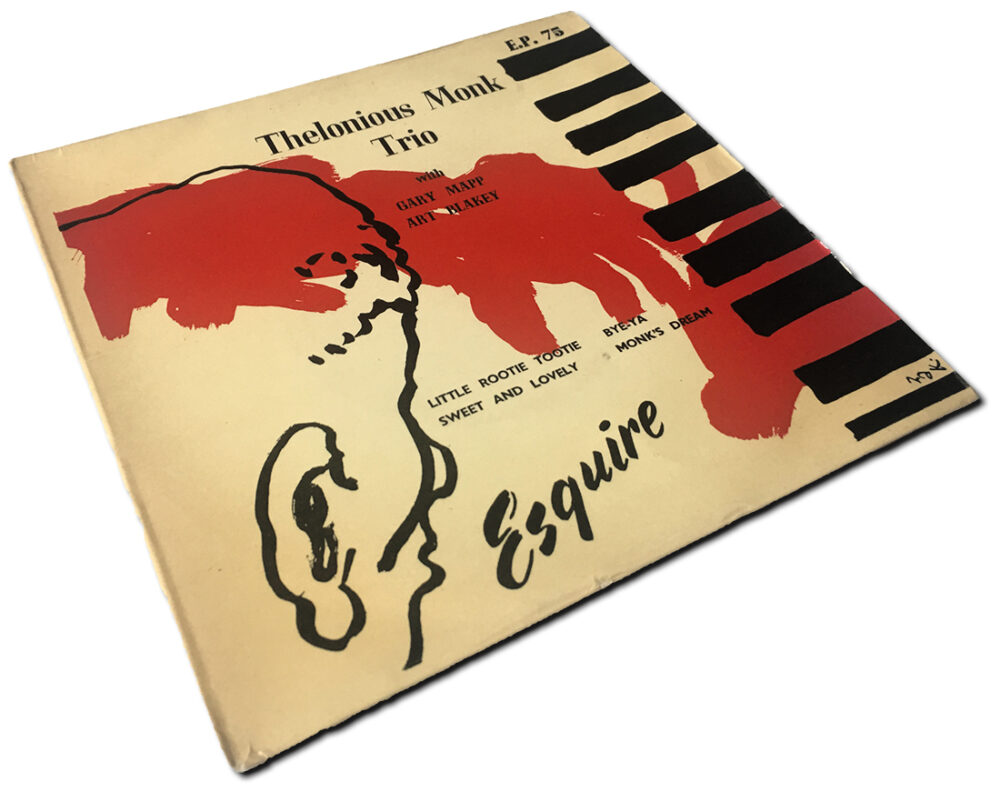
A couple years ago I switched up my philosophy of collecting, moving away from chasing expensive, high-demand vintage jazz LPs and working harder to find less expensive, less sought-after records that managed to bring me an equal amount of joy, if not more. This is partly what led me to Esquire, in addition to their sterling reputation for producing quality vinyl. The British label has been bubbling under for several years, perhaps gaining in popularity due to the internet, yet to some extent it remains off the radar, at least it seems that way here in the states. In other words, the average foaming-at-the-mouth amateur collector isn’t rushing to Discogs to look for Saxophone Colossus on Esquire; they’re going for the original U.S. pressing.
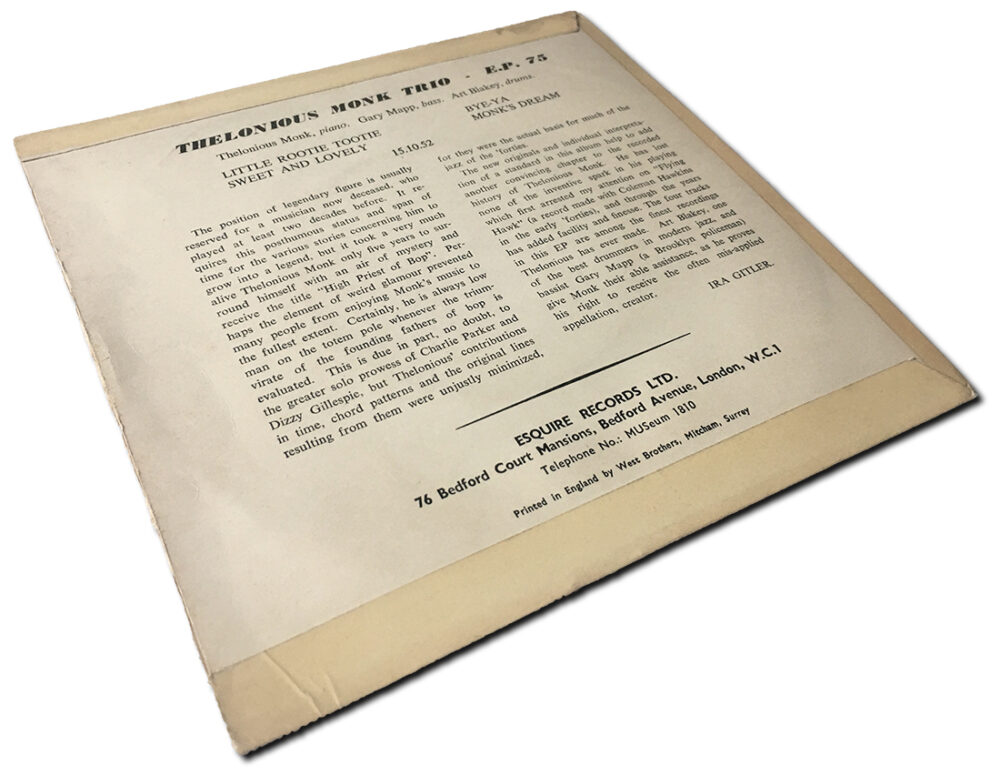
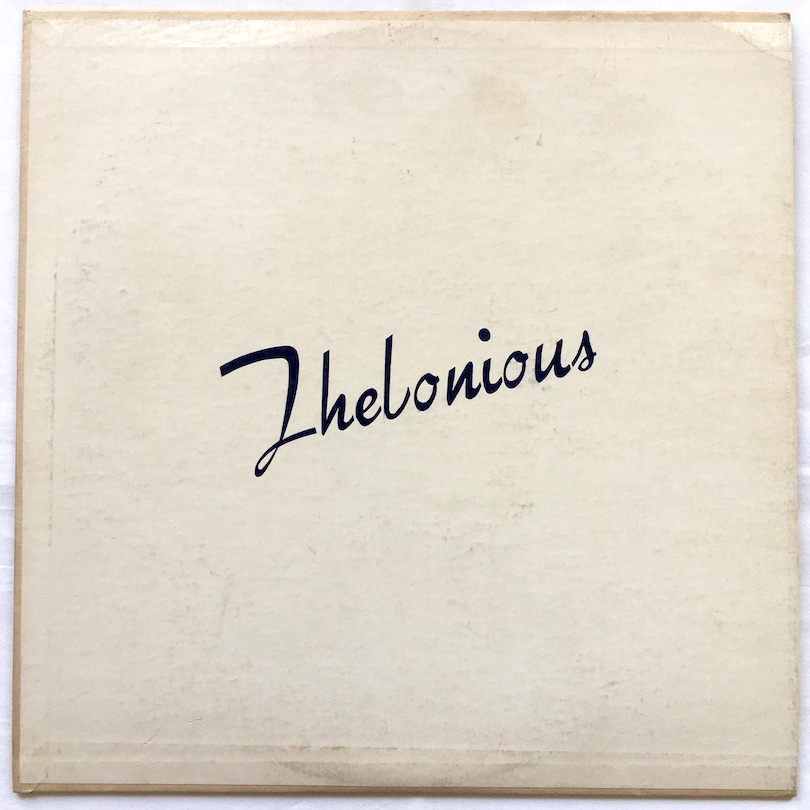
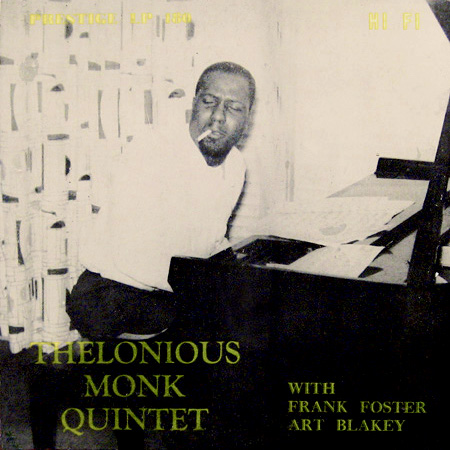
Recorded in 1952, the four sides on this Monk EP were originally issued as two 78 RPM shellac disks and also compiled on a Prestige ten-inch LP, catalog number 142, with the original cover simply reading Thelonious. I owned a copy of the latter at one point: what a gorgeous cover, and at the same time what hissy, wimpy-sounding mastering. Last year when I attended the Jazz Record Collectors’ Bash in New Jersey for the first time, I managed to meet producer and author Bob Porter, who confirmed that the first round of Prestige ten-inchers were generally shoddy. Bob told me a story of a radio jock in Manhattan dialing up Prestige to demand they continue sending 78s to the station in place of the ten-inch LPs.
The original ten-inch pressing of PRLP-142
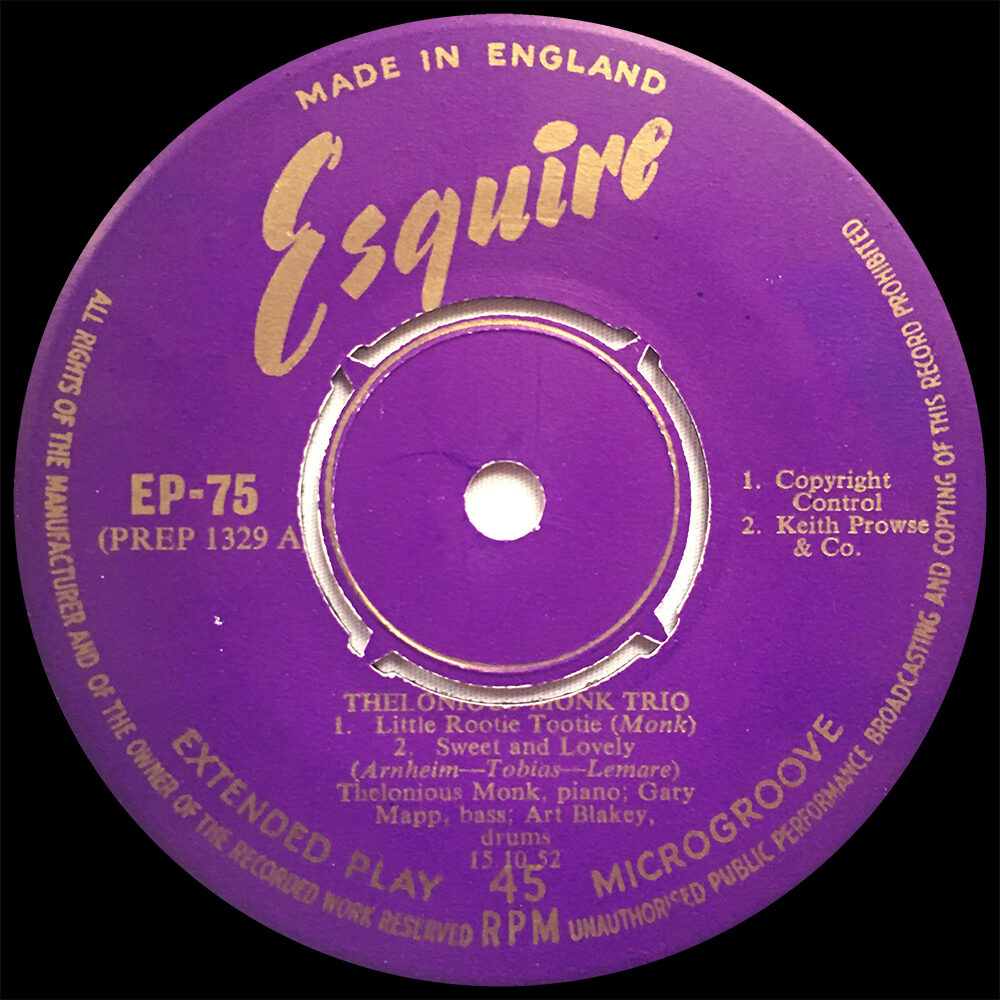
Though the cymbals don’t cut through quite as much as they do on my 2000 Monk Prestige CD box, this Esquire EP is of a much higher fidelity than the original ten-inch. Do I feel that the faster speed of 45 revolutions per minute creates a significant bump in fidelity? Maybe…it would be hard to prove in this case I think. I also find it fairly neat that this EP perfectly compiles all four tracks from Monk’s inaugural recording session with Prestige.
Monk biographer Robin D.G. Kelley has noted that Monk had no choice but to use an old, out-of-tune piano for this session. I can hear the results of that now but I’m not enough of a musician to have heard it before I read Kelley’s book. Perhaps ironically, I think the faulty piano complements Monk’s creaky style of playing perfectly here.
Of all Monk’s work, his Prestige catalog hits a particular sweet spot: hungry performances recorded with fidelity that for the most part improves on the pianist’s previous studio sessions for Blue Note. In 1952 most modern jazz fans would have been unable to hear Monk’s newest compositions played live by their composer in the jazz clubs of New York City. As a result, they got to hear three Monk originals for the very first time with the release of these sides. On “Little Rootie Tootie”, the discordant stomping of keys comprising the chorus screams for the spotlight and is exemplary of a generally raucous session. Though this type of device may sound a little contrived to me today — far from the intricacy of “Monk’s Dream”, for example — it surely had the shock value to entice me back when I was first getting into Monk.
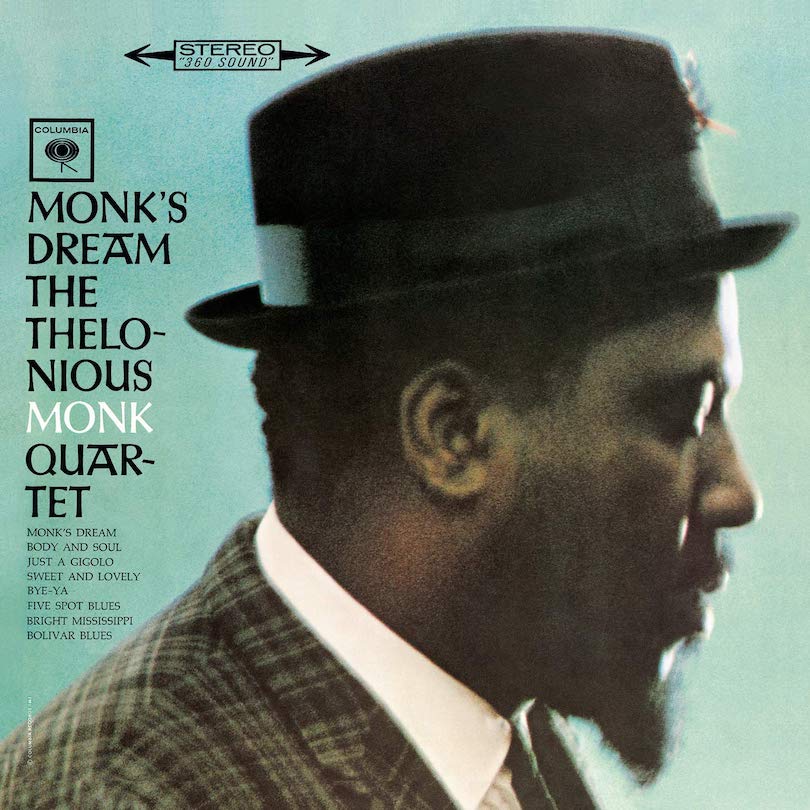
It’s worth noting that the three remaining songs from this session all resurfaced in 1963 on Monk’s first Columbia LP, Monk’s Dream. Like most jazz fans I’m sure, I was introduced to these songs (two originals and one standard) through the Columbia release. If one were to argue that the original Prestige recordings are a more authentic documenting of Monk’s work, it would then be a tragedy that so many jazz fans are introduced to these songs by way of the less aggressive Columbia LP. Aside from the fact that the Prestige session preceded the Columbia sessions by ten years, my personal feeling is that the band’s rawer delivery for Prestige does a better job of personifying Monk.
Monk’s first release for Columbia Records
That being said, when I heard the Prestige versions for the very first time, I think I probably still preferred the Columbia versions. Perhaps the former was a little too raw for me at first. For example, I definitely preferred the Columbia version of “Bye-Ya” and Frankie Dunlop’s straight-ahead swing over Art Blakey’s calypso beat on the Prestige version. But Blakey’s dirty, overly-compressed ride cymbal crashes and thunderous tom-tom hits have grown on me.
On the Columbia album Monk gives us a rather gentle reading of “Monk’s Dream”, and the dynamic, state-of-the-art quality of the Columbia recording further enhances this softer feel. This starkly contrasts with the Prestige version, where Monk plays more (dissonant) notes and is more unhinged. Again I was taken aback by this less harmonious sound initially, but over time I have come to adore it. Sandwiched between the two heads are two choruses of Monk soloing, and the way Monk flips the B-section at both passes demonstrates the pianist’s mastery of rhythm. In the first, Monk winds up with a repetitive trinkling of adjacent keys only to create an impactful sense of resolve when he brings the A-section back in smack on the “one”. The next time around Monk uses a similar motif, building us up with an ascending Chopin-esque run then landing with a swinging return to the “A”.
This is the Monk I think of when I hear these sides: In the zone, raw, and unfiltered
Monk’s reading of “Sweet and Lovely”, a less obvious standard with publishing dating back to 1931, rounds things out. Though the Prestige version is again packed with harmonic dissonance, it’s the moment on the record where everything settles down a little and the listener gets a much-deserved rest.
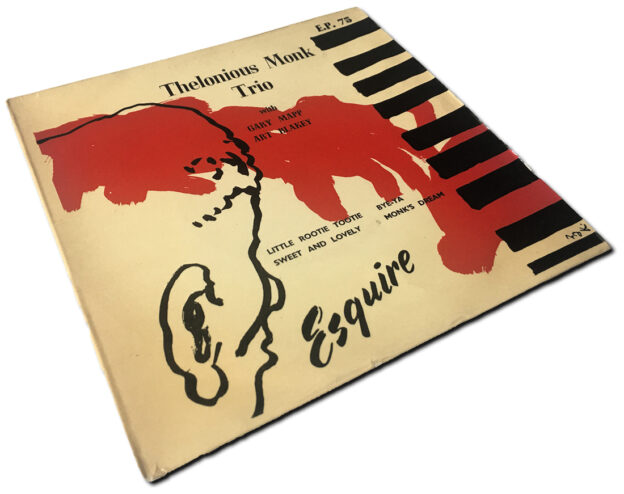
Typical of Esquire, and as we have now seen more than once here on DG Mono, the album art for this EP is sublime. Enjoy the audio clip and don’t sleep on Monk’s Prestige years!
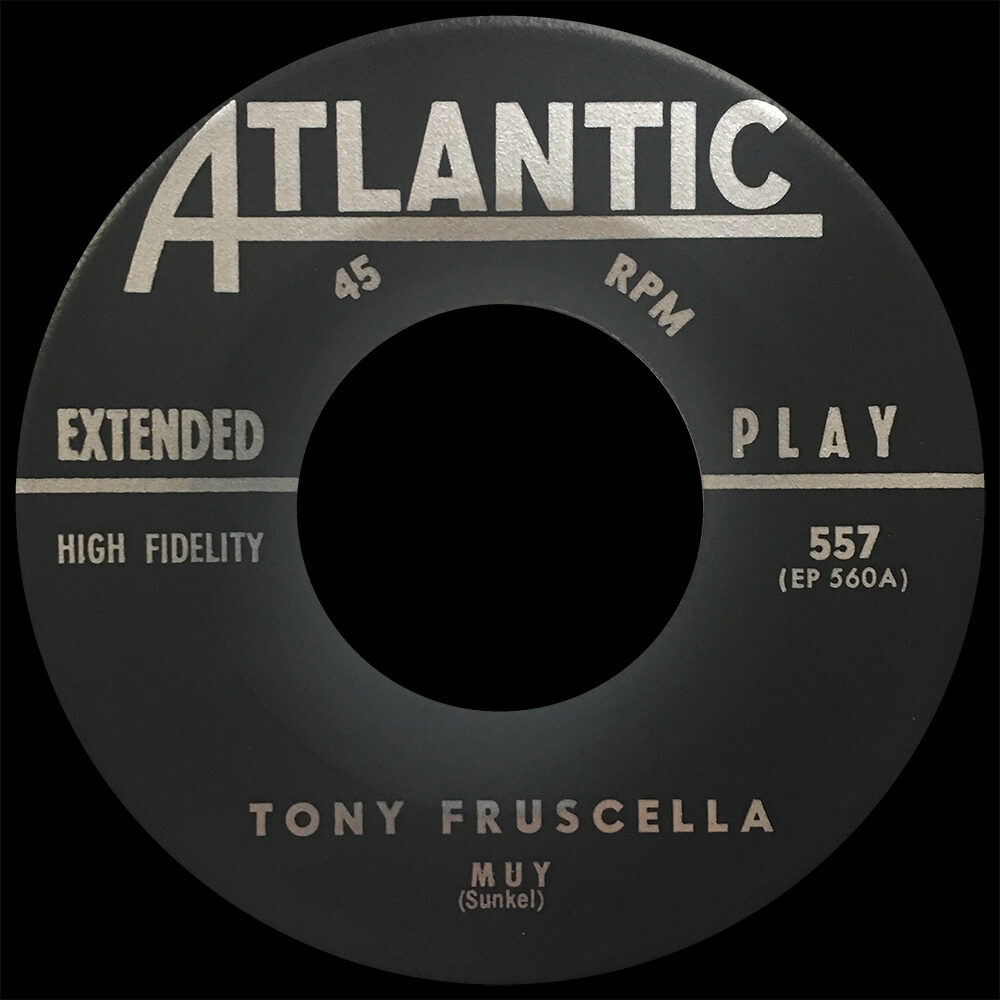
“Muy” recorded March 29, 1955 “Metropolitan Blues” recorded April 1, 1955 All selections recorded at Capitol Studios, New York, NY
Selections:
“Muy” (Sunkel)
“Metropolitan Blues” (Sunkel)
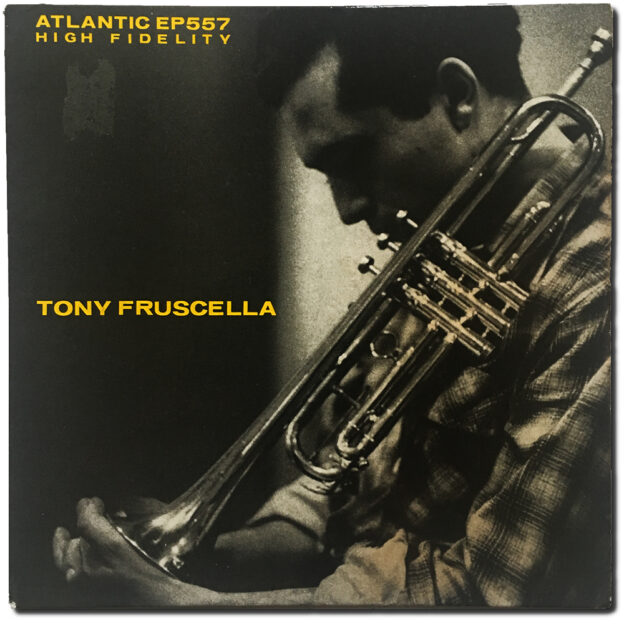
Though this seven-inch EP only contains two songs, they are both outstanding picks from an album that shares the same cover art. I had an encounter with an original pressing of the full LP about a year ago. The European seller graded it NM/M- on Discogs and it played with absolutely terrible distortion on the trumpet. When I asked the seller about it he said “the European grading system is different than the U.S.” Anyway, it was unlistenable and I sold it. This EP, on the other hand, sounds great. It wasn’t pressed terribly loud but the vinyl is clean, the music is dynamic, and the top end is crisp. There is a second EP that is meant to match this one with red lettering and I’m on the hunt for that one now.
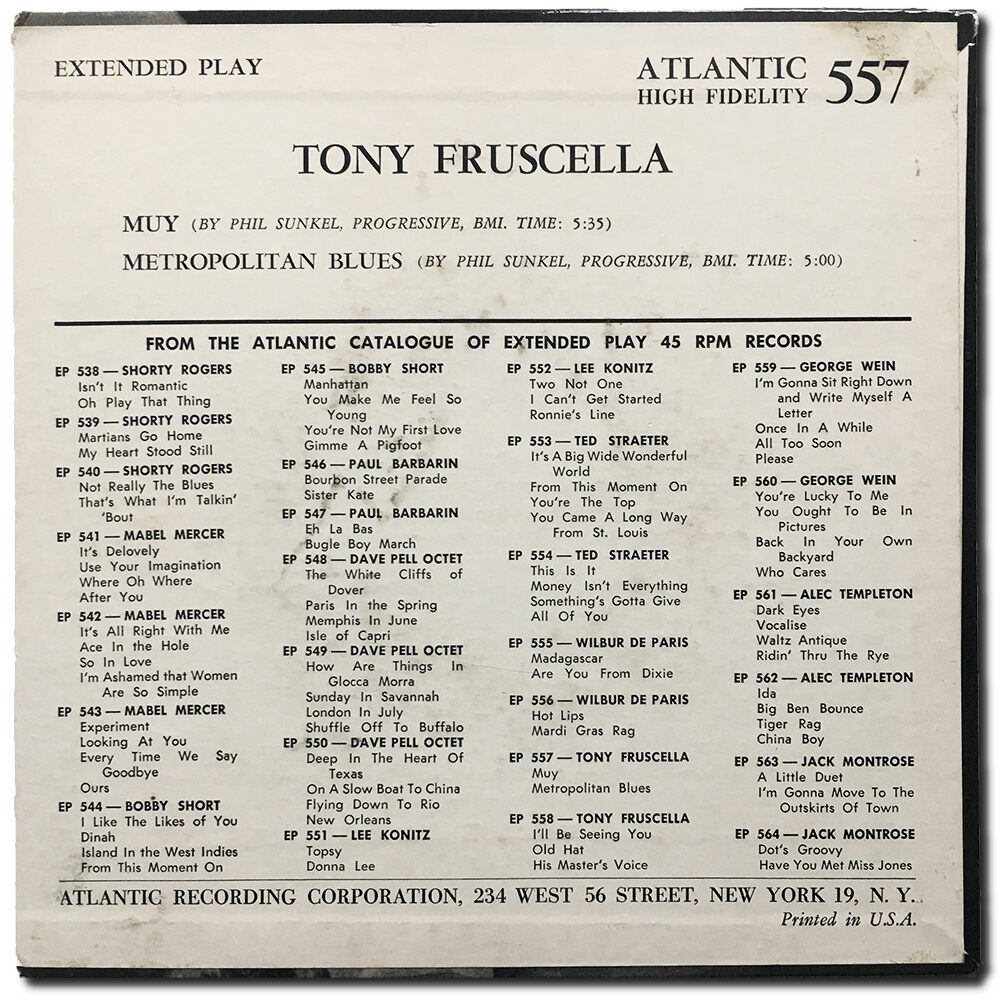
I won’t review the whole LP here, which is phenomenal (I currently own a digital copy that sounds great and I’m also considering a Japanese “mini-LP” CD). I was surprised to learn from the back of the album jacket that Tom Dowd did not record this. It was recorded by an engineer named Frank Abbey, who I admittedly know nothing about. Abbey gets an even, dry sound — both qualities of which I think are present on most of my favorite jazz recordings.
The music, generally sweet and quiet, was written by Phil Sunkel, another guy I didn’t know about until I started researching this album. He wrote both sides here and seven out of nine songs on the album. I find it especially interesting (and tragic of course) that a relatively lesser-known composer like Sunkel could pen an album of such cohesive quality yet fail to have many more impressive credits to their name.
Fun fact: Tony Fruscella was one of the earliest musicians to record at Rudy Van Gelder’s Hackensack home studio. According to my research, I have him recording there as early as January 30, 1952 for a Bill Triglia session (who plays piano here as well). Another fun fact: I have been through Rudy’s collection of acetates and he still has the acetate from that session, so there’s a good chance that the world will hear it at some point! This would technically be the fifth-oldest recording of Rudy’s we would have.
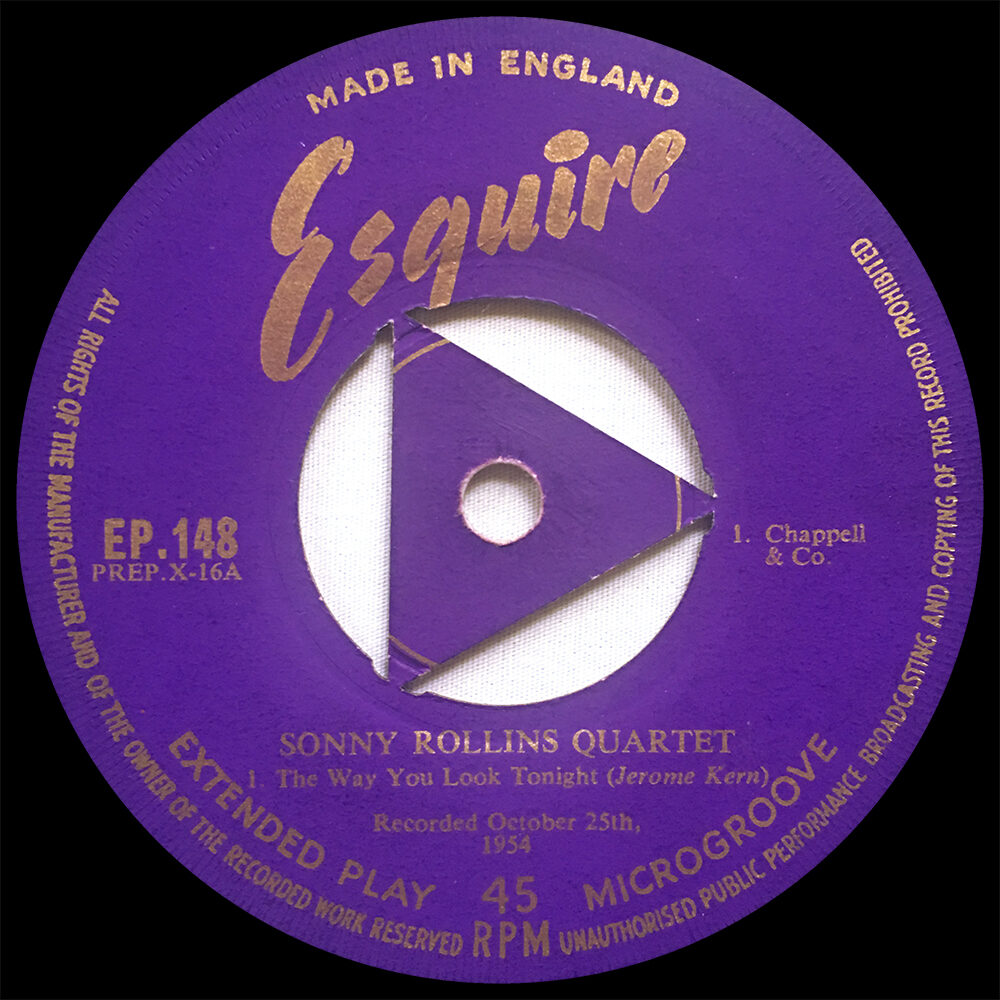
Original 45 RPM 7″ UK pressing circa 1955 Recorded October 25, 1954 at Van Gelder Studio, Hackensack, New Jersey
Selection: “I Want to Be Happy” (Caesar-Youmans)
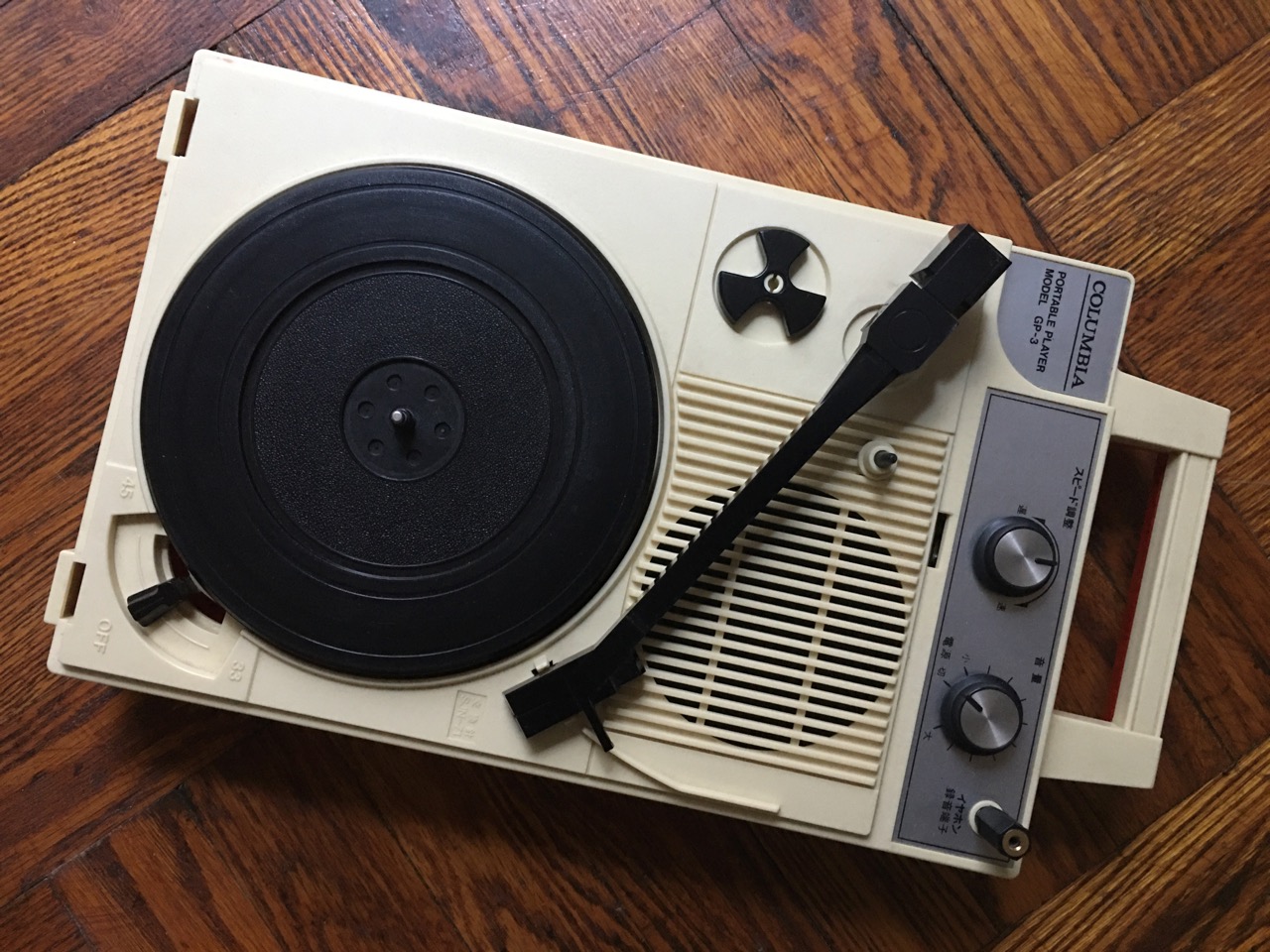
Last spring I got a Columbia GP-3, the workhorse portable record player made in Japan that has been serving beatdiggers and the like for decades. Finances were good at the time and I had been trying to find ways to relax and enjoy life more. Since I had always wanted one of these, I didn’t overthink it and just bought it. Lo and behold, a couple months later a friend visiting from Europe got me back into 45s, and as we hopped from shop to shop in Brooklyn last summer, the GP-3 proved invaluable. It allowed us to easily preview records we were otherwise unfamiliar with all while avoiding the complete takeover of a store listening station.
The Columbia GP-3 portable record player
All the 45s I was buying at that point were doo-wop, rhythm & blues, and rock & roll. Most of the records I proudly consider part of my personal collection, but I was also simultaneously investing in a set of records I could use to get back into DJing. Jazz didn’t necessarily fit into the latter category so I was passing it over when I saw it in the bins. But then I realized how fun it would be to take my GP-3 to the park or bring it along when I travel. To this end, I became more alert to the presence of jazz 45s while shopping both in person and online.
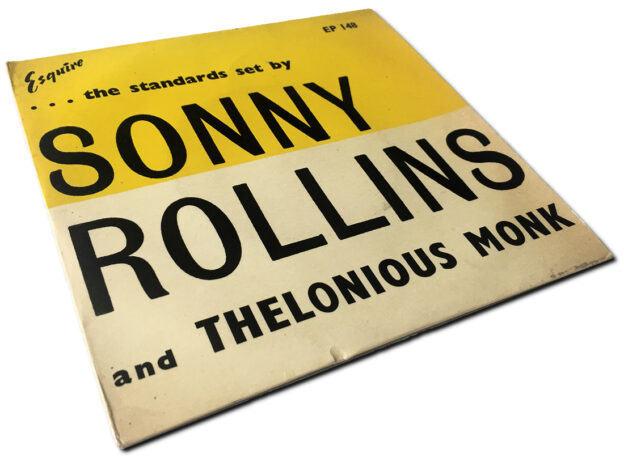
Remember that Esquire Monk ten-inch I posted about a few months ago? While conducting general research on Esquire titles around the time I acquired that record, I decided it might be fun to have some Monk on 45. Then I stumbled upon this title and its glorious cover.
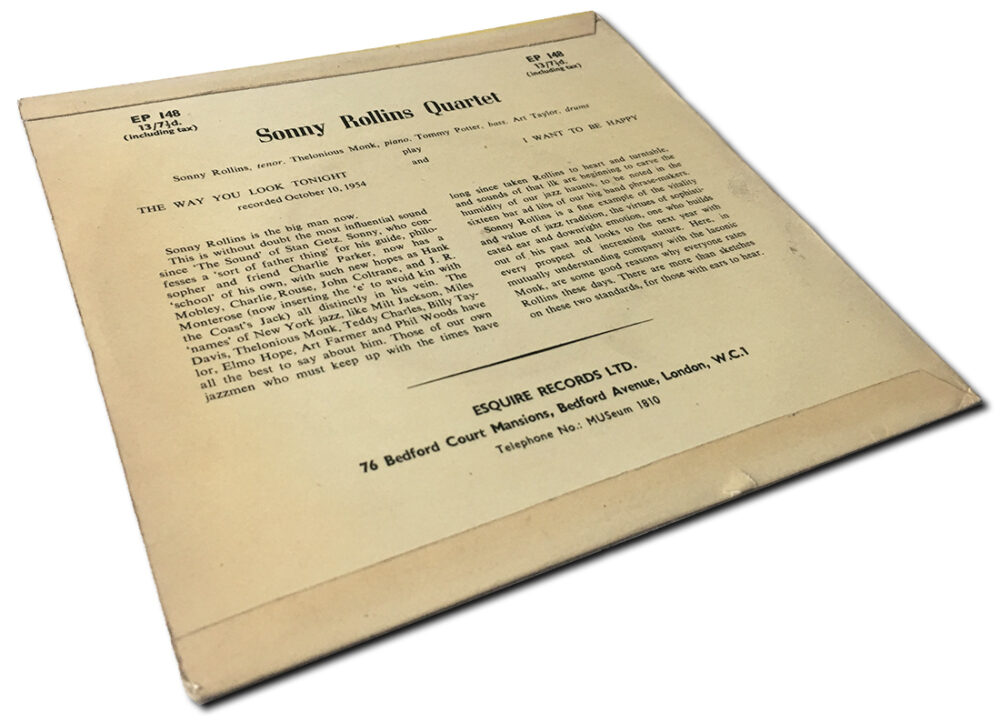
The two songs on this British extended play or “E.P.” first appeared in the U.S. most likely in late 1954 or early 1955 on Prestige catalog number 190, a ten-inch long-play featuring Sonny Rollins and Thelonious Monk. A couple years later the songs would resurface on Prestige 7075, this time a twelve-inch LP that compiled takes from three sessions Rollins and Monk collaborated on in 1953 and ’54. Unfortunately, Rudy Van Gelder is noticeably absent from the mastering process for this E.P., evidenced by the lower signal-to-noise ratio between the music and surface noise.
Prestige catalog numbers 190 and 7075 (photo of 190 courtesy of @jrock1675)
While I’m a big fan of the music and performances here, I’m not the biggest fan of the actual recording. Van Gelder did record this session, though it was recorded during a period in which he seems to have been fascinated with a shiny new toy, a spring reverberation unit. The result is a Rollins unfavorably drenched in artificial-sounding reflections. The truth is it takes away from my enjoyment of the recording a little, but the performances surely make up for it. I enjoy Monk’s especially heavy-handed comping on “I Want to Be Happy”, and I’ve always liked the melody of Jerome Kern’s “The Way You Look Tonight”, where we find Monk a bit tamer behind Rollins.
Lastly, if it makes sense to call any album covers “sexy”, surely this is one of them. The eye-popping contrast of bold yellow with cream and the cover’s deep black typography demands your attention. Esquire, you have done it again with absolutely killer cover design…hats off.
Recorded May 11, 1954 at Van Gelder Studio, Hackensack, New Jersey
Originally released August 1954
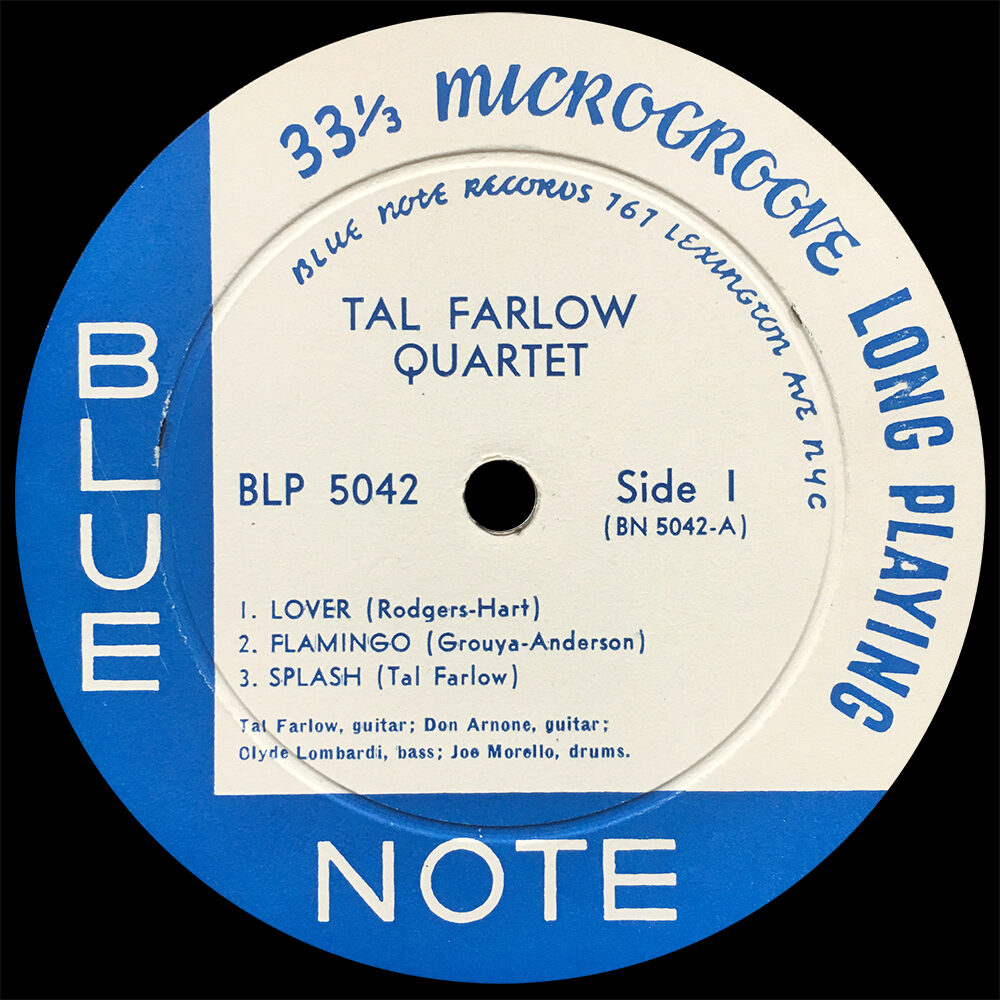
1
Lover
2
Flamingo
3
Splash
4
Rock ‘n’ Rye
5
All Through the Night
6
Tina
Selection:
“Rock ‘N’ Rye” (Farlow)
For Collectors
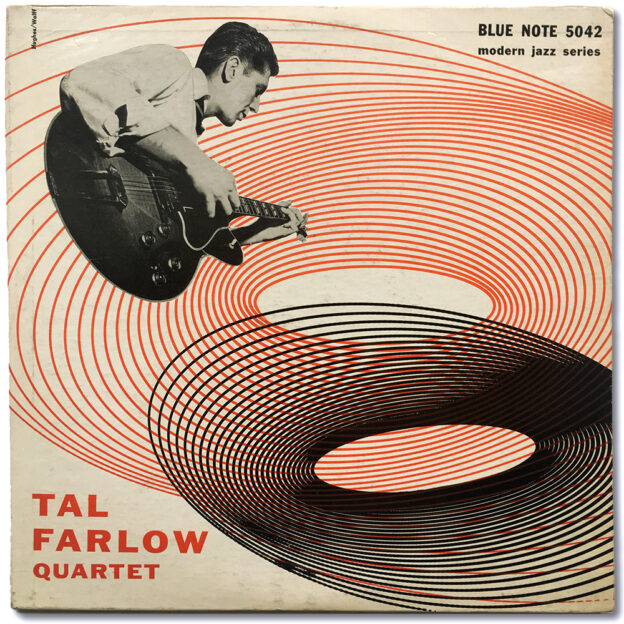
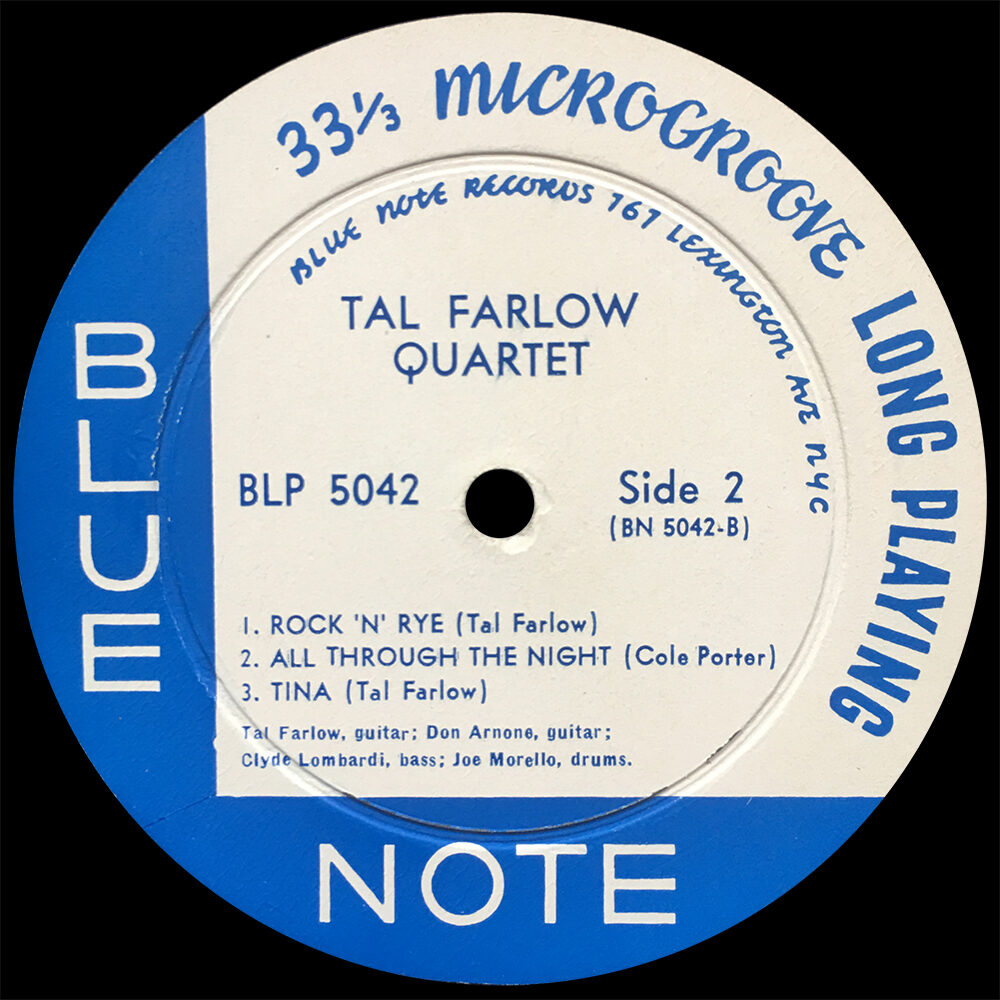
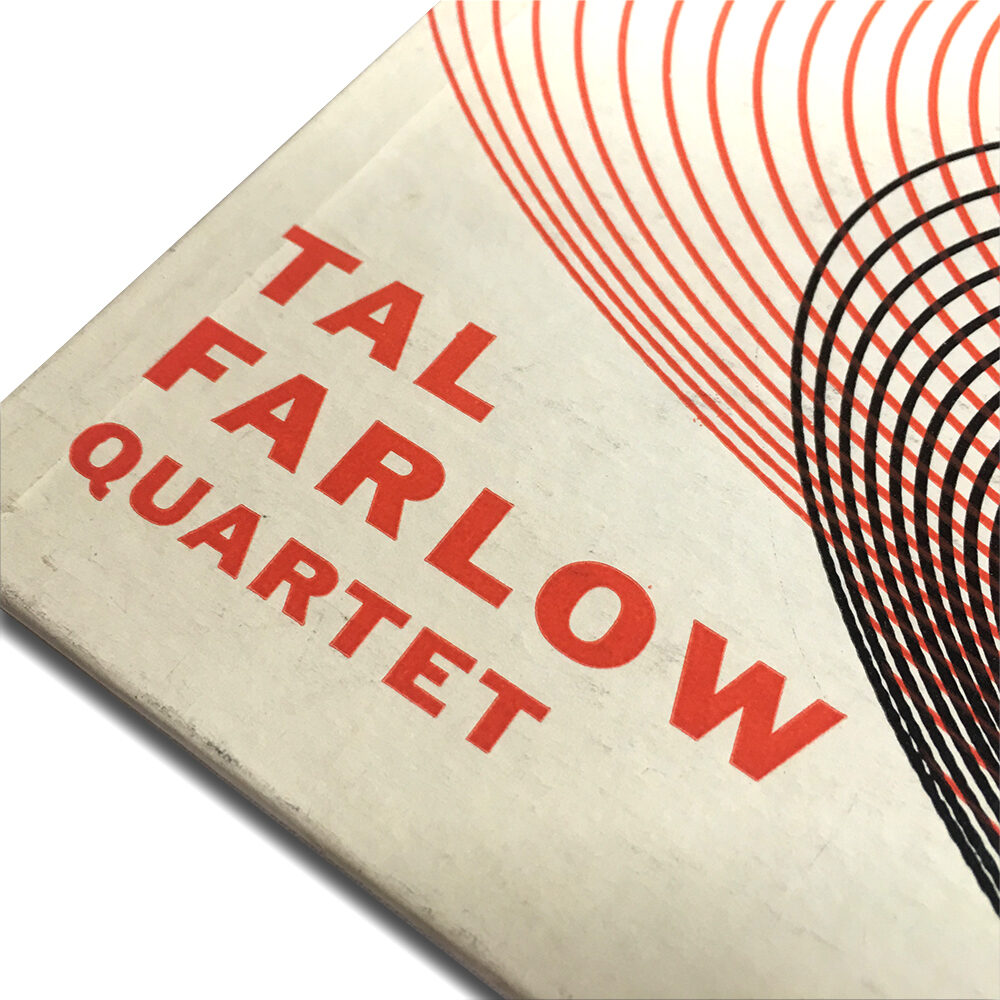
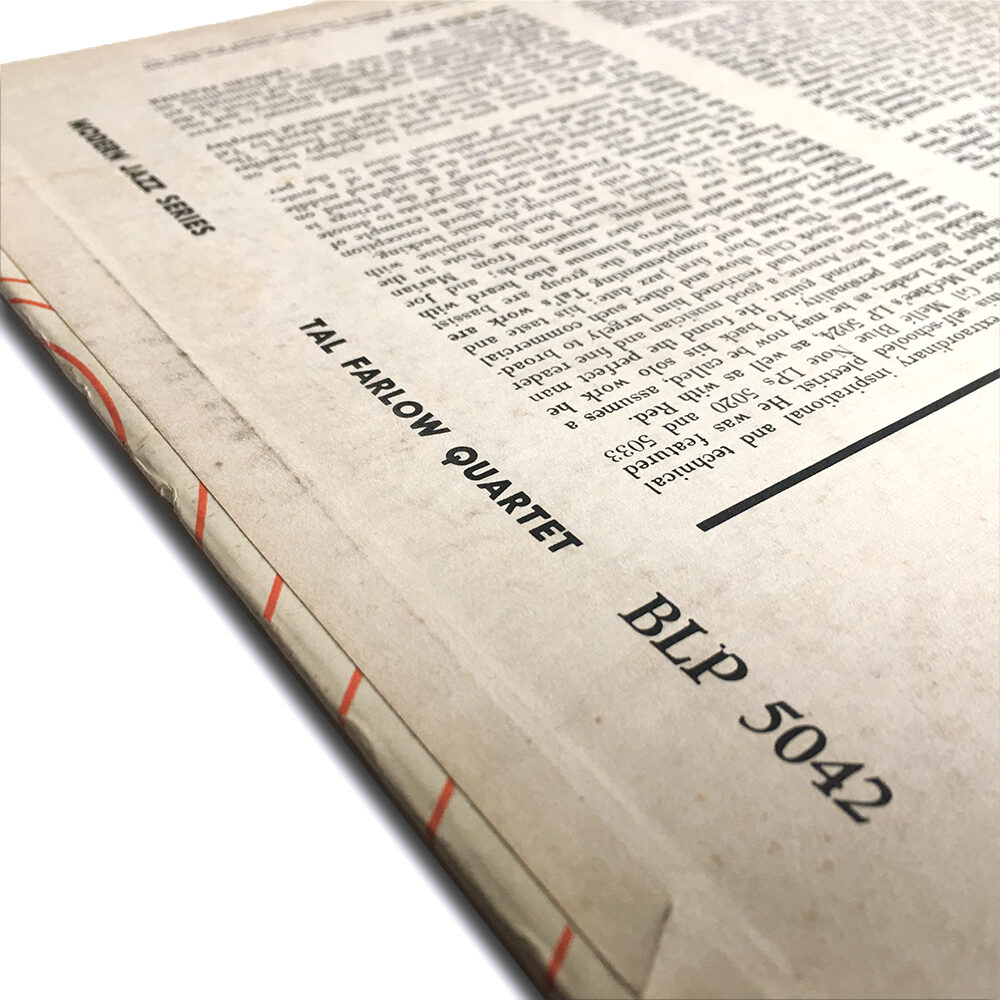
I don’t exactly remember what piqued my interest in this LP. I think it started when I came across a copy of Gil Melle Quintet, Volume 2. Tal Farlow is on that LP. I also think I was just getting into ten-inch LPs and Rudy Van Gelder’s earliest Hackensack recordings. This album is rare in any format. On Spotify there’s only one track buried in an obscure Farlow compilation, and only two tracks are readily available on YouTube. But the tracks I was able to preview sounded good so I sought the album out. White guys playing jazz guitar may have originally steered me clear of a record like this back when I was an ignorant novice collector, but I’m glad I got over my preconceptions and gave this album a chance.
I originally bid on a vinyl-only (no jacket) copy of this last summer on eBay. Though it was described EX, once I got it I only graded it strong VG. But I got such a good deal it didn’t matter (I did, however, politely share my opinion of the seller’s grading with them). Then last month, I caught the collecting bug (yet again), and in the midst of doing some virtual shopping I searched Discogs for a copy that might have a nice jacket. It turned out that the only copy for sale on there had VG vinyl and a VG+ jacket, and not only that, the seller’s store was a 20-minute bus ride away from me in Queens. So I headed out to Ridgewood that weekend and got the record at a discount. A couple weeks later I sold the vinyl from that copy to break even on what I originally paid for the first record, and universal balance had once again been restored.
I’d only grade this vinyl, the original vinyl, strong VG visually, and it has a few pops here and there but nothing repetitive so it is indeed a very strong VG; playback is VG+ for the most part — groove wear is rarer on records like these with quieter arrangements — and I’m very happy to have this record for the price I paid.
For Music Lovers
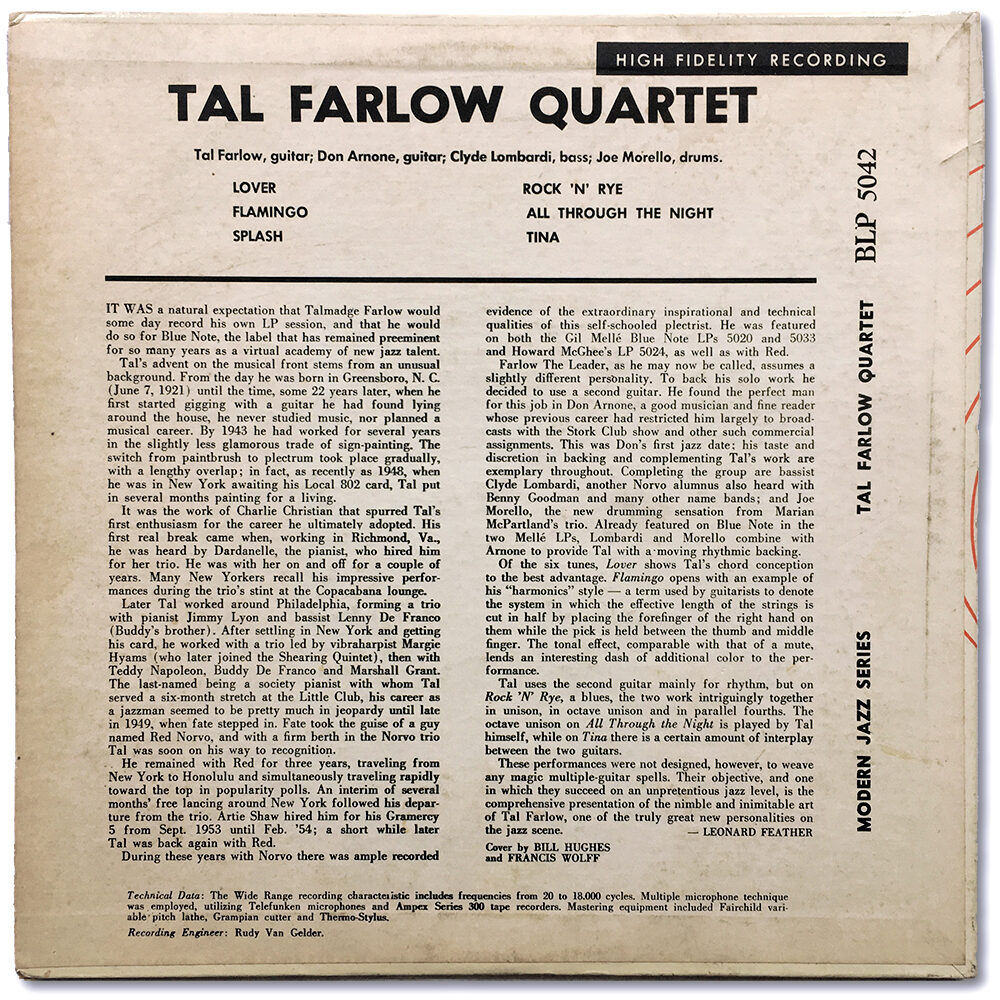
This is a gorgeous early Hackensack living room recording from April 1954, and additionally a unique quartet combo of two guitars, bass, and drums. It is also one of those rare records that I genuinely enjoy listening to from start to finish. The Farlow compositions (“Splash”, “Rock ‘N’ Rye”, “Tina”) are buoyant bits of songwriting. “Rock ‘N’ Rye” listens like a jazz song with a hook, and employs fun use of artificial reverb at the end to make it sound like Farlow and co-guitarist Don Amone are retreating to a cave to jam the night away whilst never abandoning their instruments. “Flamingo”, the record’s ballad, is a sweet tune where Farlow puts his virtuous playing down for a take, opting for some pretty, minimalist plucking. The album is cool and quiet but manages to remain generally upbeat and thus makes for good listening in a multitude of settings.
If you’re interested in owning a copy, a relatively rare United Artists ten-inch pressing from the ‘70s exists. Perhaps it will be a bit easier to acquire one of the Japanese Toshiba reissues from the ‘90s, either the twelve-inch or ten-inch version. Japan also reissued the album on CD. Unfortunately, my understanding is that all of these reissues embody some measure of master tape issues, but options are obviously limited to listen to this great music.
All tracks except “Half Nelson” recorded May 11, 1956
“Half Nelson” recorded October 26, 1956
All tracks recorded at Van Gelder Studio, Hackensack, New Jersey
Originally released December 1959
1
It Never Entered My Mind
2
Four
3
In Your Own Sweet Way
4
The Theme [Take 1]
5
Trane’s Blues
6
Ahmad’s Blues
7
Half Nelson
8
The Theme [Take 2]
Selections:
“It Never Entered My Mind” (Rodgers-Hart)
“Four” (Davis)
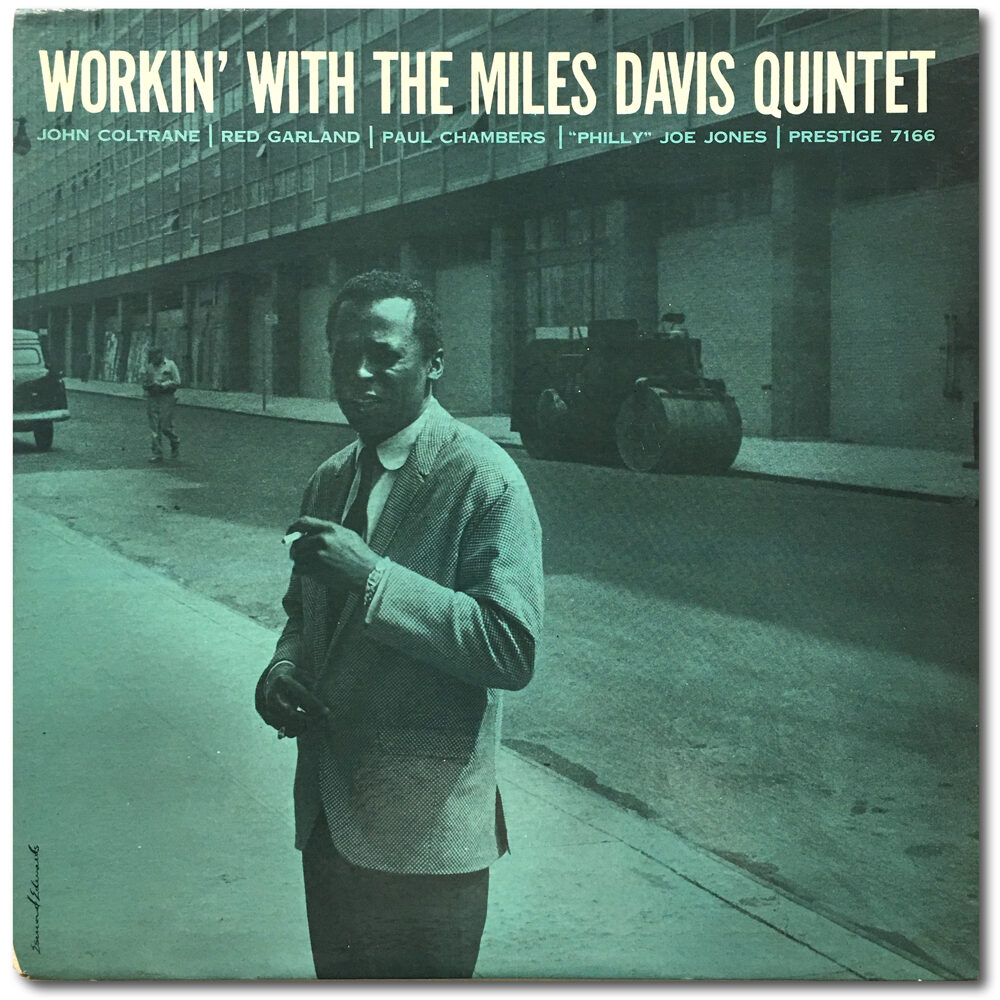
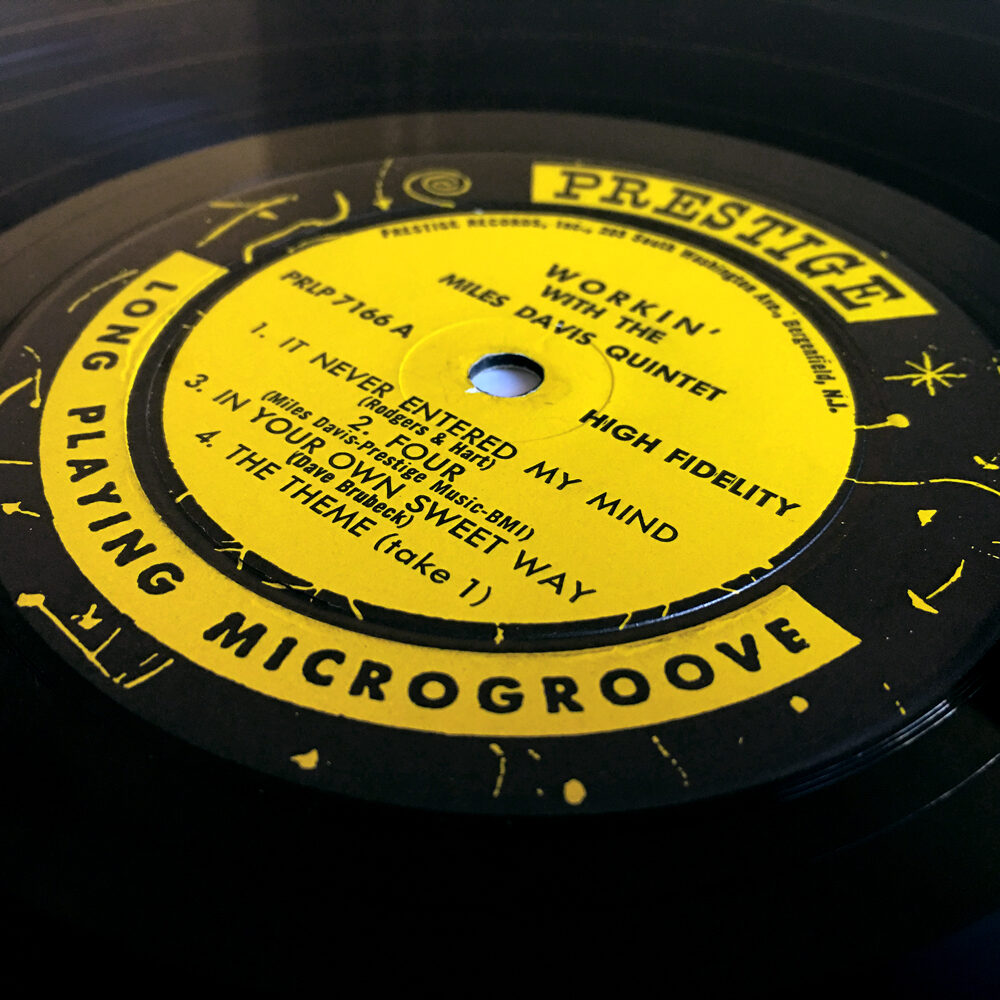
This hobby is all about patience. Several years back, a friend of mine who is almost exclusively a collector of rock and disco twelve-inches randomly scored an EX original pressing of this album for 30 bucks at a shop in Troy, New York, just a 15-minute drive up the Hudson from my native Albany. Try as I have to pry it from his hands over the years, he’s never budged. A pinch of jealousy toward his steal may have then influenced me in the coming years to pass up countless copies of this album that I felt weren’t the right combination of condition and price (I don’t think I’ve ever seen a copy of this album for $30 in any condition). Recently I finally found a VG+ copy that, while priced over double what my friend paid, was still fair nonetheless. Upon previewing playback at the store, I found a passage of very light ticks in one spot, but after running the record through my Spin Clean, I was astonished to find that the ticks went away. (As much as I adore the Spin Clean, this was a first!)
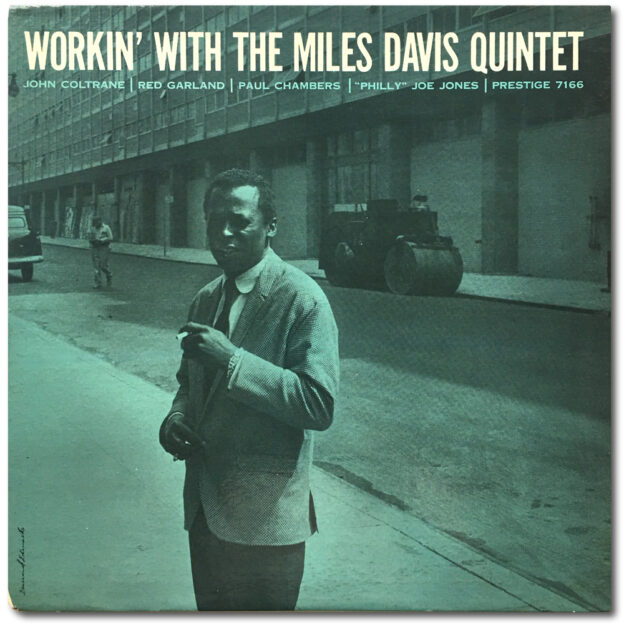
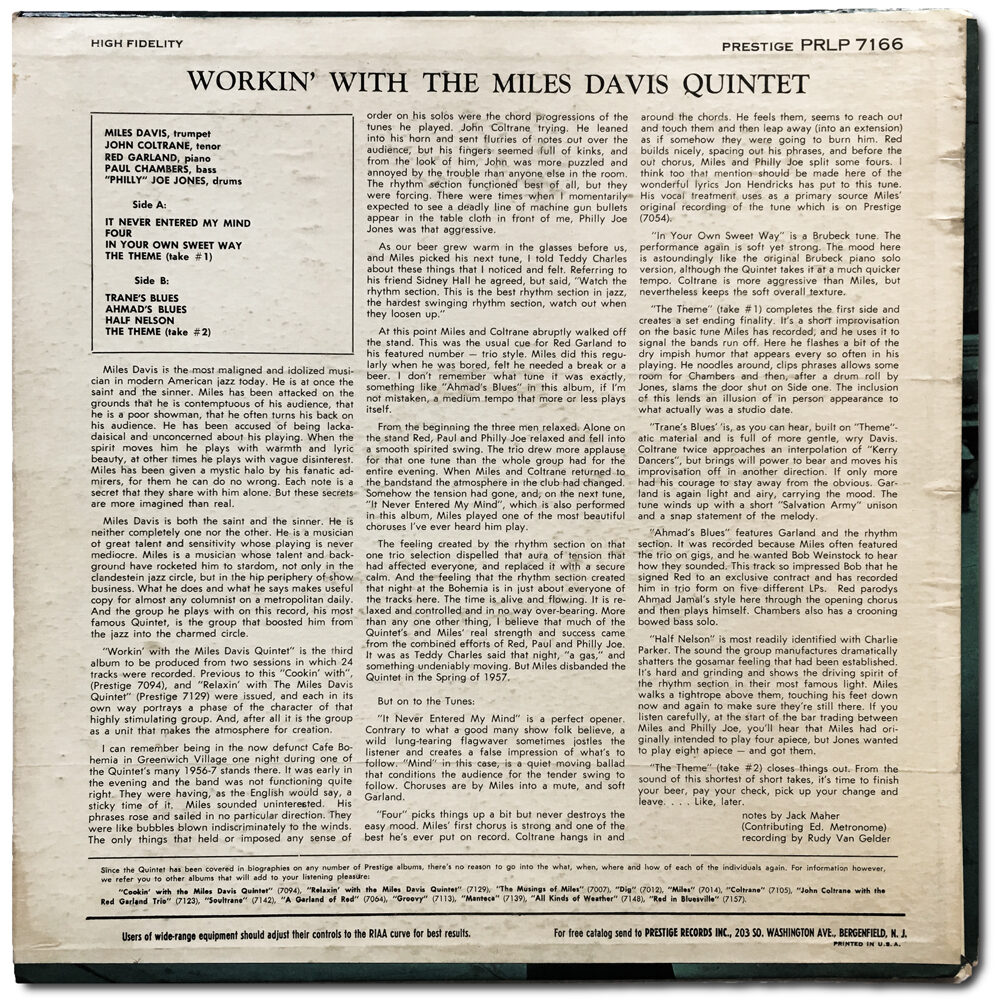
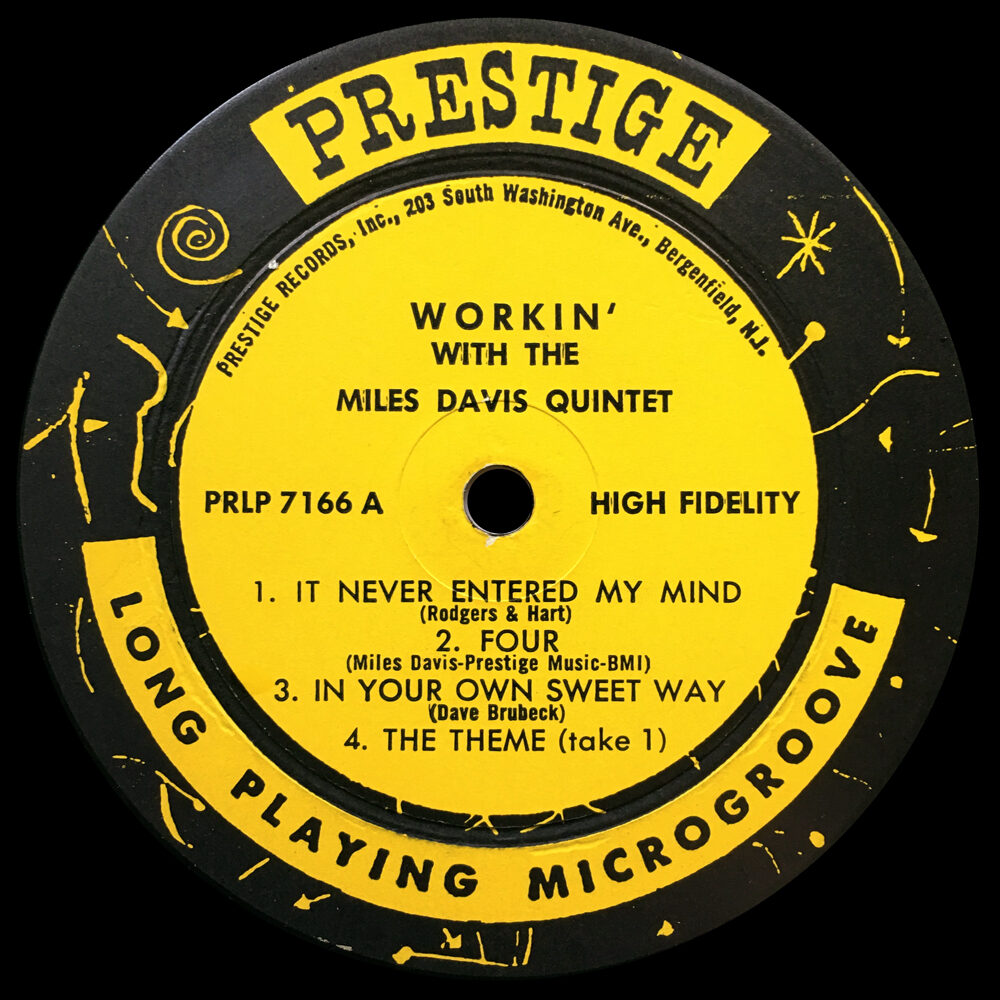
Being one of four legendary albums Miles and company recorded for Prestige in 1956 in order to quickly fulfill his contract with the label before moving over to Columbia, this copy of Workin’ now complements my copy of Cookin’ (Relaxin’ and Steamin’ I can take or leave). These recordings represent a “sweet spot” in engineer Rudy Van Gelder’s tenure at his Hackensack, New Jersey home recording studio: lifelike mono sound that creates a natural sense of space with instruments balanced to perfection. “It Never Entered My Mind”, a patented, gorgeous Miles ballad complete with the sweet sounds of the leader’s muted trumpet, will perk up the ears of just about any music lover (my rock-and-disco-collecting friend included), and “Four” has all the ingredients of a hard bop classic. As with Cookin’, Philly Joe Jones’ drums sound incredibly natural at times and thunderous at others, and I don’t think I’ll ever grow tired of the more structured style of improvisation John Coltrane sported in 1956. This combination of world-class musicianship paired with a charming, minimalist monophonic presentation firmly places these sessions near the top of my list of favorites.