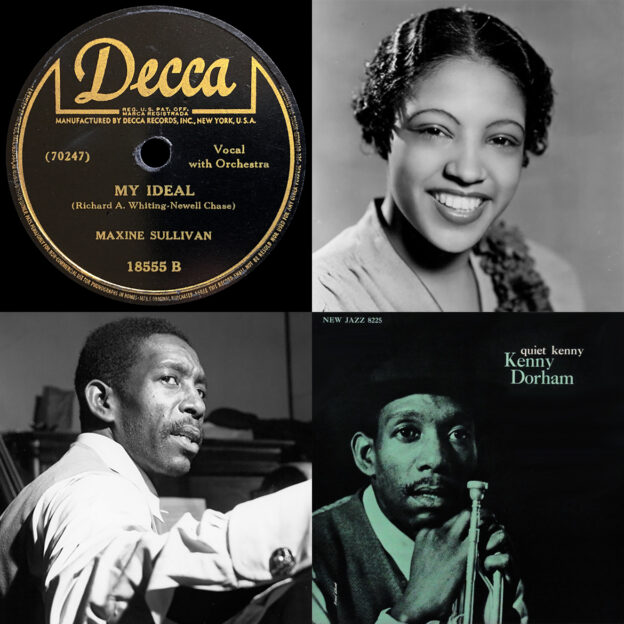
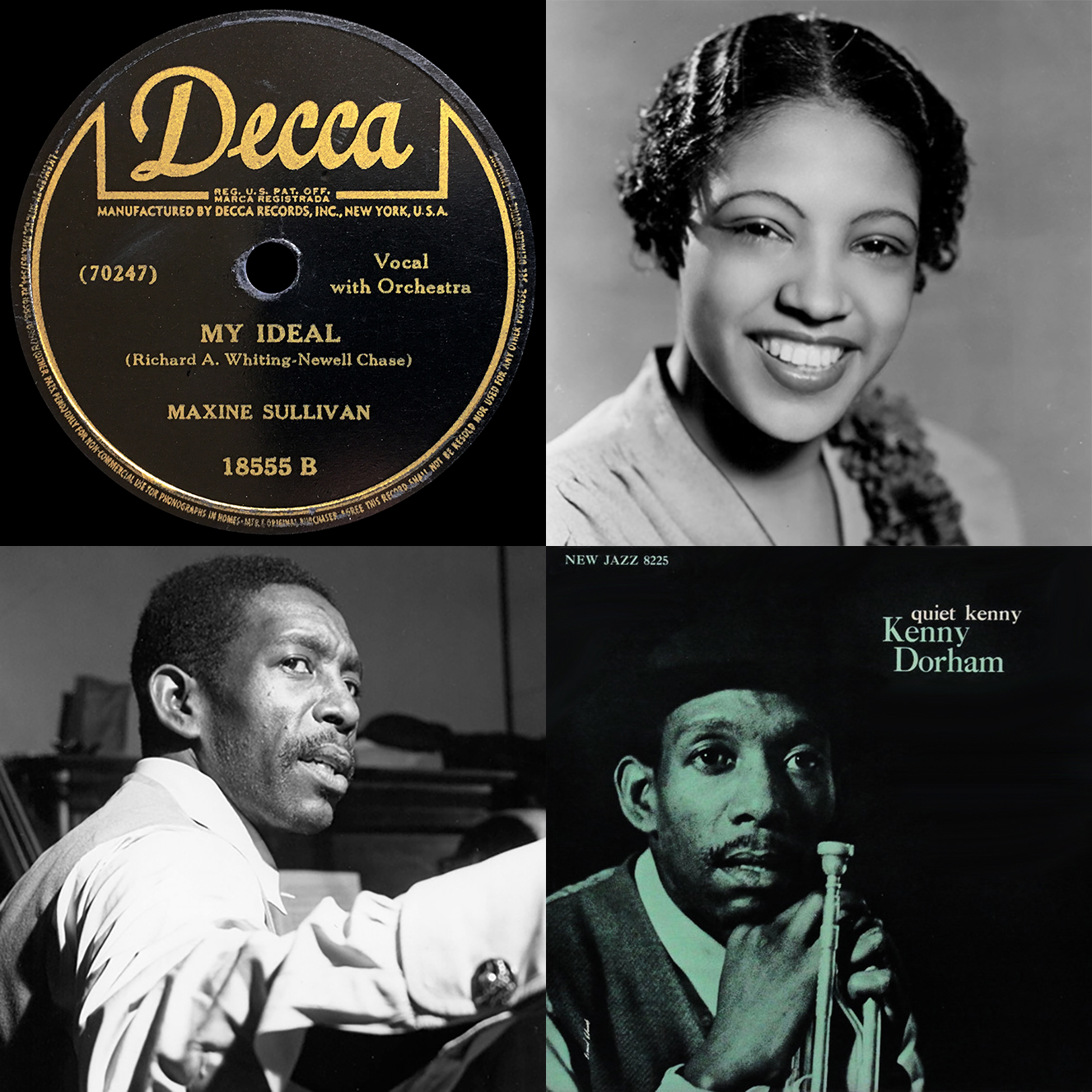
Kenny Dorham, “My Ideal” (Original Jazz Classics LP Reissue)
New Jazz Records Cat. No. 8225 | 1959
Personnel:
Kenny Dorham, trumpet
Tommy Flanagan, piano
Paul Chambers, bass
Art Taylor, drums
I’ve been noticing some buzz on the internet about an up-and-coming mono reissuing of Kenny Dorham’s Quiet Kenny by the Craft label, so I thought I’d feature a track off that album for this edition of Origins of Bop. “My Ideal” dates back to 1930, the year of both its publishing and premier on the silver screen. Playboy of Paris starred Maurice Chevalier, who was also the first to record the song.
After several years of laying commercially dormant, Maxine Sullivan decided to give “My Ideal” a fresh reading. Gone are Chevalier’s humorous French accent, masculine perspective, “B” section, and half-spoken delivery of the final verse. With Buster Bailey’s clarinet taking the instrumental lead, Sullivan’s version is the first to feature a jazz arrangement. Sullivan was 32 at the time of recording but the innocence of her voice suggests a teenage girl waiting for a fantasized heartthrob to make her acquaintance on the way home from school.
Coleman Hawkins followed soon after with his own instrumental version, which retained the structure of Sullivan’s. Over a decade later, Chet Baker tried the tune on in 1956, brining back the “B” section while moving it to the beginning, and two years later Earl Coleman would mimic the Baker arrangement on Sonny Rollins’ Tour de Force album.
A word about the popular music form: It has always seemed like “real music lovers” kind of shun popular music. I’m not one of them. I love pop music. I love it for its simplicity. You get that with Sullivan’s version. Her lyrical inflections are hardly adventurous yet they easily keep my interest. The humility of her straight-down-the-middle interpretation is also admirable. Baker takes a few steps away from that, swinging to-and-fro with syllables rarely falling on-beat. Then Coleman and Rollins wreak havoc on this pretty love song, mangling it to the point of near-unidentifiability.
Is the ease of pop such a sin? These are my opinions, after all, but to me Coleman’s version is the epitome of trying too hard to make things interesting. (Fans of Rollins might guess, like me, that his atypical stylings here are meant to appease Coleman.) Surely I don’t understand the fundamental conception of most jazz vocalists, as numerous legends seem to “jazz things up” in this manner: Johnny Hartman, Sarah Vaughan, Helen Merrill, Sheila Jordan, Cassandra Wilson. Give me Ella or Blossom Dearie and I’m a happy camper.
Thank heavens for Kenny Dorham restoring some order to the universe in 1959 with his version, which, like Hawkins’, is executed in the spirt of Sullivan’s. Dorham’s heartwarming, muffled tone is reminiscent of Baker’s, yet I have always found Kenny to have a unique and understated musical persona that is perfectly complemented by this type of tone. From his sweet playing alone I had originally and erroneously assumed that this song was dedicated by its authors (Newell Chase, Richard A. Whiting, and Leo Robin) to their respective lovers. Yet the lyrics reveal a hopeful story of longing for a partner unknown.
Dorham’s version is a favorite ballad of mine and I’m glad it led me to discover Maxine Sullivan. There’s plenty more Origins of Bop posts to come so please stay tuned.
Welcome to Origins of Bop, a new Deep Groove Mono series aiming to explore the lineage of some of my favorite hard bop recordings. I have always been interested in music history, and with jazz, that has meant finding out more about where my favorite compositions came from. This series is therefore intended to provide some backstory for many of the hard bop performances that we as collectors of twelve-inch vinyl LPs have come to love so much. Quite often, these songs date back to the 78-R.P.M. era of shellac disks, and in many cases I will be happy to feature 78s from my own collection.
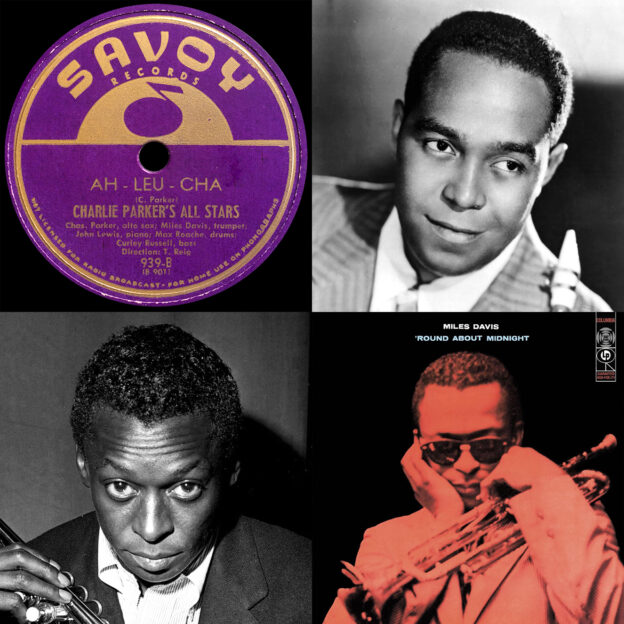
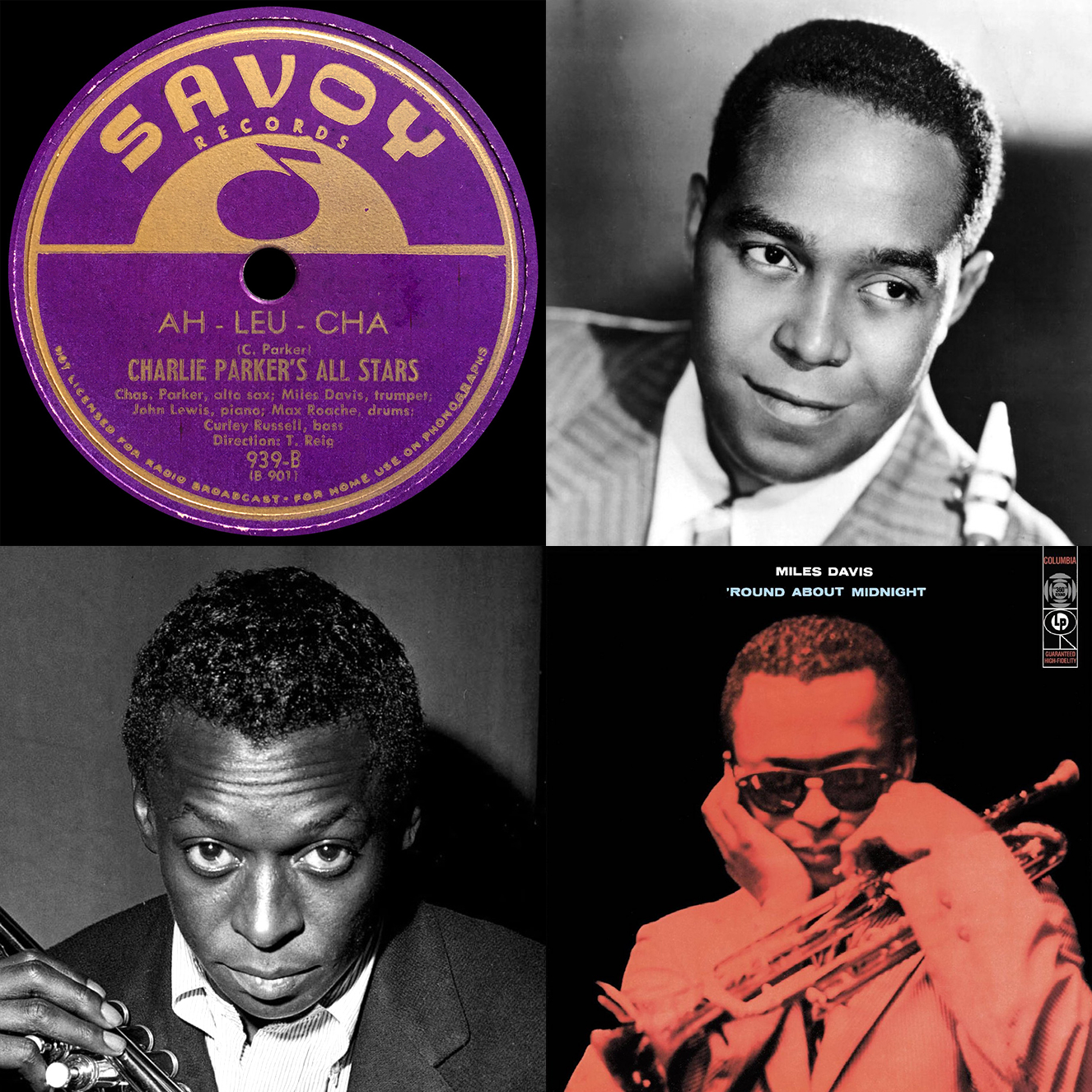
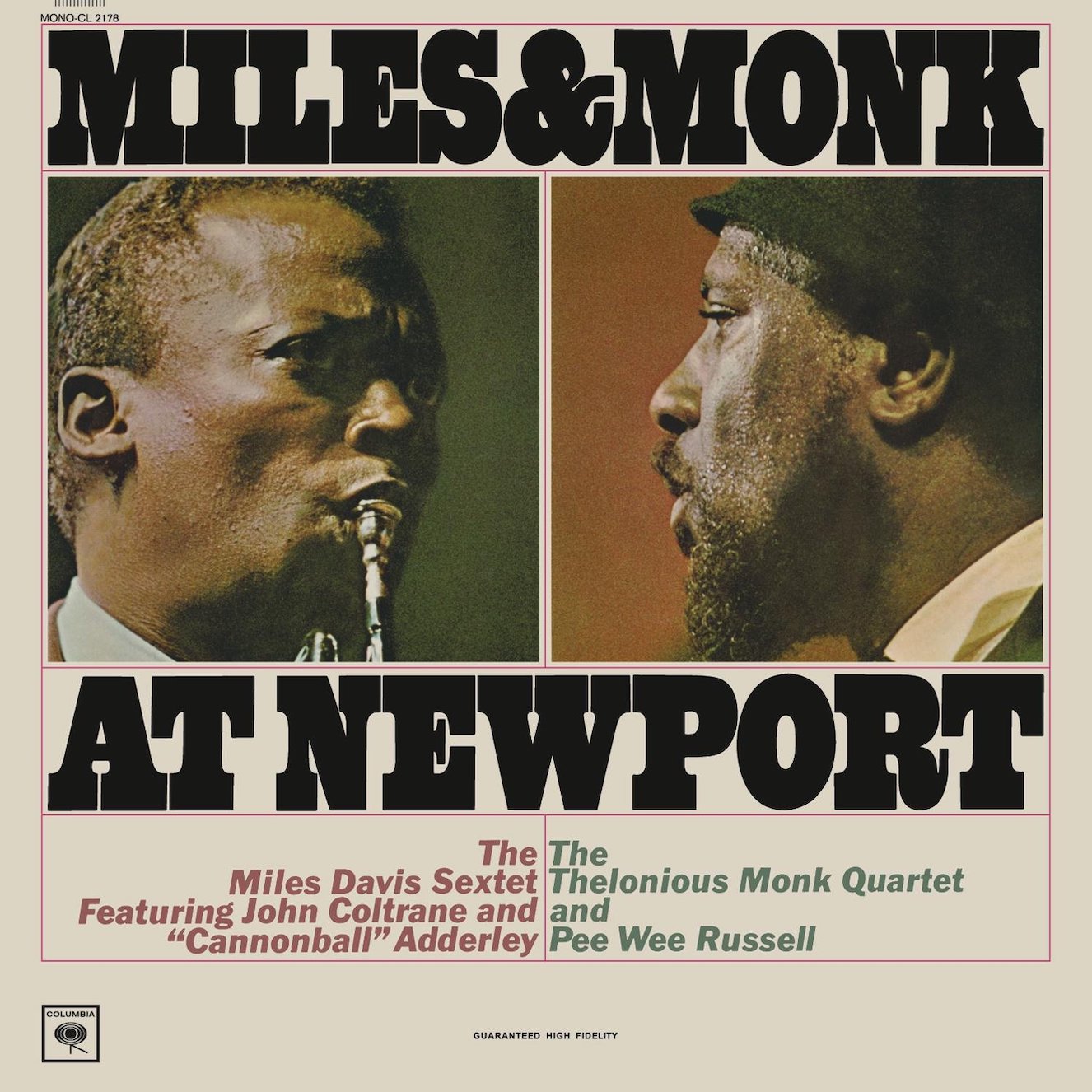
This first installment features a tune composed by one of the founding fathers of bebop. I was introduced to Charlie Parker’s “Ah-Leu-Cha” back in 2001 through the first jazz LP I ever bought: Miles & Monk at Newport. One rainy afternoon in Albany, New York I had a break between my college classes, so I decided to hop in my car and venture downtown to Last Vestige, a local record shop. With a musical background largely focused on hip hop and rock at the time, my experience with jazz was limited. All I had was a cassette tape from a friend with Kind of Blue on one side and My Favorite Things on the other. But as a DJ, I had been seeing lots of cool covers for jazz albums popping up on the Turntable Lab website, and I had recently gotten interested in Madlib’s new electronic jazz project, Yesterday’s New Quintet. I was also DJing with an R&B cover band, and I befriended the group’s saxophonist, who was a locally-renowned jazz musician and composer.
My first-ever jazz vinyl purchase
This all had an influence on me when I decided to check out the jazz section of that shop for the first time. The copy of Miles & Monk I found was a stereo ‘70s reissue, it costed six dollars, and I pretty much bought it solely on the strength that I had heard of both leaders before. Side 1 was the Miles side. “Ah-Leu-Cha” was the first track, and it wasted no time ripping my face off. Miles liked to play fast live, and this Newport Festival reading was taken at a blistering pace, nearly twice as fast as Parker’s original 1948 recording, which by no coincidence also featured Davis. If I’m being honest, I remember wondering if I would even like jazz if this was what most jazz sounded like! Today I love that recording for its tenacity, high fidelity, and airtight performances. But back then, knowing nothing about jazz and being quite unfamiliar with such high levels of musicianship, I felt utterly confused.
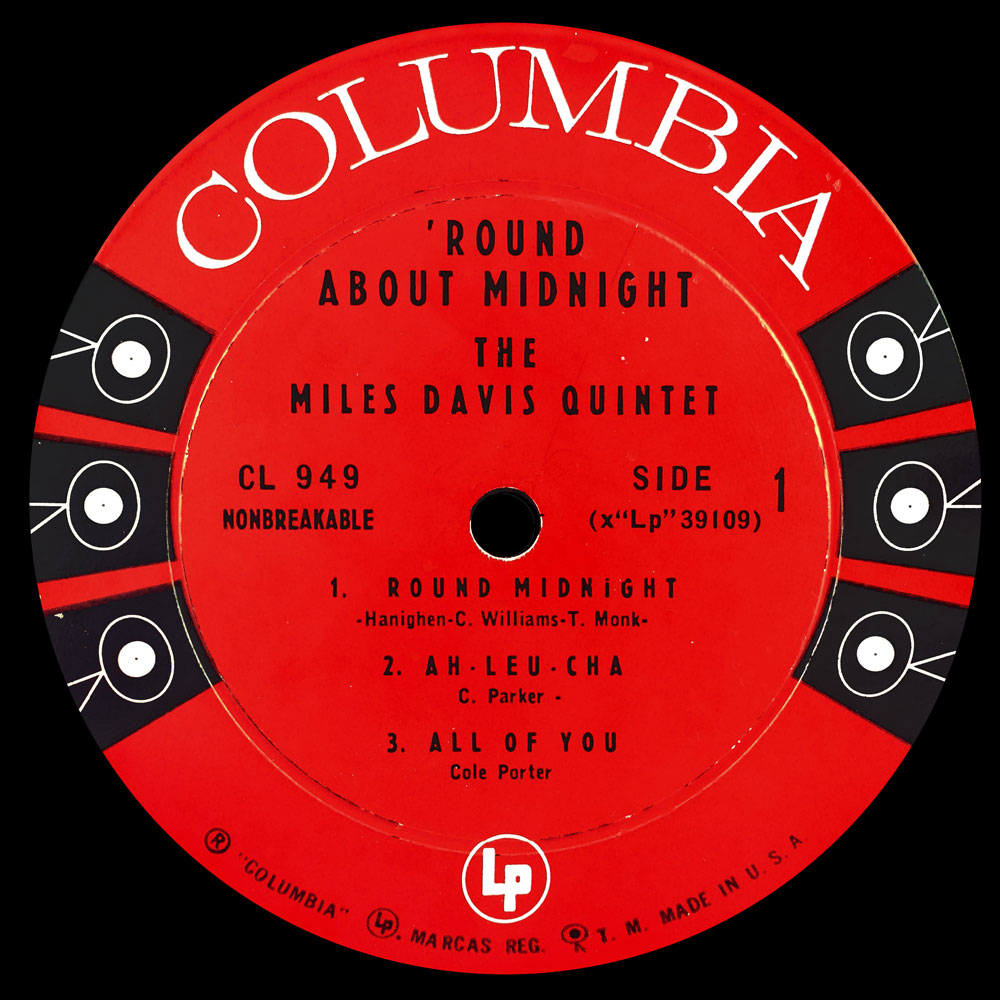
Many years later when I discovered Davis’ classic ‘Round About Midnight, I was pleasantly surprised to find a slower, more accessible version of “Ah-Leu-Cha”. It was recorded three years before the Newport date in 1955 and features Miles’ First Great Quintet. Philly Joe Jones sounds snappy, his patented loose-wrist cymbal work creating an inimitable groove for each soloist to work with. The exceptional fidelity of this recording needs to be noted as well.
Side 1 label for CL 949
Prior to reviewing ‘Round About Midnight for my blog several years ago, I had never noticed Parker as the composer of “Ah-Leu-Cha”, and when I listened to Bird’s version for the first time I was caught off-guard by its syrupy tempo. Recorded for Savoy Records at Apex Studios in New York City (mentioned last week in a blog post here), engineer Harry Smith set the rhythm section back a ways behind a very present front line. This was a standard mixing aesthetic in the 1940s, and it makes jazz recordings from that period unmistakably of-the-era. Max Roach could tear it up like no one else in 1948, but he’s much tamer here. Peppering the backbeat with gentle fills throughout, the drummer manages to quickly trade two half-bar solos with bassist Curley Russell before the track’s closing. As a composition, the counterpoint of Bird and Miles creates exciting harmonic motion that makes my ears smile every time I hear it.
Recorded September 11 and September 24, 1929 in New York City
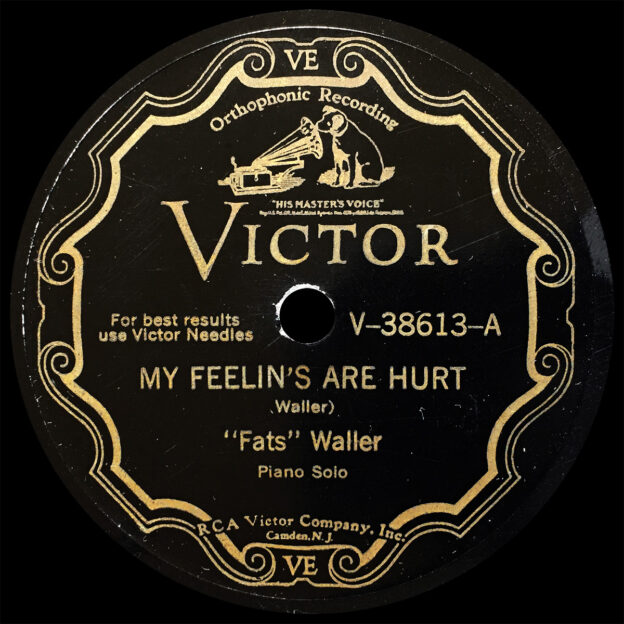
Selection: “My Feelin’s Are Hurt” (Waller)
While I still haven’t delved all too deeply into ‘pre-bop’ jazz, I managed to find another great 78 from that era. For a stretch in 2019 I was accustomed to seeing the silly grin on Fats Waller’s pudgy face regularly while volunteering at the National Jazz Museum in Harlem. Footage of Waller performing was part of a video on loop there, and I was regularly reminded what a natural entertainer he was.
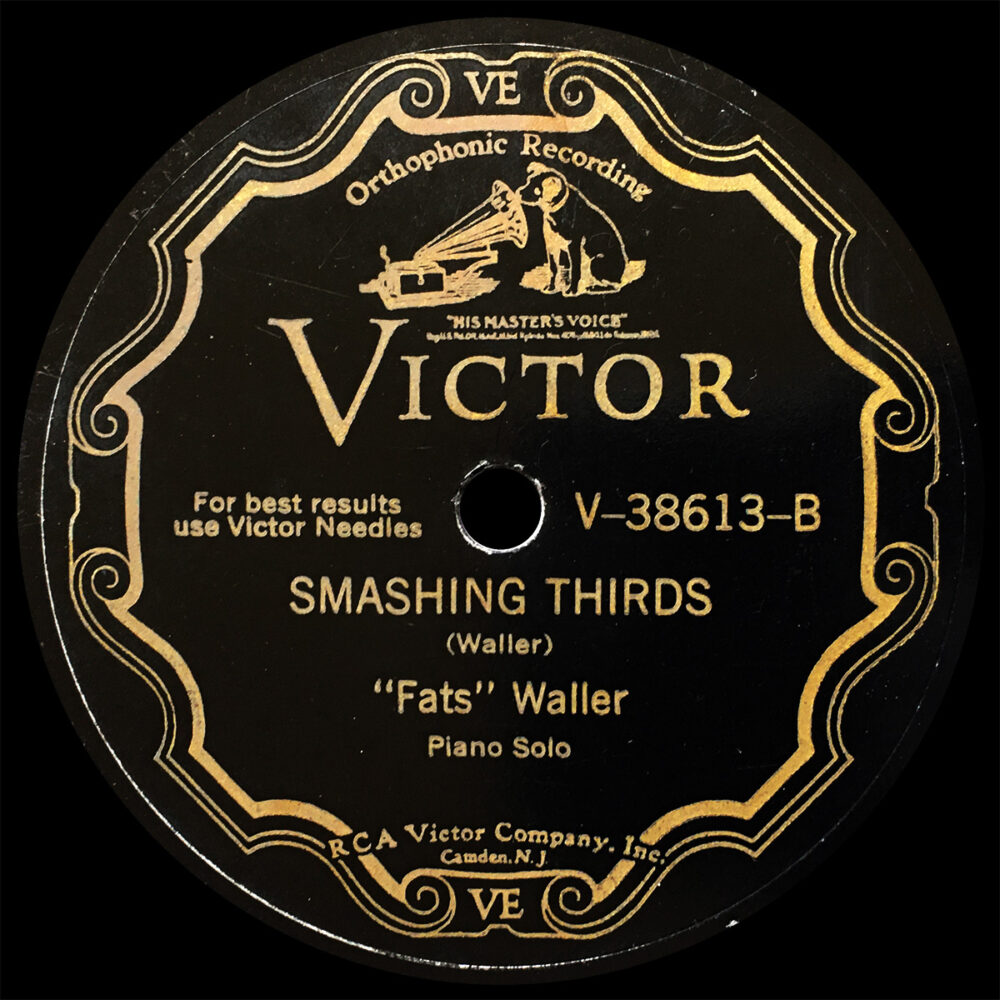
It was enough to make this “serious” jazz fan (who sometimes takes himself too seriously) avoid Waller’s records whenever they came up. But trying to be more open-minded about older jazz, I figured I would give Fats a chance if I could find an instrumental record of his. Then I found this. Despite knowing how influential all the stride pianists were on my favorite bop pianists including Thelonious Monk, I’m still not decided on how I feel about boogie/stride piano numbers like “Smashing Thirds”, the B-side here (pretty awesome title, though). For this 78, it was the “A” that caught my attention.
The first thing that stood out about “My Feelin’s Are Hurt” was that it is not an uptempo stride tune. More of a brisk walk, it reminds me of Monk’s tendency to avoid faster paces. Fats starts the tune off by playing with numerous ideas and finally settles on a rhythmic romp halfway through the side. Like the Louis Armstrong sides I reviewed recently, his super-steady playing here makes me move every time. Toward the end Waller breaks out into stride for a brief spell, then slows things back down to return home with a beautiful cadence.
For many collectors including myself, exclusivity ultimately plays a role in the extent to which a particular record is desired. Very rarely is a recording unavailable via streaming services like Spotify and Apple Music. That being the case for the A-side here, don’t say I never did anything for you. This is a fun tune you’re not gonna hear anywhere else on internet, so enjoy and I’ll see you for the next installment of Shellac Spotlight!
Recorded May 7 and May 10, 1927 at Okeh Studios, Chicago
Selections:
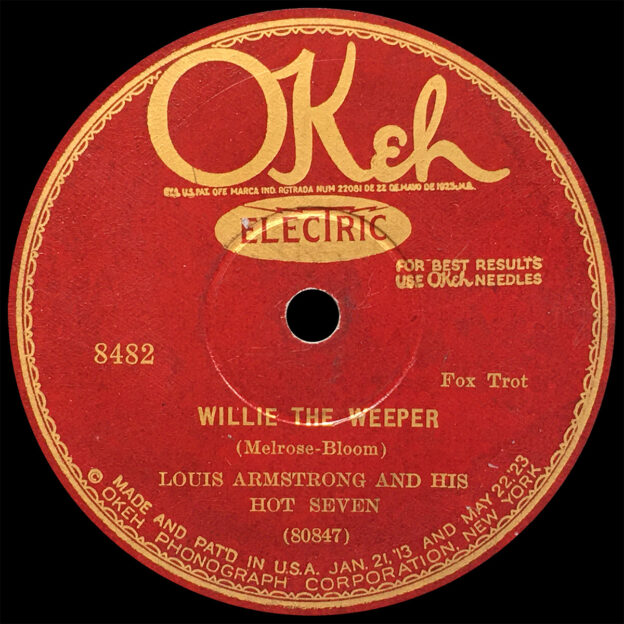
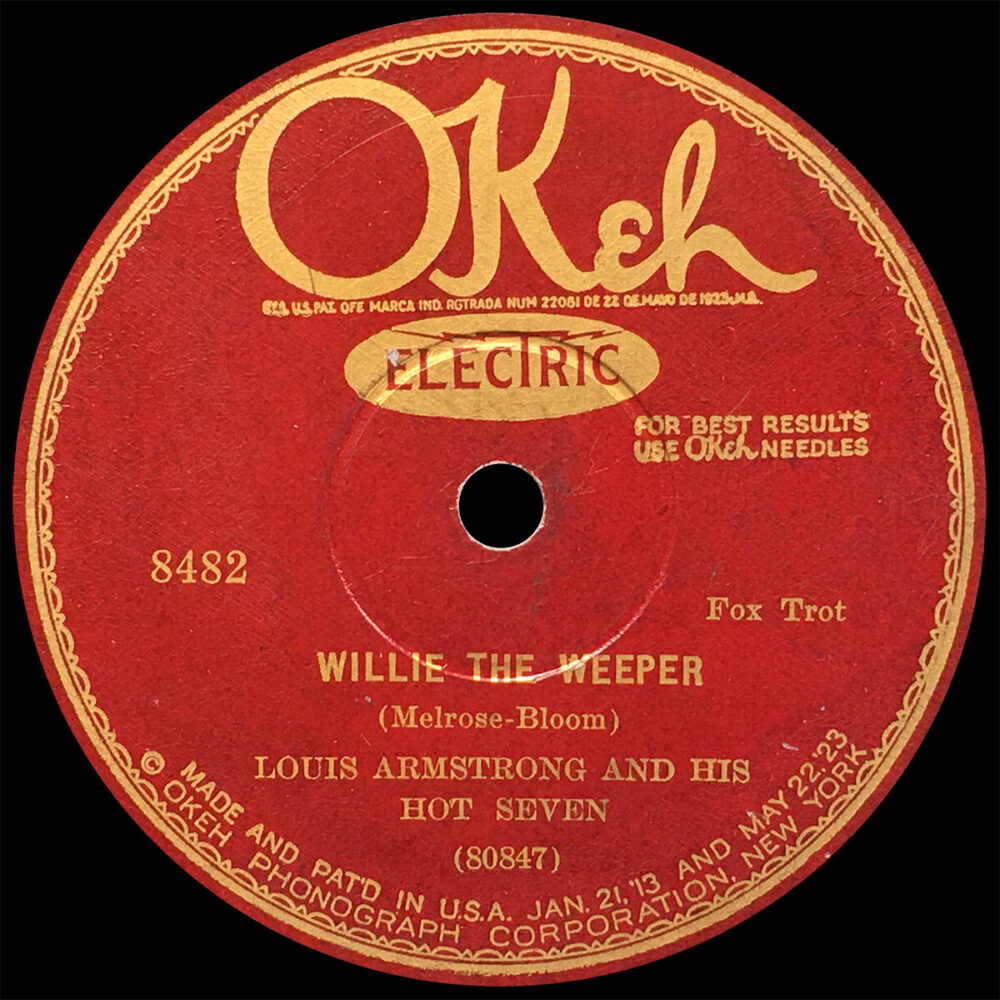
“Willie the Weeper” (Melrose-Bloom)
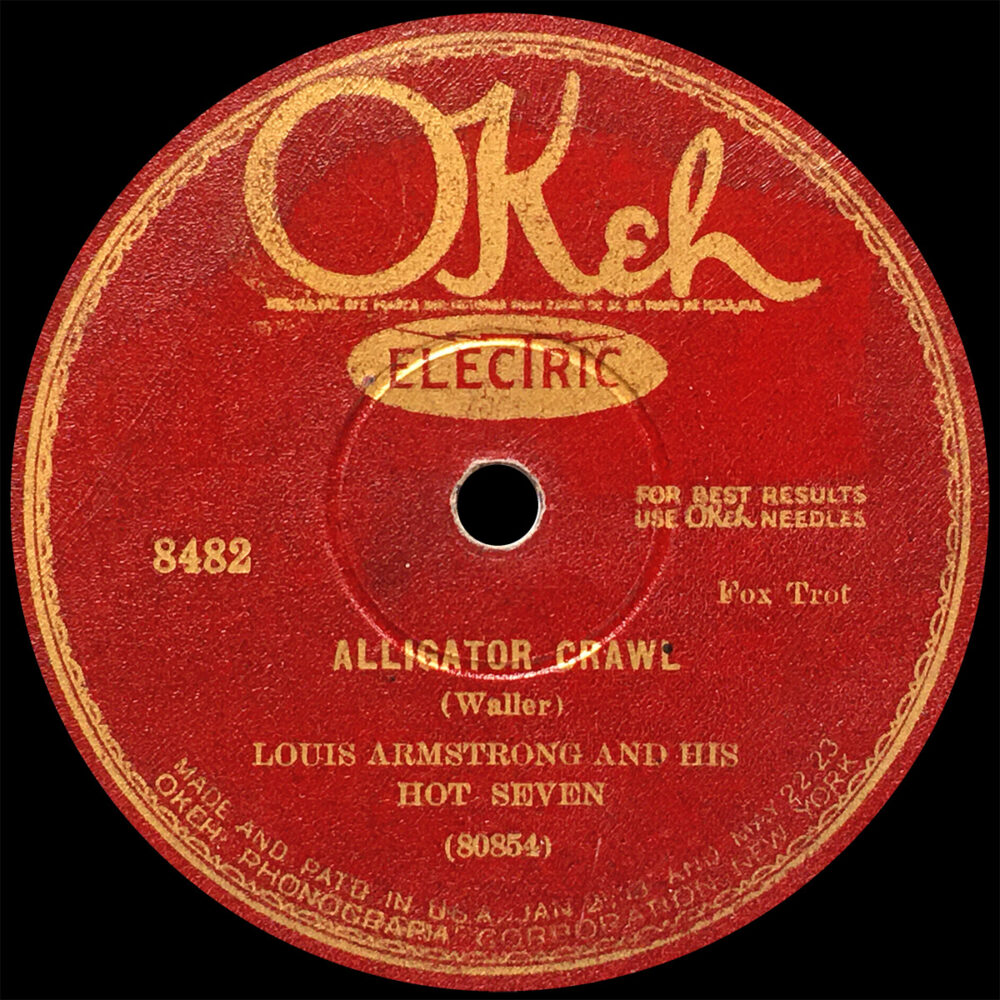
“Alligator Crawl” (Waller)
So far, Deep Groove Mono’s coverage of 78s has been limited to the very first 78 I ever acquired and the Dual idler wheel turntable I recently picked up for its popularity with 78 collectors. Since I have replaced that first 78 with a cleaner copy, abandoned the economical Califone portable featured in that post, and now prefer my modified Technics 1200 to play 78s over the Dual, this in some ways is my inaugural 78 post.
I have managed to build up a modestly-sized 78 collection over the past six months, and without trying to sound too self-congratulatory, I worked hard for it. It took a lot of research, shopping, patience, reception of packages, cleaning, critical listening, transferring, and photographing. Time for me to finally relax and enjoy the fruits of my labor.
For Jazz Historians
I have always taken an interest in the historical roots of the hard bop I cherish most. After exhausting all my resources for bebop 78s recently, I shifted gears to collecting original vocal versions of my favorite jazz standards. But jazz history is deep as the ocean, and it surely does not end with the white popular vocal artists featured on most of these earlier records. The music of colossal jazz legends like Louis Armstrong and Fats Waller was clearly a major influence on my favorite bop musicians, and even if it isn’t naturally the first music I would reach for, I still felt a drive to understand it and the way it’s connected to bop. Maybe I would develop a more genuine interest in the music from there; either way, the records those guys put out have historical value to me.
In the process of exploring “hot jazz”, I stumbled upon the Instagram page of Hot Club of New York. Founded and maintained by a young, bright WKCR alum and disciple of Phil Schaap that I only know as “Fat Cat”, his passion and enthusiasm for hot jazz is infectious, and it surely inspired me to further explore the subgenre.
Ever since I watched Ken Burns’ (somewhat controversial) Jazz documentary, I had been curious about Louis Armstrong. The thing I noticed right away about that documentary (probably true of any history of jazz) was how unanimous the interviewees seemed in their agreement that Louis Armstrong is essentially the gravitational force of creativity at the center of the jazz galaxy. More than any other figure in the music’s history, experts seem to agree that Pops is tops. For obvious reasons, this white boy born in 1980 had trouble understanding that universal sentiment, but I too wanted to share in the knowledge of Armstrong’s lasting influence on jazz.
Author Gary Giddins’ input on Satchmo made an especially strong impression on me. Giddins spoke about Armstrong’s importance with certainty and conviction. There was also a moment in which I really felt I understood just how special Louis Armstrong was. During footage of an October 21, 1933 live performance with his orchestra in Copenhagen, his immense charm and skill is on full display as he effortlessly shifts between addressing the crowd, dancing along with the music, and taking his solos with utmost poise and seriousness. Fashioning a white rag to wipe the sweat from his brow, one can’t help but remember trumpeters past like Buddy Bolden who would drape a rag over their hand to protect the secrets of their fingering from onlooking players. Witnessing Louis’ swagger then made it perfectly clear why he was far and away “the man” in his day.
For Record Collectors
Once I started researching Armstrong’s 78 catalog, it didn’t take long to realize that his Hot Five and Hot Seven recordings for Okeh in the late 1920s are considered by many to be the creme-de-la-creme. So I started listening on Spotify. Of the dozens of sides I heard, two stood out above the rest. Not only that, both were originally issued on the same 78, and even more coincidental, there was a decent copy for sale on eBay — surprising since these Louis Okeh 78s seem rare and in regular demand.
I decided to take a chance on the disk, which was graded “V” (I have learned that V for 78s is more comparable to VG- with LPs). There’s something about these really old 78s where the older the record is, the more forgiving I am of playback issues. The record proved conservatively graded, and even with some minor playback issues I decided it was worth the price of admission (my time collecting has shown me that effectively determining what does and does not constitute an “enjoyable listen” is a skill that needs developing). And I’ll be honest: these gorgeous Okeh labels and their highly-stylized typography inevitably enhance my enjoyment. Perhaps a less shallow assessment would be that records like these are pieces of history that make listening exciting in a special way.
For Music Lovers
I still have a lot to learn about the history of Louis Armstrong’s small groups, but I have managed to figure out that these are some of the earliest sides cut by the newly-formed Hot Seven in Chicago in early May 1927. Tuba and drums were added to what by modern standards seems like an odd conception of a rhythm section, which in the Hot Five consisted of a pianist and banjoist. Pops is still on cornet at this point, and while we catch the band in the middle of a one-year Kid Ory hiatus here, trombonist John Thomas succeeds at filling his shoes, and clarinetist Johnny Dodds remains faithfully flanking our leader to complete the septet’s front line.
The band comes roaring out the gate at the beginning of “Willie the Weeper”, an old Vaudeville song that saw a sort of resurgence around the time this disk was cut. For the very first moments of the take the band is in complete rhythmic unison, creating momentum that makes me nod my head every time. No doubt this is busy music. The parts individually have a beautiful simplicity but together they ensue a happy sort of chaos that is a proven hallmark of hot jazz.
I’ve heard many historians say that one of the great original contributions Armstrong made to jazz was the way he created space for soloists to make their mark on a tune. In “Willie the Weeper”, John Thomas leads off and does not disappoint. In fact, while casually perusing my Hot Five and Hot Seven playlist on Spotify, this was probably the first solo that made my ears perk up. I continue to fashion hot jazz as a little ‘silly’ sounding (regardless of how ignorant or historically invalid that opinion may be), and while I find Thomas’ solo fits this description to a tee, I find it entirely captivating at the same time.
Dodds comes in next and steals the show. A few weeks ago I had the pleasure of joining a virtual meeting of the Hot Club of New York on Zoom, at which time Fat Cat proceeded to school me on the brilliance of Johnny Dodds. With embellishments shifting at each chord change, Dodds resolves the first and second halves of his solo with a matching pair of high notes that create a most satisfying sense of cadence.
I’m not sure how typical this was of Armstrong but he lets his bandmates take the lion’s share of the spotlight here. After a brief appearance by Satch, pianist Lil Armstrong pounces through her solo and is followed by guitarist Johnny St. Cyr, who registers yet another catchy solo for the group. The leader then triumphantly returns with a chorus that is pure rhythm. Accompanied by Baby Dodds’ syncopated bashing of a choked cymbal, the two proceed to create a bouncing rhythm that makes it impossible to sit still. They are eventually rejoined for a victory lap by the rest of the band and they ride out the side together.
Things slow down on the B-side with “Alligator Crawl”. Written by Fats Waller, I wonder if Louis learned of the song back when he was playing with Fletcher Henderson in New York. Dodds opens things up and is followed by a chorus from the band. Then we finally get to hear Louis unleash over Pete Briggs’ bossy tuba and Baby Dodds’ choked cymbal, which again, along with Armstrong’s highly rhythmic sense of playing, provides motivating syncopation. St. Cyr enters jarringly just as Armstrong exits, does some strumming, and the band plays the tune out.
I’m not sure how much more Hot Five and Hot Seven stuff I’m going to collect but this disk definitely does it for me. Stay tuned, I’ll be back with another Shellac Spotlight post soon!
In my time collecting vintage jazz LPs I have always been curious about jazz from the bebop era, which for the most part was originally released on 78 R.P.M. shellac disks. Listening to digital reissues of music from artists who thrived in the 1940s like Charlie Parker, Thelonious Monk, and Lester Young was educational, but it still felt like it left something to be desired. Not only did that feeling accompany me when listening to vintage twelve-inch LP compilations of this material, I always felt that if I’m going to go back that far to get closer to the original listening experience, I might as well go all the way to the 78s — assuming I could find them.
But the prospect of studying and acquiring different, older equipment always loomed overhead, and as a result I hesitated to jump into the 78 game. Finally last year I decided to start simple, purchasing a Califone portable player and an original 1948 pressing of Thelonious Monk’s “Evonce” backed with “Off Minor”. The listening experience did not disappoint and my appetite was whet for more.
Months went by and I hadn’t given the medium much thought. I blindly bought a few 78s cheap at a record fair that were recommended by of one of the dealers, but they didn’t quite match up with my taste. I bought another Monk 78 online but returned it for groove wear issues. But then a couple months ago, frustrated with the trendiness and high cost of collecting vintage jazz LPs, I got inspired to purchase a handful of jazz 78s. For the most part this batch of shellac disks sounded great but the Califone was having some trouble tracking a couple of them. Noticing that the grooves of these records were extremely clean led me to hypothesize that the Califone may have had some unique troubles tracking 78s that were either cut hot or cut with a lot of bass.
Upgrading to an Actual Turntable
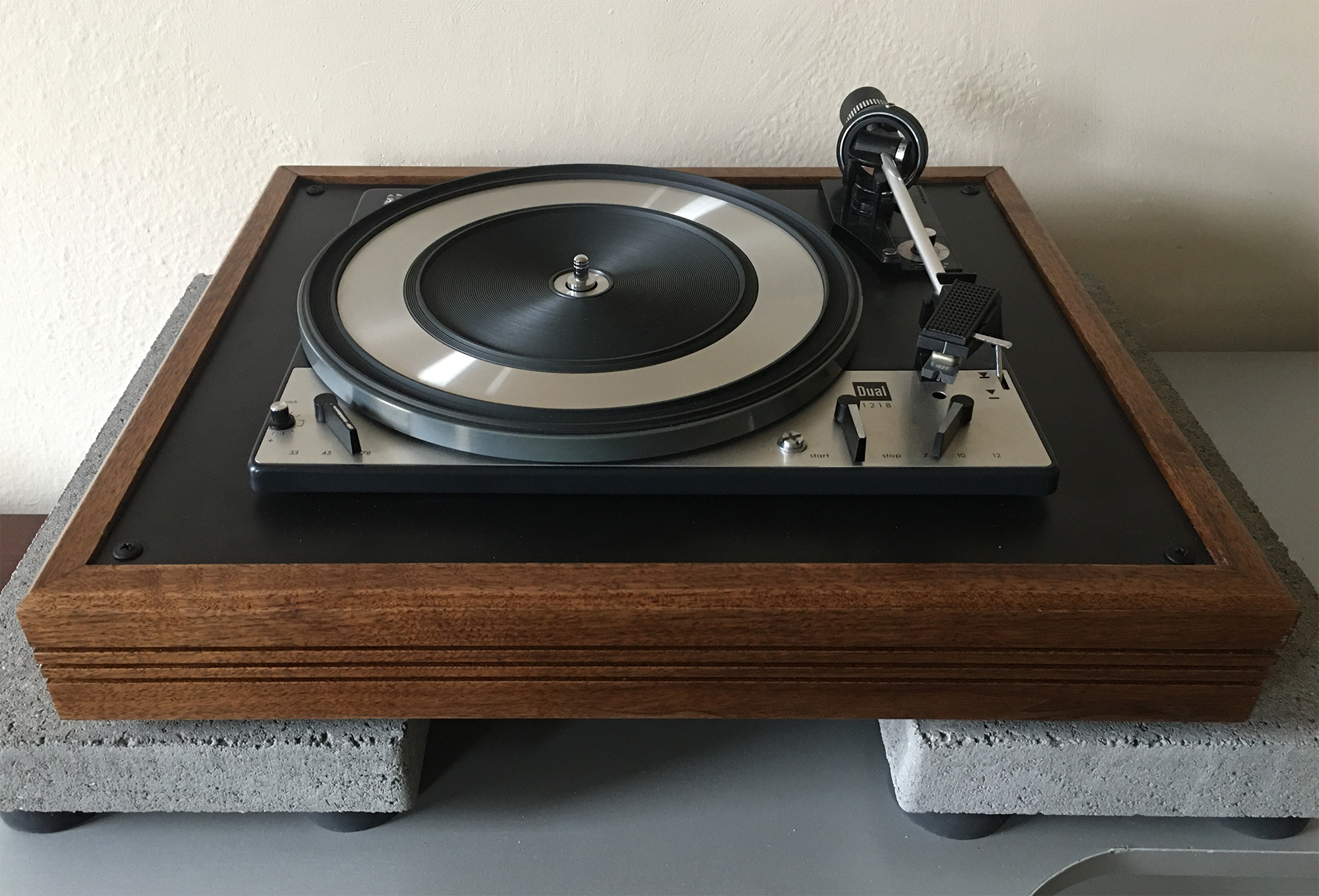
The overall experience with these new 78s and the Califone was nonetheless positive, which motivated me to investigate other playback options. I soon learned that idler wheel German-made Dual turntables from the 1960s have a good rapport with 78 collectors. So I started searching and soon settled on a model 1218 for sale on eBay.
When I got the table I was virtually clueless as to how it worked and needed to consult an online manual. The auto-play functionality was a bit baffling, as was the proprietary tonearm counterweight mechanism and headshell. After testing it out, it became clear that the seller had cleverly sidestepped any description of playback issues present: “It powers on and the platter turns fine. It works but I am selling as-is due to its age.” That was all quite true, but there were a couple glaring issues: 1. The turntable would not stop, and 2. The auto-return mechanism was malfunctioning.
Through all this, I was able to mount a cartridge and give a few records a spin. I was impressed by what I heard and frankly a little surprised. The speed was extremely stable and the sound was bold and clear. This gave me hope, so I found a seller on eBay who said they service Duals and I reached out to ask him about servicing mine. He said he doesn’t like to have tables shipped to him, so believe it or not he then proceeded via text and phone to guide me through all the necessary modifications my deck needed. Over the years I’ve gotten decent at making mild adjustments, but I wasn’t used to making repairs like this. After a couple hours though, when everything was done and my table was running smooth, I was quite proud of what I had accomplished with the guidance of my new friend.
Finding a Cartridge-Stylus Combo
Without overthinking it I chose to start with a Grado 78C cartridge, which I chose mainly for its ability to track at a higher force of five grams. (I have never shied away from tracking force. Not only have I found that more force helps alleviate surface noise, I have always been skeptical of the theory that more liberal settings will ruin records.) When I gave the Grado a test run, the sound kind of blew me away, and no tracking issues like I had with the Califone. But after several listens, it eventually became apparent that there was some ground hum in the system, hum that wasn’t present when I was testing playback with a Shure M44-7. After doing some research, I learned that Grado cartridges are unshielded, which causes problems with some turntable pairings.
At this point my 78 cartridge knowledge was still limited, and the next attractive option was the Audio-Technica VM670SP, which also tracked at five grams. But there was something underwhelming about it. It was kind of ugly and clunky-looking and rode extremely close to the record surface. My disapproval may not have been all that much about what I was actually hearing, but I had audiophile friends who I knew would back me in making cosmetics factor into my equipment choices. So I pushed on looking for something more ideal.
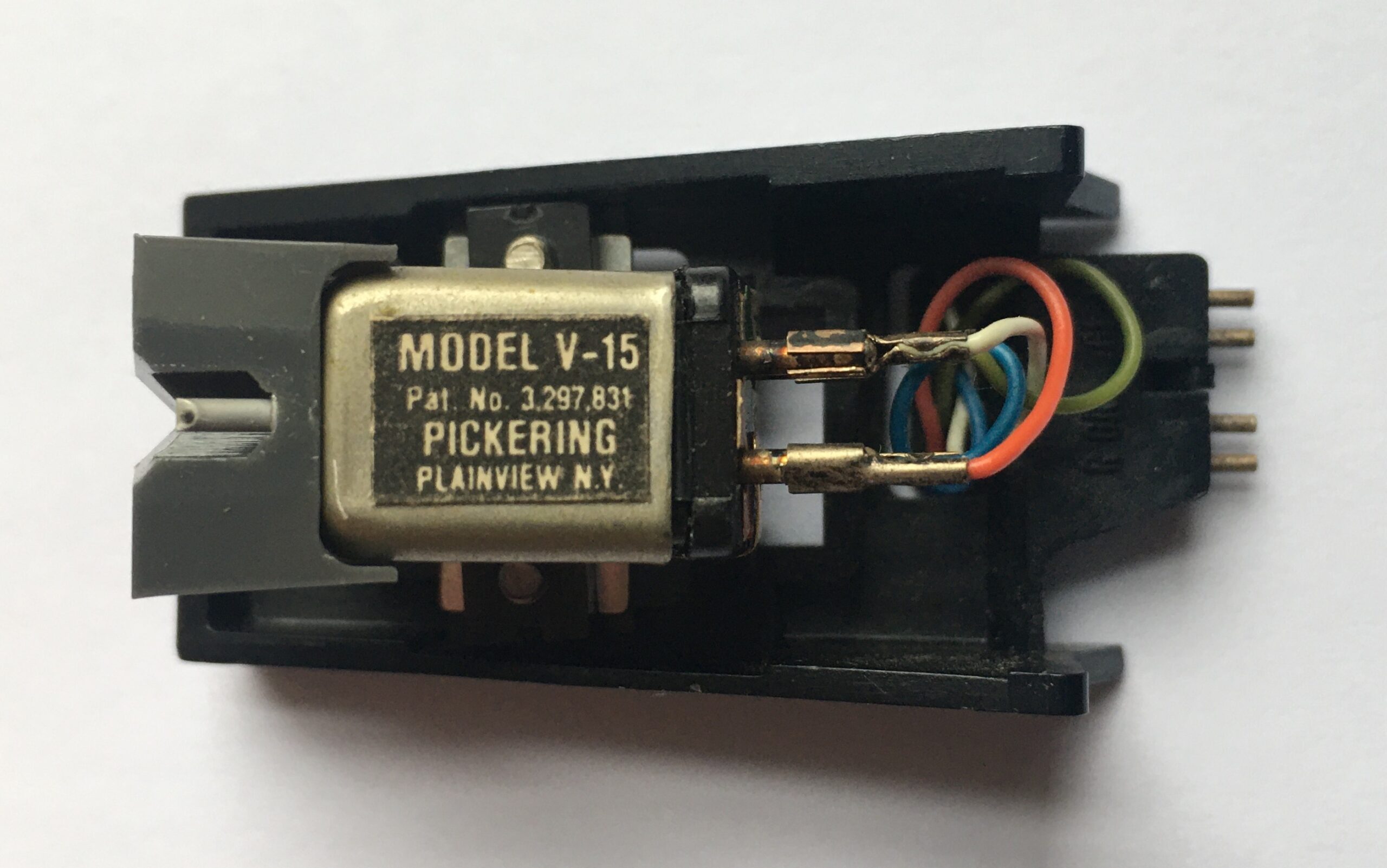
It was then that I got talking to a new vinyl mastering engineer friend, Bill Pauluh, who is an adamant 78 collector. He spoke highly of the Pickering V-15 cartridge and all of its seemingly infinite incarnations. So I found a couple vintage V-15 bodies and a variety of styli: 3.0-mil and 2.7-mil for 78s and 0.7-mil for microgroove LPs. Some were original equipment manufactured (O.E.M.), others were generic “repros” made by Pfanstiehl.
The majestic underbelly of the Pickering V-15 phono cartridge in all its glory
Shootouts
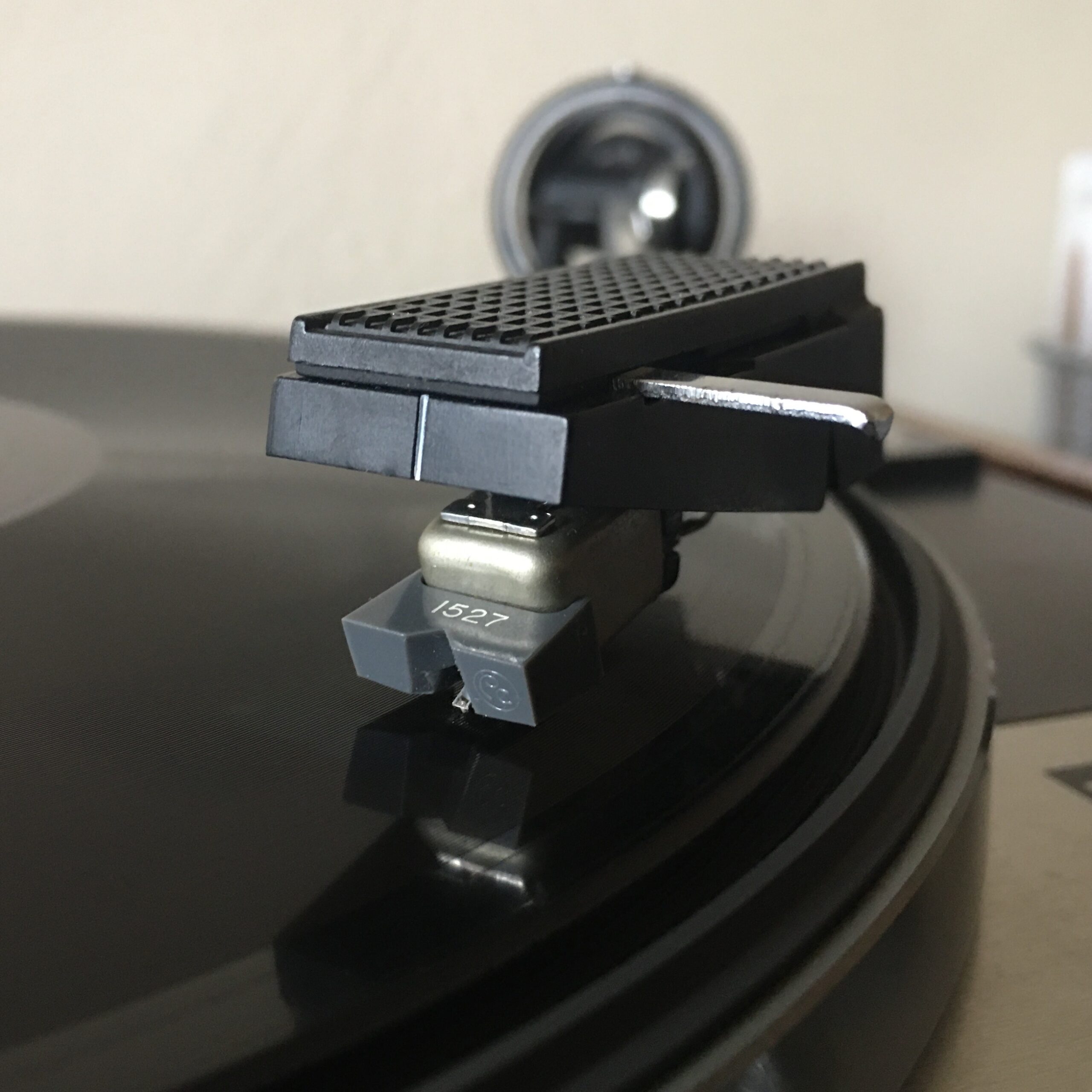
First I compared the bodies of an original Pickering V-15 cartridge with a later V-15/AME-1 (I have been told that all V-15 model number variations are identical to the original mechanically). Using the same stylus for playback, there was no difference detected. From there I compared 78 playback with the OEM Pickering D1527 2.7-mil stylus and the repro Pfanstiehl 4604-D3 3.0-mil, both sporting conical tips and both tracking at five grams.
Three key differences arose. First, the Pfanstiehl had a slightly brighter top-end — not necessarily an advantage considering that the high-frequency response of most 78s is fairly limited. Second, at certain moments the 2.7-mil Pickering handled surface noise better, yet at other moments — on the same record — the 3.0-mil Pfanstiehl did! These differences were subtle though and took some serious critical listening to detect.
Pickering V-15 in action with original D1527 stylus
Finally and most significantly, for a few of my 78s there was a sort of swooshing noise with the wider Pfanstiehl. With the narrower Pickering, I was kind of shocked that the noise was completely absent. In the past when I have compared 0.7-mil and 1.0-mil styli with microgroove LPs I never heard this type of dramatic difference. Moving forward, I wonder if the 2.7-mil Pickering will always outperform the 3.0-mil Pfanstiehl in this way; for all I know it will be the opposite sometimes. So while I have found myself going to the Pickering regularly, I’ve decided to keep the Pfanstiehl in the mix.
Playback with Pfanstiehl 4604-D3 Stylus:
Playback with Pickering D1527 Stylus:
Phono Equalization
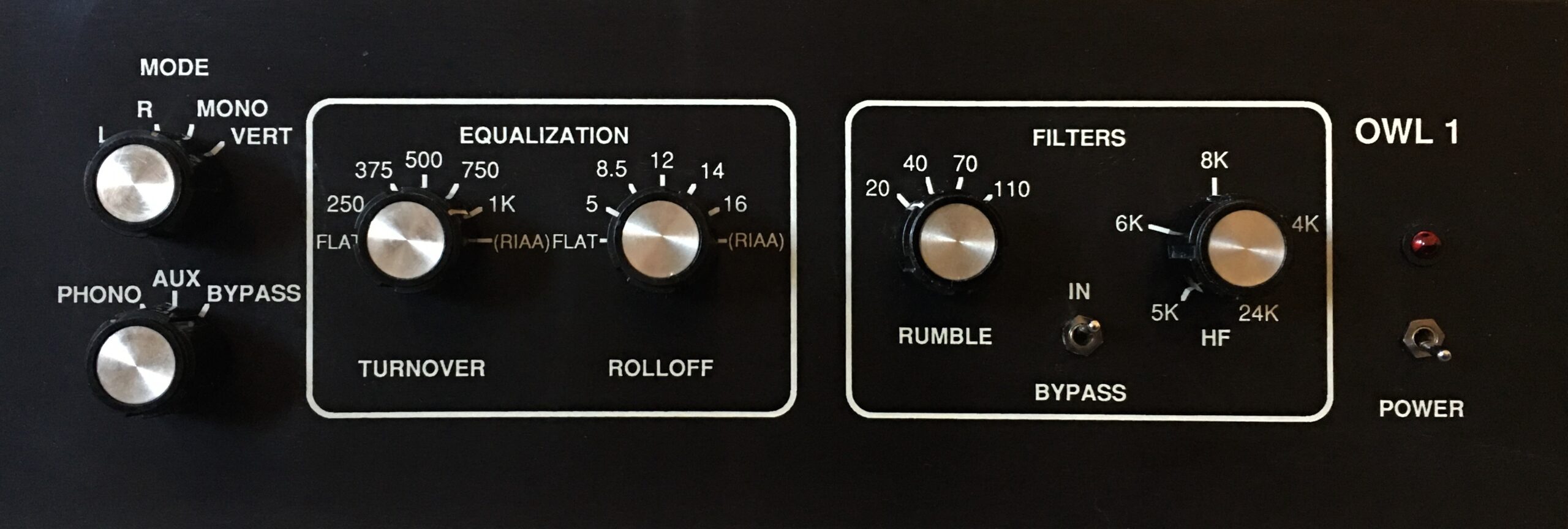
Through volunteering at engineer Rudy Van Gelder’s studio I became acquainted with his playback equipment, which included a very cool phono preamp that I had never seen before. Introduced in 1983, Conductart’s OWL 1 was designed for playing mono 78s and early mono LPs on modern stereo equipment. By default the OWL sums the input from a stereo turntable to mono, and from there the user has oodles of options for how to equalize the signal.
Conductart’s OWL 1 phono preamp
There was no collective standard for phono equalization before the RIAA curve was universally adopted around 1954, about five years into the LP era. This meant that each record company’s 78s and early microgroove LPs emphasized different bands of the frequency spectrum, which would result in a variety of different playback equalization curves when being played on a system that lacked the necessary adjustment features (sometimes a “tone control” was included on older equipment as an economical compromise). Accordingly, the OWL 1 gives you a variety of settings that accommodate all the various phono EQ curves from the time before the RIAA standardization.
When I first found out about the OWL 1 I had an interest in both ten-inch and twelve-inch LPs made in the early 1950s so I decided to look for an OWL 1 for myself. After several months of scouring the internet with no luck, an audience member at one of my Rudy Van Gelder talks just happened to mention having one. Instantly I asked, “Can I buy it?”, and I was surprised by how quickly he agreed.
Though there is information out there on which labels used which curves, I have generally been using the same settings. Conductart provides some of this info in their instruction manual but ultimately recommends that the user simply “use their ears” as a guide to setting the controls. Indeed, those favorite settings of mine coupled with some additional lowpass filtering are a substantial diversion from the RIAA curve that would be standard on any modern phono preamp.
Isolation
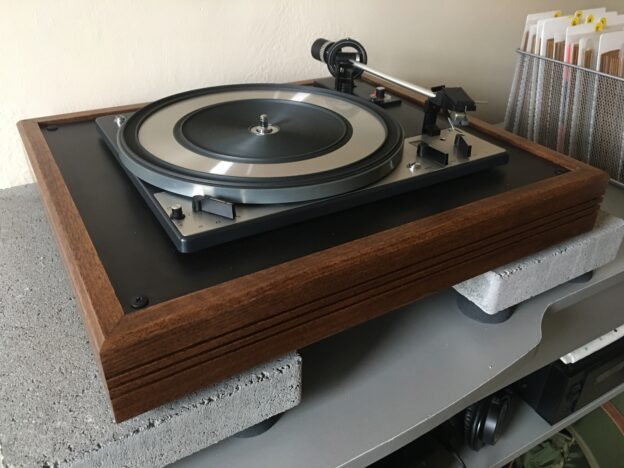
The one area where I had doubts about the Dual becoming my go-to workstation deck was that of isolation. Although the plinth that it came with was quite clean, I quickly noticed that there were wow and flutter issues if I was walking near the turntable. Surely I have been spoiled by the insane amount of isolation with my Technics 1200s, but I was really happy with the Dual otherwise so I looked for a custom plinth option. I soon found a good-looking, modestly priced option online, which sported a sturdy walnut frame and thick veneer base. Not only did isolation improve with the new plinth, things are looking much better now as well!
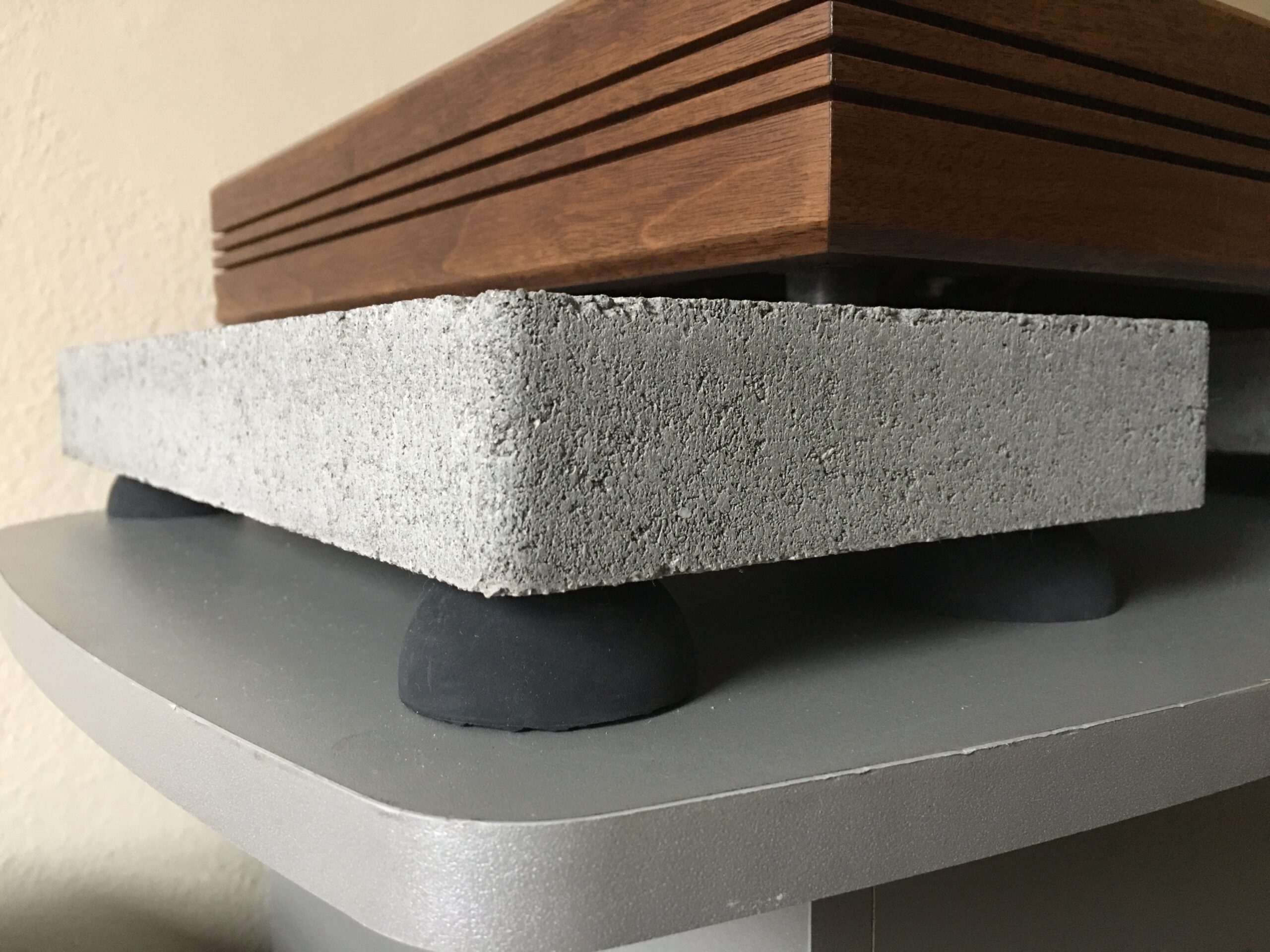
Still I felt isolation could be improved, so after yet another several hours of research and conversations with fellow collectors, I decided to purchase two eight-by-sixteen-inch concrete block slabs from Home Depot, place them under each pair of legs, and I decoupled the slabs from the tabletop with eight racquetball halves, four for each slab. While I’d say the isolation of a 1200 is still superior, I’d also say there was improvement in isolation at each of the two phases of this process.
Closeup of cement base with racquetballs used for decoupling
My Pride and Joy
I have been pleasantly surprised that my new setup rivals the stability and low noise of my 1200, and as a result I have been going to this table for playback of microgroove mono LPs and 45s in addition to 78s. Not only has the unexpectedly high performance of the 1218 allowed me to use a single deck for all my needledrops and critical listening, I have also been feeling a greater sense of pride with it as a consequence of getting it up to spec with my own labor. I also have a soft spot for cost-effective equipment that performs at a high level.
There is also something neat and special about idler wheel design. It may just be that I like the idea of a simplistic mechanism like a pulley spinning a rubber wheel which in turn spins a platter; perhaps I am also a little in awe of just how stable the speed can be under such circumstances. Either way, my new Dual 1218 is giving me joy in a way that my tried-and-true Technics 1200s — tables that have faithfully been with me since 1998 — never have.
And what better way to end my report but with a video needledrop of the new setup in action! Keep an eye out for my new “Shellac Spotlight” column here on the blog!