
Tag Archives: rvg

RVG Legacy: Preserving the Legacy of Rudy Van Gelder

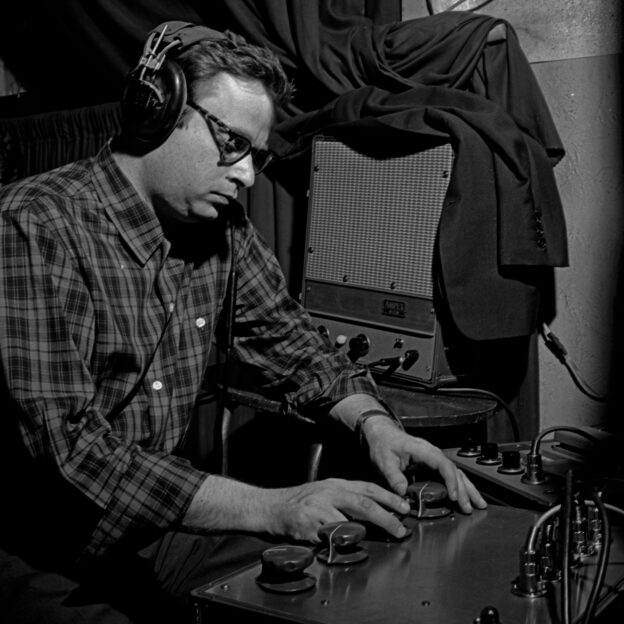
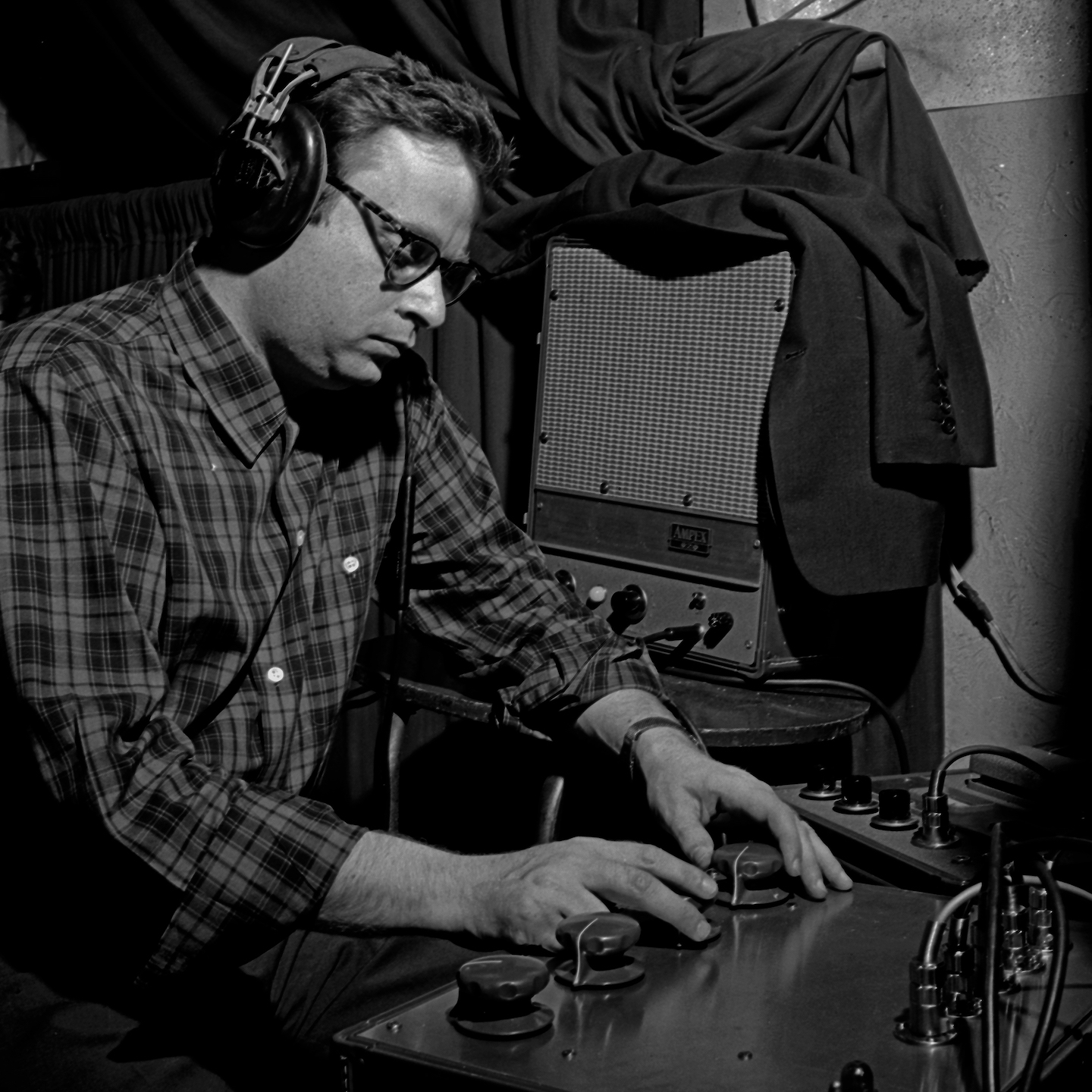
(Photo credit: Francis Wolff © Mosaic Images LLC)

It is with great pleasure that I announce the launch of RVG Legacy, a new website dedicated to preserving the legacy of Rudy Van Gelder. Since the pandemic has taken away all opportunities for me to give my presentation on Rudy in person, I decided to build a website that would essentially deliver all the content of my talk virtually. In the spring I wrote the narrative, then over the summer I put everything together and developed the site.

Produced in association with Van Gelder Studio and Estate, RVG Legacy features dozens of never-before-seen photos from Rudy’s personal collection, and it is sure to become the definitive one-stop destination for all things Van Gelder. Check out the promotional video below and have fun exploring the world of Rudy Van Gelder!

LINK: RVG Legacy (rvglegacy.org)

Vinyl Spotlight: Sonny Rollins, Newk’s Time (Blue Note 4001)

  • Liberty mono pressing ca. 1966-70
  • RVG stamped in dead wax

Personnel:

  • Sonny Rollins, tenor saxophone
  • Wynton Kelly, piano
  • Doug Watkins, bass
  • Philly Joe Jones, drums

Recorded September 22, 1957 at Van Gelder Studio, Hackensack, New Jersey
Originally released January 1959

1 Tune Up
2 Asiatic Raes
3 Wonderful! Wonderful!
4 Surrey with the Fringe on Top
5 Blues for Philly Joe
6 Namely You

Selection:

“Blues for Philly Joe” (Rollins)

I ignored this album for quite some time for a couple reasons. First, it was primarily comprised of standards and short on originals, but also because the album has rarely been reissued in mono and I kept reading about issues with the consistency of Rollins’ volume level in the stereo mix (apparently caused by the leader’s motion in the studio during recording). Well this is a copy made from the bold, original Van Gelder mono mastering, and to my ears there is no such problem here.

This is not the first time that seeing a good deal on a clean original pressing of an album encouraged me to listen to the music more carefully. On this occasion, I was surprised to unearth an album I really enjoy. First and foremost, “Tune Up” and “Asiatic Raes” are two of my favorite modern jazz standards, and this quartet knocks them out of the park. Prematurely, I never thought anyone could best Kenny Dorham’s version of “Asiatic Raes” on Quiet Kenny (titled “Lotus Blossom” there), but Rollins gives him a run for the money.

There are several comical moments from the leader here, and on “Tune Up” we find Rollins at his funniest. His descending staccato riff beginning on the seventh chorus of his solo literally sounds like laughing, and its refrain is a welcome break from the saxophonist’s inventive genius. For someone who is among the most imaginative soloists ever, this less-than-cerebral moment demonstrates Rollins’ sharp wit and special talent for expressing his sense of humor through his music. The lighthearted theme persists throughout the album, but what makes Newk’s Time special is how laid back it feels all while the musicians execute with consistent precision.

Philly Joe Jones shows up for this date and crushes it. His duet with Rollins on “Surrey with the Fringe on Top” is a must-listen. As if the album’s quartet arrangement wasn’t good enough for a minimalist like myself, this pairing of drummer and saxophonist takes it a step further. Although “Surrey” makes it most obvious that engineer Rudy Van Gelder was perhaps a little too heavy-handed with the reverb on Rollins that day, Philly still sounds dry and snappy.

“Blues for Philly” is probably my favorite cut on the album (and for all we know invented on the spot at the session). When the entire band comes back in after “Surrey”, it sounds like an explosion. The low end of Doug Watkins’ bass drops and Wyton Kelly fills the rest of the space with chords. Kelly is especially aggressive and percussive on this album, perhaps rising to match Rollins’ intensity. Everyone is in a good mood and you can hear it.

This sure is one in-your-face album. The entire band is in full attack mode and it makes for an exciting listen.

Vinyl Spotlight: A Date with Jimmy Smith, Vol. 2 (Blue Note 1548) “W63/NY” Mixed Labels Pressing

  • Vintage pressing circa 1962-1966
  • “West 63rd (no R) / New York USA” mixed labels
  • “RVG” and Plastylite “P” (ear) etched in dead wax

Personnel:

  • Donald Byrd, trumpet
  • Lou Donaldson, alto saxophone
  • Hank Mobley, tenor saxophone
  • Jimmy Smith, organ
  • Eddie McFadden, guitar
  • Art Blakey, drums

Recorded February 11 & 12, 1957 at Manhattan Towers, New York City
Originally released September 1957

When I started collecting, I bought into the popular opinion that Jimmy Smith isn’t “collectible” and didn’t pay him any attention. But then I found a great 1965 German documentary on him serving as evidence of how “incredible” he really was. From the live performances where he plays with so much heart and frankly, tears it up, to the interview moments where he communicates his philosophy of jazz and music in general so well, I decided to start listening. So I made a Spotify playlist of all his Blue Note albums, put it on shuffle while I worked, and a couple weeks later I had a condensed playlist of favorites (you can hear that playlist on Spotify now). One of those songs, “Groovy Date”, is from this LP. The sheer power with which the song opens and closes was enough to make me hit the “heart” button, and the solos from all the members do not disappoint.

Despite this album being available only in mono regardless of format, many Smith Blue Notes are only available in stereo as reissues. So I decided it would be both worthwhile and cost-effective to pursue these albums in their original mono LP incarnations. Since Smith originals are so readily available, I quickly acquired six of them. This one was a little harder to get online, but then one day I was in a local shop and they had this copy for cheap. The cover looked great but the vinyl was pretty marked up. It doesn’t play with any skips, and aside from “Groovy Date”, it can be a little noisy. That’s fine with me because my favorite track sounds bold and clear, and I basically chalk this up as paying a fair price for a single song and a great cover (I love the photos of the musicians, the layout, and the color scheme).

As for one of my favorite topics, sonics, this is one of a handful of Blue Note albums recorded by Rudy Van Gelder that wasn’t recorded at one of his studios or a live venue. For years I noticed the recording location “Manhattan Towers” for various Blue Note recordings on jazzdisco.org but never knew what it meant. But then, one day I was lucky enough to speak with Blue Note producer and archivist Michael Cuscuna about it, and he explained that Blue Note had worked out a deal with Manhattan Towers, a hotel in New York City’s Upper West Side, so bigger bands could assemble in their ballroom (Art Blakey’s percussion ensembles, Sabu Martinez) and important artists like Smith who liked to record at night could jam after the normal Hackensack business hours (Van Gelder’s neighbors were known to complain about the noise late at night and his parents lived there).

In writing this article I did a little research and found this cool New York Times article from 1974 explaining that the hotel, located on Broadway between West 76th and 77th Streets, was crime-ridden! (One has to wonder if it was similar or becoming more that way in 1957!) You can hear the massive size of that ballroom on these cuts. The horns, organ, and guitar still sound quite immediate and up-close, but the reverberation of Art Blakey’s drums is true to the space’s larger size. Stay tuned as I review more of Jimmy Smith’s classic Blue Note recordings in the coming months.

Vinyl Spotlight: Horace Silver and the Jazz Messengers (Blue Note 1518) West 63rd “No INC/R” Pressing

  • “Third” pressing circa 1957-1959
  • “47 WEST 63rd NYC” address on both labels without registered trademark “R”
  • Deep groove both sides
  • “RVG” and Plastylite “P” (ear) etched in dead wax

Personnel:

  • Kenny Dorham, trumpet
  • Hank Mobley, tenor saxophone
  • Horace Silver, piano
  • Doug Watkins, bass
  • Art Blakey, drums

Recorded November 13, 1954 and February 6, 1955 at Van Gelder Studio, Hackensack, New Jersey
Originally released as two 10″ LPs: BLP 5058 (March 1955) and BLP 5062 (September 1955)
BLP 1518 originally released July 1956

1 Room 608
2 Creepin’ In
3 Stop Time
4 To Whom It May Concern
5 Hippy
6 The Preacher
7 Hankerin’
8 Doodlin’
Not only is Horace Silver a favorite jazz composer and musician of mine, this is one of my favorite albums of his. If I had to guess, Silver was given the title of leader on this early Jazz Messengers effort since, unlike the Birdland and Bohemia Messenger LPs of the same era, the majority of the selections here (all but one) were written by Silver, who only penned three of the nine original Birdland tracks and nothing on the original Bohemia LPs. But while many jazz newcomers will, as I did, think of this effort as a single body of work encased in the minimal, baby-blue cover we have all come to know through various reissues (a cover that, by the way, sports a horrible photo of Silver with a shadow covering half his face), these sides actually numbered four in total originally, spanning across two 10″ albums both released in 1955 (BLP 5058 and BLP 5062). In some instances I prefer to own the original 10″ pressings of albums that would later resurface in a 12″ configuration — if I can even find the original 10″ LPs — but for this album, it’s so solid start to finish that I actually prefer the 12″ pressing over the two 10″ “originals”. Why not have all the great music on the 10″ LPs in one place? That’s two less times I need to get up to turn the record over!

A Night at Birdland, Vol. 1 (BLP 5037) and The Jazz Messengers at the Cafe Bohemia, Vol. 1 (BLP 1507)

The sound of this record is characteristic of that coming out of Rudy Van Gelder’s Hackensack home studio in the mid 1950s: clear, warm mono with shimmering cymbals, a slightly metallic sound to the trumpet, and a touch (less than normal) of Van Gelder’s menacing spring reverb. This is actually my second vintage copy of this LP. The first had “NEW YORK 23” on one side and “West 63rd” on the other and was acquired at an outdoor Brooklyn record fair several years ago. I recall making the decision to sell it in part because there was a tinge of distortion on Kenny Dorham’s loudest notes (which actually improved somewhat after a good cleaning) but I also sold it because I decidedly preferred the mastering of the 1987 Capitol-Manhattan CD reissue. But when this near mint copy with “West 63rd” on both sides appeared at another Brooklyn record fair recently, I simply could not pass it up.

The Horace Silver Quintet, Volumes 1 & 2 (BLP 5058 & BLP 5062)

Above all, the highest of frequencies, usually dominated by cymbals, sound more “accurate” (detailed and present) on the Manhattan CD and hence, I would assume, on the original master tape. After hearing numerous original Van Gelder LP masters from the years of approximately 1955 to 1957, it’s clear that Van Gelder was making the deliberate and regular choice to dampen the high frequencies a bit when mastering for vinyl. This could have been a precaution against mistracking that the young engineer opted for at the time, which could in theory allow the signal-to-noise ratio-obsessed Van Gelder to achieve even greater volume on his LPs. It could have also been a deliberate aesthetic choice, but we hear Van Gelder leaving more high-frequency detail on his records in 1958. I still prefer the sound of the Manhattan CD, but I’ve come to appreciate Rudy Van Gelder’s earliest LPs as an embodiment of a sonic signature representative of the time they were originally released in.

The Capitol-Manhattan CD reissue of BLP 1518

This is a solid program. Though there are plenty of uptempo tunes with unorthodox melodies written more in the tradition of hard bop’s immediate ancestor, bebop (“Room 608”, “Stop Time”, “Hippy”), Silver penned a jukebox hit with “The Preacher”. Making its debut here (technically on BLP 5062), its corny, gospel-drenched melody is undeniably fun, though I prefer Jimmy Smith’s humorous demolishing of it on Volume 1 of the Club Baby Grand LPs.

Jimmy Smith at Club Baby Grand, Vol. 1 (BLP 1528)

But the real jewels of this album are the quieter tunes. “Doodlin'” is the kind of bluesy jazz you might imagine a 1950s sleuth playing on his car’s AM radio while cruising the streets looking for clues. “Creepin’ In” is perfect for a lazy afternoon indoors sipping tea. Mobley and Dorham set the mood here, and they also set the stage for a story-like solo from Silver. Always a clear and spontaneous communicator of his musical ideas, around the twenty-first measure of his solo, Silver begins a descent toward the middle of the keyboard. He then plays with an idea for a couple measures before unearthing a simple yet highly memorable melody that he plays twice before handing things back over to the band. I also dig how often Silver changes things up from the traditional “AABA” bop writing formula, sometimes throwing in an additional “C” section after all the solos, and the “A” section of “To Whom It May Concern” embodies some of the most original writing by Silver on this great album.

Vinyl Spotlight: Sonny Rollins, Saxophone Colossus (Prestige 7079/7326) “Gold Label” RVG Mono Pressing

  • Mono Prestige reissue circa 1964-1971
  • “RVG” etched in dead wax

Personnel:

  • Sonny Rollins, saxophone
  • Tommy Flanagan, piano
  • Doug Watkins, bass
  • Max Roach, drums

Recorded June 22, 1956 at Van Gelder Studio, Hackensack, New Jersey

Well it pays to give the jazz sections in record stores a quick flip on each visit. Though usually less than mediocre, I’ve found that jazz LPs often skip the new arrivals bins — a longstanding staple of record stores — and go straight to the genre section. My method is usually to flip quickly through each of my favorite players’ sections and the beginning of each “lettered” section. This effort usually ends up fruitless but every now and then something slips through the cracks.

That surely was the case when I found this copy of Saxophone Colossus. On the surface, this pressing seems harmless. It serves as evidence of Prestige Records being up to their old capitalist tricks, updating artwork and catalog numbers in a shameless effort to rebrand previously issued material. Prior to this I had seen fake stereo copies of this reissue a few times but this was the first time I failed to see the “stereo” moniker anywhere on the cover. As I examined the front and back of the jacket I thought, “Could this be mono, and better yet, could it possibly be made from the original 1956 RVG metalwork??” And when I slid the LP out of the jacket, I was overjoyed to find the initials “RVG” handwritten there in the dead wax. To sweeten the pot, the record looked near mint and the price tag was in no way suggestive of the colossal sound laying dormant in these grooves. (See what I did there?)

I promptly paid my fare at the counter, and on this hot, sunny Manhattan day, I posted up at a nearby burger joint to grab lunch as I researched the record’s obscure gold labels. While London Jazz Collector places this label run in the rather wide range of 1964-1971, VinylBeat.com makes a narrower yet less specific claim of “mid-1960s”. Discogs has the pressing year pegged down to 1964 (I have no idea what the source of that info is), but to be honest, the vinyl’s lighter weight and thinner, more bendable material makes me suspicious that it would have been released sometime in the ‘70s. The RVG etching and bold sound of this copy nonetheless remain, a fact made even more astounding when one considers that the original metal factory master disks could have been over 15 years old when this record was made.

Although I usually post favorite albums of mine on here, to be honest Saxophone Colossus is a classic that does not resonate with me as much as it does with most jazz fans. The melody and rhythm of “Saint Thomas” is a bit too corny to find its way into my regular rotation, though the jerky rhythm and brisk pace of “Strode Rode” has always appealed to me. But the real allure for a drummer-minded jazz fan such as myself is Max Roach’s pair of solos on side two. Roach’s hands get quite busy at times during “Moritat” (a renaming of the 1928 Weill-Brecht composition “Mack the Knife”, made for the German play Die Dreigroschenoper; “Moritat” roughly translates to “murder ballad”), but Roach plays with tasteful restraint during his solo on “Blue 7”. Engineer Rudy Van Gelder’s recording of drums was always second to none, even in 1956 as demonstrated here. Roach’s consistent striking of the ride cymbal during his solo on “Blue 7” shimmers with glowing resonance and his tom-toms ring with air-tight clarity and precision.

Though Sonny Rollins’ unique character and humor as a soloist became apparent to me many years ago, I can’t say that I’ve studied the breadth of his catalog with the careful attention it most certainly deserves. But with the addition of this record to my collection, Sonny is sure to get more play on my turntable in the future.

Vinyl Spotlight: Kenny Burrell, Blue Lights, Vol. 2 (Blue Note 1597) Liberty Mono Pressing

  • Liberty mono pressing circa 1966-1970
  • RVG etched in dead wax

Personnel:

  • Louis Smith, trumpet
  • Junior Cook, tenor saxophone (all but “The Man I Love”)
  • Tina Brooks, tenor saxophone (“Rock Salt”, “Chuckin'” only)
  • Kenny Burrell, guitar
  • Duke Jordan, piano (“The Man I Love”, “Phinupi” only)
  • Bobby Timmons, piano (“Rock Salt”, “Chuckin'” only
  • Sam Jones, bass
  • Art Blakey, drums

Recorded May 14, 1958 at Manhattan Towers, New York City
Originally released in October 1961

Selection:

“The Man I Love” (Gershwin)

For music lovers:

Continuing with the theme of mono Liberty Blue Notes, this is one of my favorite records by the prolific guitarist Kenny Burrell. In reading about this LP, I find that most of the discussion related to the album deals with its cover art. It is, of course, one of the three titles that the artist Andy Warhol drew for Blue Note. While the cover art is very beautiful, especially when seen on a clean, crisp copy, it was the sheer amount of talent on this record that sold me. The two bands that play on Blue Lights are a who’s-who of the bop era with an exciting player at every instrument.

Truly there is something for every fan of each player, and having them play on the same record provides for an interesting comparison in the styles of the musicians sharing an instrument. The opening track, “Rock Salt”, is a perfect showcase of each group member’s talent. Burrell opens with a familiar sounding, repeating blues riff that is echoed by the other instruments on repeated choruses. But the most exciting moments here involve the track’s two tenors. I always appreciate when Tina Brooks appears in a lineup because his tendency to play many minor notes with a Latin influence is right up my alley. But for this record, it was Junior Cook who first got my attention. For many years I have appreciated Cook in one of the most popular jazz groups of all time, The Horace Silver Quintet, and I was very excited to hear him at a young age in a different setting. Cook holds his own with legendary bandmates here, all while maintaining his own distinctive tone shoulder-to-shoulder with the uniquely-voiced Brooks.

Though the tenors are what drew me to this album, an unassuming player impresses me on every play. Sam Jones, though very well known as a bop player, was not known to me as an acclaimed virtuoso of the bass when I acquired this LP. I had seen his name on many recordings of the era but heard nothing in his playing on those records that would make me elevate him to the level of, say, Paul Chambers or Ron Carter. And on this recording, surrounded by such dominant and loud (Art Blakey!) musicians, you might expect Jones’ bass to be buried under crashing drums, the volume of an (at times) three-man frontline, and Burrell’s rhythmic chords. But Jones’ bass stays at the forefront throughout and drives the rhythm section to a point where he virtually assumes the role of a leader. With such strong rhythm players and timekeepers as Blakey, Bobby Timmons, and Duke Jordan, I was impressed that the bassist was the one who had the greatest impact on the overall sound of the band. Jones has several bass solos both here and on the preceding volume, but the riffs bookending “The Man I Love” are two of my favorite bass passages in jazz.

Sam Jones

In mentioning all the date’s sidemen thus far I have not forgotten the person for without whom this session would not be possible. To me Kenny Burrell has always been the epitome of consistency in his Blue Note recordings. Along with Silver, Jimmy Smith, and Stanley Turrentine, no other artist has recorded so many quality records over such a long period of time for the label. He plays just as well on this album as he does on any other, with an equally impressive display of chords, quick flourishes, and solid organization of his band. To this day (Burrell has survived the stereotypical turbulence of the bop lifestyle), he is considered the best guitarist in jazz by many. There were many other greats in the genre like Wes Montgomery or Grant Green, but many of them either had very short careers or were enticed by more commercial music. (Barring a single Christmas album) Burrell has consistently been dedicated to playing respectable music throughout his career. As it was for me with Junior Cook, part of the appeal of this recording was to hear a great player in the early stages of his career.

For collectors:

One of the only drawbacks to coveting such an all-star session with a notoriously famous cover was of course the challenge of acquiring a copy. Though recorded to both full-track and two-track tape, both volumes of Blue Lights would only be released in mono initially. My introduction to this LP was by way of a United Artists stereo pressing, but for one thing that copy had such muffled bass that Sam Jones’ incredible talent was not even on my radar at the time. It was equally dissatisfying that United Artists decided to release both volumes with the blue background of Volume 1. The scarcity of the pink second cover, the inferior stereo presentation, and the presence of deep grooves all seem to drive the high demand for first pressings.

In searching for an affordable copy, I saw that even the second and third pressings (West 63rd labels with no deep groove and New York USA labels, respectively) were still out of my price range. I had started looking for more modern alternatives in mono (Japanese pressings) when I noticed this Liberty copy for sale in an online auction. Acquiring a top copy of this album with original mono Van Gelder metalwork all while keeping the lights on proved an attractive option and I wasn’t alone. I encountered a lot of competition, and though I paid over a thousand dollars less than what an original costs in similar condition, to this date it is the most I have ever paid for a Division of Liberty Blue Note. But it has proven to be worth every penny.