Tag Archives: prestige

The Deep Groove Mono Classic Jazz Album Art Extravaganza

Ladies and gentlemen, after several unexpected weeks immersing myself in images and history, I present to you the Deep Groove Mono Classic Jazz Album Art Extravaganza! This design love fest has been broken into two parts with links below. The first is an essay on Modern American design and its origins, and the second is an extensive gallery that includes commentary on each cover from yours truly. This project started small and turned into something much bigger, I am exhausted, and I hope you don’t mind if I let the content do the rest of the talking!

LINK: Jazz Album Art and the Origins of Modern American Graphic Design

LINK: The Deep Groove Mono Classic Jazz Album Art Gallery

Vinyl Spotlight: Workin’ with the Miles Davis Quintet (Prestige 7166) Original Pressing

  • Original 1959 pressing
  • “Bergenfield, N.J.” address on both labels
  • Deep groove both sides
  • “RVG” stamped in dead wax

Personnel:

  • Miles Davis, trumpet
  • John Coltrane, tenor saxophone
  • Red Garland, piano
  • Paul Chambers, bass
  • Philly Joe Jones, drums

All tracks except “Half Nelson” recorded May 11, 1956
“Half Nelson” recorded October 26, 1956
All tracks recorded at Van Gelder Studio, Hackensack, New Jersey
Originally released December 1959

1 It Never Entered My Mind
2 Four
3 In Your Own Sweet Way
4 The Theme [Take 1]
5 Trane’s Blues
6 Ahmad’s Blues
7 Half Nelson
8 The Theme [Take 2]
This hobby is all about patience. Several years back, a friend of mine who is almost exclusively a collector of rock and disco twelve-inches randomly scored an EX original pressing of this album for 30 bucks at a shop in Troy, New York, just a 15-minute drive up the Hudson from my native Albany. Try as I have to pry it from his hands over the years, he’s never budged. A pinch of jealousy toward his steal may have then influenced me in the coming years to pass up countless copies of this album that I felt weren’t the right combination of condition and price (I don’t think I’ve ever seen a copy of this album for $30 in any condition). Recently I finally found a VG+ copy that, while priced over double what my friend paid, was still fair nonetheless. Upon previewing playback at the store, I found a passage of very light ticks in one spot, but after running the record through my Spin Clean, I was astonished to find that the ticks went away. (As much as I adore the Spin Clean, this was a first!)

Being one of four legendary albums Miles and company recorded for Prestige in 1956 in order to quickly fulfill his contract with the label before moving over to Columbia, this copy of Workin’ now complements my copy of Cookin’ (Relaxin’ and Steamin’ I can take or leave). These recordings represent a “sweet spot” in engineer Rudy Van Gelder’s tenure at his Hackensack, New Jersey home recording studio: lifelike mono sound that creates a natural sense of space with instruments balanced to perfection. “It Never Entered My Mind”, a patented, gorgeous Miles ballad complete with the sweet sounds of the leader’s muted trumpet, will perk up the ears of just about any music lover (my rock-and-disco-collecting friend included), and “Four” has all the ingredients of a hard bop classic. As with Cookin’, Philly Joe Jones’ drums sound incredibly natural at times and thunderous at others, and I don’t think I’ll ever grow tired of the more structured style of improvisation John Coltrane sported in 1956. This combination of world-class musicianship paired with a charming, minimalist monophonic presentation firmly places these sessions near the top of my list of favorites.

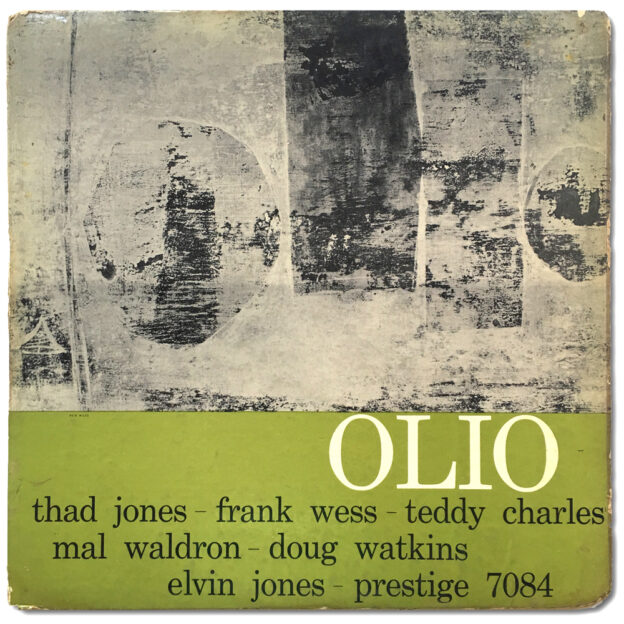
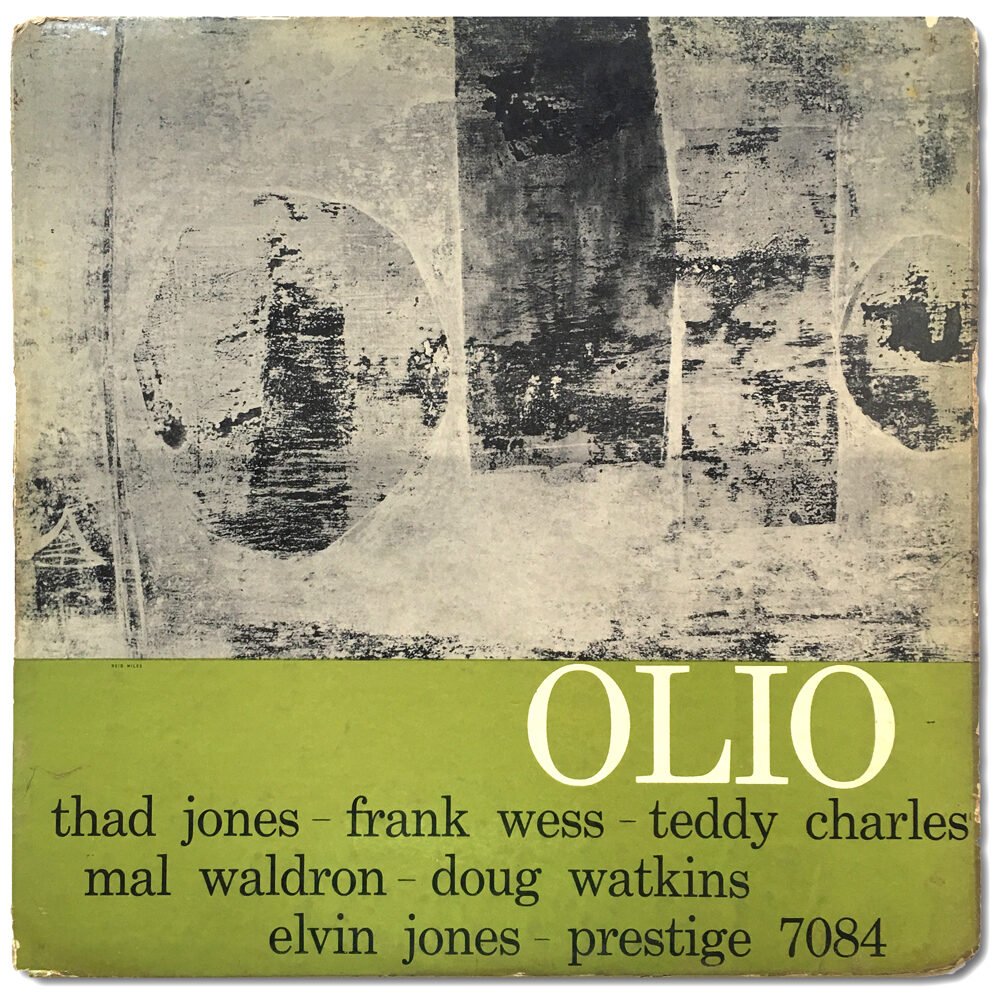
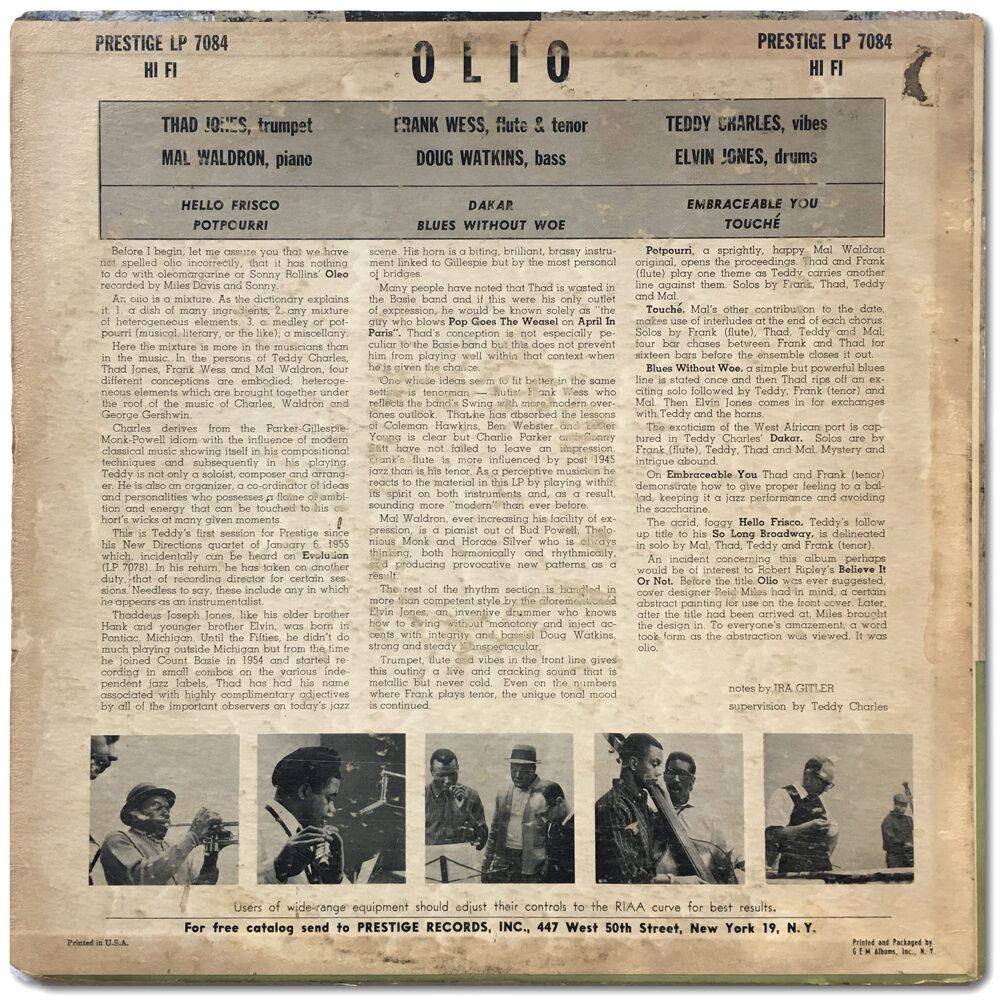
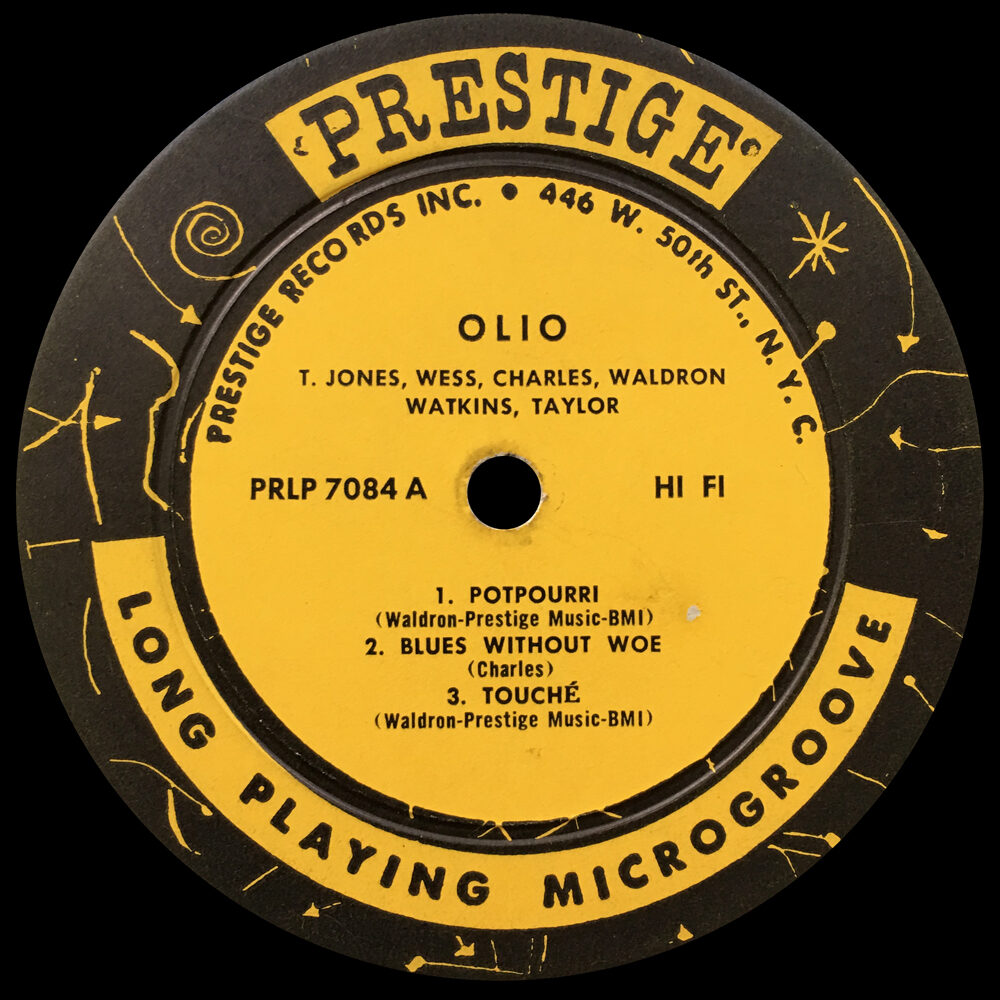
Vinyl Spotlight: Olio (Prestige 7084) Original Pressing

  • Original 1957 pressing
  • “446 W. 50th ST., N.Y.C.” on both labels
  • Deep grooves on both sides
  • “RVG” stamped in dead wax

Personnel:

  • Thad Jones, trumpet
  • Frank Wess, flute & tenor saxophone
  • Teddy Charles, vibraphone
  • Mal Waldron, piano
  • Doug Watkins, bass
  • Elvin Jones, drums

Recorded February 16, 1957 at Van Gelder Studio, Hackensack, New Jersey
Originally released in 1957

Selection:

“Blues Without Woe” (Charles)

It’s rare that I hang on to a record in VG condition, but this record has a couple things working for it: 1. Despite the pops and ticks, it has no groove wear, 2. I got it for (the vintage jazz record collecting equivalent of) a dollar bin price, and 3. The music and performances are both spectacular. Like my copies of Saxophone Colossus and Coltrane Live at Birdland, this was a “jazz genre section” find. Unfamiliar with the music, the price tag made me walk it over to the listening station to give it a try, and I wasn’t expecting such great performances and such a sweet sound.

For several months I grappled with the choice of keeping it or selling it, and lately I decided it’s here to stay. The compositions are all top-notch, mostly written by the tag team of Teddy Charles and Mal Waldron. The sound of the recording hearkens back to the days of lo-fi recording, drums softly set back in the mix (although the bass is maybe a little too low) and the soloists are loud and clear up front, providing a unique take on late 1950s jazz recordings. And the solos are fantastic, from “leader” Thad Jones (the leader of these Prestige “jam sessions” is never clear, save their name being first on the cover) to Charles to Waldron to the most gifted Frank Wess, who plays with a breathiness undeniably reminiscent of Lester Young. Thad Jones had a unique tone and was inventive on the level of Sonny Rollins, and Frank Wess plays with unbeatable swing (this record made me realize what I miss with the avant-garde: swing). We also get to hear a young, swinging Elvin Jones on drums, a rare occasion considering the splashy, liberated rhythmic style he would develop and own in the post bop era of the ’60s. Everyone is on point when it’s their time to shine, and though these Prestige dates often get a bad rep for lacking the care and preparation that went into sessions on labels like Blue Note, one can’t help but conclude that this group knew what they were doing when they stepped into the studio that day.

The album maintains a high quality of writing and musicianship throughout. Opening with “Potpourri”, which features Frank Wess on flute, the group then shifts to “Blues Without Woe”, an uptempo hard bop masterpiece. The first side concludes with “Touché”, a lazy summer jazz walk most exemplified by the harmony of Charles’ vibes and Wess’ flute. Side two opens with “Dakar”, a Charles composition with harmonic chaos in the spirit of Thelonious Monk’s “Evidence”. From there the band slows things down with a reading of the Gershwin standard “Embraceable You”. Thad Jones is his usual ballad-sweet self, and Wess plays a resonating, breathy solo. The album’s final cut, Charles’ “Hello Frisco”, ends things without exclamation, though we still get an inspired solo from Waldron, a pianist who we hear tirelessly working out ideas record after record.

At the end of the day, a cheap original pressing that plays without groove wear or skips is a record worth listening to, especially if the music and performances are as captivating as they are here.


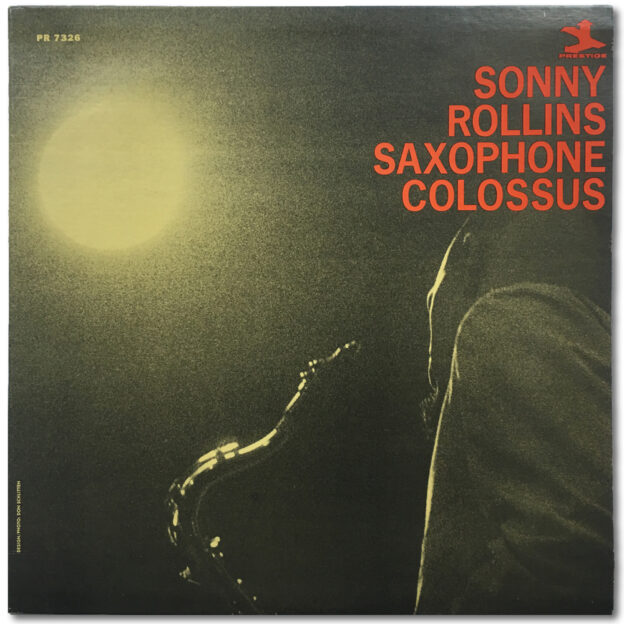
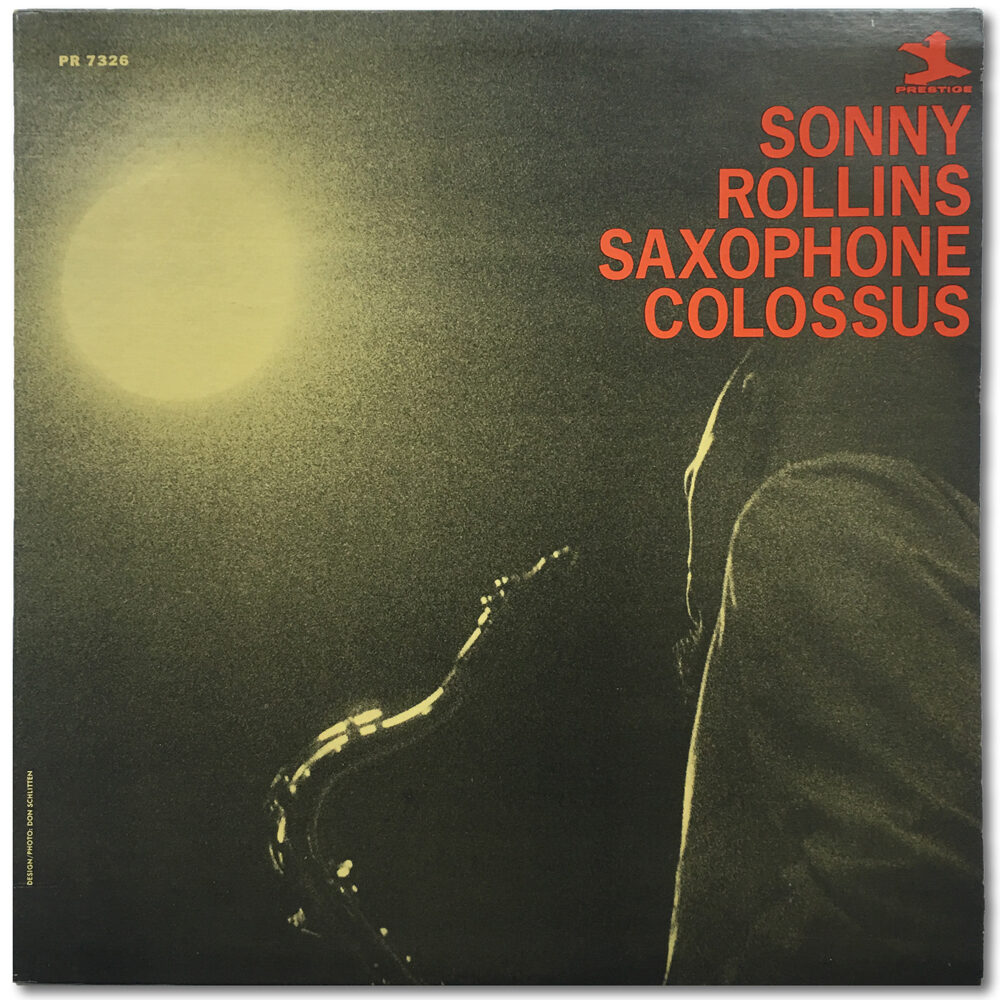
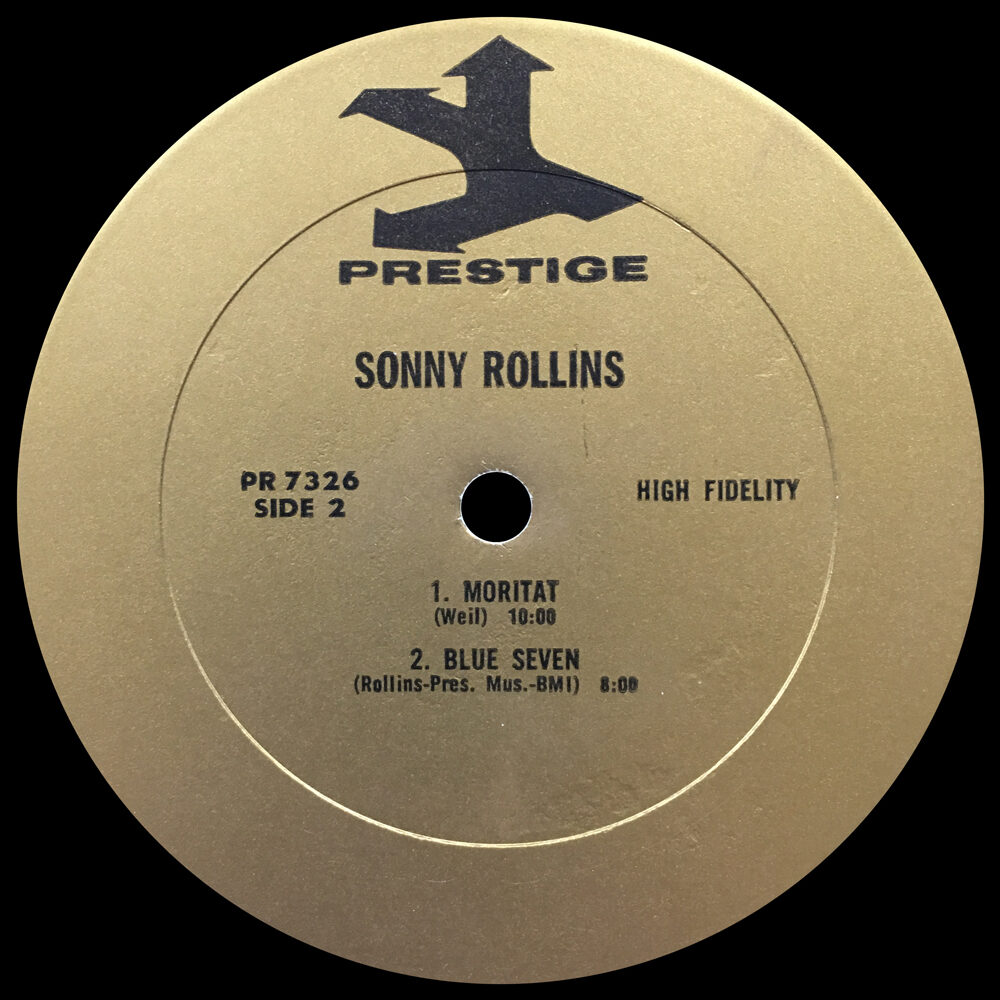
Vinyl Spotlight: Sonny Rollins, Saxophone Colossus (Prestige 7079/7326) “Gold Label” RVG Mono Pressing

  • Mono Prestige reissue circa 1964-1971
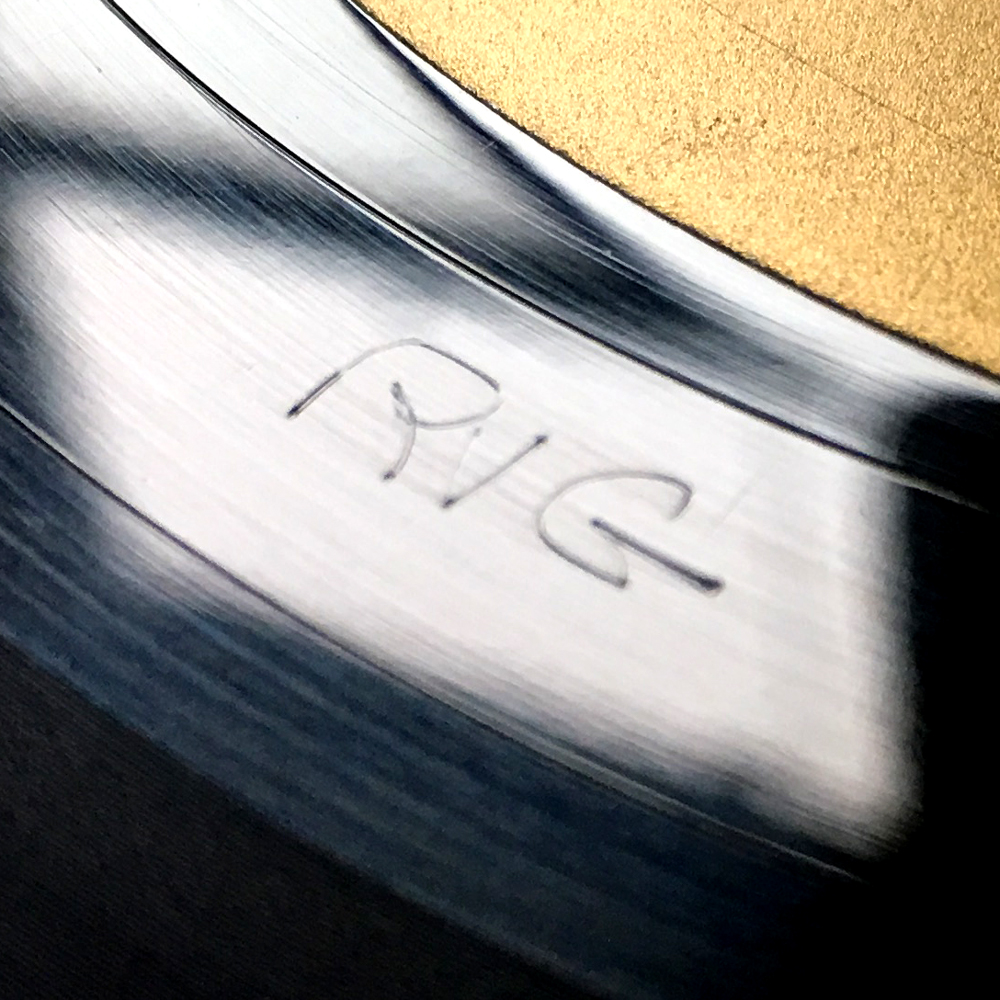
  • “RVG” etched in dead wax

Personnel:

  • Sonny Rollins, saxophone
  • Tommy Flanagan, piano
  • Doug Watkins, bass
  • Max Roach, drums

Recorded June 22, 1956 at Van Gelder Studio, Hackensack, New Jersey

Well it pays to give the jazz sections in record stores a quick flip on each visit. Though usually less than mediocre, I’ve found that jazz LPs often skip the new arrivals bins — a longstanding staple of record stores — and go straight to the genre section. My method is usually to flip quickly through each of my favorite players’ sections and the beginning of each “lettered” section. This effort usually ends up fruitless but every now and then something slips through the cracks.

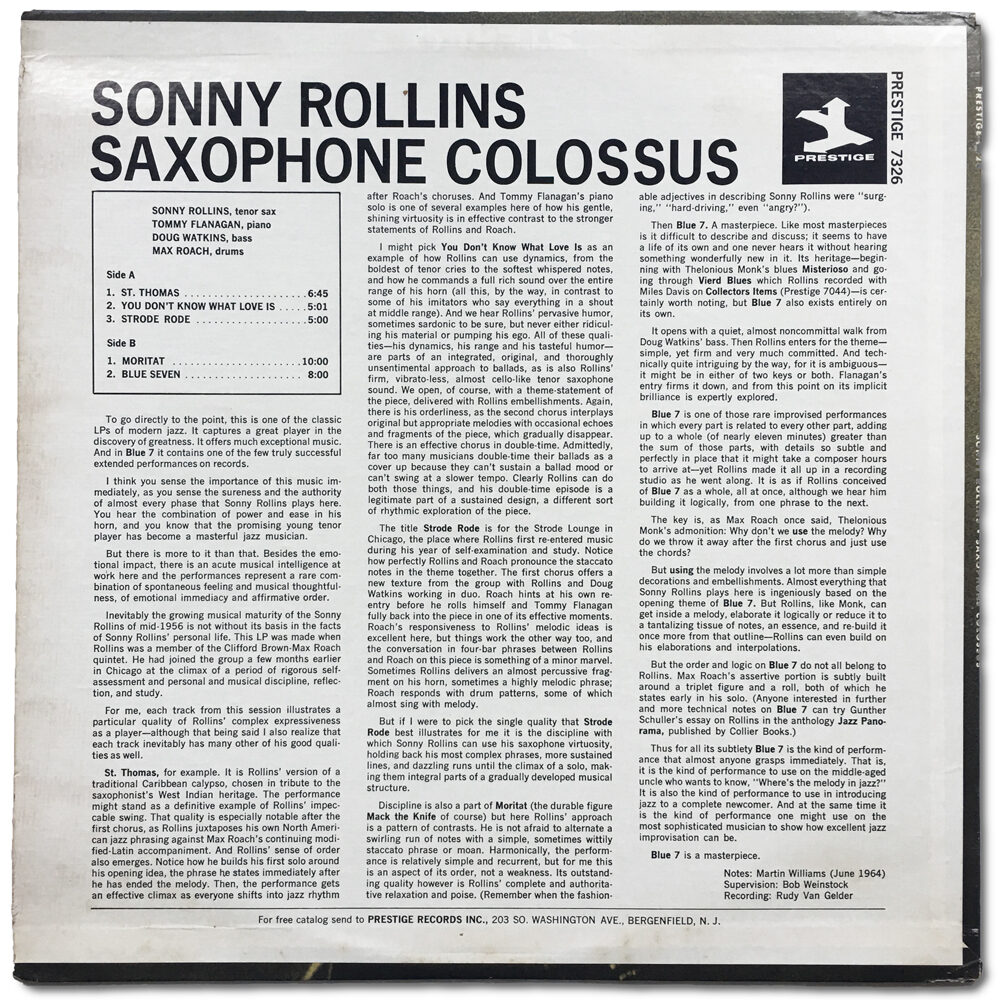
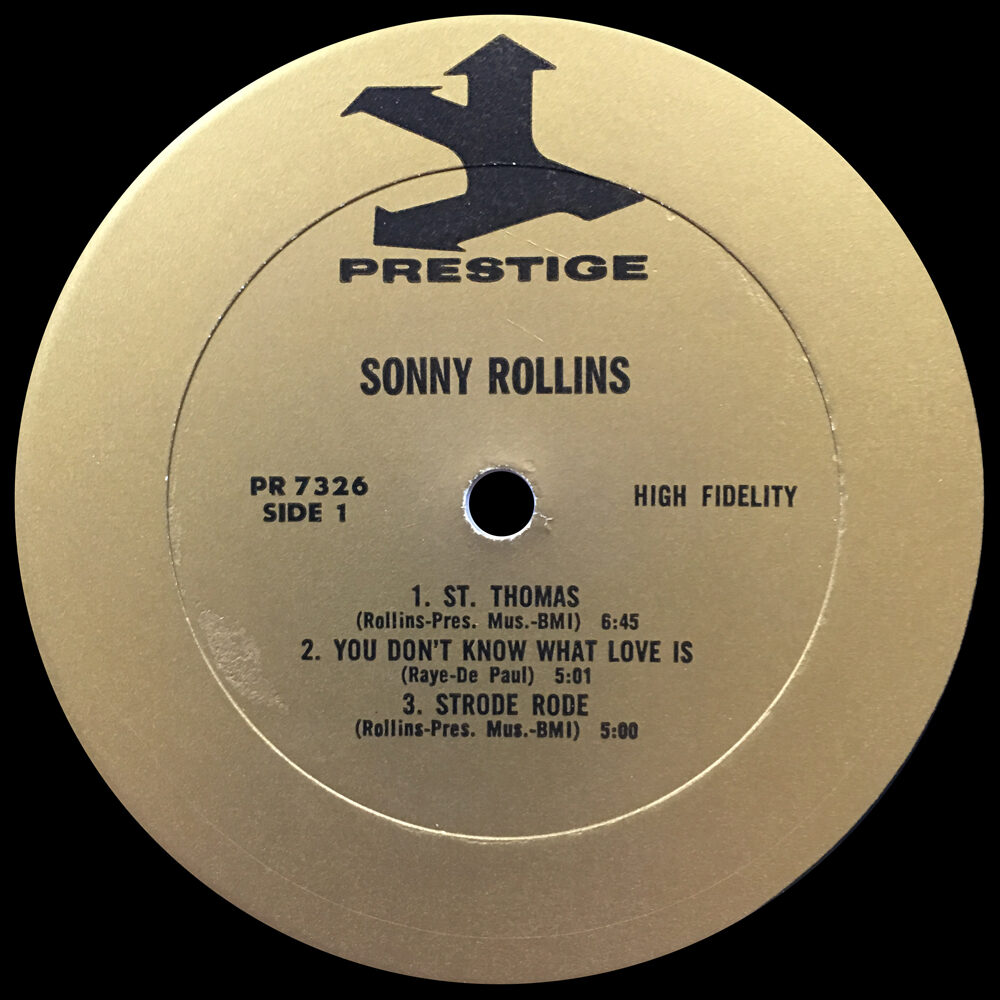
That surely was the case when I found this copy of Saxophone Colossus. On the surface, this pressing seems harmless. It serves as evidence of Prestige Records being up to their old capitalist tricks, updating artwork and catalog numbers in a shameless effort to rebrand previously issued material. Prior to this I had seen fake stereo copies of this reissue a few times but this was the first time I failed to see the “stereo” moniker anywhere on the cover. As I examined the front and back of the jacket I thought, “Could this be mono, and better yet, could it possibly be made from the original 1956 RVG metalwork??” And when I slid the LP out of the jacket, I was overjoyed to find the initials “RVG” handwritten there in the dead wax. To sweeten the pot, the record looked near mint and the price tag was in no way suggestive of the colossal sound laying dormant in these grooves. (See what I did there?)

I promptly paid my fare at the counter, and on this hot, sunny Manhattan day, I posted up at a nearby burger joint to grab lunch as I researched the record’s obscure gold labels. While London Jazz Collector places this label run in the rather wide range of 1964-1971, VinylBeat.com makes a narrower yet less specific claim of “mid-1960s”. Discogs has the pressing year pegged down to 1964 (I have no idea what the source of that info is), but to be honest, the vinyl’s lighter weight and thinner, more bendable material makes me suspicious that it would have been released sometime in the ‘70s. The RVG etching and bold sound of this copy nonetheless remain, a fact made even more astounding when one considers that the original metal factory master disks could have been over 15 years old when this record was made.

Although I usually post favorite albums of mine on here, to be honest Saxophone Colossus is a classic that does not resonate with me as much as it does with most jazz fans. The melody and rhythm of “Saint Thomas” is a bit too corny to find its way into my regular rotation, though the jerky rhythm and brisk pace of “Strode Rode” has always appealed to me. But the real allure for a drummer-minded jazz fan such as myself is Max Roach’s pair of solos on side two. Roach’s hands get quite busy at times during “Moritat” (a renaming of the 1928 Weill-Brecht composition “Mack the Knife”, made for the German play Die Dreigroschenoper; “Moritat” roughly translates to “murder ballad”), but Roach plays with tasteful restraint during his solo on “Blue 7”. Engineer Rudy Van Gelder’s recording of drums was always second to none, even in 1956 as demonstrated here. Roach’s consistent striking of the ride cymbal during his solo on “Blue 7” shimmers with glowing resonance and his tom-toms ring with air-tight clarity and precision.

Though Sonny Rollins’ unique character and humor as a soloist became apparent to me many years ago, I can’t say that I’ve studied the breadth of his catalog with the careful attention it most certainly deserves. But with the addition of this record to my collection, Sonny is sure to get more play on my turntable in the future.

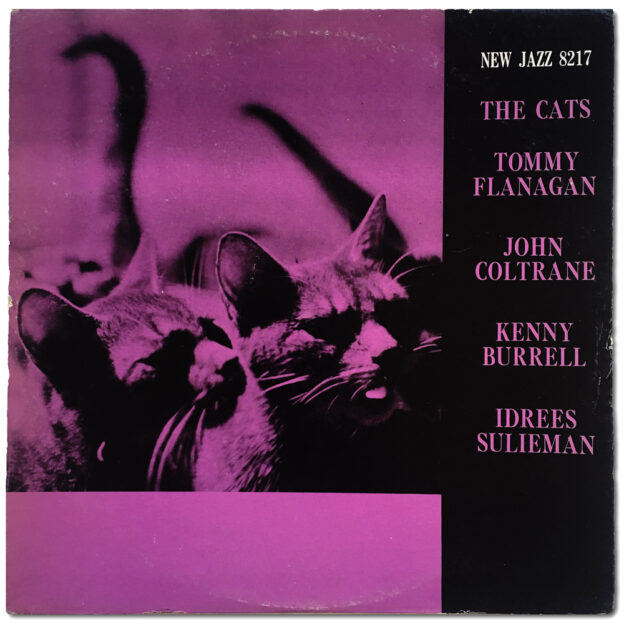
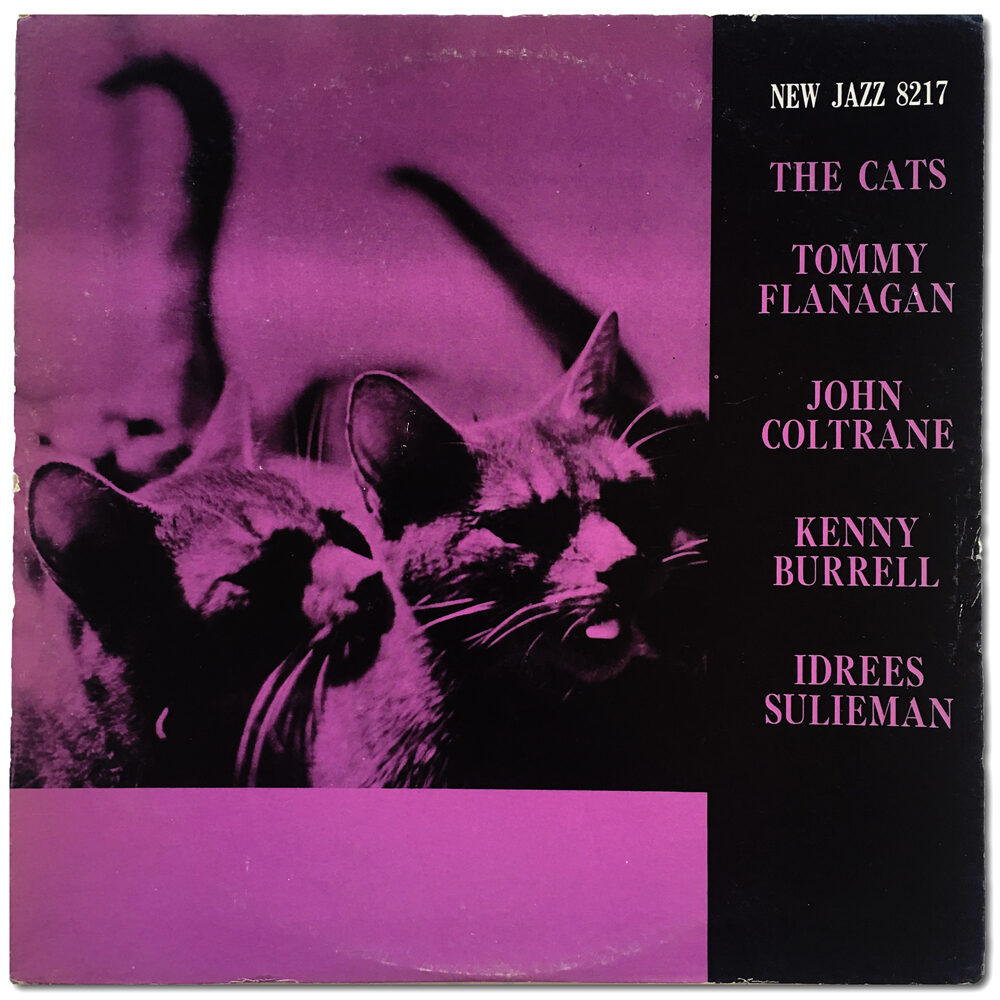
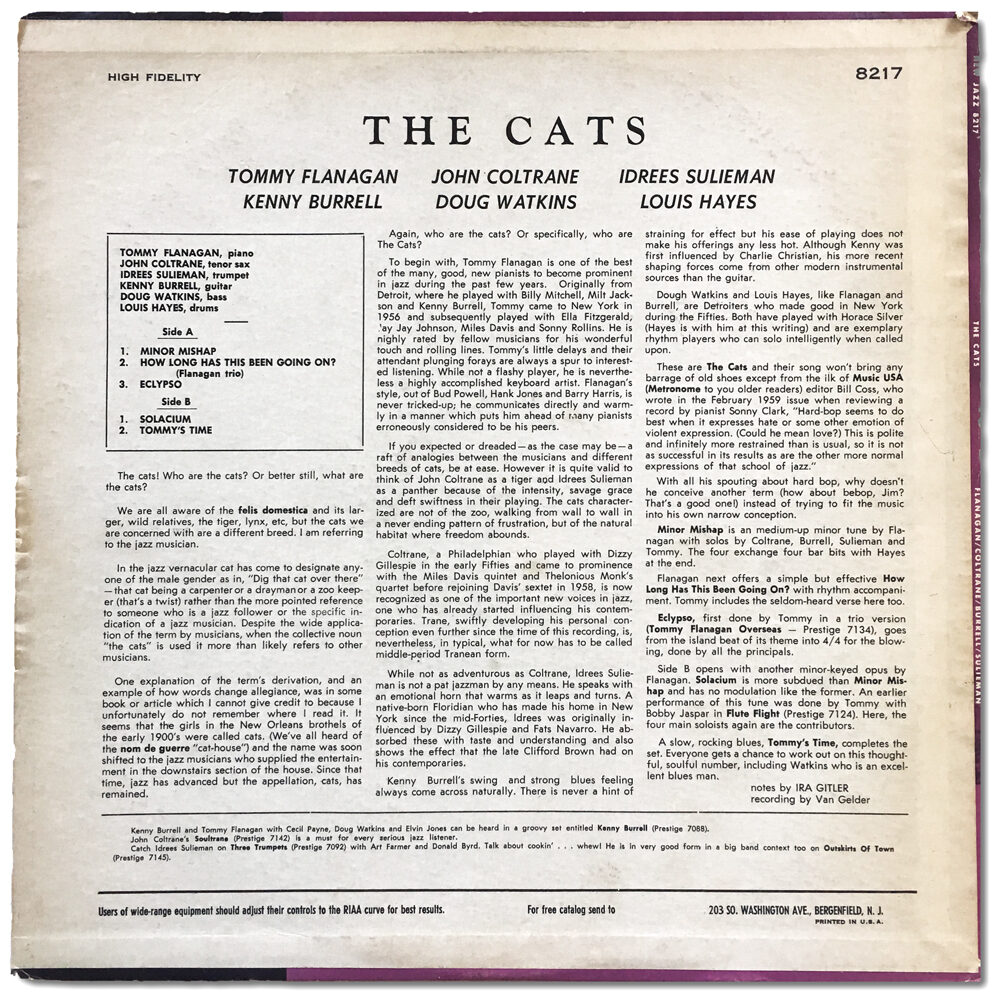
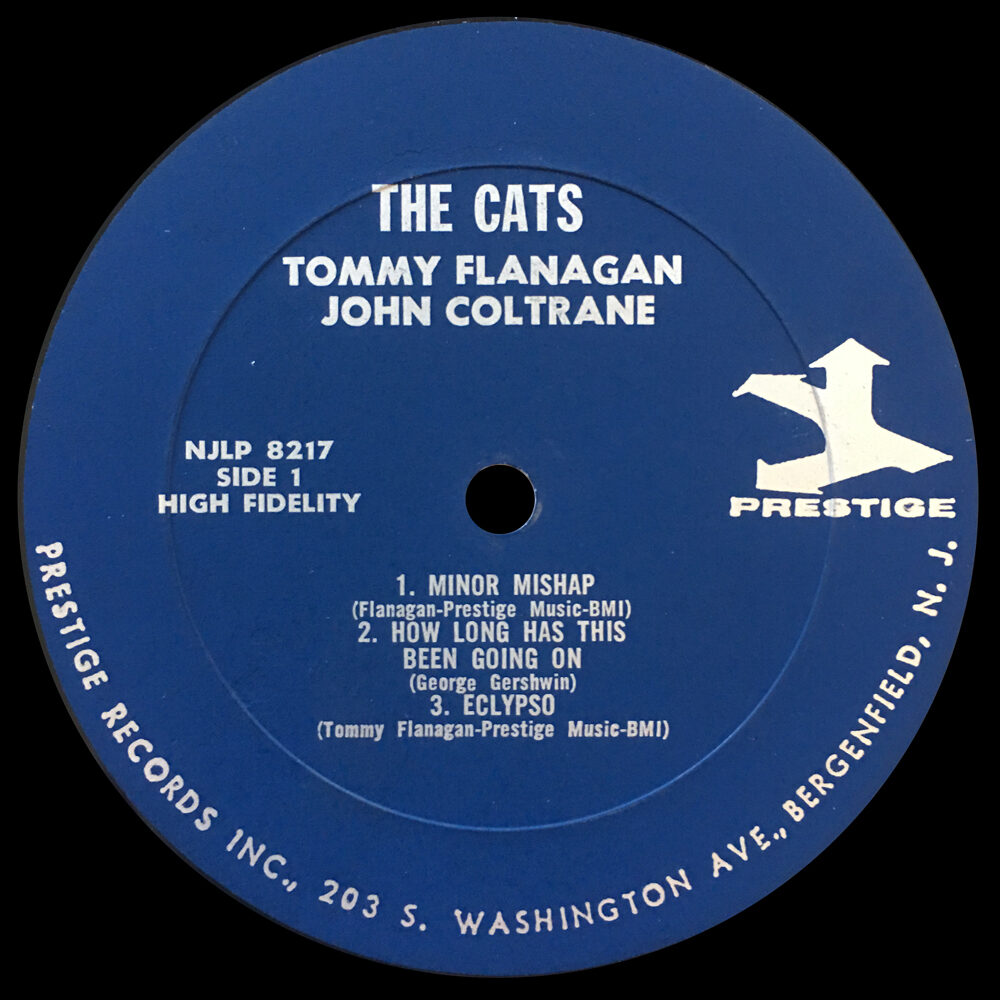
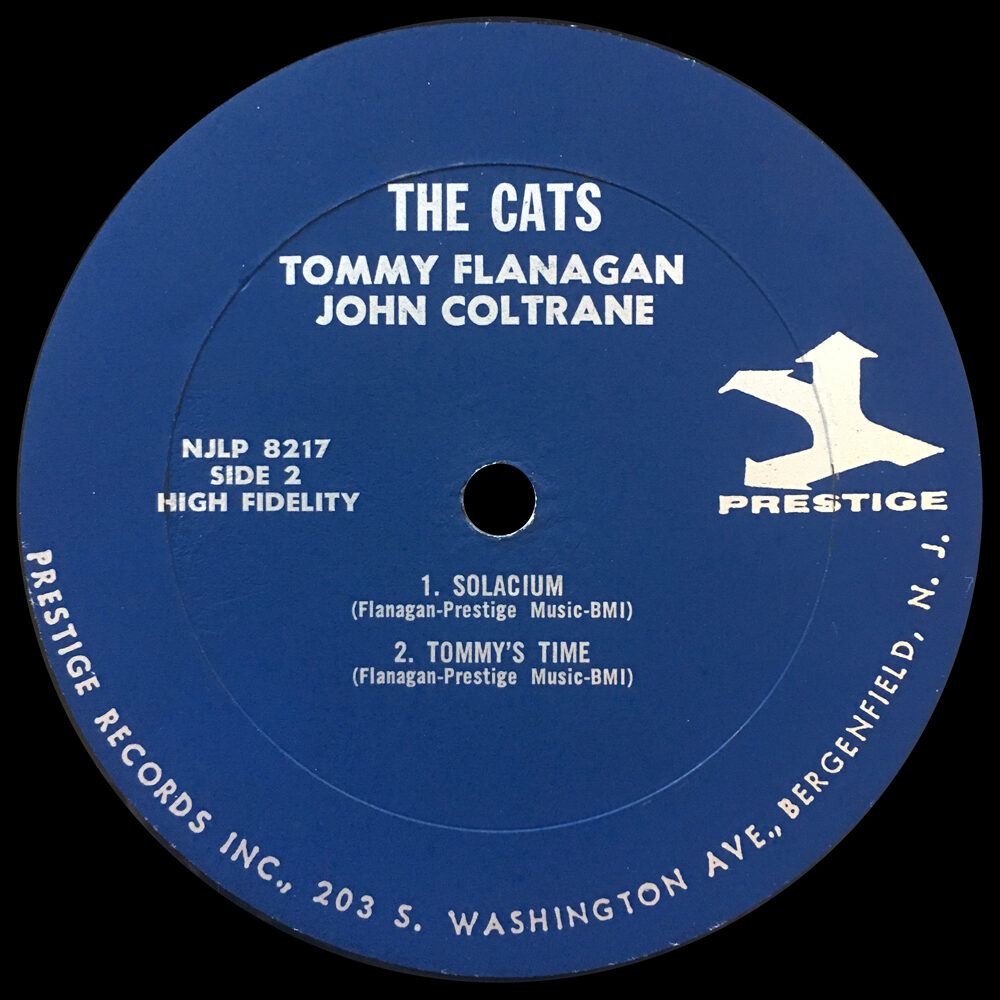
Vinyl Spotlight: The Cats (New Jazz 8217) Second “Blue Label” Pressing

  • Second (Prestige) pressing with blue labels circa 1964
  • “RVG” stamped in dead wax

Personnel:

  • Idrees Sulieman, trumpet
  • John Coltrane, tenor saxophone
  • Tommy Flanagan, piano
  • Doug Watkins, bass
  • Louis Hayes, drums

Recorded April 18, 1957 at Van Gelder Studio, Hackensack, New Jersey
Originally released in 1959

When I lived in Albany, New York, the East Greenbush library had a killer selection of classic jazz CDs, and the 1989 Original Jazz Classics reissue of this album was one of them. Flipping through the racks, this album piqued my interest because of its super-hip cover and the name “John Coltrane”. I became more familiar with this album over the years and acquired the Original Jazz Classics LP a few years ago through Discogs.

Then recently on one of my periodic trips to New York’s East Village record shops, I was doing my flip-through-the-jazz-bins routine, panning for gold and expecting to turn up nothing but the usual rocks. But then in the Kenny Burrell section, the deep purple of this cover peeked out from the tightly-packed row. I assumed this was another OJC reissue, but when I slid the record out of the jacket I was surprised to see the early ’60s blue Prestige label. Things were starting to heat up. The next crucial step was examining the dead wax. With any luck I’d find the initials of Mr. Rudolph Van Gelder stamped there, and sure enough, I did.

I then examined the vinyl, which looked solid VG+. The price tag made it seem like this one slipped by whatever staff member priced it, and strangely, the numbers on the sticker indicated that it had been priced for sale three months prior. I had to believe that it sat behind the counter for months before it made its way to the racks because this record at this price would never last in a store for more than a week. Finally, I brought it over to the listening station for the final leg of my inspection routine and was humbly blown away by how quiet and clean it sounded. So I didn’t hesitate to bring it to the front and I slammed my cash down on the counter: “It’s a deal.”

In the past I’ve expressed disbelief in the commonly uttered collector sentiment that “vintage jazz records sound better than they look”. But this record wasn’t just providing evidence to the contrary, it was proving me dead wrong. I don’t think I’ve ever encountered a record that looked more marked up and sounded so quiet. In fact, this record sounds cleaner than a lot of records I own that are visually EX.

Recorded in the spring of 1957, we hear John Coltrane in a less adventurous but more accessible mood characteristic of the saxophonist before he began his ferocious onslaught of scales later that year with the release of Blue Train (Blue Note 1577). “Minor Mishap” and “Eclypso” are two favorites, but the ultimate mood-setter is “Solacium”, a somber, quiet tune that will perfectly complement a rainy afternoon spent indoors. Available in bold, straight-down-the-middle Hackensack mono only — no stereo option here.

Vinyl Spotlight: Cookin’ with the Miles Davis Quintet (Prestige 7094) Second “Bergenfield” Pressing

  • Second pressing circa 1958-1964 (mono) with small Abbey pressing ring
  • “Bergenfield, N.J.” on both labels
  • Deep groove on both sides
  • “RVG” stamped in dead wax

Personnel:

  • Miles Davis, trumpet
  • John Coltrane, tenor saxophone
  • Red Garland, piano
  • Paul Chambers, bass
  • Philly Joe Jones, drums

Recorded October 26, 1956 at Van Gelder Studio, Hackensack, New Jersey
Originally released in 1957

1 My Funny Valentine
2 Blues by Five
3 Airegin
4 Tune Up/When the Lights Are Low

Selections:

“My Funny Valentine” (Rodgers)

“Tune Up” (Davis) / “When the Lights are Low” (Carter)

I found this record several years back at the first WFMU record fair I ever attended in New York City. It’s not an “original original” pressing in the sense that it lacks the “NYC” address on the labels, but it’s still made from original Van Gelder mastering. On the ballad “My Funny Valentine” especially, you should be able to hear that this is a very clean copy I was fortunate to find for the price I paid.

Much of what I might say about the history of this album I’ve already said in my review of Davis’ ‘Round About Midnight, which shares the same lineup. I originally bought this record mainly because it was a vintage copy in great shape and because I love this version of “My Funny Valentine”, but I eventually came to appreciate the entire second side of the album just as much (“Blues by Five” remains a ho-hum listen for me). Philly Joe Jones’ drum kit sounds thunderous here, and overall we get a glimpse of engineer Rudy Van Gelder in one of his finest hours at his Hackensack studio.

It would appear that this album and Relaxin’ (Prestige 7129) are the two most popular LPs of the four that Davis’ First Great Quintet recorded for Prestige, the others being Workin’ (Prestige 7166) and Steamin’ (Prestige 7200). I find something to like in all of them, but Cookin’, the first of the four to be released, is definitely my favorite. All four albums were recorded on just two dates in 1956. Renowned audiophile mastering engineer Steve Hoffman has claimed in his online forum that Van Gelder did a better job of recording the second date (which just so happened to produce all the takes present on Cookin’), claiming that Van Gelder made excessive use of spring reverb on the earlier of the two dates; I can’t say I agree. I think Cookin’ has the best program start to finish but I think all four albums are representative of how brilliant Van Gelder was under the restrictions of the mono format.

Vinyl Spotlight: The Prestige Jazz Quartet (Prestige 7108) Original Pressing

  • Original 1957 pressing
  • “446 W. 50th ST., N.Y.C.” on both labels
  • Deep groove on both sides
  • “RVG” stamped in dead wax

Personnel:

  • Teddy Charles, vibraphone
  • Mal Waldron, piano
  • Addison Farmer, bass
  • Jerry Segal, drums

Recorded June 22 and June 28, 1957 at Van Gelder Studio, Hackensack, New Jersey

1 Take Three Parts Jazz
2 Meta-Waltz
3 Dear Elaine
4 Friday the 13th

For Collectors

Prestige released numerous LPs in the late ’50s, many of which stand today as interesting mixes of rarity, low demand, and musical excellence. This album is one example of that. I first heard it on Spotify and instantly took to it, but the master tape had noticeably degraded by the time of its digital mastering. So it became a priority of mine to seek out an original. One weekend afternoon last winter I was checking out a Swedish jazz dealer’s website and there it was, an original pressing touting VG++ condition. The asking price was a tad high so I talked the seller down a little and about ten days later the LP arrived at my doorstep. Quiet vinyl is a must for quiet music like this, and as you will be able to hear in the clips above, this one’s definitely a keeper.

I was instantly a fan of the album art as well, which portrays a serene scene of silhouettes that to me appear to be practicing tai chi. What connection the cover is intended to have with the music I do not know, though I do find that its grey, clouded imagery complements the mood of the music quite well.

For Music Lovers

A pair of forward-thinking composers, Teddy Charles and Mal Waldron first recorded together in January 1956 for Atlantic Records release 1229, The Teddy Charles Tentet. A year later they collaborated on five albums in just as many months, four of which were recorded for Bob Weinstock’s Prestige and New Jazz labels (Olio, Prestige 7084; Coolin’, New Jazz 8216; Teo, Prestige 7104). The last album in the run is presented here, captured on two dates in late June 1957.

The soft timbres of The Prestige Jazz Quartet convey a calming mood throughout, even during the more uptempo moments. The album has experimental leanings that weren’t yet trendy in 1957, but the sparse solos hardly beg for the listener’s attention. The quartet arrangement with vibraphone makes for a spacious atmosphere that lends itself well to the nuances of the vibes. Engineer Rudy Van Gelder has also set the drums further back in the mix than usual, making even more room for the dreamy echoes of the vibes to resonate.

The program begins with a trio of movements penned by Charles (“Take Three Parts Jazz”), followed by a pair of Waldron compositions (“Meta-Waltz” and “Dear Elaine”) and concluding with a lesser-known Thelonious Monk tune, “Friday the Thirteenth”. “Route 4”, the first third of Charles’ piece, is an ode to the highway traveled by hundreds of the Big Apple’s finest jazz musicians traveling to and from Van Gelder’s home studio in Hackensack, New Jersey. The piece’s other bookend, “Father George”, refers to another passageway between the city and Van Gelder’s, the George Washington Bridge. “Lyriste”, the title of the middle section, is an invented word of Charles’ crafting that joins ‘lyrical’ and ‘triste’. In accordance with the titles, perhaps Charles intended the piece to serve as a soundtrack for a somber commute back to the island after a long day of recording, where use of the word ‘triste’ might have been meant to suggest that trips to Van Gelder’s were for many of the musicians a welcome break from the routine of city life.

Accompanying Charles and Waldron are bassist Addison Farmer (twin brother of trumpeter Art Farmer) and drummer Jerry Segal. Segal avoids complicating things by playing with tasteful restraint throughout, and Farmer more than plays his part by delivering an impressive solo on “Meta-Waltz”. Side B begins with “Dear Elaine”, an apprehensive sprinkling of notes that seems to provide a window into the mind of a cautious courter. Closing the album, Waldron’s regular use of refrain on “Friday the Thirteenth” creates a comforting sense of familiarity that culminates in an inspired hammering of adjacent keys. (In the original 1953 recording of the tune, Monk is in his prime, rightly delivering an astonishing solo, though there’s something about hearing that melody played on the vibes that makes more sense to me than hearing it on Rollins’ sax…what do you think?)

Charles and Waldron would collaborate sporadically moving forward, but this would be the last time the entire ensemble would be in a recording studio together. Despite it being a short-lived, lesser-known experiment, the Prestige Jazz Quartet was a group of exceptional talent that deserves its rightful place in the storybook of modern jazz.

Epilogue

When I was preparing to take photos of the album jacket last week, I heard something jostling around inside, so I took a peek and to my surprise there was a small piece of paper inside with what appeared to be two interviews dated 1958 and typed in Swedish (the country the record came from upon my purchase). I then thought it would be cool to post a scan of the paper and maybe send out an S.O.S. for help translating it, then I thought of Google Translate and decided to do the translation myself, which I am presenting here.

The reviews would have originally been published in two Swedish magazines, Estrad (“Bandstand” in English) and OJ (“WOW”), and both were written by well-known Swedish jazz musicians: saxophonist/arranger Harry Arnold, whose resume included working with Quincy Jones, and pianist/composer Lars Werner. The original owner of the record must have been in the habit of typing up reviews for all the records they owned (perhaps to make up for the fact that they couldn’t read the English liner notes). Arnold seems the more opinionated of the two, possibly due to being more experienced and knowledgeable, though the way in which Werner has been charmed by the music resonates more with me. Through my amateur translation I also sense that Arnold’s review is surprisingly informal and that Werner was the better writer of the two (I also favored what I heard of Werner’s own music on YouTube).

For me, finding that piece of paper and reading the reviews felt like being transported back to the endlessly fascinating time that these records were made in, and I thought I’d share my experience with anyone who feels similarly nostalgic. I hope you enjoy!

Harry Arnold, Estrad (Bandstand), February 1958:

Harry Arnold

Of course I could try to make this into a pompous analysis of this record, but since it is said that honesty is best kept at a distance — all right, I do not have much profound to say about this record. Do not think that I condemn the whole thing because I absolutely do not; I’m just so damn precarious about it.

Perhaps the review will be more useful if I stick to the basics. The quartet consists of vibraphone, piano, bass, and drums, so it is tempting to draw parallels with the Modern Jazz Quartet. Here and there the style is similar, but the compositions are not in the “classical” spirit, as is usually the case with John Lewis and partners.

Side one is occupied by a work endowed “Take Three Parts Jazz”. It is a symphony in three movements with names “Route 4”, “Lyriste”, and “Father George”. In addition there is a song called “Meta-Waltz” on the same side.

On “Friday the Thirteenth”, which Thelonious Monk wrote, I think the whole thing suddenly begins to sound more natural, this may possibly be due to the fact that Monk has a truer sense of jazz when he composes than the other composers on the disc have?

I think pianist Mal Waldron stumbles too much at times, and the slow vibrato on the vibraphone affects my nerves in an unpleasant way. I think that the chord changes become one soporific grinding — but I appreciate the disc in a way, because I have a feeling Teddy Charles and the others have a bona fide interest in reinventing jazz without resorting to hysterical effects. It should also be noted that the solos are quite interesting at times.

Lars Werner, OJ (WOW), January 1958:

Lars Werner

In both name and composition, listeners will inevitably be tempted to compare this group with the Modern Jazz Quartet, which of course for a long time almost had a monopoly on sales in the vibraphone quartet market. However, the Prestige group’s music is of an entirely different character than MJQ’s: it is less stylized and lacks a certain coolness while spanning over a larger emotional register. There is certainly no equivalent in the Prestige Jazz Quartet to the personality that is John Lewis in MJQ, nor a soloist by Lewis’ standards, but Teddy Charles and Mal Waldron’s music proves capable of keeping the listener’s interest alive naturally, and the brilliant bassist Addison Farmer gives an intense and unfailing swing to everything.

To their credit, Charles and Waldron have been doing a lot of experimenting that sometimes has more in common with contemporary musical manifestations other than jazz. Here however, it seems that they have started from the rich ballad tradition found in jazz, and I feel they have found success with this approach.

Charles’ contribution, the tripartite “Take Three Parts Jazz”, contains much more tangible musical material than some of the earlier stuff he has done. The piece is highly successful, with tempo changes, solos, and themes emerging out of necessity, and the sense of a greater whole is never lacking.

Waldron’s two contributions, “Meta Waltz” and “Dear Elaine”, display an unconventional touch and much melodic finesse. Both works are well prepared, and fortunately they lack the sort of searching character that has so easily crept into many attempts to break jazz conventions.

Finally, Thelonious Monk’s four-beat composition “Friday the Thirteenth” provides an opportunity for longer solos from Charles, Waldron, and Farmer.

As a soloist, Charles is not as virtuosic as Milt Jackson — who is the only one he has to compare. Charles plays fewer notes but often gets an aphoristic clarity of melody, which makes him a musician I like to listen to.

Waldron seems to look for things other than melodic development as a soloist. He is more interested in piano percussion characteristics, and piano solos become more of a series of rhythmic figures, albeit rather monotonous at times.

The Prestige Jazz Quartet is still only a gramophone ensemble, and I am afraid that its music lacks the accessibility of MJQ. But this album should in the long run be of greater importance than, for example, MJQ’s last album, which gets a little stale after a while.