Tag Archives: Kenny Dorham

Origins of Bop: Maxine Sullivan / Kenny Dorham, “My Ideal”

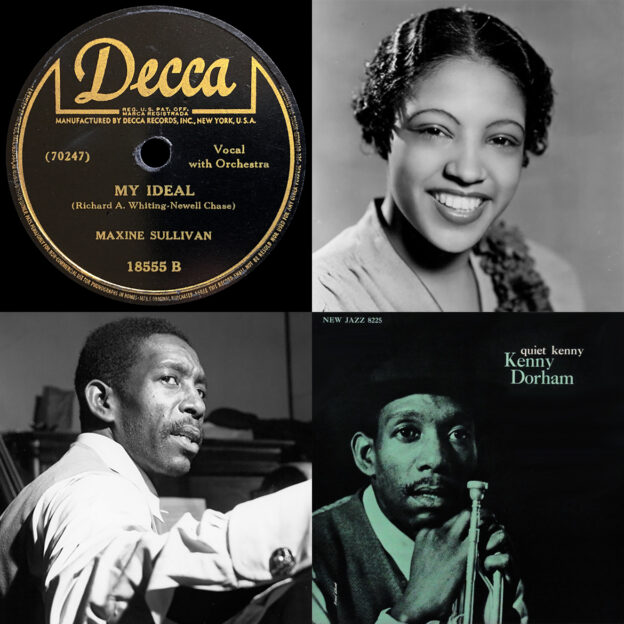
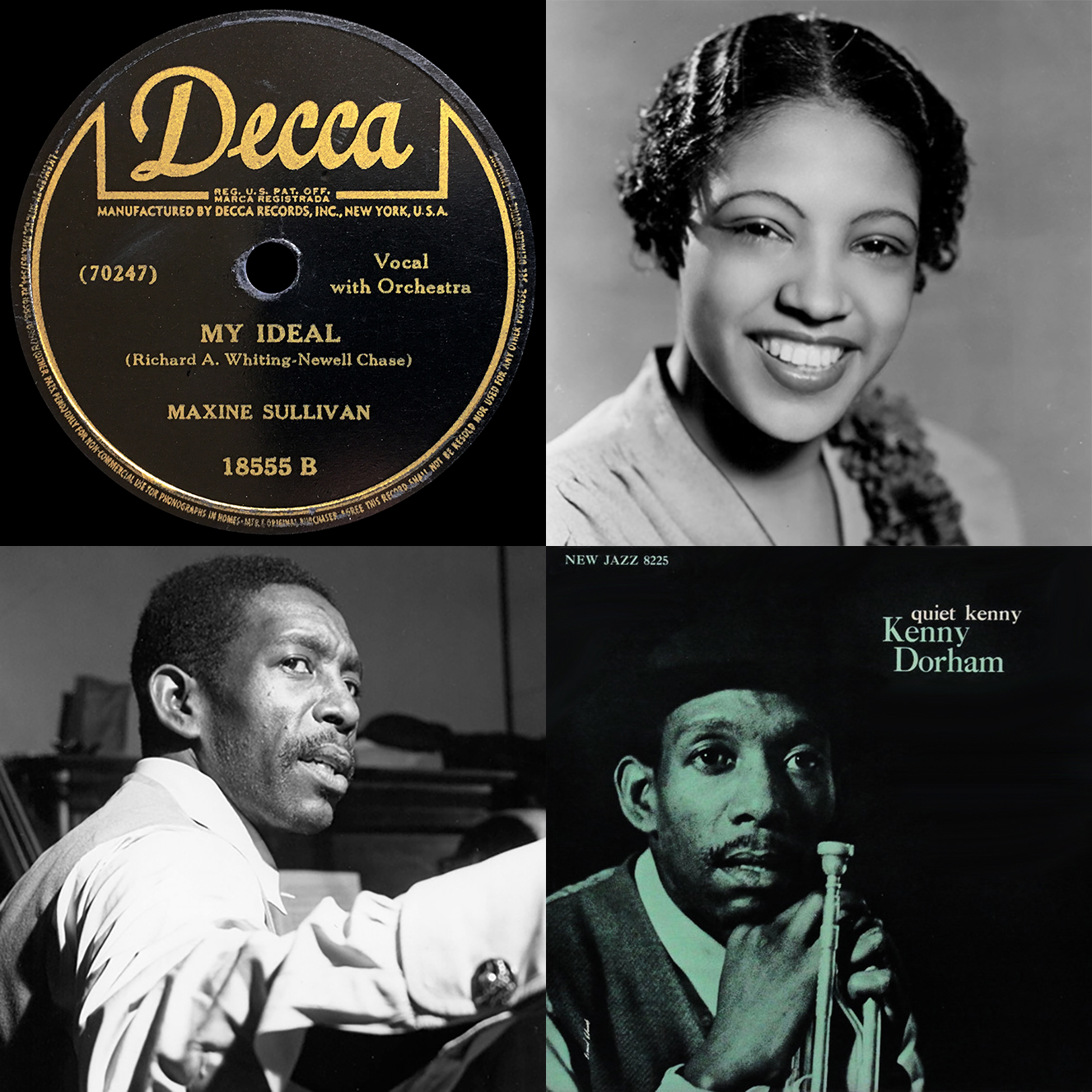
Maxine Sullivan, “My Ideal” (Original 78)

Decca Records Cat. No. 18555 (Side B) | 1943

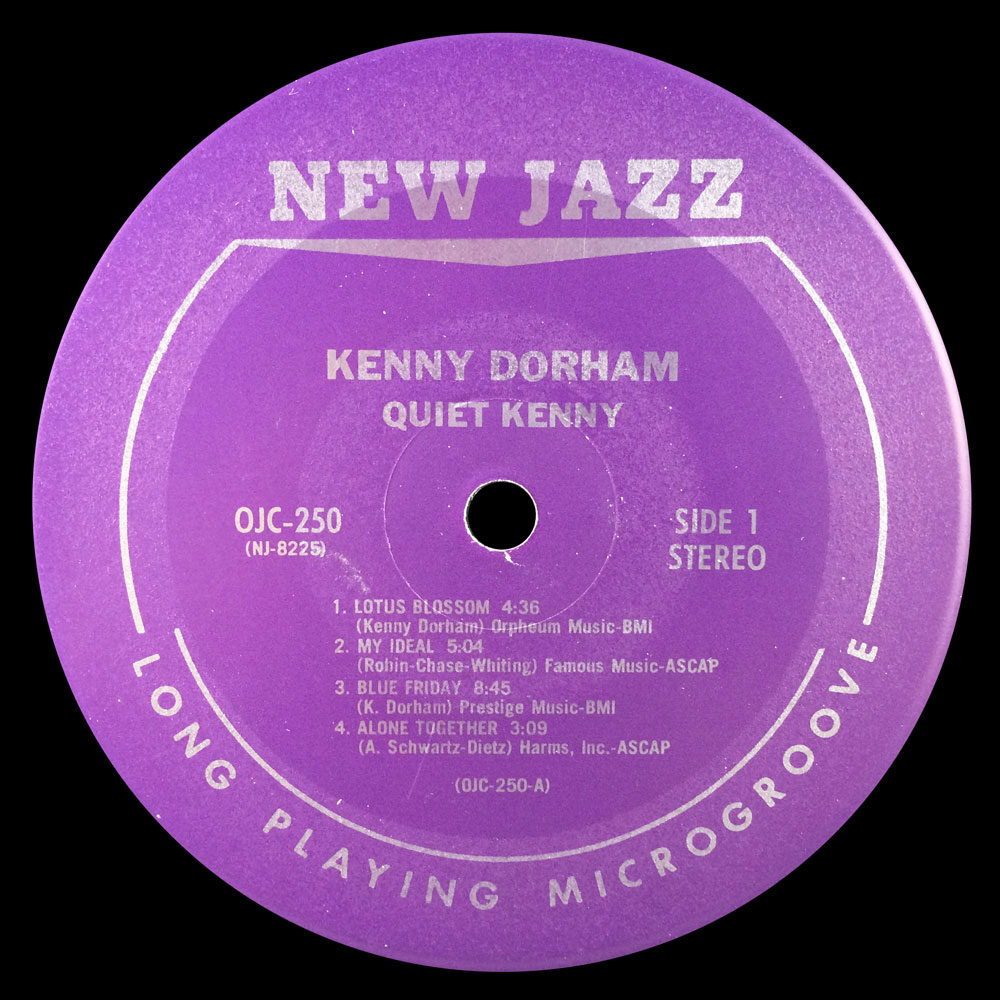
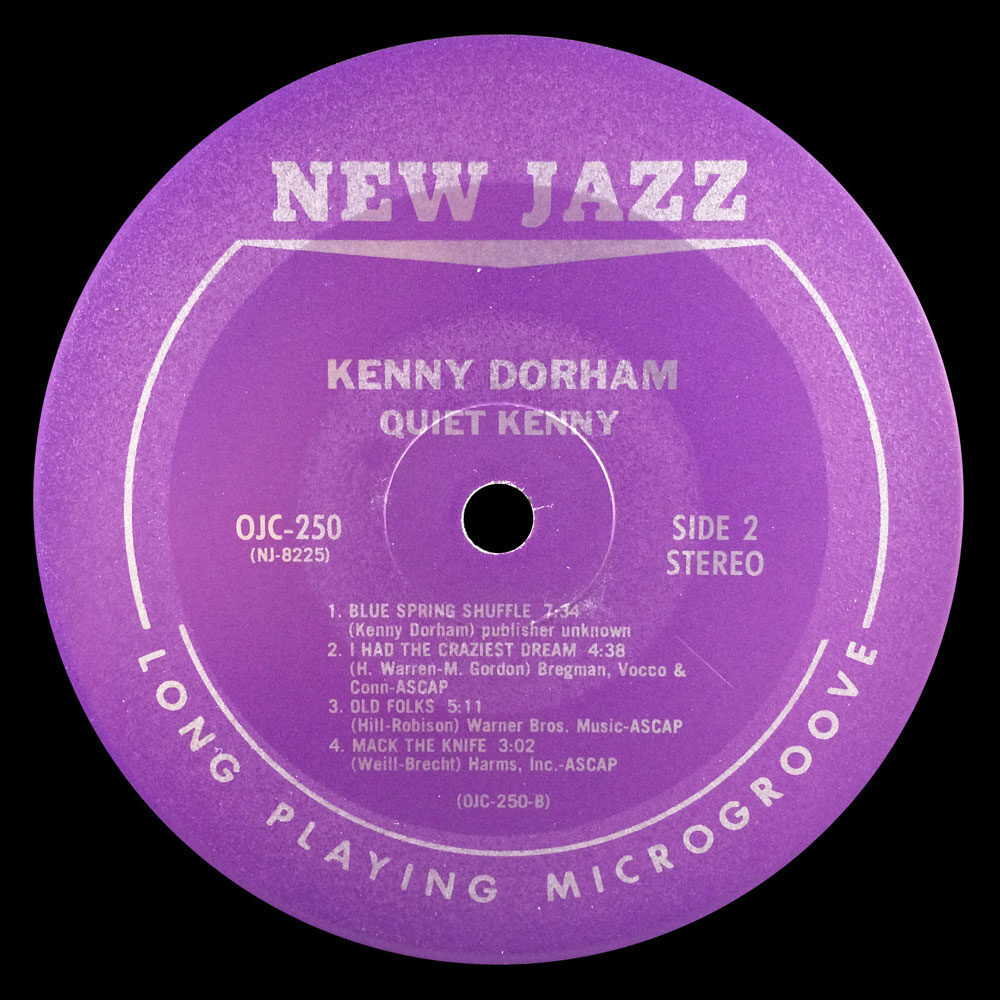
Kenny Dorham, “My Ideal” (Original Jazz Classics LP Reissue)

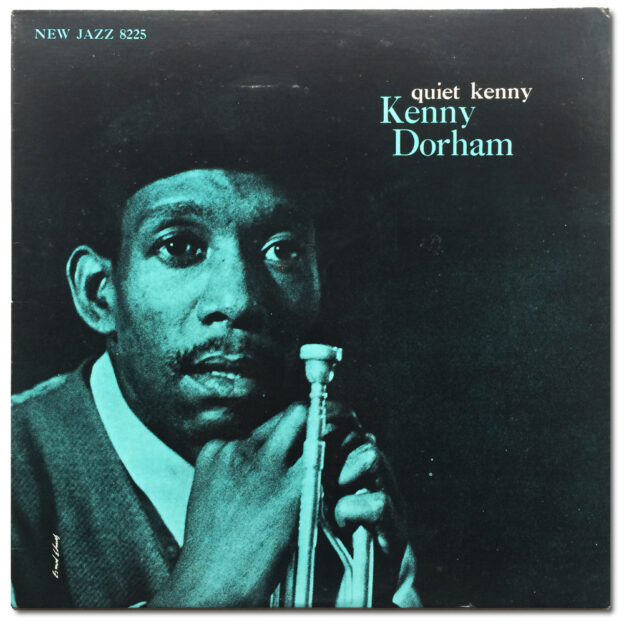
New Jazz Records Cat. No. 8225 | 1959

Personnel:

  • Kenny Dorham, trumpet
  • Tommy Flanagan, piano
  • Paul Chambers, bass
  • Art Taylor, drums
I’ve been noticing some buzz on the internet about an up-and-coming mono reissuing of Kenny Dorham’s Quiet Kenny by the Craft label, so I thought I’d feature a track off that album for this edition of Origins of Bop. “My Ideal” dates back to 1930, the year of both its publishing and premier on the silver screen. Playboy of Paris starred Maurice Chevalier, who was also the first to record the song.

After several years of laying commercially dormant, Maxine Sullivan decided to give “My Ideal” a fresh reading. Gone are Chevalier’s humorous French accent, masculine perspective, “B” section, and half-spoken delivery of the final verse. With Buster Bailey’s clarinet taking the instrumental lead, Sullivan’s version is the first to feature a jazz arrangement. Sullivan was 32 at the time of recording but the innocence of her voice suggests a teenage girl waiting for a fantasized heartthrob to make her acquaintance on the way home from school.

Coleman Hawkins followed soon after with his own instrumental version, which retained the structure of Sullivan’s. Over a decade later, Chet Baker tried the tune on in 1956, brining back the “B” section while moving it to the beginning, and two years later Earl Coleman would mimic the Baker arrangement on Sonny Rollins’ Tour de Force album.

A word about the popular music form: It has always seemed like “real music lovers” kind of shun popular music. I’m not one of them. I love pop music. I love it for its simplicity. You get that with Sullivan’s version. Her lyrical inflections are hardly adventurous yet they easily keep my interest. The humility of her straight-down-the-middle interpretation is also admirable. Baker takes a few steps away from that, swinging to-and-fro with syllables rarely falling on-beat. Then Coleman and Rollins wreak havoc on this pretty love song, mangling it to the point of near-unidentifiability.

Is the ease of pop such a sin? These are my opinions, after all, but to me Coleman’s version is the epitome of trying too hard to make things interesting. (Fans of Rollins might guess, like me, that his atypical stylings here are meant to appease Coleman.) Surely I don’t understand the fundamental conception of most jazz vocalists, as numerous legends seem to “jazz things up” in this manner: Johnny Hartman, Sarah Vaughan, Helen Merrill, Sheila Jordan, Cassandra Wilson. Give me Ella or Blossom Dearie and I’m a happy camper.

Thank heavens for Kenny Dorham restoring some order to the universe in 1959 with his version, which, like Hawkins’, is executed in the spirt of Sullivan’s. Dorham’s heartwarming, muffled tone is reminiscent of Baker’s, yet I have always found Kenny to have a unique and understated musical persona that is perfectly complemented by this type of tone. From his sweet playing alone I had originally and erroneously assumed that this song was dedicated by its authors (Newell Chase, Richard A. Whiting, and Leo Robin) to their respective lovers. Yet the lyrics reveal a hopeful story of longing for a partner unknown.

Dorham’s version is a favorite ballad of mine and I’m glad it led me to discover Maxine Sullivan. There’s plenty more Origins of Bop posts to come so please stay tuned.
Shellac Spotlight: Max Roach Quintet, “Maximum” / James Moody Quartet, “Just Moody” (Blue Note 1570)

Original 1949 pressing
“Maximum” recorded May 15, 1949 at Studio Technisonor, Paris
“Just Moody” recorded April 30, 1949 in Lausanne, Switzerland

A Max Roach Quintet, “Maximum”
B James Moody Quartet, “Just Moody”

Selection:

“Maximum” (Dorham-Roach)

There is something to be said about the role exclusivity plays in record collecting and even in music appreciation in general, with this 78 being a prime example. If you’re a collector and you want to preview the songs on this disk, it’s possible to unearth them on YouTube. But you won’t find them on Spotify, and you’ll need to make a considerable effort to locate them in the twelve-inch LP format on a compilation from the ’70s. Admittedly, knowing the scarce availability of these recordings makes listening to the original 78 a little more exciting.

The A-side, “Maximum”, steals the show by a longshot. It was written by Max Roach and Kenny Dorham, and the title is surely a tribute to the former. I would be hard-pressed to find a more exhilarating musical performance in any era and in any genre of music. Indeed, Max Roach played a central role in making fast tempos fashionable during the bebop era. I have always been fascinated by how quickly bop is played at times, and several years ago I actually set out to determine which drummers in jazz could play the fastest. At the end of my survey, Max Roach and Tony Williams were at the top of the heap, unmatched in their ability to keep a steady, swift beat.

This track is of incredibly-low fidelity standards. But just like the other 78s covered here recently, that lack of sheen gives the recording oodles of character. In fact, I’m glad this wasn’t recorded in higher fidelity — can you imagine how different the overall feel would be if this was recorded at 30th Street in the 1960s? Bassist Tommy Potter gets lost in the lo-fi melee but everyone else cuts through with ease. Perhaps as a consequence of being the session leader, and despite the trend to subdue the drummer in 1940s recordings, leader Roach has a surprisingly up-front presence. This rightfully gives the sonic spotlight to Roach’s pedal-to-the-floor tour de force.

I have never heard such thunderous drumming in my life. Roach’s in-your-face snare packs a punch, and when he winds up for one of his machine-gun fills, watch out. (Depending on how you count a measure, and as a result of how fast the song is, Roach is technically only playing eighth notes during these rolls!) Solos by James Moody, Dorham, and Al Haig are all executed with astounding precision, all the more impressive when considering the quintet’s race-car velocity. But my god, Roach is superhuman on this. He is incredibly inventive, even while comping, and his accuracy is awe-inspiring.

Max and company recorded four other tunes on that Paris spring day in 1949. All five were released in the 78 format by Vogue Records in France originally. “Prince Albert”, “Maximum”, and “Yesterdays” (titled “Tomorrow” for this issuing) would all be licensed to Blue Note for 78 release before they appeared on Blue Note ten-inch 5010 three years later. “Baby Sis” (dubbed “Maxology”) would be licensed to Prestige Records for a 78 release here in the states, and “Hot House” (titled “Ham and Haig” — someone dodging publishing royalties???) would remain unissued in the U.S.

Nothing beats feeling the sheer weight of a shellac 78 in your hands. I have a special adoration for the original Blue Note 78 label as well. This precursor to the classic Blue Note LP label is perfect in every way. I love the thicker block font of the company name and how everything fits neatly within in the 78 label’s smaller surface area. I also like how the deep groove lines up with the edge of the label as originally intended. The hazy yellow — preceded and succeeded by the more familiar off-white — has an edginess, though I wonder if this was an intentional aesthetic choice despite the fact that many Blue Note 78s look like this.

Getting ready to (gently) drop this record on my turntable

Disks like this make record collecting worth it, and I’m glad to have stumbled upon this record when I did. Episode 2 of Origins of Bop is slated for next week so stay tuned.

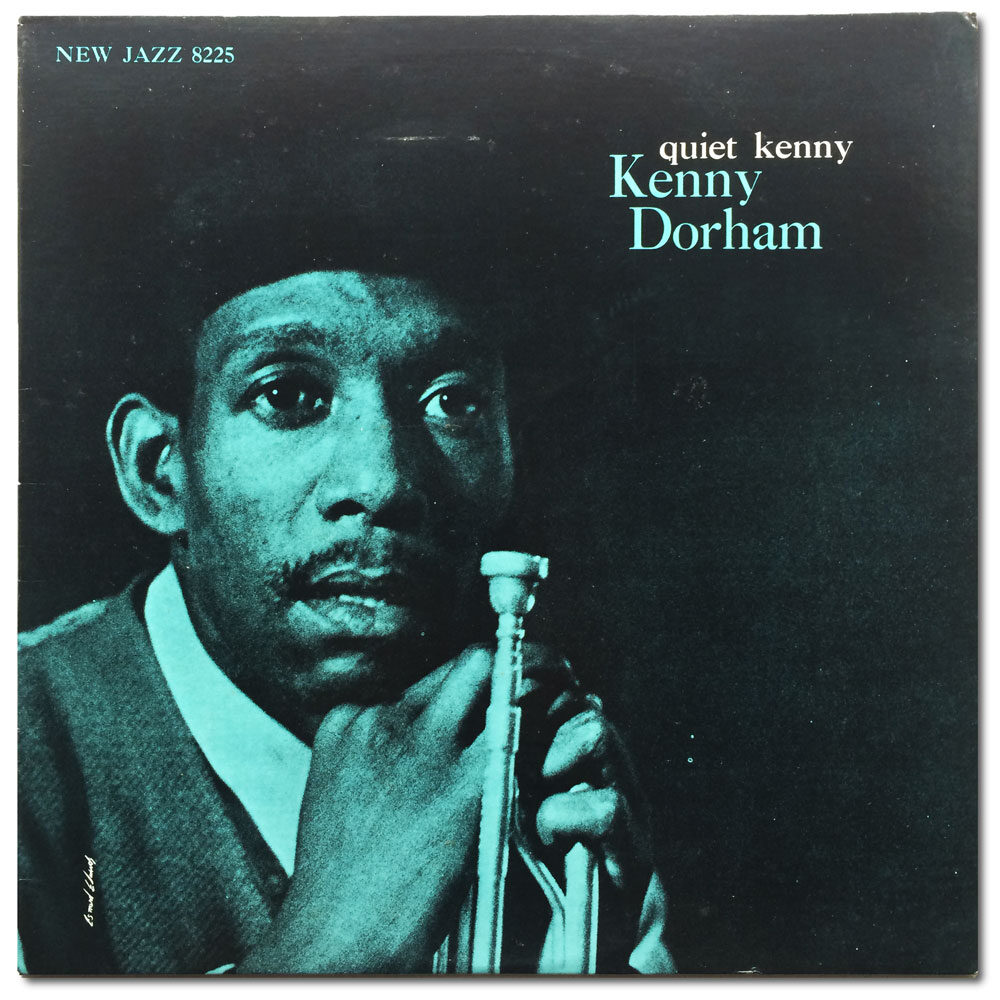
Vinyl Spotlight: Kenny Dorham, Quiet Kenny (New Jazz 8225) OJC Stereo Reissue

  • Original Jazz Classics stereo reissue circa 1986 (catalog no. OJC-250)

Personnel:

  • Kenny Dorham, trumpet
  • Tommy Flanagan, piano
  • Paul Chambers, bass
  • Art Taylor, drums

Recorded November 13, 1959 at Van Gelder Studio, Englewood Cliffs, New Jersey
Originally released February 1960

For Collectors

After a couple years of collecting on a budget, the reality of the situation starts to sink in: you won’t be acquiring a first pressing of a holy grail like Kenny Dorham’s Quiet Kenny any time soon.

What makes an album a holy grail? Simply put, a combination of being very rare and very in demand. More specifically, in the case of this overlooked album, it probably has a lot to do with the fact that it didn’t get a proper second U.S. pressing until this version, the 1986 Original Jazz Classics reissue. (According to Discogs, Prestige released a Dorham album in 1970 simply titled 1959 with different album art but the same track listing as the OJC reissue, which includes the originally unreleased “Mack the Knife”.) To give the original even more allure, the tendency for reissue producers to have an overwhelmingly strong preference for stereo has rendered the original the only mono version of this album ever released.

There’s always something about reissues causing them to fall short of the excitement an original provides. Though I avoided Original Jazz Classics reissues for a while for this reason, I eventually relaxed my naïve original pressing snobbery and began considering reissues of favorites that were much too expensive in their first pressing form. I then read about how OJC reissues were by and large considered to be of exceptional sound quality, with the earliest of them guaranteed to be all analog as well (my copy had the original shrink wrap complete with the long rectangular OJC sticker characteristic of OJC albums released in the mid-80s). So I gave these reissues a chance, and by and large they have lived up to my expectations. The artwork and packaging are hit or miss with OJCs, though I think they did a good job with this release, and the fact that the labels mimic those used for the original New Jazz LP is an added bonus.
For Music Lovers

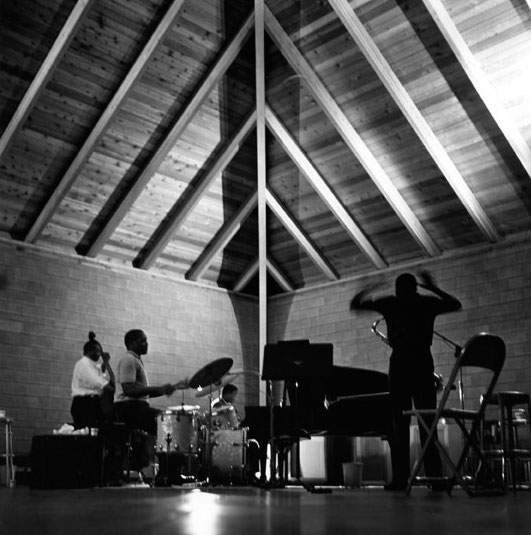
Shortly after I got into jazz, I came across the OJC CD reissue of Quiet Kenny at a local library, and going off the album’s 3.5-star rating in The Penguin Guide to Jazz Recordings and its elite status among collectors, I decided to give it a try. Though the music didn’t immediately draw me in, I soon grew to appreciate the minimal arrangement and the big, empty, dark sound of Rudy Van Gelder’s Englewood Cliffs studio. I also have a leaning toward more gentle styles of playing, which, as the title suggests, this album epitomizes.

Van Gelder Studio, Englewood Cliffs, New Jersey

Quiet Kenny features three Dorham originals: “Blue Friday”, “Blue Spring Shuffle”, and “Lotus Blossom” — not to be confused with “Lotus Flower”, another Dorham composition, a ballad that premiered in 1955 on the ten-inch Blue Note LP Afro-Cuban (BLP 5065). Though “Blue Friday” appears here for the first time, “Lotus Blossom” had first been recorded by Riverside in 1957 with a piano-less quartet led by Dorham (2 Horns, 2 Rhythm, Riverside 255). As much as I enjoy the less busy rendition presented here, the driving pace of the Riverside version along with the harmony offered by Ernie Henry’s sax make the Riverside version tough to beat. “Blue Spring Shuffle” had already been laid to tape as well, appearing several months prior with the truncated title “Blue Spring” on the LP of the same name (Blue Spring, Riverside 297). In this case I hold the more sparse arrangement here in higher regard.

The first track on Quiet Kenny that stood out to me was “Lotus Blossom”, the gentle, uptempo opener. Art Taylor’s solo shines here, the gorgeous sound of which is a combination of the drummer’s well-crafted, finely-tuned kit, Van Gelder’s EMT reverb plate, and the natural ambience of the engineer’s custom-built cathedral-like studio. “My Ideal”, the next song in the sequence, has become one of my favorite jazz ballads. The other ballad, “Alone Together” follows close behind, and overall I find Quiet Kenny to be a solid listen with a clean, sweet sound throughout.

Mono vs. Stereo

Like many Blue Note albums released between the years of 1959 and 1962, every reissue of Quiet Kenny has been stereo despite the original release being exclusively mono. The best explanation for this would be that the album was recorded to two-track tape only. Since Van Gelder didn’t mix down to a separate master tape for mono releases in these instances (all mixing was done on the fly), reissue producers today would only be left with a two-track master tape to work with. And though it’s quite possible that these producers have unanimously preferred the stereo presentation to the mono, they may have also erroneously concluded that the album was monitored and mixed in stereo due to the absence of a mono master tape. But the fact that the inaugural release was strictly in mono strongly suggests the contrary. As a result, the only way to hear this music in mono today short of summing the channels of your stereo is to cough up $2,000+ USD for an original.

Offered here are both the stereo and mono presentations of the opening track for comparison (the mono obviously not being from an original pressing but the summing of the channels on my amplifier). Though the mono is cohesive where the stereo is somewhat disjoint and empty, I find the space created by the stereo spread too beautiful to collapse into a single channel.