
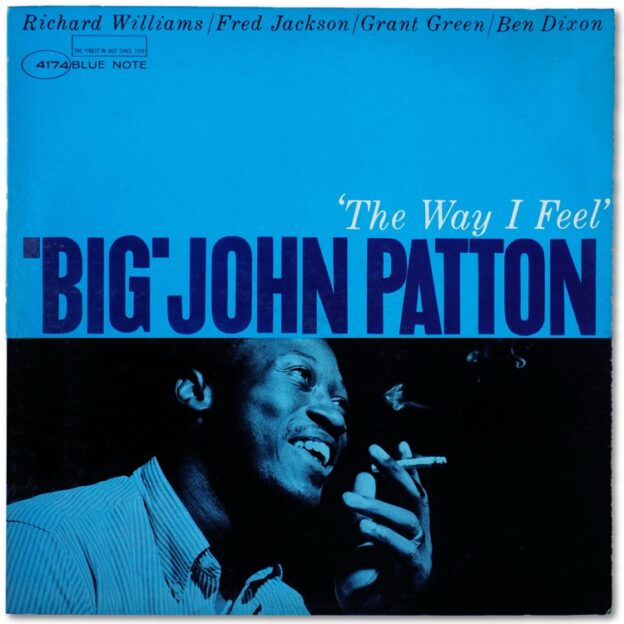
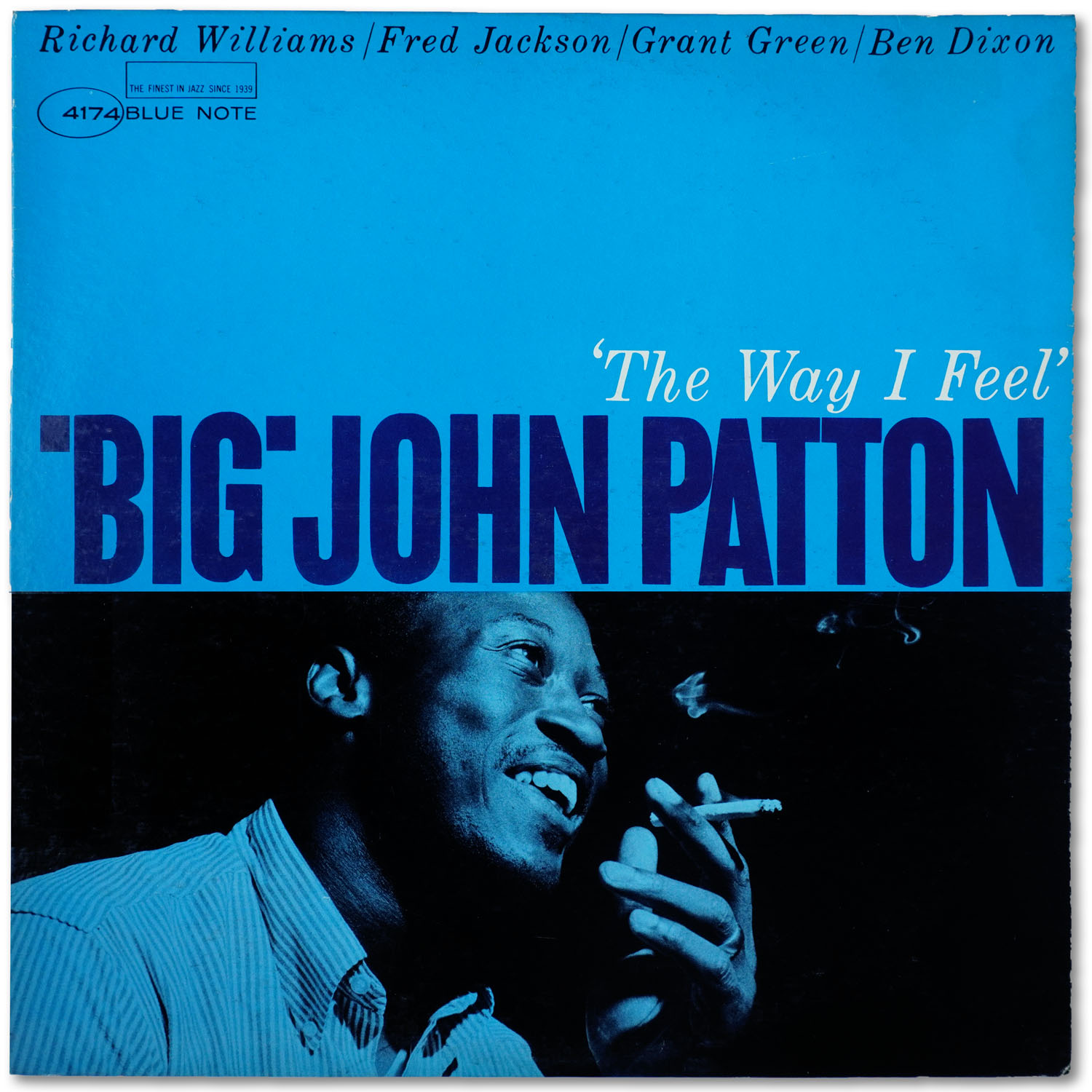
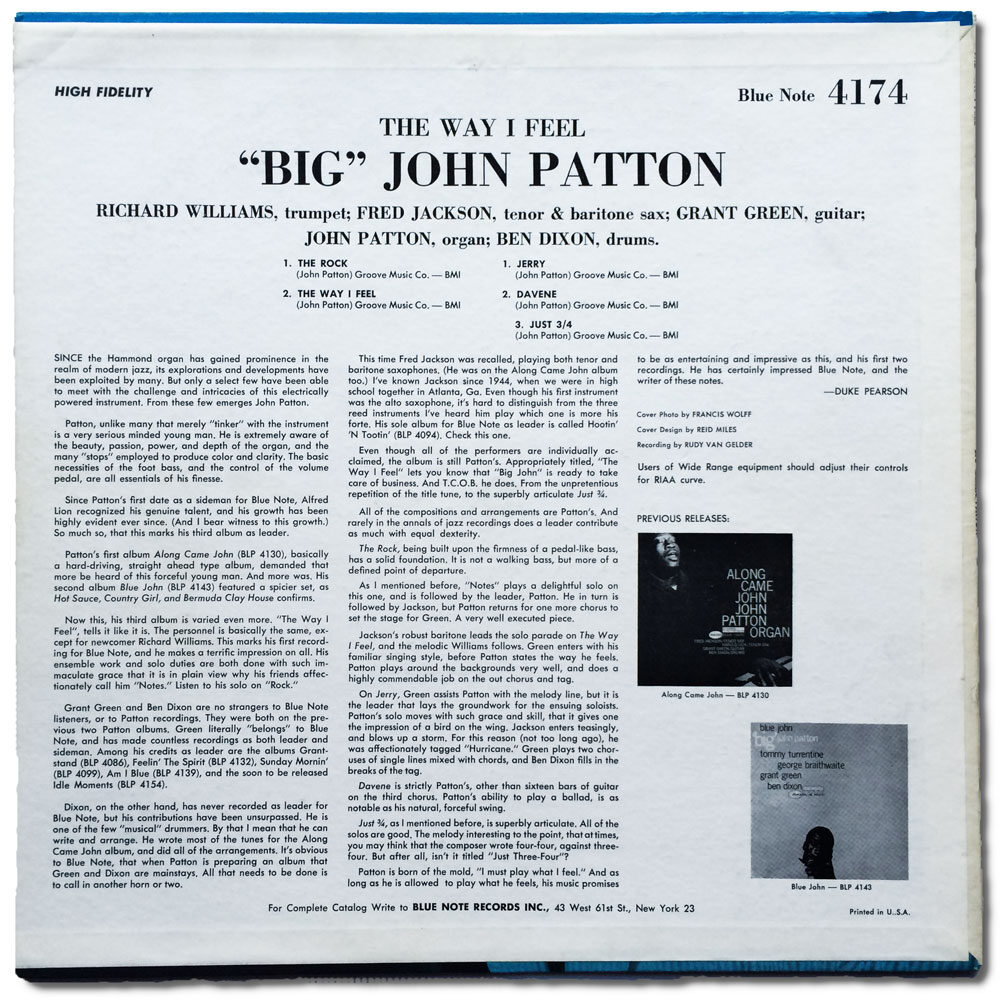
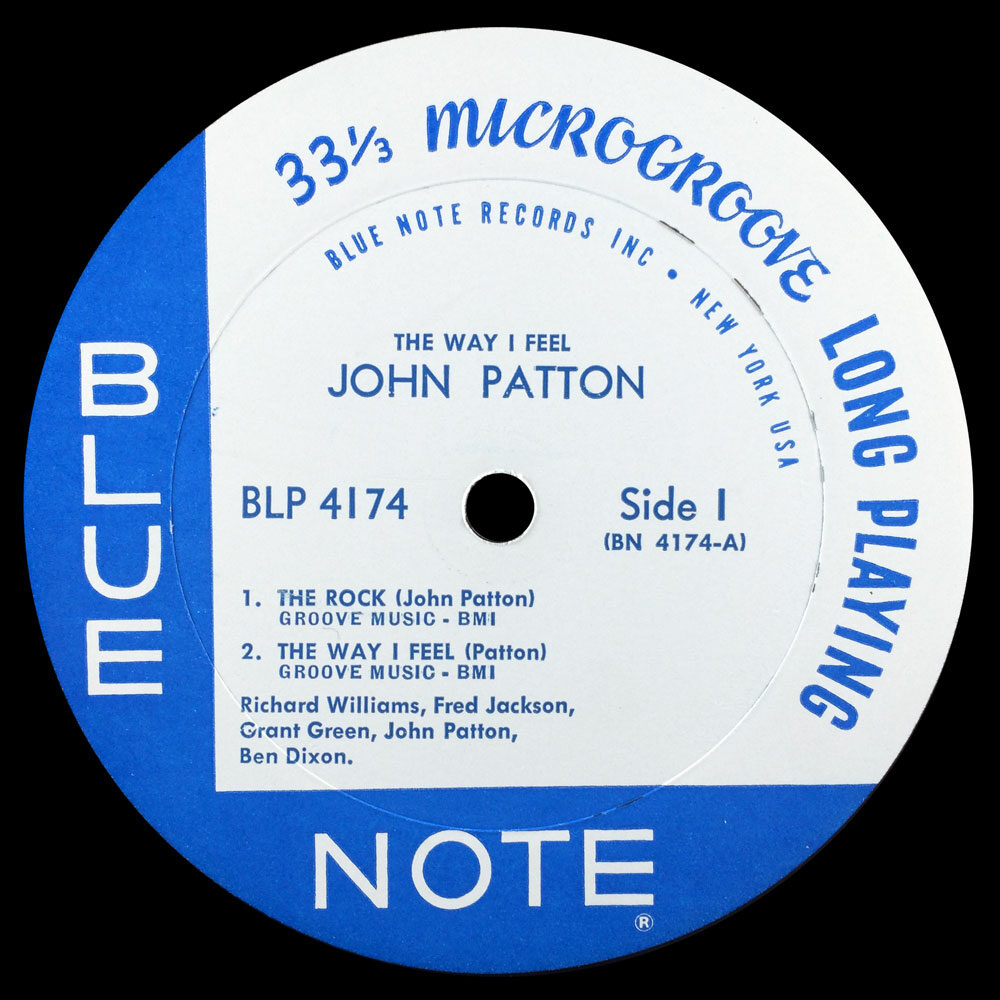
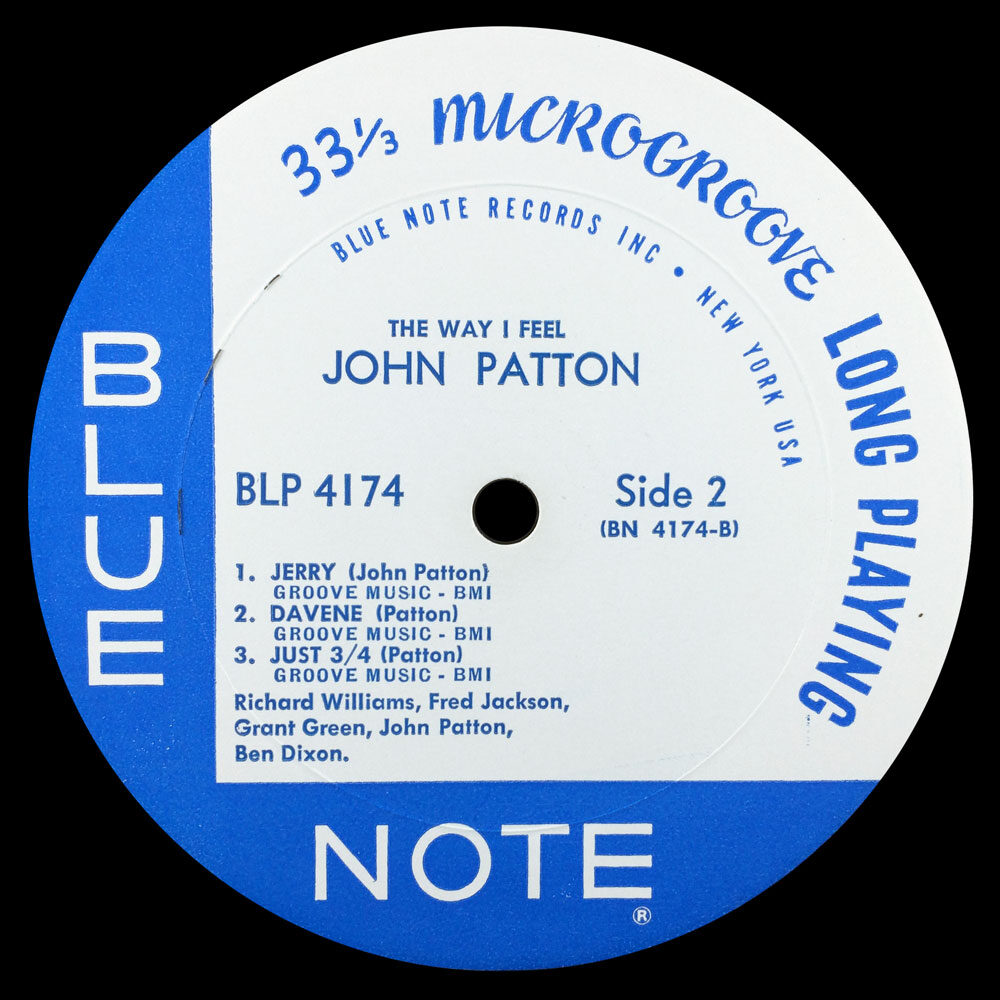
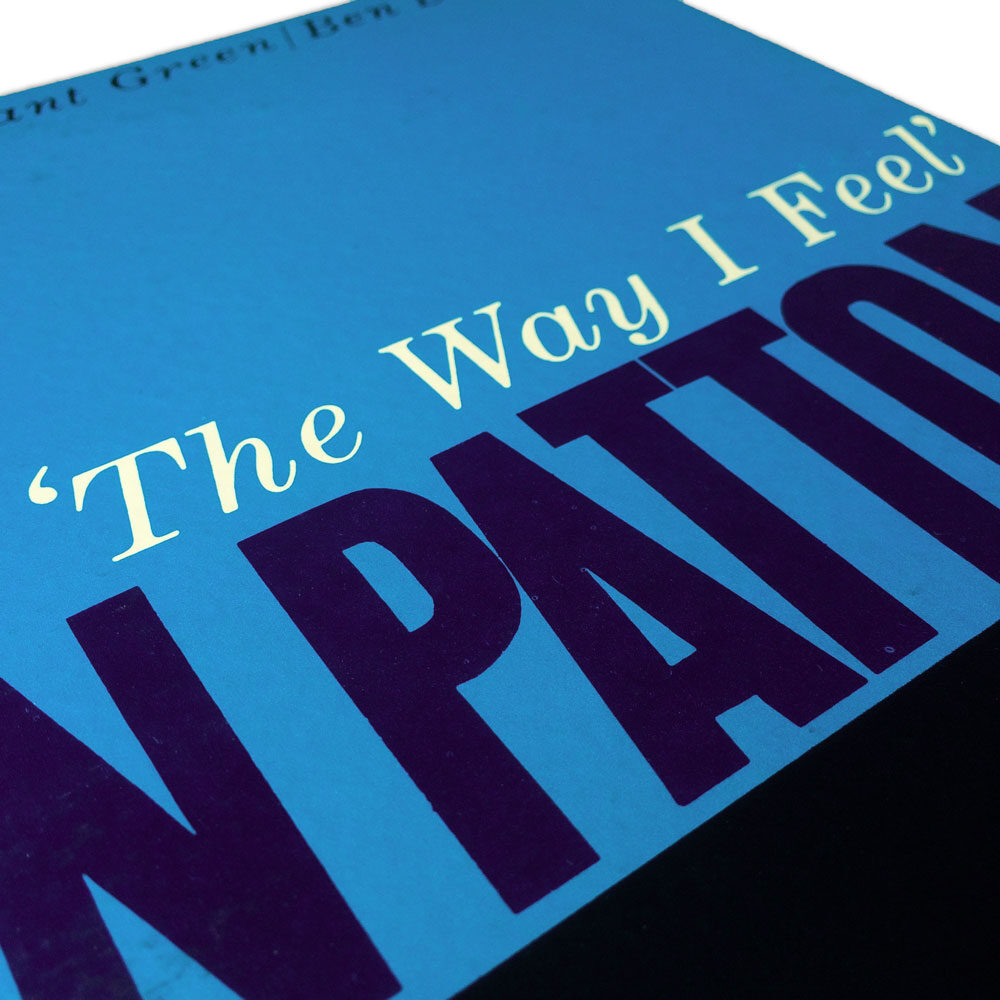
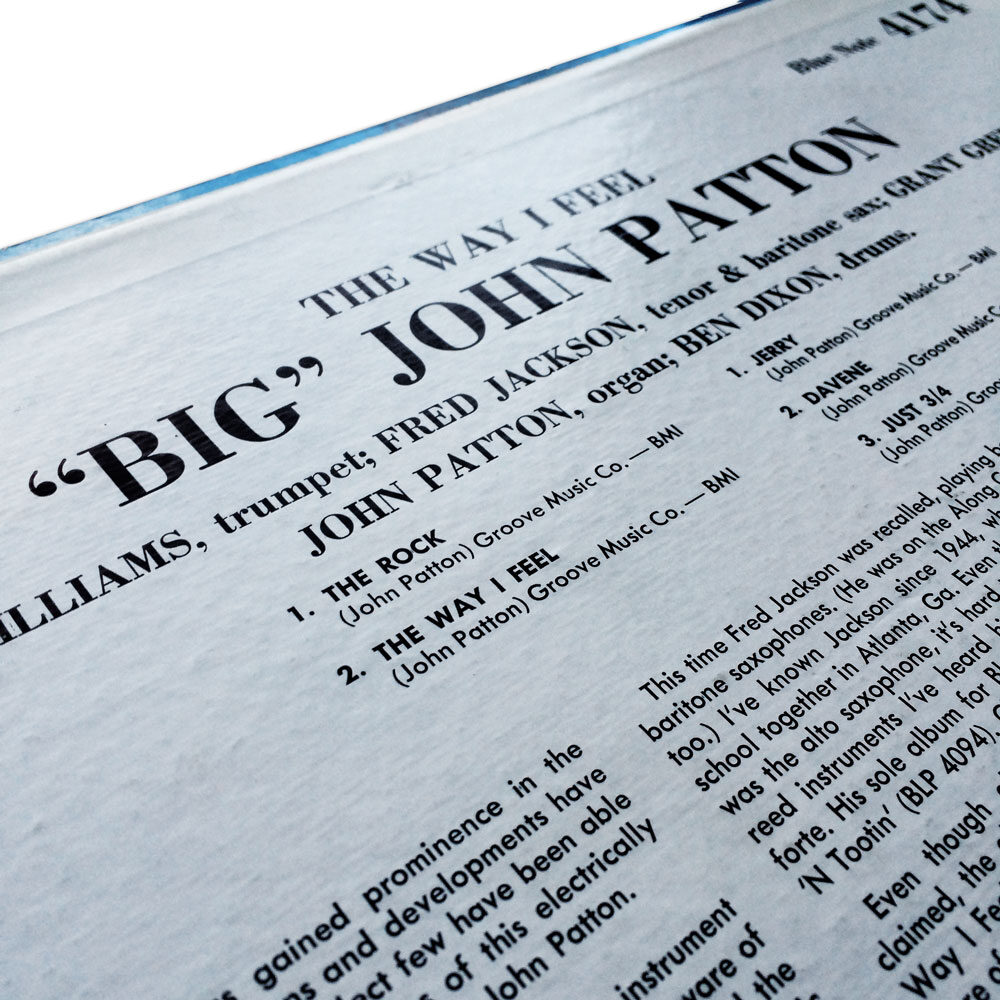
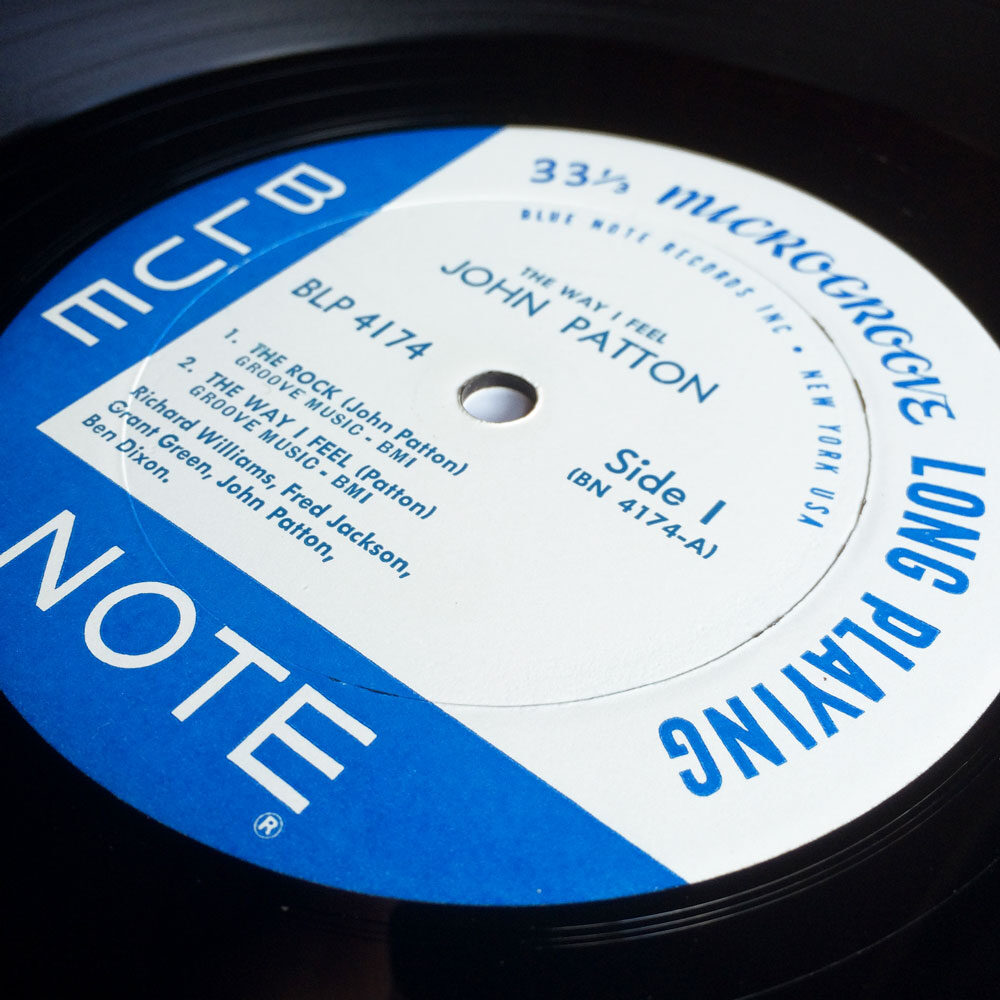
- Original 1964 mono pressing
- “NEW YORK USA” on both labels
- Plastylite “P” etched and “VAN GELDER” stamped in dead wax
Personnel:
- Richard Williams, trumpet
- Fred Jackson, tenor & baritone saxophones
- Grant Green, guitar
- John Patton, organ
- Ben Dixon, drums
Recorded June 19, 1964 at Van Gelder Studio, Englewood Cliffs, New Jersey
Originally released October 1964
| 1 | The Rock | |
| 2 | The Way I Feel | |
| 3 | Jerry | |
| 4 | Davene | |
| 5 | Just 3/4 |
Selection:
“The Rock” (Patton)
A rare record in any format, this is the genuine article right here: Van Gelder stamp, Plastylite “P”, mono. After its original release in 1964, The Way I Feel was never reissued on LP or CD in the United States, and it has only been reissued twice in Japan on CD. The reason for the scarce number of reissues could be related to the fact that my Capitol Vaults digital copy has heavy audible tape damage in a couple of spots, which was a major reason I was so persistent in seeking out a vintage copy. However, I’ve owned a few copies of this over the years, all with original Van Gelder mastering, and I’m convinced that the mild distortion I hear on Richard Williams’ loudest trumpet blasts was baked into the original master lacquer disk and is therefore present on every copy. As much of an RVG fan-boy as I am, the truth is that the engineer was obsessed with obtaining a superior signal-to-noise ratio in his work and in the process mastered (and recorded) a little too hot at times.
This is one of my favorite Blue Note albums. It is definitely in my top five, partly because it is so consistent. When I first got into jazz, I followed a lot of ignorant stereotypes, one of them being that jazz with an organ isn’t “real jazz”. But John Patton looked so damn cool on this album cover that I had to give it a try, and it was undeniable how jazzy, soulful, and funky this record was all at once. John Patton’s music is lighthearted and occasionally funny, and the leader clearly succeeds at bringing those qualities out of his sidemen here (saxophonist Fred Jackson’s solo on “The Rock” is a good example). The title track’s laid-back groove breaks up the soulful tempo of the first side by strutting at the pace of a crawl, and though “Davene” sounded a bit hokey to me at first, I have since realized it to be a beautiful ballad that is now a favorite.
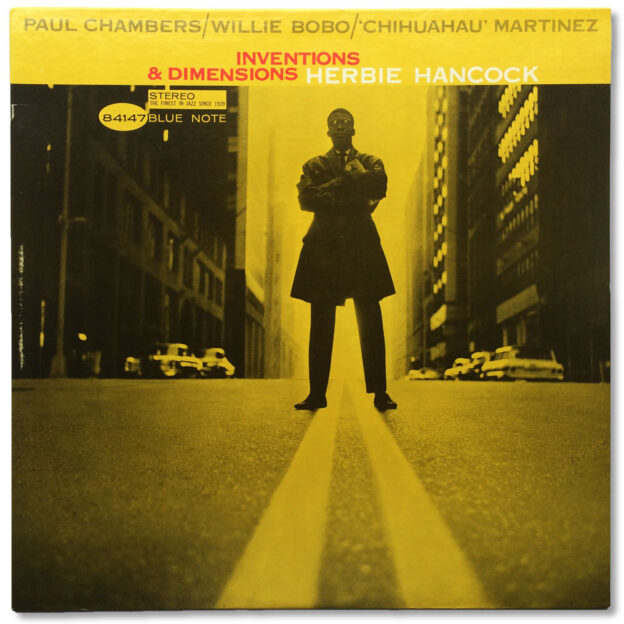
Vinyl Spotlight: Herbie Hancock, Inventions and Dimensions (Blue Note 84147) Liberty RVG Stereo Pressing
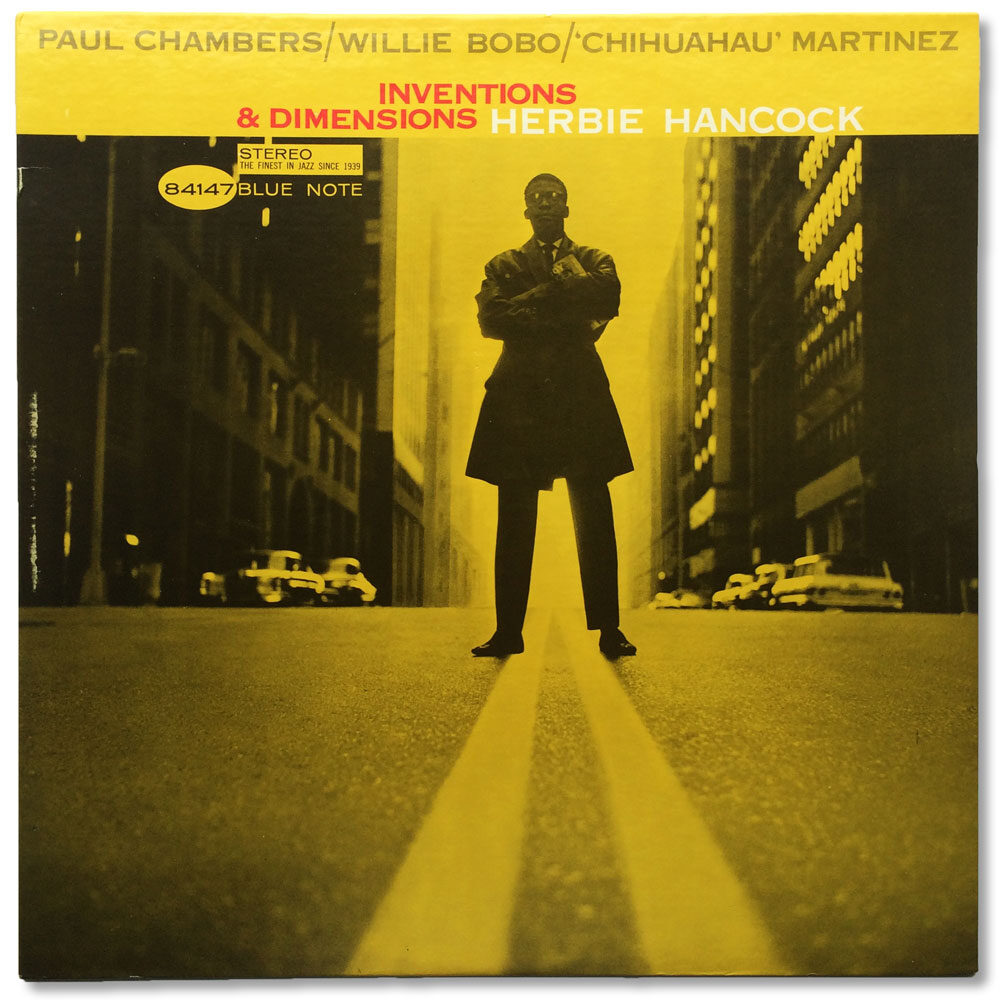
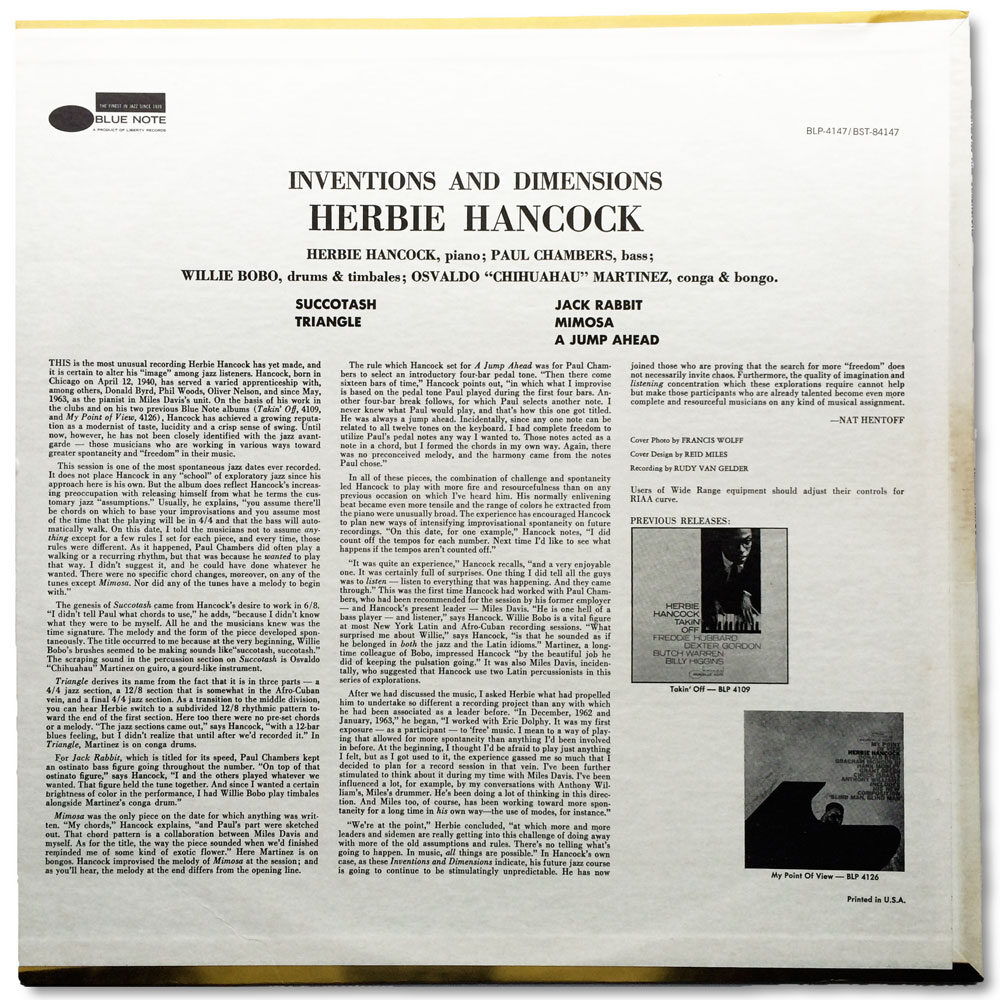
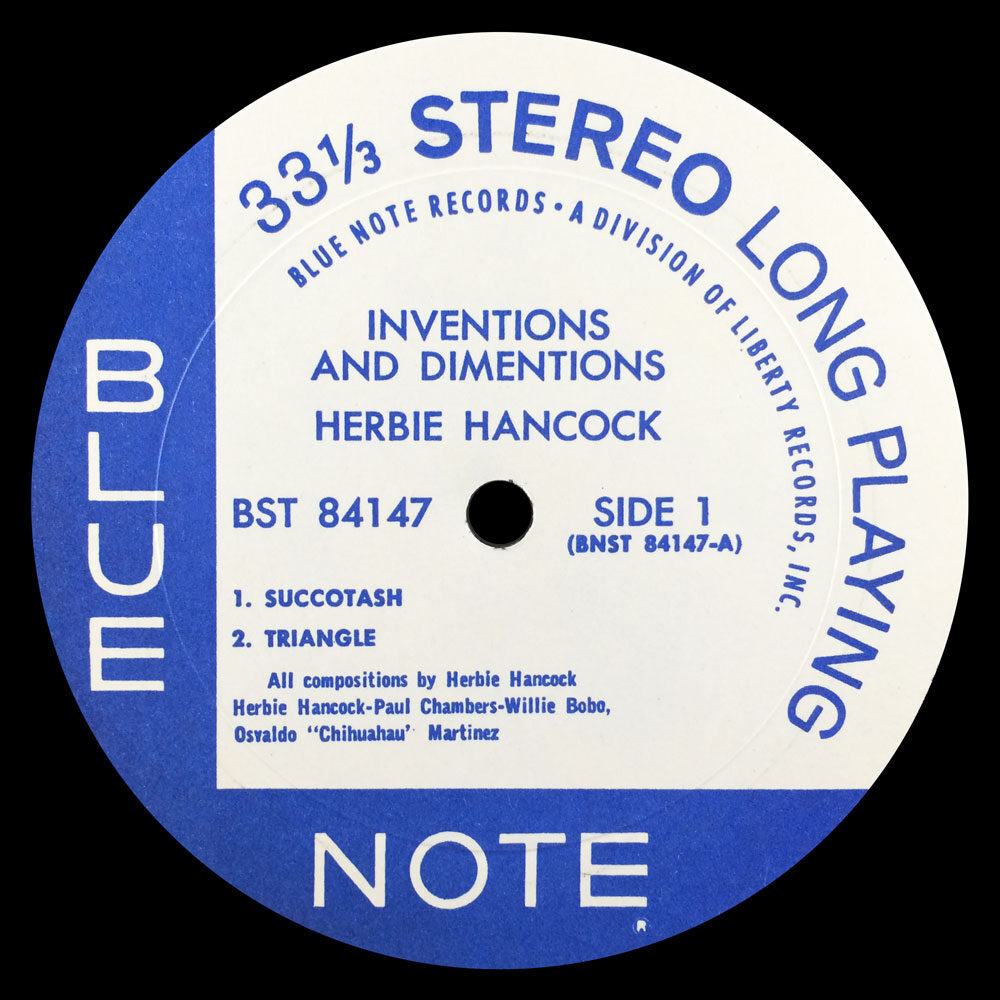
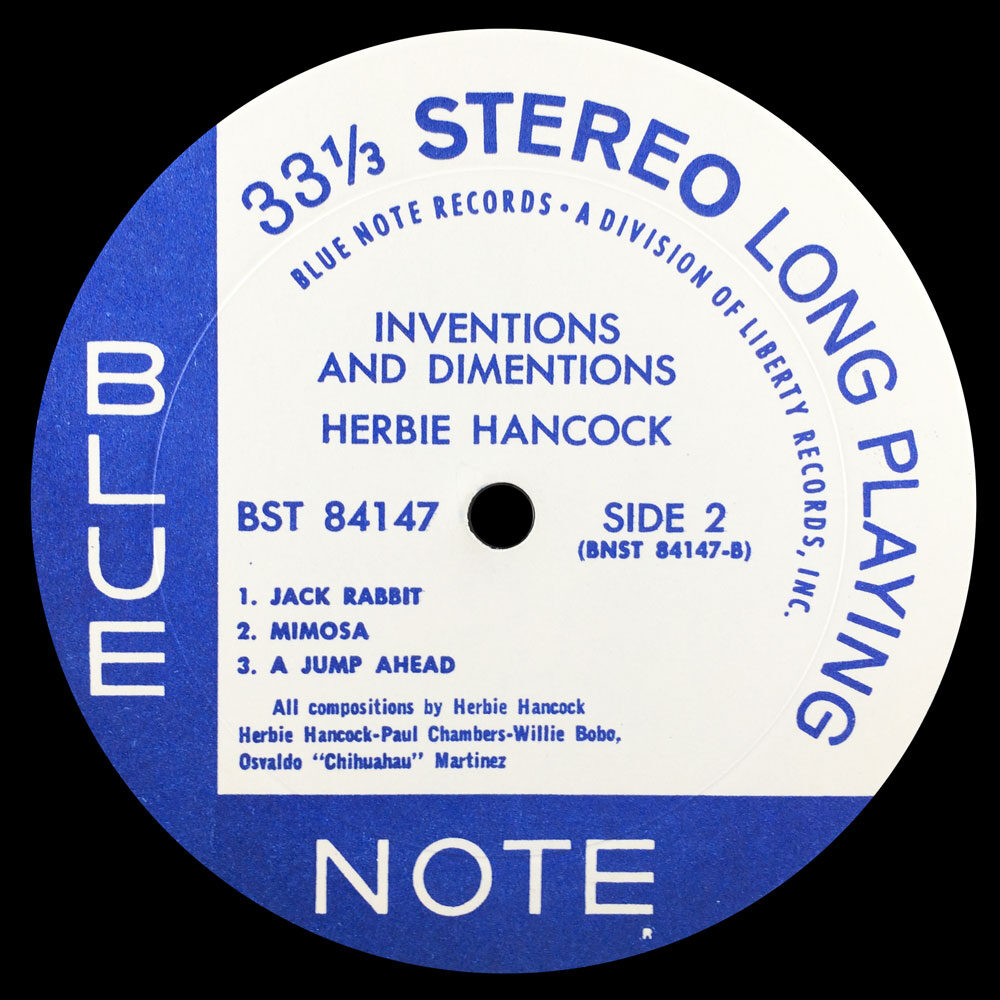
- Stereo Liberty reissue circa 1966-1970
- “A DIVISION OF LIBERTY RECORDS, INC.” on both labels
- “VAN GELDER” stamped in dead wax
Personnel:
- Herbie Hancock, piano
- Paul Chambers, bass
- Willie Bobo, drums and timbales
- Osvaldo “Chihuahua” Martinez, conga and bongo
Recorded August 30, 1963 at Van Gelder Studio, Englewood Cliffs, New Jersey
Originally released February 1964
Selection:
“Triangle” (Hancock)
Although Liberty pressings of most classic Blue Note albums are not original pressings, they still have the potential to sound great. They may lack the Plastylite “P” found in the runout groove of most originals but they do usually brandish the Van Gelder stamp in the runout groove, indicating that they were made from the same master lacquer disk as an original. This stereo copy of Herbie Hancock’s third album for Blue Note may not be a first pressing but it still embodies engineer Rudy Van Gelder’s original mastering work.
Many collectors will shun any vintage Blue Note without the “P”, claiming that its absence takes something away from the listening experience. I beg to differ, having never heard a significant contrast between originals and subsequent Liberty-era pressings sourced from the original metal work. In fact, I have found that Liberty pressings are more likely to sound fresher since they are less likely than originals to have suffered excessive wear.
One does need to be careful of how far they venture away from the original release of an album, however. Van Gelder’s mastering was used well into the late ’70s after Liberty had sold Blue Note to United Artists, and depending on the title, it seems there is an increased chance that the original work parts will have lost some measure of quality by this time. These records are more likely to lack the ‘life’ of earlier pressings (usually a reference to lower distortion and better high-frequency detail).
Despite having heard the popular audiophile criticisms of Rudy Van Gelder’s mastering work, I often find his LP masters to be highly accurate, even, and dynamic. But be careful — you won’t get this experience if you’re listening to a worn record. This particular copy was purchased sealed a couple years back, which I feel makes it a shining example of the mastering engineer’s handiwork, certainly more so than any wear-ridden original.
As for the music, this is my favorite Herbie Hancock album. Every time I listen, I listen from start to finish. Hancock takes an experimental approach to the songwriting here and can often be heard working out ideas on the fly. This leads to frequent use of refrain, a technique that has never been popular with jazz soloists (because of the central role improvisation plays in the genre, jazz musicians often seem driven by an intense desire to constantly invent, which means never sitting on the same phrase for very long at all). My longstanding relationship with sampling and hip hop has made me very accustomed to repetition in instrumentation, which I think has much to do with why I find Hancock’s regular use of refrain here a very welcome break from the bop norm. Bassist Paul Chambers and drummer Willie Bobo intensify the trance-like qualities of the music by locking in on various rhythms throughout, and percussionist Chihuahua Martinez’s timing is rock solid — something crucial in a minimal arrangement like this.
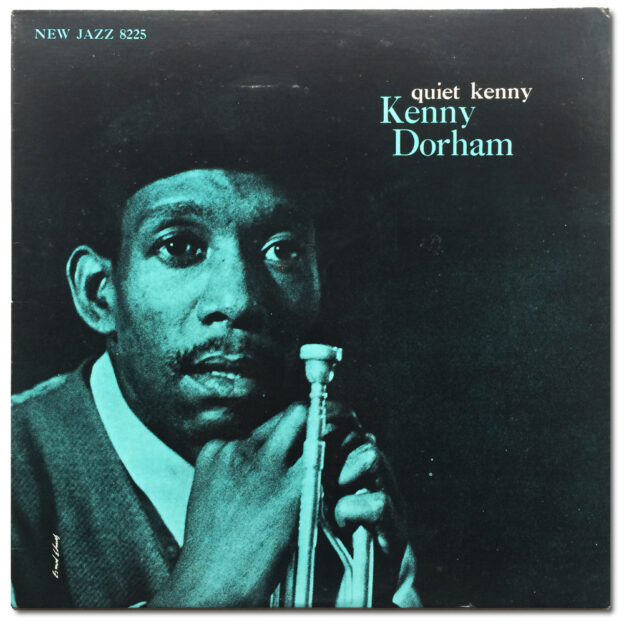
Vinyl Spotlight: Kenny Dorham, Quiet Kenny (New Jazz 8225) OJC Stereo Reissue
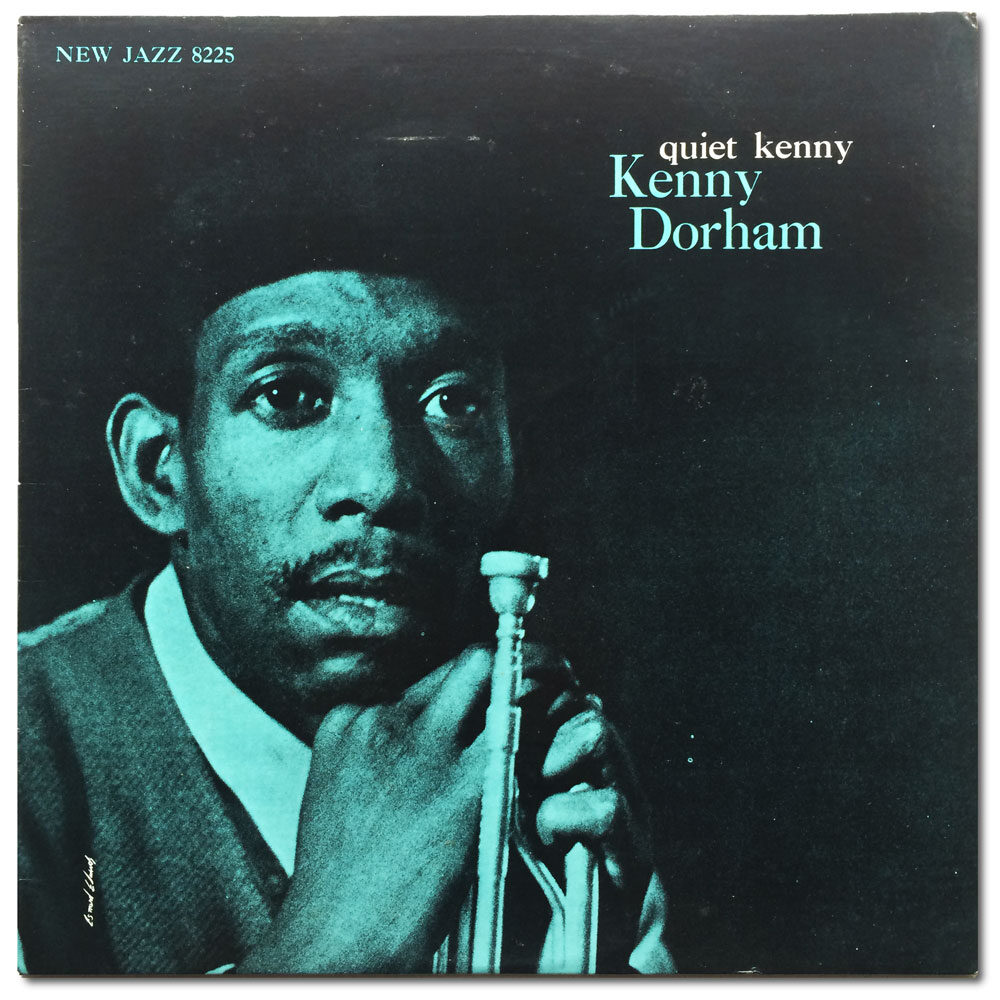

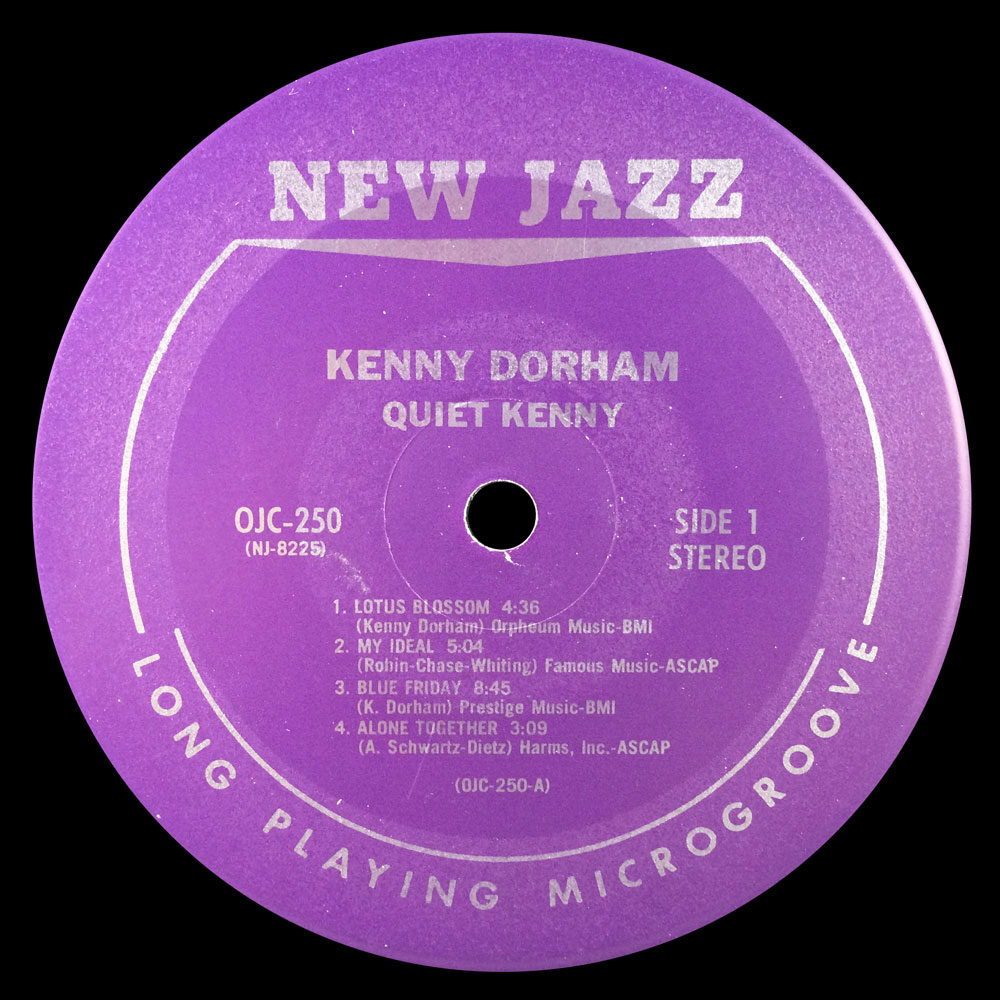
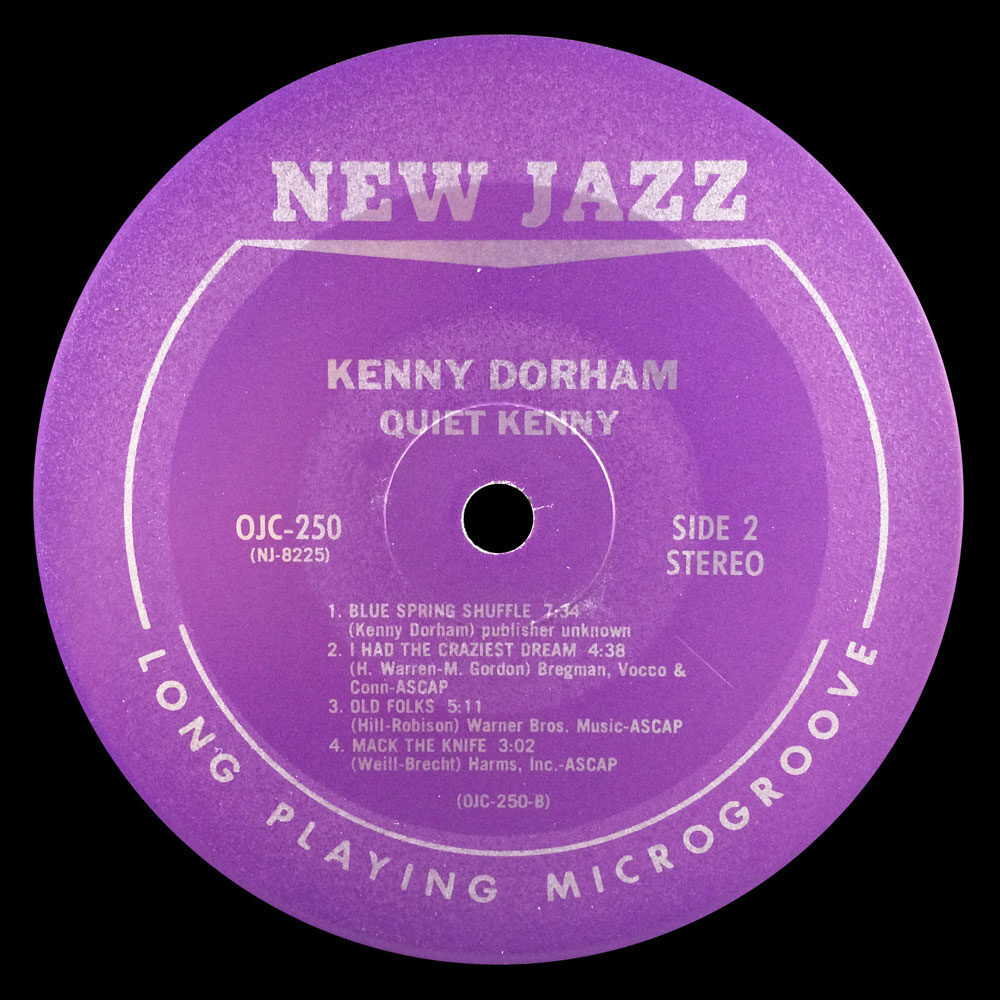
- Original Jazz Classics stereo reissue circa 1986 (catalog no. OJC-250)
Personnel:
- Kenny Dorham, trumpet
- Tommy Flanagan, piano
- Paul Chambers, bass
- Art Taylor, drums
Recorded November 13, 1959 at Van Gelder Studio, Englewood Cliffs, New Jersey
Originally released February 1960
Selections:
“Lotus Blossom” (Dorham) [Stereo]
“Lotus Blossom” (Dorham) [Summed Mono]
For Collectors
After a couple years of collecting on a budget, the reality of the situation starts to sink in: you won’t be acquiring a first pressing of a holy grail like Kenny Dorham’s Quiet Kenny any time soon.
What makes an album a holy grail? Simply put, a combination of being very rare and very in demand. More specifically, in the case of this overlooked album, it probably has a lot to do with the fact that it didn’t get a proper second U.S. pressing until this version, the 1986 Original Jazz Classics reissue. (According to Discogs, Prestige released a Dorham album in 1970 simply titled 1959 with different album art but the same track listing as the OJC reissue, which includes the originally unreleased “Mack the Knife”.) To give the original even more allure, the tendency for reissue producers to have an overwhelmingly strong preference for stereo has rendered the original the only mono version of this album ever released.
 There’s always something about reissues causing them to fall short of the excitement an original provides. Though I avoided Original Jazz Classics reissues for a while for this reason, I eventually relaxed my naïve original pressing snobbery and began considering reissues of favorites that were much too expensive in their first pressing form. I then read about how OJC reissues were by and large considered to be of exceptional sound quality, with the earliest of them guaranteed to be all analog as well (my copy had the original shrink wrap complete with the long rectangular OJC sticker characteristic of OJC albums released in the mid-80s). So I gave these reissues a chance, and by and large they have lived up to my expectations. The artwork and packaging are hit or miss with OJCs, though I think they did a good job with this release, and the fact that the labels mimic those used for the original New Jazz LP is an added bonus.
For Music Lovers
Shortly after I got into jazz, I came across the OJC CD reissue of Quiet Kenny at a local library, and going off the album’s 3.5-star rating in The Penguin Guide to Jazz Recordings and its elite status among collectors, I decided to give it a try. Though the music didn’t immediately draw me in, I soon grew to appreciate the minimal arrangement and the big, empty, dark sound of Rudy Van Gelder’s Englewood Cliffs studio. I also have a leaning toward more gentle styles of playing, which, as the title suggests, this album epitomizes.
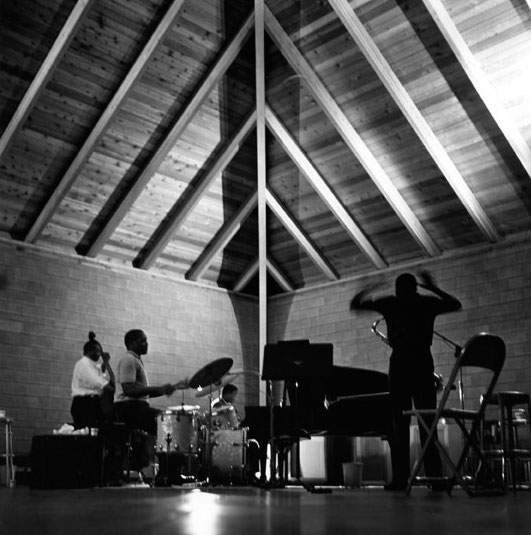 |
| Van Gelder Studio, Englewood Cliffs, New Jersey |
Quiet Kenny features three Dorham originals: “Blue Friday”, “Blue Spring Shuffle”, and “Lotus Blossom” — not to be confused with “Lotus Flower”, another Dorham composition, a ballad that premiered in 1955 on the ten-inch Blue Note LP Afro-Cuban (BLP 5065). Though “Blue Friday” appears here for the first time, “Lotus Blossom” had first been recorded by Riverside in 1957 with a piano-less quartet led by Dorham (2 Horns, 2 Rhythm, Riverside 255). As much as I enjoy the less busy rendition presented here, the driving pace of the Riverside version along with the harmony offered by Ernie Henry’s sax make the Riverside version tough to beat. “Blue Spring Shuffle” had already been laid to tape as well, appearing several months prior with the truncated title “Blue Spring” on the LP of the same name (Blue Spring, Riverside 297). In this case I hold the more sparse arrangement here in higher regard.
The first track on Quiet Kenny that stood out to me was “Lotus Blossom”, the gentle, uptempo opener. Art Taylor’s solo shines here, the gorgeous sound of which is a combination of the drummer’s well-crafted, finely-tuned kit, Van Gelder’s EMT reverb plate, and the natural ambience of the engineer’s custom-built cathedral-like studio. “My Ideal”, the next song in the sequence, has become one of my favorite jazz ballads. The other ballad, “Alone Together” follows close behind, and overall I find Quiet Kenny to be a solid listen with a clean, sweet sound throughout.
Mono vs. Stereo
Like many Blue Note albums released between the years of 1959 and 1962, every reissue of Quiet Kenny has been stereo despite the original release being exclusively mono. The best explanation for this would be that the album was recorded to two-track tape only. Since Van Gelder didn’t mix down to a separate master tape for mono releases in these instances (all mixing was done on the fly), reissue producers today would only be left with a two-track master tape to work with. And though it’s quite possible that these producers have unanimously preferred the stereo presentation to the mono, they may have also erroneously concluded that the album was monitored and mixed in stereo due to the absence of a mono master tape. But the fact that the inaugural release was strictly in mono strongly suggests the contrary. As a result, the only way to hear this music in mono today short of summing the channels of your stereo is to cough up $2,000+ USD for an original.
Offered here are both the stereo and mono presentations of the opening track for comparison (the mono obviously not being from an original pressing but the summing of the channels on my amplifier). Though the mono is cohesive where the stereo is somewhat disjoint and empty, I find the space created by the stereo spread too beautiful to collapse into a single channel.
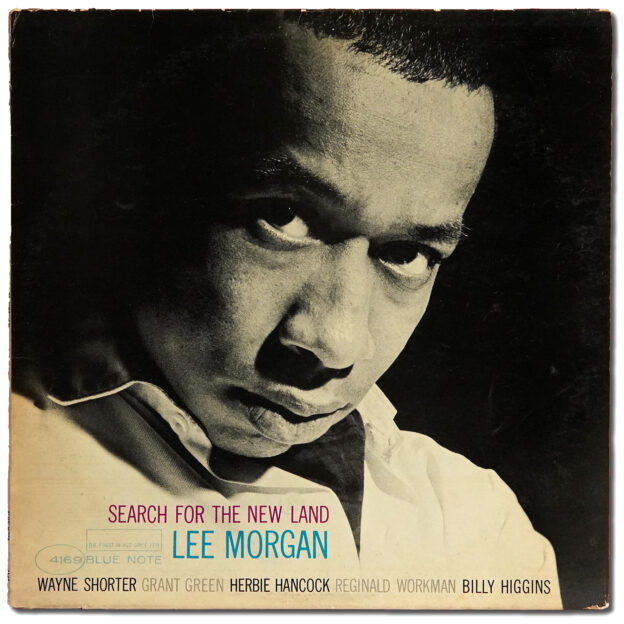
Vinyl Spotlight: Lee Morgan, Search for the New Land (Blue Note 4169) “Earless NY” Mono Pressing


- Second mono pressing circa 1966
- “NEW YORK USA” on both labels
- “VAN GELDER” stamped in dead wax
- “43 West 61st St., New York 23” address on jacket
Personnel:
- Lee Morgan, trumpet
- Wayne Shorter, tenor saxophone
- Grant Green, guitar
- Herbie Hancock, piano
- Reggie Workman, bass
- Billy Higgins, drums
Recorded February 15, 1964 at Van Gelder Studio, Englewood Cliffs, New Jersey
Originally released August 1966
| 1 | Search for the New Land | |
| 2 | The Joker | |
| 3 | Mr. Kenyatta | |
| 4 | Melancholee | |
| 5 | Morgan the Pirate |
Selection:
“Melancholee” (Morgan)
For Collectors
This record is especially hard to find with the Plastylite “P”, though it does exist. I have had good experiences with Liberty pressings though, so I’m not hung up on finding an original pressing of this album. The first copy I had, also a Liberty pressing, was cheap but it had a few loud pops and clicks, which prompted me to seek out this replacement, which I think was fairly graded VG+.
For Music Lovers
It’s difficult to discuss a Lee Morgan album without considering where and how it fits into the dramatic and tragic story of his life. At the age of 20, Morgan first recorded as a member of Art Blakey’s Jazz Messengers in October 1958 for the classic album Moanin’. His residency with Blakey would continue until the summer of 1961 when Morgan and fellow Philadelphian Bobby Timmons made the decision to retreat to their hometown for relief from the heroin-infested New York jazz scene. Morgan would only step in the studio once over the course of the next two years for producer Orrin Keepnews (Take Twelve, Jazzland 980), but would eventually make his official return to the New York recording scene in the fall of 1963 for a date with Hank Mobley (No Room for Squares, Blue Note 4149). After taking an uncharacteristic date with the progressive Grachan Moncur III the following month (Evolution, Blue Note 4153), Morgan recorded The Sidewinder in December 1963. The smash hit wouldn’t be released until the following summer, however. In the meantime, Morgan entered the studio again in February 1964 to record Search for the New Land, which would ultimately be shelved until 1966 – perhaps as a result of the tremendous commercial success of Sidewinder.
While Morgan and Shorter had been bandmates in The Jazz Messengers for years before Morgan’s hiatus, this would be the first of only a handful of occasions where the trumpeter would record with Herbie Hancock. (I was surprised to learn that this was only the second time that Shorter and Hancock had recorded together.) Billy Higgins returned from the Sidewinder date – which would prove to be the start of a lengthy partnership between he and Morgan – while Grant Green and Reggie Workman rounded out the sextet.
For all the Blue Note sessions Lee Morgan had led since he began recording for the label in 1956, this would only be the second where the entire program was penned by Morgan himself (The Sidewinder being the first). As such, Search for the New Land is a beautiful contemplation of the then looming and uncertain future of jazz. It is not a desperate exodus out of bop; it can be better likened to a child on the ocean’s shoreline standing knee-deep in the waves, hesitant to submerge themself in the water. Search thus pushes the boundaries of hard bop just enough to keep within the sub-genres inherent structure.
The album is consistent and cohesive. The dreamy, somber choruses of the title track are flanked by improvisational sections fashioning a minimal harmonic structure that compliments the modal leanings of Hancock and Shorter (this session would predict their uniting with Miles Davis as members of his “second great quintet” later that year). Hancock especially shines on the take with a crisp solo exemplifying his clear and acute thinking at the piano. “Mr. Kenyatta” bounces between moods in much the same way as the title track, swaying back and forth between feelings of angst and playfulness. And while The Penguin Guide to Jazz Recordings refers to the closing pair of songs as “more than makeweights” but “more off-the-peg” in comparison to the rest of the material, this ironically is my favorite sequence of the album. “Melancholee” is a gorgeously despondent composition that gives us a hard, honest look at the inner workings of Morgan, and the uplifting melody of “Morgan the Pirate” follows closely behind to conclude the album with an air of optimism.
One can’t help but wonder if the aforementioned session with Moncur had a profound impact on Morgan. Perhaps his experimentation at this time was actually a rebellion against the avant-garde manifesto, an attempt to push the boundaries of the institution of bop without succumbing to the full-blown chaos of free jazz. Either way, Search for the New Land is an expressive journey to the edges of an idiom, and it stands as an important work created at a pivotal crossroad in the evolution of the jazz art form.
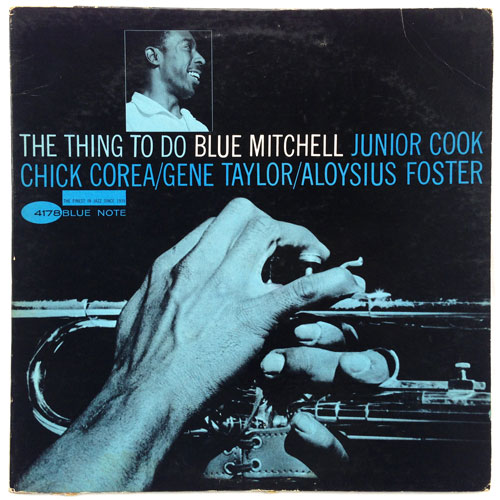
Vinyl Spotlight: Blue Mitchell, The Thing to Do (Blue Note 4178) Original Mono Pressing
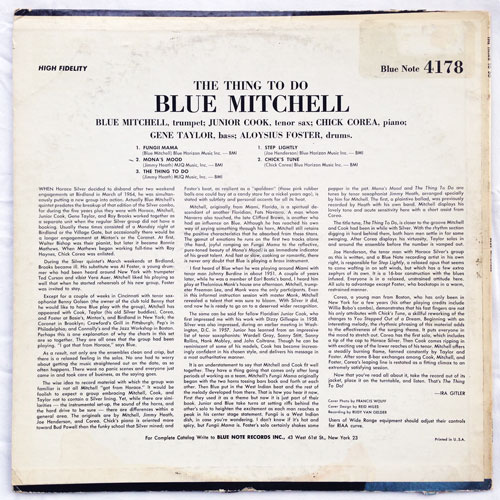
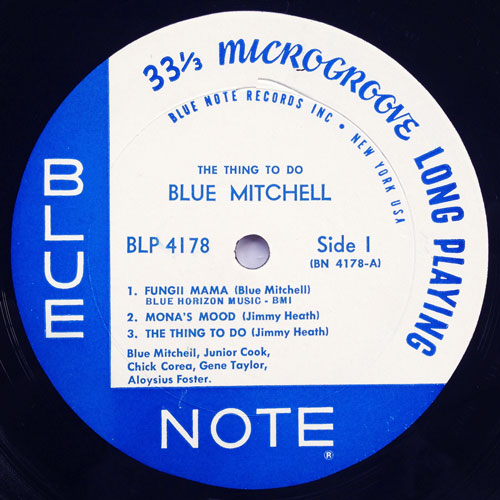
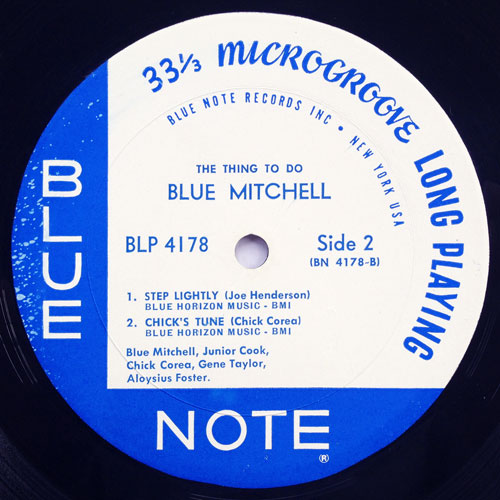
- Original 1965 mono pressing
- “NEW YORK USA” on both labels
- Plastylite “P” etched and “VAN GELDER” stamped in dead wax
- “43 West 61st St., New York 23” address on jacket
Personnel:
- Blue Mitchell, trumpet
- Junior Cook, tenor sax
- Chick Corea, piano
- Gene Taylor, bass
- Al Foster, drums
Recorded July 30, 1964 at Van Gelder Studio, Englewood Cliffs, New Jersey
Originally released May 1965
Selection: “Step Lightly” (Henderson)
For Collectors
If you’ve read my first “Perspective” article here on Deep Groove Mono, you already know the story of how I acquired this record, which is special to me because it was the first vintage Blue Note album I ever heard that truly embodied the legendary “Blue Note sound”. And how about that cover? The symmetry, the cool blue on the dead black background, and the detailed shot of Blue’s hands on his trumpet make for a winning combination in my book.
For Music Lovers
I’m a huge Horace Silver fan, and I have always enjoyed the work of Blue Mitchell and tenor saxophonist Junior Cook as members of the Horace Silver Quintet. Mitchell had been working with Silver for four solid years the first time he entered the studio as a leader for Blue Note in August 1963 for a session including Joe Henderson and Herbie Hancock (for some reason, the recordings were shelved for nearly two decades). Two months later in the fall of ’63 though, Blue, Junior, and Quintet bassist Gene Taylor would have their last hurrah recording with Silver on a date producing two takes which would eventually find their way to Song for My Father. I haven’t read anything regarding the musicians’ parting of ways, but one can only guess it was peaceful, especially in light of the fact that Blue had jammed with Henderson, Cook’s replacement, before Silver.
Nine months later in the summer of 1964, Blue, 34 at the time, got Cook and Taylor together with a couple bright and budding musicians who would go on later to obtain global exposure with Miles Davis. 23-year-old Chick Corea had only recorded a handful of times when he arrived at Englewood Cliffs that day, and the 21-year-old Al Foster had yet to even set foot in a recording studio. But the pair rose to the challenge of this big-league outing with grace and poise, and their youthful energy ultimately steal the show on The Thing to Do.
If you think the head of the album opener, “Fungii Mama”, sounds zany or perhaps even corny, don’t let it deter you so quickly. Cook leads off with an inspiring solo, and Blue provides a fun improvisation of his own songwriting work. Corea eventually delivers a solo that is both fun and ambitious, and Foster follows with a challenging juxtaposition of the downbeat that causes the head to make a startling and exciting return. It’s a real treat to hear the young drummer’s rock-solid, driving latin rhythm throughout, and the tension created by each return to the bridge is a most welcome harmonic excursion.
My personal pick though is “Step Lightly”. The song was first recorded on the aforementioned 1963 date with Henderson and Hancock, but the overall vibe remains the same here. This track never really stood out to me until I recently heard it on a cloudy weekday afternoon off from work. The lazy tempo and bluesy melody complemented the mood so perfectly I instantly felt like I understood Henderson’s intentions as the song’s composer.
Sonically, this album is an example of Rudy Van Gelder at his best. The recording giant got a very nice piano sound here, and the natural reverberation of the Englewood Cliffs studio sounds heavenly, especially during Foster’s solo on “Fungii”. For those who don’t know, I’m a drum guy, and as such I recommend paying close attention to how tight and well-tuned Foster’s tom-toms sound here. (That’s one thing I love about classic jazz: the drum kits were made with care, the drummers took their craft seriously enough to tune their kits regularly, and you can hear the difference!)
Overall, I think the songwriting on this album is solid (Jimmy Heath’s title track included), and it gives us a rare glimpse of the vigorous, hungry duo of Corea and Foster on a straight-ahead bop date preceding their respective moves into free jazz and fusion. I personally need to be in the right mood to enjoy a record like The Thing to Do with its don’t-take-yourself-too-seriously-type attitude. But when I’m in that mood, these sides are as good as any.