Tag Archives: Van Gelder

Vinyl Spotlight: Sonny Clark, Cool Struttin’ (Blue Note 1588) Liberty Mono Pressing

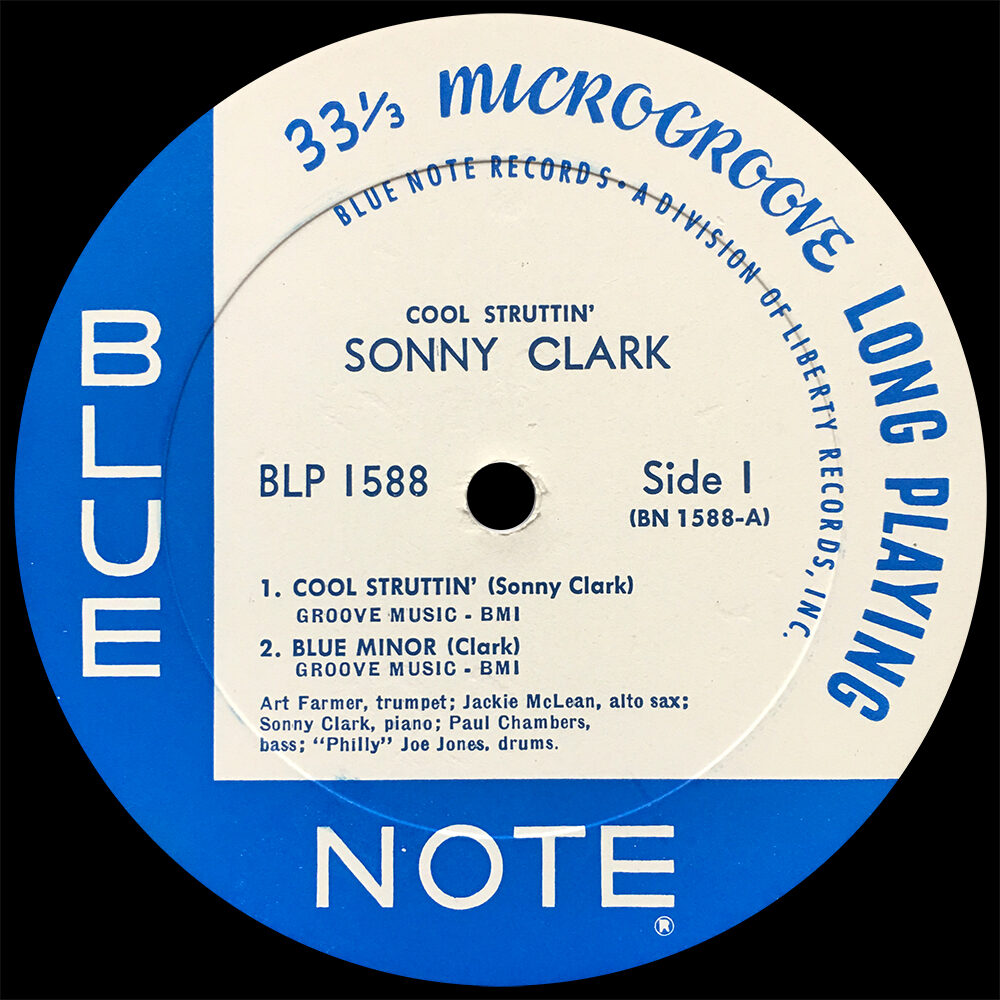
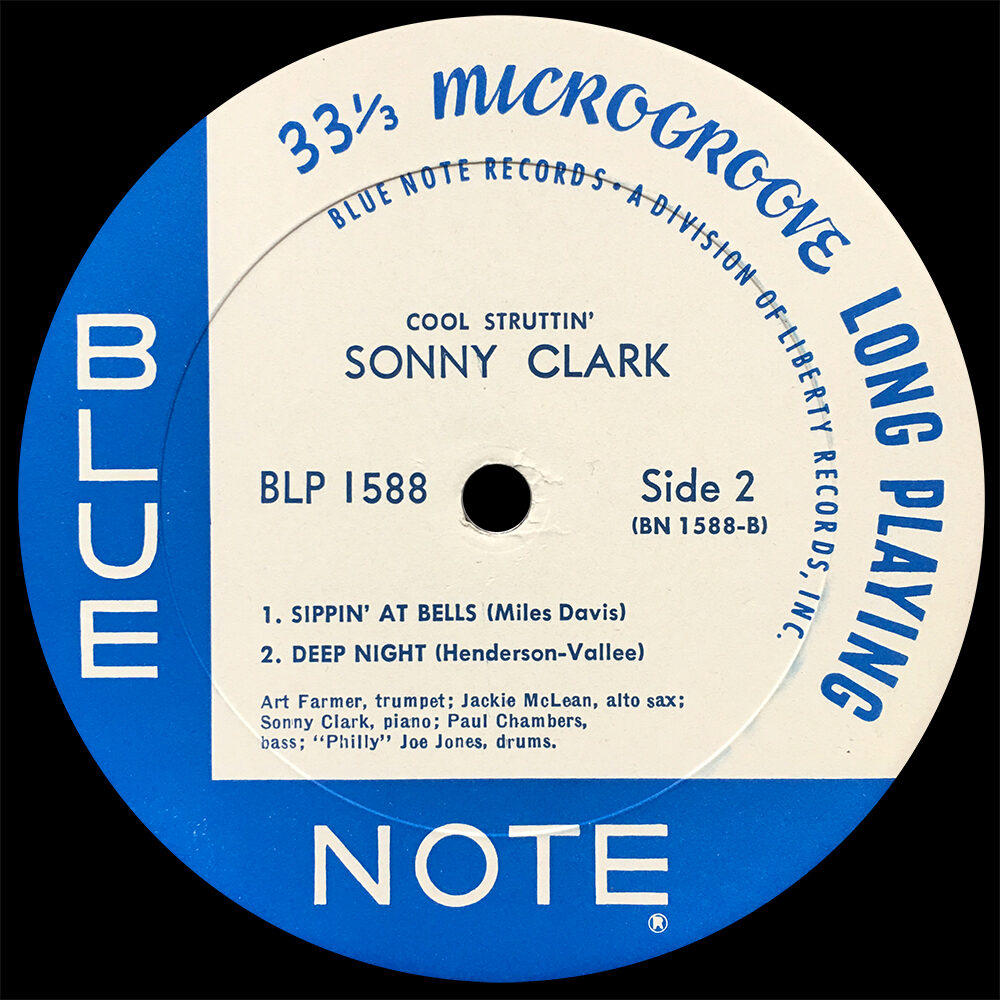
  • Liberty mono pressing circa 1966-1970
  • “RVG” stamped in dead wax

Personnel:

  • Jackie McLean, alto saxophone
  • Art Farmer, trumpet
  • Sonny Clark, piano
  • Paul Chambers, bass
  • Philly Joe Jones, drums

Recorded January 5, 1958 at Van Gelder Studio, Hackensack, New Jersey
Originally released August 1958

1 Cool Struttin’
2 Blue Minor
3 Sippin’ at Bells
4 Deep Night

Selection:

“Deep Night” (Henderson-Vallee)

For Collectors

When I first began collecting vintage jazz records, I quickly noticed that Sonny Clark’s Cool Struttin’ is a very in-demand album and considered by many to be a classic. Additionally, I noticed that original pressings fetched in the upwards of two thousand dollars. At some point I became aware that this third/fourth Liberty pressing with original mono Rudy Van Gelder mastering existed, but it still fetched substantial sums of money despite being at least eight years removed from the initial release. Since this isn’t one of my favorite jazz albums, I didn’t foresee myself owning a copy with the Van Gelder stamp any time soon.

Then this copy popped up in a friend’s list of records for sale. Graded highly and priced very fairly, I replied to my friend’s email the instant I saw it, beating out any other potential buyers who also received my friend’s list that evening. Despite this not being a personal favorite, I still fancy the music, the price was right, and it is a great recording that, after finally hearing an authentic mono copy, revealed itself to be even more outstanding than I had already known it to be in stereo.

The stereo version of Cool Struttin’ has been vastly favored over the mono in reissue programs down through the decades, and I have owned the stereo RVG Edition CD for quite some time. Coincidentally, just before I acquired this copy, I was considering either a 2004 Classic Records mono reissue or the 2011 Japanese Disk Union “DBLP” mono reissue. Blue Note albums like this recorded between May 1957 and October 1958 are especially intriguing in mono because they were recorded to both full-track and two-track tape, so mono versions aren’t (shouldn’t be) a “50/50” summation of the two-track tape, as all Blue Note mono LPs following this period are. So while in theory you may not hear a huge difference between an authentic mono version and a stereo version with the channels summed, at least in principle the two versions came from two different master tapes.

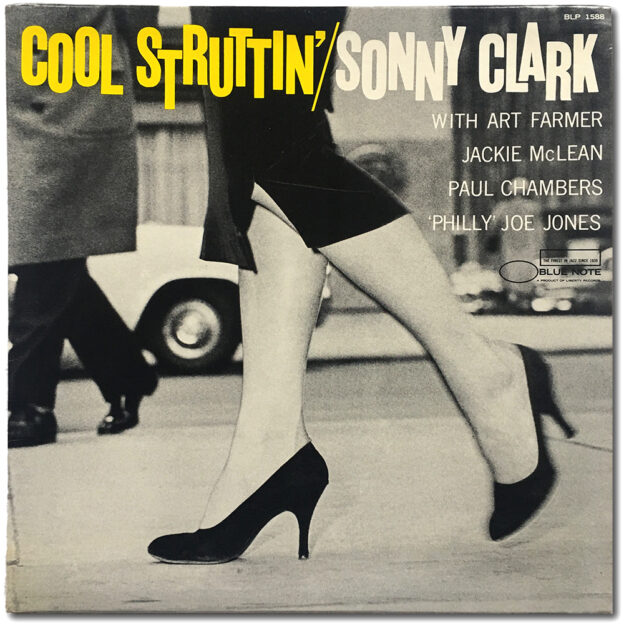
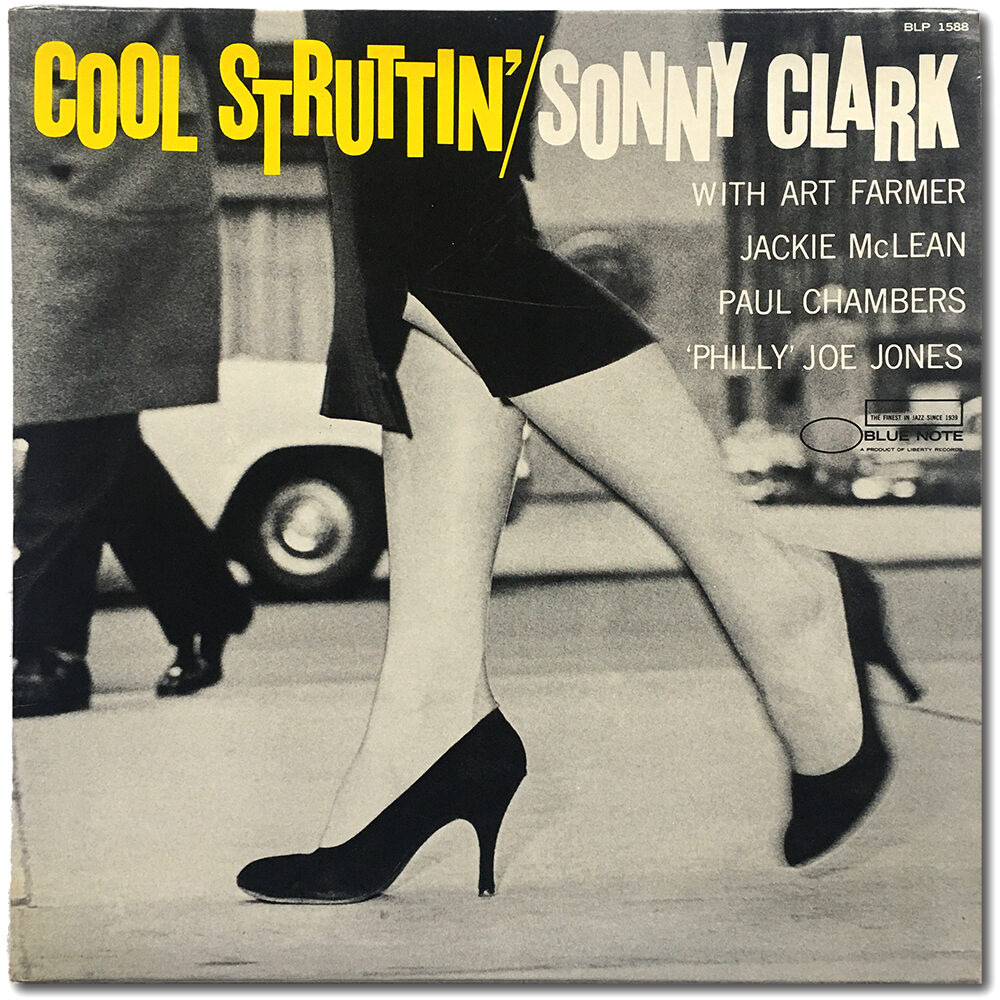
Another factor enticing me to bite on this copy was the album’s iconic cover, which is perhaps the most famous jazz album cover of all time. The presentation of both the graphic and typography remain sharp with this issue, though after Liberty Records acquired Blue Note in 1966 they felt obligated to brandish their name on the front and in the process tarnish Reid Miles’ original artistic vision. The typography he chose for the words “Blue Note 1588” have been replaced with a less attractive outlined version of the label’s note logo complete with the phrase “A Product of Liberty Records” in fine print. While this is the type of thing a detail-oriented collector like myself often takes notice of, it ultimately only amounts to a subtle disappointment that is easy to overlook upon hearing the vinyl’s playback.
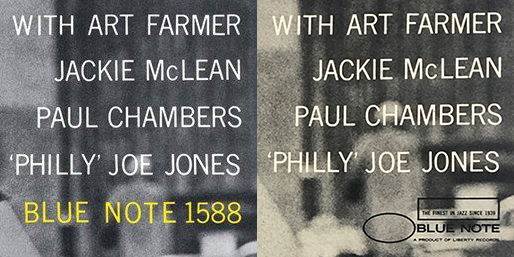
Differences in the original and Liberty reissue album covers

For Audio Engineering Nerds

The several stereo versions of this album I have heard no doubt have accurate representations of each instrument (save Rudy Van Gelder’s less-than-ideal piano sound, of course), yet the overall presentation has typically been a little on the bright side in stereo, and, as per usual with pre-seventies stereo, sounds disjoint. Surely some jazz lovers prefer the added detail of these stereo mixes; personally I prefer the cohesion of the mono.

I don’t know if my mind is playing tricks on me as a result of this being such a high-profile album, but the mono presentation of Cool Struttin’ seems especially balanced in relation to other mono-stereo comparisons from the same time period. This original Van Gelder mono mastering is on the darker side — especially good here since it sounds like the cymbals were recorded with a lot of high-frequency energy — but everything really locks into place in mono here.

For example, where stereo issues arguably give an added sense of depth by placing the reverb for Art Farmer’s trumpet in the center of the stereo spread with Farmer flanked to the left, on the mono version the same plate reverb melds with Farmer’s tone in a unique and satisfying way. What’s more, the mono seems to emphasize producer Alfred Lion’s artistic sensibilities and engineer Rudy Van Gelder’s ability to give each musician their own sound. As pointed out by my honorable collecting friend Clifford (Instagram’s @tallswami), in contrast to Farmer, Jackie McLean is presented front and center with drier immediacy. These choices emphasize each soloist’s unique character and helps each find their own voice on the recording.

For Music Lovers

Many jazz fans adore Cool Struttin’. While collectors stereotypically have a special fetish for the album that is perhaps in some way informed by its killer album art, a drummer friend who is deeply rooted in the jazz tradition and entirely unfamiliar with the world of collecting has identified this as his favorite jazz album of all time. Paraphrasing him, “It just swings so hard”.

I don’t deny that, but hard bop is my thing and I hear a lot of hard swinging in my day-to-day listening. As a result then, I can’t say that I hold Cool Struttin’ in such high regard. I would never deny that it embodies quality performances by world-class musicians but it’s a bit off-base from my typical taste. I’ve never been a big fan of bluesy walking tunes like the title track; they have always seemed kind of “jammy” to me and hence a bit lacking in purpose. The song’s artistic statements could have probably been made in about two minutes’ less time as well. Not that there’s anything inherently wrong with two solos from a great pianist, but Clark solos twice, and the band seems to be in miscommunication when Chambers comes out of his solo, which leads to an additional chorus of meandering.

I dig the intro of “Blue Minor”, and though the bridge has a cheesy, swanky quality to it, perhaps it creates interesting contrast with the song’s hipper A-section. McLean’s solo here is in the Monkian tradition of sticking close to the melody, but at the same time it sounds out of character for the saxophonist, who is typically quite adventurous harmonically. Ironically, this paints McLean as being somewhat unfamiliar with the tune at the time of recording.

“Sippin’ at Bells” is a Miles Davis composition dating back to 1947, the melody of which has firm roots in the bebop tradition. Regular readers of Deep Groove Mono may be aware that compositions with more complex melodies like this generally aren’t my favorite. True, many Monk compositions I adore have challenging structures (“Four in One”, for example), though there’s something about Monk’s melodies that make them fun to hum regardless (which I believe is a very important aspect of his genius). A lot of bebop melodies make me think of tangled string and thus I have a hard time finding something to latch on to. That said, I don’t feel that “Sippin’ at Bells” squarely falls into this category, and I enjoy both Clark’s take and Miles’ original version with Charlie Parker.

Concluding the album is “Deep Night”, a song originally recorded by Rudy Vallee in 1929 and my favorite track on Cool Struttin’. I love the opening two-minute trio vamp. Philly’s brush work and Clark’s delicate, lyrical style complement each other so well, and Philly’s solo at the end is airtight percussive perfection. I probably would have preferred that the trio finish out the song unaccompanied, but when Farmer and McLean eventually enter they deliver quality solos nonetheless.
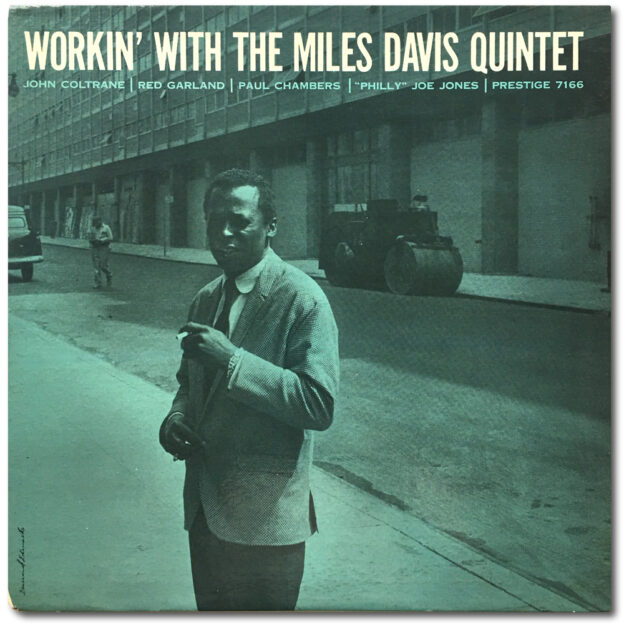
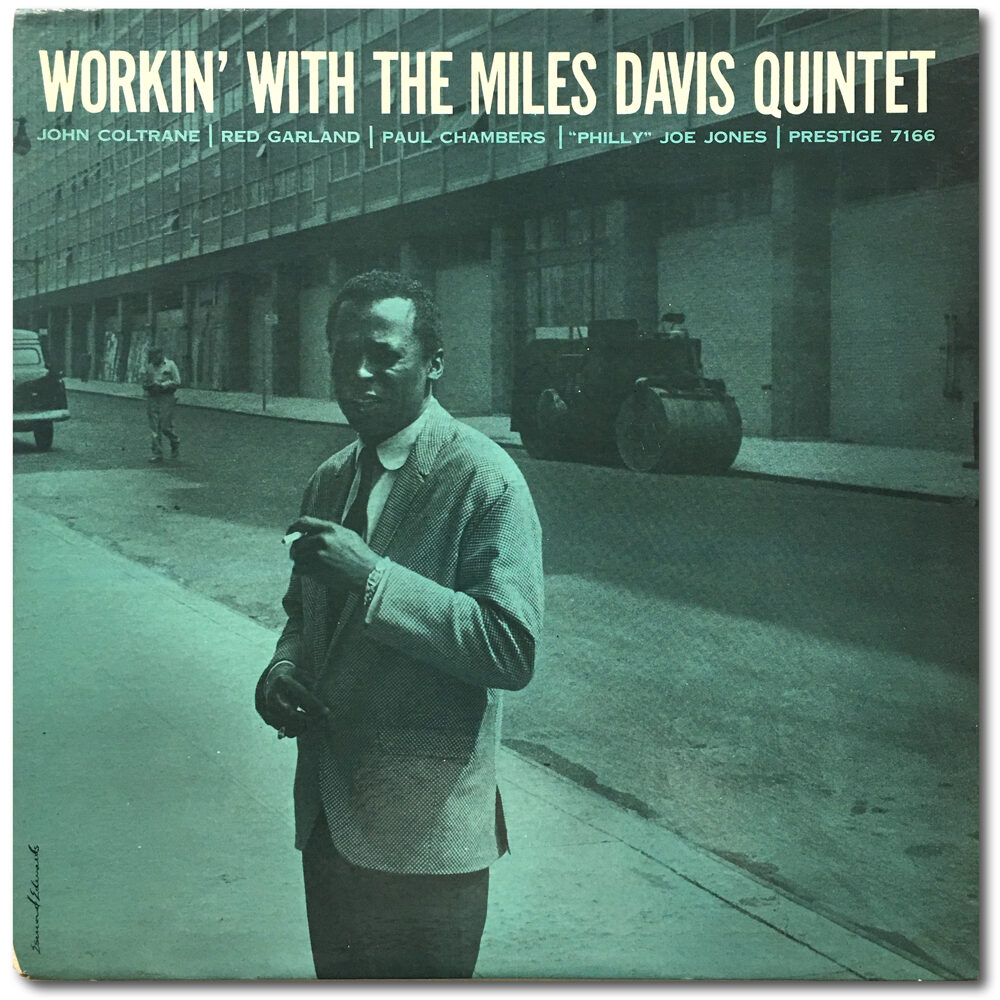
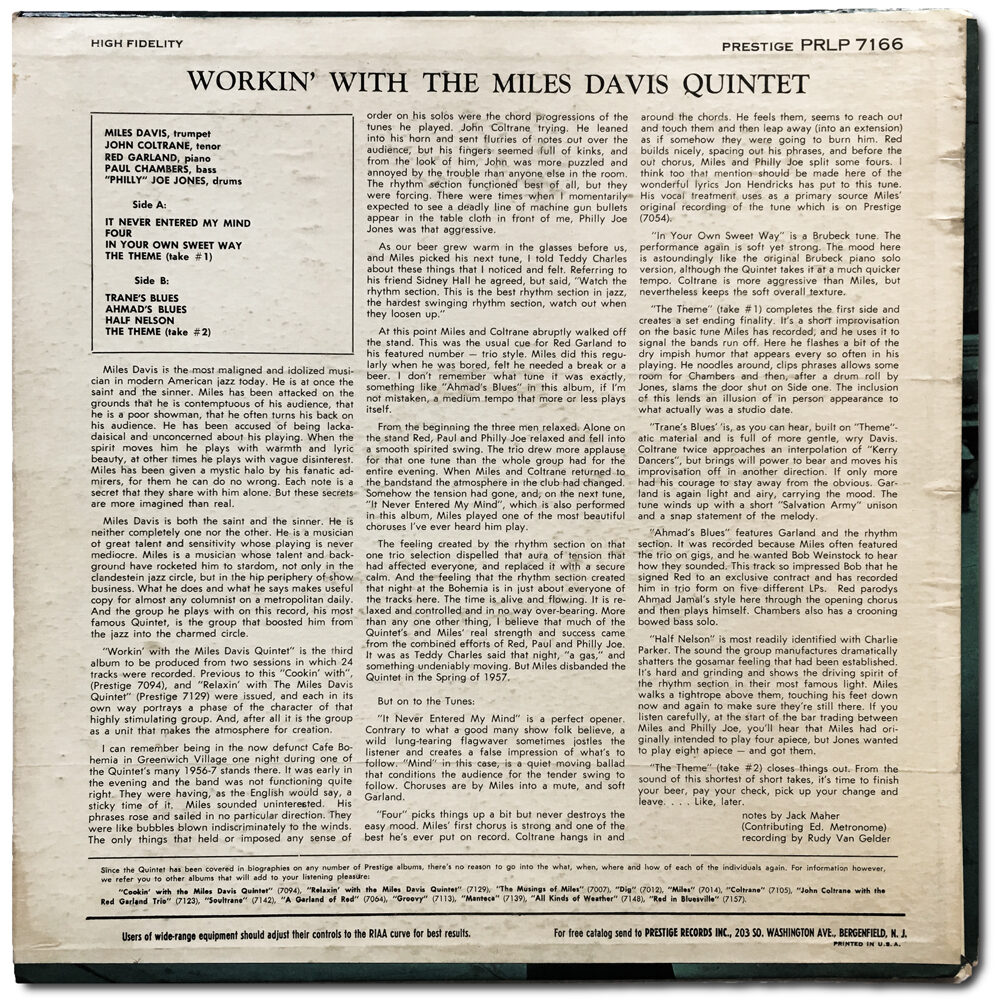
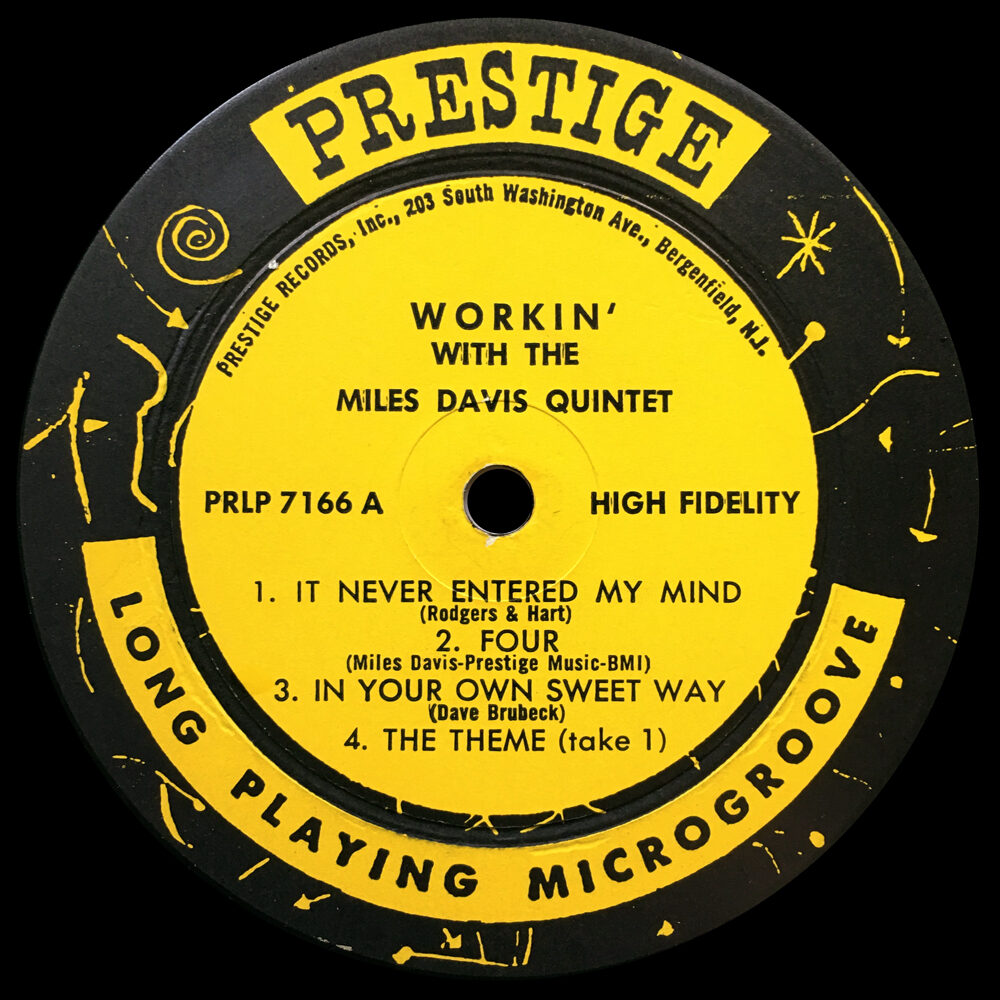
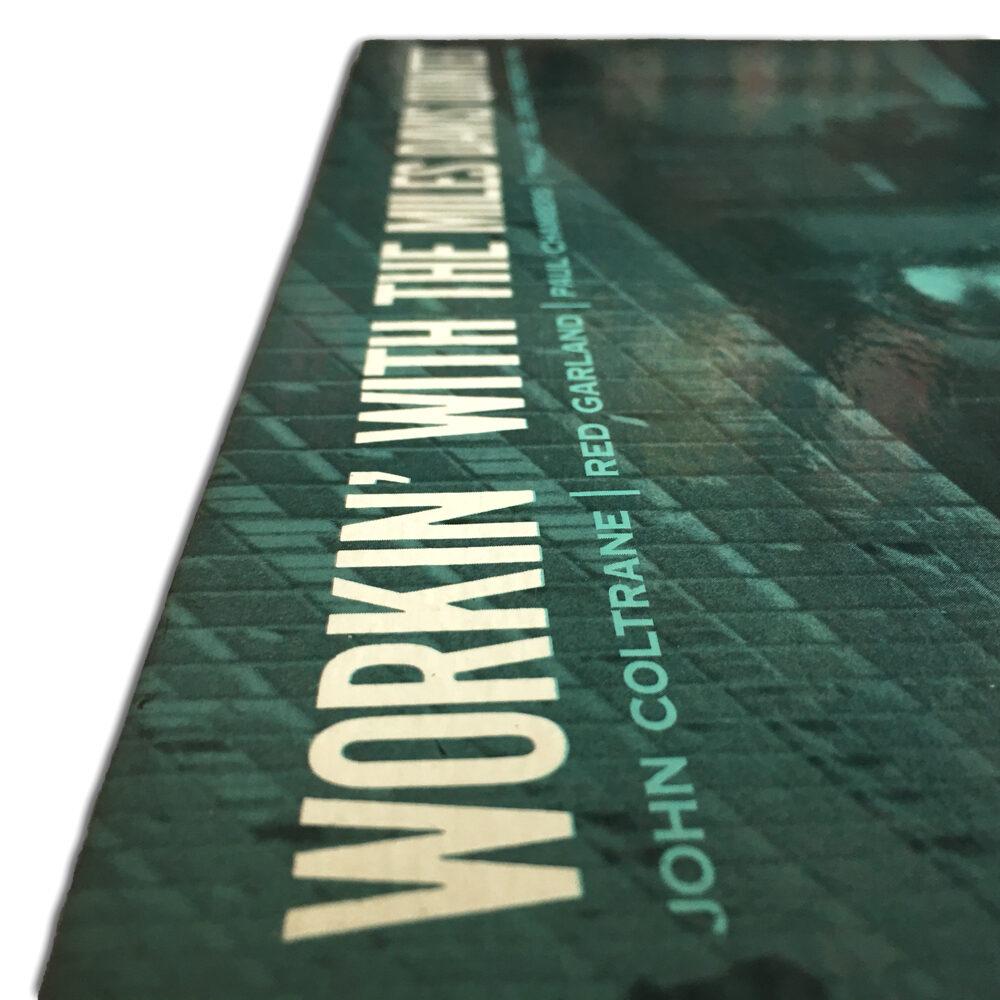
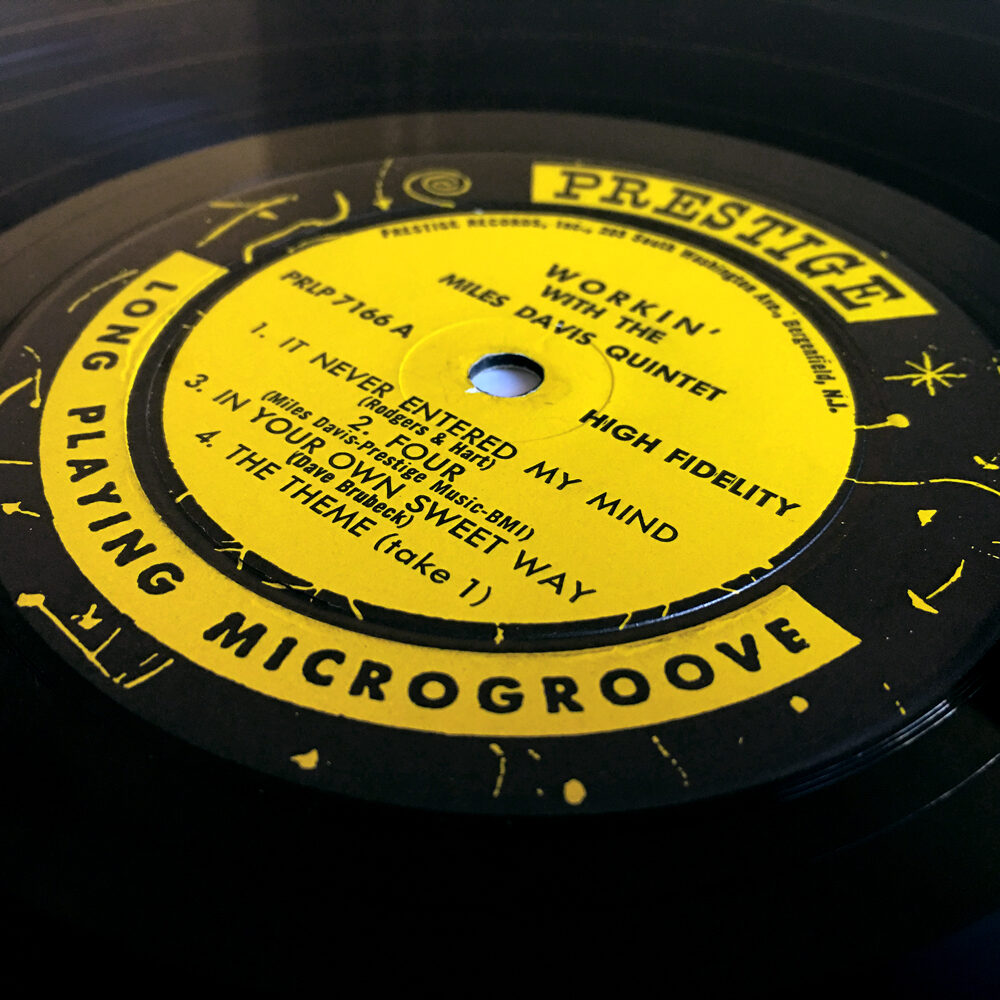
Vinyl Spotlight: Workin’ with the Miles Davis Quintet (Prestige 7166) Original Pressing

  • Original 1959 pressing
  • “Bergenfield, N.J.” address on both labels
  • Deep groove both sides
  • “RVG” stamped in dead wax

Personnel:

  • Miles Davis, trumpet
  • John Coltrane, tenor saxophone
  • Red Garland, piano
  • Paul Chambers, bass
  • Philly Joe Jones, drums

All tracks except “Half Nelson” recorded May 11, 1956
“Half Nelson” recorded October 26, 1956
All tracks recorded at Van Gelder Studio, Hackensack, New Jersey
Originally released December 1959

1 It Never Entered My Mind
2 Four
3 In Your Own Sweet Way
4 The Theme [Take 1]
5 Trane’s Blues
6 Ahmad’s Blues
7 Half Nelson
8 The Theme [Take 2]
This hobby is all about patience. Several years back, a friend of mine who is almost exclusively a collector of rock and disco twelve-inches randomly scored an EX original pressing of this album for 30 bucks at a shop in Troy, New York, just a 15-minute drive up the Hudson from my native Albany. Try as I have to pry it from his hands over the years, he’s never budged. A pinch of jealousy toward his steal may have then influenced me in the coming years to pass up countless copies of this album that I felt weren’t the right combination of condition and price (I don’t think I’ve ever seen a copy of this album for $30 in any condition). Recently I finally found a VG+ copy that, while priced over double what my friend paid, was still fair nonetheless. Upon previewing playback at the store, I found a passage of very light ticks in one spot, but after running the record through my Spin Clean, I was astonished to find that the ticks went away. (As much as I adore the Spin Clean, this was a first!)

Being one of four legendary albums Miles and company recorded for Prestige in 1956 in order to quickly fulfill his contract with the label before moving over to Columbia, this copy of Workin’ now complements my copy of Cookin’ (Relaxin’ and Steamin’ I can take or leave). These recordings represent a “sweet spot” in engineer Rudy Van Gelder’s tenure at his Hackensack, New Jersey home recording studio: lifelike mono sound that creates a natural sense of space with instruments balanced to perfection. “It Never Entered My Mind”, a patented, gorgeous Miles ballad complete with the sweet sounds of the leader’s muted trumpet, will perk up the ears of just about any music lover (my rock-and-disco-collecting friend included), and “Four” has all the ingredients of a hard bop classic. As with Cookin’, Philly Joe Jones’ drums sound incredibly natural at times and thunderous at others, and I don’t think I’ll ever grow tired of the more structured style of improvisation John Coltrane sported in 1956. This combination of world-class musicianship paired with a charming, minimalist monophonic presentation firmly places these sessions near the top of my list of favorites.

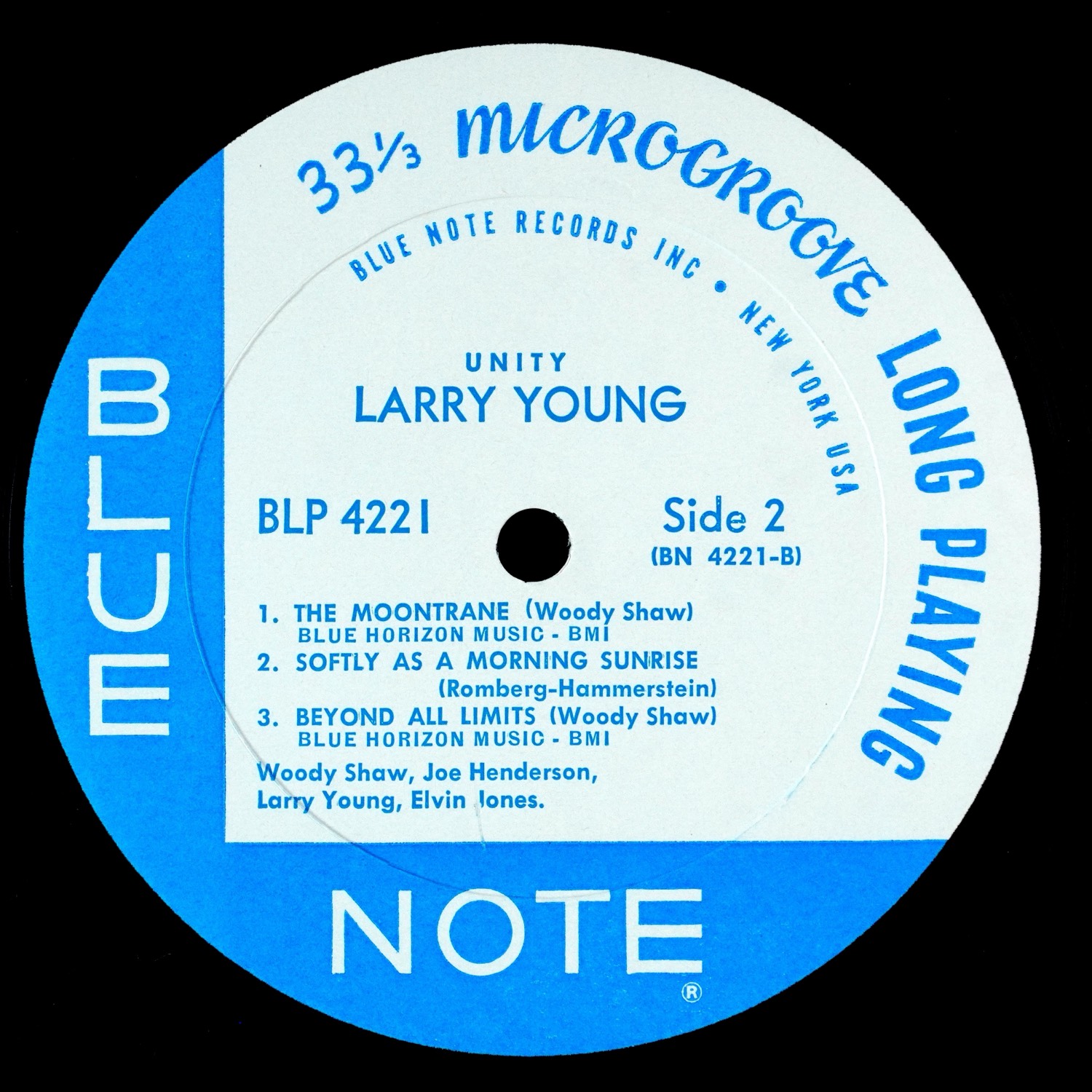
Vinyl Spotlight: Larry Young, Unity (Blue Note 4221) “Earless NY” Mono Pressing

  • Second “earless New York” mono pressing ca. 1966
  • “VAN GELDER” stamped in dead wax

Personnel:

  • Woody Shaw, trumpet
  • Joe Henderson, tenor saxophone
  • Larry Young, organ
  • Elvin Jones, drums

Recorded November 10, 1965 at Van Gelder Studio, Englewood Cliffs, New Jersey
Originally released August 1966

1 Zoltan
2 Monk’s Dream
3 If
4 The Moontrane
5 Softly As A Morning Sunrise
6 Beyond All Limits
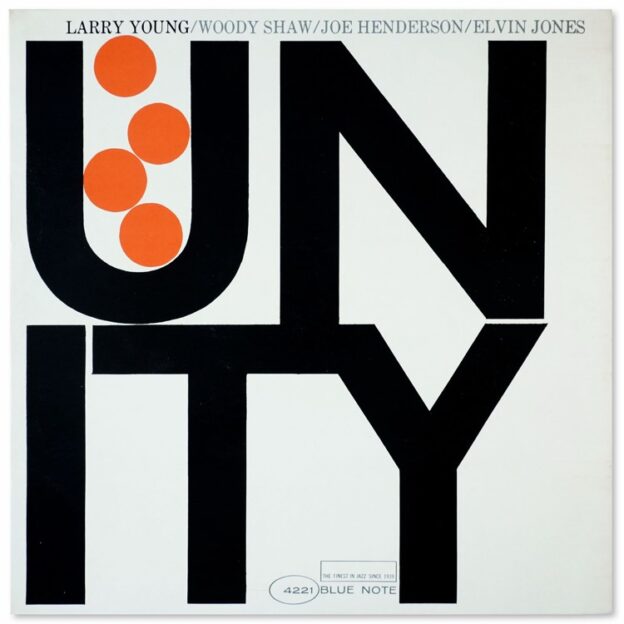
Back in 2010, I first got interested in collecting vintage jazz records by way of the Blue Note Album Cover Art book. Since then it’s been glaringly obvious that Larry Young’s Unity sports one of the most popular and timeless covers in the legendary label’s catalog — there’s even a copy of it on display (alongside BLP 1530, Jutta Hipp and Zoot Sims) at the Museum of Modern Art here in New York City. I always fancied this album art but initially ignored the music; I may have initially bought into the hype of jazz records with organ not being “cool”, and the post bop leanings of the soloists here didn’t appeal to me at first either.

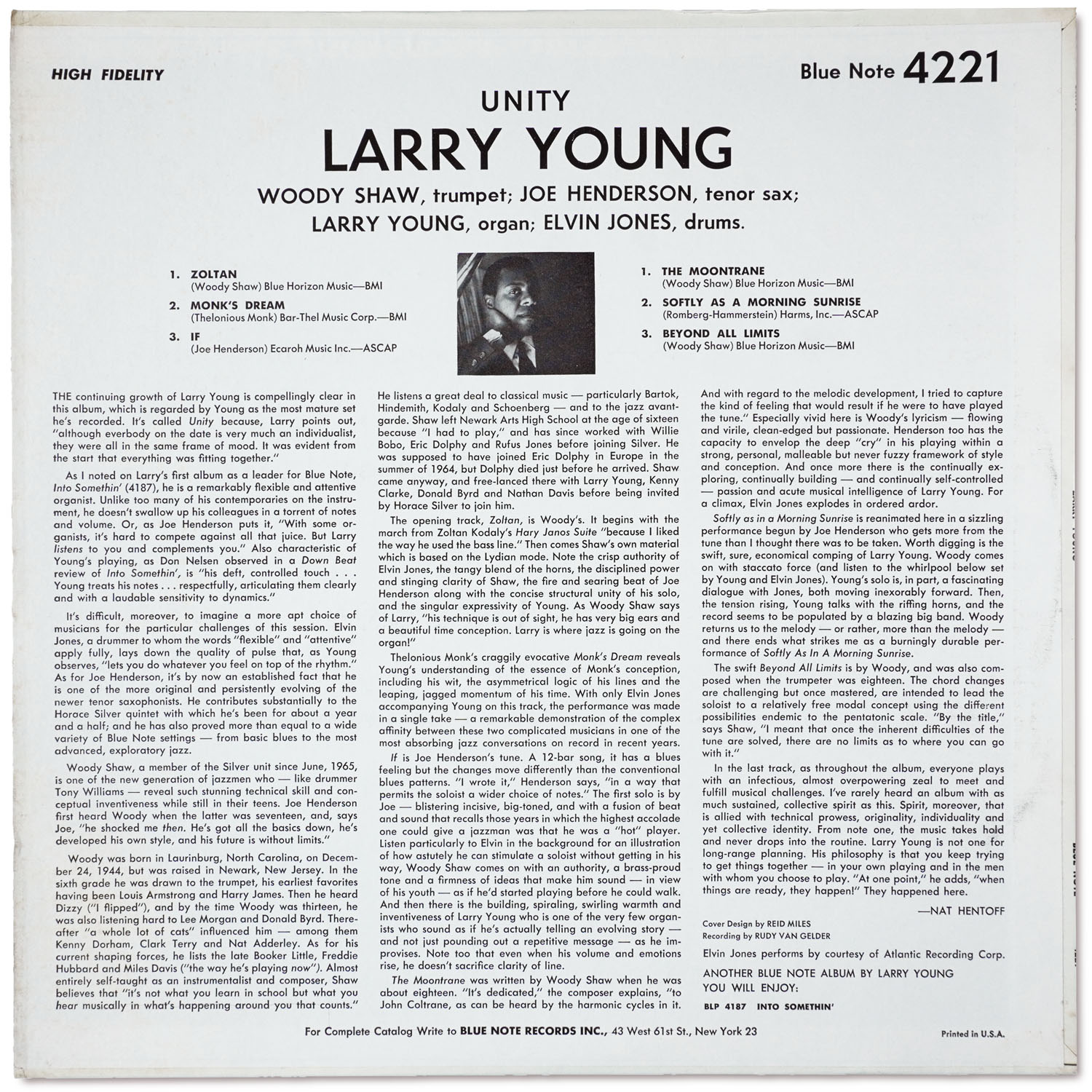
Well I’ve come full circle with most of that. Finding an earless mono copy in excellent condition for a fair price on Discogs recently forced my hand at giving the album another chance, and all kinds of great musical things started jumping out at me. Being a big Monk fan, “Monk’s Dream” got my attention first, and I found a new appreciation for its tag-team arrangement featuring Young and drummer Elvin Jones. From there, it became clear how incredible Jones sounds on this album and how well his kit was recorded by engineer Rudy Van Gelder. Over time I’ve also become a bigger fan of the sound coming out of Van Gelder’s Englewood Cliffs studio in the mid ‘60s. Distinguished from all of the engineer’s previous eras by a “softer” approach to recording and mastering, there is a smoothness to these 1965 takes that starkly contrasts with the more heavily compressed instrumentation on other Van Gelder albums recorded in 1963 and 1964 like The Sidewinder (BLP 4157), Search for the New Land (BLP 4169), and Song for My Father (BLP 4185).

Other standout tunes on Unity include “If” and “The Moontrane”, composed by frontmen Joe Henderson and Woody Shaw, respectively, and the pair’s contribution as songwriters is paramount to the album’s classic status. As for this band’s interpretation of “Softly as in a Morning Sunrise”, I prefer Sonny Rollins’ (BLP 1581, A Night at the Village Vanguard) and Sonny Clark’s (BLP 1579, Sonny Clark Trio) treatments of the standard. Auditioning this album multiple times early on in my jazz listening, I probably rarely got past Shaw’s “Zoltan”: I enjoy the melody here but the tune’s dissonant “B” section leaves the door open for chaotic improvisation and Joe Henderson seems to take advantage of that more than any other band member.

Unity is a gorgeous recording of four adventurous musicians that I have returned to countless times since acquiring it. The more progressive frontline pairing of Henderson and Shaw make it a challenging listen, and the more tempered post bop leanings of Young and Jones have kept me coming back for more.

Vinyl Spotlight: Horace Silver and the Jazz Messengers (Blue Note 1518) West 63rd “No INC/R” Pressing

  • “Third” pressing circa 1957-1959
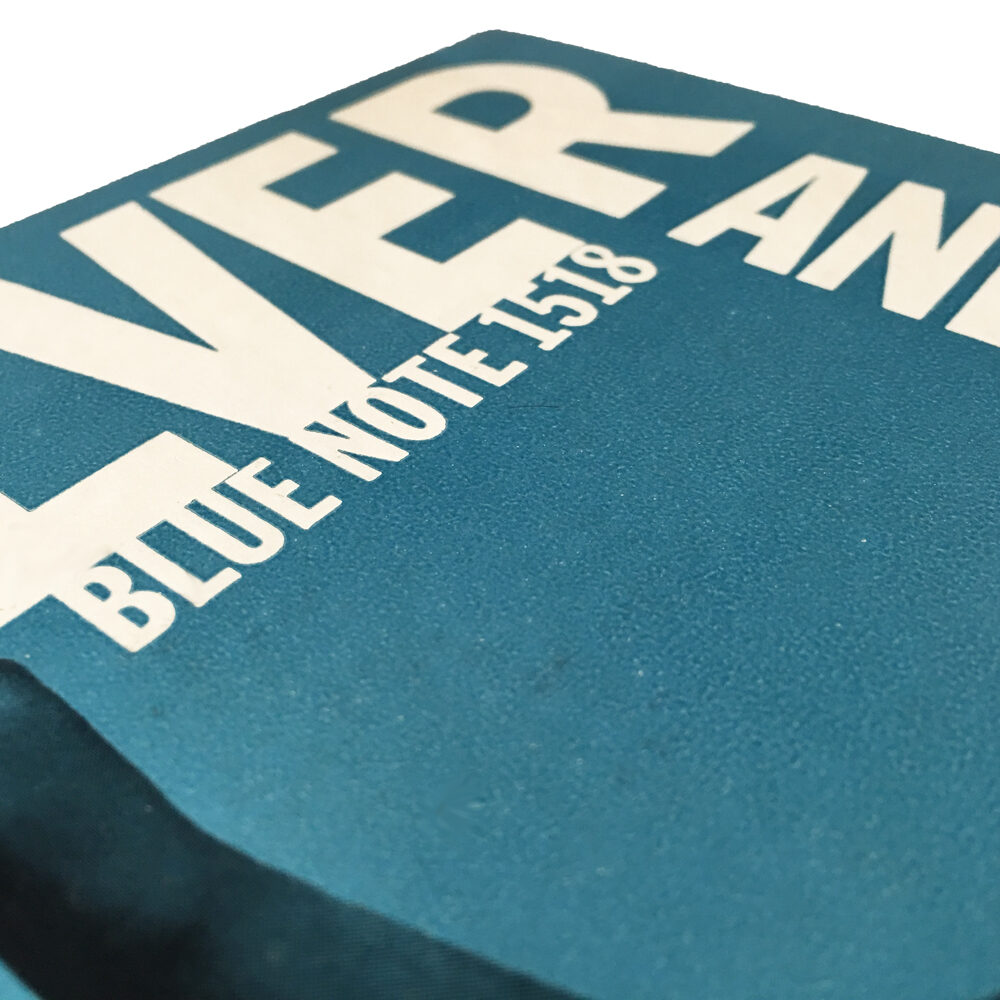
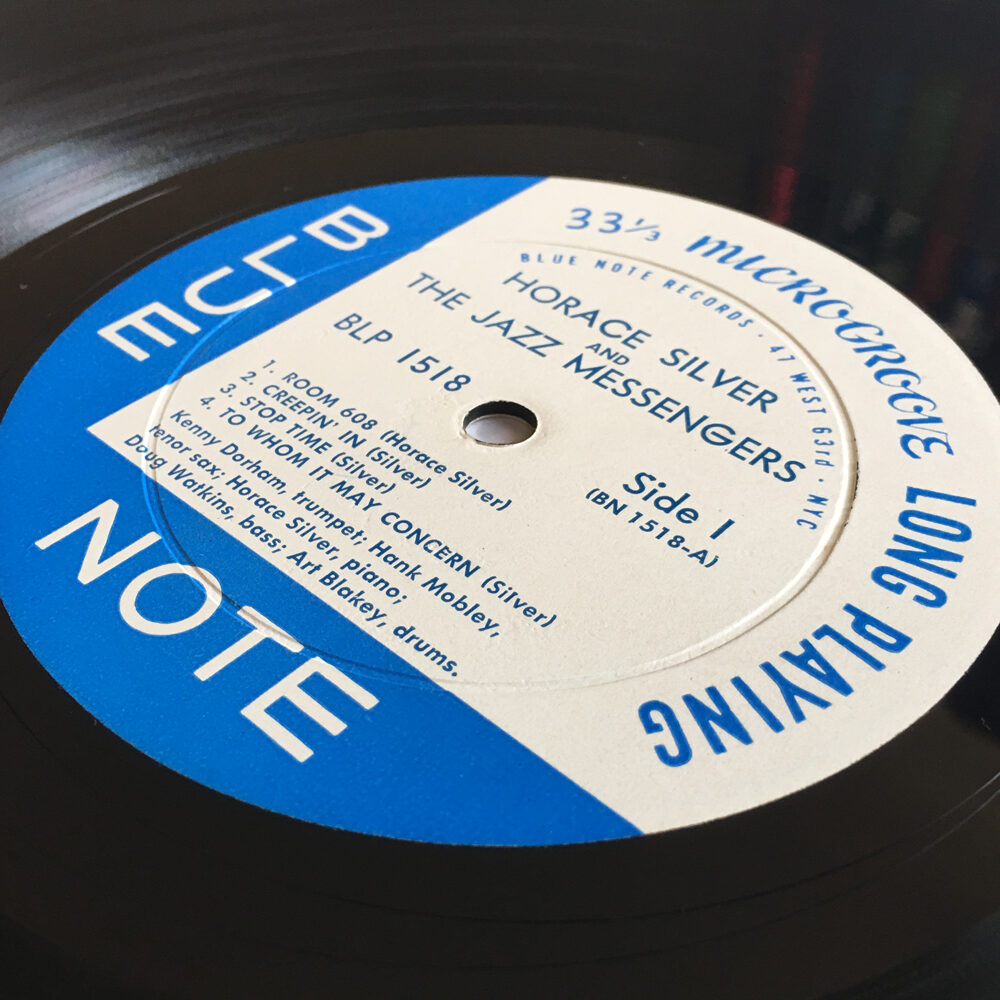
  • “47 WEST 63rd NYC” address on both labels without registered trademark “R”
  • Deep groove both sides
  • “RVG” and Plastylite “P” (ear) etched in dead wax

Personnel:

  • Kenny Dorham, trumpet
  • Hank Mobley, tenor saxophone
  • Horace Silver, piano
  • Doug Watkins, bass
  • Art Blakey, drums

Recorded November 13, 1954 and February 6, 1955 at Van Gelder Studio, Hackensack, New Jersey
Originally released as two 10″ LPs: BLP 5058 (March 1955) and BLP 5062 (September 1955)
BLP 1518 originally released July 1956

1 Room 608
2 Creepin’ In
3 Stop Time
4 To Whom It May Concern
5 Hippy
6 The Preacher
7 Hankerin’
8 Doodlin’
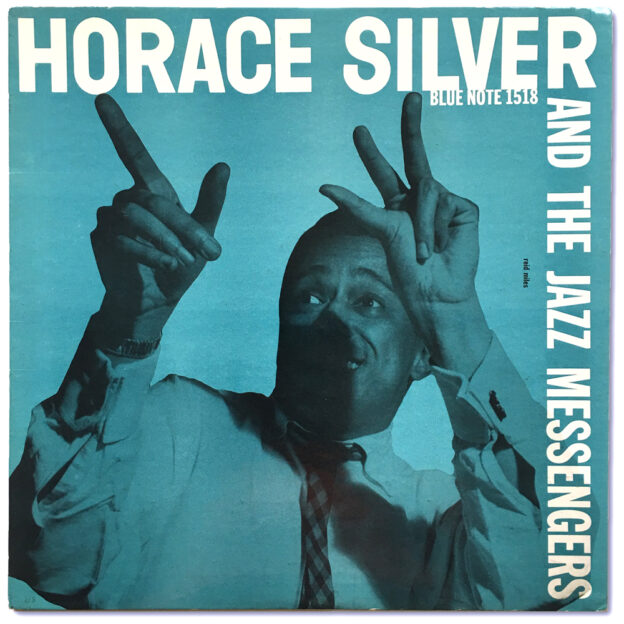
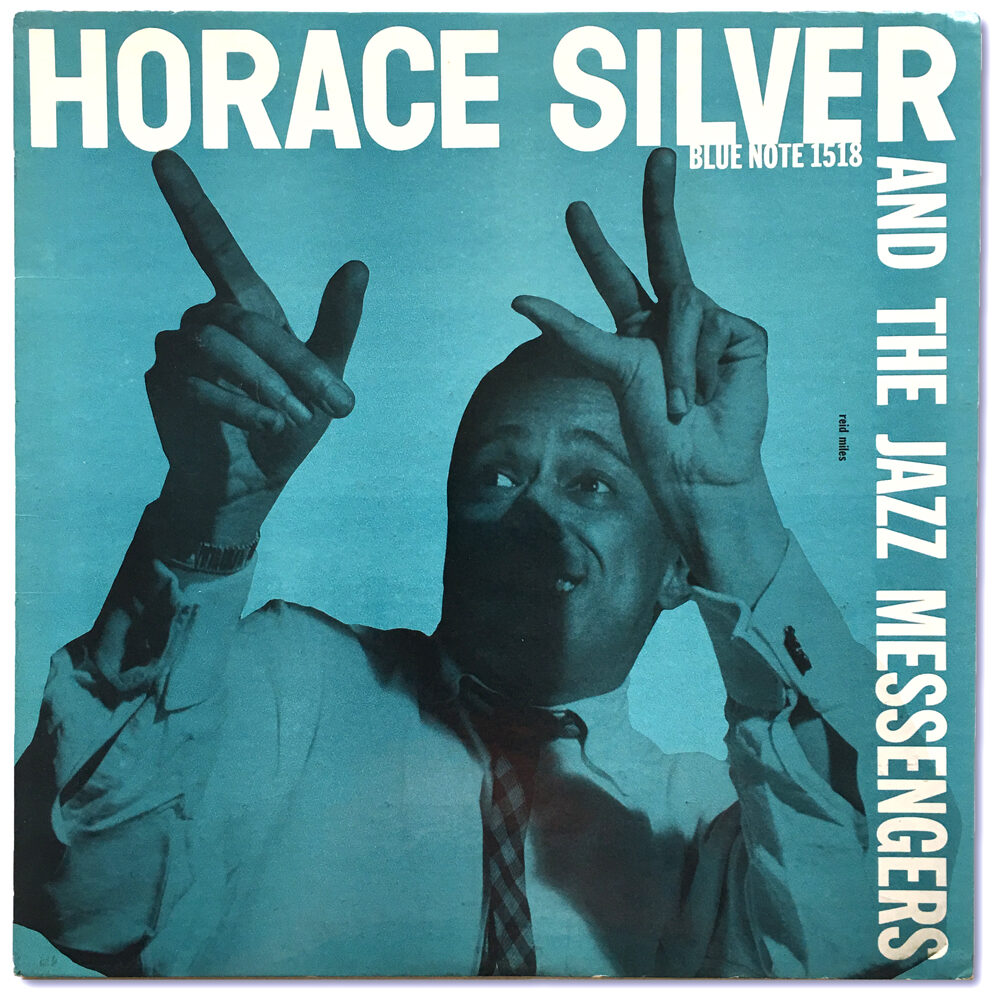
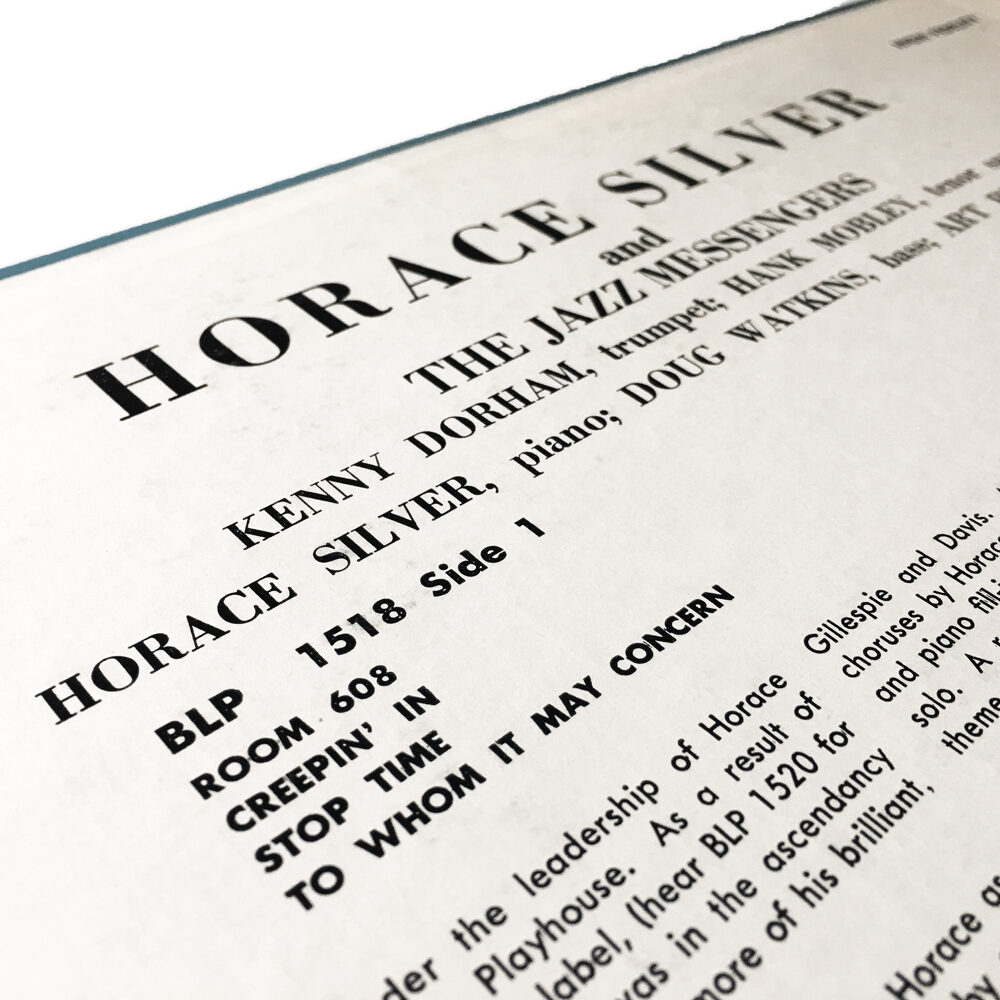
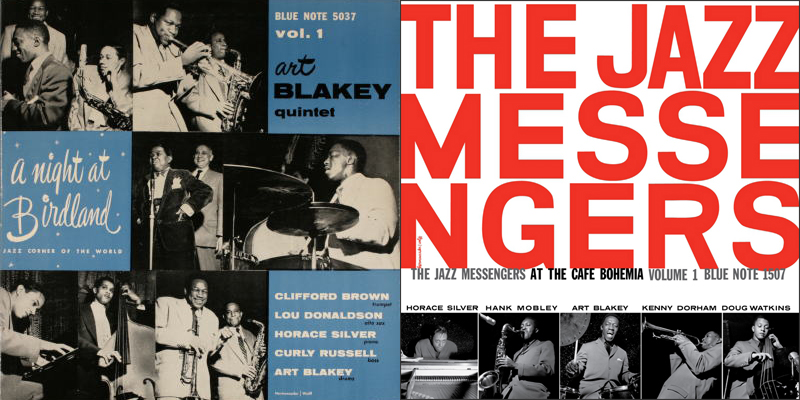
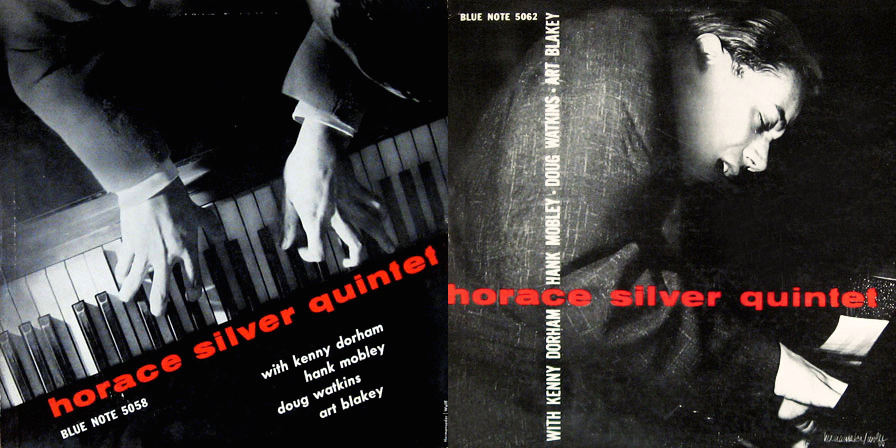
Not only is Horace Silver a favorite jazz composer and musician of mine, this is one of my favorite albums of his. If I had to guess, Silver was given the title of leader on this early Jazz Messengers effort since, unlike the Birdland and Bohemia Messenger LPs of the same era, the majority of the selections here (all but one) were written by Silver, who only penned three of the nine original Birdland tracks and nothing on the original Bohemia LPs. But while many jazz newcomers will, as I did, think of this effort as a single body of work encased in the minimal, baby-blue cover we have all come to know through various reissues (a cover that, by the way, sports a horrible photo of Silver with a shadow covering half his face), these sides actually numbered four in total originally, spanning across two 10″ albums both released in 1955 (BLP 5058 and BLP 5062). In some instances I prefer to own the original 10″ pressings of albums that would later resurface in a 12″ configuration — if I can even find the original 10″ LPs — but for this album, it’s so solid start to finish that I actually prefer the 12″ pressing over the two 10″ “originals”. Why not have all the great music on the 10″ LPs in one place? That’s two less times I need to get up to turn the record over!

A Night at Birdland, Vol. 1 (BLP 5037) and The Jazz Messengers at the Cafe Bohemia, Vol. 1 (BLP 1507)

The sound of this record is characteristic of that coming out of Rudy Van Gelder’s Hackensack home studio in the mid 1950s: clear, warm mono with shimmering cymbals, a slightly metallic sound to the trumpet, and a touch (less than normal) of Van Gelder’s menacing spring reverb. This is actually my second vintage copy of this LP. The first had “NEW YORK 23” on one side and “West 63rd” on the other and was acquired at an outdoor Brooklyn record fair several years ago. I recall making the decision to sell it in part because there was a tinge of distortion on Kenny Dorham’s loudest notes (which actually improved somewhat after a good cleaning) but I also sold it because I decidedly preferred the mastering of the 1987 Capitol-Manhattan CD reissue. But when this near mint copy with “West 63rd” on both sides appeared at another Brooklyn record fair recently, I simply could not pass it up.

The Horace Silver Quintet, Volumes 1 & 2 (BLP 5058 & BLP 5062)

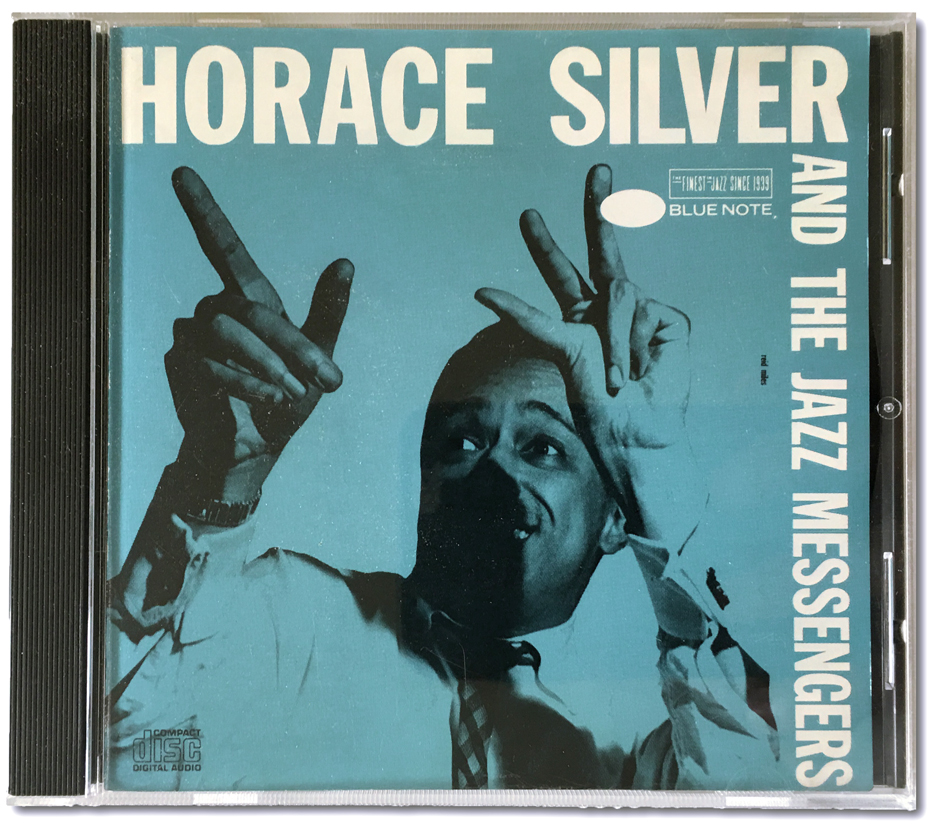
Above all, the highest of frequencies, usually dominated by cymbals, sound more “accurate” (detailed and present) on the Manhattan CD and hence, I would assume, on the original master tape. After hearing numerous original Van Gelder LP masters from the years of approximately 1955 to 1957, it’s clear that Van Gelder was making the deliberate and regular choice to dampen the high frequencies a bit when mastering for vinyl. This could have been a precaution against mistracking that the young engineer opted for at the time, which could in theory allow the signal-to-noise ratio-obsessed Van Gelder to achieve even greater volume on his LPs. It could have also been a deliberate aesthetic choice, but we hear Van Gelder leaving more high-frequency detail on his records in 1958. I still prefer the sound of the Manhattan CD, but I’ve come to appreciate Rudy Van Gelder’s earliest LPs as an embodiment of a sonic signature representative of the time they were originally released in.

The Capitol-Manhattan CD reissue of BLP 1518

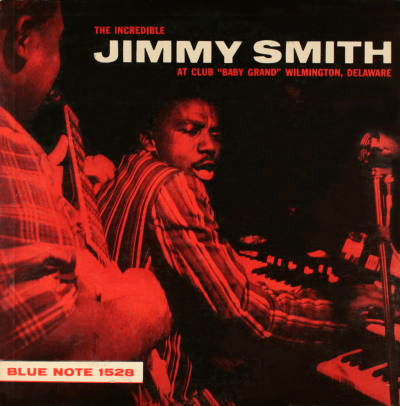
This is a solid program. Though there are plenty of uptempo tunes with unorthodox melodies written more in the tradition of hard bop’s immediate ancestor, bebop (“Room 608”, “Stop Time”, “Hippy”), Silver penned a jukebox hit with “The Preacher”. Making its debut here (technically on BLP 5062), its corny, gospel-drenched melody is undeniably fun, though I prefer Jimmy Smith’s humorous demolishing of it on Volume 1 of the Club Baby Grand LPs.

Jimmy Smith at Club Baby Grand, Vol. 1 (BLP 1528)

But the real jewels of this album are the quieter tunes. “Doodlin'” is the kind of bluesy jazz you might imagine a 1950s sleuth playing on his car’s AM radio while cruising the streets looking for clues. “Creepin’ In” is perfect for a lazy afternoon indoors sipping tea. Mobley and Dorham set the mood here, and they also set the stage for a story-like solo from Silver. Always a clear and spontaneous communicator of his musical ideas, around the twenty-first measure of his solo, Silver begins a descent toward the middle of the keyboard. He then plays with an idea for a couple measures before unearthing a simple yet highly memorable melody that he plays twice before handing things back over to the band. I also dig how often Silver changes things up from the traditional “AABA” bop writing formula, sometimes throwing in an additional “C” section after all the solos, and the “A” section of “To Whom It May Concern” embodies some of the most original writing by Silver on this great album.