Tag Archives: Thelonious Monk

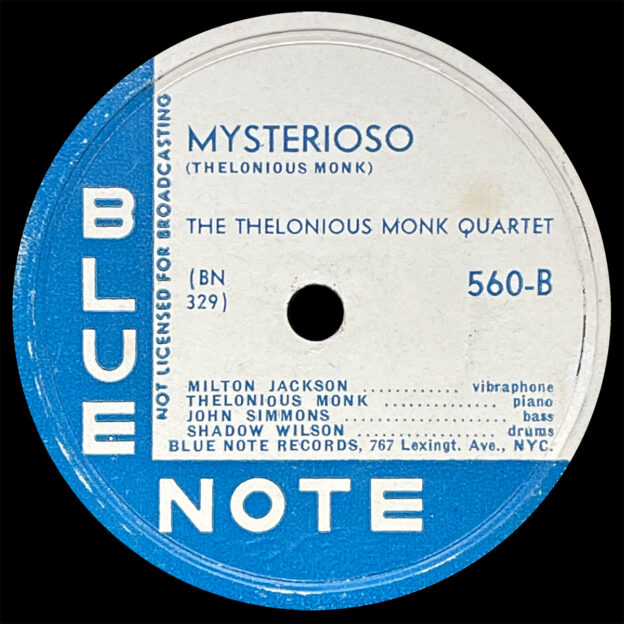
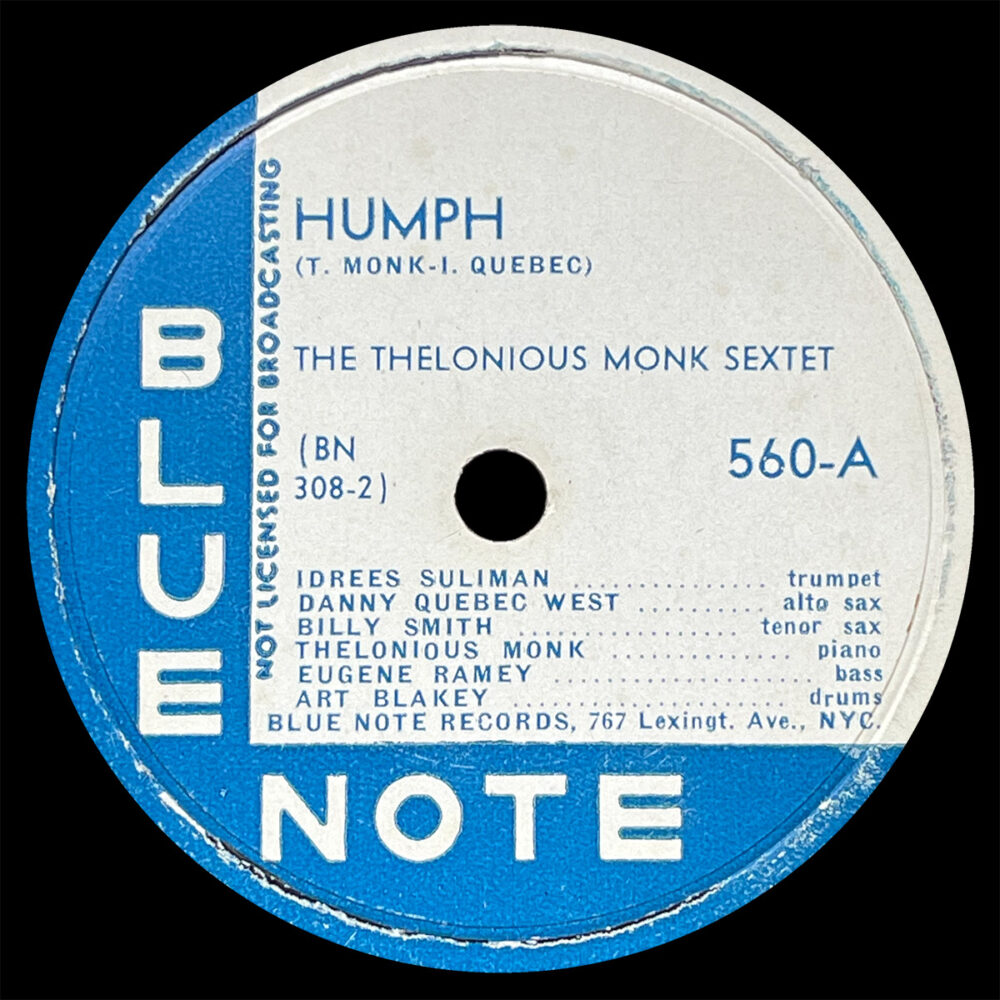
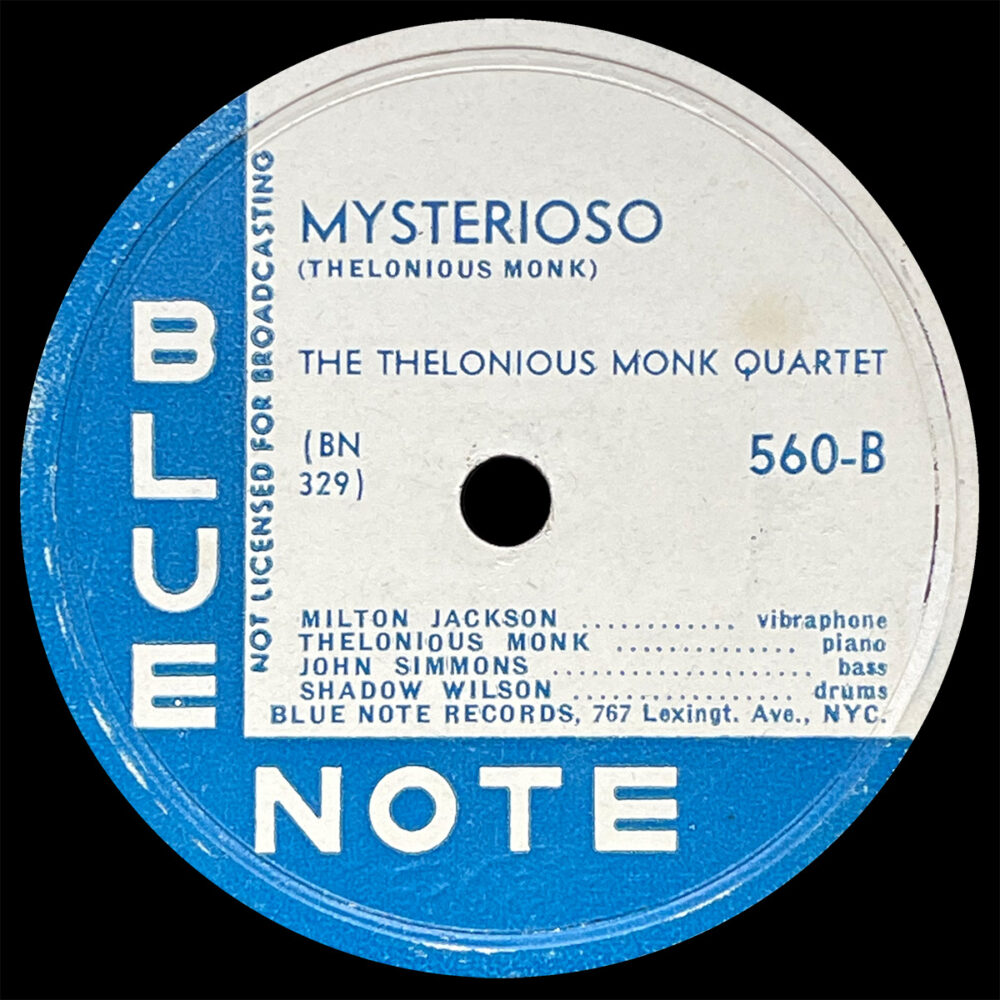
Shellac Spotlight: Thelonious Monk, “Humph” / “Misterioso” (Blue Note 560)

  • Original 1949 pressing

Personnel:

  • Idrees Sulieman, trumpet (side A only)
  • Danny Quebec West, alto saxophone (side A only)
  • Billy Smith, tenor saxophone (side A only)
  • Milt Jackson, vibraphone (side B only)
  • Thelonious Monk, piano
  • Gene Ramey, bass (side A only)
  • John Simmons, bass (side B only)
  • Art Blakey, drums (side A only)
  • Shadow Wilson, drums (side B only)

“Humph” recorded October 15, 1947 at WOR Studios, New York City
“Misterioso” recorded July 2, 1948 at Apex Studios, New York City

A Humph
B Mysterioso
It’s been several months since I last did a proper record review. It’s a rule of mine to refrain from writing unless inspiration strikes, and it hadn’t until now. I recently received a birthday gift from my significant other in the form of a homemade video. She knows I adore Thelonious Monk, and while the inclusion of some of Monk’s music was a real treat, I didn’t realize she knew my taste well enough to include one of my all-time favorite Monk recordings.

The recording I am speaking of, a recording that makes my heart melt every time I hear it, is Monk’s original 1948 recording of “Misterioso”, the pseudoword title taking on the more predictable spelling “Mysterioso” for this inaugural release. Eight months prior to cutting this side for Alfred Lion and Blue Note Records, Monk recorded a flurry of tunes in his studio debut as a leader in the fall of 1947, also for Blue Note. But while all three of those sessions took place at a studio operated by WOR radio station in Manhattan, Blue Note pivoted to acclaimed engineer Harry Smith (not to be confused with the legendary 78 collector of the same name) and his nearby Apex Studios for this July 2, 1948 session.

In the late ’40s, Harry Smith was making a name for himself as a major industry player. Yet the fidelity of Monk’s sole session at Apex stands in stark contrast to the earlier WOR dates. The latter, recorded by engineer Doug Hawkins, exhibit lower noise and greater clarity in definition of the instruments. But Smith’s take on this quartet, distorted peaks and all, is dirtier, it’s grittier, and it excels at complementing Monk’s obtuseness both as composer and improviser.

Monk can’t help but demand our attention from start to finish on “Misterioso”. Vibraphonist Milt Jackson, another one of the jazz world’s rising stars at the time, accompanied Monk on the date. While Jackson navigates the changes, Monk manages to steal the spotlight out from under Bags’ busy hands with a jarring, minimalist comping technique that probably struck many contemporary listeners as…odd. For this author listening over 70 years later, it evokes an image of Monk leaning back on his stool between key strikes in a way that might seem casual or just flat-out lazy. But even and especially in the summer of 1948, Monk is hungry. He is a predator on his way to the top of the musical food chain, and in those silent moments he is surely scanning the keyboard with intense focus, deciding which keys will be his next tonal prey. He is a complete and utter alien to the music world, and we have Blue Note producer Alfred Lion to thank for blessing us with this glimpse of just what a musical revolutionary Monk was early on in his career.

When Jackson’s solo is over, the less-is-more trend continues, and the space Monk leaves between notes gives us a chance to catch a glimpse of John Simmons’ bassline lurking mischievously in the background. Long descending runs are often found in Monk’s solos at this time, and his patented half-step dissonance is also on full display. To most of the era’s critics, this flat-fingered striking of adjacent keys was presumedly the work of a hack pianist with poor technique that lacked the necessary precision. Yet time has revealed to us that every last one of these notes was deliberately chosen by a highly skilled pianist with an entirely unique musical conception.

The A-side, “Humph”, is no slouch either. Recorded during the first of the three previous sessions, it stands far apart from “Misterioso” not only in sonics but also in arrangement and songwriting. In fact, one might even guess that producer Alfred Lion was desperate to pair Monk’s strange “B” with a brighter, more upbeat “A” — anything vaguely resembling something more accessible to the customer — and to think that “Humph” was as close as Lion would get is a hilarious predicament only Monk could create.

Like many of the quintet and sextet sides he recorded as a leader at this time, Monk respectfully falls in line with his sidemen on “Humph” by taking a shorter solo that gives everyone a chance to shine under the limitations of the format. A lesser-known original of which Monk only recorded once, “Humph” is a complex undertaking densely packed with descending chords and fast-paced notes that sound like a tornado ripping through a cartoon town. And the peculiarity of that metaphor speaks perfectly to the character of the song’s tumultuous, colorful creator.
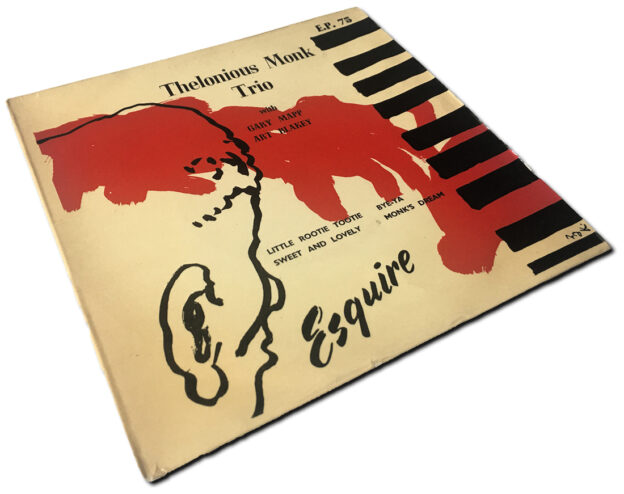
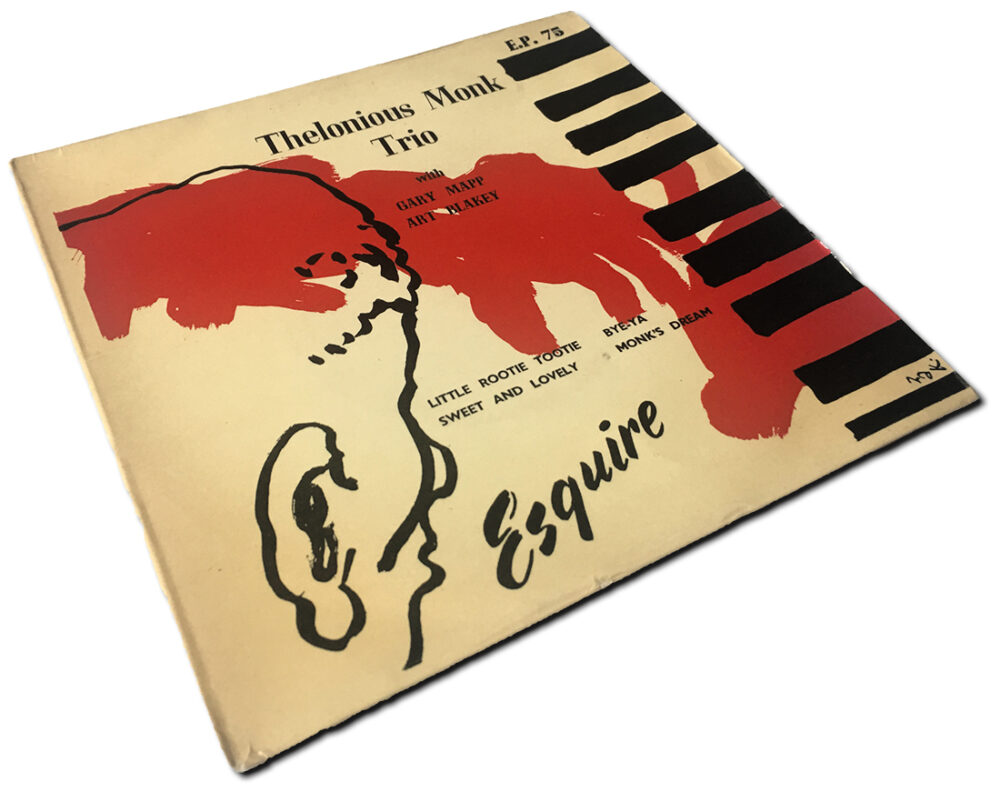
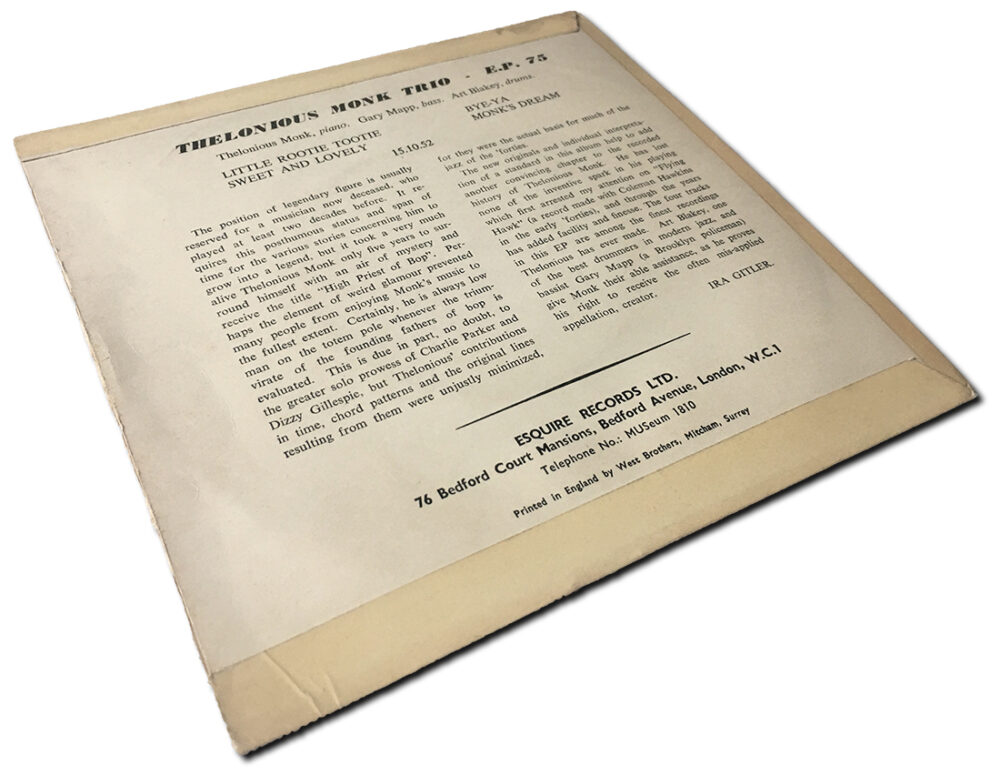
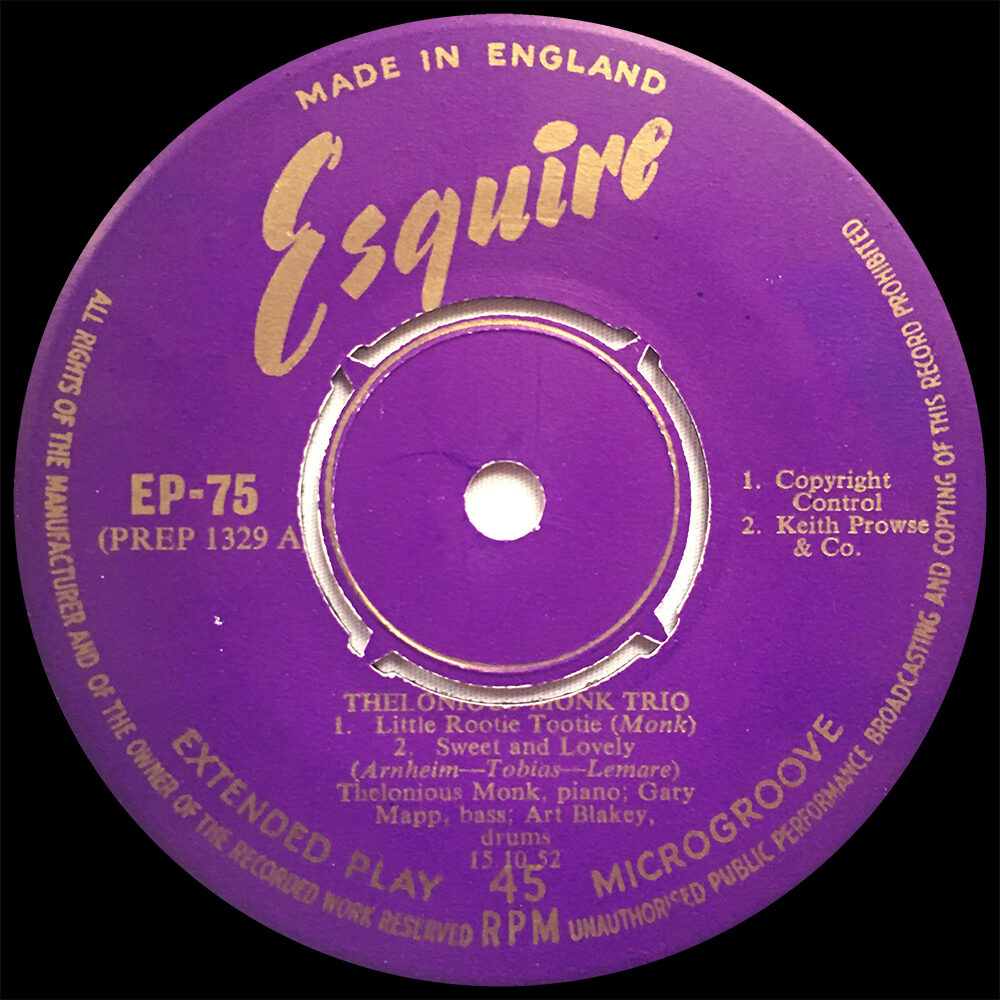
Vinyl Spotlight: Thelonious Monk Trio (Esquire EP-75) Original 45 RPM 7″ EP

Original 45 RPM 7″ UK pressing circa 1954

Personnel:

  • Thelonious Monk, piano
  • Gary Mapp, bass
  • Art Blakey, drums

Recorded October 15, 1952 at WOR Studios, New York, NY

Selection: “Monk’s Dream” (Monk)

A couple years ago I switched up my philosophy of collecting, moving away from chasing expensive, high-demand vintage jazz LPs and working harder to find less expensive, less sought-after records that managed to bring me an equal amount of joy, if not more. This is partly what led me to Esquire, in addition to their sterling reputation for producing quality vinyl. The British label has been bubbling under for several years, perhaps gaining in popularity due to the internet, yet to some extent it remains off the radar, at least it seems that way here in the states. In other words, the average foaming-at-the-mouth amateur collector isn’t rushing to Discogs to look for Saxophone Colossus on Esquire; they’re going for the original U.S. pressing.

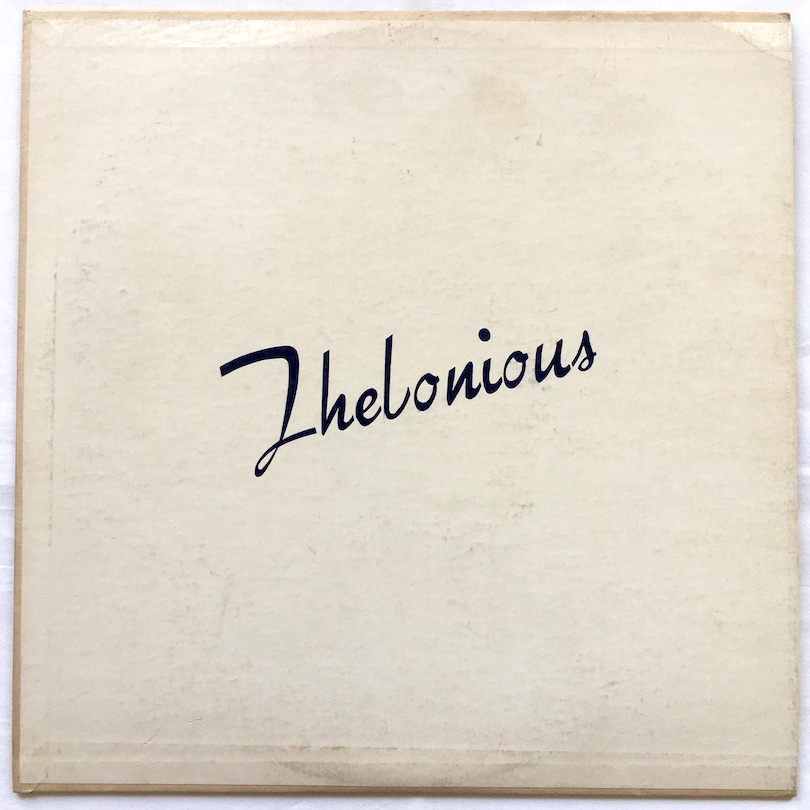
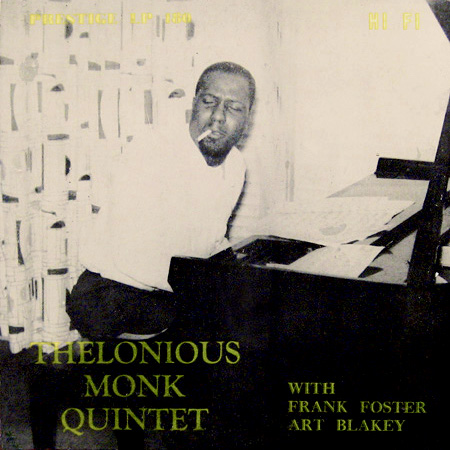
Recorded in 1952, the four sides on this Monk EP were originally issued as two 78 RPM shellac disks and also compiled on a Prestige ten-inch LP, catalog number 142, with the original cover simply reading Thelonious. I owned a copy of the latter at one point: what a gorgeous cover, and at the same time what hissy, wimpy-sounding mastering. Last year when I attended the Jazz Record Collectors’ Bash in New Jersey for the first time, I managed to meet producer and author Bob Porter, who confirmed that the first round of Prestige ten-inchers were generally shoddy. Bob told me a story of a radio jock in Manhattan dialing up Prestige to demand they continue sending 78s to the station in place of the ten-inch LPs.

The original ten-inch pressing of PRLP-142

Though the cymbals don’t cut through quite as much as they do on my 2000 Monk Prestige CD box, this Esquire EP is of a much higher fidelity than the original ten-inch. Do I feel that the faster speed of 45 revolutions per minute creates a significant bump in fidelity? Maybe…it would be hard to prove in this case I think. I also find it fairly neat that this EP perfectly compiles all four tracks from Monk’s inaugural recording session with Prestige.

Monk biographer Robin D.G. Kelley has noted that Monk had no choice but to use an old, out-of-tune piano for this session. I can hear the results of that now but I’m not enough of a musician to have heard it before I read Kelley’s book. Perhaps ironically, I think the faulty piano complements Monk’s creaky style of playing perfectly here.

Of all Monk’s work, his Prestige catalog hits a particular sweet spot: hungry performances recorded with fidelity that for the most part improves on the pianist’s previous studio sessions for Blue Note. In 1952 most modern jazz fans would have been unable to hear Monk’s newest compositions played live by their composer in the jazz clubs of New York City. As a result, they got to hear three Monk originals for the very first time with the release of these sides. On “Little Rootie Tootie”, the discordant stomping of keys comprising the chorus screams for the spotlight and is exemplary of a generally raucous session. Though this type of device may sound a little contrived to me today — far from the intricacy of “Monk’s Dream”, for example — it surely had the shock value to entice me back when I was first getting into Monk.

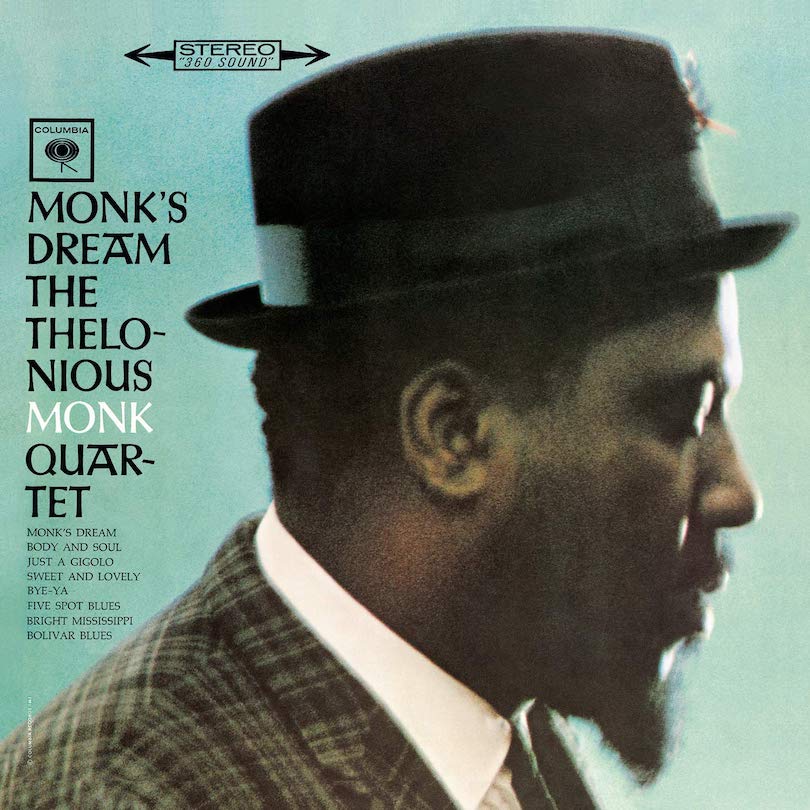
It’s worth noting that the three remaining songs from this session all resurfaced in 1963 on Monk’s first Columbia LP, Monk’s Dream. Like most jazz fans I’m sure, I was introduced to these songs (two originals and one standard) through the Columbia release. If one were to argue that the original Prestige recordings are a more authentic documenting of Monk’s work, it would then be a tragedy that so many jazz fans are introduced to these songs by way of the less aggressive Columbia LP. Aside from the fact that the Prestige session preceded the Columbia sessions by ten years, my personal feeling is that the band’s rawer delivery for Prestige does a better job of personifying Monk.

Monk’s first release for Columbia Records

That being said, when I heard the Prestige versions for the very first time, I think I probably still preferred the Columbia versions. Perhaps the former was a little too raw for me at first. For example, I definitely preferred the Columbia version of “Bye-Ya” and Frankie Dunlop’s straight-ahead swing over Art Blakey’s calypso beat on the Prestige version. But Blakey’s dirty, overly-compressed ride cymbal crashes and thunderous tom-tom hits have grown on me.

On the Columbia album Monk gives us a rather gentle reading of “Monk’s Dream”, and the dynamic, state-of-the-art quality of the Columbia recording further enhances this softer feel. This starkly contrasts with the Prestige version, where Monk plays more (dissonant) notes and is more unhinged. Again I was taken aback by this less harmonious sound initially, but over time I have come to adore it. Sandwiched between the two heads are two choruses of Monk soloing, and the way Monk flips the B-section at both passes demonstrates the pianist’s mastery of rhythm. In the first, Monk winds up with a repetitive trinkling of adjacent keys only to create an impactful sense of resolve when he brings the A-section back in smack on the “one”. The next time around Monk uses a similar motif, building us up with an ascending Chopin-esque run then landing with a swinging return to the “A”.

This is the Monk I think of when I hear these sides: In the zone, raw, and unfiltered

Monk’s reading of “Sweet and Lovely”, a less obvious standard with publishing dating back to 1931, rounds things out. Though the Prestige version is again packed with harmonic dissonance, it’s the moment on the record where everything settles down a little and the listener gets a much-deserved rest.

Typical of Esquire, and as we have now seen more than once here on DG Mono, the album art for this EP is sublime. Enjoy the audio clip and don’t sleep on Monk’s Prestige years!

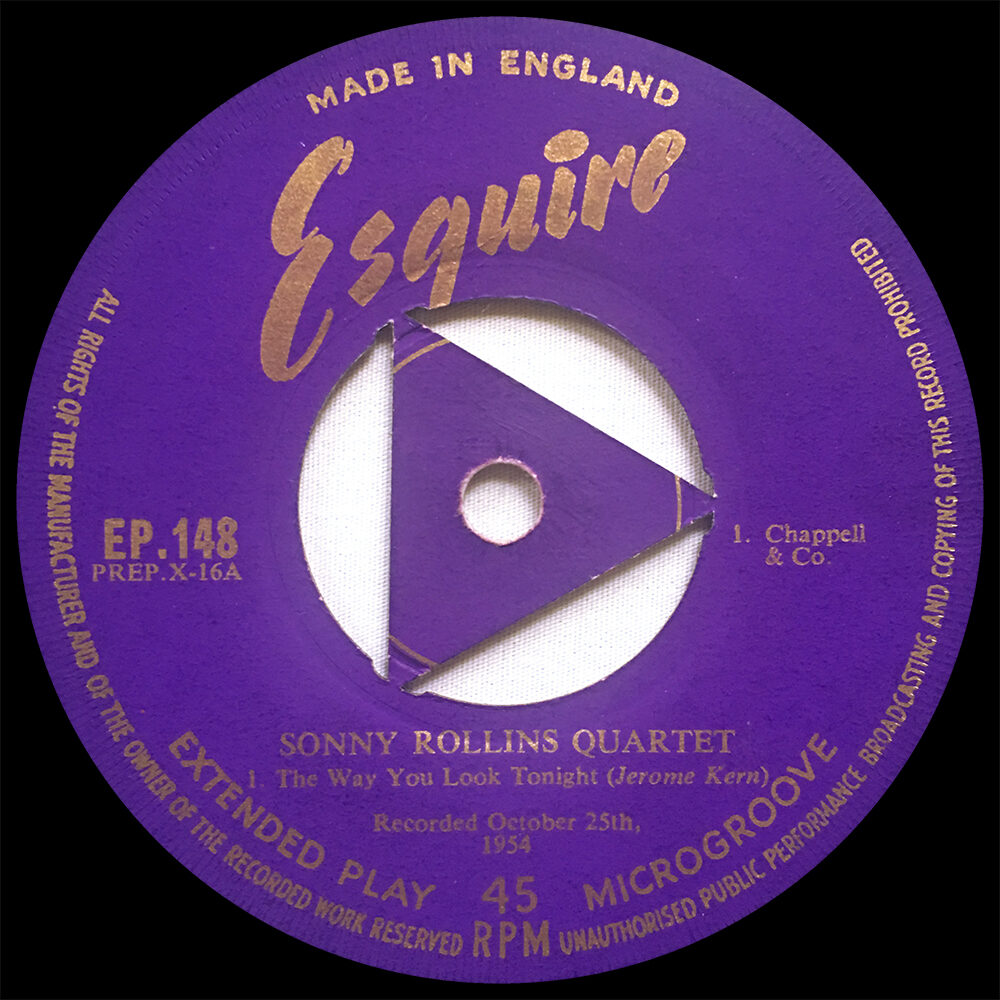
Vinyl Spotlight: Sonny Rollins Quartet (Esquire EP-148) Original 45 RPM 7″ EP

Original 45 RPM 7″ UK pressing circa 1955
Recorded October 25, 1954 at Van Gelder Studio, Hackensack, New Jersey

Selection: “I Want to Be Happy” (Caesar-Youmans)

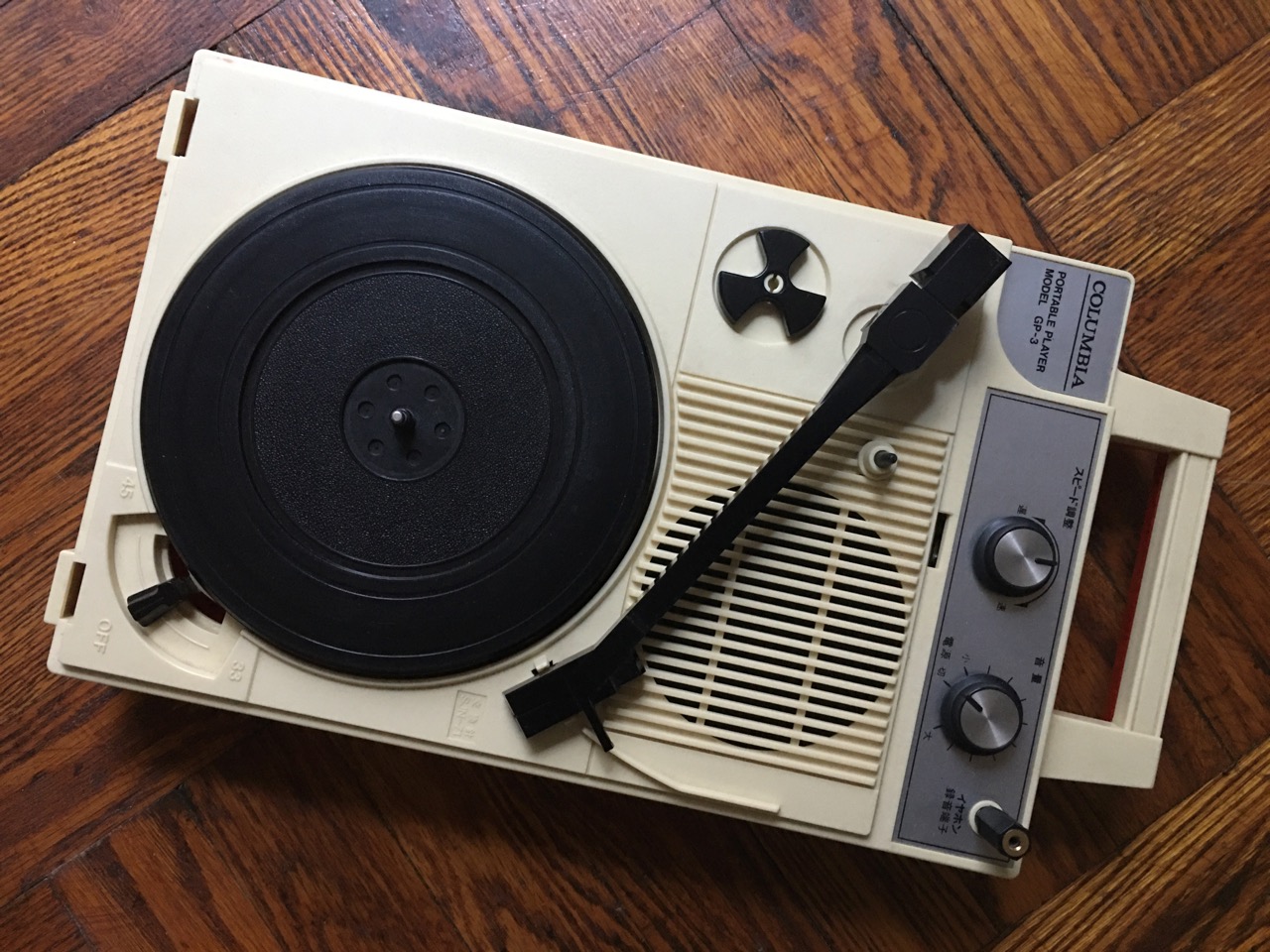
Last spring I got a Columbia GP-3, the workhorse portable record player made in Japan that has been serving beatdiggers and the like for decades. Finances were good at the time and I had been trying to find ways to relax and enjoy life more. Since I had always wanted one of these, I didn’t overthink it and just bought it. Lo and behold, a couple months later a friend visiting from Europe got me back into 45s, and as we hopped from shop to shop in Brooklyn last summer, the GP-3 proved invaluable. It allowed us to easily preview records we were otherwise unfamiliar with all while avoiding the complete takeover of a store listening station.

The Columbia GP-3 portable record player

All the 45s I was buying at that point were doo-wop, rhythm & blues, and rock & roll. Most of the records I proudly consider part of my personal collection, but I was also simultaneously investing in a set of records I could use to get back into DJing. Jazz didn’t necessarily fit into the latter category so I was passing it over when I saw it in the bins. But then I realized how fun it would be to take my GP-3 to the park or bring it along when I travel. To this end, I became more alert to the presence of jazz 45s while shopping both in person and online.

Remember that Esquire Monk ten-inch I posted about a few months ago? While conducting general research on Esquire titles around the time I acquired that record, I decided it might be fun to have some Monk on 45. Then I stumbled upon this title and its glorious cover.

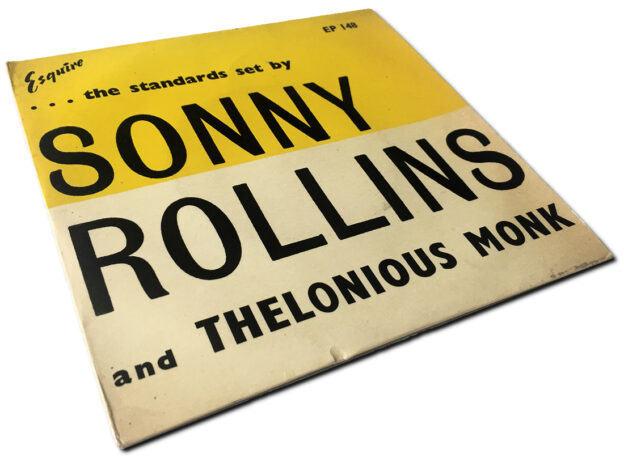
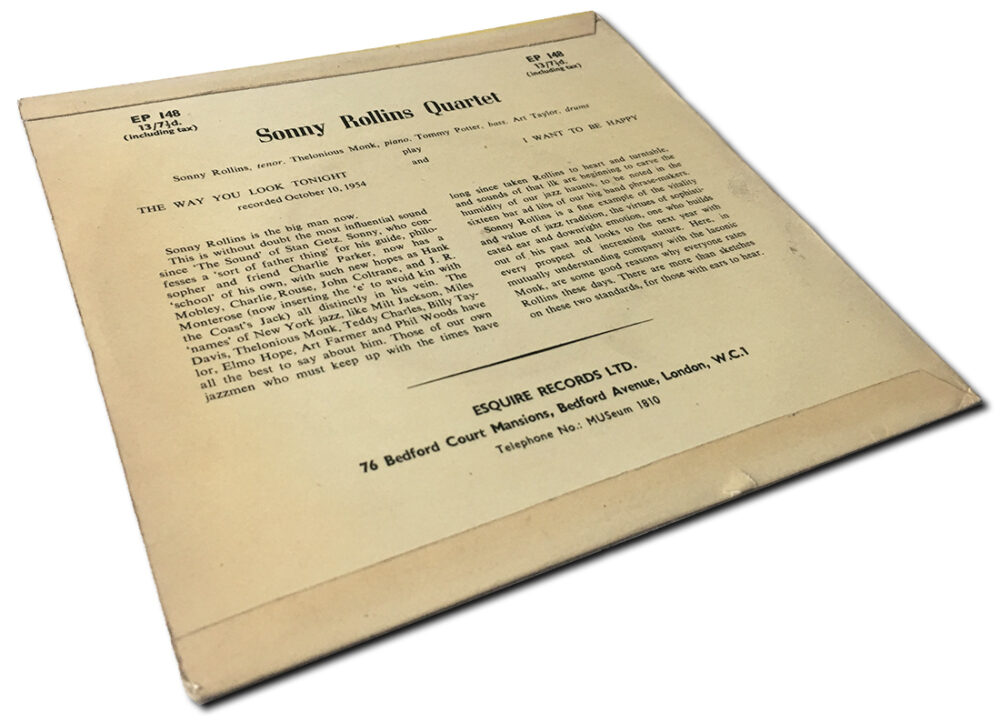
The two songs on this British extended play or “E.P.” first appeared in the U.S. most likely in late 1954 or early 1955 on Prestige catalog number 190, a ten-inch long-play featuring Sonny Rollins and Thelonious Monk. A couple years later the songs would resurface on Prestige 7075, this time a twelve-inch LP that compiled takes from three sessions Rollins and Monk collaborated on in 1953 and ’54. Unfortunately, Rudy Van Gelder is noticeably absent from the mastering process for this E.P., evidenced by the lower signal-to-noise ratio between the music and surface noise.

Prestige catalog numbers 190 and 7075 (photo of 190 courtesy of @jrock1675)

While I’m a big fan of the music and performances here, I’m not the biggest fan of the actual recording. Van Gelder did record this session, though it was recorded during a period in which he seems to have been fascinated with a shiny new toy, a spring reverberation unit. The result is a Rollins unfavorably drenched in artificial-sounding reflections. The truth is it takes away from my enjoyment of the recording a little, but the performances surely make up for it. I enjoy Monk’s especially heavy-handed comping on “I Want to Be Happy”, and I’ve always liked the melody of Jerome Kern’s “The Way You Look Tonight”, where we find Monk a bit tamer behind Rollins.

Lastly, if it makes sense to call any album covers “sexy”, surely this is one of them. The eye-popping contrast of bold yellow with cream and the cover’s deep black typography demands your attention. Esquire, you have done it again with absolutely killer cover design…hats off.

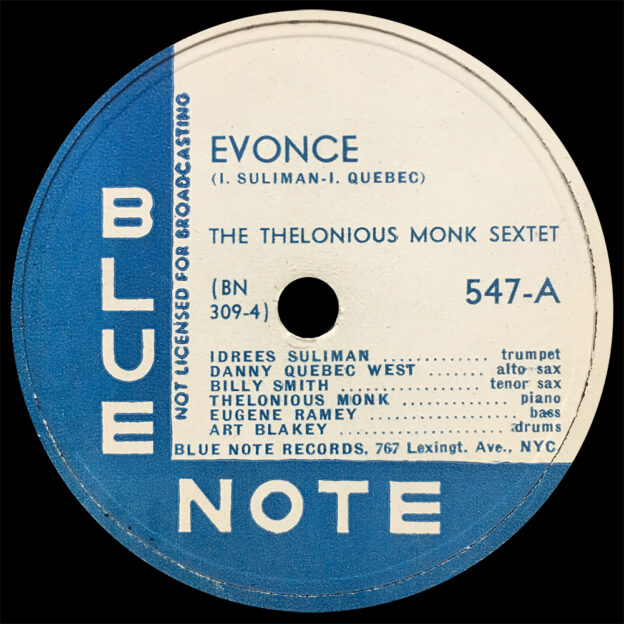
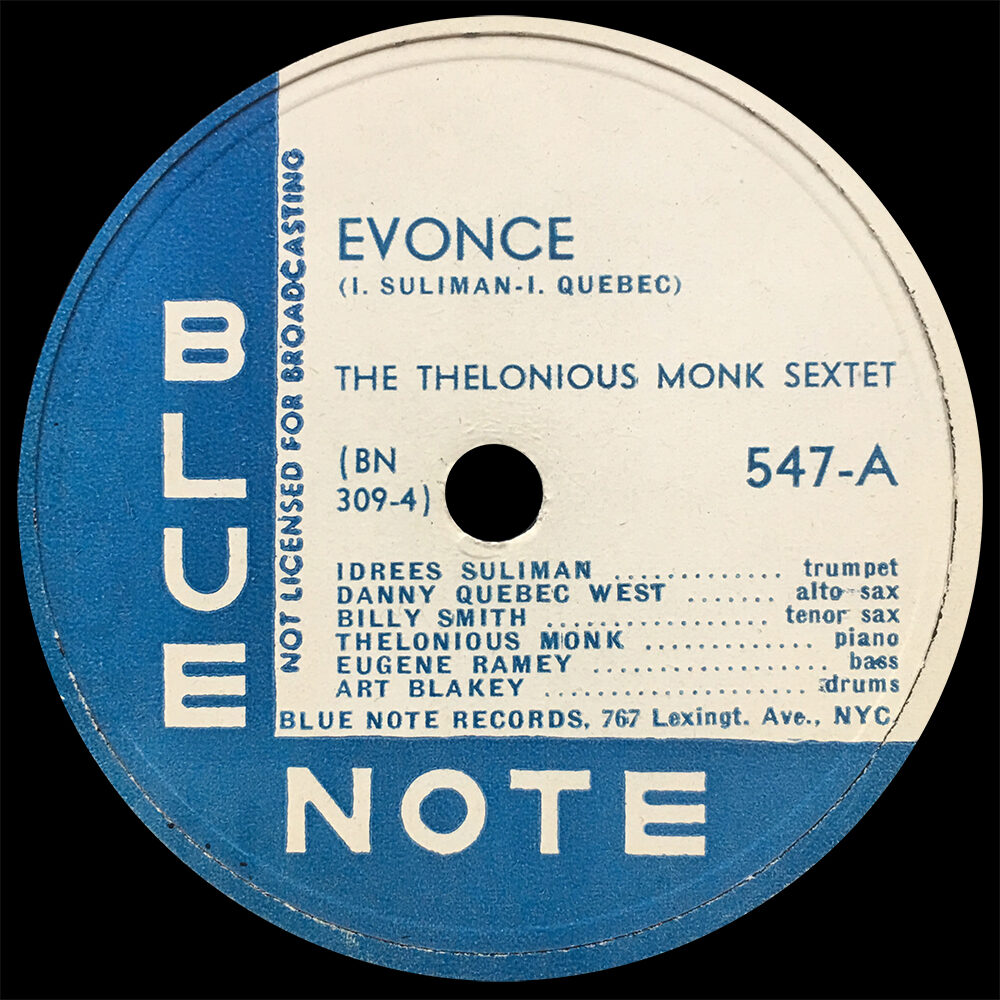
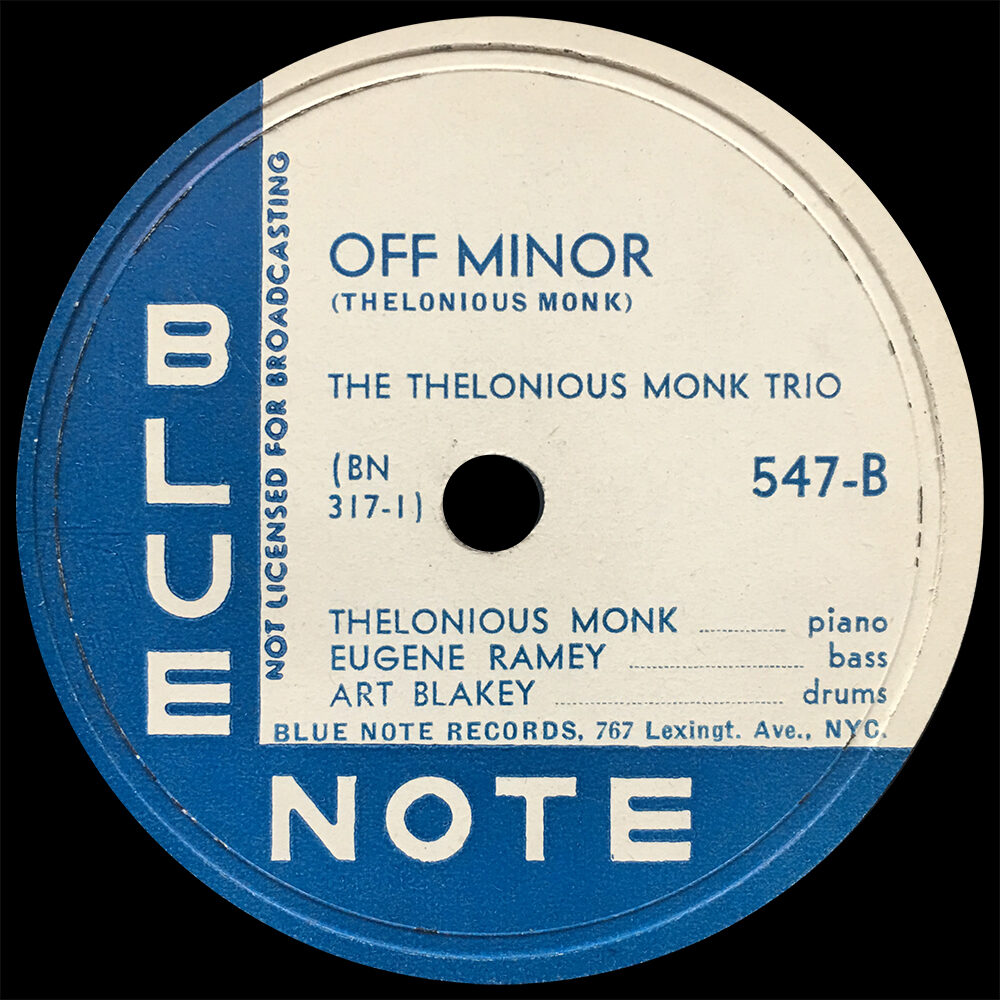
Shellac Spotlight: Thelonious Monk, “Evonce” / “Off Minor” (Blue Note 547) Original 78

  • Original 1948 pressing

Personnel:

  • Thelonious Monk, piano
  • Eugene Ramey, bass
  • Art Blakey, drums

“Evonce” Only:

  • Idrees Sulieman, trumpet
  • Danny Quebec West, alto saxophone
  • Billy Smith, tenor saxophone

“Evonce” recorded October 15, 1947
“Off Minor” recorded October 24, 1947
All selections recorded at WOR Studios, New York City

A Evonce
B Off Minor

Prelude: I’m Baaack

First off, sorry about the flip-flopping regarding the shutting down and reopening of Deep Groove Mono. Last year was an interesting year as a collector. In short, I tried to make some “power moves” in purchasing some expensive records and equipment. Months later, it just didn’t feel right. I felt like I was spending beyond my means, and eventually I would humbly retreat back to being a modest collector of mostly ~$100-or-less discs, a Technics 1200 turntable, and a Shure moving magnet cartridge.

I felt a little defeated and inferior to other collectors who brandish $1,000+ records on the regular, but over time — and this is hard to admit — I found a way to get past the jealousy and irrational shame that came from comparing myself to them. Now I’m back in the saddle and loving collecting more than ever. My spending is more aligned with my means, I appreciate what I have more, and I spend a lot less time obsessing over what I don’t have.

One more thing before we get into the post: I started a new YouTube account where I’m going to start posting “video needledrops” of all my records. Click here to subscribe and keep an eye out for new videos!

My Intro to 78s

For some time now I have wanted to get into collecting 78s. Recently, I began reading Robin D.G. Kelley’s Thelonious Monk biography, and digging into the history of Monk inspired me to seek out the “authentic” experience of hearing his earliest Blue Note recordings on original ten-inch 78 R.P.M. shellac discs opposed to the CD box set I already had (which sounds great, by the way).

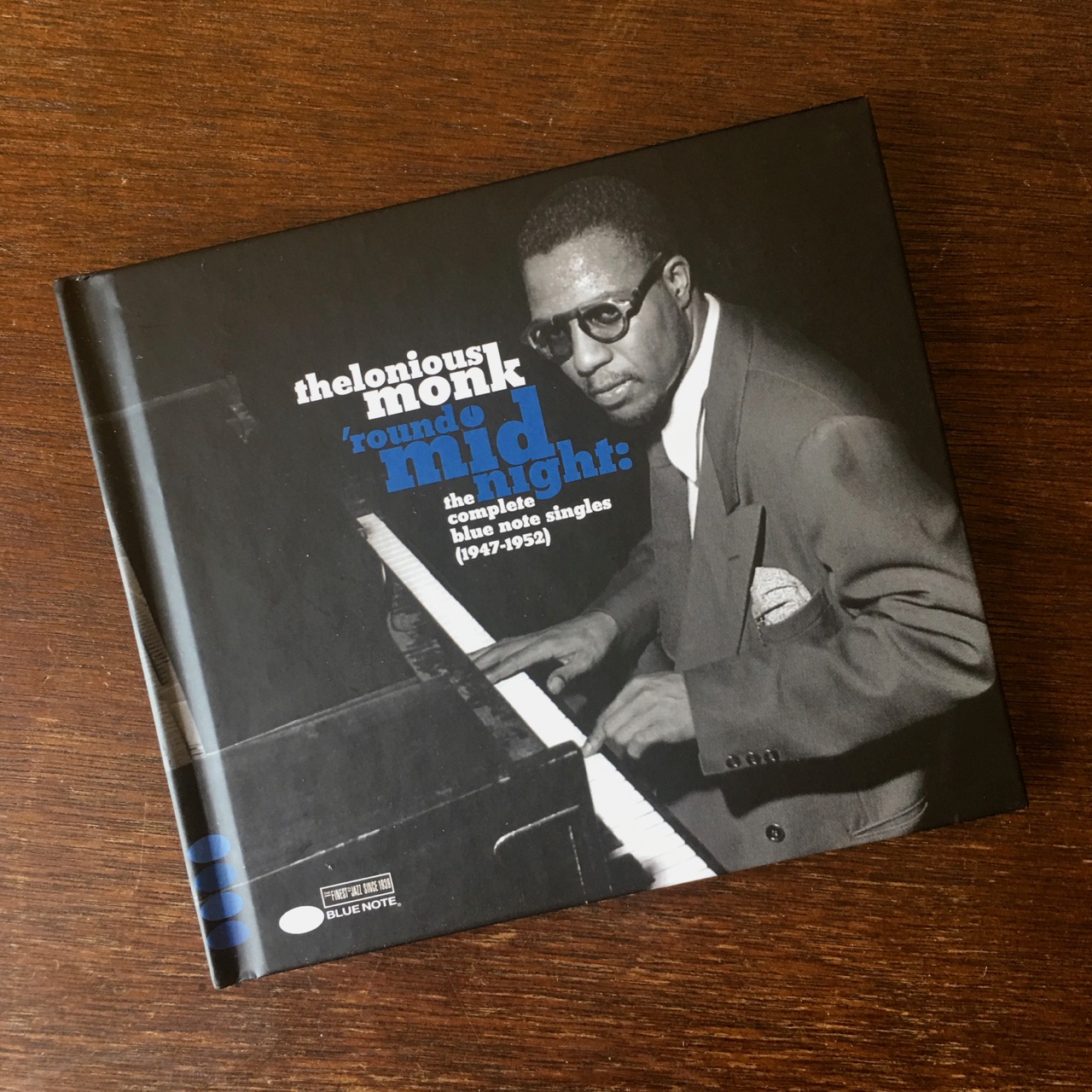
The 2014 double-CD Monk Blue Note “box set”

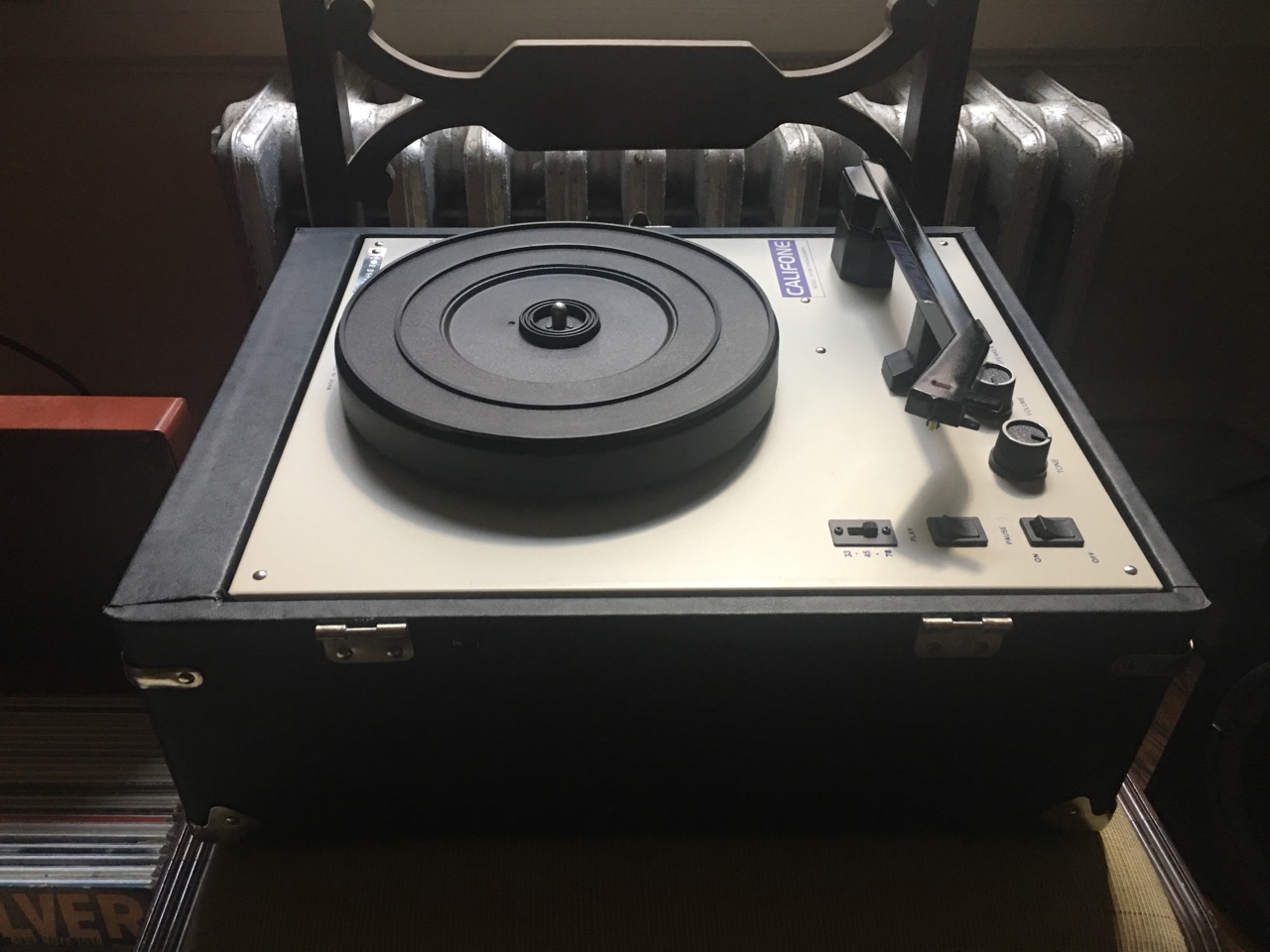
Part of my hesitation to jump into 78 collecting was the problem of playing the discs. There are a couple Technics 1200 clones currently on the market that will play 78s (Pioneer, Audio-Technica — thanks to DGM reader Ross for pointing this out) but I might as well just pay to get my 1200 modified to do the same thing. Vintage was also an option, but I have my issues with the quirks commonly plaguing vintage equipment. Then I remembered Califone, the California-based company that manufactured “record players” mainly for use in educational settings through the ’90s, all of which have a 78 setting. Years ago when I first got into collecting jazz LPs, I picked up one of their newer models with the intention of playing beater copies of originals on it, and I was pleasantly surprised by how good those records sounded blasting out of the four-by-ten-inch full-range speaker on the front of the unit.

In theory, that bold, exciting sound has a lot to do with the heavier tracking force of the Califone tonearm, which I understand is in the upwards of six to seven grams. Once I realized this though, I got rid of the player out of fear that it would wear out my LPs.

But then a month ago when I decided I wanted to make the move into 78s, I decided that a Califone would be a great place to start. (Admittedly, I did this assuming that 78s have a higher tolerance for higher tracking forces, and I should probably look further into the matter before I end up ruining anything.) I quickly found a model 1010 AV for cheap locally, a model I chose specifically because it was produced through the ’90s, so any chances of “quirkiness” should have been minimized, and they were. The unit operates as new — surely more wow and flutter than my 1200 and not perfectly silent in operation but blasts out music regardless. And it has a quarter-inch line level output to hook it up to my amplifier and make needledrops. Soon after I got the Califone, I got lucky on Discogs hunting down the beautiful disc being presented here and my 78 experience was ready to begin.

The Califone 1010 AV

The 78 Sound

Surely another reason I hesitated to get into 78s was their “inferior” sound quality. Not a high fidelity experience by any stretch of the imagination, the medium nonetheless has an incredibly unique sonic signature. While volunteering at the National Jazz Museum in Harlem recently, Senior Scholar Loren Schoenberg told me that he always felt tenor sax sounded incredible on original 78s, which intrigued me even more.

Once I got a replacement 78 stylus for my Califone (the tip of which is 3 mils opposed to the 1-mil styli for the earliest microgroove LPs), I dropped the thick, weighty 78 onto the Califone’s miniature platter, watched it spin at lightning speed, plopped the needle down onto the disc, and was quickly impressed by the clarity and impact of the sound. Maybe down the road I’ll upgrade by modifying my 1200 to play 78s and then I can get a special 78 cartridge, but for the moment I’m quite happy with this setup.

What a rush hearing Monk in a similar way to how he would have been heard back in 1948. The disc is virtually free of obtrusive pops and ticks, though as is the case with all 78s, you still get a continuous stream of hiss floating above the music. (In the needledrop included here, I attenuated the high frequencies above ~6.5 kHz since that was around where the frequency response of the recording sounded like it started to roll off.) No audible groove wear on this one either, though I have to imagine that groove wear can be an issue with 78s.

The Music

According to the catalog numbers, this was the third Monk 78 released by Blue Note, preceded by 542 “Thelonious” / “Suburban Eyes” and 543 “‘Round Midnight” / “Well, You Needn’t”. For the A-side, Blue Note decided on “Evonce” (slang for marijuana at the time), a tune not accredited to Monk but instead group members Idrees Sulieman and Ike Quebec. The melody line is typical of the zanier melodies in the bebop songwriting tradition. The horns cut through like a butcher knife, though Monk is only awarded half a chorus to solo.

“Off Minor”, the Monk-penned B-side, is the real gem of the disc. Nine days after the recording of side A, the horns stayed home to let the rhythm section do its thing unrestricted in the studio. As with most of Monk’s classic compositions, the first time I ever heard “Off Minor” was not in its original Blue Note incarnation. It was instead on Monk’s Music (Riverside 242). That cleaner recording and bigger ensemble make it a very different version compared to its predecessor. The Riverside version fails to embody the grit and minimalist thrust of this power trio, rounded out by Gene Ramey and a 28 year-old Art Blakey.

On both sides Blakey shuffles, a style of drumming that was a staple of the swing era. Though he doesn’t play with “four on the floor” — the technique that played a major role in defining swing where the drummer would shoulder the bulk of the pulse-keeping responsibility with the bass drum — his cymbal work here nonetheless manages to establish a similar feel. Many bebop drummers in the ’40s (Kenny Clarke, Max Roach) broke with this rhythmic tradition by handing the task of pulse-keeping off to the bassist and instead chose to focus on establishing a sense of swing with the ride cymbal while providing unpredictable excitement with intermittent bass drum “bombs”. Though the bebop movement was well underway in 1947, shuffling apparently wasn’t a completely dated technique yet.

These early Monk recordings cannot be beat for the undeniable hunger and passion emitted by the pianist. Through the lo-fi sound we hear an inspired composer aggressively striking the keyboard, shocking the jazz community with a style of playing so foreign it would take nine more years before Monk would achieve widespread acceptance with the release of Brilliant Corners.

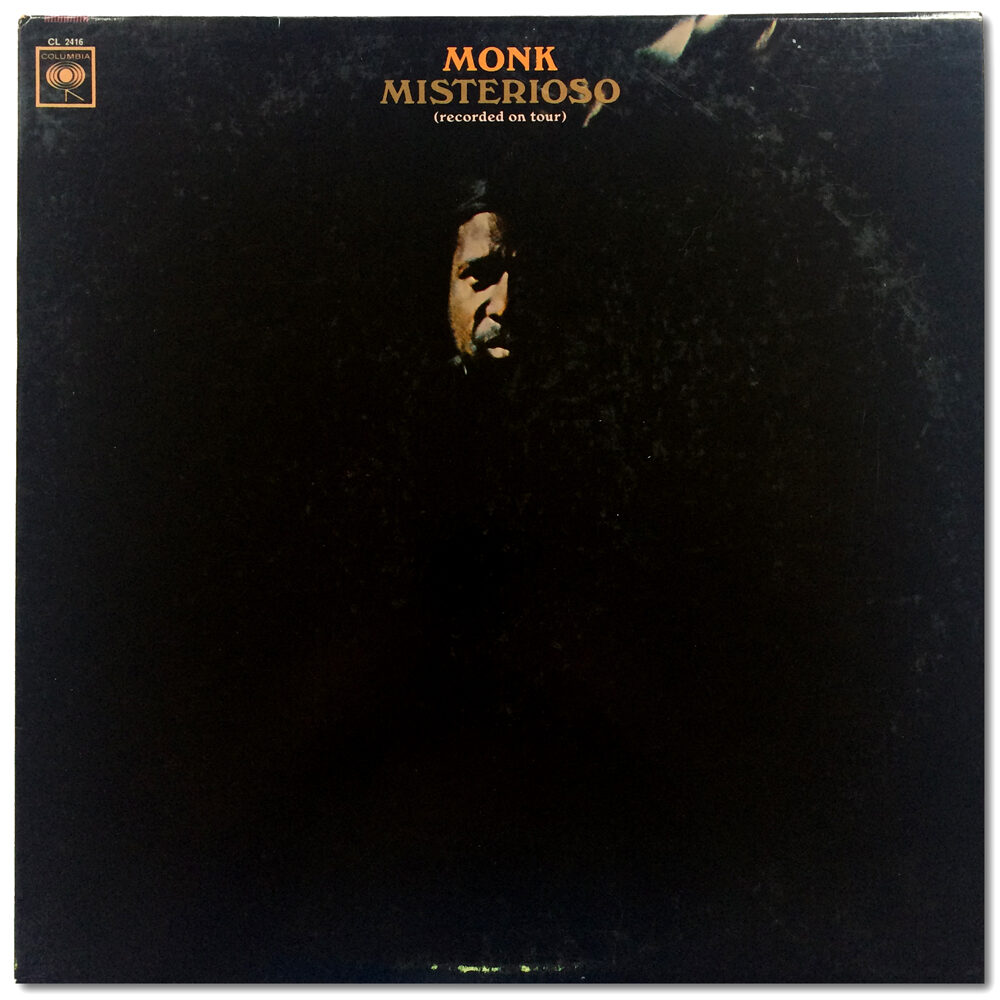
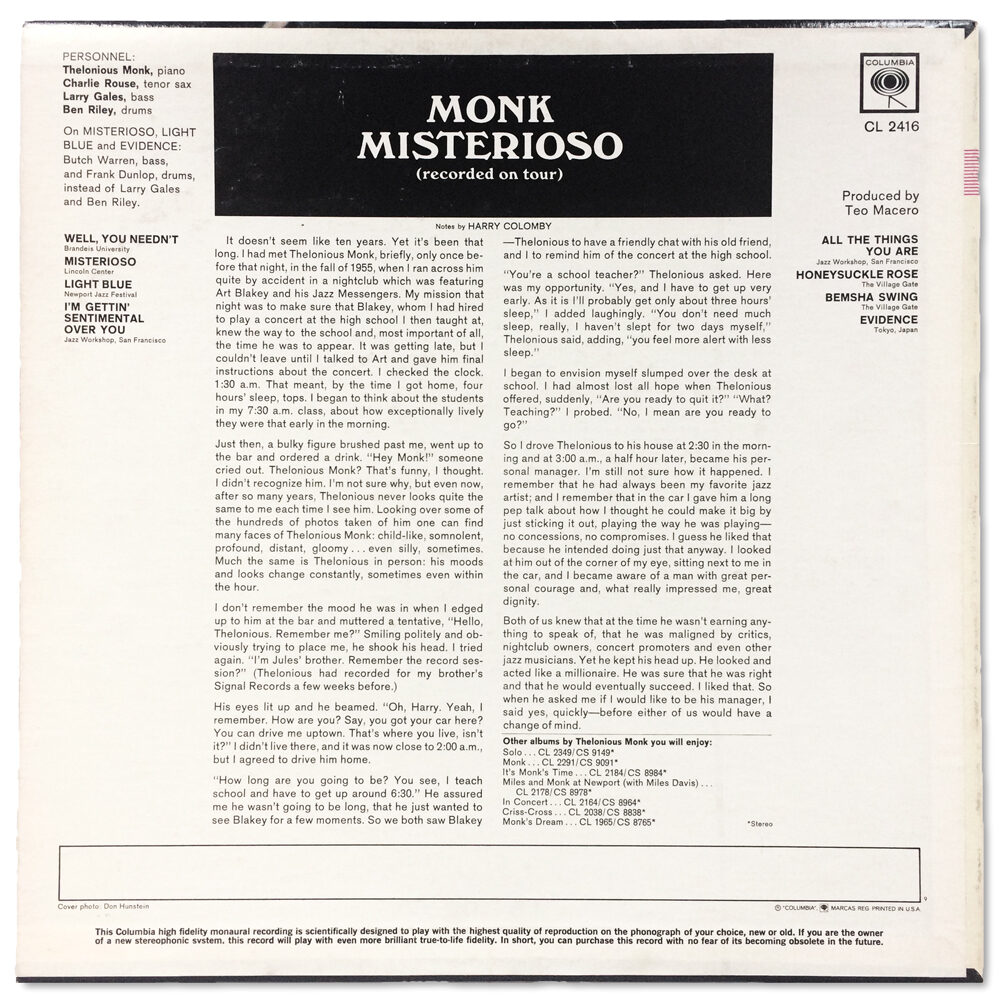
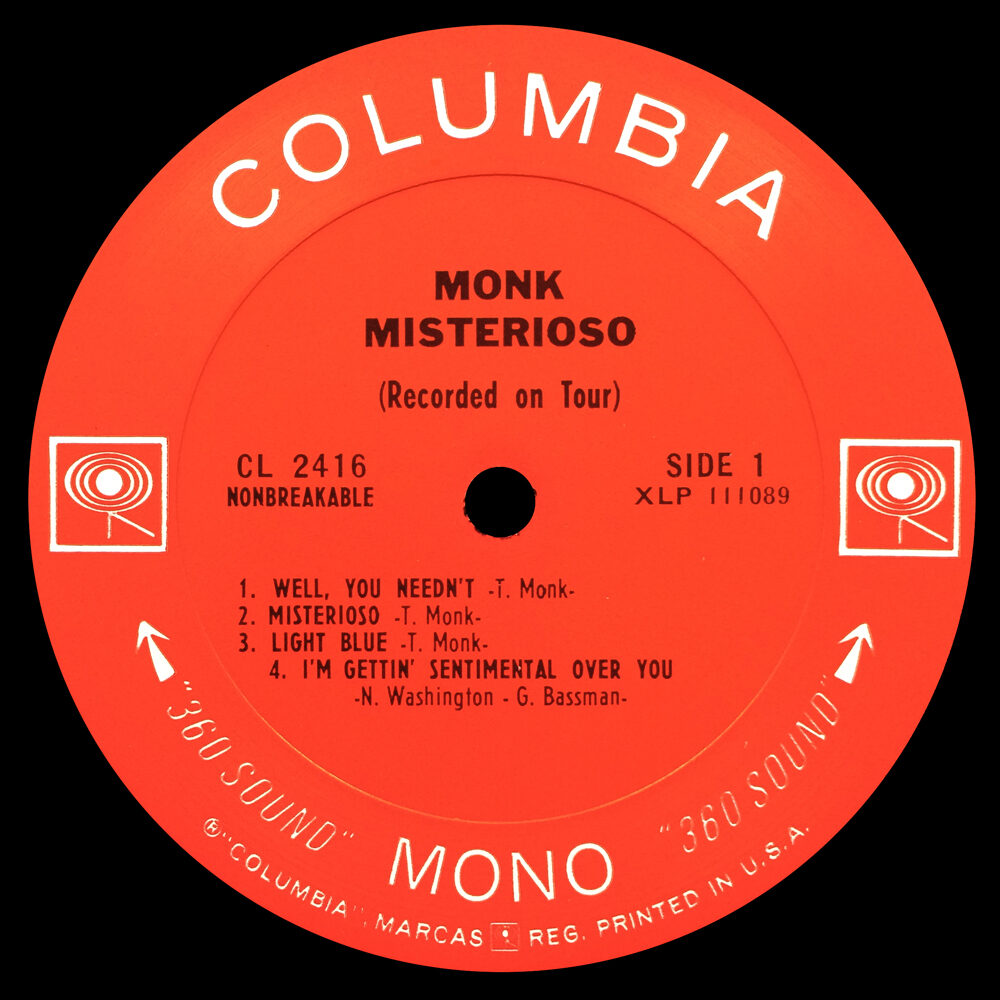
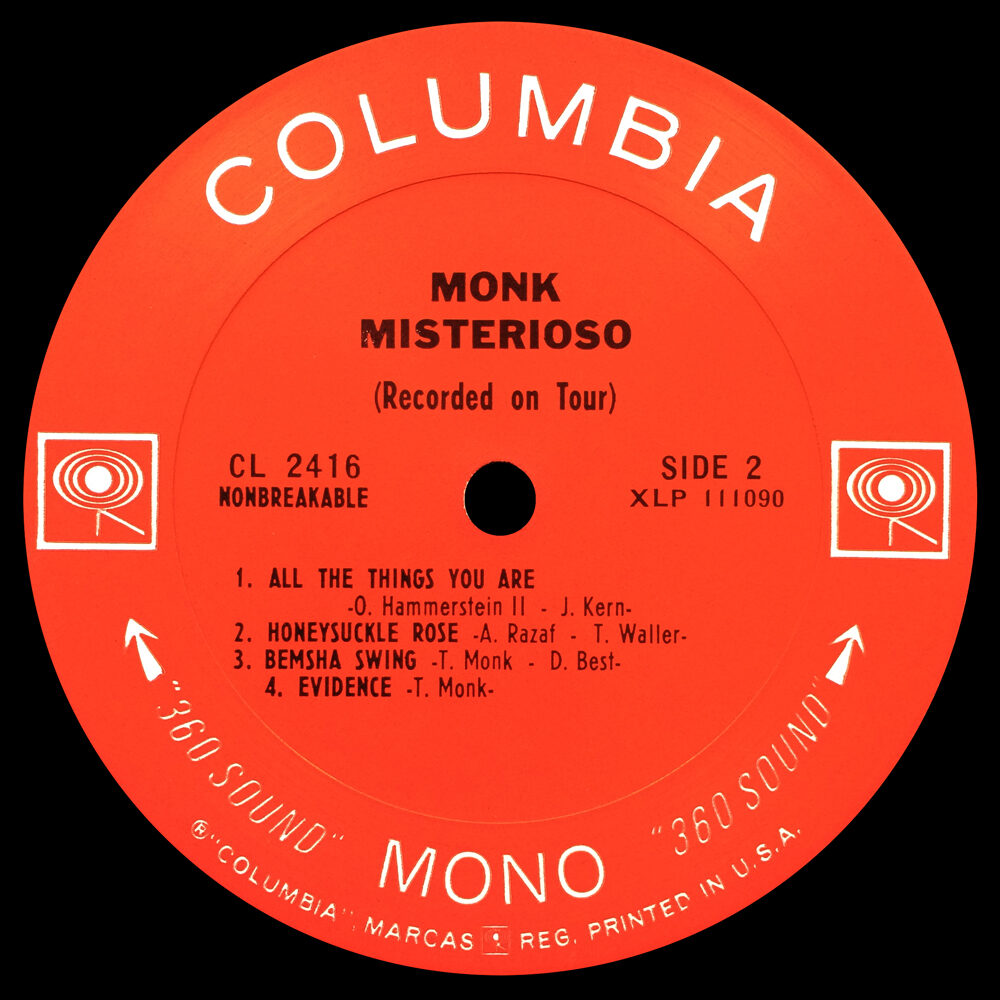
Vinyl Spotlight: Thelonious Monk, Misterioso (Columbia 2416) Original Mono Pressing

  • Original 1966 mono pressing
  • “2-eye” labels

Personnel:

All but “Misterioso”, “Light Blue”, and “Evidence”:

  • Charlie Rouse, tenor saxophone
  • Thelonious Monk, piano
  • Larry Gales, bass
  • Ben Riley, drums

“Misterioso”, “Light Blue”, and “Evidence” only:

  • Charlie Rouse, tenor saxophone
  • Thelonious Monk, piano
  • Butch Warren, bass
  • Frankie Dunlop, drums

“Evidence” recorded May 21, 1963 at Sankei Hall, Tokyo
“Light Blue” recorded July 4, 1963 at Newport Jazz Festival, Newport, RI
“Misterioso” recorded December 30, 1963 at Lincoln Center, New York, NY
“I’m Getting Sentimental Over You” and “All the Things You Are” recorded November 1, 1964 at The It Club, Los Angeles, CA
“Bemsha Swing” recorded November 4, 1964 at The Jazz Workshop, San Francisco, CA
“Well, You Needn’t” recorded February 27, 1965 at Brandeis University, Waltham, MA
“Honeysuckle Rose” recorded March 2, 1965 in New York, NY
Originally released in 1966

As big of a Thelonious Monk fan as I am, I don’t collect original pressings of Monk LPs. There are several reasons for this:

1. Some of Monk’s most inspired recordings were for Blue Note in the late ’40s and early ’50s. As a result, they are not high-fidelity and I don’t find myself seeking out older recordings like this on vinyl.

2. Though Monk’s recordings for Prestige are generally of outstanding quality in terms of both fidelity and performance, the sequencing of these recordings for Monk’s Prestige LPs is scattered in comparison to the original 10″ LP sequences, which make more sense to me.

3. I enjoy many of Monk’s Riverside releases but I’ve never found vintage Riverside pressings to be of a very high quality. I’ve owned a few but resold them shortly after acquiring them.

4. Much of Monk’s output for Columbia included songs he had already recorded for other labels in the past, and in most cases I prefer the older recording. No doubt, Monk’s Columbia recordings are of exceptionally high fidelity, but I do find that his playing on older albums sounds a little more inspired. I also don’t feel that the pinpoint accuracy of the Columbia recordings suits Monk’s music as well as the sonic signature of studios like Hackensack (Prestige and some Riverside) and Reeves (Riverside).

One of the exceptions to 4. above is this compilation of previously unreleased live material. Knowing that Monk felt his studio albums primarily served as advertisements for his live performances, I’ve taken a stronger interest in the pianist’s live albums. Although this album was released relatively close to the death knell of mono in 1964, and despite the fact that Columbia had been releasing brilliant-sounding stereo LPs for several years by that time, I still cherish the mono version of this album because the stereo mixes of Monk on Columbia fail to position the leader in the center of the stereo field.

This album has sentimental value to me because it served as my introduction to Monk when I borrowed my friend’s copy many years ago and this is the second original mono copy I’ve owned. The first was in pretty good shape but last year at the WFMU Record Fair I stumbled upon this copy in near-new condition, and for the asking price I couldn’t pass it up.

Thelonious Monk: A Collector’s Discography

When I first began listening to Thelonious Monk, it didn’t take me long to pick out my favorite songs. As I explored his discography more though, I realized that he recorded most of his compositions multiple times over the course of his life. Wanting to hear every version of each, I created a spreadsheet allowing me to quickly see every recording of any Monk song, and I have decided to share that database here with you, the readers of Deep Groove Mono!

In hindsight, it’s hard to believe that I at one time felt that Monk’s music was harder to wrap my head around than the music of other jazz greats. One thing that initially baffled me was that he seemed like such a dark, menacing force in jazz, yet his music often sounded very “major” in terms of scale. It was quite the paradox, but I soon realized that in a way, Monk is the epitome of contradiction. Upon repeated viewings of Ken Burns’ Jazz documentary, I took careful note of Wynton Marsalis’ choosing the word “logical” to describe Monk’s playing. With my limited understanding of Monk and jazz in general, that comment couldn’t have seemed any further from the truth. But slowly, I chipped away at the wall separating me from a better understanding of the complex composer. I watched footage of Monk performances, I kept studying, I kept listening, and eventually Monk made more sense as the shadowy, dangerous archnemesis of jazz I first imagined him as.

The way in which Monk tirelessly incorporated dissonance into his solos left melodies sounding broken in a beautiful way. Consistent with this, Monk was often found thunderously striking the keys with heavy, flat fingers. He literally marched to the beat of his own drum, bucking the bop trend of playing at breakneck speeds while consistently opting for more mid-tempo readings. His style of improvisation was also unique in the sense that he followed the melody much closer than his contemporaries, who in comparison seemed obsessed with rendering a tune utterly unrecognizable. Monk clearly didn’t feel the need to venture out very far melodically to captivate his listener, and by going against the grain in this fashion, the once-misunderstood composer slowly but surely gained both popularity and critical acclaim as one of the founding fathers of modern jazz.

Thelonious Monk is a special character in the American musical storybook with a one-of-a-kind voice that will never be forgotten. This discography is a tribute to him as an artist who has inspired me in numerous ways. Click the following link to start exploring!