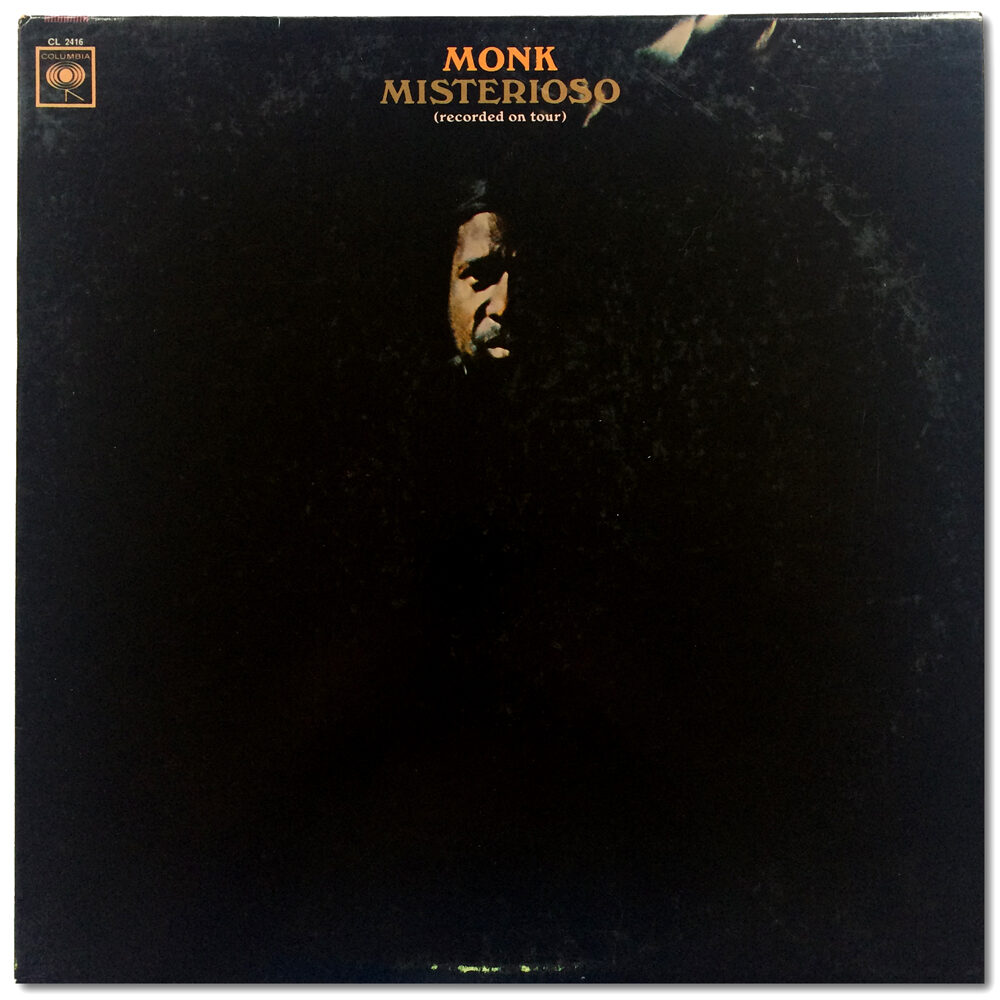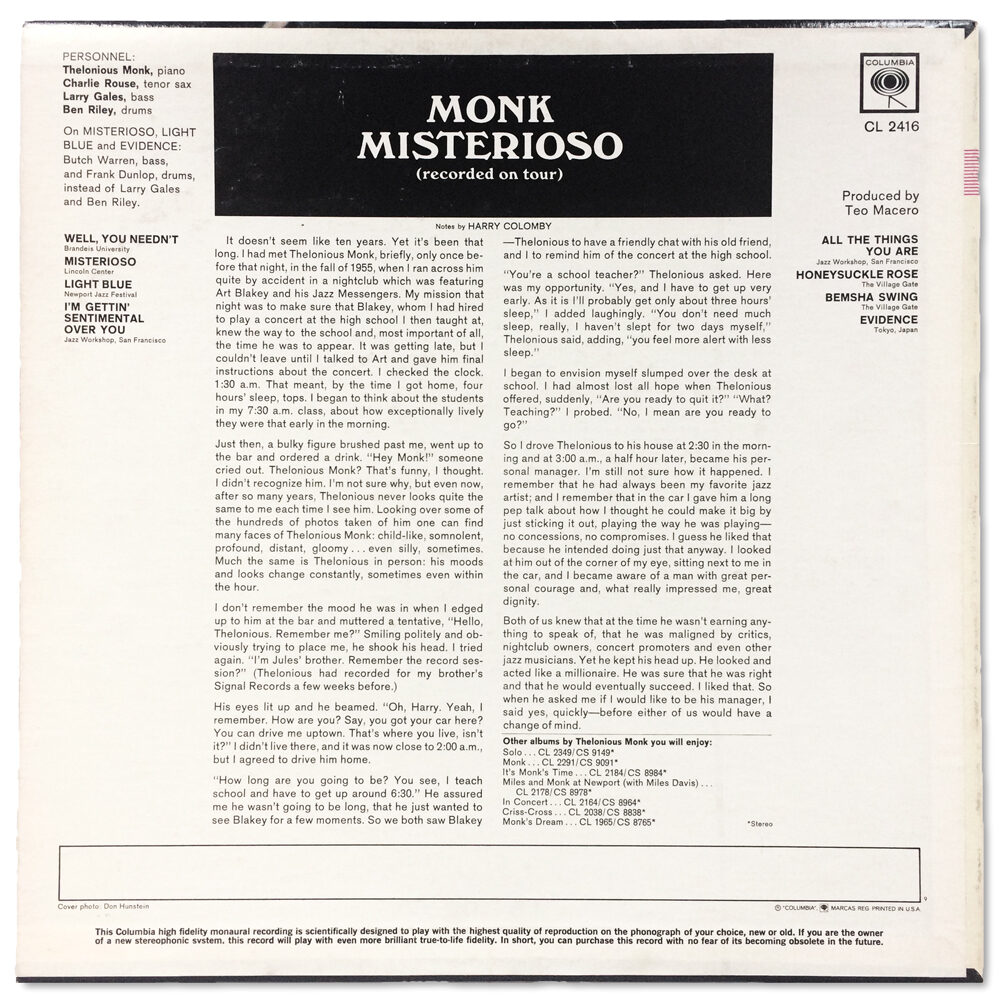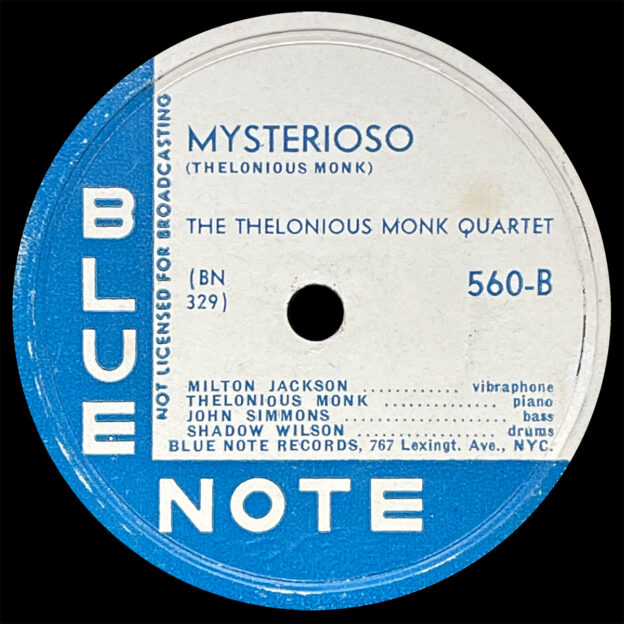
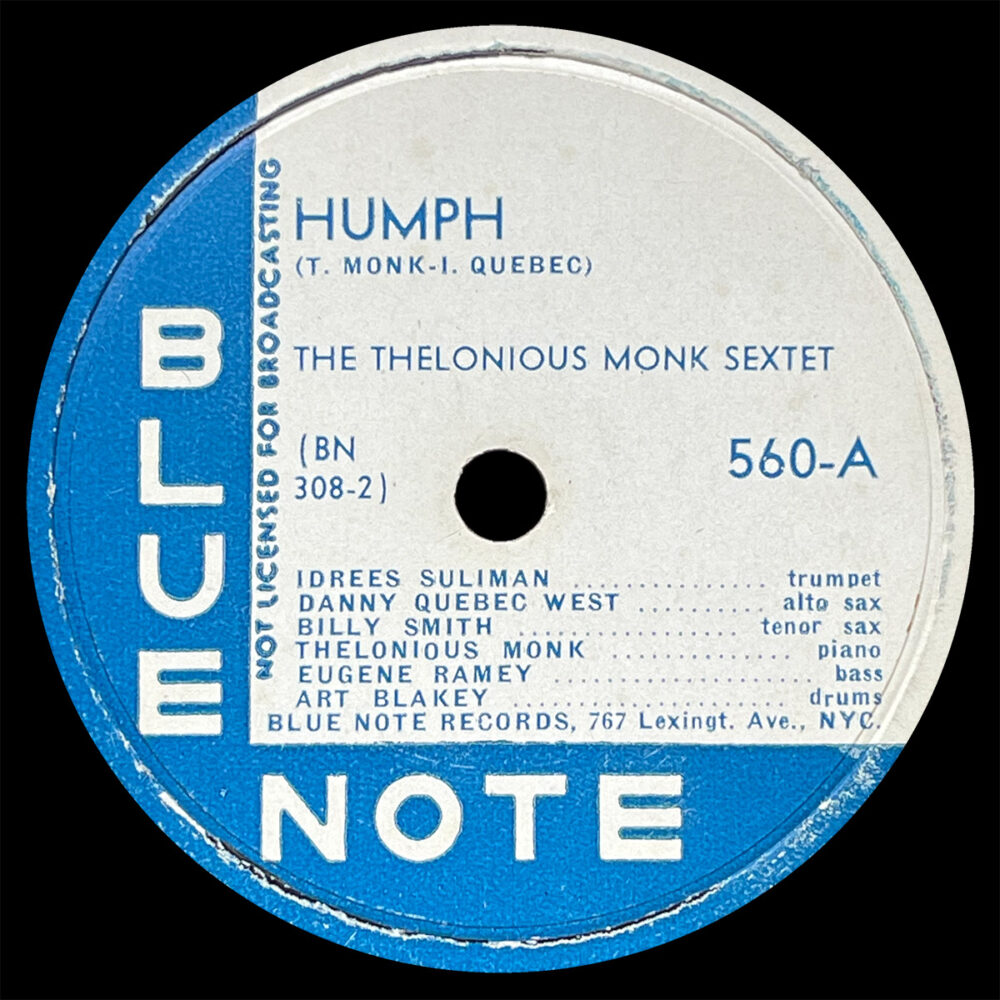
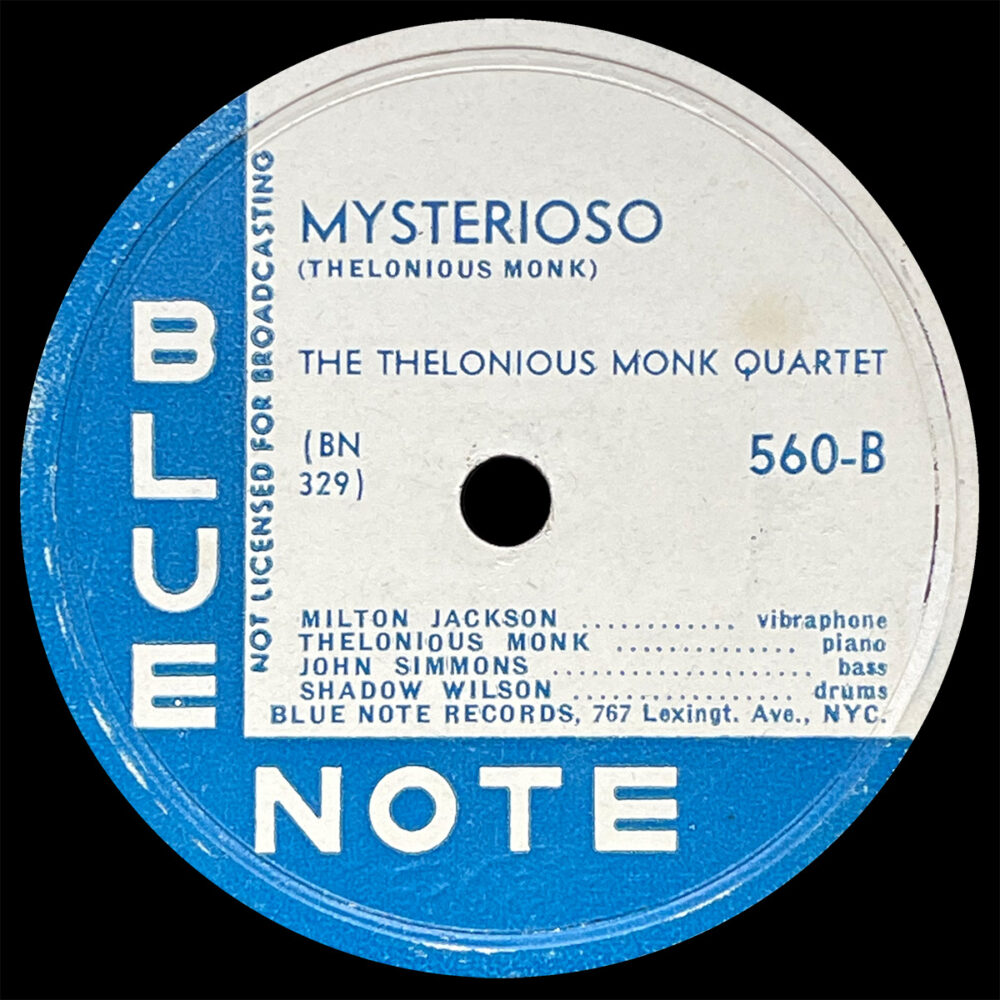
- Original 1949 pressing
Personnel:
- Idrees Sulieman, trumpet (side A only)
- Danny Quebec West, alto saxophone (side A only)
- Billy Smith, tenor saxophone (side A only)
- Milt Jackson, vibraphone (side B only)
- Thelonious Monk, piano
- Gene Ramey, bass (side A only)
- John Simmons, bass (side B only)
- Art Blakey, drums (side A only)
- Shadow Wilson, drums (side B only)
“Humph” recorded October 15, 1947 at WOR Studios, New York City
“Misterioso” recorded July 2, 1948 at Apex Studios, New York City
| A | Humph | |
| B | Mysterioso |
Selections:
“Misterioso” (Monk)
“Humph” (Monk)
The recording I am speaking of, a recording that makes my heart melt every time I hear it, is Monk’s original 1948 recording of “Misterioso”, the pseudoword title taking on the more predictable spelling “Mysterioso” for this inaugural release. Eight months prior to cutting this side for Alfred Lion and Blue Note Records, Monk recorded a flurry of tunes in his studio debut as a leader in the fall of 1947, also for Blue Note. But while all three of those sessions took place at a studio operated by WOR radio station in Manhattan, Blue Note pivoted to acclaimed engineer Harry Smith (not to be confused with the legendary 78 collector of the same name) and his nearby Apex Studios for this July 2, 1948 session.
In the late ’40s, Harry Smith was making a name for himself as a major industry player. Yet the fidelity of Monk’s sole session at Apex stands in stark contrast to the earlier WOR dates. The latter, recorded by engineer Doug Hawkins, exhibit lower noise and greater clarity in definition of the instruments. But Smith’s take on this quartet, distorted peaks and all, is dirtier, it’s grittier, and it excels at complementing Monk’s obtuseness both as composer and improviser.
Monk can’t help but demand our attention from start to finish on “Misterioso”. Vibraphonist Milt Jackson, another one of the jazz world’s rising stars at the time, accompanied Monk on the date. While Jackson navigates the changes, Monk manages to steal the spotlight out from under Bags’ busy hands with a jarring, minimalist comping technique that probably struck many contemporary listeners as…odd. For this author listening over 70 years later, it evokes an image of Monk leaning back on his stool between key strikes in a way that might seem casual or just flat-out lazy. But even and especially in the summer of 1948, Monk is hungry. He is a predator on his way to the top of the musical food chain, and in those silent moments he is surely scanning the keyboard with intense focus, deciding which keys will be his next tonal prey. He is a complete and utter alien to the music world, and we have Blue Note producer Alfred Lion to thank for blessing us with this glimpse of just what a musical revolutionary Monk was early on in his career.
When Jackson’s solo is over, the less-is-more trend continues, and the space Monk leaves between notes gives us a chance to catch a glimpse of John Simmons’ bassline lurking mischievously in the background. Long descending runs are often found in Monk’s solos at this time, and his patented half-step dissonance is also on full display. To most of the era’s critics, this flat-fingered striking of adjacent keys was presumedly the work of a hack pianist with poor technique that lacked the necessary precision. Yet time has revealed to us that every last one of these notes was deliberately chosen by a highly skilled pianist with an entirely unique musical conception.
The A-side, “Humph”, is no slouch either. Recorded during the first of the three previous sessions, it stands far apart from “Misterioso” not only in sonics but also in arrangement and songwriting. In fact, one might even guess that producer Alfred Lion was desperate to pair Monk’s strange “B” with a brighter, more upbeat “A” — anything vaguely resembling something more accessible to the customer — and to think that “Humph” was as close as Lion would get is a hilarious predicament only Monk could create.
Like many of the quintet and sextet sides he recorded as a leader at this time, Monk respectfully falls in line with his sidemen on “Humph” by taking a shorter solo that gives everyone a chance to shine under the limitations of the format. A lesser-known original of which Monk only recorded once, “Humph” is a complex undertaking densely packed with descending chords and fast-paced notes that sound like a tornado ripping through a cartoon town. And the peculiarity of that metaphor speaks perfectly to the character of the song’s tumultuous, colorful creator.