
Tag Archives: LP

Introducing “Video Vinyl Spotlight”, A New DGM YouTube Series

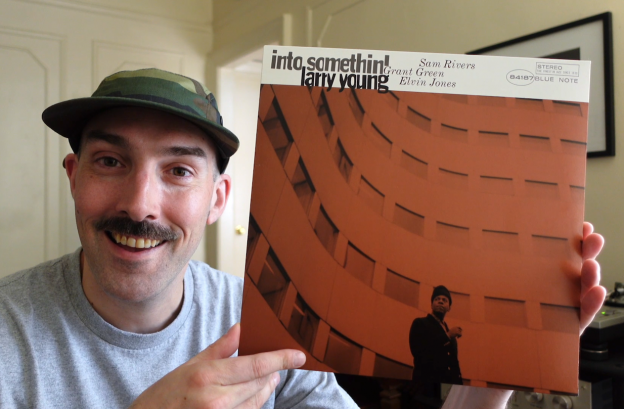
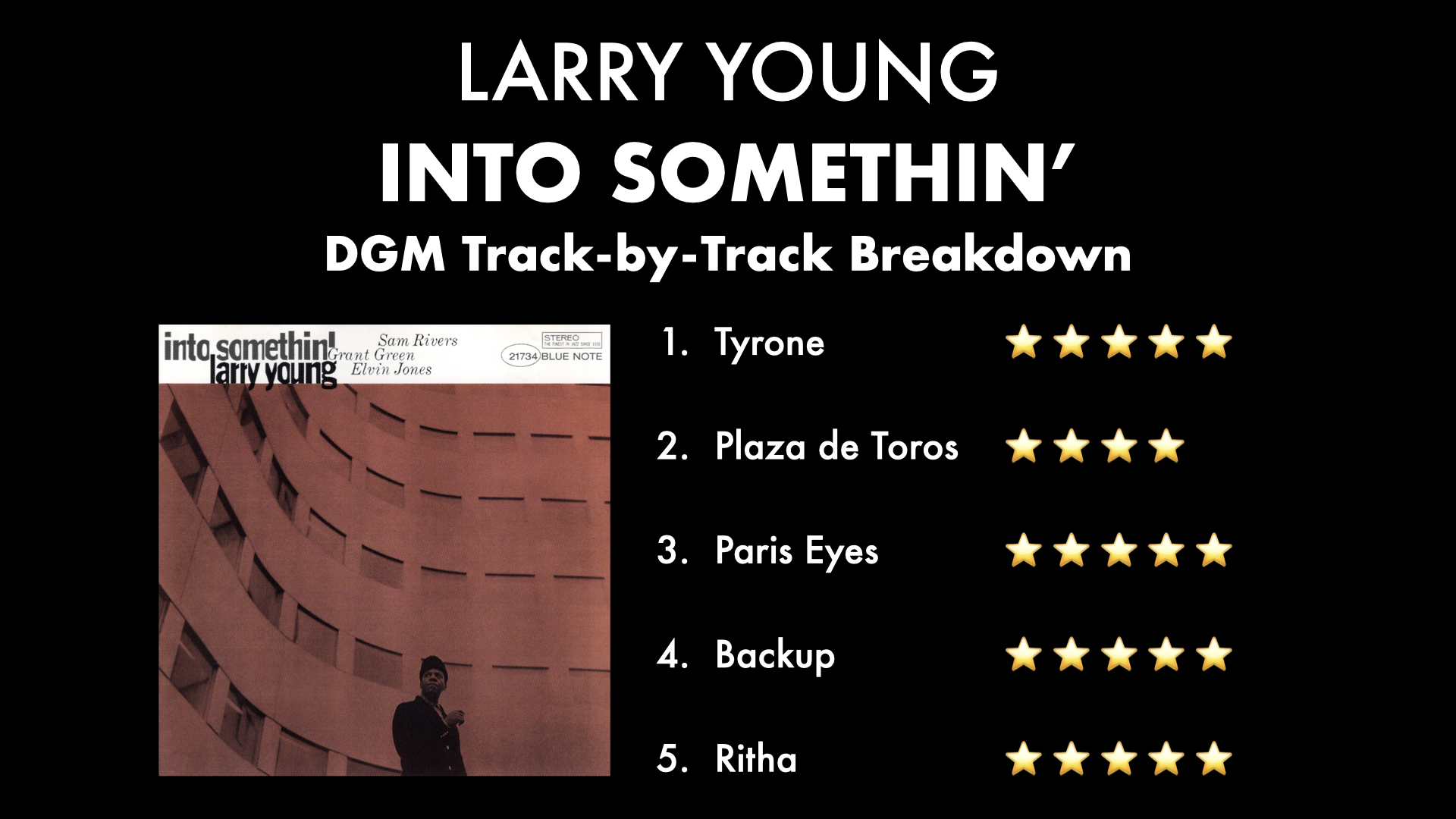
I’m back, once again. Vinyl Spotlight posts began back in January 2014 and have been a cornerstone of this blog for the past eight years. Well, I recently acquired a new camera and decided it was time to bring Deep Groove Mono into the 2020s with a new series, Video Vinyl Spotlight. The first video covers Blue Note’s 80th Anniversary reissue of Larry Young’s Into Somethin’. Feel free to head over to YouTube and subscribe to my channel if you haven’t already, and stay tuned!
Vinyl Spotlight: Sonny Rollins, Newk’s Time (Blue Note 4001)

  • Liberty mono pressing ca. 1966-70
  • RVG stamped in dead wax

Personnel:

  • Sonny Rollins, tenor saxophone
  • Wynton Kelly, piano
  • Doug Watkins, bass
  • Philly Joe Jones, drums

Recorded September 22, 1957 at Van Gelder Studio, Hackensack, New Jersey
Originally released January 1959

1 Tune Up
2 Asiatic Raes
3 Wonderful! Wonderful!
4 Surrey with the Fringe on Top
5 Blues for Philly Joe
6 Namely You

Selection:

“Blues for Philly Joe” (Rollins)

I ignored this album for quite some time for a couple reasons. First, it was primarily comprised of standards and short on originals, but also because the album has rarely been reissued in mono and I kept reading about issues with the consistency of Rollins’ volume level in the stereo mix (apparently caused by the leader’s motion in the studio during recording). Well this is a copy made from the bold, original Van Gelder mono mastering, and to my ears there is no such problem here.

This is not the first time that seeing a good deal on a clean original pressing of an album encouraged me to listen to the music more carefully. On this occasion, I was surprised to unearth an album I really enjoy. First and foremost, “Tune Up” and “Asiatic Raes” are two of my favorite modern jazz standards, and this quartet knocks them out of the park. Prematurely, I never thought anyone could best Kenny Dorham’s version of “Asiatic Raes” on Quiet Kenny (titled “Lotus Blossom” there), but Rollins gives him a run for the money.

There are several comical moments from the leader here, and on “Tune Up” we find Rollins at his funniest. His descending staccato riff beginning on the seventh chorus of his solo literally sounds like laughing, and its refrain is a welcome break from the saxophonist’s inventive genius. For someone who is among the most imaginative soloists ever, this less-than-cerebral moment demonstrates Rollins’ sharp wit and special talent for expressing his sense of humor through his music. The lighthearted theme persists throughout the album, but what makes Newk’s Time special is how laid back it feels all while the musicians execute with consistent precision.

Philly Joe Jones shows up for this date and crushes it. His duet with Rollins on “Surrey with the Fringe on Top” is a must-listen. As if the album’s quartet arrangement wasn’t good enough for a minimalist like myself, this pairing of drummer and saxophonist takes it a step further. Although “Surrey” makes it most obvious that engineer Rudy Van Gelder was perhaps a little too heavy-handed with the reverb on Rollins that day, Philly still sounds dry and snappy.

“Blues for Philly” is probably my favorite cut on the album (and for all we know invented on the spot at the session). When the entire band comes back in after “Surrey”, it sounds like an explosion. The low end of Doug Watkins’ bass drops and Wyton Kelly fills the rest of the space with chords. Kelly is especially aggressive and percussive on this album, perhaps rising to match Rollins’ intensity. Everyone is in a good mood and you can hear it.

This sure is one in-your-face album. The entire band is in full attack mode and it makes for an exciting listen.

Vinyl Spotlight: John Coltrane, Coltrane’s Sound (Atlantic 1419) Second “Orange/Purple Label” Mono Pressing

  • Second 1966 mono pressing
  • Orange & purple labels with black fan and “Atlantic” written vertically
  • Non-laminated cover with “NEW YORK, NEW YORK 10023” and “copyright 1966” on back of jacket

Personnel:

  • John Coltrane, tenor & soprano saxophones
  • McCoy Tyner, piano
  • Steve Davis, bass
  • Elvin Jones, drums

“Central Park West”, “Body and Soul”, and “Satellite” recorded October 24, 1960
“Liberia”, “The Night Has a Thousand Eyes”, and “Equinox” recorded October 26, 1960
All selections recorded at Atlantic Records’ 56th Street studio, NYC
Originally released in 1964

1 The Night Has a Thousand Eyes
2 Central Park West
3 Liberia
4 Body and Soul
5 Equinox
6 Satellite
Before I started collecting vintage jazz records, a friend of mine who also happens to be a jazz drummer let me borrow a bunch of jazz CDs to rip to my computer and this was one of them. At the time, I pretty much took all the John Coltrane he had, not having any idea of what was what. But a couple songs on this album, “Central Park West” and “Equinox”, immediately stood out to me, and this has been one of my favorite Trane albums since.

Released after Coltrane had already moved over to Impulse and his contract with Atlantic had expired, Coltrane’s Sound was compiled from three 1960 recording sessions (two in one day on October 24, 1960), which also produced tracks for My Favorite Things and Coltrane Plays the Blues. (Fun fact: I’ve heard that Coltrane disapproved of this cover art, believing that the way it made his face look like it was melting was morbid.) The separation on stereo versions of this album is typical of that on all the Atlantic Coltrane albums: an empty center and all instruments panned either hard left or right. After ripping this album from my friend but before I acquired this copy, I got a hold of the same 1999 stereo CD my friend had, and the extreme separation made me especially interested in hunting down an original mono pressing. A copy evaded me for years (stereo originals of this album seem to outnumber mono copies by a wide margin), but a couple months ago I was elated to find this copy at a local shop.

I had a bit of fun determining the vintage of this pressing. Almost convinced that it was a first pressing, I noticed a copy for sale on eBay that appeared to sport a laminated cover. Upon further inspection I noticed that, despite the labels being identical on both copies, the bottom of the eBay jacket read, “NEW YORK 23, NEW YORK”, followed by “copyright 1964”. My copy is therefore clearly a second pressing, but what’s to complain about when the mastering is identical, my copy is in top condition, and I paid the price of a sealed reissue?

As previously stated, “Central Park West” and “Equinox” are the moody standouts here. The former, a sweet ballad written by Coltrane and played with soprano sax, conjures imagery of a romantic couple strolling the namesake Upper West Side street on a cloudy autumn day. The latter is a blues with a dark, foreboding underpinning whose happier “B” section ultimately gives way to solos of a more playful nature. These two songs are really the sole reason I hold this album in such high regard. The rest of the tracks don’t appeal to me enough to play this album all the way through every time (I’ve never been a big fan of the standard “Body and Soul”), though the controlled chaos of the pianoless trio on “Satellite”, which serves as one of numerous Atlantic-era predictors of Trane’s future direction at Impulse, has steadily grown on me.

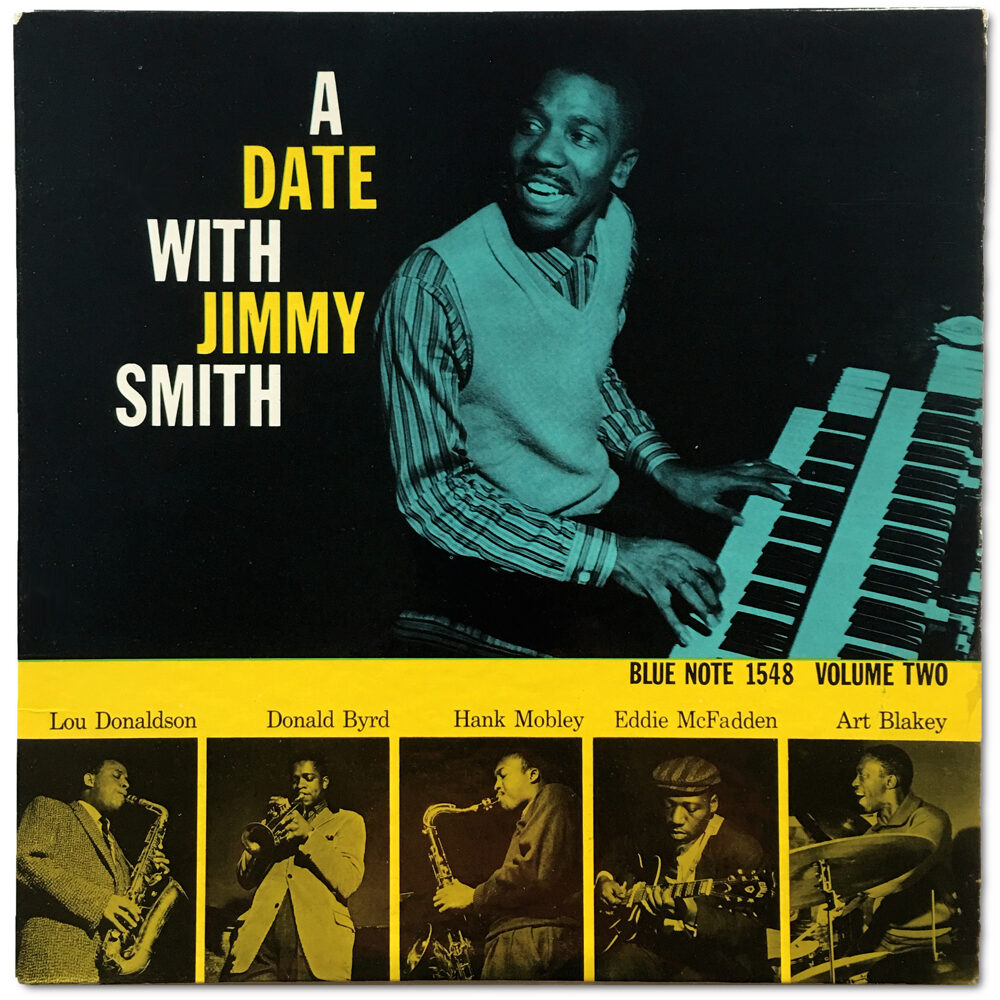
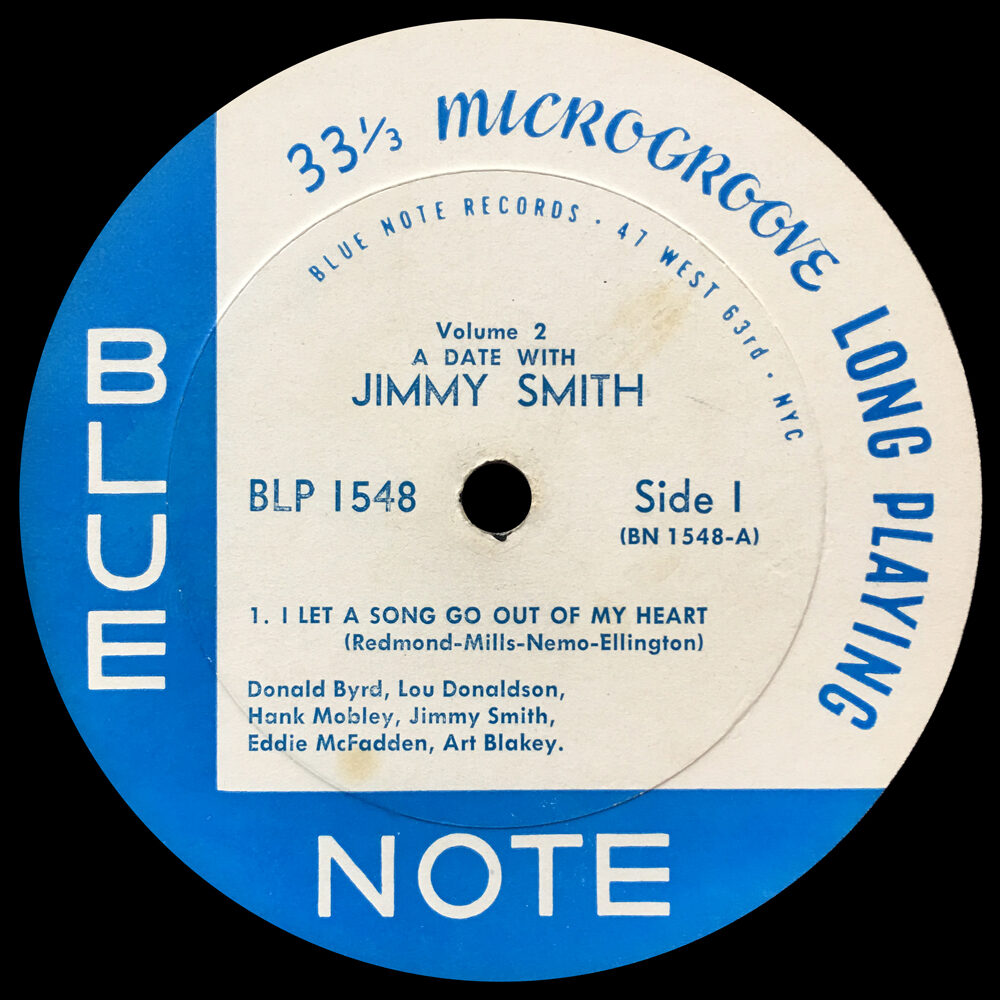
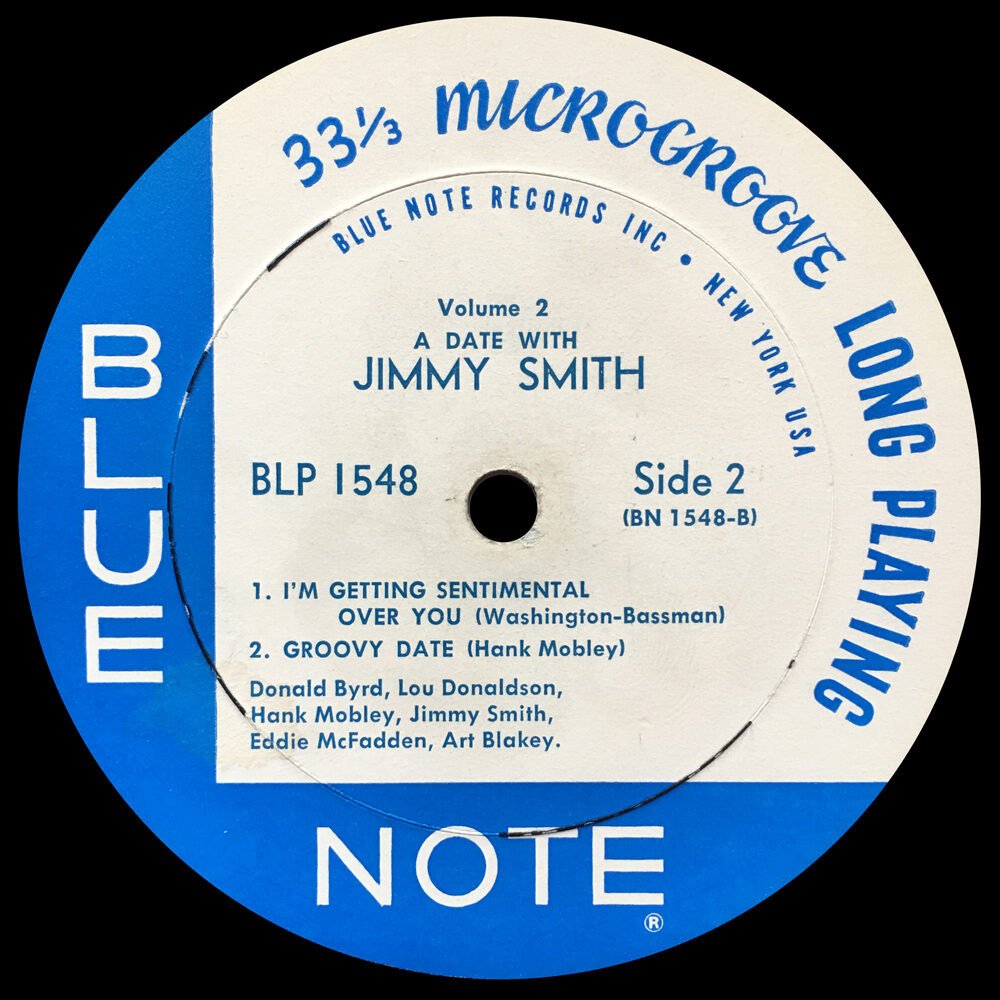
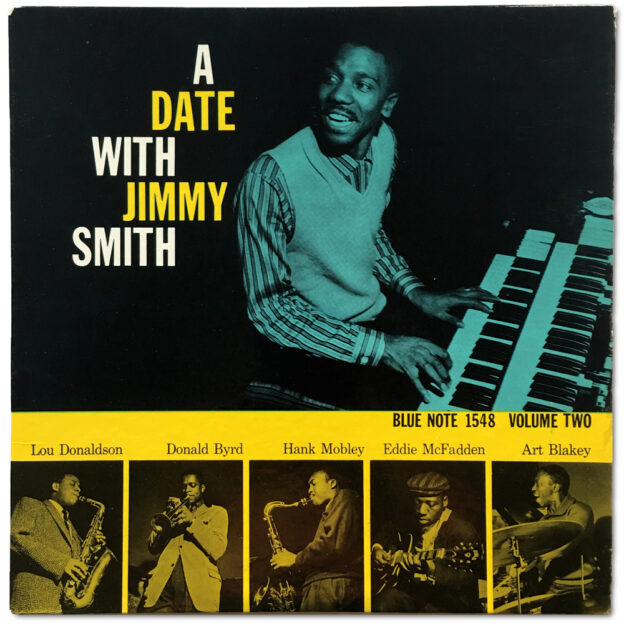
Vinyl Spotlight: A Date with Jimmy Smith, Vol. 2 (Blue Note 1548) “W63/NY” Mixed Labels Pressing

  • Vintage pressing circa 1962-1966
  • “West 63rd (no R) / New York USA” mixed labels
  • “RVG” and Plastylite “P” (ear) etched in dead wax

Personnel:

  • Donald Byrd, trumpet
  • Lou Donaldson, alto saxophone
  • Hank Mobley, tenor saxophone
  • Jimmy Smith, organ
  • Eddie McFadden, guitar
  • Art Blakey, drums

Recorded February 11 & 12, 1957 at Manhattan Towers, New York City
Originally released September 1957

When I started collecting, I bought into the popular opinion that Jimmy Smith isn’t “collectible” and didn’t pay him any attention. But then I found a great 1965 German documentary on him serving as evidence of how “incredible” he really was. From the live performances where he plays with so much heart and frankly, tears it up, to the interview moments where he communicates his philosophy of jazz and music in general so well, I decided to start listening. So I made a Spotify playlist of all his Blue Note albums, put it on shuffle while I worked, and a couple weeks later I had a condensed playlist of favorites (you can hear that playlist on Spotify now). One of those songs, “Groovy Date”, is from this LP. The sheer power with which the song opens and closes was enough to make me hit the “heart” button, and the solos from all the members do not disappoint.

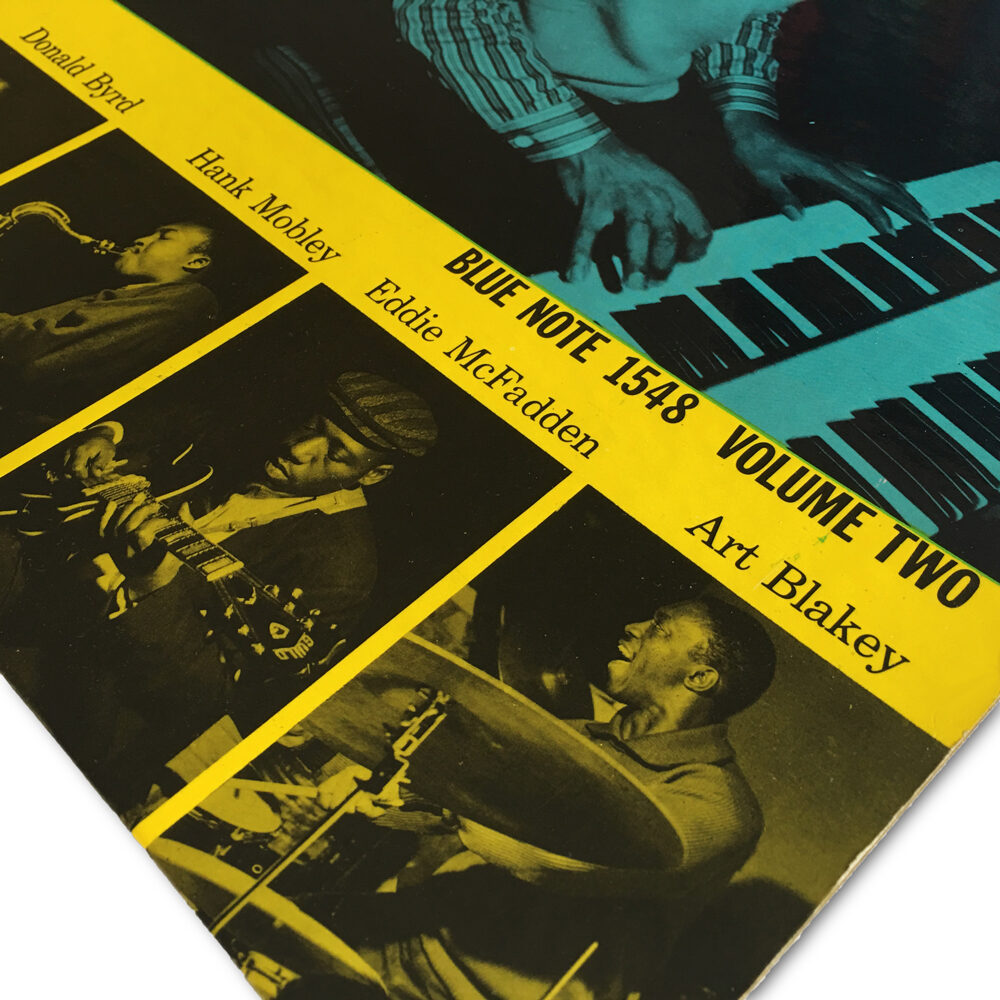
Despite this album being available only in mono regardless of format, many Smith Blue Notes are only available in stereo as reissues. So I decided it would be both worthwhile and cost-effective to pursue these albums in their original mono LP incarnations. Since Smith originals are so readily available, I quickly acquired six of them. This one was a little harder to get online, but then one day I was in a local shop and they had this copy for cheap. The cover looked great but the vinyl was pretty marked up. It doesn’t play with any skips, and aside from “Groovy Date”, it can be a little noisy. That’s fine with me because my favorite track sounds bold and clear, and I basically chalk this up as paying a fair price for a single song and a great cover (I love the photos of the musicians, the layout, and the color scheme).

As for one of my favorite topics, sonics, this is one of a handful of Blue Note albums recorded by Rudy Van Gelder that wasn’t recorded at one of his studios or a live venue. For years I noticed the recording location “Manhattan Towers” for various Blue Note recordings on jazzdisco.org but never knew what it meant. But then, one day I was lucky enough to speak with Blue Note producer and archivist Michael Cuscuna about it, and he explained that Blue Note had worked out a deal with Manhattan Towers, a hotel in New York City’s Upper West Side, so bigger bands could assemble in their ballroom (Art Blakey’s percussion ensembles, Sabu Martinez) and important artists like Smith who liked to record at night could jam after the normal Hackensack business hours (Van Gelder’s neighbors were known to complain about the noise late at night and his parents lived there).

In writing this article I did a little research and found this cool New York Times article from 1974 explaining that the hotel, located on Broadway between West 76th and 77th Streets, was crime-ridden! (One has to wonder if it was similar or becoming more that way in 1957!) You can hear the massive size of that ballroom on these cuts. The horns, organ, and guitar still sound quite immediate and up-close, but the reverberation of Art Blakey’s drums is true to the space’s larger size. Stay tuned as I review more of Jimmy Smith’s classic Blue Note recordings in the coming months.

Vinyl Spotlight: Horace Silver and the Jazz Messengers (Blue Note 1518) West 63rd “No INC/R” Pressing

  • “Third” pressing circa 1957-1959
  • “47 WEST 63rd NYC” address on both labels without registered trademark “R”
  • Deep groove both sides
  • “RVG” and Plastylite “P” (ear) etched in dead wax

Personnel:

  • Kenny Dorham, trumpet
  • Hank Mobley, tenor saxophone
  • Horace Silver, piano
  • Doug Watkins, bass
  • Art Blakey, drums

Recorded November 13, 1954 and February 6, 1955 at Van Gelder Studio, Hackensack, New Jersey
Originally released as two 10″ LPs: BLP 5058 (March 1955) and BLP 5062 (September 1955)
BLP 1518 originally released July 1956

1 Room 608
2 Creepin’ In
3 Stop Time
4 To Whom It May Concern
5 Hippy
6 The Preacher
7 Hankerin’
8 Doodlin’
Not only is Horace Silver a favorite jazz composer and musician of mine, this is one of my favorite albums of his. If I had to guess, Silver was given the title of leader on this early Jazz Messengers effort since, unlike the Birdland and Bohemia Messenger LPs of the same era, the majority of the selections here (all but one) were written by Silver, who only penned three of the nine original Birdland tracks and nothing on the original Bohemia LPs. But while many jazz newcomers will, as I did, think of this effort as a single body of work encased in the minimal, baby-blue cover we have all come to know through various reissues (a cover that, by the way, sports a horrible photo of Silver with a shadow covering half his face), these sides actually numbered four in total originally, spanning across two 10″ albums both released in 1955 (BLP 5058 and BLP 5062). In some instances I prefer to own the original 10″ pressings of albums that would later resurface in a 12″ configuration — if I can even find the original 10″ LPs — but for this album, it’s so solid start to finish that I actually prefer the 12″ pressing over the two 10″ “originals”. Why not have all the great music on the 10″ LPs in one place? That’s two less times I need to get up to turn the record over!

A Night at Birdland, Vol. 1 (BLP 5037) and The Jazz Messengers at the Cafe Bohemia, Vol. 1 (BLP 1507)

The sound of this record is characteristic of that coming out of Rudy Van Gelder’s Hackensack home studio in the mid 1950s: clear, warm mono with shimmering cymbals, a slightly metallic sound to the trumpet, and a touch (less than normal) of Van Gelder’s menacing spring reverb. This is actually my second vintage copy of this LP. The first had “NEW YORK 23” on one side and “West 63rd” on the other and was acquired at an outdoor Brooklyn record fair several years ago. I recall making the decision to sell it in part because there was a tinge of distortion on Kenny Dorham’s loudest notes (which actually improved somewhat after a good cleaning) but I also sold it because I decidedly preferred the mastering of the 1987 Capitol-Manhattan CD reissue. But when this near mint copy with “West 63rd” on both sides appeared at another Brooklyn record fair recently, I simply could not pass it up.

The Horace Silver Quintet, Volumes 1 & 2 (BLP 5058 & BLP 5062)

Above all, the highest of frequencies, usually dominated by cymbals, sound more “accurate” (detailed and present) on the Manhattan CD and hence, I would assume, on the original master tape. After hearing numerous original Van Gelder LP masters from the years of approximately 1955 to 1957, it’s clear that Van Gelder was making the deliberate and regular choice to dampen the high frequencies a bit when mastering for vinyl. This could have been a precaution against mistracking that the young engineer opted for at the time, which could in theory allow the signal-to-noise ratio-obsessed Van Gelder to achieve even greater volume on his LPs. It could have also been a deliberate aesthetic choice, but we hear Van Gelder leaving more high-frequency detail on his records in 1958. I still prefer the sound of the Manhattan CD, but I’ve come to appreciate Rudy Van Gelder’s earliest LPs as an embodiment of a sonic signature representative of the time they were originally released in.

The Capitol-Manhattan CD reissue of BLP 1518

This is a solid program. Though there are plenty of uptempo tunes with unorthodox melodies written more in the tradition of hard bop’s immediate ancestor, bebop (“Room 608”, “Stop Time”, “Hippy”), Silver penned a jukebox hit with “The Preacher”. Making its debut here (technically on BLP 5062), its corny, gospel-drenched melody is undeniably fun, though I prefer Jimmy Smith’s humorous demolishing of it on Volume 1 of the Club Baby Grand LPs.

Jimmy Smith at Club Baby Grand, Vol. 1 (BLP 1528)

But the real jewels of this album are the quieter tunes. “Doodlin'” is the kind of bluesy jazz you might imagine a 1950s sleuth playing on his car’s AM radio while cruising the streets looking for clues. “Creepin’ In” is perfect for a lazy afternoon indoors sipping tea. Mobley and Dorham set the mood here, and they also set the stage for a story-like solo from Silver. Always a clear and spontaneous communicator of his musical ideas, around the twenty-first measure of his solo, Silver begins a descent toward the middle of the keyboard. He then plays with an idea for a couple measures before unearthing a simple yet highly memorable melody that he plays twice before handing things back over to the band. I also dig how often Silver changes things up from the traditional “AABA” bop writing formula, sometimes throwing in an additional “C” section after all the solos, and the “A” section of “To Whom It May Concern” embodies some of the most original writing by Silver on this great album.