
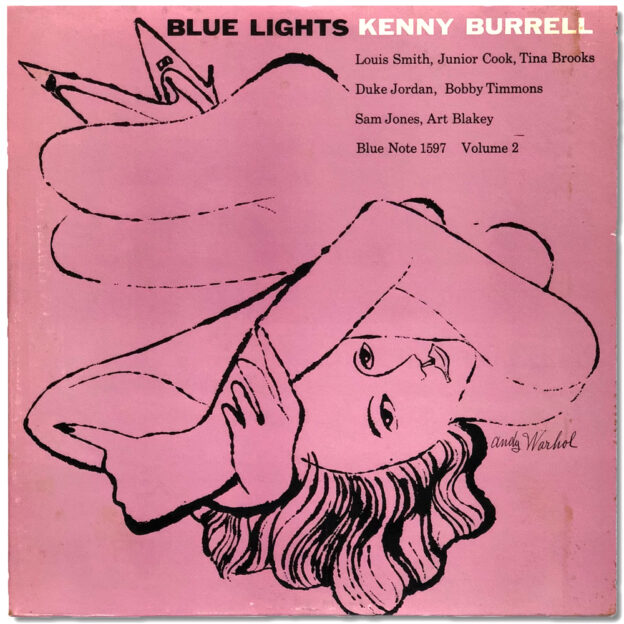
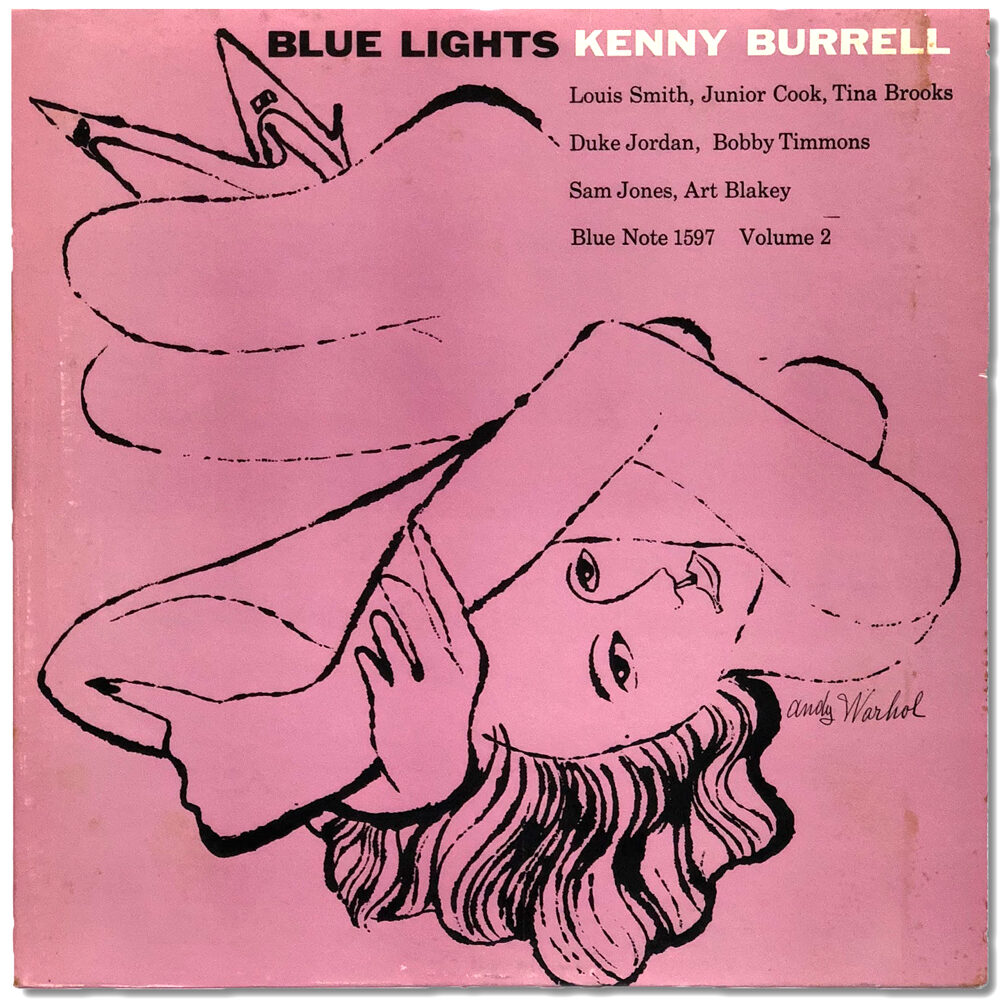
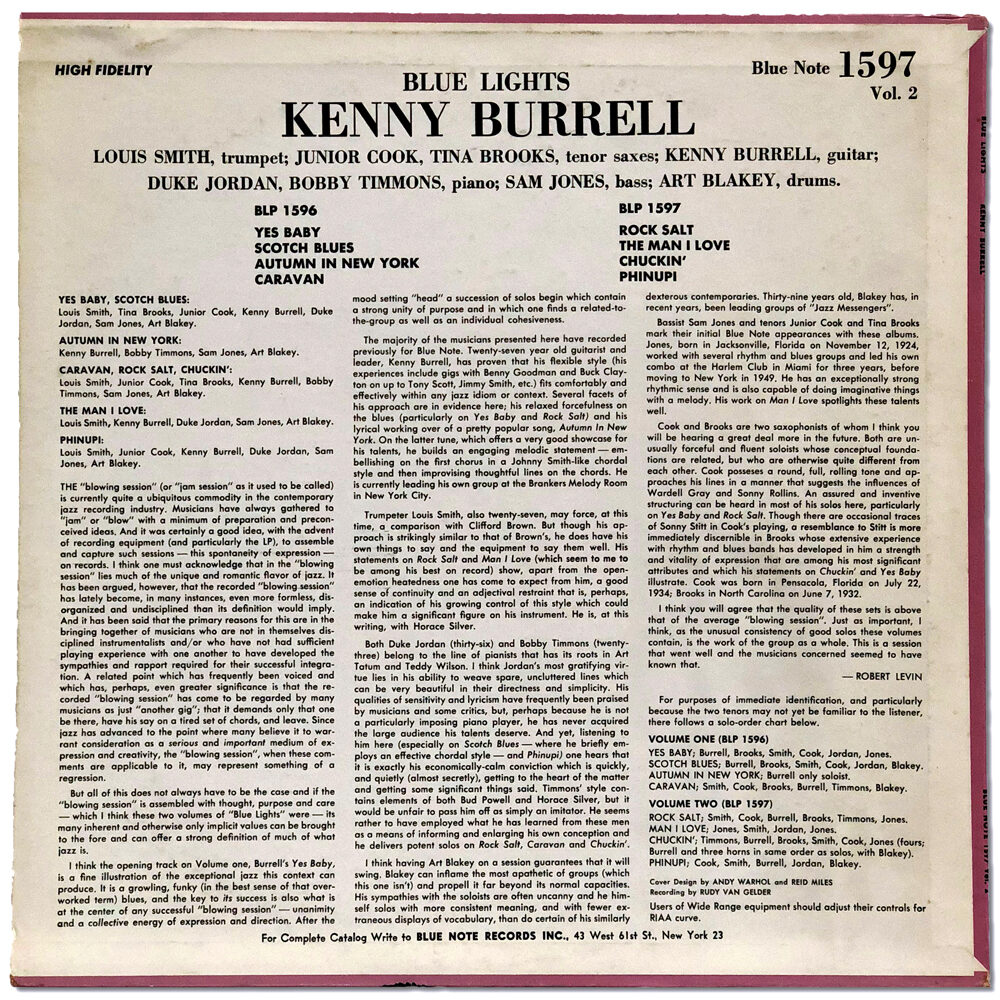
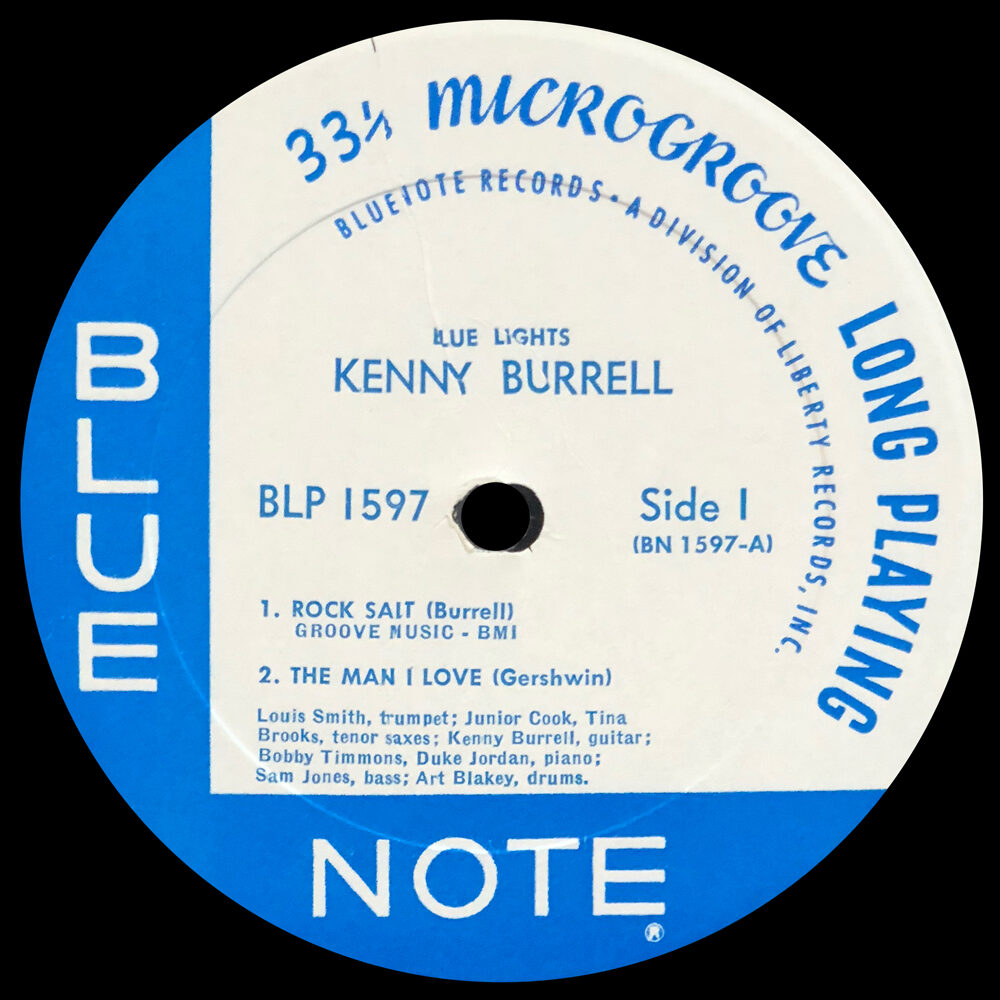
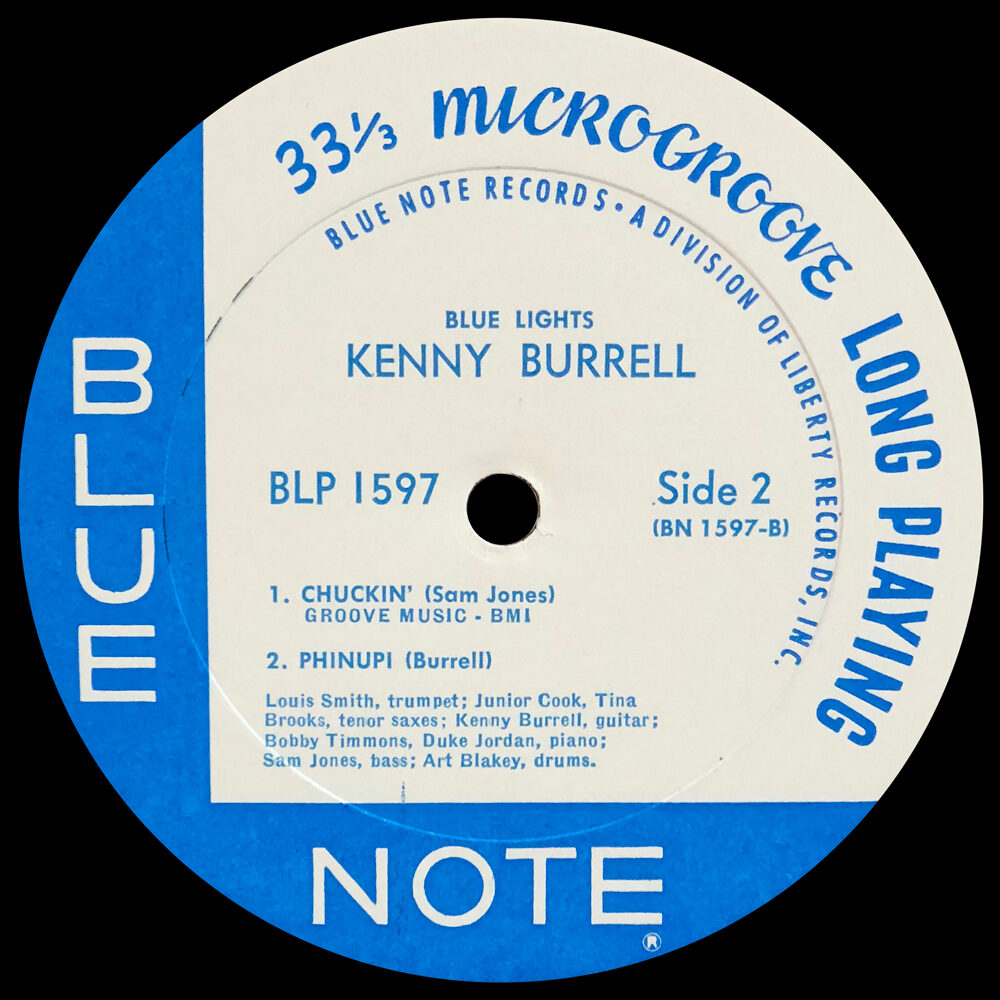
- Liberty mono pressing circa 1966-1970
- RVG etched in dead wax
Personnel:
- Louis Smith, trumpet
- Junior Cook, tenor saxophone (all but “The Man I Love”)
- Tina Brooks, tenor saxophone (“Rock Salt”, “Chuckin'” only)
- Kenny Burrell, guitar
- Duke Jordan, piano (“The Man I Love”, “Phinupi” only)
- Bobby Timmons, piano (“Rock Salt”, “Chuckin'” only
- Sam Jones, bass
- Art Blakey, drums
Recorded May 14, 1958 at Manhattan Towers, New York City
Originally released in October 1961
Selection:
“The Man I Love” (Gershwin)
For music lovers:
Continuing with the theme of mono Liberty Blue Notes, this is one of my favorite records by the prolific guitarist Kenny Burrell. In reading about this LP, I find that most of the discussion related to the album deals with its cover art. It is, of course, one of the three titles that the artist Andy Warhol drew for Blue Note. While the cover art is very beautiful, especially when seen on a clean, crisp copy, it was the sheer amount of talent on this record that sold me. The two bands that play on Blue Lights are a who’s-who of the bop era with an exciting player at every instrument.
Truly there is something for every fan of each player, and having them play on the same record provides for an interesting comparison in the styles of the musicians sharing an instrument. The opening track, “Rock Salt”, is a perfect showcase of each group member’s talent. Burrell opens with a familiar sounding, repeating blues riff that is echoed by the other instruments on repeated choruses. But the most exciting moments here involve the track’s two tenors. I always appreciate when Tina Brooks appears in a lineup because his tendency to play many minor notes with a Latin influence is right up my alley. But for this record, it was Junior Cook who first got my attention. For many years I have appreciated Cook in one of the most popular jazz groups of all time, The Horace Silver Quintet, and I was very excited to hear him at a young age in a different setting. Cook holds his own with legendary bandmates here, all while maintaining his own distinctive tone shoulder-to-shoulder with the uniquely-voiced Brooks.
Though the tenors are what drew me to this album, an unassuming player impresses me on every play. Sam Jones, though very well known as a bop player, was not known to me as an acclaimed virtuoso of the bass when I acquired this LP. I had seen his name on many recordings of the era but heard nothing in his playing on those records that would make me elevate him to the level of, say, Paul Chambers or Ron Carter. And on this recording, surrounded by such dominant and loud (Art Blakey!) musicians, you might expect Jones’ bass to be buried under crashing drums, the volume of an (at times) three-man frontline, and Burrell’s rhythmic chords. But Jones’ bass stays at the forefront throughout and drives the rhythm section to a point where he virtually assumes the role of a leader. With such strong rhythm players and timekeepers as Blakey, Bobby Timmons, and Duke Jordan, I was impressed that the bassist was the one who had the greatest impact on the overall sound of the band. Jones has several bass solos both here and on the preceding volume, but the riffs bookending “The Man I Love” are two of my favorite bass passages in jazz.
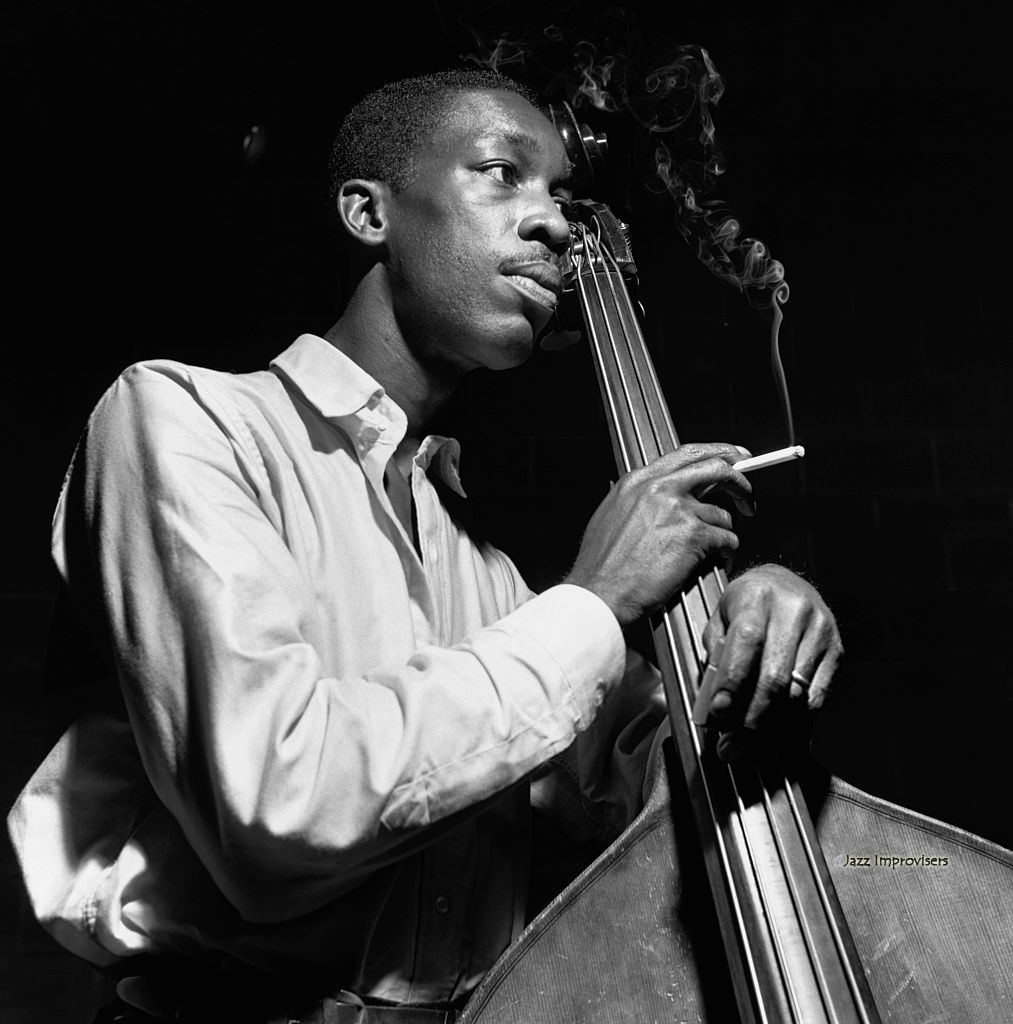 |
| Sam Jones |
In mentioning all the date’s sidemen thus far I have not forgotten the person for without whom this session would not be possible. To me Kenny Burrell has always been the epitome of consistency in his Blue Note recordings. Along with Silver, Jimmy Smith, and Stanley Turrentine, no other artist has recorded so many quality records over such a long period of time for the label. He plays just as well on this album as he does on any other, with an equally impressive display of chords, quick flourishes, and solid organization of his band. To this day (Burrell has survived the stereotypical turbulence of the bop lifestyle), he is considered the best guitarist in jazz by many. There were many other greats in the genre like Wes Montgomery or Grant Green, but many of them either had very short careers or were enticed by more commercial music. (Barring a single Christmas album) Burrell has consistently been dedicated to playing respectable music throughout his career. As it was for me with Junior Cook, part of the appeal of this recording was to hear a great player in the early stages of his career.
For collectors:
One of the only drawbacks to coveting such an all-star session with a notoriously famous cover was of course the challenge of acquiring a copy. Though recorded to both full-track and two-track tape, both volumes of Blue Lights would only be released in mono initially. My introduction to this LP was by way of a United Artists stereo pressing, but for one thing that copy had such muffled bass that Sam Jones’ incredible talent was not even on my radar at the time. It was equally dissatisfying that United Artists decided to release both volumes with the blue background of Volume 1. The scarcity of the pink second cover, the inferior stereo presentation, and the presence of deep grooves all seem to drive the high demand for first pressings.
In searching for an affordable copy, I saw that even the second and third pressings (West 63rd labels with no deep groove and New York USA labels, respectively) were still out of my price range. I had started looking for more modern alternatives in mono (Japanese pressings) when I noticed this Liberty copy for sale in an online auction. Acquiring a top copy of this album with original mono Van Gelder metalwork all while keeping the lights on proved an attractive option and I wasn’t alone. I encountered a lot of competition, and though I paid over a thousand dollars less than what an original costs in similar condition, to this date it is the most I have ever paid for a Division of Liberty Blue Note. But it has proven to be worth every penny.
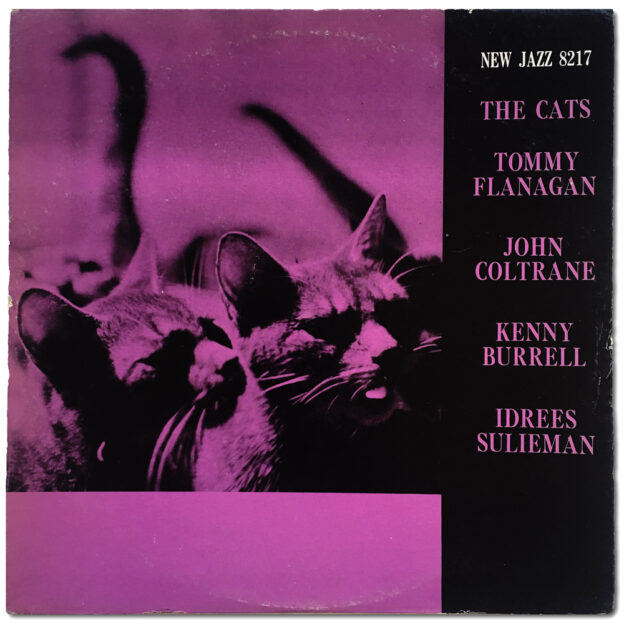
Vinyl Spotlight: The Cats (New Jazz 8217) Second “Blue Label” Pressing
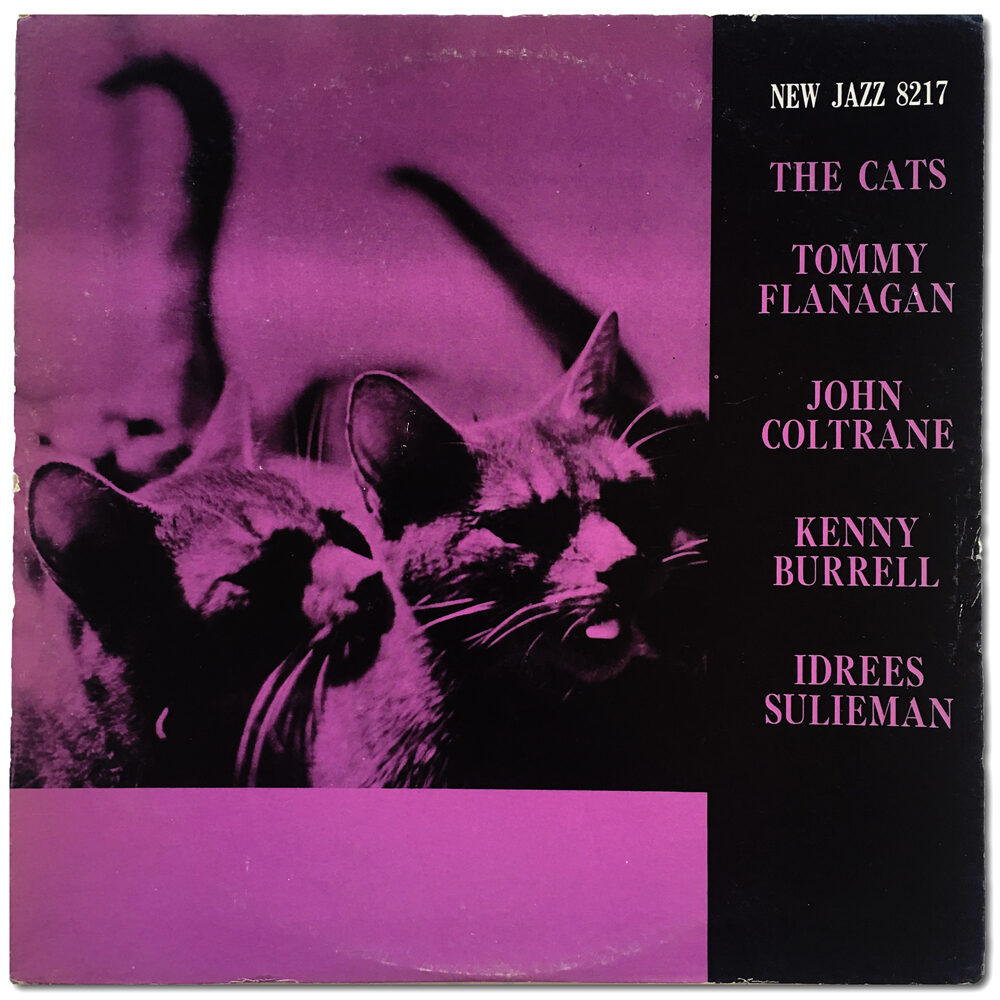
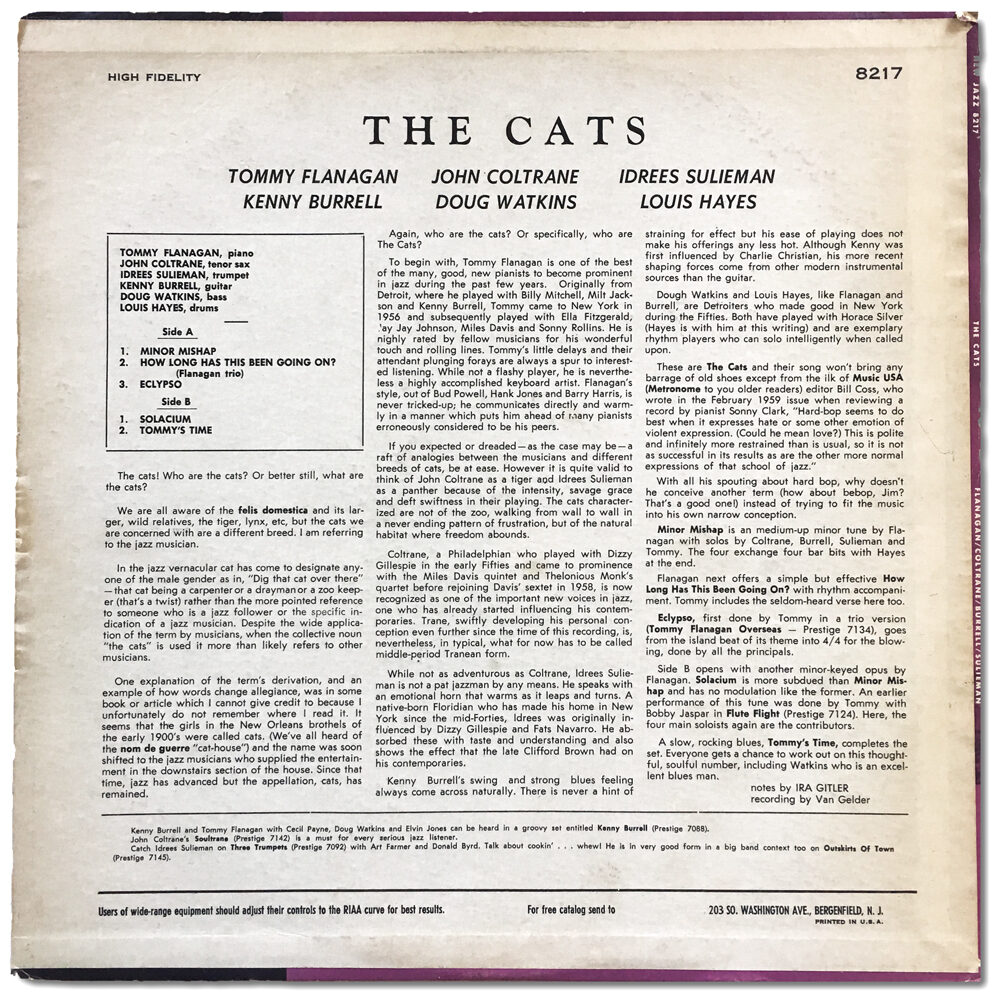
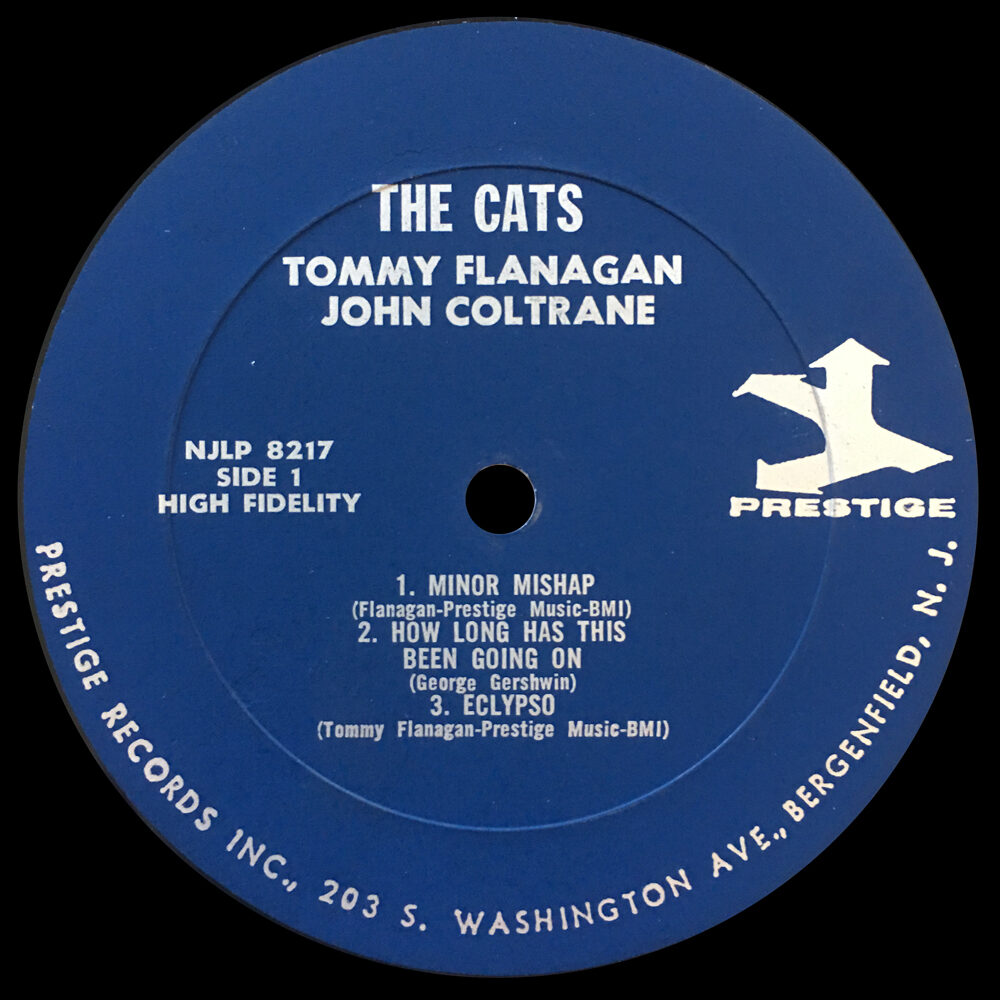
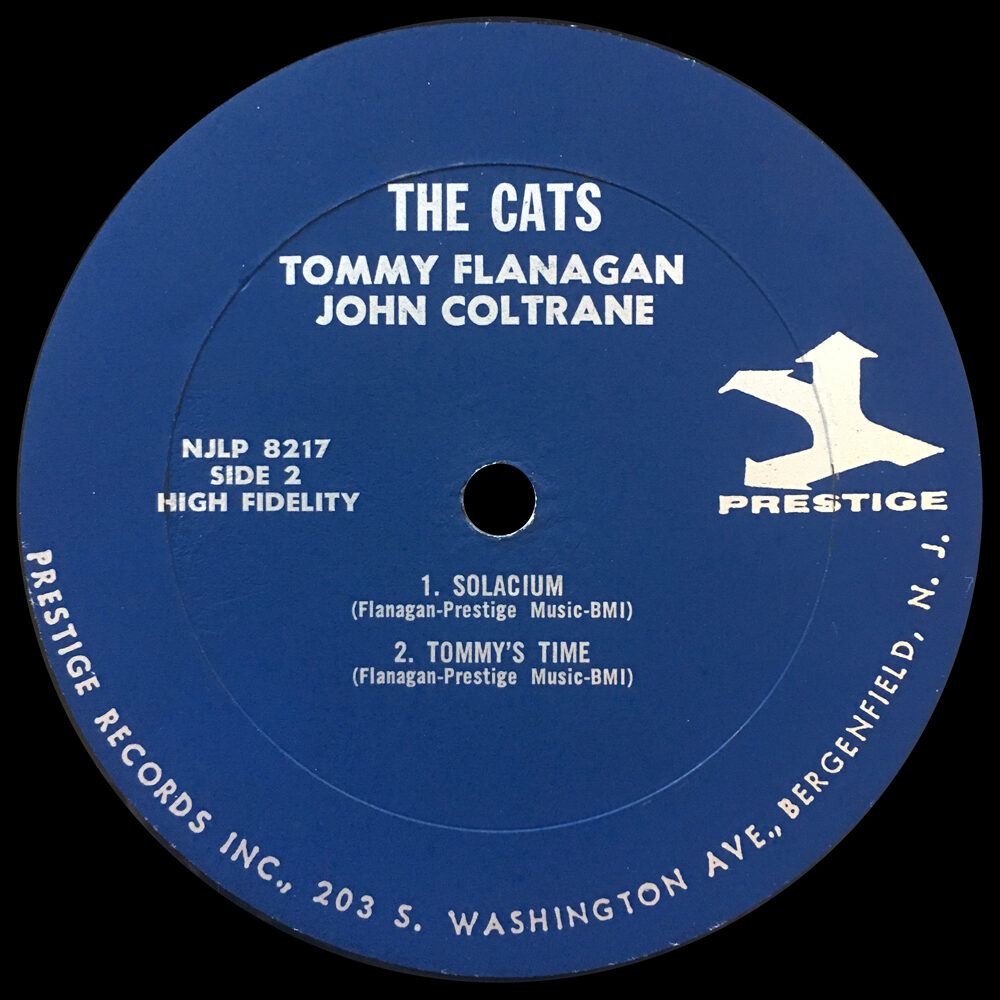
- Second (Prestige) pressing with blue labels circa 1964
- “RVG” stamped in dead wax
Personnel:
- Idrees Sulieman, trumpet
- John Coltrane, tenor saxophone
- Tommy Flanagan, piano
- Doug Watkins, bass
- Louis Hayes, drums
Recorded April 18, 1957 at Van Gelder Studio, Hackensack, New Jersey
Originally released in 1959
Selection:
“Solacium” (Flanagan)
Then recently on one of my periodic trips to New York’s East Village record shops, I was doing my flip-through-the-jazz-bins routine, panning for gold and expecting to turn up nothing but the usual rocks. But then in the Kenny Burrell section, the deep purple of this cover peeked out from the tightly-packed row. I assumed this was another OJC reissue, but when I slid the record out of the jacket I was surprised to see the early ’60s blue Prestige label. Things were starting to heat up. The next crucial step was examining the dead wax. With any luck I’d find the initials of Mr. Rudolph Van Gelder stamped there, and sure enough, I did.
I then examined the vinyl, which looked solid VG+. The price tag made it seem like this one slipped by whatever staff member priced it, and strangely, the numbers on the sticker indicated that it had been priced for sale three months prior. I had to believe that it sat behind the counter for months before it made its way to the racks because this record at this price would never last in a store for more than a week. Finally, I brought it over to the listening station for the final leg of my inspection routine and was humbly blown away by how quiet and clean it sounded. So I didn’t hesitate to bring it to the front and I slammed my cash down on the counter: “It’s a deal.”
In the past I’ve expressed disbelief in the commonly uttered collector sentiment that “vintage jazz records sound better than they look”. But this record wasn’t just providing evidence to the contrary, it was proving me dead wrong. I don’t think I’ve ever encountered a record that looked more marked up and sounded so quiet. In fact, this record sounds cleaner than a lot of records I own that are visually EX.
Recorded in the spring of 1957, we hear John Coltrane in a less adventurous but more accessible mood characteristic of the saxophonist before he began his ferocious onslaught of scales later that year with the release of Blue Train (Blue Note 1577). “Minor Mishap” and “Eclypso” are two favorites, but the ultimate mood-setter is “Solacium”, a somber, quiet tune that will perfectly complement a rainy afternoon spent indoors. Available in bold, straight-down-the-middle Hackensack mono only — no stereo option here.