
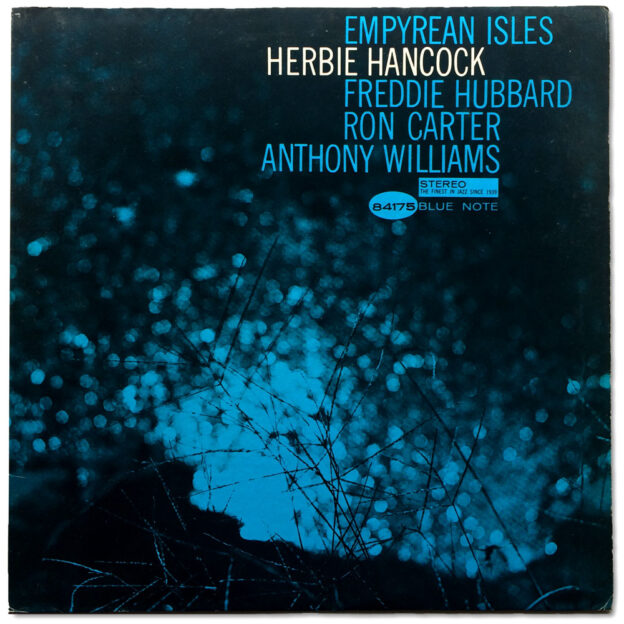
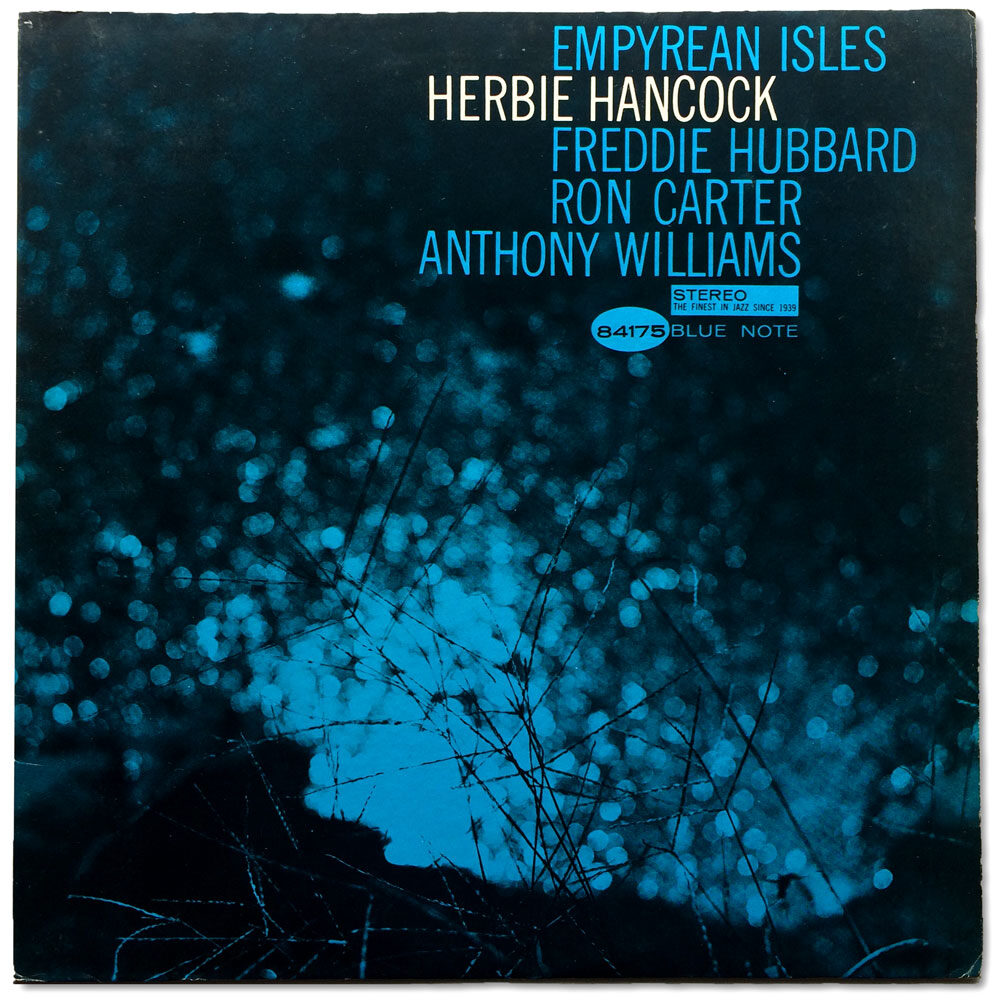
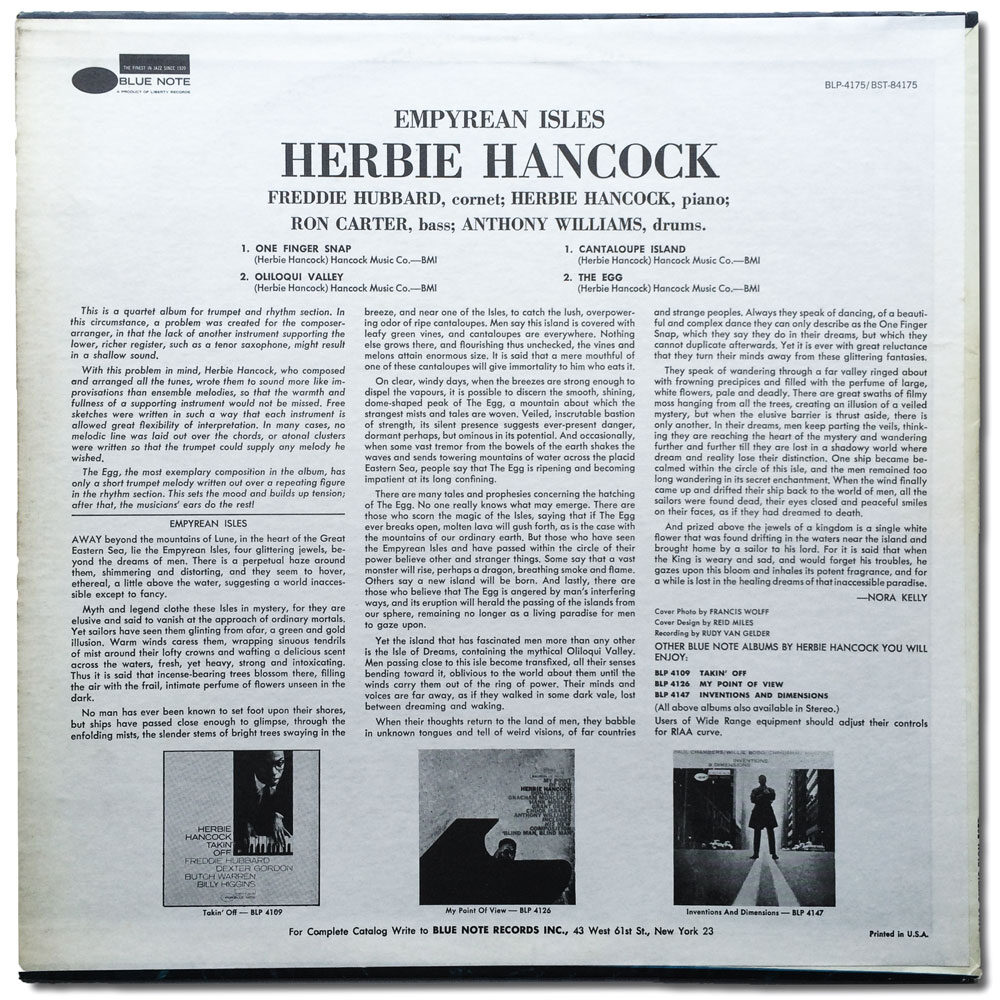
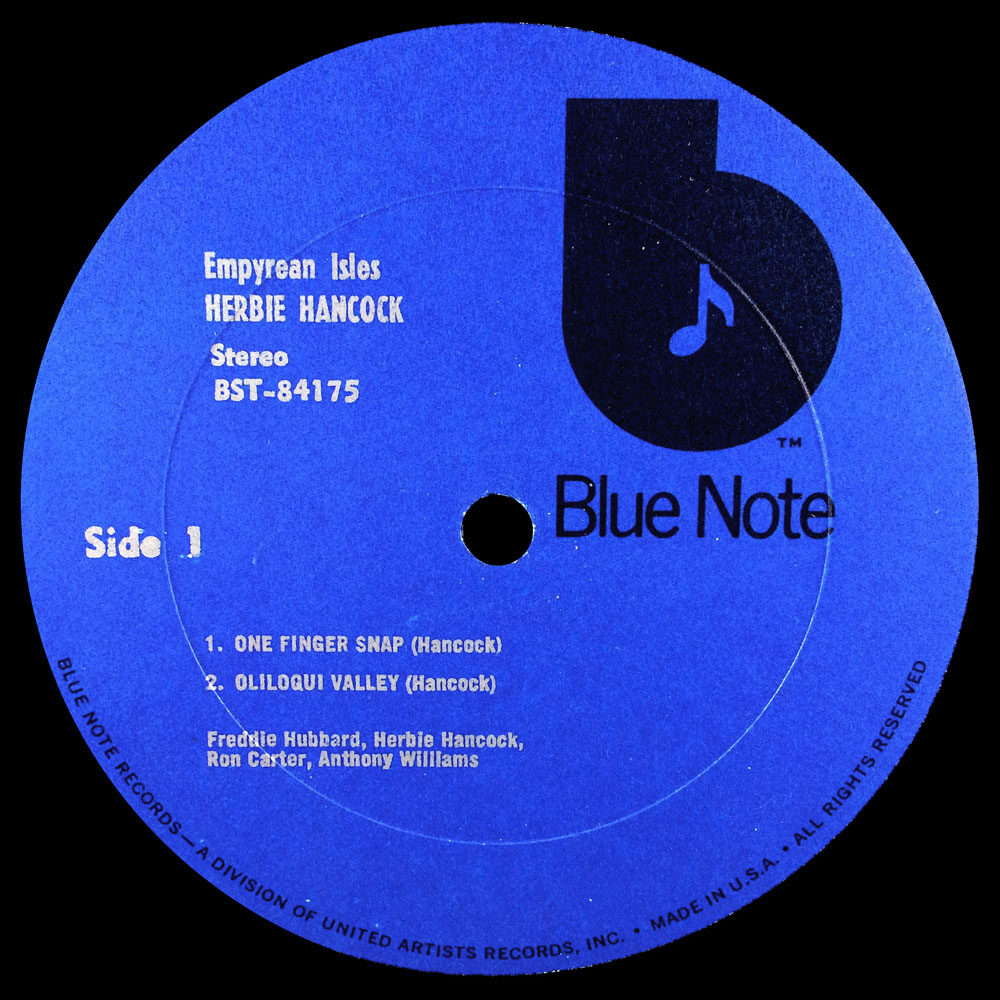
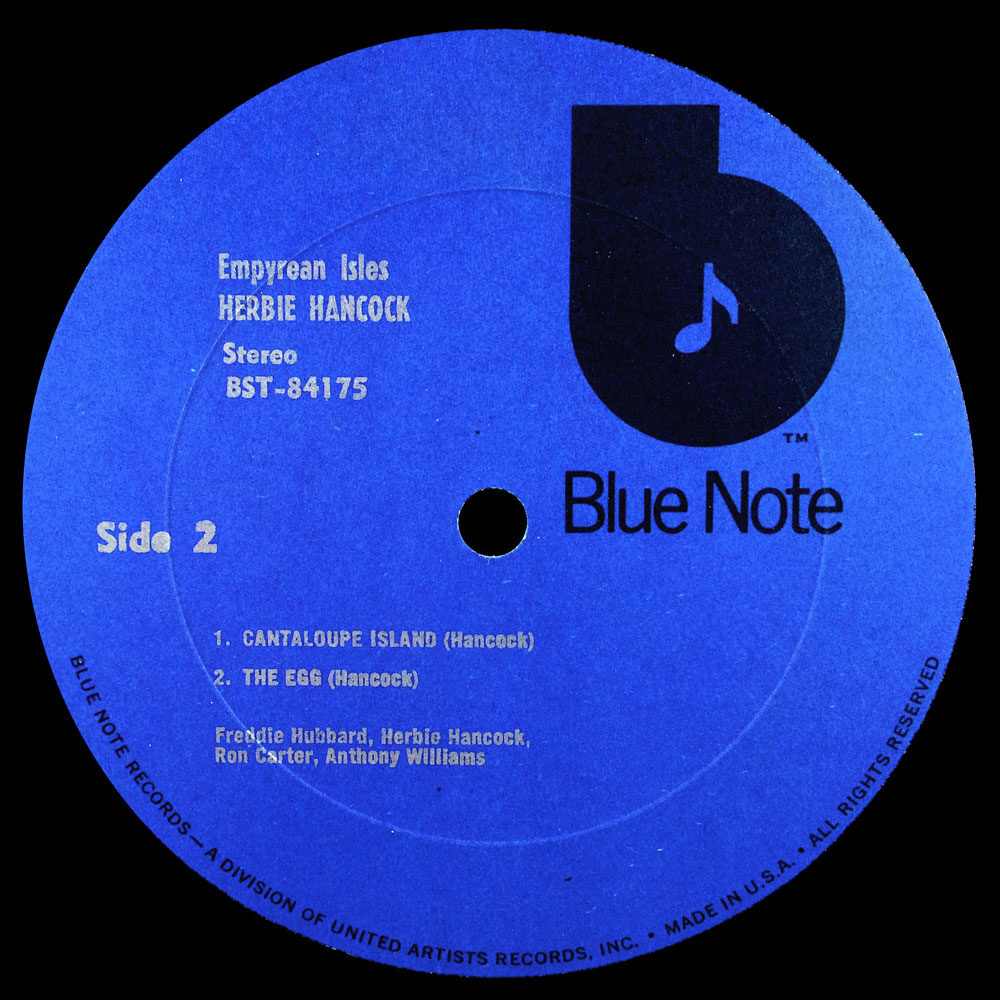
- United Artists stereo reissue circa 1972-1975
- “VAN GELDER” stamped in dead wax
Personnel:
- Freddie Hubbard, trumpet
- Herbie Hancock, piano
- Ron Carter, bass
- Tony Williams, drums
Recorded June 17, 1964 at Van Gelder Studio, Englewood Cliffs, New Jersey
Originally released November 1964
Selections:
“One Finger Snap” (Hancock)
“Oliloqui Valley” (Hancock)
This is one of my favorite Herbie Hancock albums. It has a soft, gentle vibe that I return to time and time again when I want to listen to something quiet. The quartet with trumpet seems like the perfect minimal arrangement for this album, and even though I’m not the biggest Freddie Hubbard fan, I find that he fits in with the rest of the group like a glove here. I love the cover too. Reid Miles had a way of making album art reflect the music contained within, and with this album, the simple, out-of-focus image of shimmering water cast in a teal blue tint complements the music extremely well…even the pronunciation of the title has a calming sort of effect (“Em-PEE-ree-in”).
Although the album’s closing track, “The Egg”, ventures out a bit too far for my taste, the other three compositions are all favorites. “Cantaloupe Island” sounds like part three in a trilogy of soulful, radio-friendly Hancock compositions that began with “Watermelon Man” and “Blind Man, Blind Man”, but side 1 consists of sixteen of my favorite minutes in music. Eighteen-year-old (Eighteen!) Tony Williams’ drumming is fiery, imaginative and expressive. His kit sounds incredible here as well, especially his ride cymbal. Engineer Rudy Van Gelder’s spacious Englewood Cliffs studio had a way of making drum kits sound colossal when they needed to, which can be heard during Williams’ solo on “One Finger Snap”. Who would have ever thought that Blue Note darling Freddie Hubbard would pair with the rhythm section of Miles Davis’ Second Great Quintet so well?
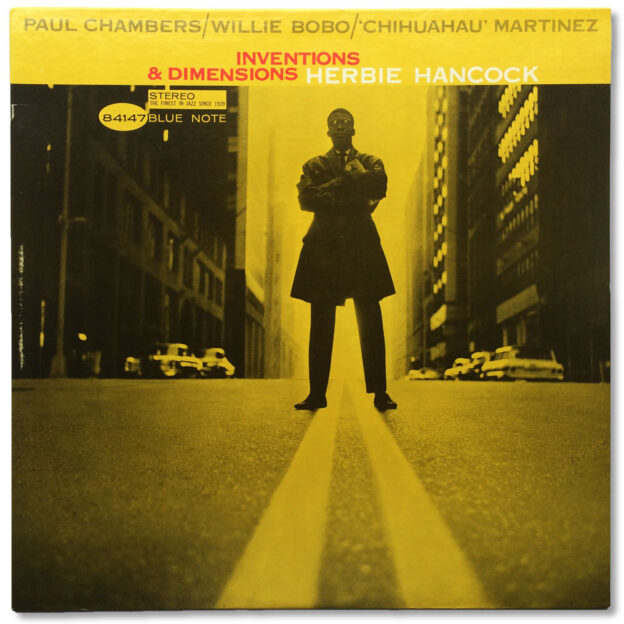
Vinyl Spotlight: Herbie Hancock, Inventions and Dimensions (Blue Note 84147) Liberty RVG Stereo Pressing
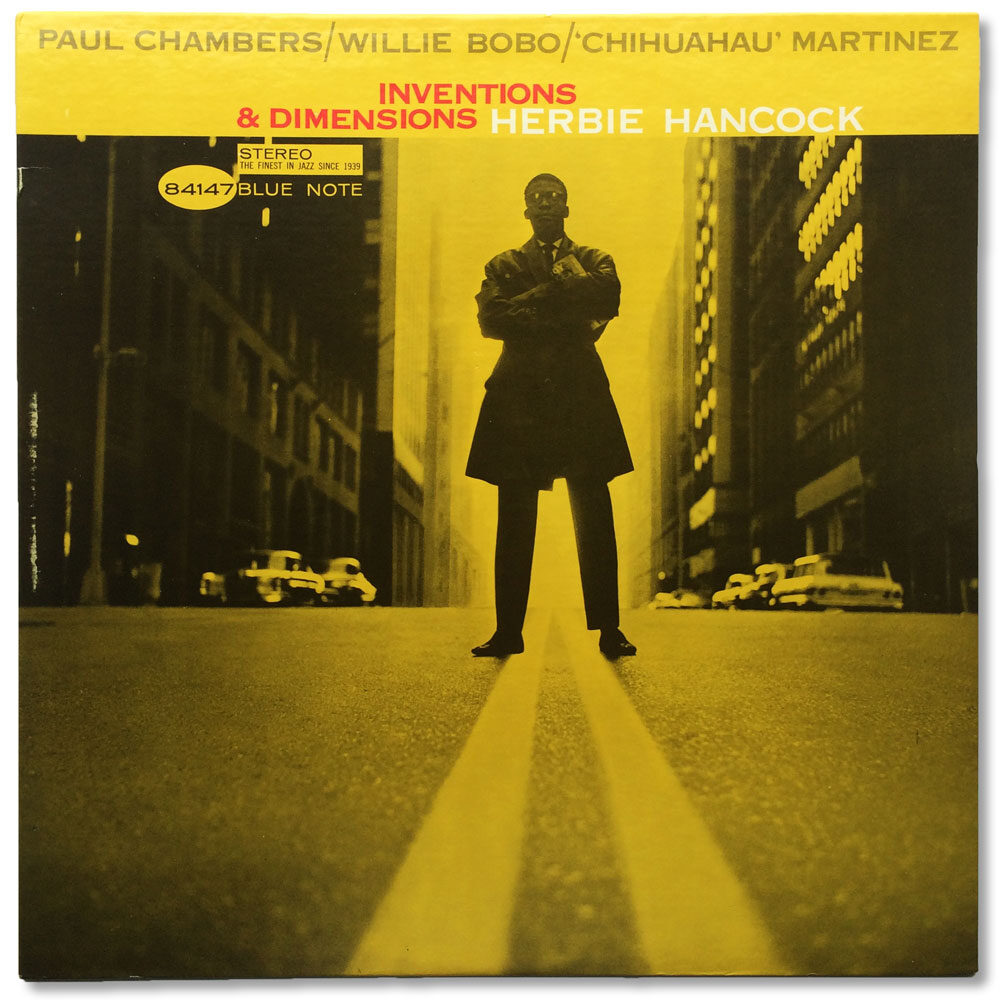
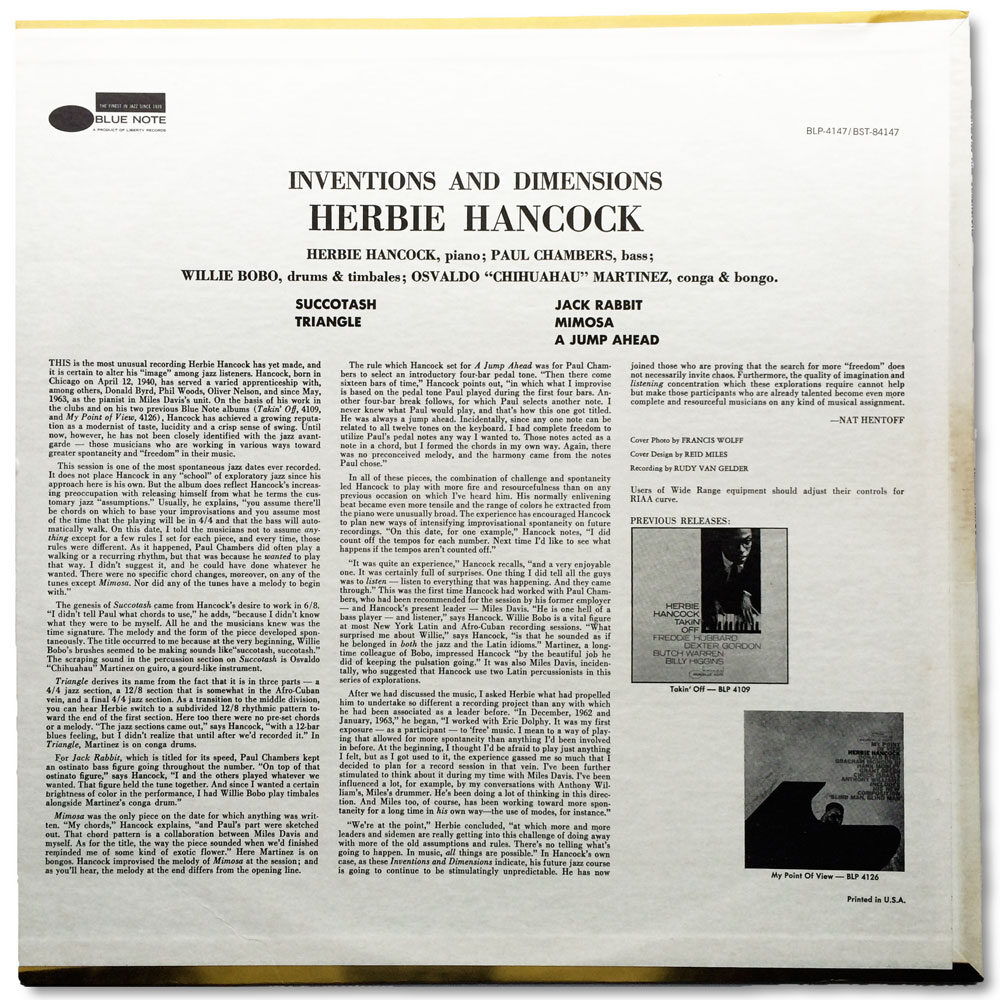
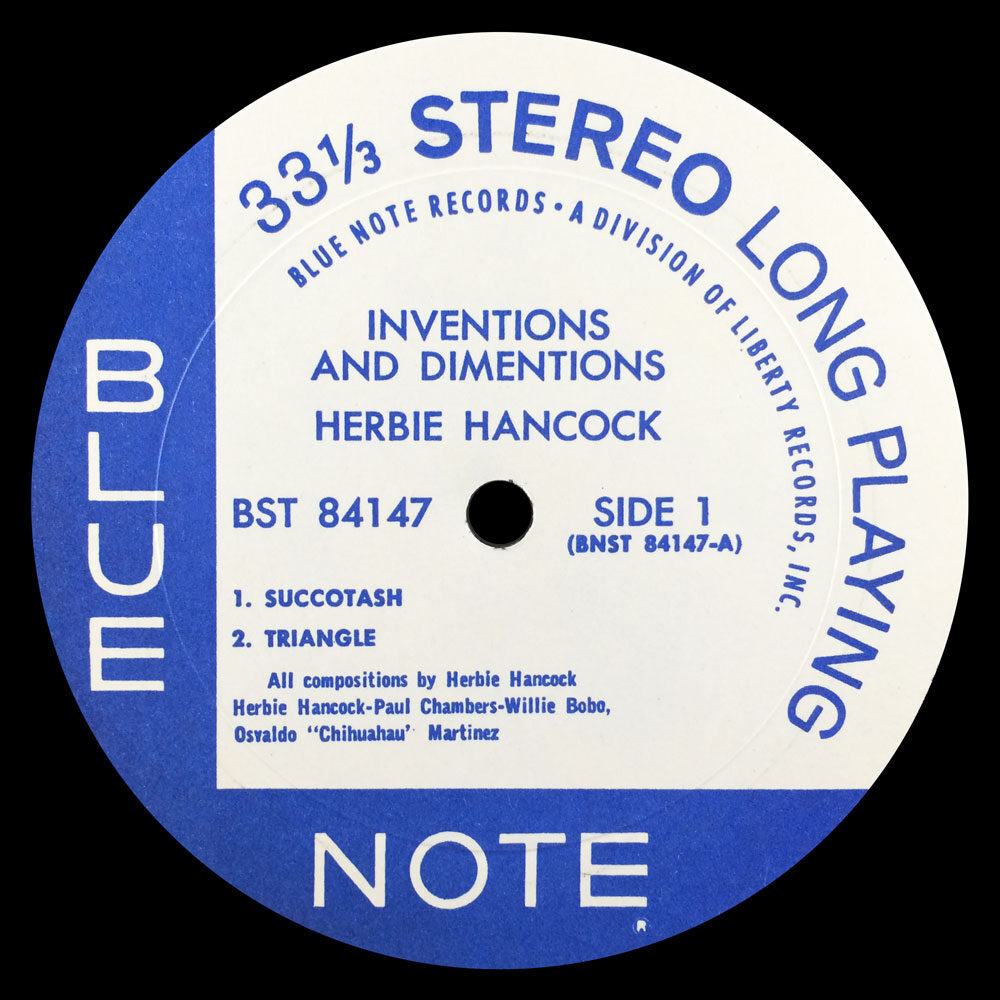
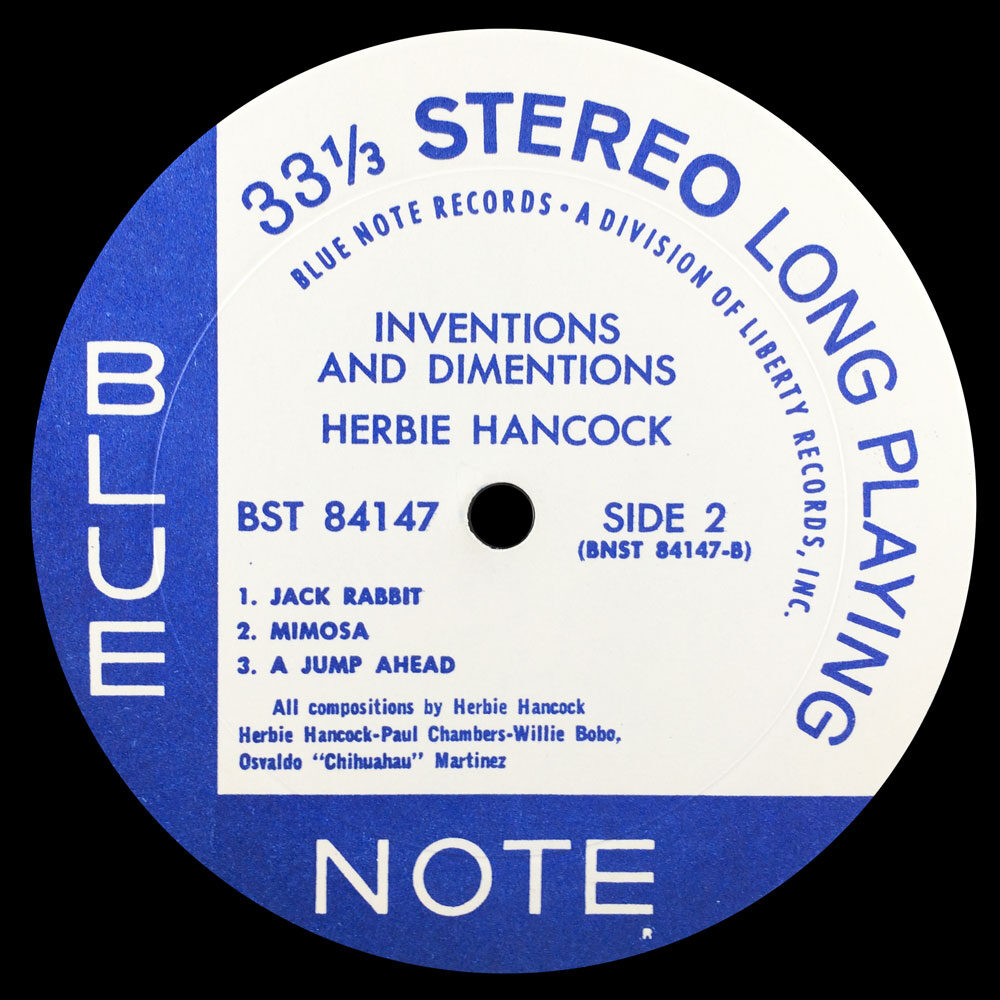
- Stereo Liberty reissue circa 1966-1970
- “A DIVISION OF LIBERTY RECORDS, INC.” on both labels
- “VAN GELDER” stamped in dead wax
Personnel:
- Herbie Hancock, piano
- Paul Chambers, bass
- Willie Bobo, drums and timbales
- Osvaldo “Chihuahua” Martinez, conga and bongo
Recorded August 30, 1963 at Van Gelder Studio, Englewood Cliffs, New Jersey
Originally released February 1964
Selection:
“Triangle” (Hancock)
Although Liberty pressings of most classic Blue Note albums are not original pressings, they still have the potential to sound great. They may lack the Plastylite “P” found in the runout groove of most originals but they do usually brandish the Van Gelder stamp in the runout groove, indicating that they were made from the same master lacquer disk as an original. This stereo copy of Herbie Hancock’s third album for Blue Note may not be a first pressing but it still embodies engineer Rudy Van Gelder’s original mastering work.
Many collectors will shun any vintage Blue Note without the “P”, claiming that its absence takes something away from the listening experience. I beg to differ, having never heard a significant contrast between originals and subsequent Liberty-era pressings sourced from the original metal work. In fact, I have found that Liberty pressings are more likely to sound fresher since they are less likely than originals to have suffered excessive wear.
One does need to be careful of how far they venture away from the original release of an album, however. Van Gelder’s mastering was used well into the late ’70s after Liberty had sold Blue Note to United Artists, and depending on the title, it seems there is an increased chance that the original work parts will have lost some measure of quality by this time. These records are more likely to lack the ‘life’ of earlier pressings (usually a reference to lower distortion and better high-frequency detail).
Despite having heard the popular audiophile criticisms of Rudy Van Gelder’s mastering work, I often find his LP masters to be highly accurate, even, and dynamic. But be careful — you won’t get this experience if you’re listening to a worn record. This particular copy was purchased sealed a couple years back, which I feel makes it a shining example of the mastering engineer’s handiwork, certainly more so than any wear-ridden original.
As for the music, this is my favorite Herbie Hancock album. Every time I listen, I listen from start to finish. Hancock takes an experimental approach to the songwriting here and can often be heard working out ideas on the fly. This leads to frequent use of refrain, a technique that has never been popular with jazz soloists (because of the central role improvisation plays in the genre, jazz musicians often seem driven by an intense desire to constantly invent, which means never sitting on the same phrase for very long at all). My longstanding relationship with sampling and hip hop has made me very accustomed to repetition in instrumentation, which I think has much to do with why I find Hancock’s regular use of refrain here a very welcome break from the bop norm. Bassist Paul Chambers and drummer Willie Bobo intensify the trance-like qualities of the music by locking in on various rhythms throughout, and percussionist Chihuahua Martinez’s timing is rock solid — something crucial in a minimal arrangement like this.