
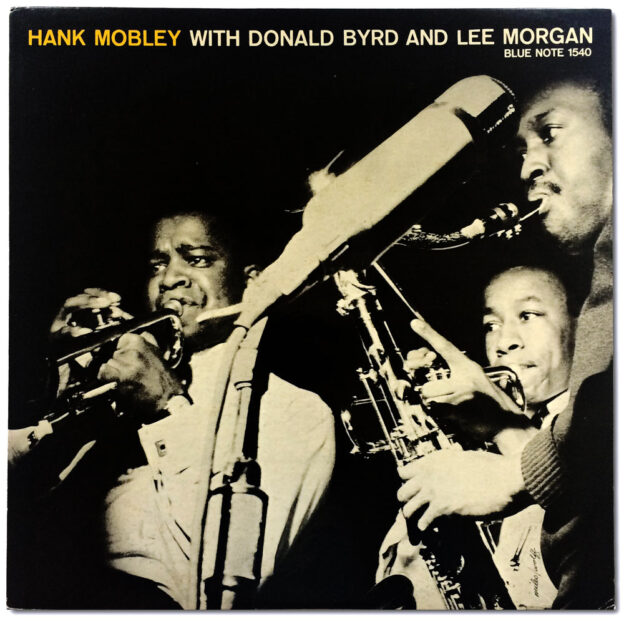
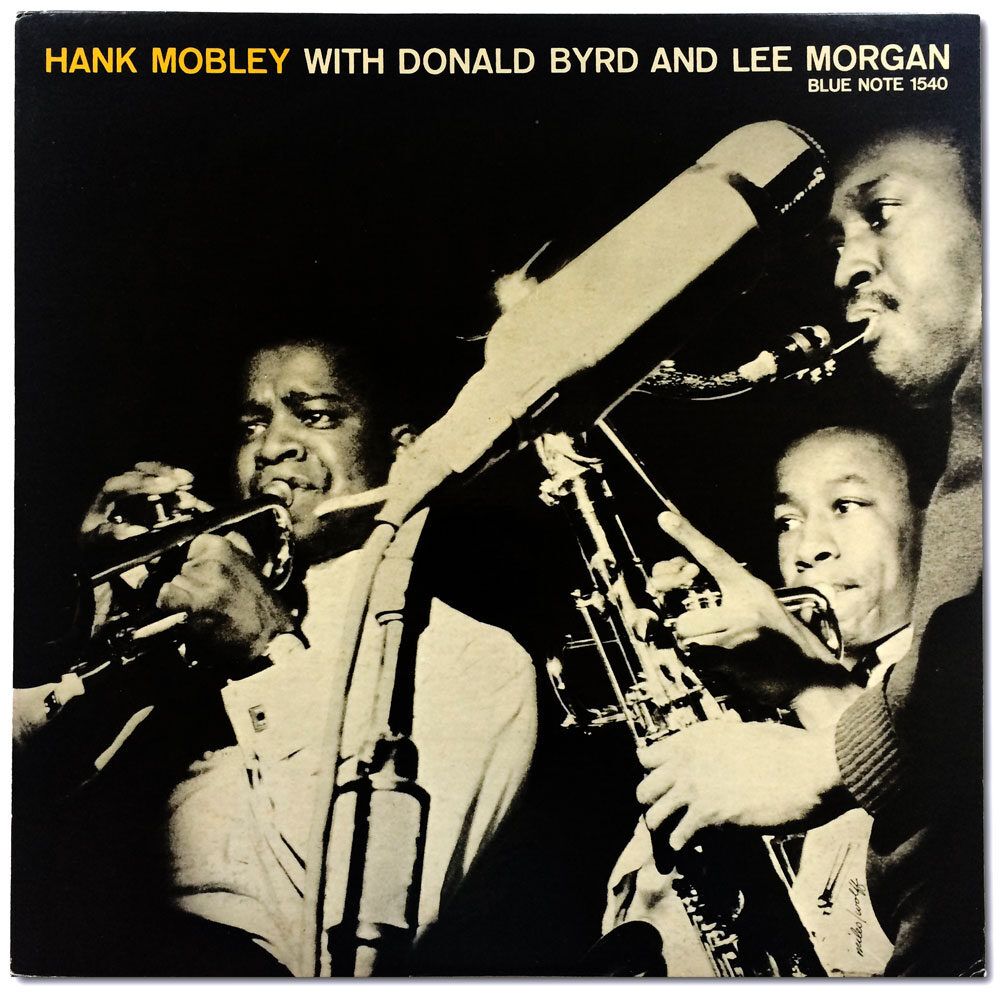
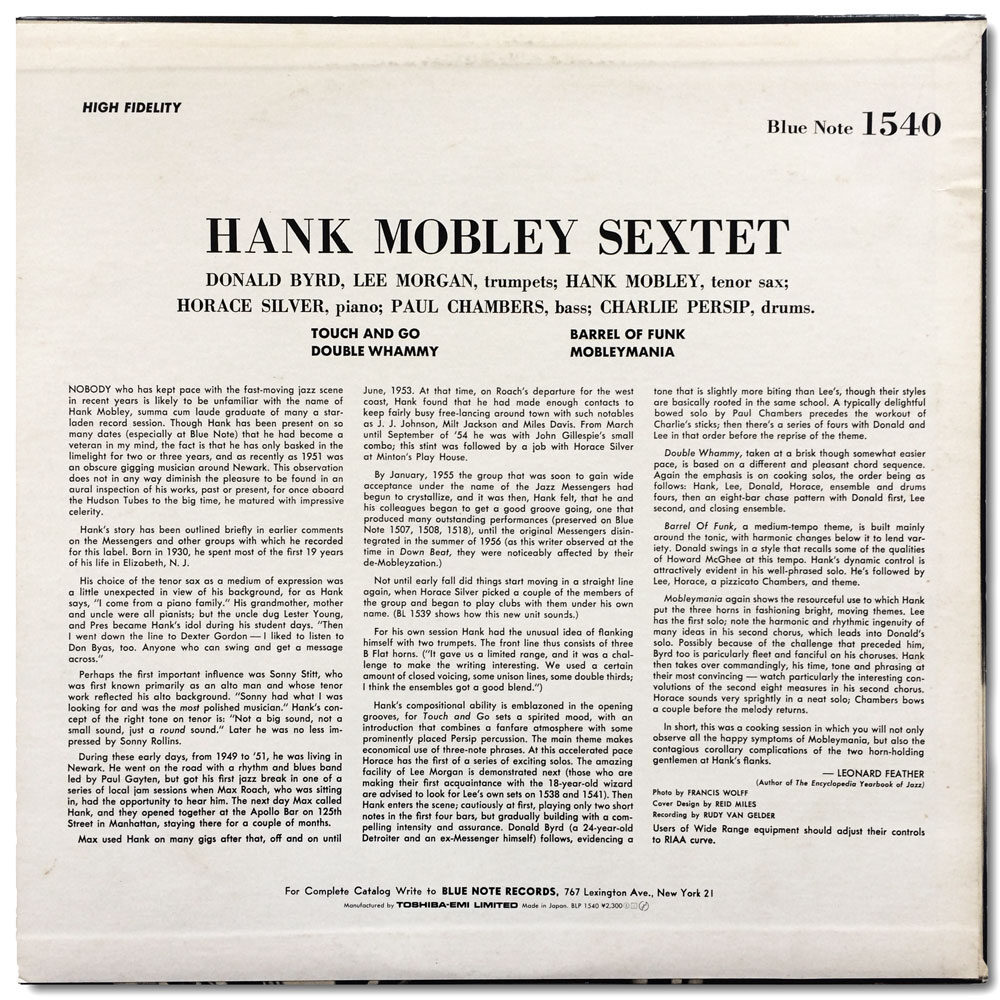
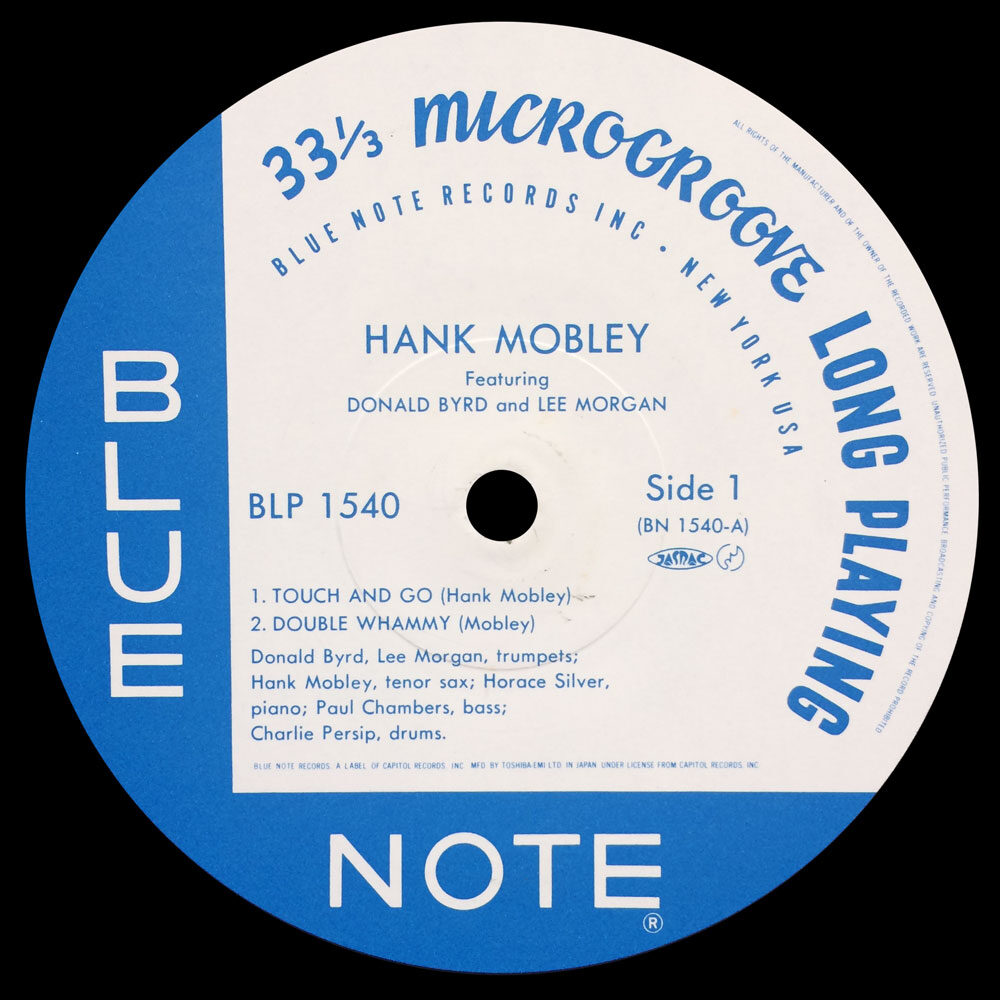
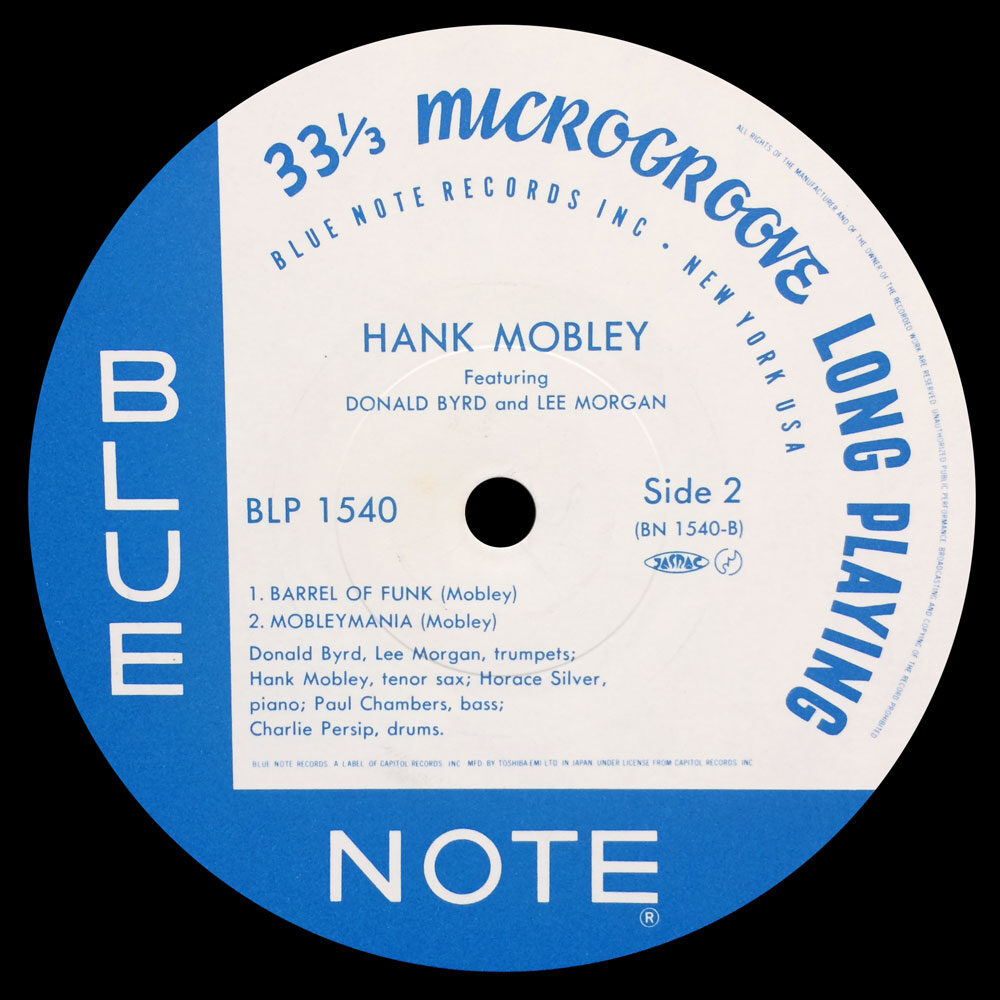
- Japanese Toshiba reissue circa 1983 (BN 1540)
Personnel:
- Donald Byrd, trumpet
- Lee Morgan, trumpet
- Hank Mobley, tenor saxophone
- Horace Silver, piano
- Paul Chambers, bass
- Charlie Persip, drums
Recorded November 25, 1956 at Van Gelder Studio, Hackensack, New Jersey
Originally released January 1957
Selection: “Touch and Go” (Mobley)
Selection: “Double Whammy” (Mobley)
There was something different about this sound, though. The horns had a tremendous sonic impact. The unique arrangement of two trumpets and one tenor saxophone was certainly playing a role, but recording engineer Rudy Van Gelder had clearly found a rare synergy with his equipment that day and I have yet to hear this horn sound topped by any other jazz recording. It is intense, smooth, and cohesive all at once. Van Gelder was getting a similar sound on other albums in late 1956 but perhaps the particular combination of Mobley, Byrd, and Morgan sets this album apart. The engineer’s choices regarding microphone positioning, preamplifier gain, compression, and instrument balance certainly played a role in the creation of this monumental sound as well.
The album’s compositions, all written by leader Hank Mobley, are consistently menacing. The haunting harmonies of “Touch and Go” and “Double Whammy” carry a sense of foreboding, and while “Barrel of Funk” has a rather upbeat “A” section, the tune ultimately transforms into an intriguing progression of minor-key origins at its bridge. Even the album’s most upbeat tune, “Mobleymania”, manages to keep listeners on the edge of their seats with harmonic tension.
Blue Note catalog number 1540 features Mobley’s characteristic sweet, smooth tone throughout. As a youthful pair of trumpeters, Donald Byrd and Lee Morgan are difficult to tell apart. Horace Silver does little to detract from this star-studded frontline, and the forefather of bop humbly yet tastefully blends into the background for much of the program. Silver’s comping is never boastful here, but at the same time it falls short of embodying the pianist’s big musical personality and signature funk (it wouldn’t be long before Silver would ditch sideman work for good and become the leader of his own legendary quintet). To round things out, drummer Charlie Persip sits at the throne behind his drum kit in the far corner of Rudy Van Gelder’s living room studio. I cannot get enough of the beautiful simplicity of Van Gelder’s mono drum sound at Hackensack in the late ’50s. Persip sounds just as good as anyone in that room and his straight-ahead timekeeping compliments Van Gelder’s technique exceedingly well.
Beyond a repress in the late ’60s after Blue Note had been sold to Liberty Records (the proof of which lies in the existence of copies with “RVG” etchings but no “ear”), this album has never been reissued in the United States, not even on compact disc (it has, however, appeared on numerous compilations including Mosaic’s box set of Mobley’s ’50s Blue Note recordings). The Japanese almost never left a Blue Note stone unturned though and this album is no exception, having been reissued by Toshiba-EMI five times in various formats. I was also considering the King reissue from the same year when I bought this 1983 Toshiba copy on eBay from a Japanese seller but ultimately chose the Toshiba not only because it was cheaper but I also noticed that the fonts used on the Toshiba cover more accurately portrayed those of the original artwork (King album covers also often admit an unnaturally high level of contrast). This was my first Japanese Blue Note vinyl reissue venture and I remember being stunned by how dead-quiet this pressing was.
My dream is to someday own a vintage copy of this album with RVG etchings. Until then, this Toshiba reissue is sure to get lots of turntable time in my house.
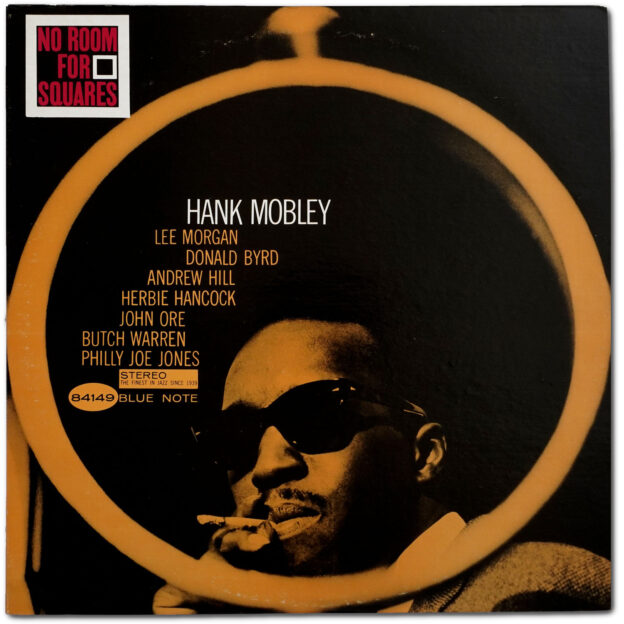
Vinyl Spotlight: Hank Mobley, No Room for Squares (Blue Note 84149) UA RVG Stereo Pressing
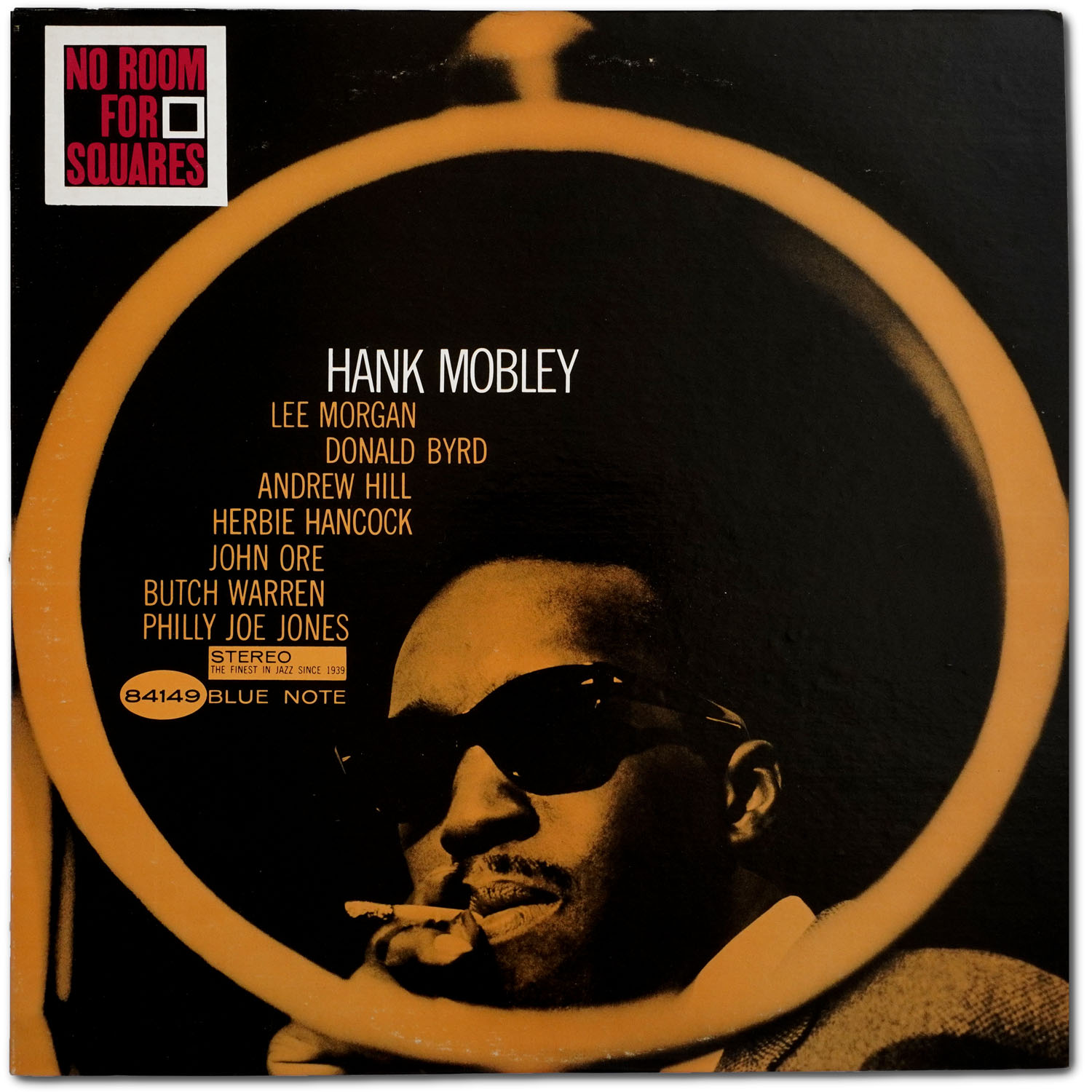
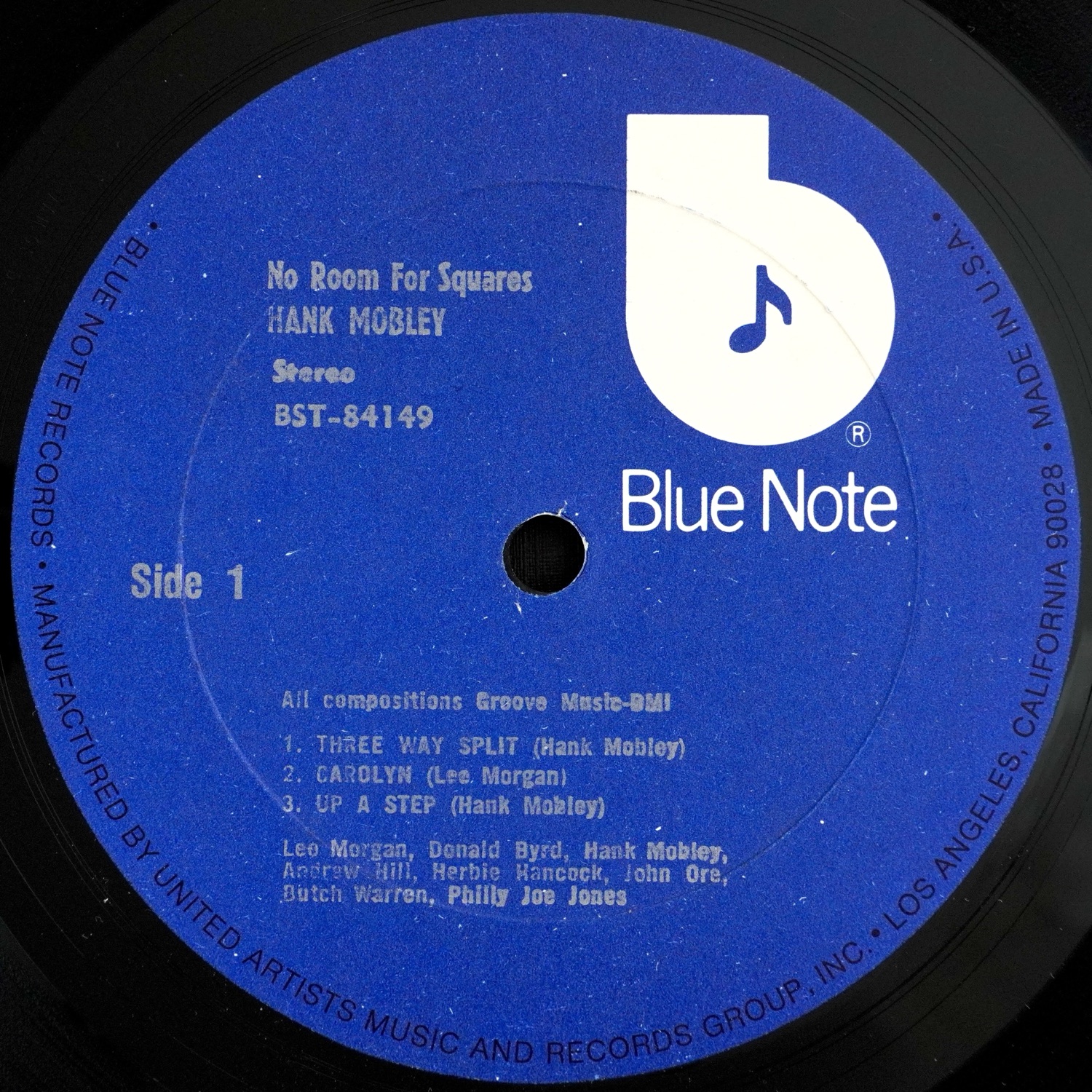
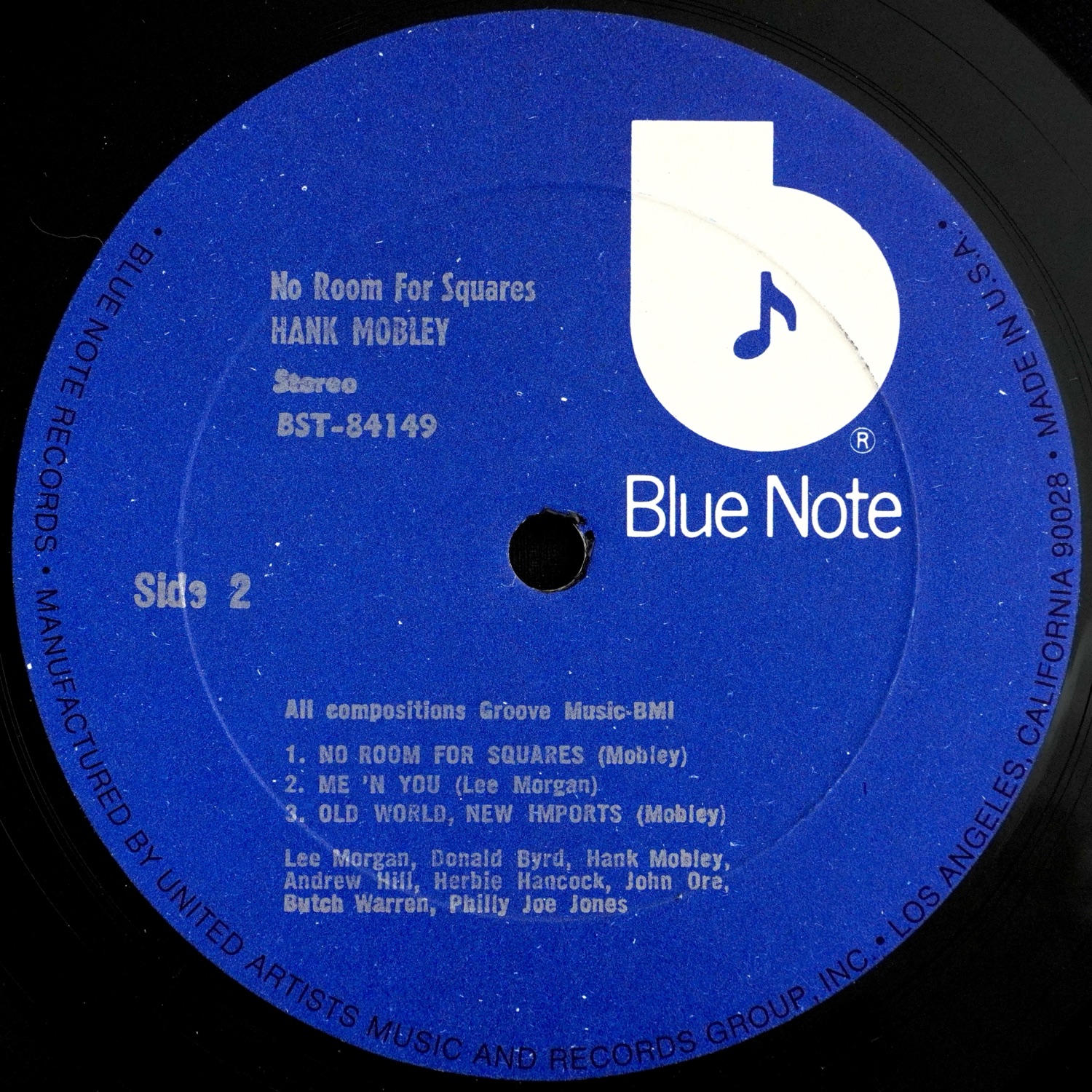
- United Artists stereo reissue circa 1975-1978
- “VAN GELDER” stamped in dead wax
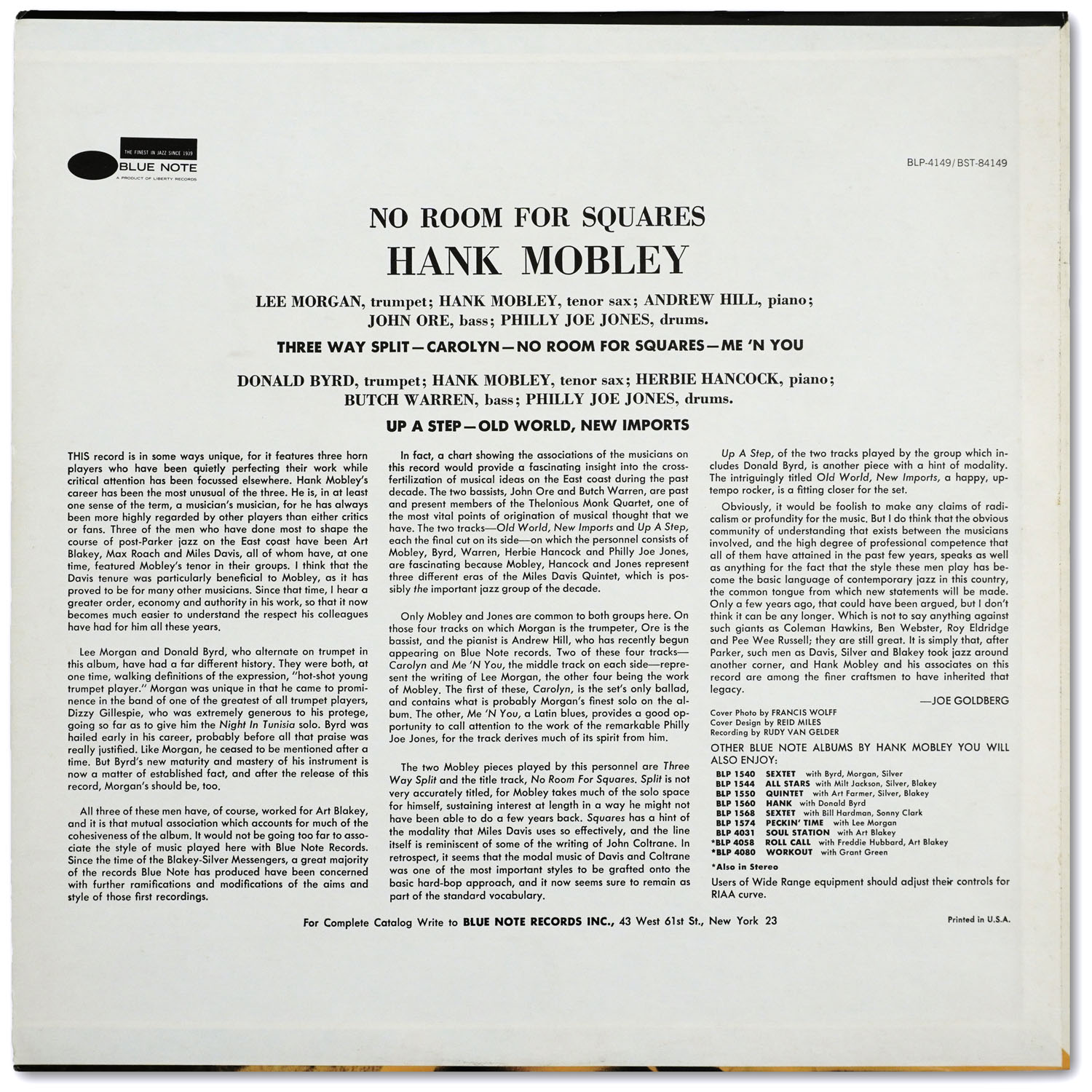
Personnel:
All but “Up a Step”, “Old World, New Imports”:
- Lee Morgan, trumpet
- Hank Mobley, tenor saxophone
- Andrew Hill, piano
- John Ore, bass
- Philly Joe Jones, drums
“Up a Step”, “Old World, New Imports” only:
- Donald Byrd, trumpet
- Hank Mobley, tenor saxophone
- Herbie Hancock, piano
- Butch Warren, bass
- Philly Joe Jones, drums
“Up a Step”, “Old World, New Imports” recorded March 7, 1963
All other selections recorded October 2, 1963
All selections recorded at Van Gelder Studio, Englewood Cliffs, New Jersey
Originally released May 1964
| 1 | Three Way Split | |
| 2 | Carolyn | |
| 3 | Up a Step | |
| 4 | No Room for Squares | |
| 5 | Me ‘n You | |
| 6 | Old World, New Imports |
Selection:
“Three Way Split” (Mobley) [Stereo]
“Three Way Split” (Mobley) [Summed Mono]
So far on Deep Groove Mono, we’ve covered original pressings, Liberty pressings and early ’70s United Artists pressings of classic albums released by the beloved Blue Note label. This ’70s copy of Hank Mobley’s No Room for Squares with the all-blue label and the white (sometimes black) lowercase “b” logo is more or less the last phase in vintage US Blue Note pressings. (Prior to the current era of audiophile reissue programs, which gained great momentum in the late ’90s with Classic Records, the ’80s and ’90s saw a series of less popular, less acclaimed reissue programs eclipsed by the advent and subsequent reign of the compact disc.) This reissue program also constitutes the last time the original mastering work of engineer Rudy Van Gelder would be used to press reissues of classic Blue Note albums.
As is the case with the earlier mono UA reissues of the early ’70s with the classic blue-and-white label scheme, these all blue-label reissues seem hit or miss. This is at least in part due to the fact that Van Gelder’s metal work was being employed beyond the point where it could produce records of the exceptional quality originals and earlier reissues are known for. Several Blue Note albums I have encountered with all-blue-labels and Van Gelder mastering have been duds, but No Room for Squares is not one of them.
This is one of my favorite Hank Mobley albums. Recorded in 1963, it is far removed from the string of 1500-series albums Mobley recorded for Blue Note in the late fifties, all of which are very rare and in-demand in their original incarnations. Nonetheless, Mobley puts together a solid, consistent program here, best demonstrated by a pair of the leader’s own compositions (the title track and “Three Way Split”) and the ballad “Carolyn”, an original work of session trumpeter Lee Morgan. Then-veteran of the bop scene, drummer Philly Joe Jones, provides a driving and exciting performance on the skins as well.
Though this is a stereo copy, it is tempting to hit the ‘mono’ button on my amplifier in order gain a sense of what an original mono pressing might sound like. The reason we can be fairly certain that this type of summing can produce comparable results is because of what we know about the way Rudy Van Gelder recorded, mixed, and mastered these albums for both mono and stereo. Though the clarity and separation offered by the stereo spread is a treat in its own right, summing to mono provides a glue to the mix that the stereo presentation is incapable of, especially when it comes to the harmonies of the horns.