- Original 1966 mono pressing
- “2-eye” labels
Personnel:
All but “Misterioso”, “Light Blue”, and “Evidence”:
- Charlie Rouse, tenor saxophone
- Thelonious Monk, piano
- Larry Gales, bass
- Ben Riley, drums
“Misterioso”, “Light Blue”, and “Evidence” only:
- Charlie Rouse, tenor saxophone
- Thelonious Monk, piano
- Butch Warren, bass
- Frankie Dunlop, drums
“Evidence” recorded May 21, 1963 at Sankei Hall, Tokyo
“Light Blue” recorded July 4, 1963 at Newport Jazz Festival, Newport, RI
“Misterioso” recorded December 30, 1963 at Lincoln Center, New York, NY
“I’m Getting Sentimental Over You” and “All the Things You Are” recorded November 1, 1964 at The It Club, Los Angeles, CA
“Bemsha Swing” recorded November 4, 1964 at The Jazz Workshop, San Francisco, CA
“Well, You Needn’t” recorded February 27, 1965 at Brandeis University, Waltham, MA
“Honeysuckle Rose” recorded March 2, 1965 in New York, NY
Originally released in 1966
Selection: “Light Blue” (Monk)
1. Some of Monk’s most inspired recordings were for Blue Note in the late ’40s and early ’50s. As a result, they are not high-fidelity and I don’t find myself seeking out older recordings like this on vinyl.
2. Though Monk’s recordings for Prestige are generally of outstanding quality in terms of both fidelity and performance, the sequencing of these recordings for Monk’s Prestige LPs is scattered in comparison to the original 10″ LP sequences, which make more sense to me.
3. I enjoy many of Monk’s Riverside releases but I’ve never found vintage Riverside pressings to be of a very high quality. I’ve owned a few but resold them shortly after acquiring them.
4. Much of Monk’s output for Columbia included songs he had already recorded for other labels in the past, and in most cases I prefer the older recording. No doubt, Monk’s Columbia recordings are of exceptionally high fidelity, but I do find that his playing on older albums sounds a little more inspired. I also don’t feel that the pinpoint accuracy of the Columbia recordings suits Monk’s music as well as the sonic signature of studios like Hackensack (Prestige and some Riverside) and Reeves (Riverside).
One of the exceptions to 4. above is this compilation of previously unreleased live material. Knowing that Monk felt his studio albums primarily served as advertisements for his live performances, I’ve taken a stronger interest in the pianist’s live albums. Although this album was released relatively close to the death knell of mono in 1964, and despite the fact that Columbia had been releasing brilliant-sounding stereo LPs for several years by that time, I still cherish the mono version of this album because the stereo mixes of Monk on Columbia fail to position the leader in the center of the stereo field.
This album has sentimental value to me because it served as my introduction to Monk when I borrowed my friend’s copy many years ago and this is the second original mono copy I’ve owned. The first was in pretty good shape but last year at the WFMU Record Fair I stumbled upon this copy in near-new condition, and for the asking price I couldn’t pass it up.
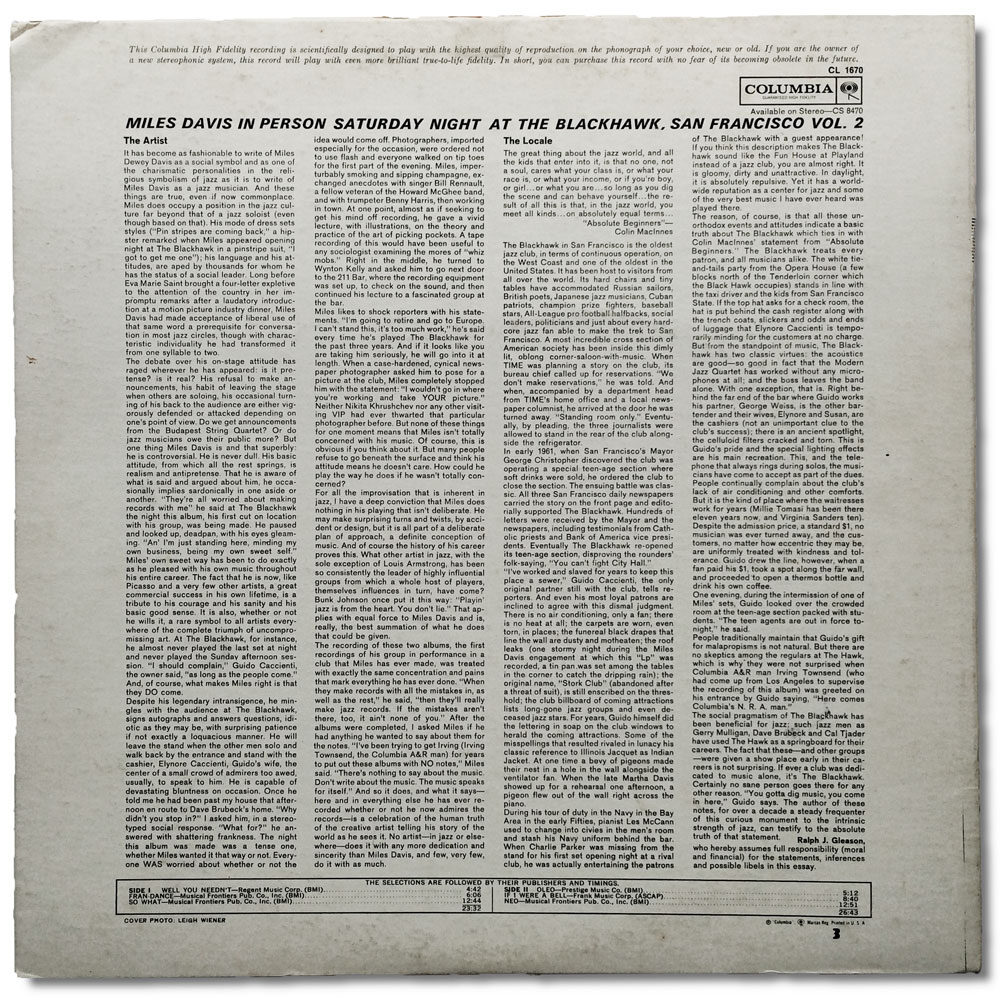
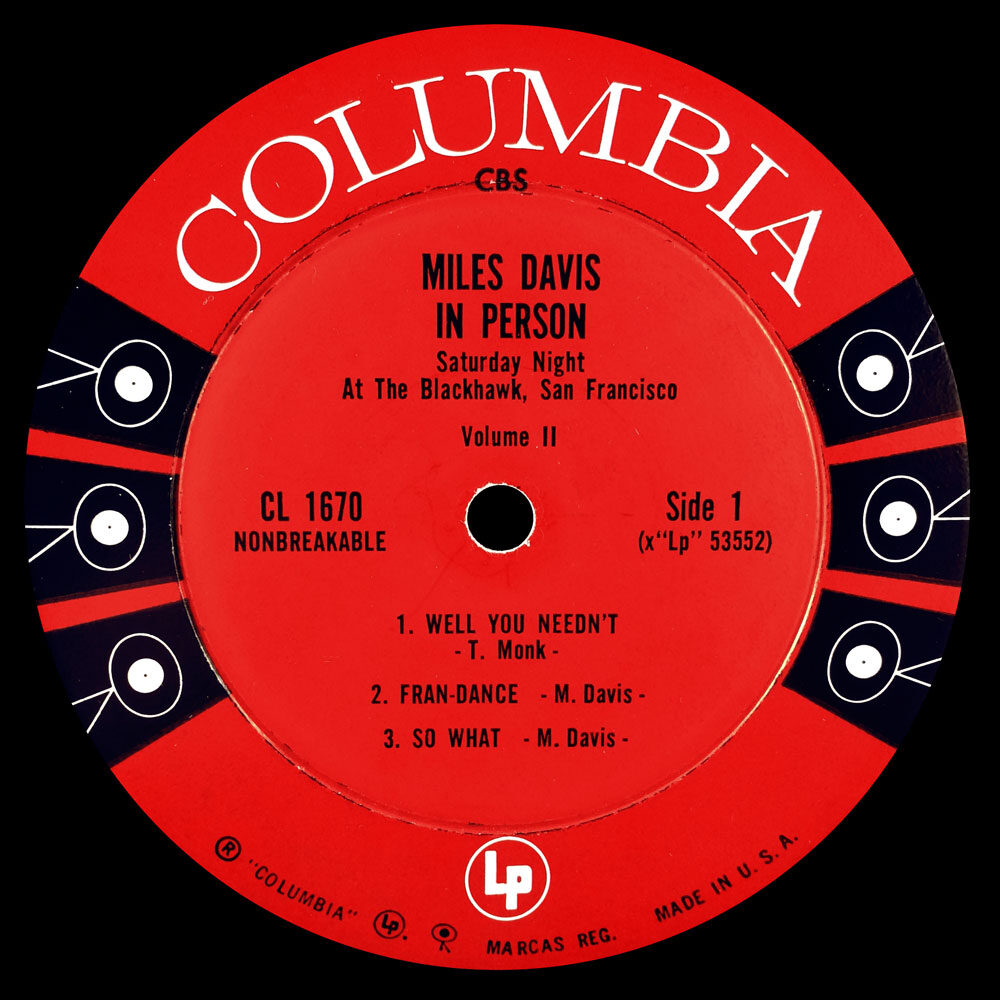
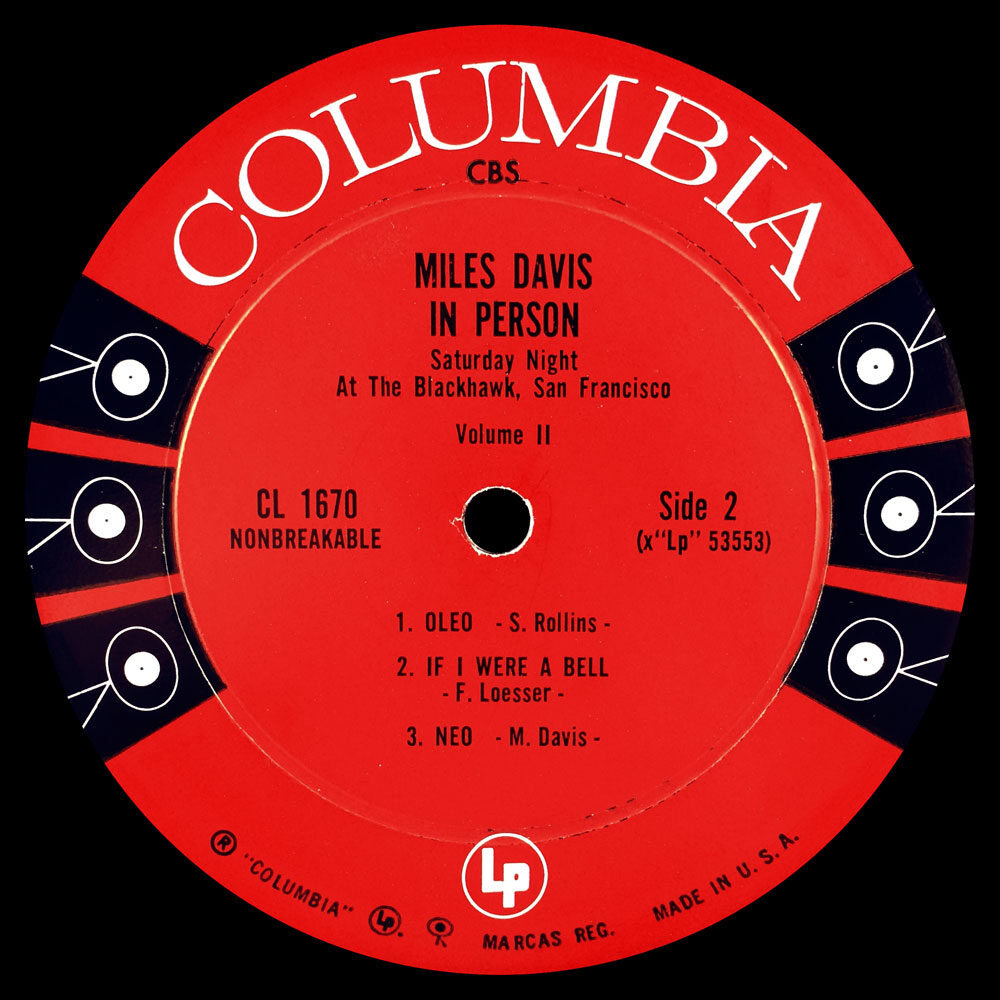
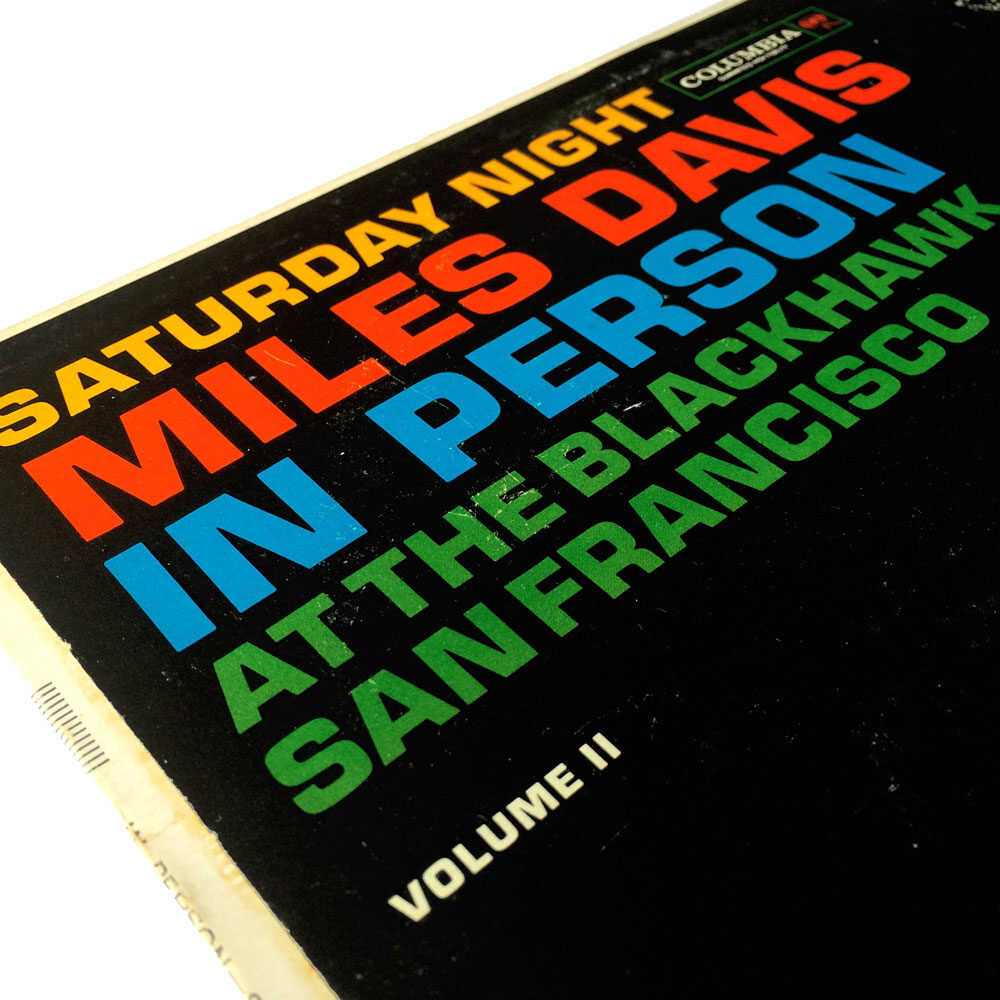
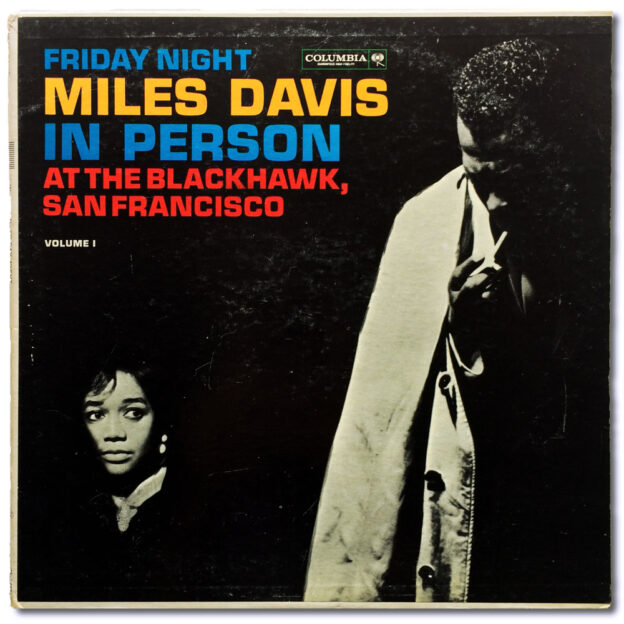
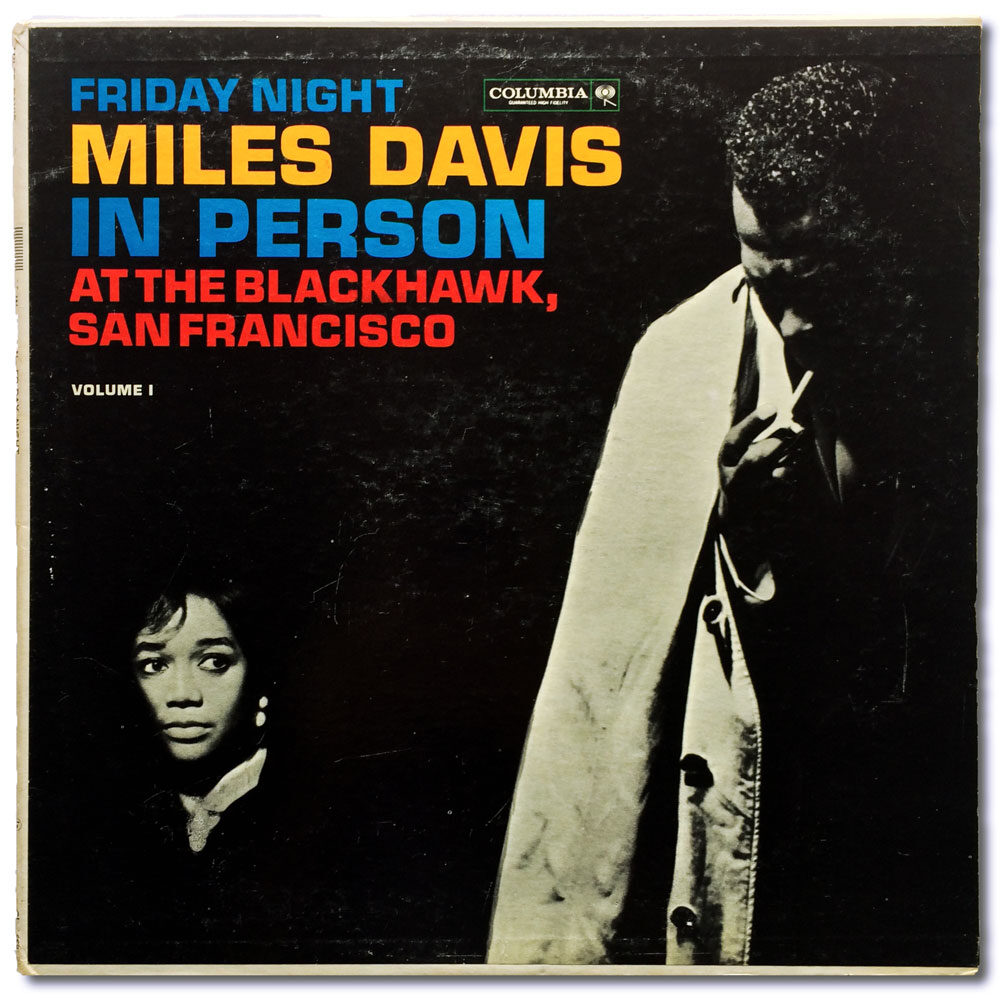
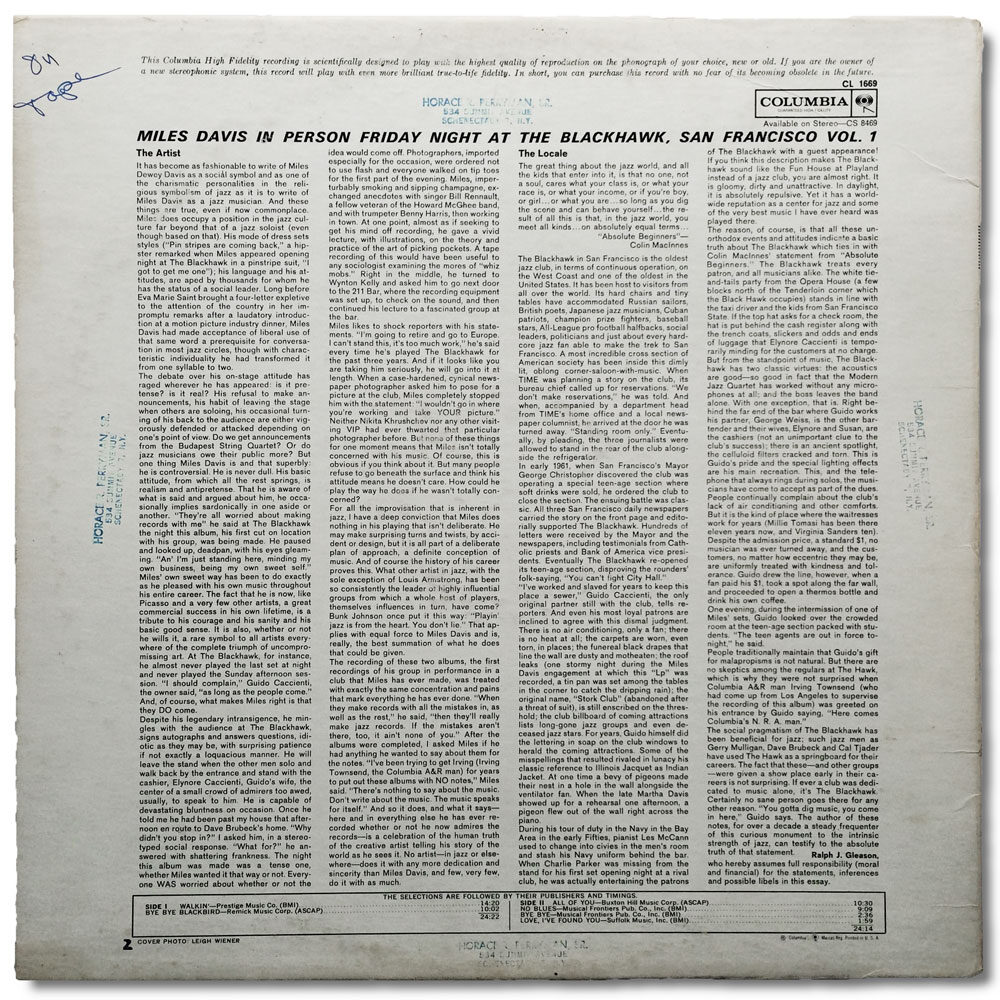
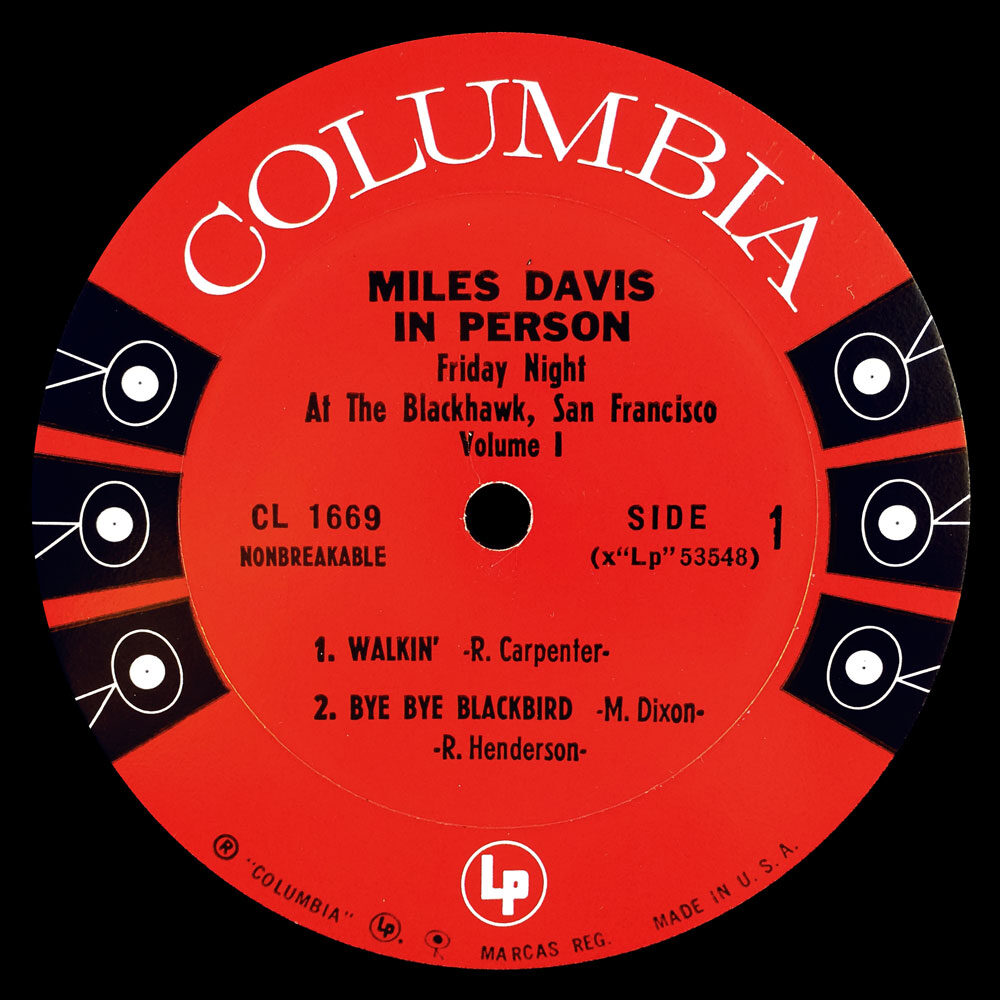
Vinyl Spotlight: Miles Davis In Person at the Blackhawk (Columbia 1669/1670) “6-Eye” Mono Pressings
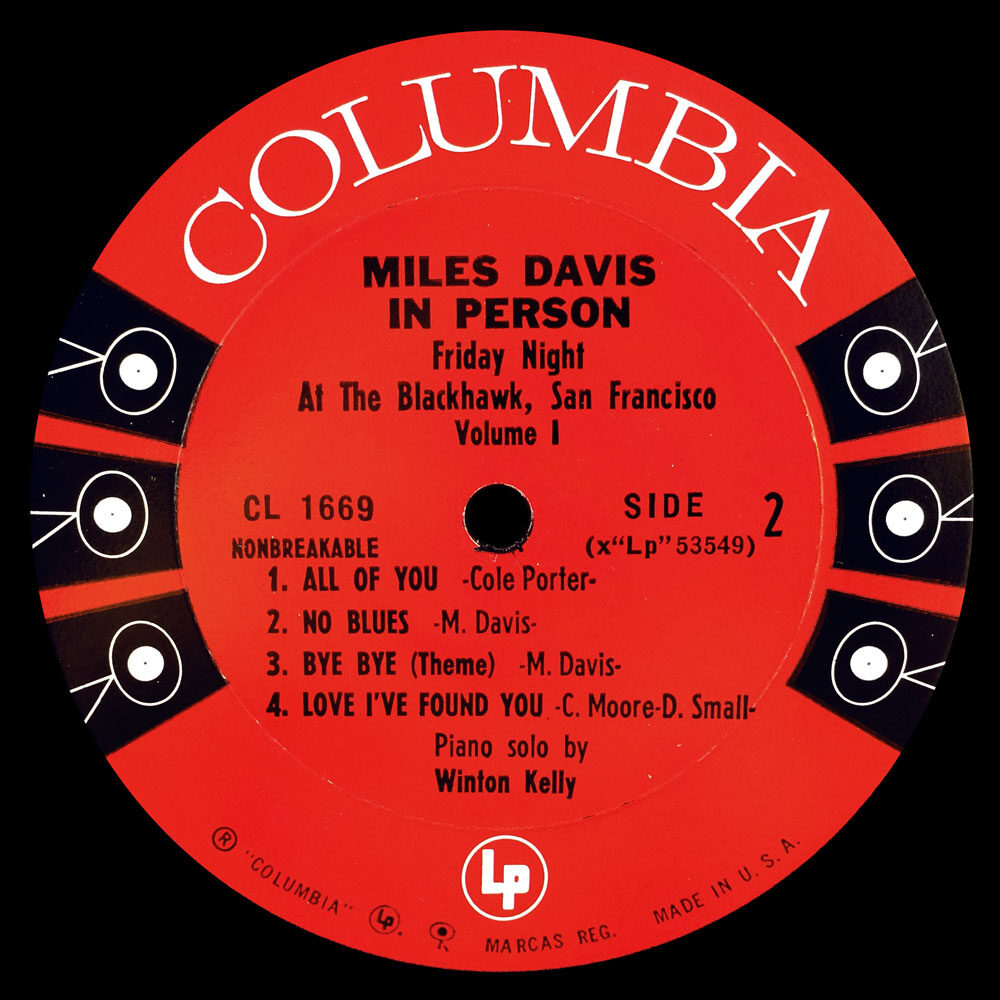
Friday Night (CL 1669):
- Original 1961 mono pressing
- “Six-eye” labels
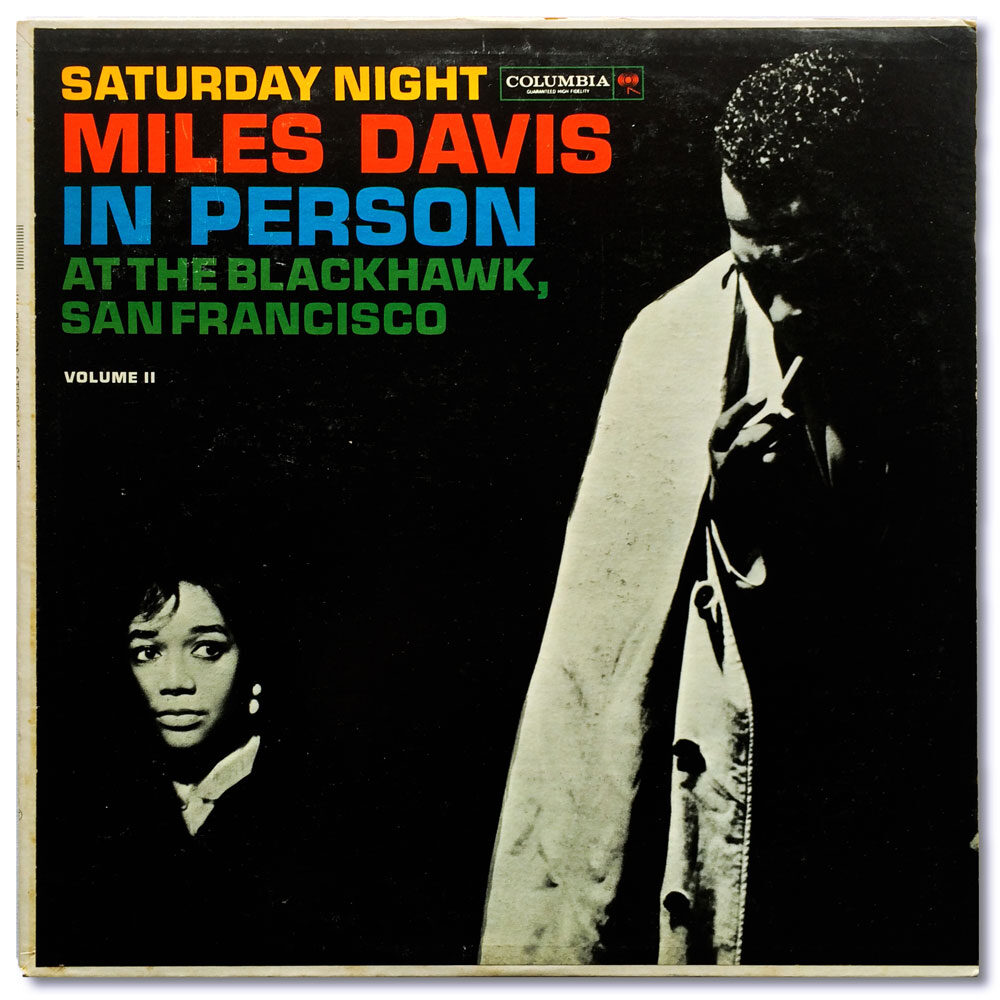
Saturday Night (CL 1670):
- Second mono pressing circa 1961-1962
- “Six-eye” labels
Personnel:
- Miles Davis, trumpet
- Hank Mobley, tenor saxophone
- Wynton Kelly, piano
- Paul Chambers, bass
- Jimmy Cobb, drums
Recorded April 21-22, 1961 at the Blackhawk, San Francisco, California
Originally released September 1961
| 1 | Walkin’ | |
| 2 | Bye Bye Blackbird | |
| 3 | All Of You | |
| 4 | No Blues | |
| 5 | Bye Bye (Theme) | |
| 6 | Love I’ve Found You | |
| 7 | Well You Needn’t | |
| 8 | Fran-Dance | |
| 9 | So What | |
| 10 | Oleo | |
| 11 | If I Were a Bell | |
| 12 | Neo |
Selections:
“Walkin'” (Carpenter)
“So What” (Davis)
My Friday Night copy is considered an original pressing by most collectors but my Saturday Night copy is not due to the “CBS” marking on the labels. This is where I diverge from the record collecting consensus. I would agree that the CBS copy is not a first pressing but I would argue that there’s nothing wrong with referring to it as an “original pressing”. Being as specific as possible seems the honorable thing to do when it comes to selling, but my feeling is that in everyday conversation any copy of an album that would have been released in the era the album was originally released can rightfully be called an original (certainly, “in the era” is open to interpretation). Seeing that my CBS copy of Saturday Night was in all likelihood pressed in either the same year or the year after a first pressing, I don’t hesitate to think of this as an “original pressing”.
Live recording is by and large a more challenging endeavor when compared to the higher degree of control typically obtained in a recording studio. That being said, this Miles Davis album is an exceptional example of a live recording. Every instrument has its own space, even in mono, and the level of detail and accuracy here is a welcome break from the smeared, distorted sound of many live albums. Not only does Jimmy Cobb’s drum kit sound incredible here, his playing has a captivating and energetic sense of forward motion that seems to predict Tony Williams’ inclusion in Davis’ lineup shortly after. These albums also present a rare opportunity to hear how tenor saxophonist Hank Mobley, a mainstay of Blue Note records, holds up under the intense scrutiny of the date’s superstar bandleader.