Tag Archives: Atlantic

Vinyl Spotlight: Tony Fruscella (Atlantic EP-557) Original 45 RPM 7″ EP

Original 45 RPM 7″ pressing circa 1955

Personnel:

  • Tony Fruscella, trumpet
  • Chauncey Welsch, trombone
  • Allen Eager, tenor saxophone
  • Danny Bank, baritone saxophone
  • Bill Triglia, piano
  • Bill Anthony, bass
  • Junior Bradley, drums

“Muy” recorded March 29, 1955
“Metropolitan Blues” recorded April 1, 1955
All selections recorded at Capitol Studios, New York, NY

Selections:

“Muy” (Sunkel)

“Metropolitan Blues” (Sunkel)

Though this seven-inch EP only contains two songs, they are both outstanding picks from an album that shares the same cover art. I had an encounter with an original pressing of the full LP about a year ago. The European seller graded it NM/M- on Discogs and it played with absolutely terrible distortion on the trumpet. When I asked the seller about it he said “the European grading system is different than the U.S.” Anyway, it was unlistenable and I sold it. This EP, on the other hand, sounds great. It wasn’t pressed terribly loud but the vinyl is clean, the music is dynamic, and the top end is crisp. There is a second EP that is meant to match this one with red lettering and I’m on the hunt for that one now.

I won’t review the whole LP here, which is phenomenal (I currently own a digital copy that sounds great and I’m also considering a Japanese “mini-LP” CD). I was surprised to learn from the back of the album jacket that Tom Dowd did not record this. It was recorded by an engineer named Frank Abbey, who I admittedly know nothing about. Abbey gets an even, dry sound — both qualities of which I think are present on most of my favorite jazz recordings.

The music, generally sweet and quiet, was written by Phil Sunkel, another guy I didn’t know about until I started researching this album. He wrote both sides here and seven out of nine songs on the album. I find it especially interesting (and tragic of course) that a relatively lesser-known composer like Sunkel could pen an album of such cohesive quality yet fail to have many more impressive credits to their name.

Fun fact: Tony Fruscella was one of the earliest musicians to record at Rudy Van Gelder’s Hackensack home studio. According to my research, I have him recording there as early as January 30, 1952 for a Bill Triglia session (who plays piano here as well). Another fun fact: I have been through Rudy’s collection of acetates and he still has the acetate from that session, so there’s a good chance that the world will hear it at some point! This would technically be the fifth-oldest recording of Rudy’s we would have.

Vinyl Spotlight: John Coltrane, Coltrane’s Sound (Atlantic 1419) Second “Orange/Purple Label” Mono Pressing

  • Second 1966 mono pressing
  • Orange & purple labels with black fan and “Atlantic” written vertically
  • Non-laminated cover with “NEW YORK, NEW YORK 10023” and “copyright 1966” on back of jacket

Personnel:

  • John Coltrane, tenor & soprano saxophones
  • McCoy Tyner, piano
  • Steve Davis, bass
  • Elvin Jones, drums

“Central Park West”, “Body and Soul”, and “Satellite” recorded October 24, 1960
“Liberia”, “The Night Has a Thousand Eyes”, and “Equinox” recorded October 26, 1960
All selections recorded at Atlantic Records’ 56th Street studio, NYC
Originally released in 1964

1 The Night Has a Thousand Eyes
2 Central Park West
3 Liberia
4 Body and Soul
5 Equinox
6 Satellite
Before I started collecting vintage jazz records, a friend of mine who also happens to be a jazz drummer let me borrow a bunch of jazz CDs to rip to my computer and this was one of them. At the time, I pretty much took all the John Coltrane he had, not having any idea of what was what. But a couple songs on this album, “Central Park West” and “Equinox”, immediately stood out to me, and this has been one of my favorite Trane albums since.

Released after Coltrane had already moved over to Impulse and his contract with Atlantic had expired, Coltrane’s Sound was compiled from three 1960 recording sessions (two in one day on October 24, 1960), which also produced tracks for My Favorite Things and Coltrane Plays the Blues. (Fun fact: I’ve heard that Coltrane disapproved of this cover art, believing that the way it made his face look like it was melting was morbid.) The separation on stereo versions of this album is typical of that on all the Atlantic Coltrane albums: an empty center and all instruments panned either hard left or right. After ripping this album from my friend but before I acquired this copy, I got a hold of the same 1999 stereo CD my friend had, and the extreme separation made me especially interested in hunting down an original mono pressing. A copy evaded me for years (stereo originals of this album seem to outnumber mono copies by a wide margin), but a couple months ago I was elated to find this copy at a local shop.

I had a bit of fun determining the vintage of this pressing. Almost convinced that it was a first pressing, I noticed a copy for sale on eBay that appeared to sport a laminated cover. Upon further inspection I noticed that, despite the labels being identical on both copies, the bottom of the eBay jacket read, “NEW YORK 23, NEW YORK”, followed by “copyright 1964”. My copy is therefore clearly a second pressing, but what’s to complain about when the mastering is identical, my copy is in top condition, and I paid the price of a sealed reissue?

As previously stated, “Central Park West” and “Equinox” are the moody standouts here. The former, a sweet ballad written by Coltrane and played with soprano sax, conjures imagery of a romantic couple strolling the namesake Upper West Side street on a cloudy autumn day. The latter is a blues with a dark, foreboding underpinning whose happier “B” section ultimately gives way to solos of a more playful nature. These two songs are really the sole reason I hold this album in such high regard. The rest of the tracks don’t appeal to me enough to play this album all the way through every time (I’ve never been a big fan of the standard “Body and Soul”), though the controlled chaos of the pianoless trio on “Satellite”, which serves as one of numerous Atlantic-era predictors of Trane’s future direction at Impulse, has steadily grown on me.

Vinyl Spotlight: John Coltrane, My Favorite Things (Atlantic 1361) Second “Black Fan” Mono Pressing

  • Second mono pressing circa 1962-1966
  • Orange & purple label
  • Black fan logo on both sides
  • Side 1/2 matrix: 11755-A “AT” / 11756-B “AT”

Personnel:

  • John Coltrane, soprano & tenor saxophones
  • McCoy Tyner, piano
  • Steve Davis, bass
  • Elvin Jones, drums

“My Favorite Things” recorded October 21, 1960
“Summertime” recorded October 24, 1960
“Everytime We Say Goodbye” and “But Not for Me” recorded October 26, 1960
All selections recorded at Atlantic Records’ 56th Street studio, NYC
Originally released March 1961

1 My Favorite Things
2 Everytime We Say Goodbye
3 Summertime
4 But Not For Me

Selection: “My Favorite Things” (Rodgers-Hammerstein)

At the tender age of twenty, my introduction to jazz came by way of a cassette tape that the guitarist in my band let me borrow. Side one was Kind of Blue and side two was My Favorite Things. At that time, the tape was little more than something I put on when I wanted to relax, but both albums have stuck with me and both have endured as crucial parts of my music collection to this day.

My Favorite Things is a magical album that is up at the top of my favorite Coltrane records. Those of you who read along here on a regular basis have probably picked up on the fact that I often favor “quieter” sounding jazz. My Favorite Things is no exception. Coltrane plays the soprano saxophone with great passion but it’s never overbearing. I also appreciate the accompaniment of Elvin Jones and McCoy Tyner, a brave young combo playing with less abandon on the eve of their leader’s ascent into the heavens of the avant-garde.

This record has a really unique, sweet sound. Engineer Tom Dowd had a way of making pianos sound soft and even ghostly with just a touch of tube amplifier overdrive. We heard that sound on Giant Steps for Tommy Flanagan and we hear it again here with Tyner, a most welcome coloring of the piano’s sonic palette.

Before I stole this original mono pressing on eBay in a weeknight-ending auction, I had heard this album in stereo my entire life. I’m not one to overhype differences in various versions of an album usually but hearing the original mono pressing of this album for the first time was profound. None of these four brilliant musicians are competing to be heard here, and the mono presentation succeeds at unifying the music without sacrificing each player’s individuality. As warm as this recording sounds even in its digital stereo incarnation, this pressing accentuates that. It’s one of the most dramatically different listening experiences I’ve had comparing a record to its digital counterpart, sonically making this one of my favorite LPs to listen to.

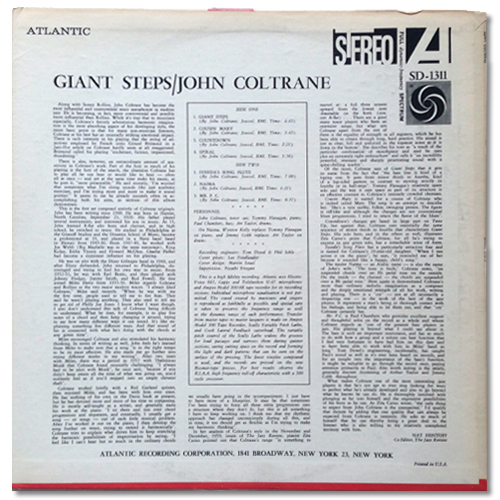
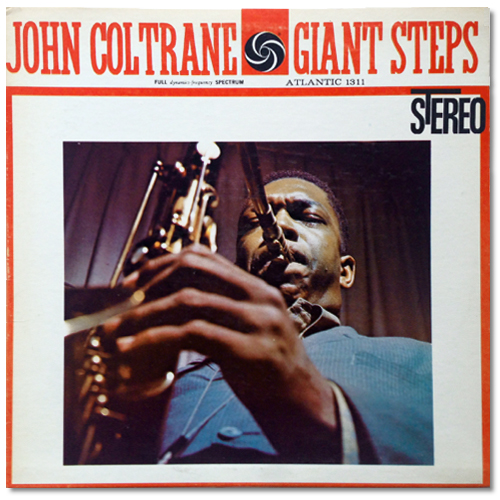
Vinyl Spotlight: John Coltrane, Giant Steps (Atlantic 1311) Mono vs. Stereo Edition

  • Fifth mono pressing circa 1966
  • Orange & purple label
  • Box logo side 1; black fan logo side 2
  • Side 1/2 matrix: 11637-A “AT” / 11638-A “AT”

VERSUS!
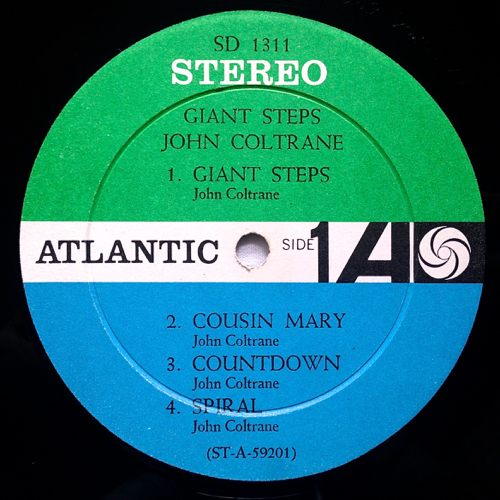
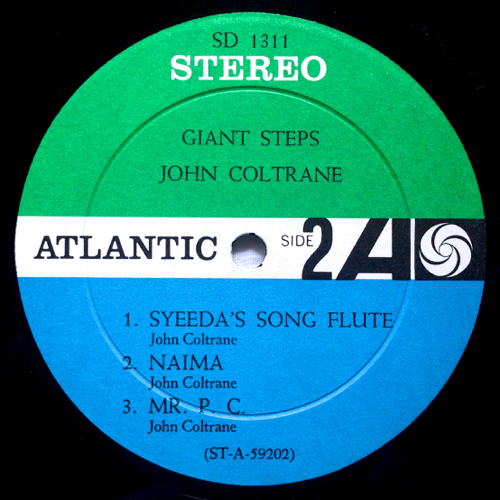
  • Second stereo pressing circa 1960-1962
  • Green & blue label
  • Deep groove on both sides
  • White fan logo on both sides
  • Side 1/2 matrix: AVCO ST-A-59201 / AVCO ST-A-59202

Personnel:

All but “Naima”:

  • John Coltrane, tenor saxophone
  • Tommy Flanagan, piano
  • Paul Chambers, bass
  • Art Taylor, drums

“Naima” only:

  • John Coltrane, tenor saxophone
  • Wynton Kelly, piano
  • Paul Chambers, bass
  • Jimmy Cobb, drums

All but “Naima” recorded May 4-5, 1959; “Naima” recorded December 2, 1959
All selections recorded at Atlantic Records’ 56th Street studio, NYC
Originally released January 1960

1 Giant Steps
2 Cousin Mary
3 Countdown
4 Spiral
5 Syeeda’s Song Flute
6 Naima
7 Mr. P.C.
Behold! Deep Groove Mono offers up its first ever head-to-head comparison. Here we take a listen to vintage mono and stereo pressings of the classic John Coltrane album Giant Steps. I had the mono LP first, but I liked the original stereo CD so much that when I saw this stereo LP for a great price I couldn’t pass it up.

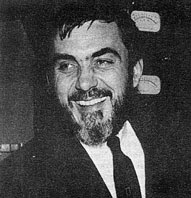
Tom Dowd

Giant Steps was recorded at Atlantic’s infamous 56th Street “office studio” under the supervision of legendary recording engineer Tom Dowd. According to the album’s liner notes, it was recorded to an Ampex 300-8R eight-track tape recorder, the results of which are two distinct i.e. ‘dedicated’ mixes, meaning the mono mix is not a ‘fold-down’.

The mono: Coltrane is front and center in this dark, bass-y mix. Trane and pianist Tommy Flanagan sit in good relationship to each other, though Paul Chambers’ bass doesn’t have a whole lot of definition, and Art Taylor’s drums get a bit buried behind Coltrane’s screaming presence.

The stereo: No instruments are presented center here, which for better or worse takes something away from Trane’s presence. (I doubt that Dowd was not yet privy to the theory of the ‘phantom center image’, and I can’t help but wonder why he was still not utilizing the center at this time.) Chambers’ bass still lacks good definition, though the spread gives Taylor more room to cut through. My first version of this album was the original 1990 stereo CD and I always appreciated how well I could hear the nuances in Taylor’s drumming in the stereo mix (I especially love the detail of the ride cymbal).

Head-to-head: On speakers, both mixes sound quite full, but in headphones the stereo version’s wide spread and its emphasis on the bass and treble leaves the mono feeling quite thin. However, Coltrane commands more presence in the mono mix, not only because he has been shifted from the far left to the center, but the mono also seems to favor the midrange, where the saxophone’s timbre is largely defined. This is probably why I feel that Coltrane sounds a bit muffled in the stereo mix when compared to the mono.

The verdict: Through speakers, both mixes sound great to me and I’d be happy to own either copy if I didn’t have a choice. But while I can only assume that most die-hard Coltrane fans will prefer the leader’s stronger presence in the mono mix, I personally love hearing all the nuances of Taylor’s kit in the stereo mix through headphones, which is probably why this is my favorite listening experience overall.

To play us out, I have included “Naima” as an added bonus because it is simply one of my favorite ballads of all-time. I chose the mono version because I find that the tune’s sparse composition works better without all the ‘empty space’ inherent in the stereo mix.