Tag Archives: 45 RPM

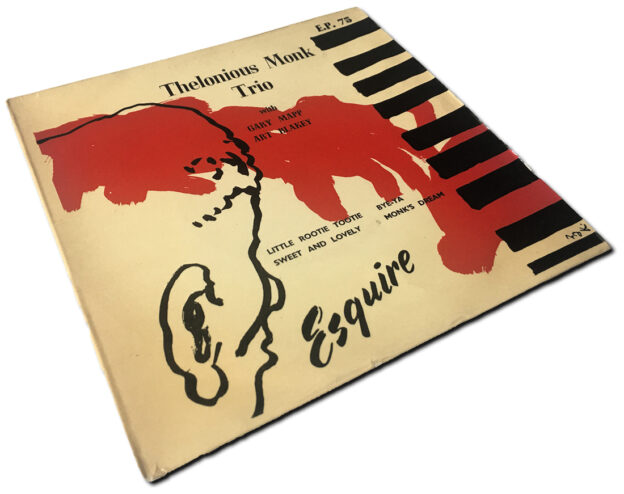
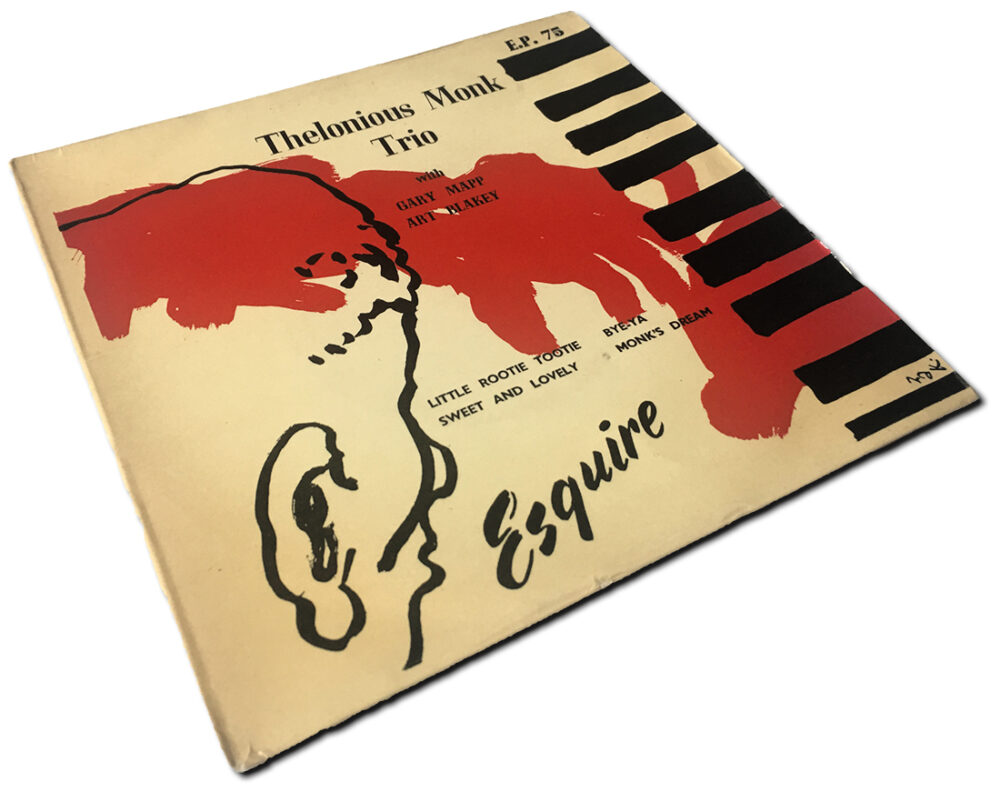
Vinyl Spotlight: Thelonious Monk Trio (Esquire EP-75) Original 45 RPM 7″ EP

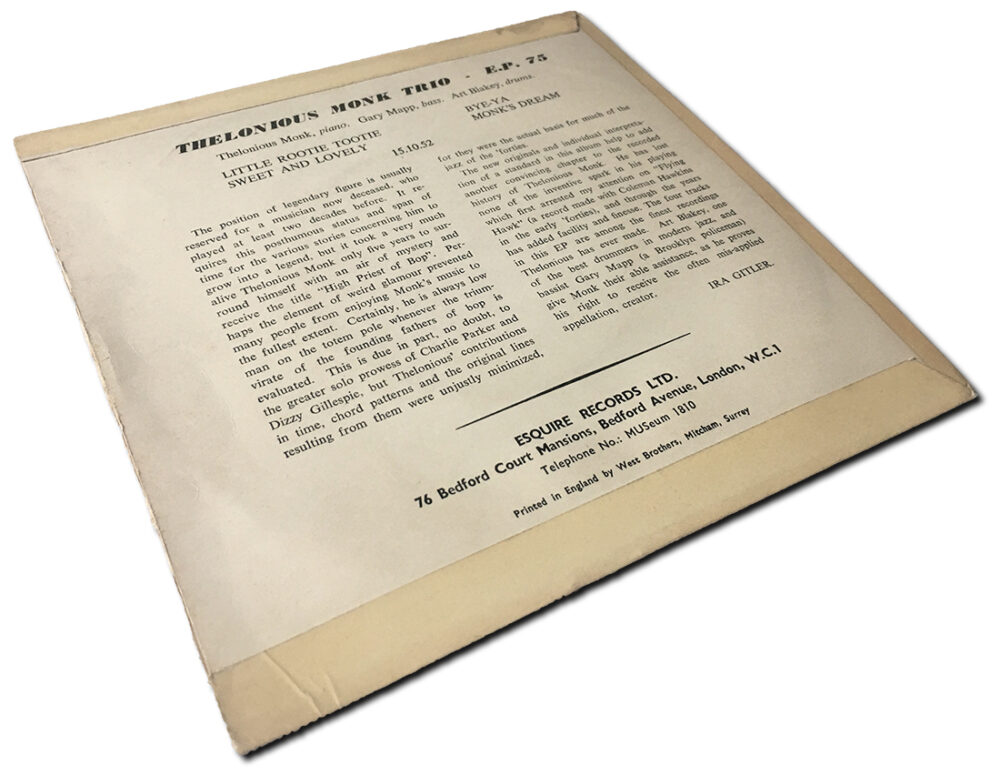
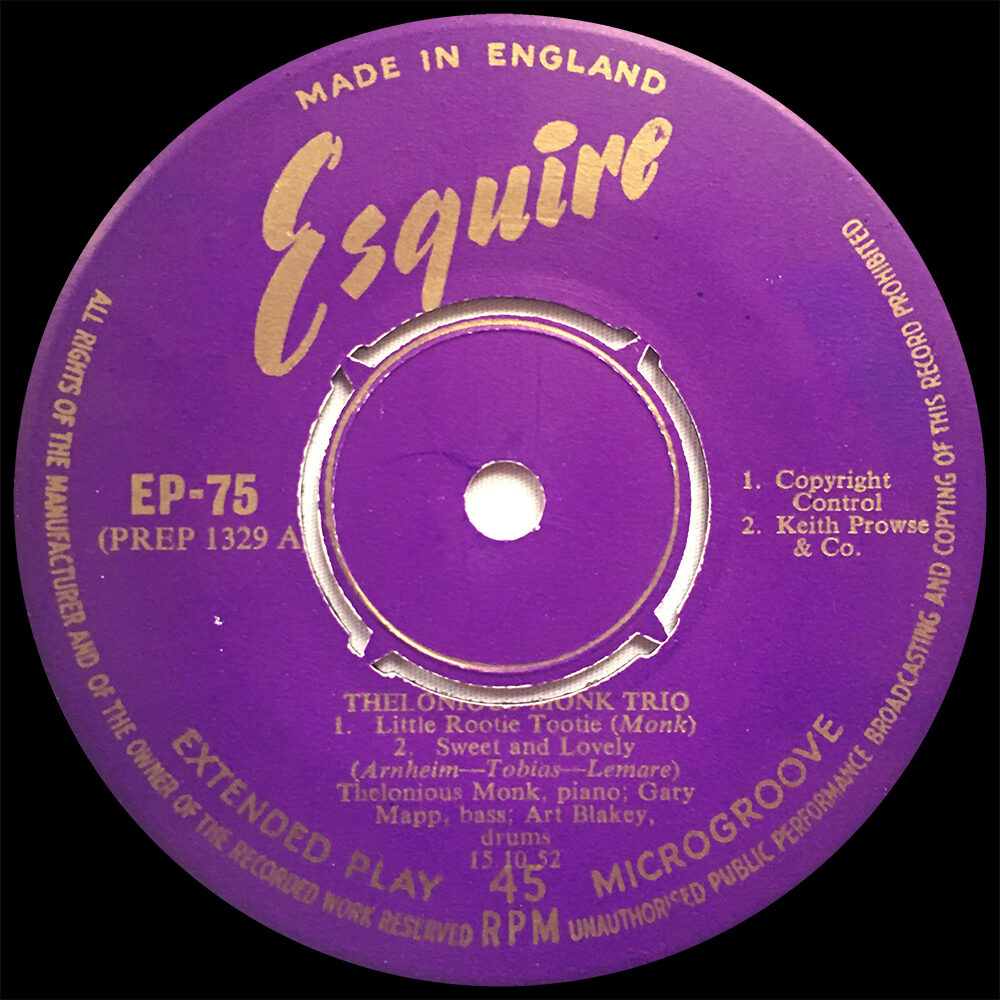
Original 45 RPM 7″ UK pressing circa 1954

Personnel:

  • Thelonious Monk, piano
  • Gary Mapp, bass
  • Art Blakey, drums

Recorded October 15, 1952 at WOR Studios, New York, NY

Selection: “Monk’s Dream” (Monk)

A couple years ago I switched up my philosophy of collecting, moving away from chasing expensive, high-demand vintage jazz LPs and working harder to find less expensive, less sought-after records that managed to bring me an equal amount of joy, if not more. This is partly what led me to Esquire, in addition to their sterling reputation for producing quality vinyl. The British label has been bubbling under for several years, perhaps gaining in popularity due to the internet, yet to some extent it remains off the radar, at least it seems that way here in the states. In other words, the average foaming-at-the-mouth amateur collector isn’t rushing to Discogs to look for Saxophone Colossus on Esquire; they’re going for the original U.S. pressing.

Recorded in 1952, the four sides on this Monk EP were originally issued as two 78 RPM shellac disks and also compiled on a Prestige ten-inch LP, catalog number 142, with the original cover simply reading Thelonious. I owned a copy of the latter at one point: what a gorgeous cover, and at the same time what hissy, wimpy-sounding mastering. Last year when I attended the Jazz Record Collectors’ Bash in New Jersey for the first time, I managed to meet producer and author Bob Porter, who confirmed that the first round of Prestige ten-inchers were generally shoddy. Bob told me a story of a radio jock in Manhattan dialing up Prestige to demand they continue sending 78s to the station in place of the ten-inch LPs.
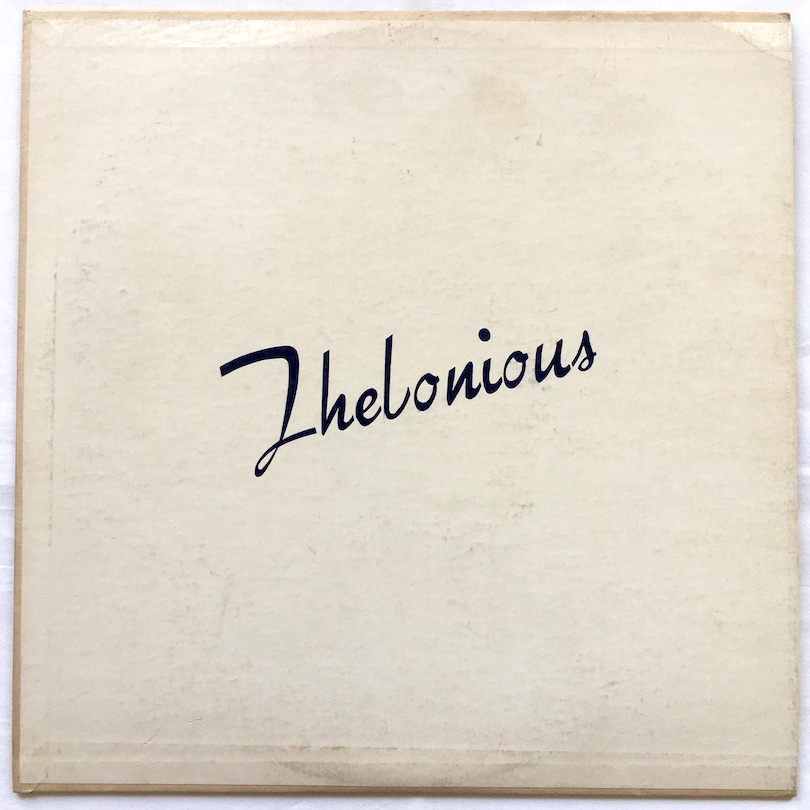
The original ten-inch pressing of PRLP-142

Though the cymbals don’t cut through quite as much as they do on my 2000 Monk Prestige CD box, this Esquire EP is of a much higher fidelity than the original ten-inch. Do I feel that the faster speed of 45 revolutions per minute creates a significant bump in fidelity? Maybe…it would be hard to prove in this case I think. I also find it fairly neat that this EP perfectly compiles all four tracks from Monk’s inaugural recording session with Prestige.

Monk biographer Robin D.G. Kelley has noted that Monk had no choice but to use an old, out-of-tune piano for this session. I can hear the results of that now but I’m not enough of a musician to have heard it before I read Kelley’s book. Perhaps ironically, I think the faulty piano complements Monk’s creaky style of playing perfectly here.

Of all Monk’s work, his Prestige catalog hits a particular sweet spot: hungry performances recorded with fidelity that for the most part improves on the pianist’s previous studio sessions for Blue Note. In 1952 most modern jazz fans would have been unable to hear Monk’s newest compositions played live by their composer in the jazz clubs of New York City. As a result, they got to hear three Monk originals for the very first time with the release of these sides. On “Little Rootie Tootie”, the discordant stomping of keys comprising the chorus screams for the spotlight and is exemplary of a generally raucous session. Though this type of device may sound a little contrived to me today — far from the intricacy of “Monk’s Dream”, for example — it surely had the shock value to entice me back when I was first getting into Monk.

It’s worth noting that the three remaining songs from this session all resurfaced in 1963 on Monk’s first Columbia LP, Monk’s Dream. Like most jazz fans I’m sure, I was introduced to these songs (two originals and one standard) through the Columbia release. If one were to argue that the original Prestige recordings are a more authentic documenting of Monk’s work, it would then be a tragedy that so many jazz fans are introduced to these songs by way of the less aggressive Columbia LP. Aside from the fact that the Prestige session preceded the Columbia sessions by ten years, my personal feeling is that the band’s rawer delivery for Prestige does a better job of personifying Monk.
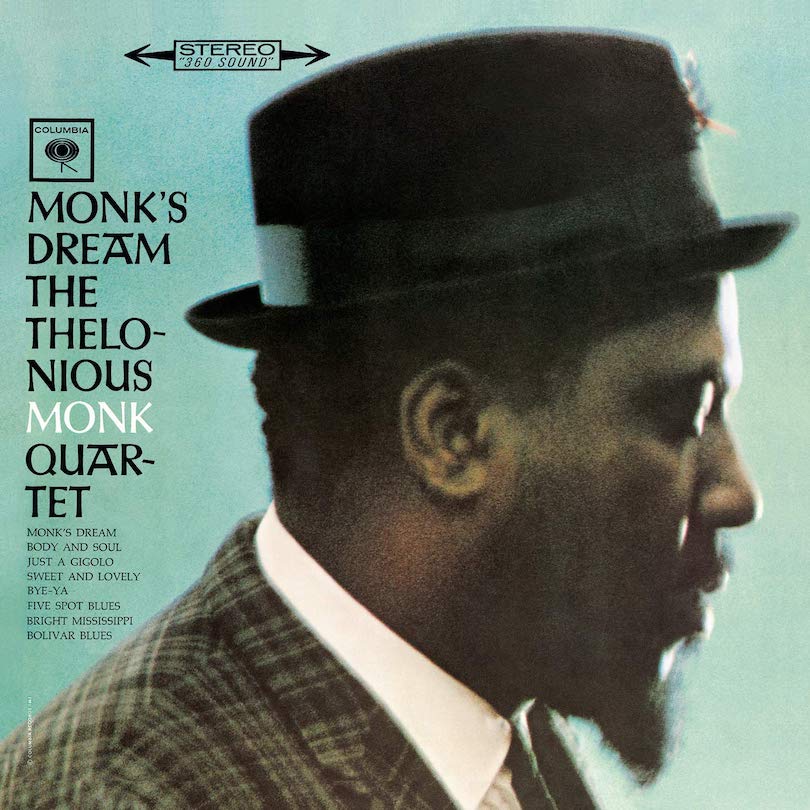
Monk’s first release for Columbia Records

That being said, when I heard the Prestige versions for the very first time, I think I probably still preferred the Columbia versions. Perhaps the former was a little too raw for me at first. For example, I definitely preferred the Columbia version of “Bye-Ya” and Frankie Dunlop’s straight-ahead swing over Art Blakey’s calypso beat on the Prestige version. But Blakey’s dirty, overly-compressed ride cymbal crashes and thunderous tom-tom hits have grown on me.

On the Columbia album Monk gives us a rather gentle reading of “Monk’s Dream”, and the dynamic, state-of-the-art quality of the Columbia recording further enhances this softer feel. This starkly contrasts with the Prestige version, where Monk plays more (dissonant) notes and is more unhinged. Again I was taken aback by this less harmonious sound initially, but over time I have come to adore it. Sandwiched between the two heads are two choruses of Monk soloing, and the way Monk flips the B-section at both passes demonstrates the pianist’s mastery of rhythm. In the first, Monk winds up with a repetitive trinkling of adjacent keys only to create an impactful sense of resolve when he brings the A-section back in smack on the “one”. The next time around Monk uses a similar motif, building us up with an ascending Chopin-esque run then landing with a swinging return to the “A”.
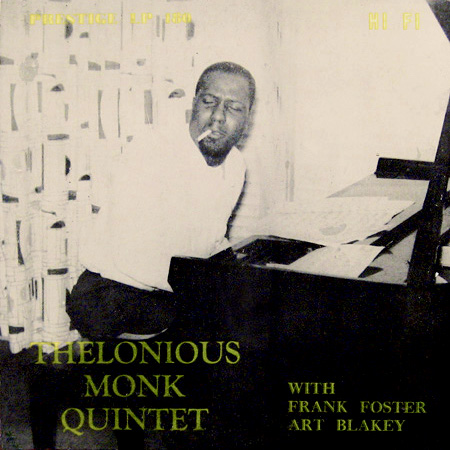
This is the Monk I think of when I hear these sides: In the zone, raw, and unfiltered

Monk’s reading of “Sweet and Lovely”, a less obvious standard with publishing dating back to 1931, rounds things out. Though the Prestige version is again packed with harmonic dissonance, it’s the moment on the record where everything settles down a little and the listener gets a much-deserved rest.

Typical of Esquire, and as we have now seen more than once here on DG Mono, the album art for this EP is sublime. Enjoy the audio clip and don’t sleep on Monk’s Prestige years!
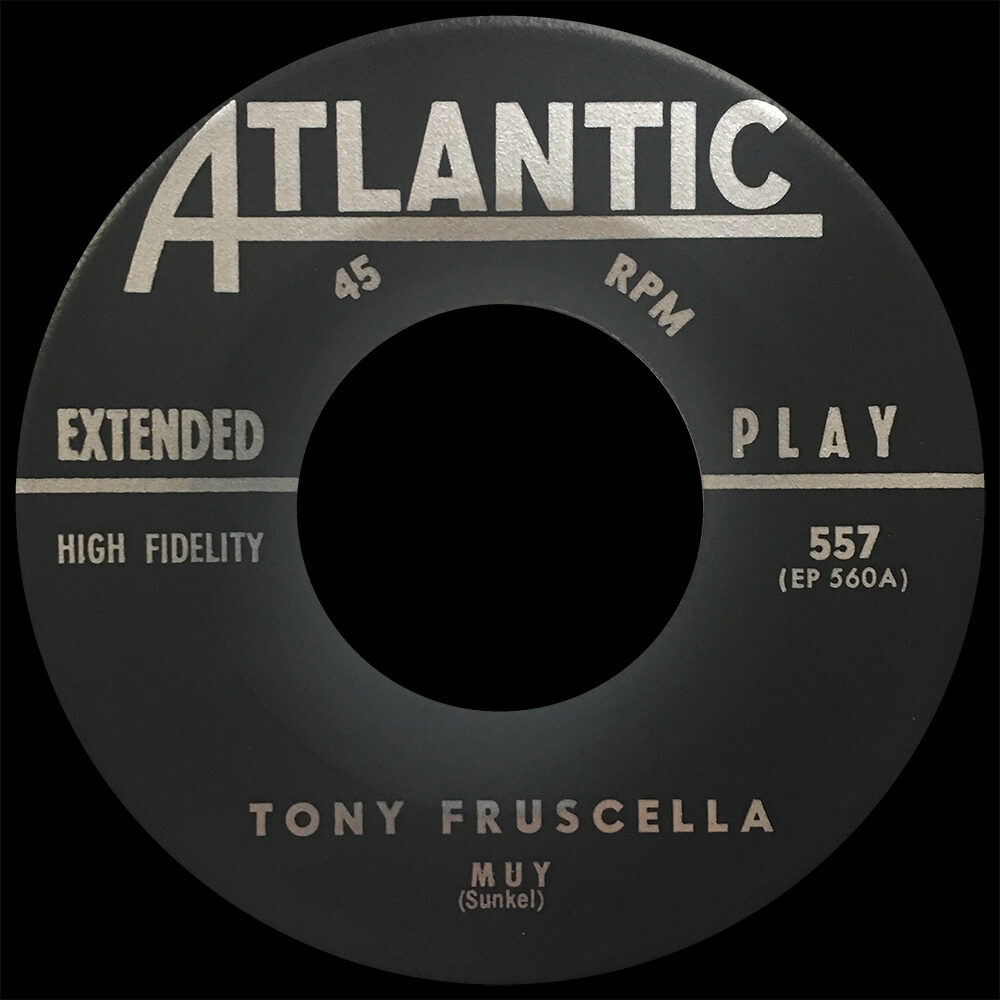
Vinyl Spotlight: Tony Fruscella (Atlantic EP-557) Original 45 RPM 7″ EP

Original 45 RPM 7″ pressing circa 1955

Personnel:

  • Tony Fruscella, trumpet
  • Chauncey Welsch, trombone
  • Allen Eager, tenor saxophone
  • Danny Bank, baritone saxophone
  • Bill Triglia, piano
  • Bill Anthony, bass
  • Junior Bradley, drums

“Muy” recorded March 29, 1955
“Metropolitan Blues” recorded April 1, 1955
All selections recorded at Capitol Studios, New York, NY

Selections:

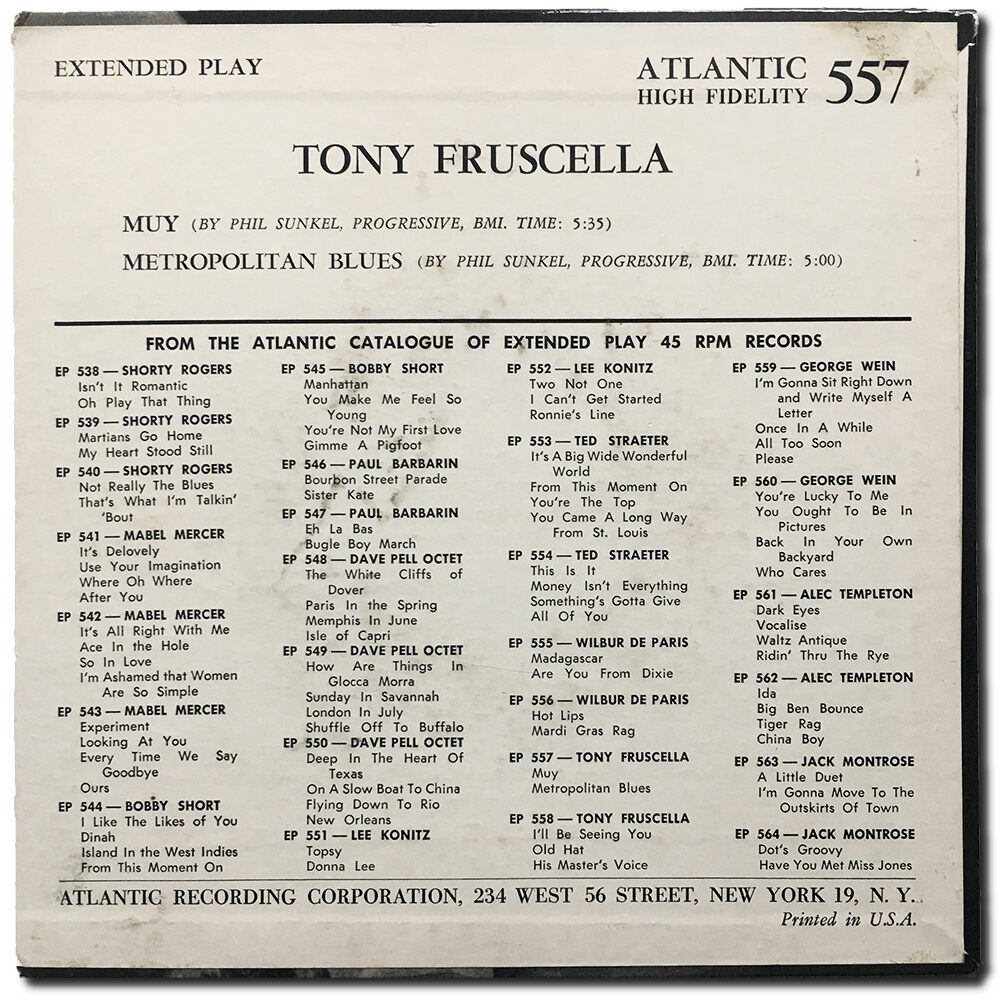
“Muy” (Sunkel)

“Metropolitan Blues” (Sunkel)

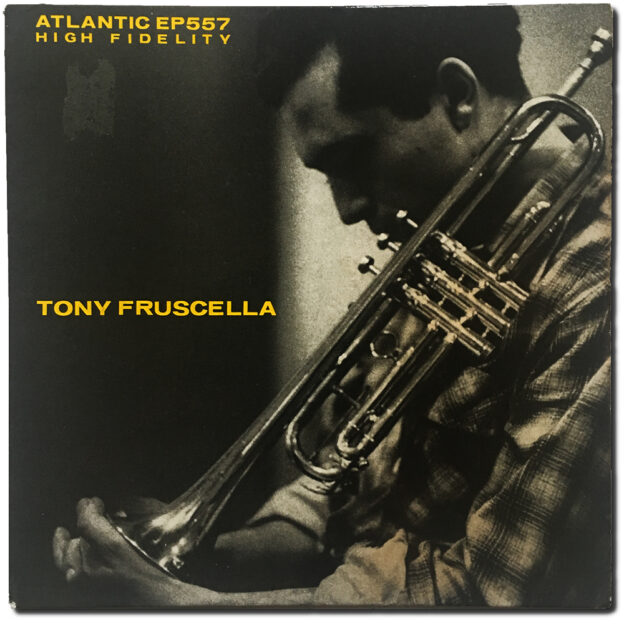
Though this seven-inch EP only contains two songs, they are both outstanding picks from an album that shares the same cover art. I had an encounter with an original pressing of the full LP about a year ago. The European seller graded it NM/M- on Discogs and it played with absolutely terrible distortion on the trumpet. When I asked the seller about it he said “the European grading system is different than the U.S.” Anyway, it was unlistenable and I sold it. This EP, on the other hand, sounds great. It wasn’t pressed terribly loud but the vinyl is clean, the music is dynamic, and the top end is crisp. There is a second EP that is meant to match this one with red lettering and I’m on the hunt for that one now.

I won’t review the whole LP here, which is phenomenal (I currently own a digital copy that sounds great and I’m also considering a Japanese “mini-LP” CD). I was surprised to learn from the back of the album jacket that Tom Dowd did not record this. It was recorded by an engineer named Frank Abbey, who I admittedly know nothing about. Abbey gets an even, dry sound — both qualities of which I think are present on most of my favorite jazz recordings.

The music, generally sweet and quiet, was written by Phil Sunkel, another guy I didn’t know about until I started researching this album. He wrote both sides here and seven out of nine songs on the album. I find it especially interesting (and tragic of course) that a relatively lesser-known composer like Sunkel could pen an album of such cohesive quality yet fail to have many more impressive credits to their name.

Fun fact: Tony Fruscella was one of the earliest musicians to record at Rudy Van Gelder’s Hackensack home studio. According to my research, I have him recording there as early as January 30, 1952 for a Bill Triglia session (who plays piano here as well). Another fun fact: I have been through Rudy’s collection of acetates and he still has the acetate from that session, so there’s a good chance that the world will hear it at some point! This would technically be the fifth-oldest recording of Rudy’s we would have.

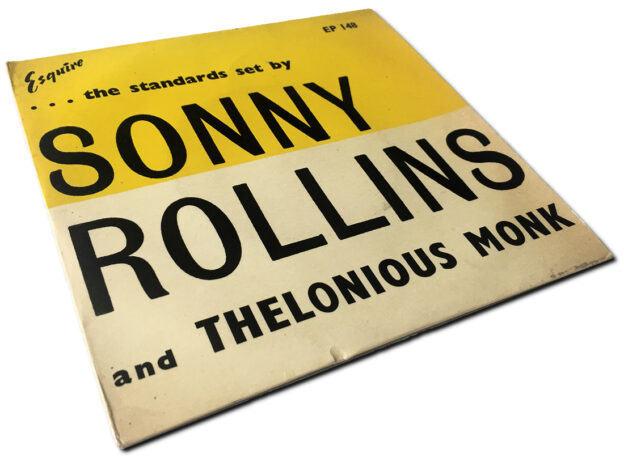
Vinyl Spotlight: Sonny Rollins Quartet (Esquire EP-148) Original 45 RPM 7″ EP

Original 45 RPM 7″ UK pressing circa 1955
Recorded October 25, 1954 at Van Gelder Studio, Hackensack, New Jersey

Selection: “I Want to Be Happy” (Caesar-Youmans)

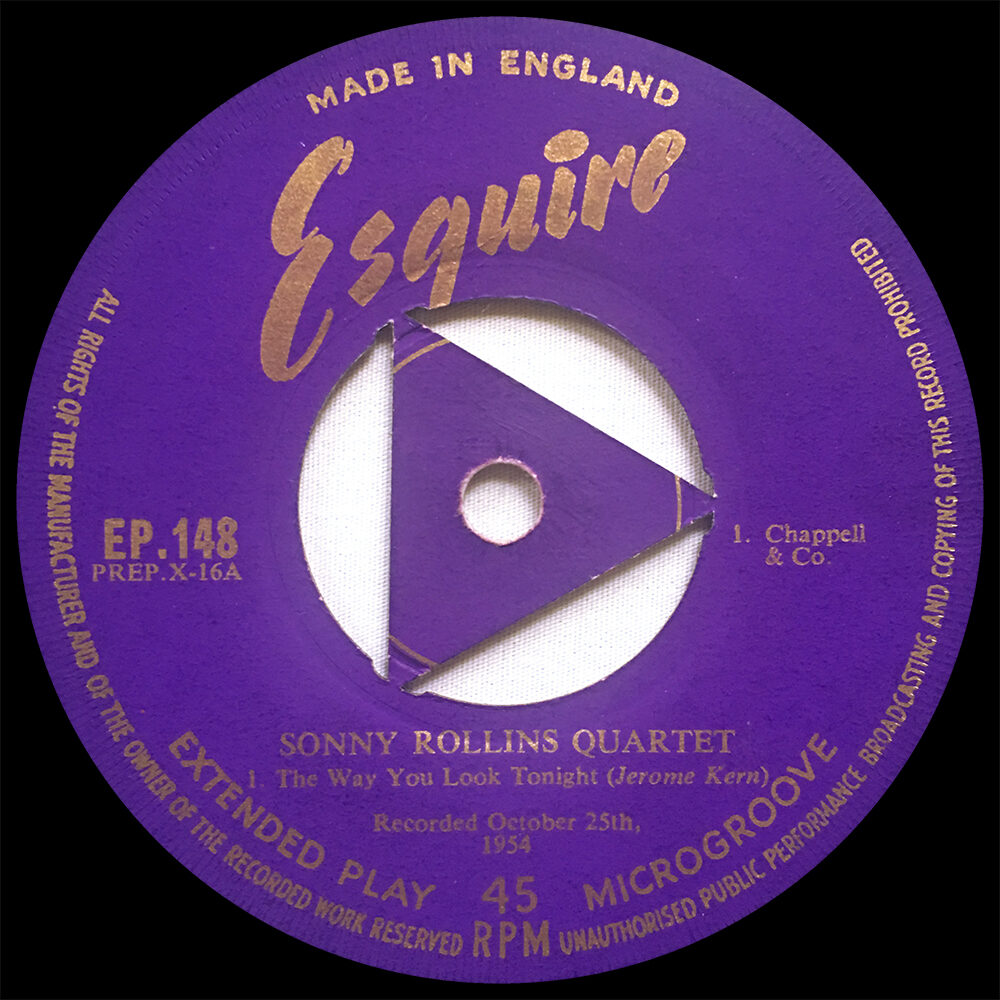
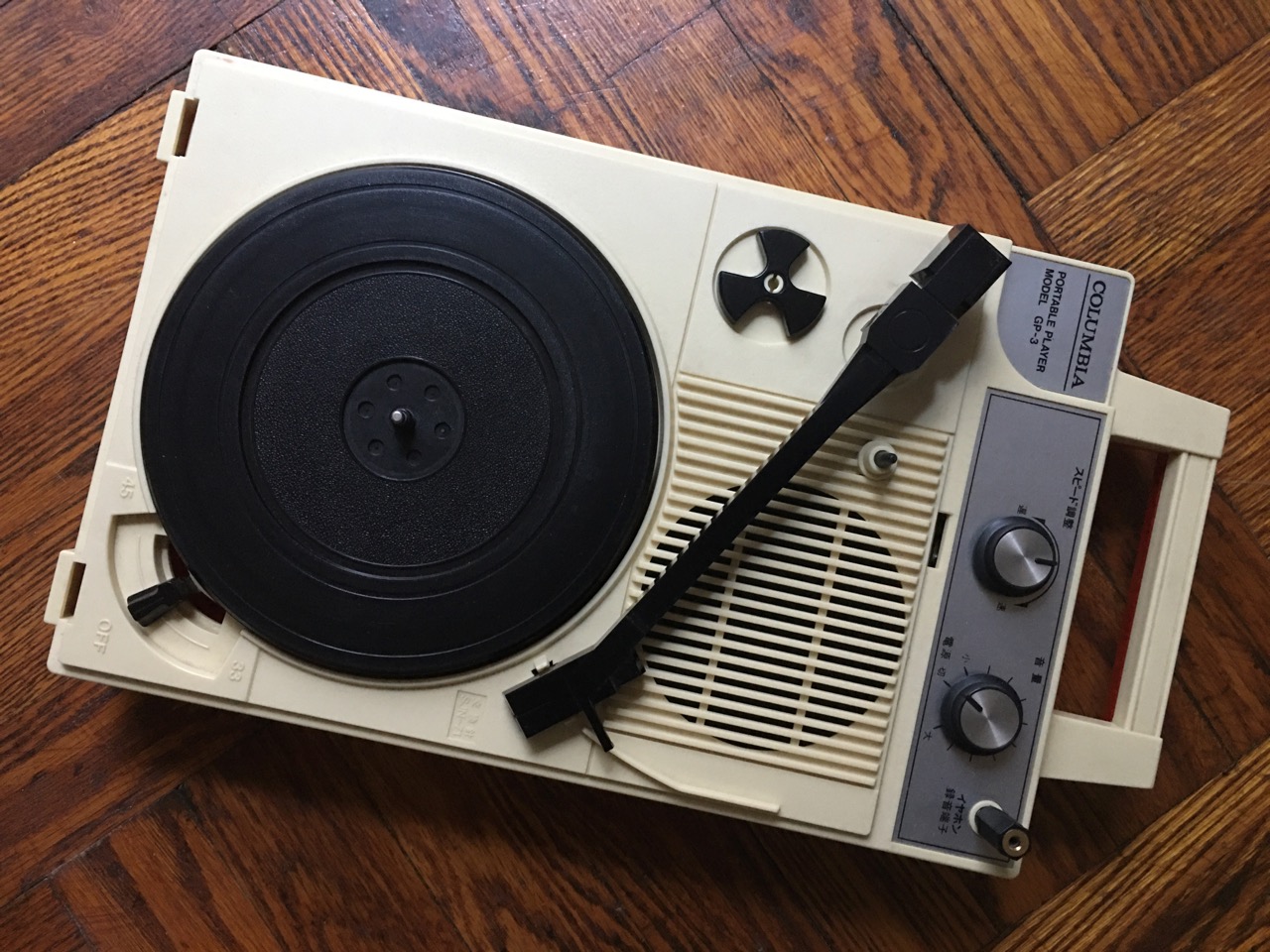
Last spring I got a Columbia GP-3, the workhorse portable record player made in Japan that has been serving beatdiggers and the like for decades. Finances were good at the time and I had been trying to find ways to relax and enjoy life more. Since I had always wanted one of these, I didn’t overthink it and just bought it. Lo and behold, a couple months later a friend visiting from Europe got me back into 45s, and as we hopped from shop to shop in Brooklyn last summer, the GP-3 proved invaluable. It allowed us to easily preview records we were otherwise unfamiliar with all while avoiding the complete takeover of a store listening station.

The Columbia GP-3 portable record player

All the 45s I was buying at that point were doo-wop, rhythm & blues, and rock & roll. Most of the records I proudly consider part of my personal collection, but I was also simultaneously investing in a set of records I could use to get back into DJing. Jazz didn’t necessarily fit into the latter category so I was passing it over when I saw it in the bins. But then I realized how fun it would be to take my GP-3 to the park or bring it along when I travel. To this end, I became more alert to the presence of jazz 45s while shopping both in person and online.

Remember that Esquire Monk ten-inch I posted about a few months ago? While conducting general research on Esquire titles around the time I acquired that record, I decided it might be fun to have some Monk on 45. Then I stumbled upon this title and its glorious cover.

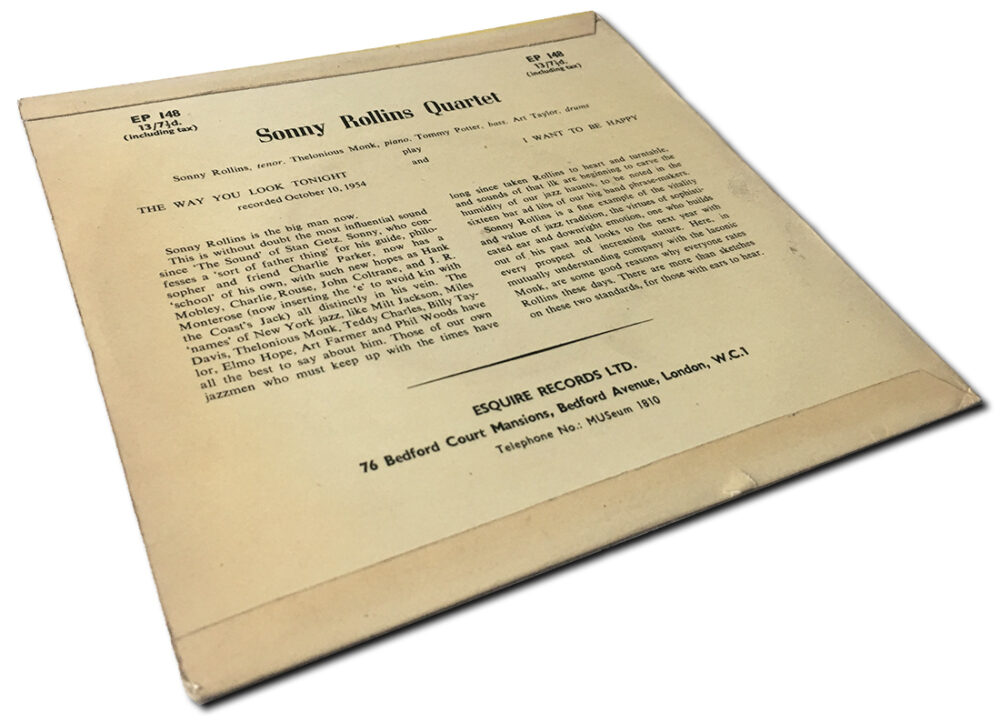
The two songs on this British extended play or “E.P.” first appeared in the U.S. most likely in late 1954 or early 1955 on Prestige catalog number 190, a ten-inch long-play featuring Sonny Rollins and Thelonious Monk. A couple years later the songs would resurface on Prestige 7075, this time a twelve-inch LP that compiled takes from three sessions Rollins and Monk collaborated on in 1953 and ’54. Unfortunately, Rudy Van Gelder is noticeably absent from the mastering process for this E.P., evidenced by the lower signal-to-noise ratio between the music and surface noise.

Prestige catalog numbers 190 and 7075 (photo of 190 courtesy of @jrock1675)

While I’m a big fan of the music and performances here, I’m not the biggest fan of the actual recording. Van Gelder did record this session, though it was recorded during a period in which he seems to have been fascinated with a shiny new toy, a spring reverberation unit. The result is a Rollins unfavorably drenched in artificial-sounding reflections. The truth is it takes away from my enjoyment of the recording a little, but the performances surely make up for it. I enjoy Monk’s especially heavy-handed comping on “I Want to Be Happy”, and I’ve always liked the melody of Jerome Kern’s “The Way You Look Tonight”, where we find Monk a bit tamer behind Rollins.

Lastly, if it makes sense to call any album covers “sexy”, surely this is one of them. The eye-popping contrast of bold yellow with cream and the cover’s deep black typography demands your attention. Esquire, you have done it again with absolutely killer cover design…hats off.